AI医疗

Search documents
王小川的“AI医生梦”,要被蚂蚁做成了?
3 6 Ke· 2025-11-12 01:20
Core Insights - The AI healthcare market is projected to grow at an annual rate of 43% from 2024 to 2032, potentially reaching a market size of $491 billion [1] - Ant Group has established a clear path in AI healthcare by integrating AI services into various medical scenarios, transforming its role from a connector to an active participant in the healthcare ecosystem [7][9] Company Focus: Baichuan Intelligence - Baichuan Intelligence, led by Wang Xiaochuan, has shifted its focus entirely to AI healthcare, abandoning other business lines to concentrate resources on this core area [2] - The company faces challenges in establishing a closed-loop business model in AI healthcare, struggling with frequent team and direction changes since late 2024 [3][4] - Baichuan's AI healthcare efforts are hindered by its reliance on traditional business models and a lack of real-world validation in medical settings [4][5] Competitive Landscape - The future leaders in AI healthcare will need to possess ecosystem integration capabilities to effectively allocate medical resources [5] - Baichuan Intelligence is at a disadvantage compared to larger competitors like Huawei, ByteDance, Ant Group, JD, and Meituan, which have more robust resources and capabilities [5] Ant Group's Strategy - Ant Group's AI healthcare strategy involves a triadic structure of "payment + healthcare + AI technology," creating a comprehensive service system for medical institutions, doctors, and patients [7] - The AQ application, launched by Ant Group, quickly gained traction, becoming one of the top AI native apps in China due to its integration with existing services like Alipay [7][9] - Ant Group's recent organizational restructuring emphasizes the importance of AI healthcare as a core business area, indicating a long-term commitment to this sector [9]


机构:多重驱动 医疗器械行业将走出低谷
Zheng Quan Shi Bao Wang· 2025-11-12 00:26
2025年10月,国家药监局共批准注册医疗器械产品204个。其中,境内第三类医疗器械产品173个,进口 第三类医疗器械产品10个,进口第二类医疗器械产品21个。 中泰证券认为,国内医疗器械行业持续处于快速发展阶段,短期医保控费和国际形势对医疗器械领域可 能带来负面扰动,但依然看好创新驱动下的进口替代以及全球化发展,当前时间点,预计多重负面影响 正在充分释放,器械板块已进入拐点区间,不同细分拐点节奏或有差异。持续看好:1)国产企业在政 策扶持以及创新驱动下,竞争力不断提升,加速进口替代;2)全球化布局完善,海外市场持续突破的 公司;3)重视AI医疗、脑机接口等主题投资机会。 方正证券认为,医疗器械行业进入调整周期尾声,行业及公司层面边际改善趋势明确,重视底部回升机 会。在医疗行业整顿、招标节奏延迟、集采扩面执行、医保控费等多重压力下,医疗器械板块股价持续 下调;2024年四季度设备更新的加速落地带来短期催化,但由于中标到收入确认存在周期,整体仍处于 底部波动,然而年初以来,该板块已出现一定回升趋势,一方面国家陆续出台政策支持高端创新器械发 展,同时管制价格"内卷"、优化国内招标采购环境,此外设备更新持续驱动采购 ...
刘宁接棒 卫宁健康困局未完
Bei Jing Shang Bao· 2025-11-10 16:01
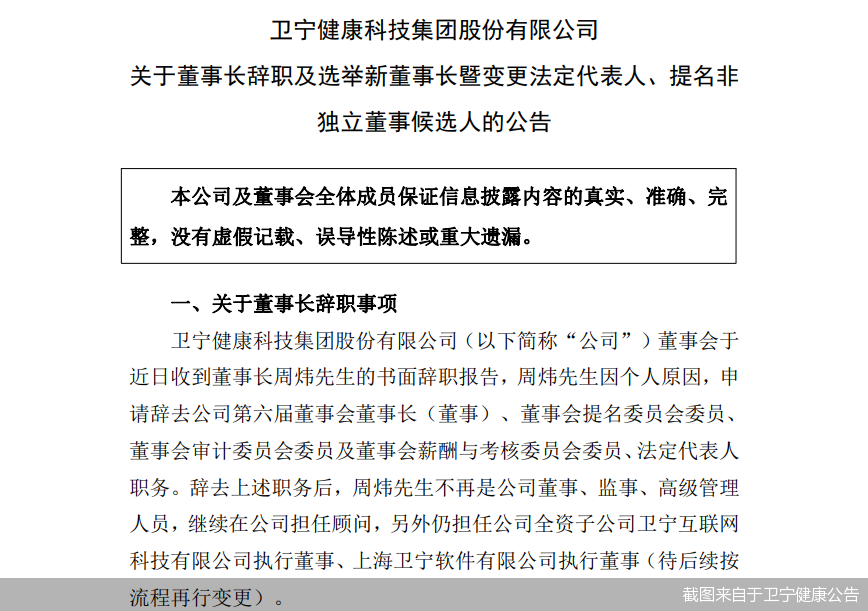
Core Viewpoint - The leadership change at Weining Health follows the conviction of its actual controller, Zhou Wei, for bribery, with Liu Ning taking over as chairman amid ongoing financial struggles and a strategic transformation towards comprehensive healthcare solutions [1][5][8]. Leadership Change - Zhou Wei resigned from all executive positions due to personal reasons and will continue as a consultant while Liu Ning, a co-founder, has been elected as the new chairman [3][4]. - Liu Ning holds 104 million shares, representing 4.68% of the company, and his spouse holds an additional 37.01 million shares, totaling 6.35% ownership [4]. Financial Performance - Weining Health reported a revenue of 1.296 billion yuan for the first three quarters of the year, a decrease of 32.27% year-on-year, and a net profit loss of 241 million yuan, down 256.1% [9]. - The company's gross margin has declined from 41.68% last year to 29.07% in the current year [9]. Strategic Transformation - The company is transitioning towards a model that encompasses the entire healthcare chain, focusing on internet hospitals, insurance payments, and health data governance [1][8]. - Despite being an early adopter of AI in healthcare, the transformation has not yet yielded significant financial results due to high R&D costs, intense competition, and potential misalignment between technology and market needs [10]. Legal Issues and Market Impact - Zhou Wei and a subsidiary were convicted of bribery, with the subsidiary fined 800,000 yuan and Zhou sentenced to 18 months in prison, which has negatively impacted investor confidence and led to a significant drop in stock price [6][7]. - The company’s stock fell by 10.38% following the announcement of the legal issues, reflecting immediate market reactions to the news [6][7].


亏损千万仍十连板!合富中国股价疯涨背后,A股“看图炒股”又卷土重来?
Sou Hu Cai Jing· 2025-11-10 14:55
Group 1 - The core point of the article highlights the recent surge in the stock price of Hefei China (603122.SH), which increased from over 6 yuan to more than 17 yuan, achieving 10 consecutive daily limit-ups despite reporting a loss of 12.38 million yuan in the first three quarters of 2024 [1] - Hefei China operates in the field of in vitro diagnostic medical devices and is now exploring AI-assisted clinical diagnostic systems, but its financial performance has been underwhelming, with a profit of only 27.56 million yuan in 2024 [1] - The stock price increase is attributed to market speculation and the hype surrounding "AI in healthcare," rather than the company's fundamental performance, as indicated by the company's warnings about the disconnect between stock price and operational performance [1] Group 2 - Such speculative trading behavior is not uncommon in the A-share market, with previous instances like Chuan Dazhi Sheng during the US elections and stocks with "Dragon" in their names gaining attention as the Year of the Dragon approaches [2] - The excitement surrounding stocks driven by market sentiment is often short-lived, and once the hype fades, stock prices tend to revert to their intrinsic values based on the company's actual performance and growth potential [2] - The term "Hefei" in Hefei China does not carry any special significance; the stock's rise is primarily due to the surge in the medical AI concept, which may not be sustainable in the long run [2]

陷实控人行贿风波,临危换将的卫宁健康如何走出困局
Bei Jing Shang Bao· 2025-11-10 11:51
Core Viewpoint - The leadership change at Weining Health follows the conviction of its actual controller, Zhou Wei, for bribery, raising concerns about the company's future direction and performance amid ongoing transformation efforts [1][7][10]. Leadership Change - Zhou Wei resigned from all positions within the company due to personal reasons, and Liu Ning, a co-founder, has been appointed as the new chairman [4][5]. - Liu Ning holds 104 million shares, representing 4.68% of the total share capital, while his spouse holds an additional 37.01 million shares [5]. Legal Issues - Zhou Wei was sentenced to 18 months in prison and fined 200,000 yuan for bribery, while the subsidiary Shenzhen Weining Zhongtian was fined 800,000 yuan [7][8]. - The company plans to appeal the judgment, which has already impacted its stock price, causing a drop of 10.38% following the announcement [8][9]. Financial Performance - Weining Health reported a revenue of 1.296 billion yuan for the first three quarters, a decrease of 32.27% year-on-year, and a net loss of 241 million yuan, a decline of 256.1% [11]. - The company's gross margin has also decreased significantly from 41.68% in 2024 to 29.07% in the first three quarters of the current year [12]. Strategic Transformation - The company is undergoing a transformation to build a comprehensive intelligent solution covering the entire healthcare chain, focusing on internet hospitals, medical insurance payments, and health data governance [1][10]. - Despite being an early player in AI healthcare, the company faces challenges in translating R&D investments into revenue due to high costs, intense competition, and potential misalignment between technology and market needs [12].
AI医疗红利加速释放,讯飞医疗(2506.HK)大模型焕新与产品进阶,筑牢增长逻辑
Ge Long Hui· 2025-11-10 09:49
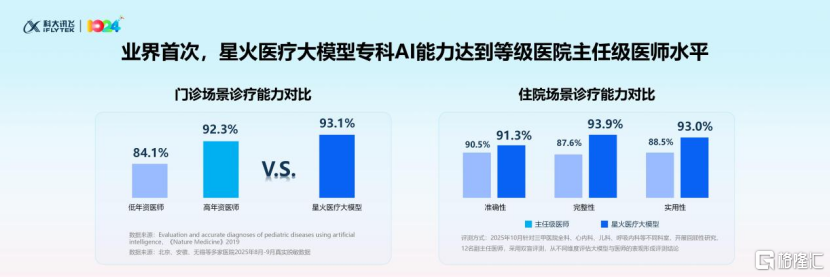
Core Insights - iFlytek Medical has achieved significant technological advancements with the upgrade of its medical model and the launch of the Smart Medical Assistant Hospital Edition 1.0, addressing key pain points in the AI healthcare industry [1] - The upgraded model emphasizes "fully autonomous and controllable" technology, creating a complete chain from technological breakthroughs to product implementation and scene adaptation, establishing a clear competitive advantage [1][3] - The AI healthcare market is expanding, with estimates indicating a cumulative market space of nearly 20 billion yuan for B-end and G-end intelligent diagnosis from 2025 to 2029, and over 70 billion yuan for the C-end annually [1][10] Technological Advantages - The core breakthrough of the upgraded medical model lies in its comprehensive technical system, which integrates high-quality medical data, a premium medical knowledge base, and reinforced evidence-based reasoning, forming a closed-loop barrier [3][4] - The model's data foundation is built on high-value directions, ensuring alignment with real clinical processes and enhancing diagnostic accuracy through continuous feedback from real-time medical practices [4] - The knowledge base is constructed from millions of authoritative medical resources, significantly reducing common issues in AI healthcare, such as "medical hallucinations," and enhancing the model's capabilities beyond competitors like GPT-5 [5][8] Market Positioning - The Smart Medical Assistant Hospital Edition 1.0 marks a transition from being an "efficiency tool" to a "doctor's AI decision-making partner," aligning with the evolving demands of the AI healthcare market [10] - The model's capabilities have been validated through extensive applications, achieving a first diagnosis accuracy of 98% and expanding diagnostic support to 2,500 diseases [5][12] - iFlytek Medical's extensive coverage across 31 provinces and over 77,000 institutions in China provides a robust foundation for its competitive edge in clinical applications [12] Policy Alignment - iFlytek Medical's strategies resonate with the policy direction in the AI healthcare sector, which is crucial for navigating industry cycles [16][18] - The government is increasingly providing resources to support AI healthcare deployment, particularly in grassroots medical institutions, which aligns with iFlytek Medical's operational model [18] - The company's international expansion, particularly in Hong Kong, positions it to tap into global market needs, leveraging its adaptable and cost-effective solutions [19] Growth Potential - The AI healthcare investment landscape is rapidly growing, with global investments projected to reach $1.4 billion by 2025, indicating a strong market demand [10] - iFlytek Medical's comprehensive approach, addressing both B-end institutional needs and C-end personal health management, opens up significant growth opportunities [19] - The combination of technological leadership, policy adaptability, and market penetration positions iFlytek Medical as a key player in the AI healthcare sector, with potential for valuation and performance enhancement [19]
医械股反弹,中源协和触及涨停!A股最大医疗ETF(512170)震荡飘红,4.8亿资金押注半年线支撑!
Xin Lang Ji Jin· 2025-11-10 02:56
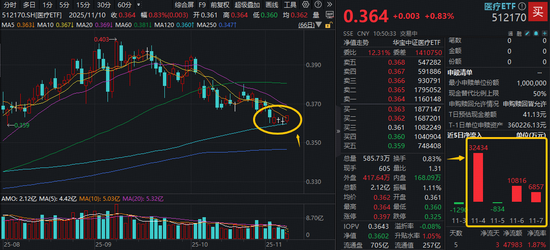
Core Viewpoint - The A-share medical sector is showing resilience with medical device stocks leading the gains, while the CXO concept is lagging behind, indicating a potential shift in market dynamics [1][3]. Group 1: Market Performance - On November 10, A-share medical stocks rose against the market trend, with Zhongyuan Xiehe hitting the daily limit and several other stocks like Jiuan Medical and Yingke Medical rising over 4% [1]. - The largest medical ETF in A-shares (512170) experienced fluctuations but was up nearly 1% at one point, attracting significant capital with a weekly inflow of 480 million yuan [1][5]. Group 2: Industry Outlook - CITIC Securities suggests that the medical device sector may be at a turning point, with opportunities for valuation recovery in individual stocks expected in the short term (2025 Q4 and 2026) [3]. - Long-term investment opportunities are anticipated from innovation, international expansion, and mergers and acquisitions, with a focus on innovative devices in areas with low domestic production rates [3]. - The medical industry is characterized as a "new quality productive force," poised for high-quality development, with expectations for improved profitability and valuation recovery [4]. Group 3: Financial Performance - In the first three quarters of this year, 45 out of 50 constituent stocks of the medical ETF (512170) reported profits, with 17 companies showing double-digit net profit growth [3]. - Notable performers include Zhaoyan New Drug and Meian Health, with net profit growth rates of 214.79% and 110.53%, respectively [4]. Group 4: Valuation Metrics - The current PE valuation of the medical ETF (512170) stands at 33.12 times, which is still below 68% of the time over the past decade, indicating potential for valuation recovery [5]. - The medical ETF has a total scale of 25.6 billion yuan, making it the largest medical ETF in the market [5].

股市必读:圣湘生物(688289)11月7日主力资金净流出1304.92万元,占总成交额11.74%
Sou Hu Cai Jing· 2025-11-09 17:44
Group 1 - The core point of the article highlights that Shengxiang Bio (688289) is actively expanding its investment in the AI medical application and innovative medical device sectors through a new fund, while also achieving significant product certifications [1][3]. Group 2 - On November 7, 2025, Shengxiang Bio's stock closed at 21.75 yuan, with a slight increase of 0.09% and a trading volume of 50,900 shares, amounting to a total transaction value of 111 million yuan [1]. - On the same day, the net outflow of main funds was 13.05 million yuan, accounting for 11.74% of the total transaction value, while retail investors saw a net inflow of 6.67 million yuan, representing 6.0% of the total [1][3]. Group 3 - Shengxiang Bio plans to invest 370 million yuan as a limited partner in a new medical industry fund with a target size of 1 billion yuan, focusing on AI medical applications and innovative medical devices [1][3]. - The company recently obtained three product certifications, including two Class III medical device registrations and one EU CE IVDR certification, for products related to the detection of Norovirus, Rotavirus, and EB virus [1][3].

公募基金周报:两只巴西ETF获资金抢购-20251109
CAITONG SECURITIES· 2025-11-09 11:25
Report Industry Investment Rating - No information provided in the content Core Views - Important news: A database for performance comparison benchmarks of public funds is coming; the scale of bond ETFs has exceeded 70 billion yuan; the MSCI index has been adjusted, with 26 Chinese stocks newly included [3] - Market review: During the week of 20251103 - 20251107, major broad - based A - share indices showed an upward trend, while most overseas indices showed a downward trend [3][17] - Fund market review: Half of the active equity funds achieved positive returns this week, with the median interval return of active equity funds at 0.19%. Cyclical and financial real - estate themed funds performed prominently [3] - ETF fund statistics: The top three ETF categories in terms of performance this week were H - share broad - based, manufacturing, and cyclical themed ETFs. There were 490 ETFs with net capital inflows and 516 with net outflows [3] - Fund market dynamics: 52 public funds had new fund manager appointments, 48 new public funds were established, 44 public funds started their initial issuance, and 56 public funds were waiting to be issued [3] - Equity fund issuance tracking: The issuance scale of equity funds this week was 21.836 billion yuan, a decrease of 1.759 billion yuan from last week. There are still 276 newly issued funds in the position - building period [3] Summary by Relevant Catalogs 1. Important News 1.1 Market Dynamics - A database for performance comparison benchmarks of public funds is coming. The draft for soliciting opinions on the operation of the benchmark element library has been issued. The benchmark library mainly includes stock indices, divided into two categories, with 69 in the first category and 72 in the second [8] - The number of newly issued funds this year has reached a new high in the past three years. As of November 3, more than 1300 new funds have been issued this year, with over 700 new stock - type funds [9] - The ETF product of Jiaoyin Schroeder Fund has been approved and is expected to start issuing in December. It is the first time in 14 years that the company has restarted the layout of the ETF product line [10][11] 1.2 Product Hotspots - The scale of bond ETFs has exceeded 70 billion yuan. As of October 31, the scale reached 70.0044 billion yuan. The scale of single - product and the management scale of some fund companies have also increased significantly [11][12] - The compilation of the China Cheng Tong Brand Value Index has been launched, aiming to guide capital to state - owned central enterprises and benchmark private enterprises with core brand advantages [12] - New pharmaceutical indices have been frequently launched, such as the China Securities Science and Technology Innovation and Entrepreneurship Innovative Drug Index and the China Securities Science and Technology Innovation and Entrepreneurship Medical Device Index [12] 1.3 Overseas/Offshore Markets - The MSCI index has been adjusted, with 69 new inclusions and 64 exclusions in the MSCI Global Standard Index. In the MSCI China Index, 26 Chinese stocks were newly included and 20 were excluded [14] - Two Brazilian ETFs were snapped up by funds. They reached their fundraising scale limits on the first day of issuance, with the confirmed ratio of Huaxia Fund's Brazilian ETF at about 11.5% and that of E Fund at about 11.8% [15][16] - Public QDII funds are gradually replenishing their positions in US stocks, which has reduced the drawdown risk of some funds during the recent adjustment of the Hong Kong stock market [17] 2. Market Review - A - share market: Major broad - based indices showed an upward trend. The Shanghai Composite Index rose 1.08% to 3997.56, the CSI 300 Index rose 0.82% to 4678.79, etc. [17] - Overseas indices: Most showed a downward trend. The Nikkei 225 index fell 4.07%, the South Korean Composite Index fell 3.74%, and the Nasdaq index fell 3.04% [17] - Industry performance: The power equipment and new energy, and steel industries led the gains. The top five industries in the CITIC First - level Industry Index were power equipment and new energy (5.10%), steel (4.57%), etc. [21] 3. Fund Market Review 3.1 Active Equity Fund Performance - In the recent week, cyclical and financial real - estate themed funds performed prominently, with average interval returns of 1.55% and 0.78% respectively. In the recent three months, technology and cyclical themed funds led, with average interval returns of 25.67% and 21.54% respectively [24] - Half of the active equity funds achieved positive returns this week, with the median interval return at 0.19%. Cyclical and financial real - estate themed funds had median interval returns of 1.62% and 1.19% respectively [27] 3.2 High - performing Fund Performance Statistics - The Galaxy Core Advantage A (011629.OF) performed outstandingly this week, with an interval return of 11.65%. The report also listed the top five funds in each industry theme [29][30] 4. ETF Fund Statistics 4.1 ETF Fund Performance - In terms of the average interval return this week, the top three ETF categories were H - share broad - based (1.77%), manufacturing (1.62%), and cyclical themed ETFs (1.48%). In the recent month, the top three were international broad - based (7.11%), cyclical (5.51%), and commodity futures themed ETFs (4.49%) [31] 4.2 ETF Fund Capital Flow Statistics - In terms of net capital inflows this week, the top categories were technology (9.242 billion yuan), pharmaceuticals (9.059 billion yuan), and financial real - estate (7.223 billion yuan). The category with the largest net outflows was A - share broad - based (18.939 billion yuan) [34] - There were 490 ETFs with net capital inflows and 516 with net outflows. The top three ETFs with net inflows were Guotai CSI All - Index Securities Company ETF, Haifutong CSI Short - Term Financing ETF, etc. The top three with net outflows were Huatai - Peregrine CSI 300 ETF, Huaxia SSE 50 ETF, etc. [37] 4.3 ETF Fund Premium and Discount Statistics - As of November 7, 2025, the top three ETFs in terms of premium rate were Huatai - Peregrine China Securities Korea Exchange China - South Korea Semiconductor ETF, Huaan Mitsubishi UFJ Nikkei 225 ETF, etc. The top three in terms of discount rate were E Fund CSI Hong Kong Stock Connect China 100 ETF, Huaxia SSE Smart - Selection Science and Technology Innovation Value 50 Strategy ETF, etc. [39] 5. Fund Market Dynamics 5.1 Fund Manager Changes - 52 public funds had new fund manager appointments, involving 46 fund managers from 35 fund management companies. The top three fund management companies in terms of the number of affected funds were Fullgoal Fund, Bosera Fund, etc. [41] - 57 public funds had fund manager departures, involving 35 fund managers from 28 fund management companies. The top three fund management companies in terms of the number of affected funds were Yongying Fund, Dacheng Fund, etc. [42] 5.2 Newly Established Funds This Week - A total of 48 new public funds were established this week, with a combined issuance share of 26.5 billion [3] 5.3 Funds with Initial Issuance This Week - 44 public funds started their initial issuance this week, with the largest number being passive index funds (14) [3] 5.4 Funds Waiting to be Issued - As of November 9, 2025, there were 56 public funds waiting to be issued [3] 5.5 Equity Fund Issuance Tracking - The issuance scale of equity funds this week was 21.836 billion yuan, a decrease of 1.759 billion yuan from last week. There are still 276 newly issued funds in the position - building period, with an estimated 29.71% having a position - building ratio of less than 5% and an estimated 82.761 billion yuan of funds yet to be invested [3]
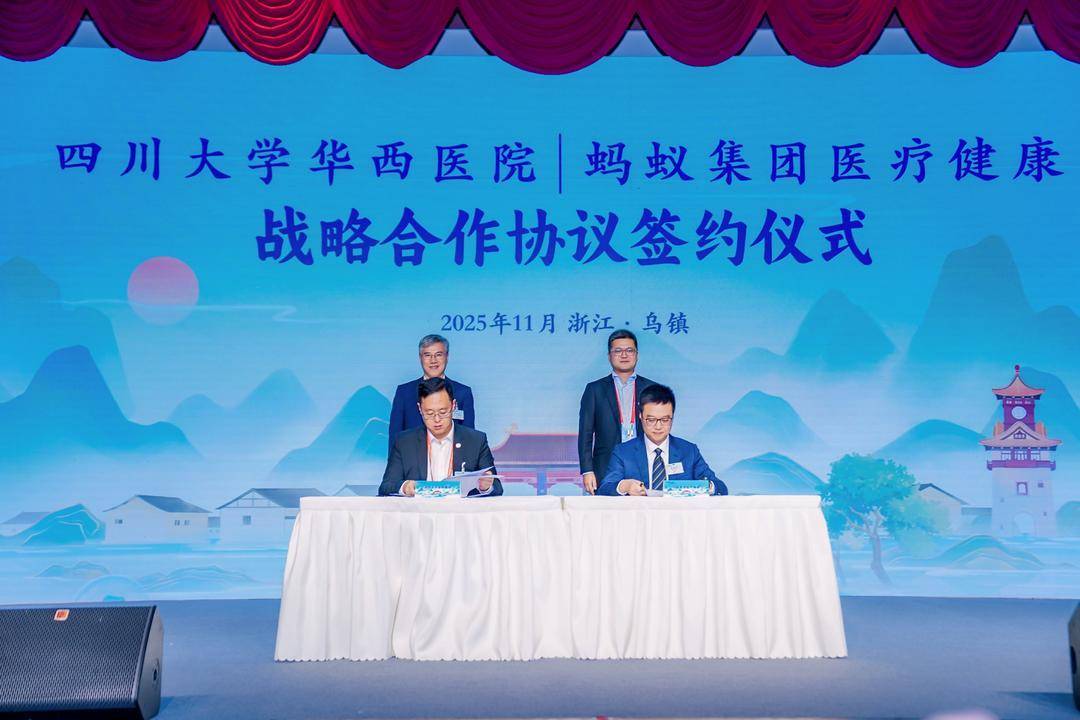
华西医院携手蚂蚁集团探索AI医疗科研创新,未来聚焦四大方向展开合作
Sou Hu Cai Jing· 2025-11-09 03:37
Core Insights - Sichuan University West China Hospital and Ant Group signed a strategic cooperation agreement to advance AI in healthcare, focusing on chronic respiratory diseases and enhancing grassroots medical services [2][3] Group 1: Collaboration Focus - The partnership will leverage West China Hospital's clinical expertise and Ant Group's technological capabilities to develop precise and efficient AI medical solutions [2] - Four main areas of collaboration include: research on respiratory diseases, optimizing medical payment services, improving patient experience in hospitals, and establishing a standardized data governance system [2] Group 2: AI Healthcare Development - Ant Group's CEO emphasized the importance of AI in addressing health challenges and transforming research into clinical applications [3] - Since entering the AI healthcare sector in 2023, Ant Group has built a robust medical model and partnered with several top medical institutions [3] - The collaboration with West China Hospital, a national center for critical care and medical research, is expected to enhance the AI health ecosystem and contribute to the "Healthy China" initiative [3]