可再生能源

Search documents
明阳电气(301291.SZ):公司暂无光伏逆变器业务
Ge Long Hui· 2025-09-18 08:08
Core Viewpoint - Mingyang Smart Energy (301291.SZ) focuses on smart transformers, box-type substations, and smart complete switchgear as its core products, which are applied in renewable energy and smart grid sectors [1] Group 1: Product Offerings - The company specializes in smart transformers, box-type substations, and smart complete switchgear [1] - The technology for photovoltaic inverter boost integrated devices has reached an internationally advanced level [1] - Currently, the company does not have a photovoltaic inverter business [1] Group 2: Industry Applications - The products are utilized in renewable energy fields, including wind energy, solar energy, and energy storage [1] - The company’s offerings are also relevant to the smart grid sector [1]
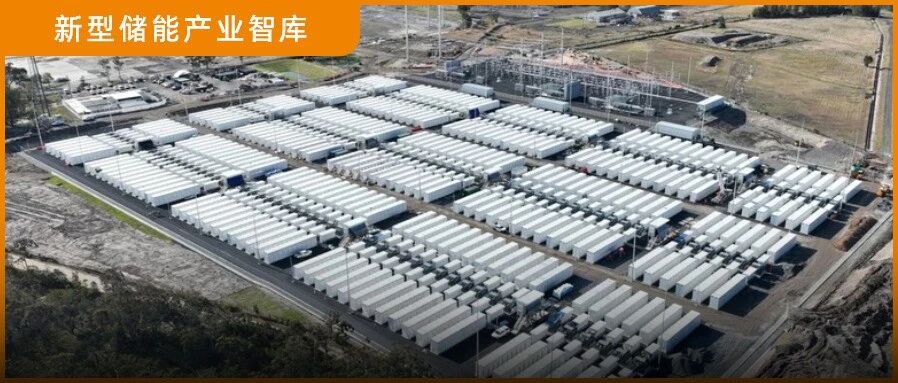
非洲储能部署驶入“快车道”
中国能源报· 2025-09-18 05:31
目前,规划、在建、投运的储能项目在非洲大陆"遍地开花",整体呈现欣欣向荣之势。 当前,电力短缺成为制约非洲经济发展和社会稳定的巨大障碍。面对这一挑战,非洲近年来加速推动电力基础设施升级和部署。广袤土 地、充沛光照、丰富矿产金属资源、快速增长的劳动力……非洲部署储能具备先天优势,这使得该地区有望成为全球清洁能源及电池存 储领域的关键力量。目前,规划、在建、投运的储能项目在非洲大陆"遍地开花",整体呈现欣欣向荣之势。 投运及规划项目显著增加 能源转型数据和市场分析机构Rho Motion指出,去年,全球部署的储能系统容量达205吉瓦时,同比增长53%。电网规模储能市场再 次成为增长引擎,部署容量超过160吉瓦时,同比增长68%,其中98%是锂离子电池储能系统。 "电池成本下降是推动储能市场增长的一个关键因素,这使得电池储能技术开始快速进入新兴市场,尤其是非洲地区。"Rho Motion研 究主管雨果表示。2022年以来,电池组和电芯成本持续下降,2023年降幅达13%,2024年以20%的降幅刷新纪录。 非洲拥有全球60%的优质太阳能资源,但可再生能源装机容量在全球占比仅1%。目前,南非、埃及、摩洛哥和埃塞俄比亚 ...

工业硅、多晶硅日评:高位整理-20250918
Hong Yuan Qi Huo· 2025-09-18 02:29
Report Summary 1. Report Industry Investment Rating No information provided in the report. 2. Report's Core View - The industrial silicon market is currently in a high - level consolidation phase. Supply is increasing steadily, with some previously - shut - down silicon plants in Xinjiang resuming production and enterprises in the southwest region increasing their operations due to low - cost electricity in the wet season. Demand is mixed, with potential demand from some silicon material plants'复产 but limited downstream inventory - building willingness. Considering supply disturbances and potential production cuts by polysilicon enterprises, short - term silicon prices may remain high, but there is a risk of a subsequent decline [1]. - The polysilicon market is also in high - level consolidation. Supply is expected to increase slightly after offsetting production cuts and new capacity additions. Demand has increased in the short term, with significant trading volume and inventory reduction. However, due to high downstream raw material inventory and pressure on terminal demand, there is pressure on further price increases [1]. 3. Summary by Related Catalogs Industrial Silicon - **Price Changes**: The average price of non - oxygen - blown 553 (East China) remained flat at 9,100 yuan/ton, and the 421 (East China) remained flat at 9,600 yuan/ton. The futures main contract's closing price rose 0.56% to 8,965 yuan/ton [1]. - **Supply and Demand**: Supply is increasing steadily as some silicon plants in Xinjiang resume production and southwest enterprises increase operations. On the demand side, polysilicon enterprises are reducing production, with some having复产 plans; the organic silicon market has supply fluctuations; and silicon - aluminum alloy enterprises purchase as needed with low inventory - building willingness [1]. - **Investment Strategy**: Suggest interval operation, continue to hold out - of - the - money put options, and consider participating in the 2511 and 2512 reverse spreads. Be cautious of potential price drops [1]. Polysilicon - **Price Changes**: N - type dense material rose 0.10% to 51.05 yuan/kg, N - type re - feed material rose 0.10% to 52.55 yuan/kg, N - type mixed material rose 0.10% to 50.05 yuan/kg, and N - type granular silicon remained flat at 49.5 yuan/kg. The futures main contract's closing price fell 0.34% to 53,490 yuan/ton [1]. - **Supply and Demand**: Supply is expected to increase slightly after offsetting production cuts and new capacity additions. Demand has increased in the short term, with significant trading volume and inventory reduction, but terminal demand is under pressure [1]. - **Investment Strategy**: Before the implementation of supply - side reform policies, consider lightly testing long positions on price dips [1]. Industry News - Italy received nearly 12GW of renewable energy project applications in its first competitive tender under the FER - X transitional ministerial order, including 10.09GW of photovoltaic and 1.67GW of wind power. Only 8GW of photovoltaic and 2.5GW of wind power will be auctioned, and the results will be announced on December 11, 2025. Italy also launched a second round of expression of interest (EOI) for photovoltaic projects using non - Chinese - made components, with a scale of 200MW - 1.6GW [1].
风电股普涨 金风科技涨近6% 协合新能源涨超1%
Ge Long Hui· 2025-09-18 02:26
Group 1 - Wind power stocks in Hong Kong collectively rose, with Goldwind Technology increasing nearly 6%, Datang New Energy up nearly 4%, Longyuan Power rising over 3%, and Jingneng Clean Energy up 1.6% [1] - In October, 12 turbine manufacturers signed a self-discipline agreement, indicating a recovery in wind turbine bidding prices starting from Q4 2024 [1] - According to Guojin Securities, the average bidding price for domestic onshore wind turbines from January to July this year increased by over 9% compared to the full year of 2024, reaching 1552 RMB per kilowatt [1] Group 2 - The International Energy Agency reported a 60% increase in global electricity investment from 2015 to 2025 [1] - With more capital flowing into renewable energy, investments in wind and nuclear power are expected to reach $242 billion and $74 billion this year, representing growth of 69% and 64% compared to 2015 [1]


港股异动丨风电股普涨 金风科技涨近6% 协合新能源涨超1%
Ge Long Hui· 2025-09-18 02:18
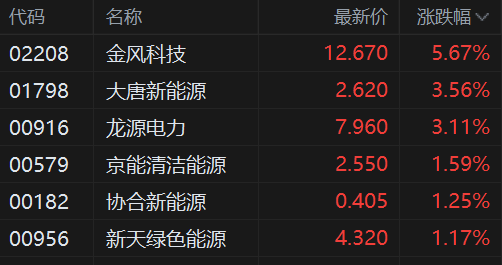
Group 1 - The core viewpoint of the article highlights a collective rise in Hong Kong wind power stocks, driven by a self-regulatory agreement among 12 turbine manufacturers to stabilize pricing in the industry starting from Q4 2023 [1] - The average bidding price for domestic onshore wind turbines has increased by over 9% compared to the projected average for 2024, reaching 1552 RMB per kilowatt [1] - The International Energy Agency reports a 60% increase in global electricity investment from 2015 to 2025, with wind and nuclear power investments expected to reach 242 billion USD and 74 billion USD respectively this year, marking growth of 69% and 64% since 2015 [1] Group 2 - Specific stock performance includes: Goldwind Technology up by 5.67% to 12.670 RMB, Datang New Energy up by 3.56% to 2.620 RMB, and Longyuan Power up by 3.11% to 7.960 RMB [1] - Other notable increases include Jingneng Clean Energy up by 1.59%, Xiehe New Energy up by 1.25%, and Xintian Green Energy up by 1.17% [1]
面向东盟蓝色经济合作发展论坛丨水电水利规划设计总院副院长张益国:中国—东盟海上能源合作前景广阔
Zhong Guo Zi Ran Zi Yuan Bao· 2025-09-17 07:28
Group 1 - The forum on "Innovation, Green, Intelligent, China-ASEAN Blue New Future" was held in Nanning, Guangxi, focusing on blue economy cooperation and development [1] - Over 500 representatives and experts from China and ASEAN countries participated, discussing innovation-driven development, industrial updates, and harmonious human-ocean relationships [1] Group 2 - The global consensus emphasizes the development of renewable energy, particularly offshore energy, as a crucial part of the renewable energy system [2][3] - Offshore energy is characterized by wide resource distribution, strong predictability, proximity to load centers, and diverse application scenarios [2] Group 3 - ASEAN is becoming a new growth pole for energy development, with significant potential for offshore energy due to its long coastlines and vast marine areas [7] - The development of offshore energy in ASEAN is still in the early exploration and technology validation stages, with multi-energy integration being a key direction [7] Group 4 - Four priority areas for China-ASEAN offshore energy cooperation include strengthening intergovernmental cooperation mechanisms, joint core technology R&D, promoting key demonstration projects, and establishing experimental verification and standard recognition [8][9]


“欧洲企业又叫屈:中国给稀土吧”
Sou Hu Cai Jing· 2025-09-17 06:02
Group 1 - The EU is considering sanctions against Chinese and Indian companies under the pretext of "Russia-related" activities, influenced by the Trump administration's pressure [4][5] - The European Chamber of Commerce in China reported that strict controls on rare earth exports from China are causing significant supply bottlenecks for European companies, leading to increased operational disruptions [1][3] - The approval rate for export licenses from China for European companies is less than 25%, exacerbating the supply chain issues faced by these businesses [1] Group 2 - The EU relies almost entirely on China for rare earth imports, with nearly 100% of its rare earth needs sourced from China, highlighting the dependency on Chinese supply for critical metals [4] - The Chinese government has stated that its export control measures are in line with international practices and are not discriminatory against specific countries [4] - The ongoing trade tensions have led to complaints from European manufacturers about potential production halts due to delays in obtaining necessary materials from China [3][4]

研究报告—地源热泵(附发展环境、全景概览、竞争格局及发展前景预测)
Sou Hu Cai Jing· 2025-09-17 05:46
Core Viewpoint - The geothermal heat pump industry in China is a sustainable energy technology that utilizes low-temperature heat sources from shallow geological formations, aligning with national energy-saving and emission-reduction policies, and is expected to see significant growth in market demand and application by 2025 [1][2][11]. Industry Definition and Classification - Geothermal heat pumps are categorized into three types based on the "geothermal exchange" method: soil source heat pumps, well water source heat pumps, and surface water heat pumps [2][6]. - This technology is recognized as a high-efficiency energy-saving air conditioning system that can provide both heating and cooling [1][2]. Industry Policies - The geothermal heat pump industry is supported by various government policies aimed at increasing investment, encouraging technological innovation, and promoting widespread adoption [2][8]. - The "Action Plan for Promoting High-Quality Development of the Heat Pump Industry" outlines goals for enhancing manufacturing and R&D capabilities by 2030, including a 20% improvement in energy efficiency for key products [2][8]. Favorable Conditions - China's vast territory and abundant resources, along with a large and relatively inexpensive labor force, contribute to lower installation costs for geothermal heat pump systems [3][7]. - Government regulations are in place to prevent energy waste and environmental pollution, facilitating the implementation of geothermal heat pump technology [3][7]. Industry Chain Core Nodes - The upstream of the geothermal heat pump industry includes components such as compressors, condensers, evaporators, expansion valves, pumps, and throttling valves [3][8]. - The midstream involves the production of geothermal heat pump main units, system integration, and installation services, while the downstream applications span residential, commercial, public, and industrial buildings [3][8]. Development Scale - In 2020, the area served by geothermal heat pumps in China exceeded 800 million square meters, with an installed capacity of over 26,000 megawatts, and is projected to reach 2.85 million megawatts by 2024 and approximately 30,000 megawatts by 2025 [3][4][11]. Demand Capacity - The installed capacity of geothermal heat pumps in China was over 27,000 megawatts in 2022, with expectations for continued growth leading to around 30,000 megawatts by 2025 [4][12]. Competitive Landscape - The geothermal heat pump industry in China features a large number of enterprises with low market concentration, characterized by diverse market participants including manufacturers of air conditioning systems, energy/building companies, and specialized geothermal heat pump producers [4][14]. - Key market players include Tianjia Energy, Gree Electric Appliances, Yongyuan Heat Pump, and others [4][14][15]. Market Trends - Geothermal heat pump technology is anticipated to play a significant role in the development of central air conditioning systems in China, driven by ongoing technological advancements and strong government support [4][11].
每3度电中就有1度绿电!风电光伏应用场景亟待进一步拓展
Zhong Guo Huan Jing Bao· 2025-09-17 03:10
Group 1 - The core viewpoint is that China has established the world's largest and fastest-growing renewable energy system, with renewable energy generation capacity increasing from 40% to approximately 60% [1] - The total electricity consumption in China now includes one-third green electricity, indicating a significant shift towards greener energy sources [1] - Distributed photovoltaic (PV) systems have emerged as a new force, with over 400 million kilowatts of new installations, including 160 million kilowatts from household PV systems, making over 7 million families "PV landlords" [1] Group 2 - China continues to prioritize large-scale renewable energy projects in regions with optimal conditions, such as Qinghai, Gansu, Shaanxi, and Ningxia, leading to the construction of major solar and wind power bases [1] - The "big base, big project" approach has resulted in significant investments and advancements in renewable energy technology, with China's renewable energy patents accounting for over 40% of the global total [1] - The average cost of electricity generated from wind and solar projects has decreased by 60% and 80%, respectively, over the past decade, showcasing China's contribution to global low-carbon transition [1] Group 3 - During the 14th Five-Year Plan, there has been a push to expand small-scale distributed wind and solar power markets, with over 7 million households adopting the "self-use and surplus electricity online" model [2] - The potential for small-scale distributed wind and solar power is significant, as these installations can be located near populated areas, leading to lower investment costs and improved land use [2] - Challenges remain in public awareness and willingness to utilize rooftops or barren land for solar installations, necessitating patience and targeted demonstrations in suitable communities [2] Group 4 - China has established a comprehensive wind and solar power technology system capable of producing a wide range of equipment and facilities [3] - To enhance product offerings, it is crucial to conduct thorough research to identify user needs and improve product design [3]
16家中标!电池储能项目总量超15GWh
行家说储能· 2025-09-16 10:40
Core Viewpoint - Australia has announced the results of its largest battery storage tender, with 16 winners selected to provide a total of 4.13GW/15.37GWh of dispatchable capacity by the end of 2029, primarily using lithium-ion batteries [2][3]. Group 1: Tender Overview - The tender received 124 bids with a total capacity of 34GW/135GWh, aiming to award 4GW/16GWh of dispatchable capacity [3]. - The selected projects are expected to include local resources valued at AUD 3.8 billion (USD 2.53 billion / CNY 18.014 billion) and provide AUD 218.8 million in benefits to Indigenous communities, creating approximately 1,900 jobs during the construction phase [3]. Group 2: Project Details - The largest individual project selected is the Teebar battery storage system proposed by Atmos Renewables, with a capacity of 400MW/1600MWh [5]. - Equis won three projects totaling 550MW/1900MWh, while Akaysha Energy is involved in the Waratah Super Battery project and has secured contracts for additional projects [6]. Group 3: Involvement of Chinese Companies - Chinese energy storage equipment companies have become significant participants in the tender, with Energy Australia, a subsidiary of China Energy Group, winning a project in New South Wales [7]. - Alinta Energy's Reeves Plains project will utilize battery storage systems supplied by CATL, and ACEnergy has also confirmed the supply of battery systems from CATL for its projects [8].