绿色化

Search documents
4.8万公里!中国高铁营业总里程占全球70%以上
Sou Hu Cai Jing· 2025-07-08 08:16
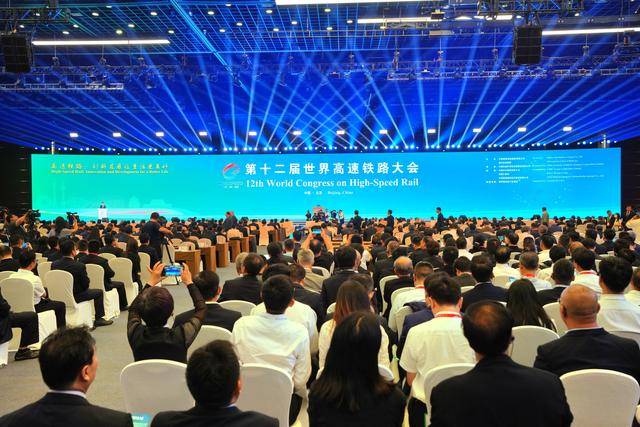
Core Insights - The 12th World High-Speed Rail Conference opened on July 8, focusing on "High-Speed Rail: Innovative Development for a Better Life," with over 2,000 attendees from more than 60 countries and regions [1][3] Industry Overview - China has built the world's largest and most modern high-speed rail network, with a total operating mileage of 48,000 kilometers, accounting for over 70% of the global high-speed rail mileage, covering 97% of cities with populations over 500,000 [3] - The operational system is highly efficient, with up to 10,000 high-speed trains running daily, transporting approximately 16 million passengers each day, and a cumulative total of over 22.9 billion passengers transported [3] Technological Developments - The conference showcased various speed series of the Fuxing high-speed trains, including CR400 (350 km/h) and CR300 (250 km/h), with multiple configurations to meet different transportation needs [8] - By the end of 2024, a total of 1,932 standard Fuxing trains are expected to be in operation, having transported 3.3 billion passengers and accumulated 32.5 billion kilometers of safe operation [8] Future Projections - The high-speed rail network is projected to reach 70,000 kilometers by 2035, covering all cities in China with populations over 500,000 [8] Conference Activities - The conference includes various activities such as high-speed rail innovation tours, technical visits, cultural outreach, and interactive sessions for rail enthusiasts, aimed at promoting high-speed rail culture and facilitating collaboration [7] - Discussions will focus on enhancing high-speed rail quality and its role in economic development, with participation from international railway organizations and experts from multiple countries [10][11] Event Significance - The World High-Speed Rail Conference serves as a global platform for showcasing achievements, technical exchanges, and industry collaboration, with significant international influence since its inception in 1992 [14]

成为江苏“唯一”入选城市,无锡有什么“密钥”
Xin Hua Ri Bao· 2025-07-07 23:12
Core Viewpoint - Wuxi has been selected as the only city in Jiangsu Province for the 2025 pilot program for new manufacturing technology transformation, highlighting its commitment to advancing intelligent, high-end, and green manufacturing practices [1][10]. Group 1: Focus on Intelligence - Wuxi is leading in intelligent manufacturing, exemplified by the "lighthouse factory" of Xincheng Special Steel, which integrates over 200 smart applications and significantly enhances production efficiency [2][3]. - The factory's implementation of AI and IoT technologies has resulted in an 11.79% increase in total output and a 46.7% reduction in product quality loss, achieving a profit of 4.376 billion yuan in a challenging market [3][4]. - Wuxi's strategy includes promoting "intelligent industrialization" and "industrial intelligence," focusing on key industries and establishing a multi-tiered intelligent factory system [4][10]. Group 2: Focus on High-End Manufacturing - Wuxi is enhancing its high-end manufacturing capabilities, as demonstrated by the new headquarters of Rihuan Technology, which aims to double production capacity and revenue through advanced X-ray detection equipment [5][6]. - The city is fostering a comprehensive innovation ecosystem, supporting key industries like integrated circuits and high-end equipment through policy initiatives and technology development [7][10]. - Wuxi's R&D investment intensity reached 3.44%, ranking second among Chinese prefecture-level cities, reflecting its commitment to high-end manufacturing [7][10]. Group 3: Focus on Green Development - Wuxi Baotong Technology has achieved recognition as a national "green factory," showcasing its commitment to sustainable practices and innovative green products [8][9]. - The city has successfully reduced its energy consumption per unit of GDP by 18% over the past three years, exceeding its energy-saving targets [10]. - Wuxi is leading in green initiatives, with over 6,000 green factory evaluations completed, and aims to implement numerous green transformation projects by 2027 [10][11].

多向赋能,中国外贸竞争力稳增
Zhong Guo Chan Ye Jing Ji Xin Xi Wang· 2025-07-03 00:19
Group 1: Global Trade Environment - The global manufacturing PMI new export orders index fell below the growth line for two consecutive months, indicating a contraction in trade due to rising protectionism and uncertainty [1] - Despite these challenges, China's foreign trade maintained steady growth in the first five months of the year, with a total import and export value of 17.94 trillion yuan, a year-on-year increase of 2.5% [1] Group 2: China's Foreign Trade Strategy - China is committed to expanding high-level opening-up and diversifying its trade partnerships, as evidenced by recent agreements with African nations and the completion of the China-ASEAN Free Trade Area 3.0 negotiations [2][3] - Chinese foreign trade enterprises are increasingly shifting from a "single-polar dependence" to a "multi-polar resonance" strategy to mitigate risks [3] Group 3: Product Structure and Competitiveness - In the first five months, China's exports of electromechanical products grew by 9.3%, with integrated circuit exports increasing by 18.9%, reflecting a shift from scale advantages to technological advantages in the global supply chain [4] - The growth in high-tech product exports, which rose by 7.4%, indicates an ongoing optimization of China's export structure, with green technology products gradually replacing traditional low-value goods [4] Group 4: R&D Investment and Innovation - China's robust growth in high-tech product exports is closely linked to increased R&D investment, which is projected to reach 2.68% of GDP in 2024, surpassing the EU average [5] - This innovation investment is transforming into tangible export competitiveness, with technology-intensive products becoming a new engine for foreign trade growth [5] Group 5: Trade Facilitation and Support - China's foreign trade policies have become more precise and pragmatic, providing support through financial assistance, customs facilitation, and market expansion [6] - Measures include expanding export credit insurance coverage and enhancing cross-border trade facilitation, which have boosted the confidence of foreign trade enterprises [6] Group 6: Market Potential and Economic Stability - China's vast market potential continues to be released, with policies aimed at stabilizing the economy and foreign trade showing positive effects [7] - The fundamental outlook for China's foreign trade remains optimistic, with confidence to face various risks and challenges [7]
建科智能(300823) - 2025年07月02日投资者关系活动记录表
2025-07-02 07:38
Company Overview - Founded in 2002, the company has over 20 years of experience in the intelligent rebar processing robot equipment industry, becoming one of the largest and most comprehensive manufacturers in China and globally [2][4] - The company provides world-class intelligent rebar processing hardware and software products, services, and technical support [4][5] Business Operations - The company operates over a dozen subsidiaries, focusing on high-quality development and new production capabilities [4] - Products include high-end CNC rebar processing robots and supporting software, offering comprehensive solutions for intelligent rebar processing factories [5] Market Presence - The company exports to over 100 countries, including 80 along the Belt and Road Initiative, with foreign sales accounting for 32.75% of total revenue in 2024 [6] - It serves various sectors, including high-speed rail, highways, bridges, tunnels, and urban infrastructure projects [5] Technological Innovation - The company has developed a digital platform for rebar processing, enhancing decision-making through a construction decision model library [8] - Innovations include a new generation of cost-effective rebar processing robots and an intelligent production scheduling system that improves efficiency and reduces energy consumption [8] Customer Engagement - The company maintains strong relationships with both large and small clients, enhancing customer loyalty and satisfaction through reliable service and innovative products [7] - It emphasizes a lifecycle approach to sustainable service, focusing on green customization and low-energy design [5][7] Future Development - The company aims to build a three-part development system focusing on technological innovation, global strategic layout, and green development [9] - Plans include establishing a matrix structure of research and innovation centers to enhance overall productivity through digital solutions [9]

研判2025!中国微耕机行业产业链、市场规模及重点企业分析:丘陵山地机械化提速,轻便高效微耕机助力小农经济转型[图]
Chan Ye Xin Xi Wang· 2025-07-02 01:26
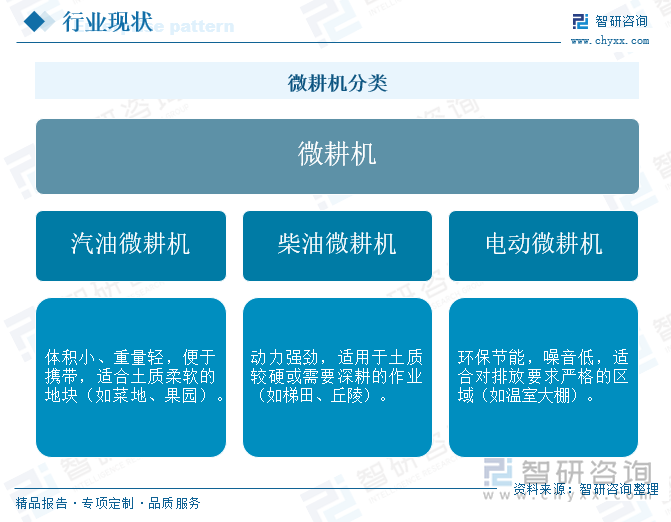
Core Viewpoint - The demand for efficient and convenient agricultural machinery, particularly tillers, is increasing among farmers in China as the modernization of agriculture accelerates. The tiller market is projected to reach a scale of 18.3 billion yuan in 2024, with a year-on-year growth of 3.98% [1][13]. Industry Overview - Tiller is a small agricultural machine powered by a small diesel or gasoline engine, characterized by its lightweight, compact size, and flexible operation. It is suitable for various terrains and can perform multiple tasks such as tilling, plowing, fertilizing, and sowing [2][4]. Industry Development History - The Chinese tiller industry has gone through four main stages: 1. **Initial Stage (1978-1999)**: The introduction of hand-held tillers from Japan and the emergence of domestic production [4]. 2. **Rapid Development (2000-2010)**: Expansion of functions and production, with a significant increase in annual output [5]. 3. **Quality Upgrade (2011-2018)**: Industry consolidation and technological improvements amid market pressures [6]. 4. **Intelligent and Green Transformation (2019-Present)**: Implementation of smart tillers with advanced features and the establishment of industry standards for electric tillers [6]. Industry Supply Chain - The upstream of the tiller industry includes raw materials and components such as steel, non-ferrous metals, rubber, and plastics. The midstream involves the manufacturing of tillers, while the downstream applications are primarily in agriculture, including family farms and orchards [8]. Market Size - The tiller market in China is expected to reach 18.3 billion yuan in 2024, reflecting a growth of 3.98% year-on-year [13]. Key Enterprises - The competitive landscape of the tiller industry is characterized by low market concentration and intense brand competition. Key players include Weima Agricultural Machinery, Chongqing Xinyuan, and Chongqing Zongshen, which have shown strong performance in sales [17][19]. Industry Development Trends 1. **Technological Upgrade and Intelligent Development**: The industry is experiencing a shift towards electric tillers and smart technologies, enhancing operational efficiency and environmental sustainability [23]. 2. **Diversified Market Demand**: The demand for multifunctional tillers is increasing, with users seeking capabilities beyond simple tilling [24]. 3. **Policy Support and Industry Consolidation**: Government policies are driving the industry forward, with subsidies favoring tillers and promoting consolidation among enterprises [25].
海洋旅游业繁荣、海洋油气业增储、海工装备市场活跃…… 深圳海洋经济劈波斩浪动能十足
Shen Zhen Shang Bao· 2025-07-01 22:34
Core Insights - The marine economy in Shenzhen is projected to reach a total output value of 540.94 billion yuan in 2024, marking a significant milestone and serving as a crucial engine for the city's stable economic development [1] Group 1: Marine Industry Development - Shenzhen's foreign trade measures have shown significant effectiveness, with the marine transportation industry leading the way [1] - The marine tourism sector continues to thrive, supported by strong supply and demand in the market [1] - The marine oil and gas industry is experiencing sustained growth in reserves and production, solidifying its pillar status [1] - The marine engineering equipment market is seeing active demand, with steady growth in marine engineering manufacturing and shipbuilding industries [1] - The inclusion in the Ministry of Commerce's pilot program for expanding service industry openness has led to robust growth in marine technology and information services [1] Group 2: Technological Innovation and Green Development - Shenzhen is committed to a "digital, green, and domestic" industrial development direction, focusing on technological innovation as the core driving force [2] - Support for CNOOC's Shenzhen branch in implementing oil and gas reserve enhancement projects in the South China Sea has strengthened marine oil and gas development capabilities [2] - The successful production of Asia's first deep-water jacket platform and the first cylindrical FPSO marks significant advancements in marine engineering [2] - A major oil field discovery near Shenzhen, with a capacity of 1.9 billion tons, highlights the city's achievements in overcoming deep-sea exploration challenges [2] Group 3: Marine Manufacturing and Services - Shenzhen is actively nurturing marine manufacturing sectors, including shipbuilding, marine engineering equipment, and related materials [3] - The city is promoting the development of green and intelligent marine products, such as underwater robots and smart boats, in response to industry trends [3] - The Marine Development Bureau is facilitating the introduction of high-quality marine industry projects and attracting key enterprises [3] Group 4: Policy Support and Infrastructure Development - Shenzhen is increasing policy and financial support for marine high-end equipment and biotechnology projects [4] - The establishment of the first "marine industry professional park" in Shenzhen Bay Eco-Tech Park is a significant step in advancing marine industry infrastructure [4] - Strategic cooperation agreements with various organizations aim to enhance marine technology and service capabilities [4] Group 5: Open Testing Zones and Collaborative Initiatives - The establishment of Shenzhen's first open water testing zone for marine intelligent equipment is a key initiative to facilitate research and development [5] - Collaborative efforts among city planning, marine development, and other departments are aimed at resolving critical issues related to site selection and infrastructure [5] - The construction of a comprehensive marine testing ground in Dapeng Bay is underway, focusing on sensor and underwater equipment testing [5][6]
活力中国调研行|从实验室突围到产业跃迁的湾区密码
Nan Fang Du Shi Bao· 2025-07-01 04:12
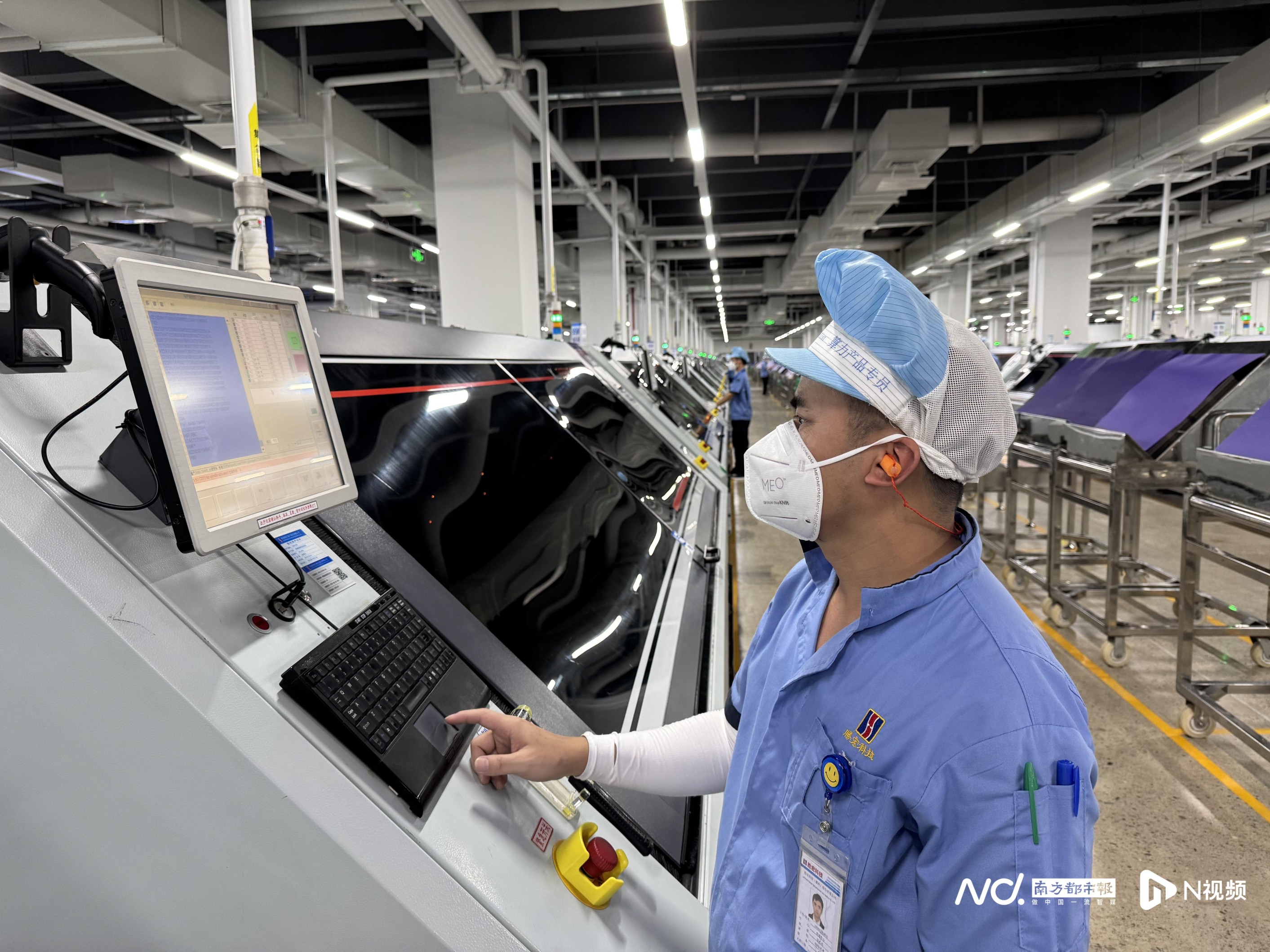
Core Insights - Guangdong is leading in technological innovation and industrial transformation, with a focus on integrating technology and industry to drive economic growth [1][5][13] - The province's R&D investment is projected to exceed 510 billion yuan in 2024, maintaining its position as the top region for R&D funding in China for eight consecutive years [1][5] - The establishment of nine trillion-yuan industrial clusters and the emergence of advanced manufacturing sectors highlight Guangdong's robust industrial ecosystem [5][13] Industry and Technology Synergy - Companies like Shenghong Technology have adopted smart manufacturing practices, achieving significant resource savings and high productivity [2][8] - The shift from "single-point breakthroughs" to "systematic reconstruction" is evident in various sectors, emphasizing the need for technological innovation to reshape industry fundamentals [2][4] Innovation and Market Transformation - The development of autonomous vehicles and advanced robotics is a key focus, with companies like Xiaoma Zhixing and EK Lighting leading the charge in their respective fields [4][10] - The integration of innovative technologies into traditional industries is creating new pathways for growth and international expansion [4][10] Ecosystem for Results Transformation - The establishment of supportive environments for startups, such as XbotPark, is fostering innovation and increasing survival rates for new enterprises [6][10] - Government initiatives are facilitating collaboration between various sectors, enhancing the overall innovation landscape [10][11] Talent Attraction and Retention - Companies in Guangdong are implementing attractive talent strategies, including substantial financial incentives and supportive work environments, to draw skilled professionals [14][16] - The region's strategic location and efficient supply chain networks are enhancing its appeal as a hub for technological development [16][17]
民企出口含“新”量提升
Ren Min Ri Bao Hai Wai Ban· 2025-06-30 22:59
Core Insights - China's private enterprises are increasingly becoming the main force in foreign trade, with a significant shift from low-cost manufacturing to high-tech exports, particularly in sectors like industrial robots and green technology [3][6][13]. Group 1: Export Growth and High-Tech Products - In the first five months of the year, China's private enterprises achieved a total import and export value of 10.25 trillion yuan, a growth of 7%, with exports reaching 6.97 trillion yuan, up 8% [3]. - The export value of industrial robots increased by 55.4% year-on-year, with private enterprises being the primary manufacturers [3][5]. - High-tech product exports from private enterprises reached a historical high of nearly 1 trillion yuan in the first quarter, with industrial robots and high-end machine tools seeing growth rates of 67.4% and 16.4%, respectively [5][6]. Group 2: Technological Innovation and R&D Investment - Private enterprises contributed over 50% of the total R&D investment and personnel in China, with the top 1,000 private companies investing a total of 1.39 trillion yuan in R&D in 2023 [7][9]. - The continuous increase in R&D investment efficiency has led to a significant rise in the technological added value of export products [6][9]. - Companies are focusing on core technology development to enhance their competitiveness in international markets, with many achieving breakthroughs in previously monopolized technologies [8][9]. Group 3: Policy Support and Market Expansion - The Chinese government has implemented various policies to support private enterprises in their international expansion, including improved intellectual property protection and financial risk-sharing mechanisms [9][12]. - Many private enterprises are transitioning from trade-based models to localized operations, establishing factories and warehouses overseas to enhance their global presence [14]. - In Brazil, several Chinese private car manufacturers have announced significant plans, indicating their growing influence in international markets [14].
京东出席2025 能源产业生态论坛,以数智供应链筑牢能源产业生态基石
Sou Hu Wang· 2025-06-30 07:39
Core Viewpoint - The forum focused on accelerating the construction of a new energy system and promoting the green and low-carbon transformation of the energy industry, with participation from over 400 representatives from government, energy companies, and related sectors [1] Group 1: Company Initiatives - JD.com is promoting energy conservation and emission reduction in its supply chain through initiatives such as green data centers, green warehousing, green logistics, and green packaging [2] - The company has installed photovoltaic equipment in 17 smart industrial parks, aiming for a self-generated photovoltaic power output exceeding 38 million kilowatt-hours by 2024, which is expected to reduce carbon emissions by over 30,000 tons [2] - JD.com has optimized operations in high-energy-consuming data centers by incorporating renewable energy and developing its own Alpha intelligent computing module, maintaining a Power Usage Effectiveness (PUE) below 1.15 [2] Group 2: Industry Collaboration - JD.com utilizes digital technology to connect and optimize various aspects of social production, consumption, and services, driving the transformation of the green supply chain [2] - Since 2022, JD.com has launched the "Green Plan" in collaboration with over 100 Fortune 500 brands to encourage consumers to choose green products [2] - The company has introduced dual carbon accounts for brands and consumers, establishing a carbon-inclusive mechanism and an environmentally friendly product system [2] Group 3: Support for the Energy Sector - JD.com extends its services across the entire energy industry chain, including generation, grid, load, and storage, serving major energy companies such as China National Energy Group, PetroChina, Sinopec, and Southern Power Grid [3] - The company has served over 8 million government and enterprise clients, including more than 30,000 large clients [3] - As the national "dual carbon" strategy deepens, the digitalization and greening of the energy industry are becoming essential, with JD.com committed to supporting energy companies in cost reduction and efficiency improvement [3]

2025年中国玻璃打印机行业功能、产业链结构、市场规模、重点企业经营情况及发展趋势研判:随着个性化定制需求增长,玻璃打印机渗透率有望进一步加深[图]
Chan Ye Xin Xi Wang· 2025-06-30 01:28
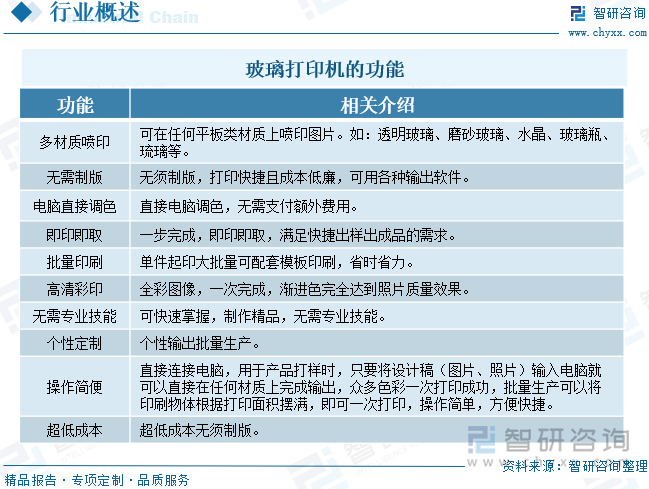
Industry Overview - The glass printer industry is experiencing rapid growth due to advancements in digital technology, allowing for direct image printing on glass without the need for traditional plate-making processes [1][3][13] - The market size for the glass printer industry in China is projected to be approximately 251 million yuan in 2024, a decline from the peak in 2022, influenced by macroeconomic fluctuations and reduced consumer budgets [1][13] - Future growth is expected in high-end decoration, electronic products, and architectural glass sectors, driven by increasing demand for personalized customization and advancements in industrial printing technology [1][13] Key Features of Glass Printers - Glass printers offer multiple material printing capabilities, allowing for direct printing on various flat materials such as glass, crystal, and ceramics [4][5] - They eliminate the need for plate-making, enabling quick and low-cost printing with high-quality results [4][5] - The technology supports single-piece printing and batch production, making it suitable for small-scale, high-precision demands [4][5] Industry Chain - The upstream of the glass printer industry includes raw materials like steel, glass substrates, inks, and core components such as print heads and control chips [7] - The midstream involves the manufacturing of glass printers, while the downstream applications span across construction decoration, home customization, advertising, automotive, and crafts [7][9] Market Dynamics - The demand for steel, a crucial raw material for glass printer manufacturing, is increasing due to growth in construction and manufacturing sectors, with China's steel production projected to rise from 1.05 billion tons in 2017 to 1.4 billion tons by 2024 [9] - The craft industry, a downstream application of glass printers, is also growing, with the market size expected to reach approximately 62.7 billion yuan in 2024, driven by rising consumer income and changing preferences [10] Competitive Landscape - The glass printer industry in China is characterized by a technology-driven and market-segmented competitive landscape, with key players like Shenzhen Longrun Color Printing and Dongguan Jihui focusing on high-end markets and specialized applications [15][16] - Local companies are gradually overcoming international technology barriers through core component development, promoting domestic substitution [15] Future Trends - The industry is expected to move towards smart technology integration, utilizing AI for optimizing printing processes and enhancing operational efficiency [22] - Environmental sustainability will be a focus, with innovations aimed at reducing energy consumption and emissions through the use of water-based inks and modular designs [23] - The rise in consumer demand for customization will drive the development of flexible production capabilities, allowing for intricate designs and functional printing applications [24]