加征关税

Search documents
沪铜日评:加征关税存不确定和铜矿供给预期紧张扰动铜价-20251015
Hong Yuan Qi Huo· 2025-10-15 02:51
Group 1: Report Industry Investment Rating - No relevant content provided Group 2: Core View of the Report - Due to uncertainties in Sino - US trade tariff re - imposition, expectations of future Fed rate cuts and halt of balance - sheet reduction, and production disruptions in multiple overseas copper mines, the price of Shanghai copper is expected to be weak first and then strong. The report suggests waiting for the price to fall before laying out long positions [1] Group 3: Summary Based on Related Data 1. Shanghai Copper Data - On October 14, 2025, the Shanghai copper inventory was 36,295 tons, an increase of 3,405 tons from the previous day; the SMM 1 electrolytic copper - semi average price was 86,668.945, the SMM premium copper open - discount - average price was 100, the Shanghai copper basis was 1,580, and the trading volume was 210,984 lots, a decrease of 80,438 lots from the previous day [1] 2. London Copper Data - On October 14, 2025, the LME 3 - month copper futures closing price (electronic trading) was 10,598.5, a decrease of 203.5 from the previous day; the LME copper futures 3 - 15 - month contract spread was 153, a decrease of 56.5 from the previous day; the LME copper futures 0 - 3 - month contract spread was 54.87, a decrease of 171.91 from the previous day [1] 3. COMEX Copper Data - On October 14, 2025, the total COMEX copper inventory was 342,280, an increase of 2,755 from the previous day; the copper futures active contract closing price was 4.998, an increase of 0.15 from the previous day; the open interest was 187,566 lots, a decrease of 14,265 lots from the previous day [1] 4. Price Ratio and Premium Data - On October 14, 2025, the Shanghai - London copper price ratio was 7.9643, an increase of 0.08 from the previous day; the SMM Yangshan copper premium (warehouse receipt) - average price was 110, and the SMM Yangshan copper premium (bill of lading) - average price was 53, a decrease of 1 from the previous day [1]
特朗普“掀桌子”太冲动,中美平等对坐,美国必定弯腰回到谈判桌
Sou Hu Cai Jing· 2025-10-13 06:32
Group 1 - The core argument is that Trump's threat of imposing a 100% tariff on China reveals the anxiety and emotional reactions of the U.S. in response to the changing global power dynamics, highlighting a misjudgment of the current situation based on outdated perceptions of U.S. dominance [1] - Imposing a 100% tariff on China would effectively act as a self-imposed embargo on the world's most efficient manufacturing hub, leading to increased costs in the U.S. and exacerbating inflation issues [3] - The U.S. faces significant challenges regarding rare earth resources, which are crucial for high-end military technology and green energy industries, with China's manufacturing capabilities being essential for global supply chains [3][5] Group 2 - China has tightly linked its rare earth controls to the global manufacturing system, creating an economic form of "nuclear deterrence," making it difficult for multinational companies to forgo the Chinese market [5] - Major U.S. companies like Tesla, Apple, and Boeing are heavily reliant on the Chinese market, indicating that they are unlikely to abandon it despite the tensions [5] - The fear on Wall Street regarding the 100% tariff reflects deeper concerns about the future of the U.S. economy, as high tariffs would increase business costs and consumer burdens, particularly affecting middle and lower-income households [6] Group 3 - Historical experience suggests that equality and respect are essential for effective negotiation, and that the U.S. must adopt a pragmatic approach to discussions with China rather than relying on threats [8] - Trump's strategy of coercing China into unfavorable agreements through economic threats is likely to backfire, leading to greater economic losses for the U.S. and damaging its international credibility [8] - The approach of using American consumers and supply chains as leverage against China is unsustainable, and the U.S. may ultimately need to make concessions and return to negotiations with a more respectful attitude [8]

全球知名航运咨询机构:美加征关税会增加其国内消费者成本
Yang Shi Xin Wen· 2025-10-03 23:27
Core Insights - Drury Shipping Consultancy is a globally recognized shipping consulting firm, known for its container freight rate index and industry analysis reports, which serve as a barometer for the global shipping market [1] - Tim Ball, the general manager of the company, stated in an interview in Germany that the U.S. tariff measures will lead to an increase in commodity prices, which will raise costs for domestic consumers in the U.S. [1]
国际观察|新一轮关税或为美国经济又添“败笔”
Xin Hua She· 2025-10-01 09:05
Core Viewpoint - The new round of tariffs imposed by the U.S. government starting October 1 is expected to negatively impact global supply chains and increase living costs for American citizens, despite being framed as a measure for national security and promoting "Made in America" [1][2]. Tariff Expansion - The U.S. government has announced an expansion of tariffs on a range of products, including pharmaceuticals, heavy trucks, kitchen cabinets, soft furniture, and foreign films. Tariffs on all imported brand or patented drugs will reach up to 100%, effective October 1, while tariffs on wood and kitchen cabinets will be 10% and 25%, respectively, effective October 14 [2][3]. - Prior to this announcement, tariffs already covered nearly one-third of U.S. imports, according to the American Progress Policy Institute [2]. Manufacturing "Reshoring" Ineffectiveness - Experts indicate that the reliance on tariffs to drive manufacturing "reshoring" is unlikely to yield results. The pharmaceutical industry, for instance, is hesitant to commit to reshoring due to unclear policies and the complexity of establishing new manufacturing facilities [3][4]. - The lack of clarity regarding exemptions for generic drugs and the status of companies already operating in the U.S. adds to the uncertainty, making it difficult for pharmaceutical companies to plan effectively [3]. Impact on Pharmaceutical Investment - The imposition of tariffs is expected to hinder pharmaceutical companies' investment plans in the U.S., as the costs associated with tariffs could divert funds away from research and development [4]. - Smaller pharmaceutical companies may opt to exit the U.S. market or sell their product lines due to the inability to relocate production domestically, potentially affecting the supply of certain medications [4]. Consumer Cost Burden - The new tariffs are anticipated to exacerbate inflation in the U.S., with industry insiders warning that the cost pressures from tariffs will likely be passed on to consumers [5][6]. - The American Chamber of Commerce previously stated that tariffs on wood and related products do not pose a national security risk and will increase costs for U.S. businesses and residential construction [5]. - The imposition of tariffs on pharmaceuticals is expected to raise costs and disrupt supply chains, ultimately making it harder for patients to access essential medications [5][6].
特朗普宣布:加征关税,最高25%!
Shen Zhen Shang Bao· 2025-09-30 04:41
Core Viewpoint - The U.S. government is imposing new tariffs on imported softwood lumber and wood products, which may impact the construction and furniture industries significantly [1] Group 1: Tariff Details - A 10% tariff will be applied to imported softwood lumber and timber [1] - A 25% tariff will be imposed on imported cabinets, bathroom vanities, and upholstered wood products [1] - The new tariffs will take effect on October 14, with some rates set to increase on January 1 of the following year [1] Group 2: Background and Investigation - The U.S. Department of Commerce has been investigating lumber and its derivatives, including cabinets and furniture, since March of this year [1]
澳方回应美将对药品加征关税:不符合美国消费者利益
Zhong Guo Xin Wen Wang· 2025-09-26 14:49
Core Viewpoint - The Australian government criticizes the U.S. decision to impose tariffs on pharmaceuticals, stating it does not align with the interests of American consumers [1] Group 1: Government Response - Australian Health and Aged Care Minister Mark Butler emphasized that the government will support Australian companies potentially affected by "unfair and unreasonable tariffs" [1] - Butler mentioned that the Australian government is currently assessing the impact of the U.S. tariff policy on pharmaceuticals [1] Group 2: Trade Dynamics - Australia imports significantly more pharmaceuticals from the U.S. than it exports, highlighting the imbalance in trade [1] - In the previous year, Australia's pharmaceutical exports to the U.S. amounted to approximately 2.1 billion Australian dollars [1] Group 3: U.S. Tariff Announcement - U.S. President Trump announced a 100% tariff on all imported brand-name or patented drugs starting October 1, unless companies establish manufacturing facilities in the U.S. [1]
特朗普宣布对重型卡车和家具加征关税
日经中文网· 2025-09-26 08:00
Core Viewpoint - The U.S. government, under President Trump, is implementing new tariffs on heavy trucks and furniture to protect domestic manufacturers from foreign competition, citing national security concerns [1][4]. Group 1: Tariff Details - Starting from October 1, a 25% tariff will be imposed on heavy trucks manufactured overseas [1][3]. - Additionally, a 50% tariff will be applied to cabinets and sinks, while upholstered furniture will face a 30% tariff [1][3]. - The U.S. Department of Commerce initiated an investigation into the import situation of medium and heavy trucks in April, with heavy trucks defined as those weighing over 26,000 pounds (approximately 11.7 tons) [3]. Group 2: Domestic Manufacturing Protection - Trump emphasized that the tariffs aim to protect American manufacturers such as Mack Trucks, Kenworth, and Peterbilt from foreign competition [3]. - The focus on tariffs for furniture products aligns with previous discussions about imposing tariffs on wood products, including furniture made from wood [3]. Group 3: Political Implications - The furniture manufacturing hubs are primarily located in swing states like North Carolina and Michigan, which are critical for electoral votes [3].

一直喊药价高的特朗普要出手了,A股医药股大跌
第一财经· 2025-09-26 03:27
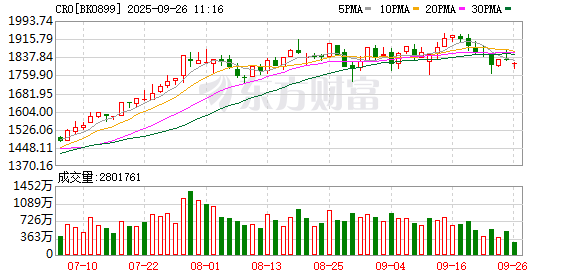
Core Viewpoint - The article discusses the implications of President Trump's announcement to impose a 100% tariff on certain imported drugs starting October 1, which has led to a significant drop in A-share pharmaceutical stocks, particularly in the CRO and chemical drug sectors [3][4]. Group 1: Impact on Pharmaceutical Companies - The proposed tariffs primarily target patented and branded drugs, while generic drugs are expected to be unaffected [3][4]. - Companies like Huahai Pharmaceutical and Haisco Pharmaceutical have stated that they will not be impacted as they only sell generic drugs in the U.S. market [4][5]. - Kelun Pharmaceutical also confirmed that it is not affected by the new tariffs [5]. Group 2: Specific Company Responses - BeiGene, the only A-share company selling innovative drugs in the U.S., saw its stock drop over 4% following the announcement [6][7]. - Industry experts believe that the lack of detailed specifics in Trump's tariff policy will limit the impact on BeiGene, especially since the company has established a manufacturing base in New Jersey with an investment of $800 million [8].

A股医药股大跌 喊药价高的特朗普要加征关税了 对药企影响如何
Di Yi Cai Jing· 2025-09-26 03:15
Group 1 - The U.S. President Trump announced a new round of high tariffs on various imported products, including a 100% tariff on patented and branded drugs, effective from October 1 [2][3] - A-share pharmaceutical stocks experienced a significant decline, with CRO and chemical pharmaceutical sectors dropping over 2% [2] - The proposed tariffs do not apply to raw materials, and the impact on Chinese pharmaceutical companies exporting formulations to the U.S. is under consideration [2] Group 2 - Some pharmaceutical companies, such as Huahai Pharmaceutical and Haizheng Pharmaceutical, stated that they would not be affected as they primarily sell generic drugs in the U.S. [2][3] - Kelun Pharmaceutical also confirmed that it would not be impacted by the new tariffs [3] - Currently, only BeiGene is selling innovative drugs independently in the U.S. market among A-share pharmaceutical companies [5] Group 3 - BeiGene's stock price fell over 4% on September 26, but the company believes the tariff policy's lack of specific details will limit its impact [6] - BeiGene's New Jersey facility, with an investment of $800 million, is expected to support global business growth and the development of innovative cancer drugs [6]
突然!特朗普宣布,加征100%关税!
中国基金报· 2025-09-26 00:17
Core Viewpoint - The article discusses the recent announcement by President Trump regarding significant tariff increases on various imported goods, particularly focusing on pharmaceuticals and heavy trucks, as part of a broader trade policy adjustment aimed at protecting U.S. manufacturing [1][3][4]. Group 1: Tariff Increases - Starting October 1, a 100% tariff will be imposed on all imported branded or patented drugs unless companies establish manufacturing facilities in the U.S. [3] - A 25% tariff will be applied to all imported heavy trucks, including brands like Peterbilt, Kenworth, and Mack [3]. - Additional tariffs include a 50% increase on kitchen and bathroom cabinets and a 30% increase on soft furniture [3]. Group 2: Trade Agreements and Responses - The U.S. government has confirmed a 15% tariff on imported cars and automotive products from the EU, effective from August 1 [6]. - Brazil has faced a 40% tariff on certain exports to the U.S., with many products facing rates as high as 50% [6]. - Brazilian Finance Minister Fernando Haddad criticized the U.S. tariffs, stating they would ultimately harm American consumers and emphasized that Brazil has developed contingency plans to support its domestic industries [7].