
双碳战略

Search documents
大商所“一品一策”跑出服务“加速度”
Qi Huo Ri Bao Wang· 2026-02-24 01:44
Core Viewpoint - In 2025, the Dalian Commodity Exchange (DCE) implemented 43 measures to optimize contract rules, expand delivery areas, introduce brand delivery, and innovate spot-futures business, tailored to the characteristics and development stages of each commodity, enhancing the utility of futures derivatives for enterprises in trade pricing, risk management, and operational optimization [1][8]. Group 1: Contract Rule Adjustments - DCE focused on adjusting contract rules for key commodities to better align with current industry developments, such as increasing the delivery quality standards for live pig futures to reflect the rising market weight [2][3]. - For black commodities, DCE reduced the delivery units for coking coal and coke from 1,000 tons and 6,000 tons to 100 tons and 60 tons respectively, and iron ore from 10,000 tons to 5,000 tons, facilitating participation from small and medium enterprises [2][3]. Group 2: Delivery Area Expansion - DCE expanded delivery areas and added delivery warehouses to enhance service networks, including the addition of Shaanxi as a delivery area for linear low-density polyethylene futures and Tianjin for polypropylene futures, improving local enterprise participation and reducing transportation costs [4][5]. - The delivery network for coking coal futures was also significantly expanded, with new delivery warehouses established in Inner Mongolia and support for additional warehouses in Henan [5]. Group 3: Innovative Delivery Methods - DCE introduced "agreement delivery" for all energy and chemical products, allowing buyers and sellers to negotiate delivery details, thus addressing the mismatch between supply and demand [6]. - The volume of "agreement delivery" transactions reached 304, involving 1,520 tons of spot goods since its introduction in September 2025, indicating strong participation from industry clients [6]. Group 4: Spot-Futures Business Development - DCE optimized the existing spot-futures business, achieving a transaction volume of 550,000 contracts in 2025, a 370% increase year-on-year, effectively meeting the needs for basis trading and personalized hedging [7]. - The launch of the "Yihai Zone" further deepened collaboration with leading enterprises and spot platforms, exploring new models for price linkage and information sharing [7]. Group 5: Future Outlook - DCE plans to continue the "one product, one policy" approach, focusing on optimizing contract rules and enhancing delivery warehouse management to provide reliable support for enterprises participating in the futures market [8]. - The shift in the futures market from merely existing to improving quality reflects DCE's commitment to serving the real economy more precisely and sustainably [8].
禁摩令下,电摩锂电池如何发展?
高工锂电· 2026-02-23 09:56
Core Viewpoint - The electric motorcycle market in China is experiencing a dual increase in inventory and exports for 2025, influenced by new national standards and the ban on gasoline motorcycles, leading to a complex market dynamic [2][10]. Market Overview - In 2025, the total sales of gasoline and electric motorcycles are projected to be approximately 21.97 million units, with exports around 13.37 million units and domestic sales about 8.6 million units, indicating that exports account for 60% of total sales, surpassing domestic sales [3]. - Domestic sales of motorcycles are expected to decline by 3.45% year-on-year, while exports are anticipated to grow by 21%, highlighting the significance of overseas markets amid domestic restrictions [4]. Electric Motorcycle Segment - The electric motorcycle segment has shown slow growth due to policy constraints, with 2025 sales expected to reach 3.5062 million units, reflecting a mere 1.14% year-on-year increase, while the penetration rate of new energy is about 16% [6]. - Despite sluggish sales growth, production of electric motorcycles is projected to reach 3.6118 million units in 2025, marking a 6.03% increase year-on-year, with December alone seeing a production of 339,100 units, a 7% month-on-month increase [6]. Inventory and Production Dynamics - The production of electric motorcycles exceeding sales is attributed to manufacturers' strategies to stockpile inventory in response to uncertainties brought by new national standards [7]. - Manufacturers are preparing "over-standard vehicles" to meet the demand of users seeking longer range and commuting capabilities due to the new speed limit of 25 km/h imposed by the new standards [8]. Export Growth and Market Competition - The overall export data for motorcycles is strong, with electric motorcycle exports experiencing significant growth, reflecting domestic manufacturers' competitive positioning under the new standards [9]. - Major domestic electric motorcycle brands are actively participating in international exhibitions, showcasing new technologies and products, with a focus on commuter and off-road electric motorcycles [9]. New National Standards Impact - The new national standards are reshaping the demand landscape for two-wheeled vehicles, with a notable increase in interest for electric motorcycles as they offer better performance for long commutes compared to electric bicycles [10][11]. - The introduction of the new standards has led to a resurgence of lead-acid two-wheeled vehicles, regaining significant market share, indicating a shift in consumer preferences [13]. Lithium Battery Integration - The combination of lithium batteries and new national standards is seen as a promising avenue for electric motorcycles, with manufacturers focusing on lightweight, high-capacity, and high-safety batteries [15]. - Lithium batteries are positioned as superior alternatives to gasoline engines, with ongoing developments in battery technology aimed at enhancing performance and safety [16]. International Market Opportunities - Despite a modest growth rate of 1.14% in domestic electric motorcycle sales, exports are projected to grow by 18%, indicating a trend of "blooming within the walls" as domestic brands expand internationally [19]. - Southeast Asia represents a significant market for electric motorcycles, although challenges such as higher initial costs compared to gasoline motorcycles and existing consumer preferences for fuel-based options persist [20]. Strategies for Market Penetration - To achieve competitive pricing in international markets, manufacturers are focusing on local production and collaboration with local brands to mitigate the impact of decreasing export tax rebates [22]. - In contrast to Southeast Asia's price-sensitive market, developed markets like Europe are more receptive to higher-priced electric motorcycles, supported by government incentives aimed at promoting sustainable transportation [23]. Brand Positioning and Future Outlook - Chinese electric motorcycle brands are increasingly participating in European markets, with strategies ranging from affordable models to high-end offerings, enhancing brand recognition and market penetration [24]. - The evolving landscape of domestic regulations and standards will continue to influence the export dynamics of electric motorcycles, necessitating adaptive strategies from manufacturers [24].





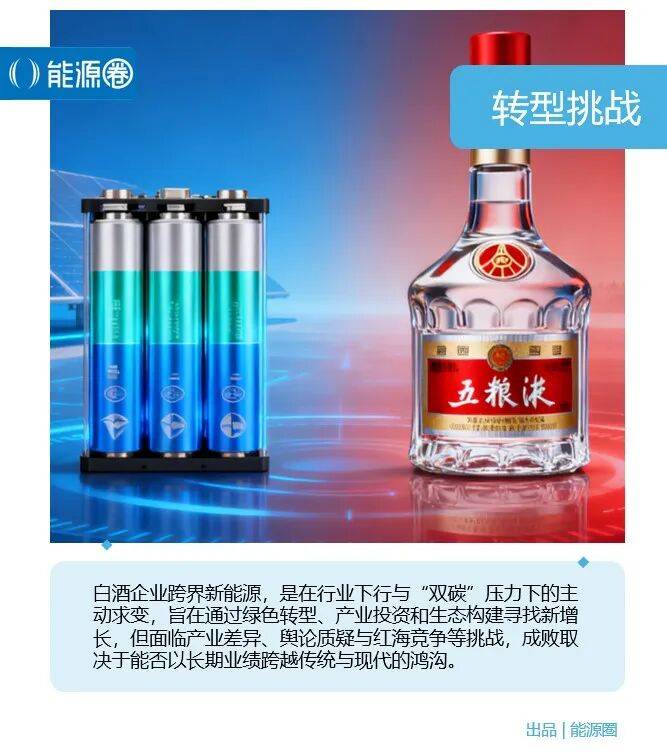
白酒老登的新能源春天
Sou Hu Cai Jing· 2026-02-23 05:46
Core Viewpoint - The traditional perception of the liquor industry and the new energy sector as distant is changing, with major liquor companies increasingly venturing into new energy initiatives to seek growth opportunities amid declining liquor sales [4][10]. Group 1: Industry Trends - Major liquor companies like Moutai and Wuliangye are investing heavily in new energy, with Moutai establishing a 10 billion yuan new energy fund and Wuliangye focusing on solar, energy storage, and hydrogen energy [4][6]. - The liquor industry is facing significant challenges, with national liquor production expected to decline for the eighth consecutive year, showing an 11.5% drop in the first ten months of the year [6][10]. - Internal pressures from new regulations and external pressures from carbon reduction strategies are pushing liquor companies to explore new growth avenues [7][10]. Group 2: Strategic Initiatives - Wuliangye is actively participating in the regional industrial transformation of Yibin, which is transitioning from a liquor hub to a new energy hub, with over 110 new energy projects attracting investments exceeding 270 billion yuan [7][8]. - Companies are taking steps to address their energy consumption issues by building green factories and utilizing renewable energy sources, such as Wuliangye's commitment to using 100% green electricity by 2025 [8][9]. - Leading liquor companies are beginning to define industry standards by creating comprehensive "zero-carbon solutions" and influencing their supply chains to adopt sustainable practices [9]. Group 3: Challenges and Market Dynamics - The transition from liquor to new energy is fraught with challenges due to the fundamental differences between the two industries, with liquor relying on brand culture and consumer demand, while new energy is driven by technology and capital [10][11]. - There are concerns regarding the motivations behind liquor companies' investments in new energy, with skepticism about whether these moves are genuine or merely opportunistic [10][11]. - The new energy sector is becoming increasingly competitive, with profit margins tightening, making it difficult for liquor companies to replicate their traditional high-profit models in this new landscape [11][12].

龙煤集团: 绿色转型开新局
Xin Lang Cai Jing· 2026-02-22 23:05
Core Viewpoint - Long Coal Group is undergoing a significant transformation from a traditional coal mining company to a green energy enterprise, aligning with China's dual carbon strategy and focusing on renewable energy development [2][4]. Group 1: Strategic Transition - Long Coal Group is moving away from its reliance on coal, aiming to integrate renewable energy sources such as wind and solar into its operations, thereby reshaping the energy landscape in Heilongjiang [2][3]. - The company is developing a comprehensive clean energy base in eastern Heilongjiang, which includes wind, solar, and hydrogen energy, creating a dual-driven development model that combines traditional coal mining with new energy initiatives [4][5]. Group 2: Project Implementation - The company has initiated various renewable energy projects, including a solar and agricultural park in Jixi and a solar project in Qitaihe, which exemplify innovative land use and ecological development [6][7]. - The wind power project in Shuangyashan has successfully connected to the grid, with significant annual savings in coal consumption and carbon emissions [8]. Group 3: Technological Empowerment - Long Coal Group is leveraging technology to convert gas from coal mining into electricity, significantly enhancing the efficiency of resource utilization and contributing to green development [10]. - The company has established 21 gas power stations with a total capacity of 73,000 kilowatts, achieving a gas utilization rate exceeding 35% [10]. Group 4: Future Commitment - The leadership of Long Coal Group emphasizes a continued commitment to green development, planning to increase investments in renewable energy and fulfill its responsibility for low-carbon transformation [11].
研判2026!全球及中国逆变器行业政策、产业链、发展现状、竞争格局及未来前景:光伏产业规模稳步增长,逆变器行业前景广阔[图]
Chan Ye Xin Xi Wang· 2026-02-22 03:09
Core Insights - The Chinese inverter market experienced a contraction from 2018 to 2019 due to significant price drops in inverter products and a slowdown in new solar photovoltaic installations, with the market size falling to 10.069 billion yuan in 2019, a year-on-year decrease of 20.47% [1] - Since 2020, the market has rebounded strongly, driven by technological advancements in the photovoltaic industry and the transition to grid parity, with the market size projected to reach 56.17 billion yuan by 2025 [1] - The inverter industry is expected to maintain a growth trend in the context of ongoing green and low-carbon energy transitions [1] Inverter Industry Overview - Inverters convert direct current (DC) from sources like batteries into alternating current (AC) for various applications, including household appliances and renewable energy systems [2] - The inverter industry is categorized by various classifications, including active vs. passive inverters, grid-connected vs. off-grid inverters, and different power levels [2][3] Industry Policies - The photovoltaic industry is a strategically supported sector in China, with numerous policies aimed at promoting growth, including financial subsidies and industry standards [3] - Recent policies encourage the upgrade of old photovoltaic equipment and the development of high-efficiency inverters to enhance energy density and efficiency [3][4] Industry Supply Chain - The inverter supply chain includes upstream raw materials and components, midstream research and manufacturing, and downstream applications in solar and wind energy, UPS systems, and electric vehicles [4] Current Industry Status - The global inverter market is projected to grow from $5.06 billion in 2015 to $21.429 billion by 2025, with a compound annual growth rate (CAGR) of 16% [6] - China's inverter production is expected to increase from 21.4 GW in 2015 to 334.8 GW by 2025, with demand rising from 13.16 GW to 186.9 GW during the same period [9] Competitive Landscape - The Chinese inverter market features a competitive landscape with both domestic and international players, including leading companies like Huawei and Sungrow, which are gaining market share through innovation and cost advantages [10] - Domestic companies are focusing on niche markets such as residential and distributed energy systems, enhancing their market positions through differentiated products [10] Key Companies - Sungrow Power Supply Co., Ltd. specializes in renewable energy equipment, including inverters, and reported a revenue of 15.327 billion yuan for its inverter products in the first half of 2025, a year-on-year increase of 17.06% [11] - Jinlang Technology Co., Ltd. focuses on photovoltaic inverters and reported a revenue of 1.82 billion yuan for grid-connected inverters in the first half of 2025, a decrease of 11.22%, while its energy storage inverters saw a significant increase of 313.51% [12] Industry Development Trends - The inverter industry is evolving towards higher power density and energy conversion efficiency, utilizing new semiconductor materials and advanced technologies [13] - Inverters are transitioning from mere energy conversion devices to integrated energy management nodes, supporting smart grid functionalities [13][14] - Future developments will include multi-energy coupling and system integration, enabling comprehensive energy management systems [15]




20余年攻关让大豆、花生安全高产——科技与产业共生共赢的生动样本
Jing Ji Ri Bao· 2026-02-14 10:05
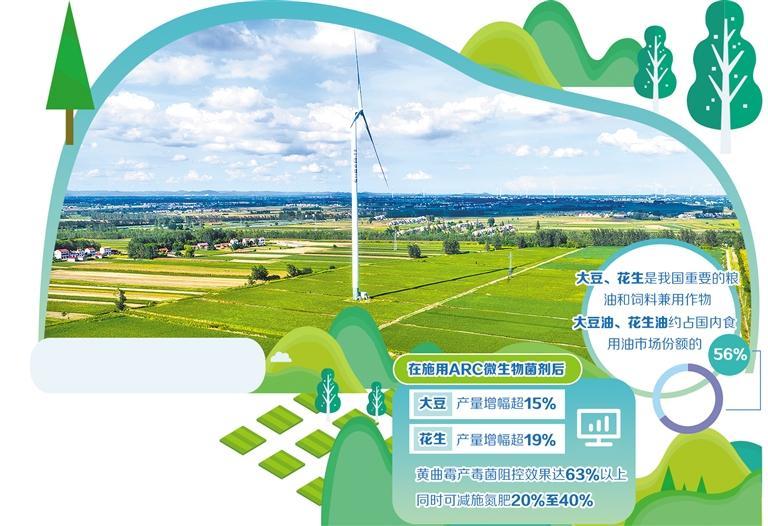
Core Viewpoint - The ARC biological coupling technology, developed by a team led by Li Peiwu, has won the highest award at the 14th China Innovation and Entrepreneurship Competition, indicating its potential to enhance soybean and peanut production while addressing food safety concerns [1][5]. Group 1: Technology Breakthrough - The ARC technology addresses two major challenges in the soybean and peanut industry: controlling aflatoxin contamination and improving nitrogen fixation efficiency [2][3]. - The technology achieves "two fixes, three increases, and five reductions," which includes nitrogen fixation, carbon fixation, increased yield, efficiency, and safety, while reducing bacteria, losses, fertilizer use, costs, and carbon emissions [3][4]. Group 2: Research and Development Journey - The research team began their work in 1999, focusing on the pain points of the soybean and peanut industry, and successfully developed a core technology for efficient aflatoxin detection in 2012 [4]. - The team discovered a "seesaw effect" between root nodule bacteria and aflatoxin-producing fungi, leading to the innovative coupling of these two research areas [4]. Group 3: Policy Support and Implementation - Since 2021, the Chinese government has emphasized increasing soybean production capacity and has shown growing interest in peanuts, with specific policies set for 2025 and 2026 to expand peanut cultivation [6]. - The ARC technology has been demonstrated in 22 provinces, showing strong resistance and quality improvement characteristics, with reported yield increases of over 15% for soybeans and 19% for peanuts [6][7]. Group 4: Future Prospects - The Chinese Academy of Agricultural Sciences plans to launch a major research task in 2024 to further develop the ARC technology, aiming to expand its demonstration area to 3 million acres by 2025 and potentially to 30 million to 50 million acres in the next 3 to 5 years [7]. - The focus on technological innovation is seen as a key driver for increasing the yield of oilseed crops, contributing to national food security and the implementation of carbon neutrality strategies [7].
国家氢能储运装备质量检验检测中心(广东)获批筹建 华南氢能产业迎来国家级技术引擎
Zhong Guo Jing Ji Wang· 2026-02-14 03:11
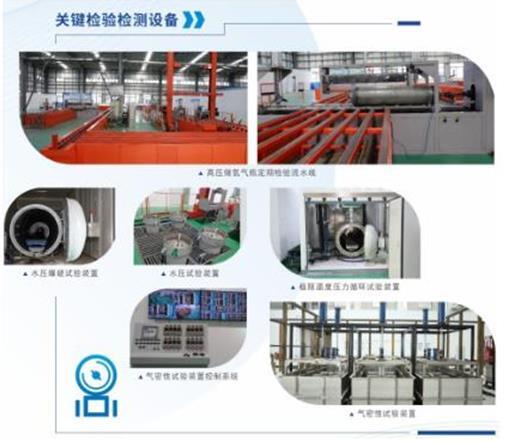
Core Viewpoint - The establishment of the National Hydrogen Energy Storage and Transportation Equipment Quality Inspection and Testing Center in Guangdong marks a significant step towards high-quality development of the hydrogen energy industry in South China, supporting the national strategy for manufacturing and quality enhancement [1][2]. Group 1: Center Establishment and Purpose - The center is approved by the State Administration for Market Regulation and will be built by the Guangdong Special Equipment Testing Research Institute, aiming to create a comprehensive technical service platform for hydrogen energy storage and transportation equipment [1]. - Located in Foshan, the center will provide critical support for the safe development, technological innovation, and standard leadership of the hydrogen energy industry in the Guangdong-Hong Kong-Macao Greater Bay Area and nationwide [1][2]. Group 2: Industry Context and Challenges - Hydrogen energy is recognized as a strategic emerging industry in China, with Guangdong being a leading province in fuel cell vehicle demonstration, covering the entire industrial chain from production to storage, transportation, and usage [2]. - Despite rapid development in hydrogen storage equipment, the industry faces technical bottlenecks in inspection capabilities, which hinder efficient and safe development [2]. Group 3: Inspection Capabilities and Coverage - The center will cover 24 types of products and 311 inspection items related to the hydrogen energy storage and transportation industry, achieving over 96% coverage of relevant product inspection projects [2]. - It aims to fill technical gaps in efficient and long-distance storage and transportation of liquid hydrogen, solid-state hydrogen, and pipeline hydrogen [2]. Group 4: Innovation and Technical Focus - The Guangdong Special Equipment Testing Research Institute has extensive experience in the hydrogen energy storage field and aims to overcome key technical challenges in performance testing and evaluation under extreme conditions [4][5]. - The center will focus on high-pressure gaseous hydrogen, cryogenic liquid hydrogen, solid-state hydrogen, and hydrogen safety, developing proprietary testing methods and equipment [5]. Group 5: Integrated Service Platform - The center is designed as a national public technology platform integrating inspection, research and development, standard formulation, and industrial services [6]. - It will provide targeted R&D support, fault diagnosis, and personnel training, while exploring cooperation with international testing institutions to align with global standards [6]. Group 6: Strategic Support for Regional Development - The center's establishment aligns with national carbon neutrality goals and energy security strategies, enhancing the safety of hydrogen equipment and promoting collaborative innovation across the industry chain [7]. - It aims to attract high-end projects and talent, solidifying Guangdong's leading position in the national hydrogen energy industry and serving as a technological engine for the Greater Bay Area's green and low-carbon transformation [7].
20余年攻关让大豆、花生安全高产—— 科技与产业共生共赢的生动样本
Jing Ji Ri Bao· 2026-02-13 23:49
Core Viewpoint - The ARC biological coupling technology, developed by a team led by Li Peiwu, has won the highest award at the 14th China Innovation and Entrepreneurship Competition, indicating its potential to enhance soybean and peanut production while addressing food safety concerns [1][3]. Group 1: Technology Breakthrough - The ARC technology addresses two major challenges in the soybean and peanut industry: controlling aflatoxin contamination and improving nitrogen fixation efficiency [2][3]. - The technology achieves "two fixes, three increases, and five reductions," which includes nitrogen fixation, carbon fixation, increased yield, efficiency, and safety, while reducing bacteria, losses, fertilizer use, costs, and carbon emissions [3][4]. Group 2: Research and Development Process - The research team began their work in 1999, focusing on the pain points of the soybean and peanut industry, and successfully developed a core technology for efficient aflatoxin detection by 2012 [3][4]. - They discovered a "seesaw effect" between root nodule bacteria and aflatoxin levels, leading to the innovative coupling of these two research areas [4][5]. Group 3: Policy Support and Implementation - Since 2021, the Chinese government has emphasized increasing soybean production capacity and has begun to pay more attention to peanuts, with specific plans for expansion in future policy documents [6]. - The ARC technology has been demonstrated in 22 provinces, showing strong resistance and quality improvement characteristics, with significant yield increases reported [6][7]. Group 4: Future Prospects - The Chinese Academy of Agricultural Sciences plans to launch a major research task in 2024 to further develop the ARC technology, aiming for a demonstration area exceeding 3 million mu by 2025, with potential expansion to 30 million to 50 million mu in the next 3 to 5 years [7]. - The focus on technological innovation is seen as a key driver for increasing oilseed crop yields and ensuring food security in China [7].
科技与产业共生共赢的生动样本
Xin Lang Cai Jing· 2026-02-13 22:46
Core Viewpoint - The ARC biological coupling technology, developed by a team led by Li Peiwu, addresses two major challenges in the soybean and peanut industries: aflatoxin contamination and low nitrogen-fixing efficiency, thereby enhancing both yield and quality of these crops [2][4][5]. Group 1: Technology Breakthrough - The ARC technology combines aflatoxin control and nitrogen fixation induction, achieving simultaneous improvements in crop yield and safety [4][5]. - The technology allows for a reduction in chemical fertilizer use by 20% to 40%, while increasing soybean and peanut yields by over 15% and 19% respectively, and achieving a 63% effectiveness in controlling aflatoxin-producing fungi [7][8]. Group 2: Industry Significance - Soybeans and peanuts are crucial for China's edible oil market, accounting for approximately 56% of the market share, highlighting the importance of enhancing domestic production to ensure food security [2][3]. - The technology has been implemented in 22 provinces, demonstrating strong resistance and yield enhancement characteristics, with reports of increased income of about 300 yuan per mu in affected areas [7][8]. Group 3: Policy Support - Since 2021, the Chinese government has emphasized the importance of increasing soybean and peanut production through various policy initiatives, with specific mentions in the Central No. 1 Document for 2025 and 2026 [7]. - The ongoing support for the ARC technology aligns with national goals for agricultural innovation and food safety, aiming for a demonstration area expansion to 3 million to 5 million mu in the next 3 to 5 years [8].
国际首套零碳复温天然气压差发电系统正式投运
Yang Shi Xin Wen· 2026-02-13 15:41
Core Insights - The first international zero-carbon reheating natural gas pressure differential power generation system has been successfully developed and put into operation in Qufu, Shandong, with a maximum power output of 500 kW and an annual electricity generation of over 3.3 million kWh [1][2] Group 1 - The system achieves a 100% localization rate for core equipment and processes, breaking through the main technical bottleneck in the promotion and application of natural gas pressure differential power generation systems [1] - The innovative zero-carbon reheating process allows the system to maintain an outlet temperature above 0°C in winter without the need for external heating sources, thus eliminating reliance on gas heating furnaces [1] - The technology converts wasted pressure energy from natural gas pipelines into electricity, supporting the transition of natural gas stations into distributed zero-carbon power stations [2] Group 2 - The successful implementation of this system is expected to significantly promote the rapid development of natural gas pressure differential power generation technology and industry, aligning with national dual carbon strategy goals [2]