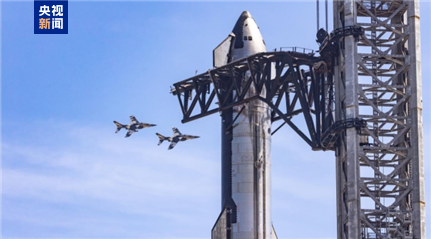
可重复使用火箭

Search documents
美“星舰”拟10月中旬再次试飞
Xin Hua Wang· 2025-09-30 07:35
Core Viewpoint - The company plans to conduct the 11th test flight of its next-generation heavy-lift rocket "Starship" on October 13, focusing on data collection for the development of the next-generation "Super Heavy" booster and testing the spacecraft's heat shield system [1] Group 1: Test Flight Objectives - The main objectives of the upcoming test flight include collecting data for the next-generation "Super Heavy" booster, testing the heat shield system, and validating the spacecraft's return to the launch site [1] - The booster used in this flight was previously employed in the 8th test flight, with a focus on verifying the new engine landing burn mode planned for the next-generation "Super Heavy" booster [1] Group 2: Mission Details - The spacecraft will perform multiple tasks in space, including deploying 8 "Starlink" prototype satellites and attempting to reignite a "Raptor" engine in orbit [1] - Certain heat shield tiles have been removed from the spacecraft to specifically test the thermal resistance of certain areas during re-entry into Earth's atmosphere [1] - The spacecraft will simulate a future return flight path to the launch site and complete dynamic maneuvers and subsonic guidance algorithm tests in the final phase of the flight, ultimately splashing down in the Indian Ocean [1] Group 3: Rocket Specifications - The "Starship" rocket is approximately 120 meters long and 9 meters in diameter, consisting of two parts: the 70-meter-long "Super Heavy" booster and the "Starship" spacecraft, both of which are designed for reusability [1] - The design goal of the rocket is to transport humans and cargo to Earth orbit, the Moon, and even Mars [1]
商业航天为什么都在拿县城的钱?
Hu Xiu· 2025-09-30 03:23
Core Viewpoint - The commercial space industry is recognized as a trillion-dollar market, with significant developments and investments, yet it still faces challenges in achieving profitability and operational stability [1][2]. Group 1: Industry Overview - The term "hard technology" has gained traction, with commercial space being a highly regarded sector due to its technological advancements and existing successful cases like SpaceX, which has raised a total of $9.8 billion since its inception [1]. - The commercial space sector has been included in various development plans, such as Chengdu's strategic initiatives to strengthen its aerospace industry [1]. - Despite initial excitement, attention has shifted towards other sectors like smart driving and embodied intelligence, indicating a potential stagnation in commercial space developments [2]. Group 2: Investment and Financing - Star River Dynamics, a leading private rocket company in China, recently completed a Series D financing round totaling 2.4 billion, setting a new record for private rocket financing in the country [2]. - The overall financing scale for the commercial space industry exceeded 20 billion last year, marking a significant increase in capital inflow [26]. Group 3: Market Dynamics - The commercial space industry is characterized by a cycle of optimism and disappointment, often referred to as "every year is the first year, yet no profits are made" [12][13]. - The emergence of the "Star Network" project has provided a clear target for companies in the industry, fostering a more defined market narrative [16]. Group 4: Technological Advancements - The industry has seen advancements in rocket technology, with 12 successful launches by private companies in 2023, and a focus on developing reusable rocket technology to significantly reduce launch costs [28][36]. - The satellite internet sector is rapidly advancing, with projects like "Star Network" and "G60" pushing for large-scale satellite deployments, which require a shift towards mass production and automation in satellite manufacturing [31]. Group 5: Future Outlook - The next two years are expected to witness significant developments in the commercial space sector, including the potential for the first successful recovery of an orbital rocket, which would mark a major technological breakthrough [54][55]. - The industry is anticipated to undergo a consolidation phase, where weaker companies may be eliminated, leading to a more mature market structure [59].
百吨级发动机实现批量化生产 中国商业航天动力系统取得新突破
Yang Shi Xin Wen· 2025-09-19 06:14
Economic Development - Zhejiang's GDP has surpassed 9 trillion yuan, with per capita GDP exceeding 130,000 yuan, indicating strong economic growth during the 14th Five-Year Plan period [1] - The digital economy in Zhejiang ranks among the top tier in the country, with the industrial digitalization index being first for four consecutive years [1] Innovation and Technology - Significant breakthroughs in core technology have been achieved, including the development of the Tongyi Qianwen model, "ice fiber," and biomimetic deep-sea soft robots [1] - The number of national-level specialized and innovative "little giant" enterprises ranks third in the country, while the number of single-item champions ranks first [1] Aerospace Industry - The aerospace industry is a key focus during the 14th Five-Year Plan, with notable achievements in rocket propulsion systems [2] - The Tianque 12A engine, a mature 80-ton thrust engine, is capable of lifting over fifty family cars simultaneously, with the Tianque 12B engine currently undergoing frequent testing [3] Engine Development - The production capacity for the Tianque series engines has significantly increased, with the ability to produce 100 engines per year, compared to one engine every five years at the beginning of the 14th Five-Year Plan [3] - The Blue Flame engine, a 220-ton thrust liquid oxygen-methane engine, has successfully completed over 30 ignition tests, marking a significant advancement for China's commercial aerospace sector [4]

星际荣耀成都可重复使用火箭生产基地将开工,完成 D+ 轮融资首批资金 7 亿元交割
Sou Hu Cai Jing· 2025-09-19 00:00
Group 1 - The company, Xingji Glory Aerospace Technology Group, has completed the first tranche of D+ round financing, raising 700 million RMB, led by Chengdu Advanced Capital [1][3] - The raised funds will be primarily used for the research and development of the reusable Hyperbola-3 rocket, the construction of a rocket production base in Chengdu's Shuangliu District, and the establishment of an engine production line in Mianyang's Fucheng District [3] - The project aims to enhance the production capacity of the Hyperbola-3 series rockets to 20 units per year, significantly improving the company's mass production capabilities and seizing opportunities in the domestic low-orbit satellite launch market [3][4] Group 2 - The financing will accelerate the development process of the Hyperbola-3 reusable rocket, with the company currently preparing for its first flight test, which includes "orbital insertion + sea recovery" [4] - The establishment of the production base in Chengdu will integrate research, production, and testing of large liquid reusable launch vehicles, filling a gap in the rocket assembly and manufacturing sector in Chengdu [3]

马斯克的“星链”正在“接管”新兴市场的互联网
Hua Er Jie Jian Wen· 2025-09-11 06:07
Core Insights - Starlink, led by Elon Musk, is emerging as a disruptive force in emerging markets due to technological breakthroughs, user growth, and cost advantages [1][2] User Growth and Market Expansion - Starlink's global user base has increased from 5 million in April 2025 to over 6 million, covering 134 countries [1] - The company has acquired 50MHz of wireless and mobile satellite service spectrum to enhance its Direct to Cell (DTC) service, aiming to eliminate global mobile network dead zones [2] - Starlink has deployed approximately 8,400 low Earth orbit satellites and plans to expand its constellation to about 42,000 [2] Technological Advancements and Cost Reduction - The report indicates that Starlink's network capacity is expected to grow by 100 times, with marginal bandwidth costs potentially decreasing by up to 90% due to reusable rocket technology [1][4] - New satellite technologies, such as the Starlink V2 Mini, have quadrupled capacity compared to previous generations [4] - The cost of satellite launches is projected to drop from approximately $62 million to below $10 million with the maturation of fully reusable rockets [4] Challenges for Traditional Telecom Companies - Starlink's rise poses structural challenges to traditional telecom operators in emerging markets, particularly those relying on high-cost services and traditional infrastructure [1][5] - In regions like the Philippines and Indonesia, where fixed broadband penetration is low, Starlink's services fill a significant market gap [6] - Starlink has introduced more affordable "light residential" packages in markets like Malaysia and Indonesia, making its offerings competitive with local fiber broadband services [6] Strategic Partnerships and Service Offerings - Starlink has partnered with various telecom operators globally, including T-Mobile in the U.S. and KDDI in Japan, to promote DTC services [2] - T-Mobile has launched a $10 monthly "T-Satellite" subscription service, while KDDI offers compatible SMS services for free [2]
可重复使用火箭与低轨星座组网提速,航空航天ETF(159227)再度回调,成交额稳居同类第一
Mei Ri Jing Ji Xin Wen· 2025-09-04 06:26
Group 1 - The aerospace ETF (159227) experienced a decline of 4.35% with a trading volume of 216 million yuan, indicating active trading with a turnover rate of 18.39% [1] - Key stocks within the ETF include Huayin Technology, Guobo Electronics, and Hangyu Technology which saw increases, while Changcheng Military Industry, Construction Industry, and Inner Mongolia First Machinery Group hit the daily limit down [1] - The first domestic commercial space situational awareness satellite named "Jiazhou" is set to launch on September 5 from the Jiuquan Satellite Launch Center [1] Group 2 - The aerospace ETF tracks the Guozheng Aerospace Index, focusing on military aerospace capabilities, with the military industry accounting for 97.96% of the index [2] - The Guozheng Aerospace Index has a higher concentration in aerospace equipment, with a weight of 65.4% in aerospace and aviation equipment, surpassing the weights in the Zhongzheng Military and Zhongzheng Defense indices [2]
2025中国商业航天行业发展研究报告
3 6 Ke· 2025-08-27 10:06
Core Viewpoint - The rapid rise of China's commercial space industry is marked by significant advancements in key technologies, particularly in reusable rockets and satellite manufacturing, positioning it as a competitive player against global leaders like SpaceX [1][2][4]. Group 1: Industry Development - China's commercial space sector is experiencing a milestone moment with the successful launch of 10 low-orbit satellites by China Star Network, marking the sixth launch in a month [1]. - The collaboration between state-owned enterprises and private companies in China is creating a complementary industrial ecosystem, with state entities focusing on strategic planning and private firms driving technological innovation and commercialization [1][2]. - The report from "Jiazi Guangnian Think Tank" provides a comprehensive overview of the current state and future prospects of China's commercial space industry, highlighting its transition from catching up to running alongside global competitors [2]. Group 2: Technological Breakthroughs - Continuous breakthroughs in key technology areas, such as reusable rockets and satellite mass production, are essential for the stable and efficient deployment of large low-orbit internet constellations in China [2][4]. - The establishment of advanced smart manufacturing bases, like the G60 satellite digital factory in Shanghai, has significantly improved satellite production efficiency through the use of digital twin and flexible intelligent manufacturing technologies [2]. - The integration of artificial intelligence and satellite internet is expanding the application boundaries of the aerospace industry, accelerating the development of commercial markets [4][37]. Group 3: Market Dynamics - The commercial space industry's core logic is based on a virtuous cycle of technological breakthroughs reducing costs, which in turn expands the market and drives innovation [4][37]. - The global commercial space market is heavily concentrated among a few key players, with SpaceX leading in launch frequency and payload capacity, while China's space capabilities are rapidly advancing [10][12]. - In 2024, the global space economy is projected to reach $415 billion, with commercial satellite services dominating the market, reflecting a growing trend towards cost reduction and efficiency improvements [33][25]. Group 4: Policy and Investment - National policies are crucial in shaping and promoting the development of China's commercial space industry, with recent government reports emphasizing the sector's strategic importance as a new growth engine [15][19]. - Local governments are actively implementing specialized policies and action plans to foster regional industrial clusters and application demonstrations in commercial space [16][18]. - The influx of diverse capital investments is a significant driver of growth in China's commercial space sector, with a notable increase in financing activities since 2015 [22][24].
2025中国商业航天行业发展研究报告 | 甲子光年智库
Sou Hu Cai Jing· 2025-08-27 08:16
Core Insights - China's commercial space industry is experiencing a milestone development moment, highlighted by the successful launch of 10 low-orbit satellites by China Star Network, marking the sixth launch in a month [2] - The industry is rapidly catching up to global leader SpaceX, which maintains a significant advantage with its reusable Falcon 9 rocket and is projected to conduct more launches in 2024 than all other providers combined [2][12] - The collaboration between state-owned enterprises and private companies in China is creating a complementary industrial ecosystem, with state enterprises focusing on strategic layout and private firms driving technological innovation and commercialization [2][3] Industry Development Background - The global commercial space industry is growing rapidly, with satellite internet revenues expanding and satellite applications and services remaining the largest segment of the market [4][27] - The core logic of commercial space development is a virtuous cycle of "technological breakthroughs reducing costs → cost reductions expanding markets → market demand driving innovation" [4][38] - Key technological breakthroughs in satellite mass manufacturing, reusable rockets, and laser communication links are enabling the transition of low-orbit mega-constellations from concept to large-scale deployment [4][41] Key Trends and Challenges - The commercial space sector is transitioning from a government-dominated model to one driven by market forces, with increasing participation from private enterprises [8][11] - The rise of private companies in the space industry is significant, with their share of the market growing rapidly [9][12] - The Chinese government is playing a crucial role in shaping and promoting the commercial space industry through supportive policies and strategic initiatives [19][22] Market Potential and Investment - The market for commercial space is showing significant potential, with policies gradually loosening and companies pursuing commercial profit [8][24] - Investment activities in China's commercial space sector have remained highly active since 2015, indicating optimistic market expectations [29][25] - The core technology teams, competitive barriers, and feasibility of business models are critical considerations for investors in the commercial space sector [29] Technological Advancements - The development of reusable rocket technology is pivotal for reducing launch costs and enhancing operational efficiency, which is essential for the commercialization of the space industry [43][39] - Laser communication is emerging as the best communication method for future integrated space-ground-sea networks, significantly improving operational efficiency [45][46] - The integration of artificial intelligence and new information technologies with satellite internet is expanding the application boundaries of the space industry and accelerating the development of the civilian market [4][38]

SpaceX星舰第十次试飞成功,首次完成卫星模型部署
Jin Shi Shu Ju· 2025-08-27 03:51
Core Points - SpaceX's Starship successfully completed its tenth test flight, marking a significant milestone for the company and NASA, as it aims to use Starship for future lunar missions [2][3] - The successful flight has temporarily silenced critics who questioned the engineering of the Starship project [2] - NASA congratulated SpaceX on this achievement, indicating a positive step forward for their commercial partnerships [2] Group 1: Test Flight Details - The Starship, which stands nearly 122 meters tall, consists of the upper spacecraft and a powerful booster with 33 engines [3] - During the test flight, the booster successfully simulated a soft landing in the Gulf of Mexico, while the upper spacecraft flew to the Indian Ocean, releasing eight new Starlink satellite prototypes [3] - The heat shield of the spacecraft effectively maintained structural integrity during re-entry, despite some issues with one engine shutting down early [4][5] Group 2: Future Plans and Challenges - SpaceX is currently behind schedule on its Mars project, potentially by six months, but aims to conduct another test flight within six weeks to catch up [6][7] - Elon Musk expressed hopes to demonstrate in-orbit propellant transfer capabilities with two Starships next year, which is crucial for missions beyond low Earth orbit [7] - The Artemis III mission, which plans to send astronauts to the Moon by late 2027 using Starship, is likely to be delayed until 2028 or later due to the development timeline of Starship [7][8] Group 3: Competitive Landscape - NASA's lunar plans are facing delays, while China is progressing steadily towards its goal of landing astronauts on the Moon by 2030 [8] - Analysts believe there is over a 50% chance that China could reach the Moon before NASA, which could have psychological impacts on the U.S. space program [8] - The frequency of future Starship launches will be critical; achieving a launch cadence of approximately every six weeks could help SpaceX stay on track, while longer intervals could significantly hinder progress on Artemis III [8]
“星舰”第十次试飞 成功与否明日“大考”
Yang Shi Xin Wen Ke Hu Duan· 2025-08-24 14:00
Core Viewpoint - The upcoming tenth test flight of SpaceX's Starship is seen as a critical moment for the program, following three previous failed attempts this year, which ended in either the spacecraft disintegrating or the booster exploding [2][6]. Group 1: Test Flight Details - The test flight is scheduled for April 24 at 6:30 PM Central Time, carrying eight simulated satellites and aims to achieve specific objectives, including the controlled splashdown of the booster and the ignition of the spacecraft's engines [3][10]. - This test will not repeat the "chopstick" recovery operation used in previous flights, which involved the booster being captured mid-air by a mechanical arm [5]. Group 2: Criticism and Concerns - The repeated failures of the Starship program have intensified criticism and raised concerns about the reliability of the rocket, with some industry experts doubting its capability to support future missions, including NASA's planned return to the Moon in 2027 [8][9]. - The Mexican government is investigating debris from the Starship's previous test flights, and the UK government is in discussions with the US to ensure the safety of its overseas territories [8]. Group 3: Industry Implications - The Starship rocket, measuring approximately 120 meters in length and designed for reusability, is central to SpaceX's ambitions to transport humans and cargo to Earth orbit, the Moon, and Mars [10]. - The Trump administration's recent executive order aims to foster a competitive commercial space industry, with SpaceX expected to be a significant beneficiary [10].