
太空光伏概念

Search documents
黄金白银再创历史新高,高手怎么看?下周A股迎来一个涨价题材!
Mei Ri Jing Ji Xin Wen· 2026-01-25 09:21
Market Performance - The Shanghai Composite Index has shown a flat performance this week, but there is a strong structural market with notable performances in gold, silver, and lithium batteries [1] - On Friday, spot silver in London broke through $100, and spot gold is approaching the $5,000 mark [1] Upcoming Events - The A-share market will enter a peak period for 2025 annual performance forecasts next week, with Tesla set to announce its fourth-quarter earnings after the U.S. market closes on January 28 [1][8] Investment Insights - Participants in the simulated stock trading competition have expressed optimism about precious metals due to the declining status of the U.S. dollar, complex geopolitical situations, and rising risk aversion stemming from trade wars [5] - The competition has highlighted the potential of the carbon-hydrogen resin and spherical silica powder industries [6] - The report from Shanghai Securities indicates that the expected release of the Rubin platform by Nvidia in 2026 will involve significant upgrades in upstream material systems [5] Price Adjustments - Passive component manufacturer Yageo announced a price adjustment for certain resistor products, with increases of approximately 15% to 20% effective from February 1, due to rising costs of chip product lines and precious metals [8]


私募CTA产品2025年度10强出炉!双隆投资、智信融科旗下产品位列量化CTA前3!
私募排排网· 2026-01-24 00:00
Core Viewpoint - In 2025, commodities such as gold, silver, copper, and aluminum performed well, leading to strong performance in private CTA (Commodity Trading Advisor) strategies, with many private funds capitalizing on opportunities in gold and silver [3]. Group 1: CTA Strategy Overview - The core feature of CTA strategies is the use of derivatives like futures and options for investment, rather than direct investments in stocks or bonds. These strategies can go long or short and aim for absolute returns, seeking profit opportunities regardless of market conditions [3]. - According to data from Private Placement Network, there were 551 CTA products displayed in 2025, with an average return of 24.79% and a median return of 13.22%. Among these, quantitative CTA products accounted for 375, with an average return of 20.21%, while subjective CTA products numbered 176, achieving an average return of 34.55% [3]. Group 2: Performance Rankings - For private funds with over 1 billion in assets, the top three quantitative CTA products in 2025 were from companies including Gongqingcheng Guangju Xinghe Private Fund, Shuanglong Investment, and Zhixin Rongke [8]. - In the category of private funds with less than 1 billion in assets, Jingying Zhito and Huacheng Private Fund had the top two quantitative CTA products, while Fanxu Asset and Farmer Private Fund led in subjective CTA products [9].

马斯克曝重磅利好!太空光伏概念掀起涨停潮!带飞商业航天板块!(附名单详情)
私募排排网· 2026-01-23 10:00
Core Viewpoint - The space photovoltaic concept has gained significant attention, leading to a surge in stock prices within the commercial aerospace sector, driven by ambitious goals set by companies like SpaceX and Tesla to develop solar power capacity [2][3]. Group 1: Market Dynamics - On January 23, several space photovoltaic stocks, including Maiwei Co., Jiejia Weichuang, and JinkoSolar, experienced a 20% limit up, contributing to a resurgence in the commercial aerospace sector [2]. - Elon Musk announced at the Davos Forum that SpaceX and Tesla aim to establish 100 GW of solar power capacity in the U.S. within three years, exceeding market expectations [2]. - The demand for solar power in satellites is expected to grow significantly, with East Wu Securities estimating that launching 10,000 satellites annually could create a nearly 200 billion yuan market for solar wings [2]. Group 2: Technology and Companies - Various photovoltaic technologies are being explored for space applications, with gallium arsenide being a leading choice due to its performance, despite high costs and material sourcing challenges [3]. - Heterojunction (HJT) technology is progressing rapidly and is expected to be applied first in computing satellites [3]. - Companies like Maiwei Co. are leading in HJT battery equipment, securing 57.46% of SpaceX orders for HJT equipment [5]. Group 3: Industry Players - Maiwei Co. is recognized as a leader in HJT battery equipment and has successfully delivered products to SpaceX, becoming a key supplier for its Starship launch base [5]. - Other companies in the sector are also making strides, with some focusing on various photovoltaic technologies, including TOPCon and perovskite [5]. - The overall photovoltaic market is projected to expand significantly, with estimates suggesting a tenfold increase in the space photovoltaic market by 2030, reaching approximately 29.5 billion yuan [2].
A股这一指标创十年新高!多只宽基ETF尾盘显著放量 发生了什么?
Mei Ri Jing Ji Xin Wen· 2026-01-23 07:27
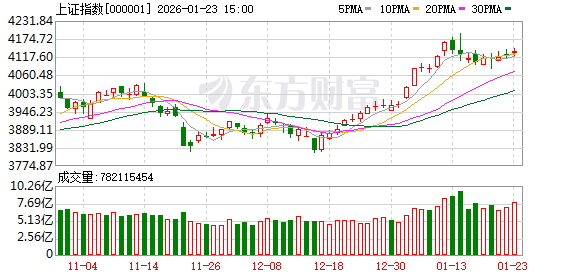
1月23日,指数尾盘震荡拉升,深成指探底回升。截至收盘,沪指涨0.33%,深成指涨0.79%,创业板指涨 0.63%。此外北证50指数大涨超3%。 板块来看,光伏、商业航天、AI应用等概念走高,贵金属概念延续强势。下跌方面,保险、银行板块跌 幅居前。 全市场超3900只个股上涨,其中121只个股涨停。沪深两市成交额3.09万亿元,较上一个交易日放量3935 亿。 截至周五收盘,A股有两个重要指数,创出了阶段新高。 一是,据Wind数据,全A平均股价收于30.35元,创2015年6月下旬以来新高,即近十年半的新高。 比如昨天"地天板"的国晟科技,盘中也几乎走出准"地天板",振幅达到19.27%。 分析认为,短线来看,这主要归功于商业航天概念的持续修复;或者更具体一些,昨日强修复的超跌股再 度走强。 昨日近百亿资金封死跌停的利欧股份,今天竞价阶段也打开跌停,开盘后拉升翻红。 我们都知道,上周三以来,沪深两市部分权重股的走势,在宽基指数ETF持续的大额赎回下受到一定压 制,也因此表现稍弱于中小盘股。 今天盘中,相关ETF产品仍然卖单频现,反复抑制指数飙升。 尾盘多只宽基ETF放量,沪深300ETF华泰柏瑞、沪深30 ...
这个美股半年涨幅1000%,A股竞争者是谁? | 0108
Hu Xiu· 2026-01-08 14:57
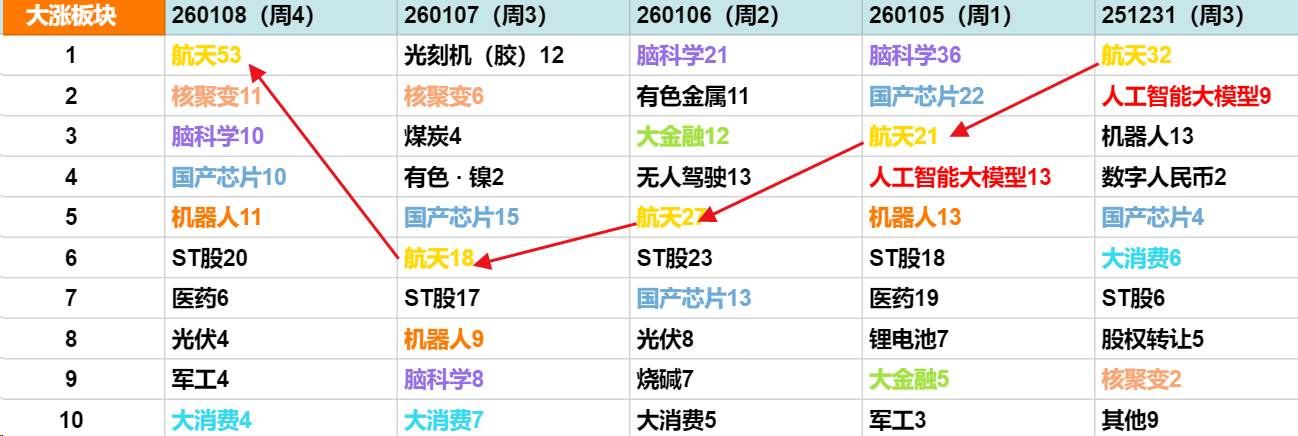
Market Observation - The Shanghai Composite Index experienced narrow fluctuations on January 8, with the ChiNext Index dropping over 1% during the session. The total trading volume in the Shanghai and Shenzhen markets was 2.8 trillion yuan, a decrease of 53.8 billion yuan compared to the previous trading day, marking the fourth consecutive day of trading volume exceeding 2.5 trillion yuan. By the close, the Shanghai Composite Index fell by 0.07%, the Shenzhen Component Index by 0.51%, and the ChiNext Index by 0.82% [1]. Sector Performance - The commercial aerospace sector has seen a resurgence, highlighted by the recent groundbreaking of a large liquid rocket assembly and recovery reuse base by Arrow Yuan Technology in Qiantang. This marks the establishment of China's first offshore recovery reusable rocket production base and the launch of the first stainless steel rocket super factory [2]. Commodity Market Dynamics - Experts warn that investors are now living in a new era of geopolitical risk, which has increasingly influenced commodity pricing mechanisms. The ongoing conflicts, from Ukraine to Venezuela, have impacted the prices of oil, gold, copper, and other commodities. Oxford Economics noted that geopolitical risks are becoming a persistent pricing factor rather than a temporary shock, with markets now incorporating a fixed risk premium reflecting supply chain vulnerabilities and resource nationalism [3][4]. Investment Opportunities - For those considering commodity investments, it is suggested to look into non-ferrous metal ETFs, which include top holdings such as Northern Rare Earth, Luoyang Molybdenum, and China Aluminum, among others. The report indicates that the non-ferrous metal sector is expected to benefit from the ongoing geopolitical tensions and supply chain issues [4][5][6]. Commercial Aerospace Insights - The commercial aerospace sector is characterized by a focus on energy technology companies linked to the growth of satellite solar cells. Perovskite solar cells, particularly flexible and ultra-thin variants, are seen as a promising alternative to traditional materials due to their lightweight, low-cost, and high conversion efficiency, aligning with the needs of large-scale low-orbit satellite constellations [10][13]. Yunnan Zinc Industry's Position - Yunnan Zinc Industry is a significant player in the indium phosphide (InP) sector, with its subsidiary, Yunnan Xinyao Semiconductor Materials, focusing on expanding production capacity to meet the growing demand in the industry. The company has reported a substantial increase in orders and revenue, particularly in the context of AI and data center applications [33][35][38].






太空光伏梦想将照进现实,马斯克:建设太空AI计算中心,光伏大佬:同样一块板子,在太空的发电量比地球高出7至10倍
3 6 Ke· 2026-01-07 00:54
Core Viewpoint - The potential of space photovoltaic (PV) technology is gaining attention, with significant advantages over terrestrial solar energy, including higher efficiency and consistent energy generation without weather-related interruptions [1][2]. Group 1: Market Potential and Advantages - Space PV can generate 7 to 10 times more energy than terrestrial installations due to its ability to operate continuously without degradation [1]. - The demand for energy from low Earth orbit satellites, such as those in SpaceX's Starlink project, is driving interest in space PV [2]. - The construction of large satellite constellations in China is expected to unlock substantial market potential, with over 50,000 satellites planned across various applications [2]. Group 2: Technical Considerations - Space PV systems require energy storage, but their storage cycles are more stable compared to terrestrial systems, which must account for extreme weather variations [2]. - The cost of solar cells for space applications is significantly higher than for terrestrial use, with gallium arsenide (GaAs) cells costing 1,000 times more than silicon cells [3][5]. - The development of perovskite solar cells is seen as a promising future technology for space PV, offering high efficiency and lower costs compared to GaAs [5][6]. Group 3: Industry Developments - Major companies in the solar industry, such as JinkoSolar and Trina Solar, are optimistic about the future of space PV and are investing in the commercialization of perovskite technology [1][2]. - The construction of space data centers is being planned both domestically and internationally, with significant projects aimed at deploying gigawatt-scale systems in orbit [4]. - The success of space PV will depend on reducing satellite launch costs, which is critical for making the technology economically viable [6].
太空光伏梦想将照进现实!马斯克站台、两光伏大佬看好 钙钛矿能否借机突围?
Mei Ri Jing Ji Xin Wen· 2026-01-06 05:09
Core Viewpoint - The potential of space photovoltaics is gaining attention, with significant advancements expected in the near future, driven by the demand for energy from satellite constellations and the development of new technologies like perovskite solar cells [1][2]. Group 1: Space Photovoltaics Advantages - Space photovoltaics can generate 7 to 10 times more power than ground-based systems due to the absence of atmospheric interference and consistent sunlight exposure [1]. - Unlike ground solar power, which relies on peak sunlight hours and requires energy storage to manage intermittent supply, space photovoltaics can provide stable energy output, reducing the need for extensive storage solutions [2]. Group 2: Market Potential and Applications - The construction of low Earth orbit satellite constellations in China is expected to unlock significant market potential for space photovoltaics, with plans for over 50,000 satellites across various applications [2]. - The demand for energy from space-based data centers is projected to grow exponentially, as these centers can utilize solar energy efficiently and operate with lower cooling requirements due to the cold environment of space [3][4]. Group 3: Technological Developments - Current space photovoltaic technologies include gallium arsenide and silicon, with perovskite solar cells emerging as a promising alternative due to their high efficiency and lower costs [5][6]. - Perovskite solar cells are anticipated to play a crucial role in the future of space photovoltaics, offering advantages in terms of weight, flexibility, and radiation resistance [6]. Group 4: Cost Considerations - The cost of deploying space photovoltaics is a significant factor, with estimates suggesting that achieving a scale of 100 GW could require hundreds of billions in component costs alone, excluding launch and maintenance expenses [6]. - The reduction in satellite launch costs through reusable rockets is critical for making space photovoltaics economically viable [6].
太空光伏梦想将照进现实!马斯克站台、两光伏大佬看好 钙钛矿能否借机突围?
Mei Ri Jing Ji Xin Wen· 2026-01-05 14:49
Core Viewpoint - The concept of space photovoltaic (PV) is gaining traction, with significant potential for energy generation in space, driven by advancements in technology and the growing demand for energy from satellite networks [1][2]. Group 1: Space Photovoltaic Potential - Space PV can generate 7 to 10 times more energy than terrestrial PV due to the absence of atmospheric interference and consistent sunlight exposure [1]. - The establishment of large-scale space PV systems is being proposed, with Elon Musk's plan to deploy 100GW annually, highlighting the increasing interest in this sector [1][2]. - The construction of low Earth orbit satellite constellations in China is expected to unlock substantial market potential for space PV, with over 50,000 satellites planned across various applications [2]. Group 2: Advantages Over Terrestrial PV - Space PV offers more stable energy generation compared to terrestrial PV, which is affected by weather and time of day, thus requiring extensive energy storage solutions [2]. - The energy storage needs for space PV are more predictable, as satellites orbit the Earth every few minutes, allowing for consistent energy capture [2]. Group 3: Technological Developments - Current space PV technologies include gallium arsenide and silicon, with perovskite solar cells emerging as a promising alternative due to their high efficiency and lower cost [5][6]. - Perovskite cells are expected to dominate the market in the long term due to their superior performance characteristics, including high power-to-weight ratios and resistance to radiation [5][6]. Group 4: Investment and Development Plans - Domestic plans include the establishment of a space data center in Beijing, aiming for a gigawatt-level system by 2027, with phased development to enhance computational capabilities [4]. - Internationally, Musk's vision for a space AI computing center aims to deploy solar-powered satellites with capacities ranging from 100GW to 500GW [4]. Group 5: Challenges and Considerations - The high costs associated with satellite launches and the need for advanced materials that can withstand extreme conditions in space pose significant challenges for the commercialization of space PV [6]. - The successful implementation of space PV will depend on reducing launch costs and developing new battery technologies that can endure the harsh space environment [6].