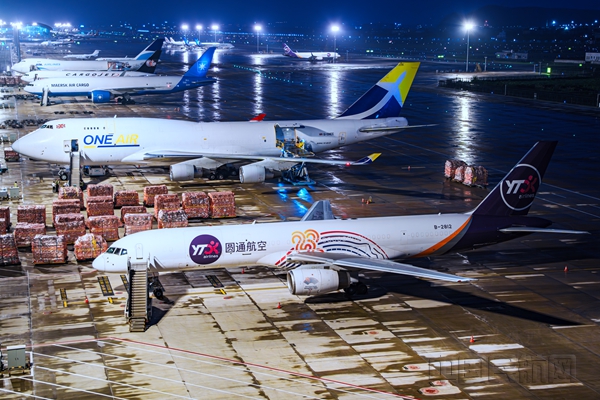
对外开放

Search documents
德阳:提升开放平台能级,增强外贸活力 工业重镇做好开放必答题
Si Chuan Ri Bao· 2026-01-12 06:47
Core Viewpoint - Deyang is enhancing its level of openness and building high-energy open platforms to attract foreign investment, driven by the need to integrate into the global market and capitalize on opportunities from the Chengdu-Chongqing economic circle [3][7]. Group 1: Open Platforms - The Deyang International Railway Logistics Port Customs Supervision Center has commenced operations, marking a significant step in enhancing the city's open platform capabilities and foreign trade vitality [2][3]. - Deyang aims to strengthen its open platforms by promoting the construction of an international railway logistics port and focusing on becoming a distribution center for import and export goods along the Belt and Road Initiative [7][8]. Group 2: Export Growth - Deyang's high-end energy equipment and chemical industries are experiencing a surge in international demand, with companies like Longbai Sichuan Titanium Industry reporting revenues of nearly 2.6 billion yuan, with over half of their titanium dioxide products exported [3][4]. - The city has over 160 equipment manufacturing enterprises engaged in international business, with a cumulative trade volume exceeding 40 billion yuan, showcasing the effectiveness of Deyang's industrial technology and market demand alignment [4][6]. Group 3: Logistics and Connectivity - The newly established customs center allows for local customs clearance and efficient rail export, saving over 30% in clearance time and reducing logistics costs by more than 15% for local enterprises [5][6]. - Deyang has actively integrated into the Belt and Road Initiative and the new western land-sea corridor, operating 454 international trains and establishing five international logistics routes connecting over 30 countries [6][7]. Group 4: Future Development Strategies - Deyang's future strategies focus on enhancing open platforms, improving logistics channels, and expanding the number of open entities, with plans to host international exhibitions and promote local products abroad [7][8]. - The city aims to innovate in attracting foreign investment and implement significant foreign projects to solidify its position in the global market [8].

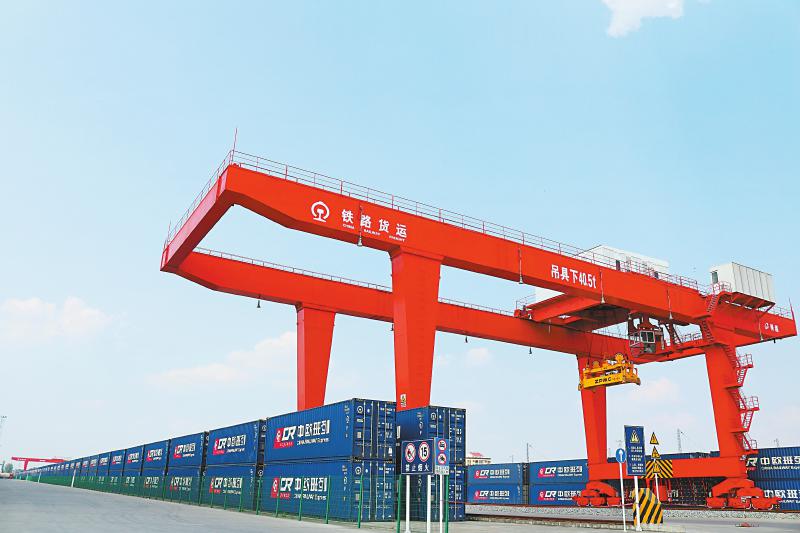
工业重镇做好开放必答题
Xin Lang Cai Jing· 2026-01-11 22:26
Core Viewpoint - Deyang is enhancing its level of openness by accelerating the construction of logistics ports and creating high-level open platforms to attract foreign investment [2] Group 1: Open Platform Development - The Deyang International Railway Logistics Port Customs Supervision Center has completed its first export business, marking a significant step in enhancing the city's open platform capabilities [2] - Deyang aims to strengthen its open platforms by focusing on the construction of an export processing industry cluster and striving to create a bonded logistics center [7] - The city plans to deepen the construction of various platforms, including free trade zones and cross-border e-commerce pilot zones, to promote trade and industrial integration [7] Group 2: Industry Opportunities - Deyang's high-end energy equipment and chemical materials industries are seizing the opportunity to expand internationally amid global energy transitions and supply chain restructuring [3][4] - Over 160 equipment manufacturing companies in Deyang are engaged in international business, with a cumulative trade volume exceeding 400 billion yuan [4] - The city has established a strong export presence, with significant contributions from companies like Longbai Sichuan Titanium Industry and Sichuan Meifeng, which have successfully penetrated overseas markets [3][4] Group 3: Logistics and Trade Facilitation - The newly operational Deyang International Railway Logistics Port will facilitate efficient connections between rail and sea transport, significantly reducing customs clearance time and logistics costs for local enterprises [5] - Deyang has actively integrated into the Belt and Road Initiative and the Western Land-Sea New Corridor, launching 454 international trains and establishing five international logistics routes [5] - The city has issued 1,464 RCEP certificates, enabling 520 million yuan worth of export goods to benefit from trade agreements [5][6] Group 4: Future Development Strategies - Deyang's strategy for higher openness focuses on enhancing platforms, channels, and the construction of open entities [7][8] - The city plans to host high-level international exhibitions and implement initiatives to promote local products abroad while also attracting foreign investment [8] - Deyang aims to develop a comprehensive transportation network that connects various modes of transport, enhancing its global connectivity [7]
【光明时评】让全球好物与中国市场互利共赢
Xin Lang Cai Jing· 2026-01-11 20:19
Core Viewpoint - The article highlights the increasing accessibility of cherries in China, symbolizing improved consumer purchasing power and the benefits of China's open trade policies [1][2]. Group 1: Market Dynamics - Cherries, once considered a luxury fruit, have seen a significant increase in supply and a decrease in prices, leading to a shift in consumer purchasing behavior from buying by weight to buying by box [1]. - The term "cherry freedom" has emerged as a reflection of enhanced living standards, facilitated by China's economic development and strategic trade agreements [1][2]. Group 2: Trade and Logistics - China's free trade agreements with major cherry-producing countries like Chile have drastically reduced tariffs, making cherries more affordable for consumers [1]. - Efficient logistics, including "smart customs" and advanced cold chain technology, have enabled rapid delivery of cherries to Chinese markets, exemplified by a 20-minute customs clearance and subsequent market availability within 5 hours [1]. Group 3: Economic Impact - The demand for cherries in China has led to significant economic benefits for Chile, creating numerous jobs and encouraging local farmers to adopt new technologies and improve management practices [2]. - The story of cherries illustrates the broader narrative of China's commitment to high-level openness and its potential to drive sustainable global economic growth [3].
2026年全国商务重点工作敲定:激发下沉市场消费活力
Sou Hu Cai Jing· 2026-01-11 19:45
大力提振消费,推进建设强大国内市场,积极扩大自主开放,推动贸易创新发展,拓展双向投资合作空 间,实现"十五五"商务高质量发展良好开局。 会议指出,2026年全国商务系统要自觉把思想和行动统一到党中央决策部署上来,学习好、运用好中央 经济工作会议关于"五个必须"的规律性认识,重点做好八个方面工作: 会议认为,"十四五"时期消费主引擎作用明显增强,贸易强国"三大支柱"更加巩固,利用外资总量稳 定、结构优化,对外投资平稳发展,产供链国际合作有序推进,高水平对外开放步伐加快,多双边经贸 合作不断深化,维护经济安全能力显著提升,为"十五五"时期商务发展奠定坚实基础。 会议强调,2026年是"十五五"开局之年,做好商务工作意义重大。全国商务系统要以习近平新时代中国 特色社会主义思想为指导,深入贯彻党的二十大和二十届历次全会精神,认真落实中央经济工作会议部 署,完整准确全面贯彻新发展理念,加快构建新发展格局,着力推动高质量发展,坚持稳中求进工作总 基调,更好统筹国内经济工作和国际经贸斗争,更好统筹发展和安全,立足商务工作"三个重要"定位, 1月10日至11日,全国商务工作会议在京召开。会议以习近平新时代中国特色社会主义思想 ...
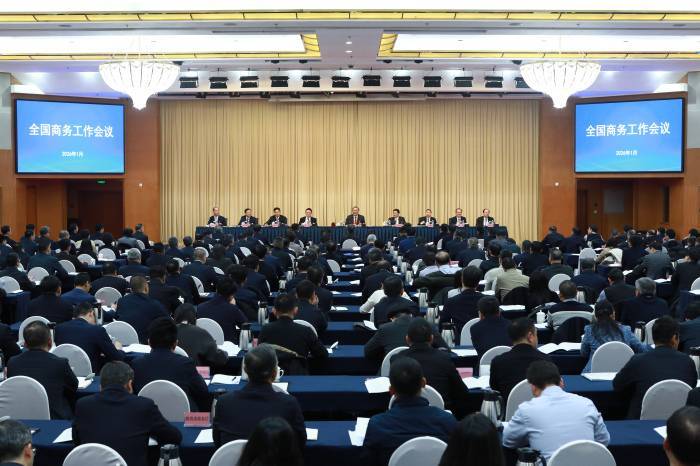
优化消费品以旧换新政策实施
Xin Lang Cai Jing· 2026-01-11 19:16
这八个方面工作涉及消费、流通、贸易、外资、对接国际规则、对外投资、多双边经贸合作、防范化解 风险等领域。 打造"购在中国"品牌、打响"出口中国"品牌、擦亮"投资中国"品牌……2026年是"十五五"开局之年,记 者从1月10日至11日在京召开的全国商务工作会议上了解到,全国商务系统2026年将重点做好深入实施 提振消费专项行动等八个方面工作。 ■据新华社 在吸引外资方面,着力塑造新优势,擦亮"投资中国"品牌。会议提出,有序扩大服务领域自主开放,提 升投资促进水平,健全外资服务保障体系。 会议要求,对接国际高标准经贸规则,更大力度推进开放高地建设。全面深入实施自贸试验区提升战 略,进一步提高海南自由贸易港贸易投资自由化便利化水平,提升开放平台质效,办好重点展会。 随着中国企业"走出去"步伐加快,会议提出,有效实施对外投资管理,引导产供链合理有序跨境布局。 健全海外综合服务体系,深化"一带一路"经贸合作,发展丝路电商,加强境外项目监管和风险防范。 会议还就积极开展多边经贸合作,扩大和丰富自贸区网络,完善涉外法治体系,完善出口管制和安全审 查机制等作出部署。 具体来看,"深入实施提振消费专项行动"是重点工作之首,将着 ...
商务部:重点做好八个方面工作
中国基金报· 2026-01-11 06:33
Core Viewpoint - The article emphasizes the importance of the national business work meeting held from January 10 to 11, 2023, which aims to implement the directives of the Communist Party of China and set the groundwork for business development in the upcoming "14th Five-Year Plan" and "15th Five-Year Plan" periods [2][4]. Summary by Sections 2025 Business Goals - The meeting highlighted that 2025 will be a significant year, focusing on stabilizing business development, enhancing consumption, and optimizing foreign investment structures [2][3]. Achievements in 2025 - The Ministry of Commerce collaborated with various local departments to boost consumption, stabilize foreign trade, and promote international cooperation in supply chains [3]. - Key initiatives included expanding the market for consumption, developing new foreign trade dynamics, and enhancing the quality of foreign investment [3]. 2026 Work Focus - The year 2026 marks the beginning of the "15th Five-Year Plan," with a strong emphasis on high-quality development and the integration of domestic and international economic efforts [4][5]. - The Ministry of Commerce aims to significantly boost consumption, expand autonomous openness, and promote trade innovation [5]. Key Work Areas for 2026 - The meeting outlined eight key areas for the national business system to focus on, including: 1. Implementing consumption-boosting actions and creating the "Buy in China" brand [6]. 2. Establishing a modern market and circulation system [6]. 3. Innovating trade development and promoting the "Export China" brand [6]. 4. Enhancing foreign investment attractiveness and the "Invest in China" brand [6]. 5. Aligning with international high-standard economic and trade rules [6]. 6. Effectively managing foreign investments and promoting the Belt and Road Initiative [6]. 7. Deepening bilateral and multilateral economic cooperation [6]. 8. Strengthening risk prevention and ensuring supply chain resilience [6]. Leadership and Governance - The meeting stressed the need for strong leadership in business work, emphasizing the importance of high-quality party governance to facilitate high-quality business development [7]. - It called for a unified approach to align actions with the central government's decisions and enhance the capabilities of the business system [7].

辽宁魅力吸引全球目光
Liao Ning Ri Bao· 2026-01-10 00:48
面对日益增长的客流和高企的航班上座率,沈阳海关主动优化服务,联合机场、安检等部门建立信 息共享机制,创新推出"一国一案""一机一策"等多元化通关举措。现场组建的青年突击队和小语种服务 队随时为旅客提供引导,清晰的多语种提示牌和广播消除了语言障碍。"我们在出境现场增开专用通 道,减少旅客等待时间,还设置了中、英、韩、俄4种语言的提示设备。"沈阳桃仙机场海关旅检一科科 长王盼介绍。 1月7日深夜,沈阳桃仙国际机场灯火通明,国际到达行李转盘前,肤色各异的旅客推着行李箱有序 前行。"借着免签政策,我终于来到中国了!"刚下飞机的俄罗斯旅客伊万兴奋地说,"通关时有俄文指 引,还有会俄语的工作人员帮忙,非常暖心!" 随着我国免签"朋友圈"不断扩大、过境免签时长延长,沈阳和大连两座城市正吸引越来越多海外游 客前来"打卡"。据沈阳海关统计,2025年沈阳空港口岸进出境航班达7505架次、旅客117万人次,同比 分别增长4.6%和17.9%。其中,对俄免签政策实施以来,经沈阳空港口岸出入境的俄罗斯旅客数量较之 前增长10.95%。持续攀升的数字,不仅是口岸客流活跃的见证,更是沈阳国际枢纽能级跃升的生动注 脚。 据大连海关统计,2 ...
成都天府国际空港综合保税区通过国家验收
Zhong Guo Fa Zhan Wang· 2026-01-08 04:23
Core Viewpoint - The Chengdu Tianfu International Airport Comprehensive Bonded Zone has successfully passed the formal acceptance by a national joint inspection team, marking a significant step in enhancing the region's logistics capabilities and promoting high-level openness in the Chengdu-Chongqing economic circle [1][5]. Group 1: Overview of the Bonded Zone - The Chengdu Tianfu International Airport Comprehensive Bonded Zone is located in the core area of the Chengdu East New District Air Port Economic Zone, with a planned area of 1.08 square kilometers, officially approved by the State Council on December 22, 2024 [3]. - As the first airport-type comprehensive bonded zone in Sichuan Province, it emphasizes the integration of the zone and port, advancing both infrastructure and institutional innovation simultaneously [5]. Group 2: Development and Operations - The zone operates under a "Management Committee + Company" model, with the Chengdu East New District Management Committee collaborating with Chengdu Industrial Investment Group to establish the Chengdu Tianfu International Airport Urban Investment and Operation Company, facilitating efficient development [7]. - Upon formal operation, the zone aims to attract internationally competitive logistics service providers, supply chain management companies, and trade businesses, focusing on core activities such as international transit, distribution, and re-export trade [7]. Group 3: Strategic Focus and Policy Support - The zone will concentrate on emerging sectors such as aviation maintenance, cross-border e-commerce, cold chain logistics, and digital trade, aiming to build a diversified and high-end industrial ecosystem [7]. - To enhance the business environment, the Chengdu East New District plans to introduce policies supporting high-quality development in the bonded zone, focusing on five key areas: manufacturing, research and design, logistics distribution, testing and maintenance, and sales services [9].
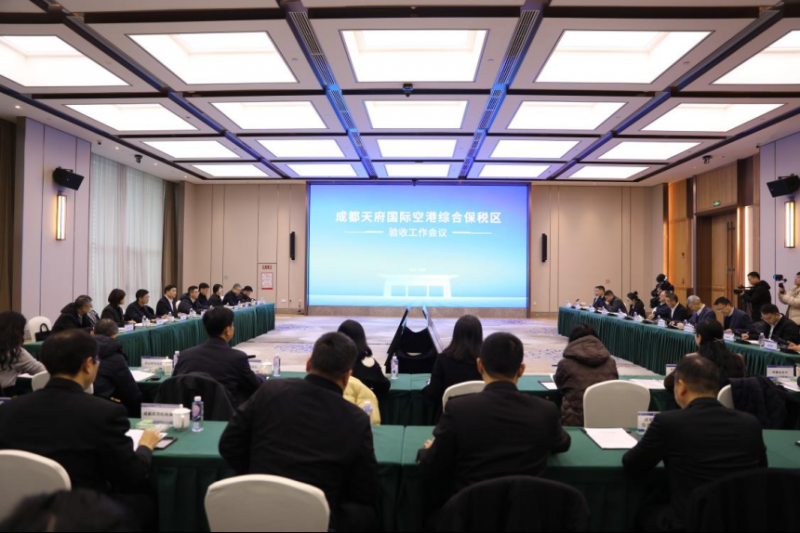
降准降息可期 央行定调今年工作重点
Sou Hu Cai Jing· 2026-01-08 00:15
Core Insights - The People's Bank of China (PBOC) has outlined key priorities for 2026, including the continuation of a moderately accommodative monetary policy and the deepening of financial reforms and opening-up measures [1][2] Group 1: Monetary Policy - The PBOC aims to promote high-quality economic development and reasonable price recovery as important considerations for monetary policy [1] - The bank plans to flexibly and efficiently utilize various monetary policy tools such as reserve requirement ratio (RRR) cuts and interest rate reductions to maintain ample liquidity [1] - The goal is to ensure that the growth of social financing and money supply aligns with economic growth and price level expectations [1] Group 2: Financial Reform and Opening-Up - The PBOC has made several deployments to deepen financial reform and enhance openness, including optimizing the "Bond Connect" and "Swap Connect" mechanisms [2] - Support for the construction of the Shanghai International Financial Center and the maintenance of Hong Kong's status as an international financial hub are emphasized [2] - The bank aims to facilitate the use of the renminbi in trade and investment through central bank currency swaps and improve cross-border financial services [2] - There is an initiative to welcome more eligible foreign entities to issue panda bonds and to expand the scope of rapid payment systems [2]
杭州机场2025年多项运输数据创新高
Zhong Guo Min Hang Wang· 2026-01-06 08:36
Core Insights - Hangzhou Airport is experiencing strong growth in passenger and cargo transport, with record highs in both passenger throughput and flight operations in 2025 [1][3] - The airport's strategic role as a high-level gateway for Zhejiang Province has led to significant international connectivity and service enhancements [3][4] Passenger Transport - In 2025, Hangzhou Airport recorded a total of 3.3 million flight operations and transported 50.46 million passengers, marking a year-on-year increase of 2.7% and 5.0% respectively [1] - The airport's passenger volume ranked seventh among domestic airports, with international passenger traffic exceeding 5.3 million, a growth of 11.6% year-on-year [3][4] Cargo Transport - The airport's international cargo volume reached 257,000 tons in 2025, reflecting a year-on-year increase of 10.4% [6] - New cargo routes were established, including flights to Tokyo, Tashkent, and Ostrava, enhancing coverage across Eurasia [6] International Connectivity - The number of international transfer routes increased to 30, with 33 international through products available, facilitating 936,000 transfer passengers, including 238,000 international transfer passengers [4][5] - The airport has implemented innovative customs and security measures to enhance the transfer experience, improving efficiency by 30% [5] Service Enhancements - Hangzhou Airport has upgraded its international service center to better cater to foreign travelers, offering integrated payment and travel services [7] - New services such as a pet waiting area and smart travel options for unaccompanied minors have been introduced to enhance the overall passenger experience [7] Economic Impact - The influx of international travelers has significantly boosted local consumption, with tax refund applications increasing by 276.5% and refund amounts rising by 105.4% in 2025 [5]