
新能源汽车出口

Search documents
【图片新闻】 7月我国新能源汽车出口同比增长1.2倍
Zheng Quan Shi Bao· 2025-08-11 22:33
Group 1 - In July, China's automotive industry produced and sold 2.591 million and 2.593 million vehicles, representing year-on-year growth of 13.3% and 14.7% respectively [1] - The growth rate of new energy vehicles (NEVs) outpaced the overall automotive market, with production and sales increasing by 26.3% and 27.4% year-on-year [1] - NEV exports were particularly strong in July, with 225,000 units exported, marking a month-on-month increase of 10% and a year-on-year increase of 120% [1]

今年7月新能源汽车出口22.5万辆
Bei Jing Shang Bao· 2025-08-11 06:31
北京商报讯(记者 刘晓梦)8月11日,中国汽车工业协会发布数据显示,今年7月新能源汽车出口22.5万 辆,环比增长10%,同比增长1.2倍。其中,新能源乘用车出口22万辆,环比增长11.9%,同比增长1.2 倍。 ...
7月新能源乘用车出口同比增长120.4%
2 1 Shi Ji Jing Ji Bao Dao· 2025-08-08 23:11
Core Insights - In July, the export of new energy passenger vehicles reached 213,000 units, representing a year-on-year increase of 120.4% and a month-on-month increase of 7.6% [1] - New energy vehicles accounted for 44.7% of total passenger vehicle exports, an increase of nearly 20 percentage points compared to the same period last year [1]
乘联分会:7月新能源乘用车厂商出口21.3万辆 同比增长120.4%
Zheng Quan Shi Bao Wang· 2025-08-08 08:12
人民财讯8月8日电,乘联分会发布数据显示,7月新能源乘用车厂商出口21.3万辆,同比增长120.4%, 环比增长7.6%;1—7月累计出口119.9万辆,增长57.1%。 ...
新能源车出口迎保险保障护航
Jin Rong Shi Bao· 2025-08-06 12:09
Core Viewpoint - The article highlights the challenges faced by Chinese electric vehicle (EV) manufacturers in overseas markets, particularly regarding insurance services, and discusses recent advancements in providing insurance solutions for EVs in Thailand [1][4]. Group 1: Insurance Solutions for EVs - China Pacific Insurance (CPIC) has partnered with Mitsui Sumitomo Insurance and other domestic EV manufacturers to launch insurance services for EVs in Thailand, covering vehicle damage, third-party liability, and local mandatory insurance [2][4]. - The insurance model involves a "technology output + local service" approach, providing comprehensive risk protection for Chinese EV exports to Thailand [2][4]. - The first batch of insurance policies for EVs in Thailand marks a significant step in the internationalization of China's insurance services, addressing the insurance needs of EV manufacturers abroad [4][7]. Group 2: Market Growth and Challenges - In the first half of the year, China's automobile exports reached 3.083 million units, a 10.4% increase year-on-year, with EV exports growing by 75.2% to 1.06 million units [2]. - High insurance premiums for EVs compared to traditional vehicles have been reported in markets like Australia and the UK, affecting consumer enthusiasm for purchasing EVs [2][3]. - The lack of pricing experience among local insurers in Thailand has led to higher premiums for EVs, which may deter potential buyers [3]. Group 3: Strategic Importance of Overseas Expansion - The insurance industry is increasingly focusing on providing insurance solutions for the growing number of Chinese EVs entering international markets, driven by the need for comprehensive risk management [5][7]. - Domestic insurance companies are exploring overseas markets as a strategic response to slowing growth and increasing competition in the domestic market [7]. - The integration of insurance services with the export of EVs is seen as essential for creating a complete industry chain, enhancing the competitiveness of Chinese brands abroad [5][7]. Group 4: Future Prospects and Innovations - Industry experts express optimism about the future of EV insurance "going abroad," viewing it as a natural extension of China's EV industry advantages [7]. - The establishment of local operational capabilities and service networks is identified as a critical challenge for insurance companies expanding into overseas markets [9]. - Collaborative efforts between EV manufacturers and insurance providers are essential for building a comprehensive service network to enhance market penetration [9].

港股异动 | 汽车股午后跌幅扩大 7月狭义乘用车零售或环比下滑逾11% 行业多方发声反对内卷式竞争
智通财经网· 2025-07-30 05:58
Core Viewpoint - The automotive sector is experiencing a decline in stock prices, with significant drops in shares of major companies like Li Auto, Xpeng Motors, GAC Group, and Great Wall Motors, amidst mixed retail sales data for July 2025 [1] Industry Summary - Retail sales of passenger vehicles in China for July 1-20, 2025, reached approximately 978,000 units, marking a year-on-year increase of 11% but a month-on-month decline of 12% [1] - The total retail market for narrow passenger vehicles in July 2025 is projected to be around 1.85 million units, reflecting a year-on-year growth of 7.6% and a month-on-month decrease of 11.2% [1] - New energy vehicle retail sales are expected to reach about 1.01 million units, with a penetration rate of approximately 54.6% [1] Company Summary - Longjiang Securities indicates that the financial health of the automotive industry is currently strong compared to both domestic and international competitors, but warns of potential pressure on profitability due to intensified competition and price declines [1] - The industry is advocating against excessive competition to maintain a healthy competitive environment, which may support the sustainable development of the automotive sector [1] - The company sees potential in strong intelligent driving vehicles during the new cycle of intelligent driving upgrades, as well as opportunities for leading manufacturers that have been negatively impacted by joint venture price cuts [1] - Despite a slowdown in overall export growth, there is a structural high growth in new energy vehicle exports, which presents opportunities in the global incremental market [1]

绿色驱动力:中国新能源汽车出口的战略布局与全球视野,头豹词条报告系列
Tou Bao Yan Jiu Yuan· 2025-07-28 13:17
Investment Rating - The report indicates a positive investment outlook for the electric vehicle export industry, highlighting growth potential and strategic opportunities in emerging markets [4]. Core Insights - The report emphasizes that in 2024, China's electric vehicle exports reached 1.284 million units, marking a year-on-year increase of 6.7%, driven by technological innovation, industry chain integration, and government support [4][17]. - Key players like BYD and NIO have made significant technological breakthroughs, enhancing their competitiveness in the global market [4]. - The report outlines a shift from "product export" to "standard export," indicating a maturation of the industry as Chinese companies expand their global footprint [5]. Summary by Sections Industry Definition - The electric vehicle export industry involves the sale of vehicles produced in China to overseas markets, encompassing complete vehicles, components, and related services [5]. - The industry is driven by global green transportation goals and domestic overcapacity, with a focus on internationalization strategies by leading manufacturers [5]. Industry Characteristics - The industry features diverse business models, including complete vehicle exports, component exports, and local production through investments and acquisitions [6][7]. - The concentration of the market is increasing due to technological and cost advantages held by leading companies [8]. Development History - The industry has evolved through several stages: initial exploration (2010-2015), formation (2016-2020), rapid growth (2021-2023), and current adjustments (2024-present) [10][11]. - The rapid growth phase saw exports surge, with 2023 witnessing a 345% increase in exports compared to 2021 [15]. Current Market Dynamics - In 2024, the export volume reached 1.284 million units, with a focus on diversifying markets beyond Europe and North America to regions like Southeast Asia and Latin America [9][44]. - The report notes that over 40% of China's electric vehicle exports are directed towards the Asian market, reflecting a strategic pivot in response to changing global policies [9]. Supply Chain Analysis - The supply chain is characterized by upstream material suppliers, midstream vehicle manufacturers, and downstream sales channels, with a focus on optimizing each segment for better market penetration [19][30]. - The report highlights the importance of local production and service networks to enhance competitiveness and reduce trade barriers [21]. Market Size and Growth Forecast - The electric vehicle export market is projected to grow significantly, with exports expected to reach 1.4 million units in 2025, reflecting a nearly 10% annual growth rate [39]. - The market size is anticipated to exceed $40 billion by 2029, driven by continued demand and technological advancements [39][43]. Competitive Landscape - The competitive landscape is increasingly concentrated, with leading companies like BYD and SAIC dominating the market, accounting for over 50% of total exports [50]. - The report identifies a tiered structure in the industry, with top-tier companies leveraging technology and brand recognition to maintain their market positions [50][53].





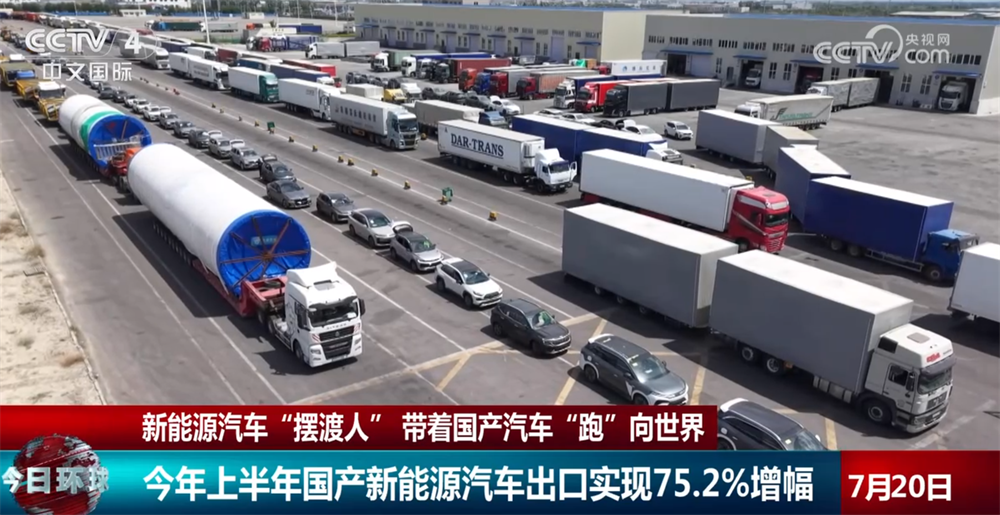
汽车出海热催生新职业 古丝路“新驼队”驾驶国产车“跑”向世界
Yang Shi Wang· 2025-07-21 03:59
Group 1 - The core viewpoint is that China's complete industrial chain has significantly accelerated the development of the new energy vehicle (NEV) industry, with production and sales both exceeding 6.9 million units in the first half of the year, and exports increasing by 75.2% [1] Group 2 - The role of "ferry drivers" like Pan Guangde has become crucial in the export process of NEVs, with over 4,000 such drivers operating at the Horgos port, which is China's largest land port for automobile exports [7] - The export process has been streamlined with a quick customs clearance model, allowing drivers to scan a QR code for rapid passage [8] Group 3 - The income for ferry drivers varies, with some reporting earnings of around 7,000 yuan per month, and the job is seen as both challenging and fulfilling due to the pride in driving Chinese-made vehicles abroad [10]

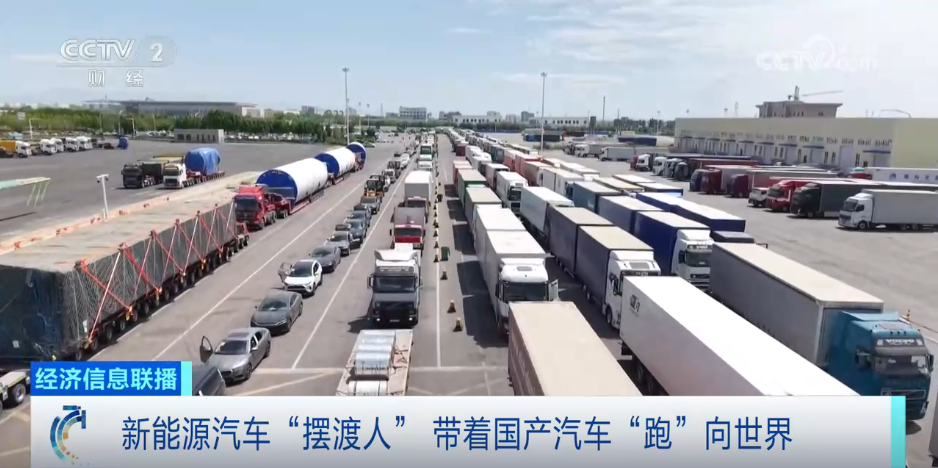
新能源汽车出口量攀升催生新职业 “摆渡人” 带着国产汽车“跑”向世界
Yang Shi Wang· 2025-07-20 02:16
Core Insights - The Chinese new energy vehicle (NEV) industry has shown remarkable performance in the first half of the year, with production and sales both exceeding 6.9 million units, and exports increasing by 75.2% [1] - The Horgos port has become China's largest land port for automobile exports, leading to the emergence of a new profession known as "ferry drivers" for NEVs [1] Group 1 - The Horgos port previously relied on cage transport for vehicle exports, but the introduction of a self-driving export clearance method has improved efficiency and reduced costs [1][5] - "Ferry drivers" like Pan Guangde are responsible for driving new cars from China to designated locations in Kazakhstan, often making multiple trips in a single day [3][9] - The implementation of a rapid clearance model at Horgos allows exporters to generate a unique QR code for vehicles, enabling quick customs clearance for "ferry drivers" [5] Group 2 - Over 4,000 "ferry drivers" operate at Horgos, comprising a diverse group including farmers, herders, and even tourists, rather than just professional drivers [7] - The popularity of Chinese NEVs in countries like Kazakhstan and Uzbekistan reflects a growing acceptance and demand for these vehicles in international markets [7] - "Ferry drivers" express pride in delivering Chinese-made vehicles abroad, viewing their work as a source of joy despite its challenges [9]
智驾再升级,新周期的阿尔法机会——整车行业2025年度中期投资策略
2025-07-11 01:05
Summary of the Conference Call on the Automotive Industry and Companies Industry Overview - The new energy vehicle (NEV) sector experienced a 30% growth in the first half of the year, but penetration rates were lower than expected, hovering between 50% and 52% due to price wars [1][4] - Policy and regulatory interventions are expected to alleviate price war pressures, benefiting NEV companies with strong product capabilities [1][4] - The overall automotive industry is anticipated to enter an upward cycle in the second half of the year, driven by new vehicle launches and improved market sentiment [3] Key Companies to Watch - Companies such as Li Auto, Geely, Xiaomi, and BYD are favored in the automotive sector due to their strong competitiveness in the new vehicle cycle and potential for overseas expansion [1][5] - XPeng's advancements in intelligent driving and chip applications present new opportunities worth monitoring [1][5] - BYD, SAIC, Geely, and other enterprises are noted for their performance in overseas markets, where profits are higher than in the domestic market [2][16] Sales and Inventory Insights - Overall vehicle sales were strong, with June wholesale volumes exceeding 2 million units, reflecting a 25% year-on-year increase [6] - NEVs maintained a 30% growth rate, while inventory levels have decreased from a peak earlier in the year to relatively low levels by July [6] Future Projections - The penetration rate of advanced intelligent driving (IA) in urban areas is expected to rise from 9% in 2024 to over 15% by May 2025, with projections to double to over 30% by 2026 [10] - The NEV penetration rate in China is currently around 46%, with expectations to reach 65%-70% in the future, indicating significant growth potential [12] Policy and Market Dynamics - Policy subsidies are projected to maintain a 4% growth rate in vehicle registrations for the year, although growth may slow in the second half due to high base effects [8] - The market is expected to see a "rush installation effect" and strong new vehicle cycles, potentially leading to record-high sales in the latter half of the year [9] Export Trends - China's NEV exports account for approximately 30% of total overseas sales, with pure electric vehicles making up 33% and plug-in hybrids 13% [15] - The European market is showing signs of recovery, with expectations for NEV penetration to rise from 20% to 32%, providing significant opportunities for Chinese automakers [15] Emerging Opportunities - The ultra-luxury automotive market presents notable opportunities, particularly for Jianghuai, which is expected to become a significant profit source in the coming years [22] - Companies like Geely and Li Auto are accelerating their new vehicle layouts, with SAIC and Great Wall also set to launch new models soon [20] Market Sentiment - The automotive industry is currently in a phase of pessimistic expectations, with price stabilization and a rebound in beta [23] - Strong vehicle cycles are anticipated to provide upward opportunities, suggesting a favorable window for automotive development [23]