
智能网联新能源汽车

Search documents
中国“汽车第一城”再易主,造车地域格局生变
Xin Jing Bao· 2026-01-11 11:09
Core Viewpoint - The automotive manufacturing industry in Chongqing is poised to become China's "Automobile Capital" by 2025, driven by significant growth in production and a successful transition towards electric vehicles [1][2]. Group 1: Industry Performance - Chongqing's automotive production reached 2.54 million units in 2024, marking a seven-year high, with 950,000 units being electric vehicles, over six times the production in 2021 [1][2]. - From January to November 2025, Chongqing's automotive output was 2.4981 million units, reflecting a year-on-year increase of 12.1% [1]. - The city aims to achieve an automotive production target of 2.6 million units by 2025, which appears attainable based on current trends [1]. Group 2: Competitive Advantages - Chongqing's competitive edge in becoming the "Automobile Capital" includes a complete industrial chain, relatively low labor costs, diverse transportation infrastructure, and proactive government support [2]. - The automotive industry in Chongqing has developed a robust ecosystem with major headquarters and numerous manufacturing bases, supported by over a thousand ancillary enterprises [2]. Group 3: Export Growth - Chongqing's automotive exports reached 45.98 billion yuan from January to November 2025, a year-on-year increase of 16.8%, with electric vehicle exports alone amounting to 13.41 billion yuan, up 78.9% [2]. Group 4: Historical Context and Transformation - The automotive sector in Chongqing faced challenges from 2017 to 2019, dropping to the seventh position in national production due to a focus on quantity over quality and slow adoption of electric vehicles [4][5]. - In response, Chongqing initiated a transformation strategy focusing on electric vehicles, leading to a resurgence in production, with 2023 output reaching 2.318 million units, ranking second nationally [6]. Group 5: Future Challenges and Market Dynamics - The automotive industry in Chongqing must enhance its research and development capabilities, industry chain collaboration, and overall business environment to sustain growth [7]. - The shift in automotive production statistics from "enterprise location" to "production location" starting in 2025 may impact Chongqing's competitive landscape, as production could be redistributed to other cities [8].
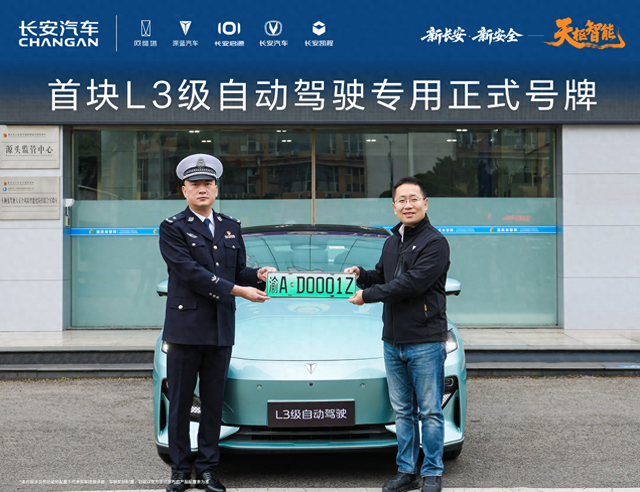
长安汽车L3级车型落地 重庆打造智能网联汽车第一城
Zhong Guo Jing Ying Bao· 2026-01-09 19:51
Core Viewpoint - The launch of L3 conditional autonomous driving vehicles by Changan Automobile in Chongqing marks a significant step towards the commercialization of smart connected vehicles in China, with the first dedicated license plate "渝AD0001Z" issued for such vehicles [2][3][4]. Group 1: Autonomous Driving Development - Changan Automobile has received approval for its L3 level conditional autonomous driving vehicles, becoming one of the first companies to do so in China [2][4]. - The first dedicated license plate for L3 autonomous driving was issued in Chongqing, allowing these vehicles to operate on specific urban roads known for complex traffic conditions [3][4]. - The current pilot program is limited to designated routes and vehicles, with the aim of gathering data to improve technology and regulatory frameworks before broader consumer access [4][5]. Group 2: Safety and Responsibility - The responsibility for driving remains with the driver, even with the introduction of L3 autonomous vehicles, as the system is only active under specific conditions [5][6]. - The transition from L2 to L3 involves a shift in responsibility, where the vehicle's control system assumes primary responsibility under defined conditions, but the driver must be ready to take over when prompted [6][7]. - Legal frameworks are being developed to clarify the responsibilities of manufacturers and drivers, ensuring safety while promoting the adoption of autonomous driving technologies [6][9]. Group 3: Industry and Policy Implications - Chongqing is positioning itself as a leader in the smart connected vehicle industry, supported by government policies aimed at fostering innovation and collaboration within the automotive sector [7][8]. - The development of smart connected vehicles is seen as a major technological breakthrough that will transform automotive usage and urban traffic management [9]. - The pilot program in Chongqing is expected to provide practical insights that will inform future legislative changes regarding autonomous driving, enhancing the legal framework to support industry growth [9].


万联晨会-20260109
Wanlian Securities· 2026-01-09 09:49
Market Overview - The A-share market experienced narrow fluctuations, with the Shanghai Composite Index closing down 0.07% at 4082.98 points, the Shenzhen Component Index down 0.51%, and the ChiNext Index down 0.82% [1][7] - The total trading volume in the Shanghai and Shenzhen markets was 2.80 trillion yuan [1][7] - In terms of industry performance, sectors such as military, media, and construction decoration led the gains, while non-bank financials, non-ferrous metals, and telecommunications lagged [1][7] - Concept sectors saw increases in domestic aircraft carriers, military information technology, and terahertz technology, while cobalt, nickel, and rare earth permanent magnets declined [1][7] Important News - China Petroleum & Chemical Corporation and China Aviation Oil announced a restructuring, approved by the State Council, aimed at leveraging advantages in refining integration and aviation fuel supply systems to reduce costs and promote high-quality development of the industry chain [2][8] - Guangzhou has introduced a plan to accelerate the cultivation of five strategic leading industries: artificial intelligence, semiconductors and integrated circuits, new energy and new energy storage, low-altitude economy and aerospace, and biomanufacturing [2][8]
股指期货将偏强震荡,白银、铂、钯、镍期货将宽幅震荡铜、铝、氧化铝、锡、螺纹钢、铁矿石、焦煤将偏弱震荡,多晶硅、玻璃、纯碱期货将震荡偏弱
Guo Tai Jun An Qi Huo· 2026-01-09 05:16
Report Industry Investment Rating There is no information provided regarding the report industry investment rating in the given content. Core Viewpoints of the Report - Through macro - fundamental and technical analysis, the report predicts the trends, resistance levels, and support levels of various futures contracts on January 9, 2026, and for the month of January 2026 [2][5]. - It also provides the performance of these futures contracts on January 8, 2026, including opening prices, closing prices, price changes, and key support and resistance levels [12][32][40] etc. - The report includes macro - economic news, such as statements from government officials, economic data releases, and geopolitical events, which may impact the futures market [6][7][8]. Summary by Related Catalogs Futures Market Outlook - **January 9, 2026 Outlook**: - **Stock Index Futures**: Expected to be strongly volatile. For example, IF2603 has resistance at 4753 and 4786 points, and support at 4708 and 4690 points [2]. - **Precious Metals**: Gold (AU2602) is expected to be strongly volatile; silver (AG2604), platinum (PT2606), and palladium (PD2606) are expected to have wide - range fluctuations [2]. - **Base Metals**: Copper (CU2602), aluminum (AL2602), alumina (AO2605), and tin (SN2602) are expected to be weakly volatile; nickel (NI2602) is expected to have wide - range fluctuations [2]. - **Other Commodities**: Polysilicon (PS2605), glass (FG605), and soda ash (SA605) are expected to be weakly volatile; lithium carbonate (LC2605) is expected to be strongly and widely volatile; rebar (RB2605), hot - rolled coil (HC2605), iron ore (I2605), and coking coal (JM2605) are expected to be weakly volatile [2][4]. - **January 2026 Outlook**: - Stock index futures' main continuous contracts are expected to be strongly volatile [5][17]. - Gold, silver, copper, and aluminum futures' main continuous contracts are expected to be strongly volatile and may reach new highs [5]. - Polysilicon futures' main continuous contract is expected to be weakly volatile [5]. Macro - economic News - **Domestic News**: The Ministry of Commerce will assess Meta's acquisition of Manus; the Ministry of Finance welcomes LSEG's cooperation; Guangzhou plans to develop advanced manufacturing industries [6]. - **International News**: Trump promotes sanctions against Russia; the US may manage Venezuela's oil industry; the US Supreme Court will rule on tariff legality; the US may exit 66 international organizations; the US is expected to cut interest rates; the US economic data shows GDP growth, inflation, and unemployment trends [6][7][8]. Futures Market Performance on January 8, 2026 - **Stock Index Futures**: IF2603, IH2603, and IC2603 had different trends, with some facing downward pressure and others having limited upward space [12][13][14]. - **Precious Metals**: Gold (AU2602) had a slight decline; silver, platinum, and palladium also showed downward trends [32][40][45]. - **Base Metals**: Copper, aluminum, and nickel futures had significant declines [52][58][68]. - **Other Commodities**: Polysilicon futures hit the daily limit down; coking coal futures had a significant increase; glass and soda ash futures had different trends [79][102][106].
汽车早报|小鹏开年发布四款新车 吉利汽车获L3级自动驾驶道路测试牌照
Xin Lang Cai Jing· 2026-01-09 00:37
Industry Regulation and Market Dynamics - The Ministry of Industry and Information Technology, along with other departments, held a meeting to regulate the competition order in the power and energy storage battery industry, highlighting rapid development and competitive advantages but also irrational behaviors like blind construction and price competition that need to be addressed [1] - The Secretary-General of the Passenger Car Association stated that by 2025, promotions and price reductions in the passenger car industry will return to rationality, with a notable improvement in market order, as the number of price reductions for various vehicle types has decreased compared to the previous year [1] Automotive Innovations and Developments - XPeng Motors launched four new models, including the new XPeng G6 and G9 electric versions, and plans to scale production of humanoid robots and flying cars this year [2] - Geely Auto received an L3 autonomous driving road test license for its Zeekr 9X model, covering an area of 9,224 square kilometers in Hangzhou, including over 1,500 kilometers of dual-direction expressways [3] - BYD introduced new models of the Qin L DM-i, with a starting price of 116,800 yuan and a pure electric range of 210 kilometers, along with a limited-time tax exemption for new energy vehicle purchases [4] Strategic Partnerships and Financial Support - The Taizhou Municipal Government signed a strategic cooperation framework agreement with Geely Holding Group to enhance investment and industrial layout, aiming to establish Taizhou as a high-end new energy vehicle manufacturing base [5] - XPeng Motors secured a 10 billion yuan financing support commitment from the Industrial and Commercial Bank of China, Guangdong Branch, for the next five years [6] Sales Performance and Market Trends - Jianghuai Automobile reported a total sales volume of 384,100 vehicles for 2025, reflecting a year-on-year decline of 4.72%, while December sales showed a significant increase of 42.24% [7] - Tesla announced the production of its 5 millionth electric drive system at its Shanghai Gigafactory, marking a significant milestone in its manufacturing capabilities [8]


【快讯】每日快讯(2026年1月8日)
乘联分会· 2026-01-08 08:38
Domestic News - The Ministry of Industry and Information Technology and seven other departments have issued an implementation opinion to accelerate the integration of artificial intelligence in industrial mother machines and industrial robots, focusing on developing new-generation AI numerical control systems and conducting tests for intelligent connected vehicles [7] - Hefei's 14th Five-Year Plan emphasizes the growth of emerging industries, particularly in sectors like "chip, display, automotive, and integration," aiming to enhance the scale and advantages of leading industries, including smart connected new energy vehicles [8] - Geely Auto has obtained an L3-level autonomous driving road test license in Hangzhou, which is the largest in terms of area and mileage in the country, allowing access to over 7,000 traffic data points [9] - Dongfeng Motor plans to start localized production of passenger vehicles in Turkey within the year, targeting a market with an annual sales volume of approximately 1.4 million vehicles [10] - Li Auto has launched a total of 3,900 Li Supercharging stations across 286 cities in China as of January 4, 2026 [11] - BAIC and Horizon Robotics have established a joint venture, Zhiyu Technology, focusing on core technologies for intelligent driving [12] - Baidu's Apollo Go has received the first full unmanned testing license in Dubai, marking a significant milestone in autonomous driving [13] - Intramco has partnered with Leap Motor to apply its charging products in Leap Motor's future European factory for electric vehicles [14] International News - Turkey's automotive market is projected to reach a record high of 1.37 million units in 2025, reflecting a year-on-year growth of 10.5% despite high taxes and tightening financing conditions [16] - Ford plans to launch a new driver assistance system by 2028, which will allow drivers to completely disengage from monitoring while driving [17] - Mercedes-Benz will introduce both fuel and electric versions of the next-generation S-Class, with separate platforms for each, indicating a strategic shift in their electric vehicle lineup [18] - Mobileye intends to acquire the humanoid robot manufacturer Mentee Robotics for $900 million, aiming to enhance its capabilities in autonomous driving and robotics [19] Commercial Vehicles - Henan Province will exempt hydrogen fuel trucks from tolls on expressways until the end of 2027, and electric trucks will receive a 50% toll discount [21] - Foton's Oumark has launched the "Zhi Nuan Core" thermal management system for electric trucks, addressing winter operational challenges with advanced temperature control technologies [22] - The Long-distance company has introduced its 3.0 generation product matrix, focusing on AI integration and high-efficiency solutions for various commercial vehicle segments [23] - Chongqing has released policies to support the development of intelligent connected new energy commercial vehicles from 2025 to 2027, including incentives for R&D and financing [24]


装备工业高质量发展迈入新阶段
中汽协会数据· 2026-01-07 10:22
Core Viewpoint - The article highlights the significant achievements and advancements in China's equipment manufacturing industry during the "14th Five-Year Plan" period, emphasizing the industry's role in supporting economic growth and innovation across various sectors. Group 1: Equipment Industry Growth - The equipment industry has shown a notable increase in value-added output, with an 8.4% year-on-year growth from January to November, surpassing the overall industrial growth rate by 2.4 percentage points [5] - The industry is focusing on enhancing the supply capacity of quality equipment and stimulating internal industry dynamics through coordinated efforts on both supply and demand sides [5] Group 2: Innovations in Core Areas - Significant breakthroughs have been made in industrial mother machines, including the engineering application of large gantry five-axis machining centers and advancements in high-precision gear grinding machines [6][7] - The establishment of a high-quality standard system for industrial mother machines aims to guide the industry's development [9] - The "Industrial Mother Machine+" initiative has facilitated nearly a hundred cooperative projects between various industries and enterprises [10] Group 3: High-End Instruments and Smart Detection Equipment - The development of high-end products such as a 90GHz ultra-fast real-time oscilloscope and a high-power wavelength-dispersive X-ray fluorescence spectrometer has reached international advanced levels [12] - Intelligent ultrasonic detection equipment for rail transit axles has achieved smart detection capabilities, marking a significant advancement in the field [14] Group 4: Agricultural Machinery and Engineering Equipment - Key agricultural products, including a 350-horsepower hybrid tractor, have achieved mass application, showcasing the industry's innovation [16] - The world's largest 24-meter diameter vertical shaft tunneling machine has been successfully launched and applied in major railway projects [16][17] Group 5: Emerging Industries and New Energy Vehicles - The production and sales of smart connected new energy vehicles reached new highs, with production increasing by 11.9% and sales by 11.4% in the first eleven months of 2025 [24] - The industry is actively promoting the construction of a strong automotive nation, with initiatives to standardize competition and enhance product consistency [25][28] Group 6: Medical Equipment Innovations - The first multifunctional heart-brain magnetic synchronous imaging equipment has received national medical device registration and is now in clinical use [30] - The promotion of high-end medical equipment has significantly improved patient care, with innovations leading to reduced costs and enhanced treatment outcomes [32] Group 7: Robotics and Intelligent Manufacturing - The production of industrial robots has seen substantial growth, with 67.4 million units produced and exports exceeding $15 billion [33] - The establishment of over 7,000 advanced smart factories and the development of a comprehensive standard system for intelligent manufacturing are key highlights [37][40] Group 8: Overall Industry Performance - The equipment industry's revenue reached 30.4 trillion yuan in 2024, with a year-on-year increase of 6% [43] - The industry has contributed significantly to overall industrial growth, accounting for 20% of the total industrial growth [43]
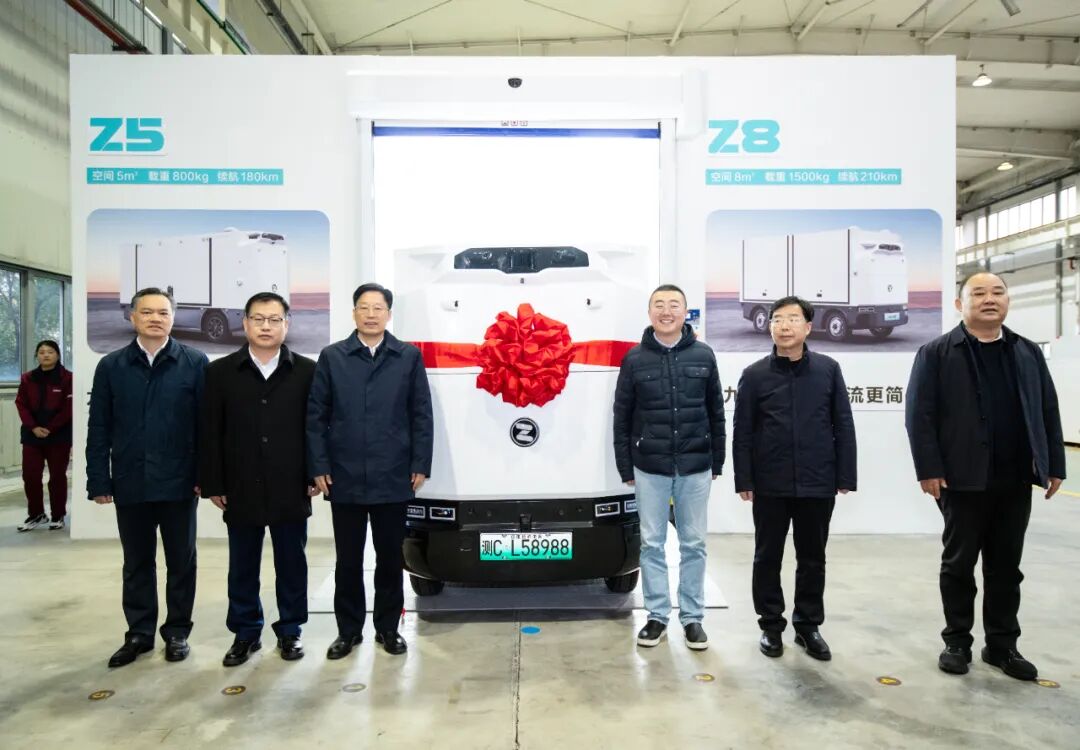
九识智能自动驾驶物流配送车阜阳生产基地正式投产
Xin Lang Cai Jing· 2026-01-07 04:56
Core Viewpoint - The official launch of the autonomous logistics delivery vehicle production line by Jiushi Intelligent at the Jiangqi Group's Fuyang production base marks a significant milestone in the collaboration between Fuyang City, Jiushi Intelligent, and Jianghuai Automobile, aimed at advancing technological and industrial innovation integration [1][3][9]. Group 1: Company Developments - Jiushi Intelligent has invested 1 billion yuan in Fuyang, planning to establish a production base with an annual capacity of 20,000 autonomous logistics delivery vehicles [7][13]. - The project from initiation to the first vehicle off the line took only two months, showcasing the rapid execution capabilities of Jiushi Intelligent and its partners [11]. Group 2: Strategic Goals - The collaboration aims to leverage Fuyang's advantages in talent, transportation, logistics, and industrial support to create a leading production base and ecosystem for autonomous logistics vehicles [3][9]. - Jiushi Intelligent plans to develop a comprehensive ecosystem covering research and development, manufacturing, operation, and service, contributing to improved urban operational efficiency and innovative urban governance models [5][11]. Group 3: Industry Impact - The partnership is expected to enhance the integration of technology and manufacturing, with a focus on creating a robust supply chain and industry ecosystem for smart connected new energy vehicles [1][3]. - Jiushi Intelligent is recognized as a leading player in the autonomous driving sector, having achieved large-scale operations in urban logistics with its self-developed L4 autonomous driving technology [7][13].

北京进一步提升中试服务能力
Ren Min Ri Bao· 2026-01-05 22:32
Core Viewpoint - Beijing's Development and Reform Commission, in collaboration with other municipal agencies, has issued measures to enhance the city's pilot testing service capabilities, promoting the integration of technological and industrial innovation [1] Group 1: Policy Measures - The measures include 14 policy initiatives focusing on the layout of pilot testing platforms, continuous improvement of service capabilities, optimization of the service ecosystem, and strengthening of support measures [1] - A number of pilot testing platforms will be established in leading industries such as artificial intelligence, healthcare, green and low-carbon technologies, new materials, integrated circuits, aerospace technology, and new safety emergency technologies [1] - For new projects, a subsidy of 35% of total investment, capped at 100 million yuan, will be provided [1] - For industries such as new generation information technology and intelligent connected vehicles, clusters of pilot testing platforms will be built, with a subsidy of 25% of total investment, capped at 50 million yuan for new projects [1]
新能源产品增速显著 一汽红旗2025年销量突破46万辆
Zhong Guo Jing Ying Bao· 2026-01-02 05:45
Core Insights - Hongqi brand achieved annual sales of over 460,000 units in 2025, marking an 11.7% year-on-year growth and maintaining eight consecutive years of positive growth, solidifying its position as a leading domestic luxury brand [1] - The brand's new energy products contributed significantly to sales, with a total of 149,000 units sold, reflecting a 29.8% increase [1] - Hongqi brand has become the first Chinese luxury car brand to surpass 2 million users in 2025, with a brand value of 141.065 billion yuan, ranking first in the passenger car industry [2] Sales and Market Position - The sales of Hongqi's premium products, such as the Hongqi Jin Kui Hua, reached 1,404 units, enhancing its presence in the ultra-luxury market [1] - The brand's strategy focuses on user-centric development, emphasizing internal management, technology research, smart manufacturing, and marketing services [1][2] Product Development and Innovation - Hongqi has expanded its product range to include fuel, pure electric, plug-in hybrid, and range-extended vehicles, with a focus on hybrid models as a new sales foundation [3] - The Hongqi H5 PHEV and the new generation HS6 PHEV were launched, featuring advanced technology and long-range capabilities, catering to mainstream family users [3] Technological Advancements - Since 2023, Hongqi has transitioned to smart connected new energy vehicles, achieving breakthroughs in over 1,000 key technologies [4] - The brand has developed the "Hongqi 1" chip and a fully autonomous intelligent chassis, enhancing vehicle performance and user experience [4] Brand Strategy and User Engagement - Hongqi's brand renewal strategy includes the implementation of the IPMS model to match differentiated products with various user groups [5] - The brand has engaged with users through events like the "Hongqi Fans Family Festival," celebrating milestones and fostering community [5] Future Outlook - Hongqi aims to continue its commitment to producing high-quality vehicles while focusing on smart, high-end, and personalized developments [6]