林下经济

Search documents
丰收南粤,林下生“金”
Nan Fang Nong Cun Bao· 2025-10-16 08:04
Core Viewpoint - The event celebrating the 2025 Chinese Farmers' Harvest Festival in Guangdong showcased the rapid development of the forestry industry, highlighting significant economic contributions and future growth potential in the sector [2][37]. Group 1: Event Overview - The third Economic Forest Autumn Consumption Season event took place in Qingyuan, Guangdong, organized by the Guangdong Forestry Bureau and local governments [3][4]. - Over 70 forestry leading enterprises from 21 cities in Guangdong participated, showcasing various economic forest products [3][4]. Group 2: Product Highlights - The event featured a vibrant display of local specialties, including oil tea seed oil, dried southern medicinal herbs, and various mushroom products, attracting significant public interest [8][16]. - The popularity of products like mountain camellia seeds was noted, with plans for standardized planting to reach 10,000 acres in the coming years [21][23]. Group 3: Economic Impact - Qingyuan's forestry industry achieved a total output value of 44.3 billion yuan in 2024, marking a 16.63% increase year-on-year, the highest growth rate in the province [38][46]. - The overall forestry industry in Guangdong is projected to reach a total output value of over 1 trillion yuan by 2025, contributing significantly to the national economy [55]. Group 4: Future Development Plans - Guangdong plans to deepen collective forest rights reform and promote the integration of forest resource protection with economic development [51][52]. - The province aims to enhance the development of green industries, including eco-tourism and forest health care, to create new economic opportunities for rural areas [54].


激活12万亩林下经济潜能
Zhong Guo Zi Ran Zi Yuan Bao· 2025-10-15 07:23
Core Insights - The article highlights the development of the under-forest economy in Ziyang, Sichuan Province, focusing on diverse agricultural practices that enhance farmers' income and promote sustainable growth [1][2] Group 1: Economic Development - Ziyang has developed 123,000 acres of under-forest economy, emphasizing "three-dimensional compound and diversified development" with a focus on medicinal herbs, fungi, poultry, and vegetables [1] - In Anyue County, intercropping models such as "alder + Huangjing" and "lemon + vegetables" have led to an average income increase of over 2,000 yuan per acre for farmers [1] - The annual output value in the Yanjiang District has surpassed 250 million yuan, driven by the cultivation of medicinal herbs and ecological livestock [1] Group 2: Policy Support and Financial Investment - Ziyang has issued policies to support the under-forest economy, including a total of 4.6 million yuan in subsidies and 80 million yuan in special bonds, leveraging 480 million yuan in bank credit [2] - The city has developed over 40 leading enterprises and cooperatives in the under-forest economy, attracting more than 20 million yuan in social capital investment [2] - The "village collective + enterprise + farmer" model has been deepened to integrate farmers into the industry chain, ensuring ecological benefits reach numerous households [2] Group 3: Technological Advancement - Ziyang has established collaborative mechanisms with research institutions to promote efficient cultivation techniques, addressing the low added value of the under-forest economy [1] - Anyue County has built a technology demonstration park for the under-forest economy, successfully implementing three central and provincial technology promotion projects [1] - The Lvzhi County "zhihu + Huangjing" industrial park has introduced modern facilities like intelligent irrigation and ecological recycling to promote standardization and branding [1]
福建漳州:靠林养林兴产业
Jin Rong Shi Bao· 2025-10-14 02:03
Core Insights - Zhangzhou, recognized as a national forest city, has a forest coverage rate of 45.18% and a total forest area of 9.9 million acres, providing a solid foundation for the development of the forestry economy [1] - The People's Bank of China (PBOC) in Zhangzhou has been actively exploring ways to leverage forestry resources to stimulate economic growth, with a focus on transforming "green mountains and clear waters" into "golden mountains and silver mountains" for local residents [1] - As of August 2025, the total balance of forestry-related loans in Zhangzhou reached 21.175 billion yuan, an increase of 3.427 billion yuan since the beginning of the year [1] Financial Support Initiatives - The Changtai Rural Credit Cooperative provided a low-cost loan of 5 million yuan to a landscaping company, helping them save 50,000 yuan in interest annually [2] - The PBOC in Zhangzhou has implemented structural monetary policy tools, such as re-loans, to enhance financial support for the forestry sector, with a focus on creating a monitoring mechanism for forestry financing [3] - As of August, the balance of re-loans in the region was 10.163 billion yuan, which directly facilitated 680 million yuan in forestry loans, with an average interest rate of 4.93%, 24 basis points lower than the average rate for general forestry loans [3] Asset Utilization and Innovation - The PBOC has signed a memorandum with the Zhangzhou Forestry Bureau to facilitate the financing of forestry rights through accounts receivable, addressing challenges in asset registration [4] - Financial institutions are encouraged to offer specialized loan products like "Lin Piao Dai" to support rural operators in utilizing forestry assets for efficient online financing [4] - A successful case in Yunxiao County involved a loan of 4 million yuan secured against land management rights, providing a replicable model for expanding forestry-related collateral business [4] Development of Under-forest Economy - Pinghe County, known for its high forest coverage, is developing a national reserve forest project with a loan of 259 million yuan from the PBOC to support the planting of various tree species [5] - The project is expected to generate over 5.6 billion yuan in economic benefits, demonstrating the potential of under-forest economic development [5] - The PBOC is also promoting supply chain finance to support forestry enterprises, facilitating loans without collateral based on real transaction backgrounds [5]
绿美广东,林果飘香!到现场去,一口尝尽粤林山珍
Nan Fang Nong Cun Bao· 2025-10-13 12:04
Core Viewpoint - The event "Economic Forest Autumn Consumption Season" is organized to celebrate the 2025 Chinese Farmers' Harvest Festival, showcasing the achievements of Guangdong's forestry industry and promoting high-quality forest products to consumers [9][10][15]. Group 1: Event Overview - The event will take place on October 16 in Qingyuan City, hosted by the Guangdong Forestry Bureau and Qingyuan Municipal Government [7][8]. - Over 70 leading forestry enterprises from 21 cities in Guangdong will participate, presenting hundreds of high-quality forest products [11][34][81]. Group 2: Objectives and Significance - This event serves as a significant platform for displaying the strength of Guangdong's forestry industry and meeting consumer demand for quality forest products [17][18]. - It aims to activate the consumption potential of forest products and support rural revitalization, contributing to the high-quality development of the forestry industry [20][21]. Group 3: Product Highlights - The event will feature a variety of forest products, including forest fungi, tea, fruits, medicinal plants, honey, and more, showcasing the ecological advantages of Guangdong [37][38][39][40]. - Notable products include Qingyuan's bamboo shoots, Yingde black tea, and various local specialties from different regions of Guangdong [42][44][46][48]. Group 4: Consumer Engagement - The event is designed to enhance consumer experience with activities such as tasting sessions, cultural performances, and opportunities for direct purchases from producers [90][91]. - It emphasizes the importance of quality assurance, with products undergoing strict testing and some being traceable throughout the supply chain [83].
浙江衢州常山县:油茶科技助丰收
Zhong Guo Zi Ran Zi Yuan Bao· 2025-09-24 03:31
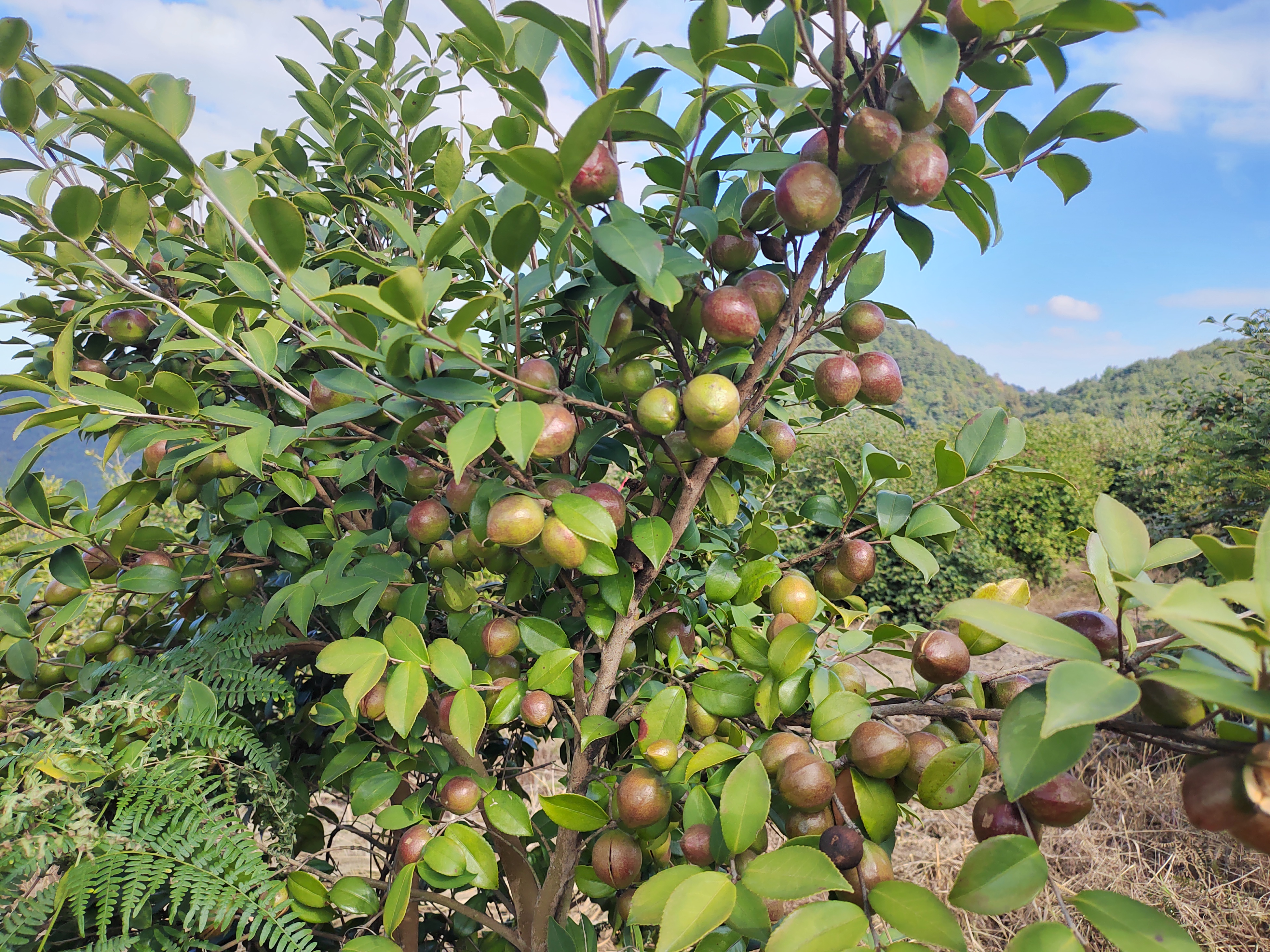
Core Viewpoint - The article highlights the development of the oil tea industry in Changshan County, Zhejiang Province, leveraging scientific research and technology to enhance productivity and economic benefits for local farmers [4][18]. Group 1: Industry Development - Changshan County has established a comprehensive research service system for oil tea, focusing on intelligent seedling cultivation, efficient mechanized management, and green processing, aiming to boost the oil tea industry [4][10]. - The oil tea planting area in Changshan is projected to reach 290,000 acres by 2024, with a total output value exceeding 1.7 billion yuan, making it the largest in Zhejiang Province [4][10]. Group 2: Technological Innovation - The "Oil Doctor" initiative, a collaborative platform established in 2019, includes seven PhD experts addressing various challenges in seedling cultivation, management, and processing within the oil tea industry [6][10]. - The introduction of new oil tea varieties and high-quality seedlings has significantly increased yields, with some farmers reporting production increases of over 100% [10][17]. Group 3: Mechanization and Efficiency - Innovative mechanized harvesting solutions have improved efficiency by five times and reduced operational costs by 70%, addressing the labor-intensive nature of oil tea cultivation [12][14]. - A shared forestry machinery service center has been established, allowing farmers to access advanced equipment without the burden of ownership, thus promoting mechanization in the region [14][15]. Group 4: Economic Impact - The integration of technology and mechanization has led to increased income for farmers, with some reporting earnings of over 5,000 yuan per acre from their oil tea plantations [4][10]. - The establishment of a comprehensive technical service system is expected to enhance the overall economic viability of the oil tea industry, contributing to rural prosperity [17][18].
内蒙古呼伦贝尔牙克石市:山林之宝惠民生
Zhong Guo Zi Ran Zi Yuan Bao· 2025-09-24 03:30
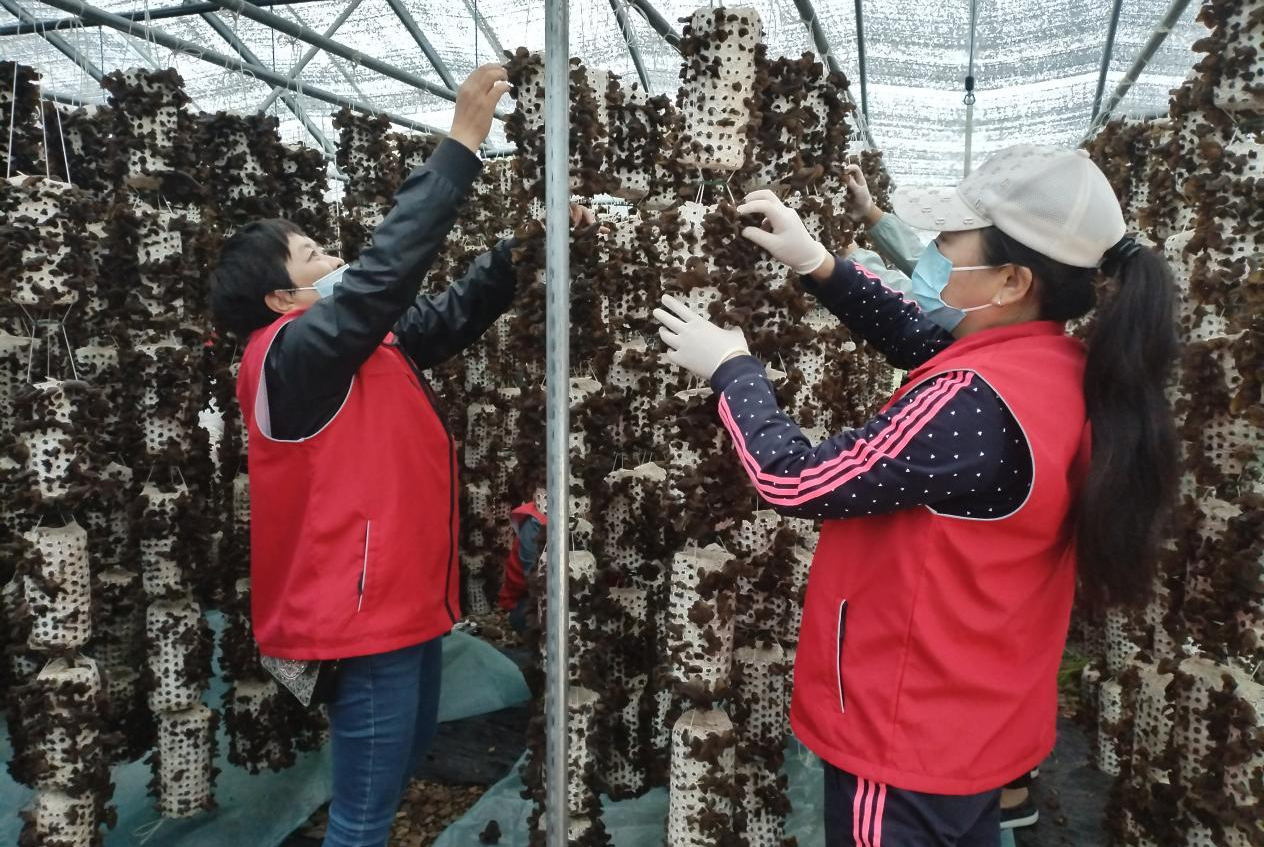
Core Viewpoint - The article highlights the successful development of the under-forest economy in Yakeshi Forest Farm following the complete ban on commercial logging in Daxing'anling, showcasing the establishment of a unique brand and initial scale of the industry [1][6]. Group 1: Economic Development - Yakeshi Forest Farm has begun exploring the cultivation of under-forest economic products, leading to the formation of a distinctive brand and initial industry scale [1][6]. - In 2023, the village of Xiwuqiqi successfully initiated black fungus cultivation, generating a revenue of 77,600 yuan and a net profit of 25,000 yuan in its first year [5][6]. - The village plans to expand production in 2024, aiming for a revenue of nearly 120,000 yuan by enhancing greenhouse facilities and purchasing more fungus segments [5][6]. Group 2: Community Impact - The black fungus cultivation project provides job opportunities for local residents, particularly benefiting elderly and women who face challenges due to rural depopulation [6]. - The local government has actively promoted the "Qingshan Heiye" regional product to broaden the sales channels for black fungus [5][6]. - The forest farm's development strategy includes not only mushroom cultivation but also the careful selection and cultivation of fruits, flowers, and seedlings, contributing to a diverse agricultural economy [6][7].
玉米丰收“金”满仓 智能农机“唱主角” 希望的田野上 “丰”景如画
Yang Shi Wang· 2025-09-23 02:48
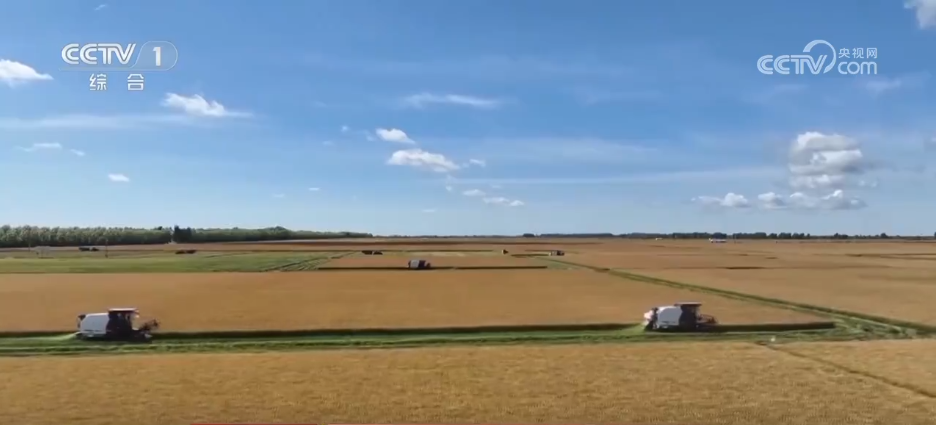
Group 1: Agricultural Development and Harvesting - The autumn harvest is underway in various regions, with a focus on enhancing agricultural production capacity and promoting orderly grain collection [1] - In Heilongjiang, the use of contract farming has expedited the rice harvesting process, allowing immediate transportation to storage facilities [3] - In Ningxia, new agricultural technologies and machinery have led to increased rice yields, achieving approximately 1000 pounds per acre [6] Group 2: Resource Utilization and Efficiency - In Xinjiang, corn harvesting is characterized by efficient machinery that reduces labor costs and shortens harvesting time, with by-products being repurposed as livestock feed [8] - In Hebei, smart agriculture techniques in greenhouse vegetable production have significantly lowered operational costs through the integration of advanced technologies [9] Group 3: Economic Growth through Forest Resources - In Hubei, the development of the under-forest economy has provided new income sources for local villagers, with significant areas dedicated to the cultivation of wild mushrooms and medicinal herbs [10]
金秋栗子香!淄博原山林场“林下经济”实现生态经济双赢
Qi Lu Wan Bao Wang· 2025-09-22 07:57
Core Insights - The chestnut harvest season has arrived in Qiaoling Qianying Forest Area, Zibo City, with abundant chestnut trees bearing fruit [1][3] - The ecological planting model adopted by the forest area has resulted in larger and sweeter chestnuts, which are well-received by consumers [3][5] Group 1: Harvest and Production - The Qiaoling Qianying Forest Area has over 1,000 chestnut trees planted on approximately 50 acres, with a history of chestnut cultivation spanning over 40 years [3][5] - The region's fertile soil and suitable climate provide ideal conditions for chestnut growth, complemented by a rich resource of wild chestnut trees, including over 30 trees aged over 300 years and 12 trees over 500 years [3][5] Group 2: Management and Care - Forest staff have consistently implemented scientific management practices, including pruning, pest control, and fire prevention, to ensure the health of the forest [5] - The care for each tree is likened to nurturing a child, emphasizing the importance of meticulous attention to detail in achieving good fruit yields [5] Group 3: Processing and Product Development - Freshly harvested chestnuts are sorted and categorized by size and quality, with the forest area also developing processed products like chestnut cakes and chestnut flour, which are free from preservatives and additives [7] - Plans are in place to enhance the development of deep-processed chestnut products, aiming to establish a brand that brings the chestnuts of Yuanshan to a wider consumer base [7] Group 4: Economic and Ecological Initiatives - The forest area is diversifying its economic activities by cultivating traditional Chinese medicinal herbs, raising forest chickens, and planting crops, thereby achieving both ecological and economic benefits [7] - Future plans include creating an "under-forest picking + eco-tourism" experience project to enhance visitor engagement and promote the forest economy [9]
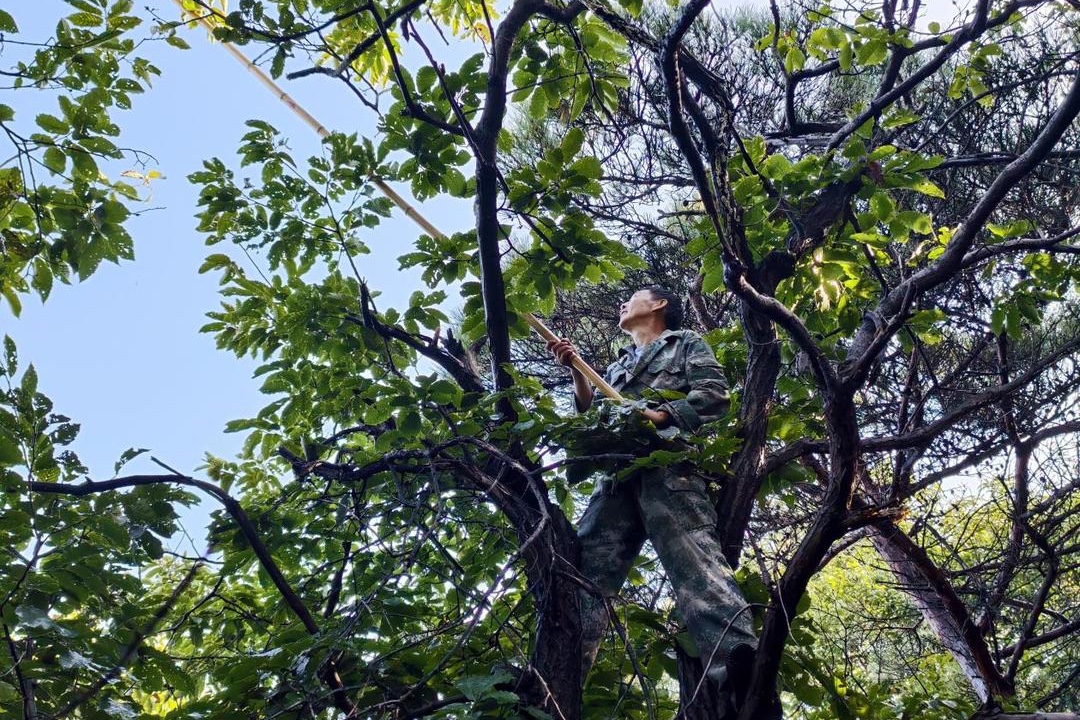
甘肃成县:“红色引擎”驱动林下经济点“绿”成金
Zhong Guo Fa Zhan Wang· 2025-09-19 16:01
Core Viewpoint - The article highlights the successful integration of party leadership and agricultural development in Songping Township, Gansu Province, focusing on the cultivation of kiwifruit and the promotion of under-forest economy to enhance local income and achieve rural revitalization [1][2][3] Group 1: Agricultural Development Model - Songping Township has adopted a "Party Branch + Cooperative + Farmers" model to leverage party organization advantages for industrial development, leading to a successful under-forest economy [1] - The cooperative encourages leading farmers to cultivate kiwifruit, resulting in over 30 households planting more than 140 acres of kiwifruit, thereby strengthening the income foundation for local residents [1] Group 2: Crop Diversification and Economic Benefits - The township explores intercropping by planting medicinal herbs and other economic crops under kiwifruit trees, improving land utilization and output efficiency [2] - The average yield of kiwifruit is around 2,000 pounds per acre, with total income from kiwifruit and intercropped crops exceeding 10,000 yuan per acre [2] Group 3: Sales and Marketing Strategies - To enhance the sales channels for kiwifruit, the township actively engages local officials and e-commerce experts to promote products through social media platforms, resulting in over 30 orders for more than 800 pounds of kiwifruit [3] - The initiative includes both online and offline sales strategies, ensuring a diverse sales network for local farmers [3] Group 4: Overall Impact on Rural Revitalization - The integration of party leadership with green economic practices exemplifies the transformation of local resources into economic value, contributing to rural revitalization and sustainable development [3]
破除海拔高、耕地少、交通差等农业发展制约要素 甘孜兴农事 高原绘“丰”景
Si Chuan Ri Bao· 2025-09-18 06:42
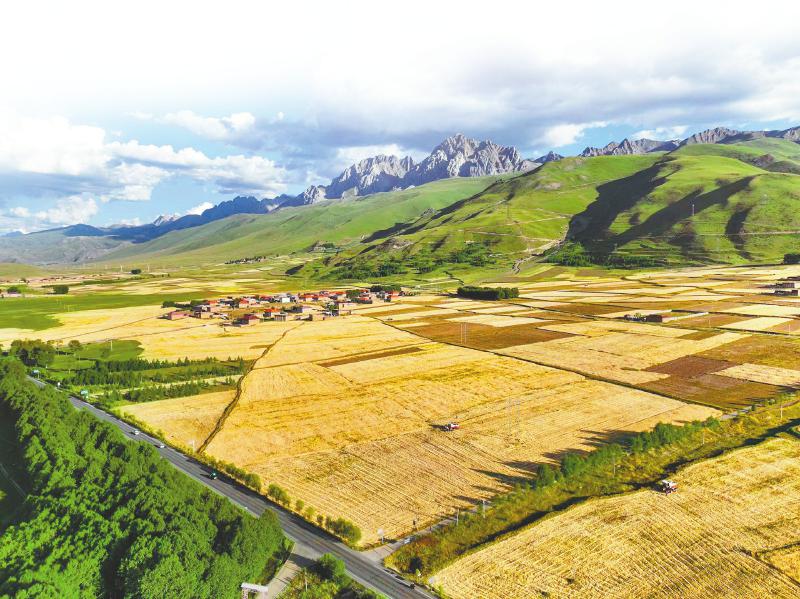
Group 1: Agricultural Development in Ganzi Prefecture - Ganzi Prefecture is experiencing a harvest season with significant yields, including over 280 million pounds of "Meiren Cui" apples and an expected total barley production of over 27,800 tons, marking a 4.9% increase from last year [2] - The region faces challenges such as limited arable land, high altitude, and poor transportation, which complicate agricultural development [2] - Innovative agricultural practices, including crop rotation and the introduction of winter crops, have been implemented to enhance productivity and soil health [5][6] Group 2: Forest Resources and Economic Development - Ganzi Prefecture is leveraging its extensive forest resources, with 6.96 million hectares of forest land, to develop a "forest economy" by promoting products like mushrooms, green tea, and medicinal herbs [7] - As of June this year, the production of forest products reached 9,111.7 tons, generating nearly 2 billion yuan in value [8] - The region has also developed various livestock farming practices under forest canopies, contributing to an additional revenue of 15.99 million yuan [9] Group 3: Organic Product Development - The first organic index for Ganzi's mushrooms was released, achieving a score of 83.4%, which enhances the brand's marketability [10][11] - Ganzi's organic products, including "Meiren Cui" apples and other specialty items, have seen significant market success, with premium mushrooms priced over 1,000 yuan per kilogram [11] - The region aims to establish a comprehensive logistics hub for organic products, focusing on six major industry clusters, including yak and pig farming, grains, fruits, and wines [11]