粤港澳大湾区融合发展

Search documents
无人驾驶、低空飞行传递火炬,科技赋能十五运会火炬四城同传
2 1 Shi Ji Jing Ji Bao Dao· 2025-10-27 07:02
Core Viewpoint - The 15th National Games torch relay will take place simultaneously in Hong Kong, Macau, Guangzhou, and Shenzhen on November 2, showcasing the integration of technology and sports through the use of smart robots, autonomous vehicles, and low-altitude flying devices [1][2]. Group 1: Torch Relay Details - The torch relay in Guangzhou will highlight the city's historical and modern landmarks, including the Zhenhai Tower and the Pearl River New Town [1]. - Shenzhen's relay route will cover 45 kilometers, with 5 kilometers on the ground and 40 kilometers in the air, emphasizing the city's innovative spirit [1]. - The Hong Kong relay will start at the Tamar Government Headquarters and end at the Kai Tak Sports Park, featuring iconic sites like Victoria Harbour and the Hong Kong Cultural Centre [2]. - The Macau relay will cover approximately 2.6 kilometers, passing through major roads and landmarks, ending at the Ruins of St. Paul's, reflecting the city's harmonious spirit [2]. Group 2: Technological Integration - The event will utilize advanced technologies such as smart robots and drones to enhance the relay experience, showcasing the Greater Bay Area's strengths as an international technology innovation center [2]. - A special customs clearance plan will be implemented for the torch and related equipment, ensuring efficient logistics and demonstrating the convenience of the "one-hour living circle" in the Greater Bay Area [2].

十五运会火炬11月2日在港澳广深四地同传,共设200棒火炬手
2 1 Shi Ji Jing Ji Bao Dao· 2025-10-27 04:24
Core Viewpoint - The torch relay for the 15th National Games will take place simultaneously in four cities: Hong Kong, Macau, Guangzhou, and Shenzhen on November 2, showcasing the cultural and historical significance of each city while promoting community engagement and technological innovation [1][2][3][4][5]. Group 1: Torch Relay Details - The torch relay will feature a total of 200 torchbearers, with each city having 50 torchbearers running 50-100 meters each [2]. - The relay routes will highlight historical and contemporary landmarks, with Guangzhou emphasizing its "thousand-year commercial capital" heritage and Shenzhen showcasing its "open city" characteristics [2]. - Various cultural activities will accompany the relay, including performances and interactive events to foster community spirit [2]. Group 2: Torchbearer Selection and Representation - The selection of torchbearers will reflect a broad representation, including model citizens, frontline workers, and representatives from various sectors such as education, technology, and healthcare [3]. - Approximately 29% of torchbearers will be sports workers and athletes, while 46% will be model citizens, and 21% will be frontline representatives [3]. Group 3: Innovative Aspects of the Relay - The relay will adopt a "three-region linkage, four-city simultaneous transmission" model, showcasing the integration of the Guangdong-Hong Kong-Macau Greater Bay Area [4][5]. - Technological innovations will be employed, including smart robots and drones, to enhance the relay experience and demonstrate the region's status as a center for technological innovation [4]. - The relay will feature point-to-point transmission methods to connect city landmarks, emphasizing the cultural and historical continuity [5]. Group 4: Logistics and Safety Measures - A specialized logistics plan will ensure smooth transportation of the torch and related equipment, achieving same-day delivery for the event [5]. - Emergency response plans will be in place to address potential weather-related disruptions, ensuring the event proceeds safely and smoothly [5].
为湾区融合发展和外贸稳增长注入强劲动力
Ren Min Ri Bao· 2025-10-23 21:13
Core Insights - The Hong Kong-Zhuhai-Macao Bridge has significantly enhanced cross-border trade and travel, becoming a vital artery for the Guangdong-Hong Kong-Macao Greater Bay Area since its opening seven years ago [1][2][4] Group 1: Trade and Economic Impact - The bridge has facilitated the export of goods, with cross-border e-commerce exports exceeding last year's total within the first nine months of this year, making it the second-largest port for cross-border direct purchase exports in China [3][4] - In the first nine months of this year, the import and export value to countries and regions involved in the Belt and Road Initiative reached 68.19 billion yuan, marking a 52.6% year-on-year increase [4] - The bridge's customs and trade reforms have improved the export efficiency for companies, allowing for rapid processing of goods, with some exports completed in under five minutes [3][5] Group 2: Travel and Connectivity - The bridge has reduced travel time between Hong Kong and Zhuhai/Macao from three hours to approximately 45 minutes, leading to a significant increase in the number of residents from Hong Kong and Macao traveling to the mainland for shopping, investment, and tourism [2][4] - In 2023, the average daily vehicle flow at the Zhuhai port of the bridge exceeded 18,000, with over 14.36 million Hong Kong and Macao residents crossing the border this year [2][4] - The bridge has also enhanced tourism, with over 10.15 million mainland travelers passing through the bridge's border inspection station this year, indicating a growing trend in cross-border leisure travel [2][4] Group 3: Future Projections - By 2025, it is projected that the Zhuhai port will see over 30 million passenger trips and 6 million vehicle crossings, reflecting the ongoing integration and development of the Greater Bay Area [5]
开通七周年!港珠澳大桥成联通内外“经贸动脉”
Xin Hua She· 2025-10-23 11:16
Core Insights - The Hong Kong-Zhuhai-Macao Bridge has become a significant driver of trade growth and regional integration in the Guangdong-Hong Kong-Macao Greater Bay Area since its opening seven years ago [2] Trade and Economic Impact - As of September this year, the total number of vehicles passing through the Zhuhai Port of the bridge reached 18.931 million, with a cumulative import and export value of 1.24 trillion yuan [2] - In the first nine months of this year, the total import and export value reached 228.88 billion yuan, representing a year-on-year increase of 37% [2] - Cross-border e-commerce exports through the bridge's customs management platform exceeded 76.46 billion yuan, showing a remarkable year-on-year growth of 99.2%, surpassing the total value of the previous year [2] - The bridge has become the second-largest port in the country for cross-border direct purchase exports [2] Growth Metrics - Since its opening, the average monthly import and export value has increased from 4.1 billion yuan to 25.4 billion yuan, marking an increase of over five times [2] - Notably, the export of high-tech products has seen particularly strong growth [2]
港珠澳大桥开通7周年 进出口货物总值超1.2万亿元
Nan Fang Ri Bao Wang Luo Ban· 2025-10-23 09:17
Core Insights - The Hong Kong-Zhuhai-Macao Bridge has seen significant growth in passenger and vehicle traffic since its opening 7 years ago, with over 93.34 million passengers and 19.42 million vehicles recorded as of October 22 [1] - The bridge has become a vital economic link in the Guangdong-Hong Kong-Macao Greater Bay Area, facilitating trade and cross-border movement [2] Traffic Growth - As of 2024, the border inspection station at the bridge is expected to handle 27 million passengers and 5.55 million vehicles, a substantial increase from 12.88 million passengers and 860,000 vehicles in 2019 [1] - Daily vehicle flow at the bridge has increased from an average of 9,000 to over 18,000, with peak days exceeding 28,000 vehicles [1] Trade and Economic Impact - The total value of imports and exports through the bridge's border inspection station reached 1.24 trillion yuan by September 2023, with a year-on-year increase of 37% [2] - Monthly trade value has surged from an average of 4.1 billion yuan at the bridge's opening to 25.4 billion yuan currently, representing over a fivefold increase [2] - The bridge has facilitated cross-border e-commerce, with exports surpassing 76.46 billion yuan in the first nine months of 2023, a 99.2% increase year-on-year [2]
香江观澜:“粤车南下”将激活大湾区融合发展新动能
Zhong Guo Xin Wen Wang· 2025-10-19 12:49
Core Viewpoint - The "Yue Car Southbound" policy is set to enhance cross-border travel between Hong Kong and Guangdong, creating new opportunities for economic and social development in the Greater Bay Area, with implementation aimed for November 2023 [1]. Group 1: Policy Implementation - The Hong Kong government is adopting a phased approach to the "Yue Car Southbound" policy, reflecting a cautious and pragmatic decision-making process [3]. - In the initial phase, eligible Guangdong vehicles will park at an automated facility on the Hong Kong side, allowing drivers and passengers to transfer to flights or public transport [3]. - The second phase will allow eligible vehicles to enter Hong Kong directly without needing a regular quota, facilitating easier access to urban areas [3]. Group 2: Safety and Standards - The policy includes strict standards for driver qualifications, vehicle safety inspections, and mandatory insurance, ensuring a comprehensive safety framework [3]. - This approach addresses public concerns while laying the groundwork for orderly expansion of the policy in the future [3]. Group 3: Economic Impact - The "Yue Car Southbound" initiative is expected to significantly boost Hong Kong's economy by attracting high-spending Guangdong tourists, revitalizing sectors such as retail, dining, and hospitality [4]. - It will encourage Hong Kong businesses to innovate and enhance service offerings, leading to an upgrade in consumer products [4]. Group 4: Industrial Collaboration - The policy will strengthen industrial linkages between Hong Kong and mainland cities in the Greater Bay Area, facilitating participation in international events and financial services [4]. - Enhanced cross-border travel will promote deeper cooperation in technology innovation and high-end manufacturing within the Greater Bay Area [4]. Group 5: Cultural Integration - The "Yue Car Southbound" policy will foster cultural exchanges between Guangdong and Hong Kong, enriching daily interactions and enhancing the "one-hour living circle" concept [4]. - This initiative aims to create not only economic convenience but also a warmer, more integrated community experience [4]. Group 6: Overall Development - The continuous improvement of cross-border transportation policies, from "Yue Car Southbound" to "Hong Kong Car Northbound," outlines a clear path for the integration of the Greater Bay Area [5]. - As transportation barriers diminish and resource flow becomes smoother, Hong Kong is expected to discover new growth opportunities through mutual empowerment with mainland cities [5].
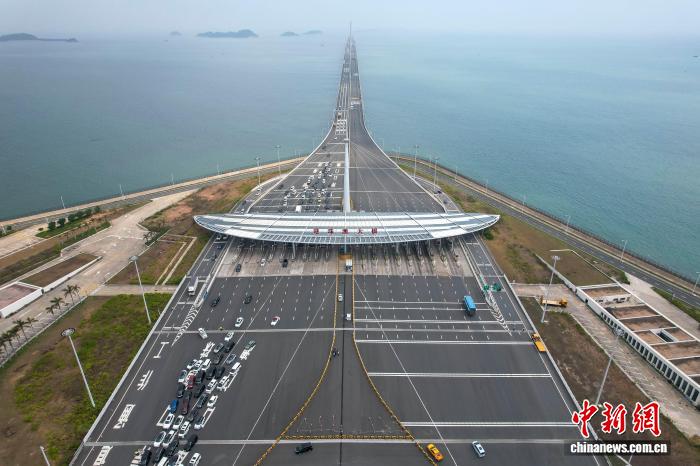
“港车北上口岸范围扩大”消息不实!
Nan Fang Du Shi Bao· 2025-10-13 06:33
Core Points - The Hong Kong Transport Department has clarified that the "Hong Kong vehicles going north" policy currently only applies to the Hong Kong-Zhuhai-Macao Bridge and does not extend to other ports [1] - The "Hong Kong vehicles going north" arrangement, which started in September, allows for travel without prior booking on Tuesdays and Wednesdays, excluding specified dates [1] - The "Shenzhen Bay crossing private vehicle one-time special quota" and "Hong Kong vehicles going north" are two distinct programs, and applicants must apply for the special quota for each trip to Guangdong [1] Summary of Developments - Regarding the "Guangdong vehicles going south" arrangement, officials from the Hong Kong government have expressed a desire to implement it in November, but this has been misinterpreted on social media as a confirmed plan [2] - The Hong Kong Transport Department will report the latest developments on "Guangdong vehicles going south" to the Legislative Council on October 17, indicating that the specifics are still under review [2] - The Transport Department emphasizes that any new arrangements for cross-border driving will be officially announced, and the public should rely on official communications to avoid misinformation [2] - The Hong Kong government aims to optimize the "Hong Kong vehicles going north" program and advance the "Guangdong vehicles going south" initiative to enhance cross-border travel and promote integration within the Guangdong-Hong Kong-Macao Greater Bay Area [2]
向祖国报告丨狮子洋通道建设正酣 又一超级工程初显“真身”
Yang Guang Wang· 2025-10-05 12:47
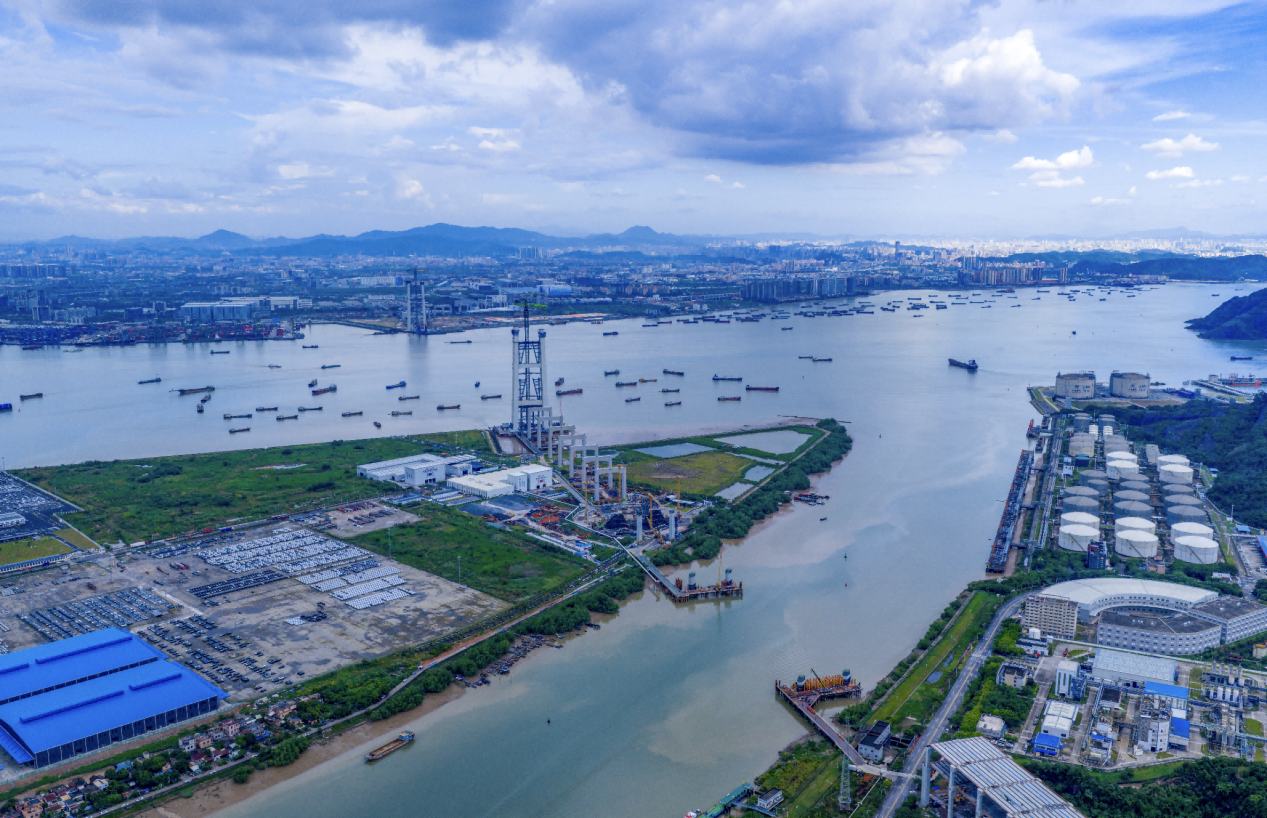
Core Viewpoint - The construction of the Lion Rock Channel is a significant infrastructure project in the Guangdong-Hong Kong-Macao Greater Bay Area, aimed at enhancing connectivity and supporting high-quality economic development in the region [1][7]. Group 1: Project Overview - The Lion Rock Channel is a key transportation project connecting Nansha in Guangzhou to Humen in Dongguan, spanning approximately 35 kilometers with a dual-layer design featuring 16 lanes, significantly increasing traffic capacity [2][7]. - The project includes the Lion Rock Bridge, which utilizes a double-layer steel truss suspension bridge design with a main span of 2,180 meters, eliminating the need for bridge piers in the river [2][3]. Group 2: Construction Progress - As of October 2023, construction is in full swing, with critical processes being maintained during the National Day holiday, showcasing a commitment to timely project completion [2][6]. - The main tower of the Lion Rock Bridge has reached a height of 342 meters, equivalent to a 110-story building, and is constructed using a combination of steel and concrete to enhance stability and reduce weight [4][6]. Group 3: Technical Challenges and Innovations - The project faces significant technical challenges due to its unprecedented scale, requiring innovations in design, construction techniques, and equipment development [3][4]. - Advanced technologies, such as high-precision positioning systems and intelligent control systems, are employed to ensure the accuracy and safety of the construction process [6][7]. Group 4: Future Outlook - The year 2025 is projected to be a peak construction period for the Lion Rock Channel, with major engineering milestones expected to be achieved [7]. - Upon completion, the channel is anticipated to alleviate traffic pressure across the Pearl River and play a crucial role in the integrated high-quality development of the Greater Bay Area [7].
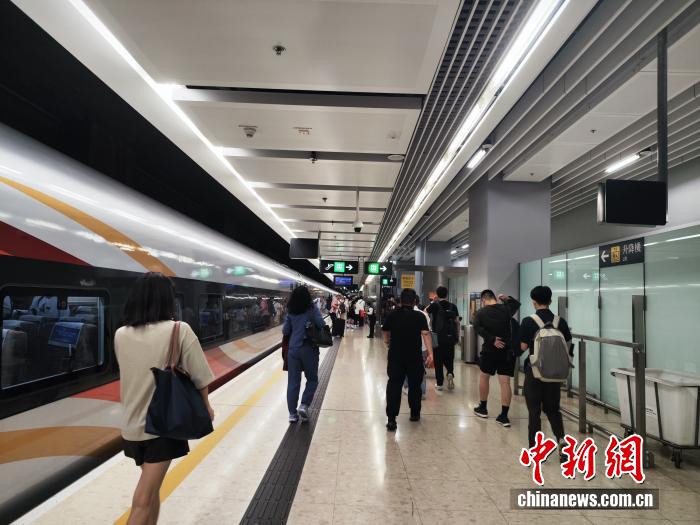
“狂飙”七年的广深港高铁 从区域生活圈开进全国大版图
Zhong Guo Xin Wen Wang· 2025-09-27 23:22
Core Insights - The Guangzhou-Shenzhen-Hong Kong High-Speed Rail has transformed the travel dynamics between Hong Kong and mainland China, evolving from a regional connection to a national network over the past seven years [1][5][10] Group 1: Travel Patterns and User Experience - The high-speed rail has enabled a "one-hour living circle," allowing residents of Hong Kong to frequently visit mainland cities like Shenzhen and Guangzhou for leisure and shopping [2][3] - Travel times have significantly decreased, with the journey from Hong Kong West Kowloon to Shenzhen North taking as little as 18 minutes, enhancing the convenience of cross-border travel [3][10] - The high-speed rail has led to a shift in travel habits, with many Hong Kong residents now opting for high-speed rail over traditional bus services, which previously took over five hours [3][12] Group 2: Passenger Volume and Economic Impact - As of September 25, 2023, the high-speed rail has transported 22.872 million cross-border passengers this year, marking a 16.3% increase year-on-year [5][9] - The peak days for cross-border travel have exceeded 100,000 passengers, particularly during weekends and holidays, indicating a strong demand for leisure and family visits [5][7] - The summer travel period saw 6.124 million cross-border passengers, reflecting a 16.7% increase, with significant contributions from tourism, business, and family visits [7][9] Group 3: Infrastructure and Service Enhancements - The number of daily train services has increased from a minimum of 83 pairs to over 100 pairs, expanding the network to cover 96 direct stations, including major cities in the Greater Bay Area [9][10] - The implementation of the "one location, two inspections" model has streamlined the customs process, reducing average clearance times to 15-30 minutes [13][14] - Various passenger-friendly initiatives, such as the introduction of regular and multi-ride tickets, have improved the travel experience and catered to diverse travel needs [14]
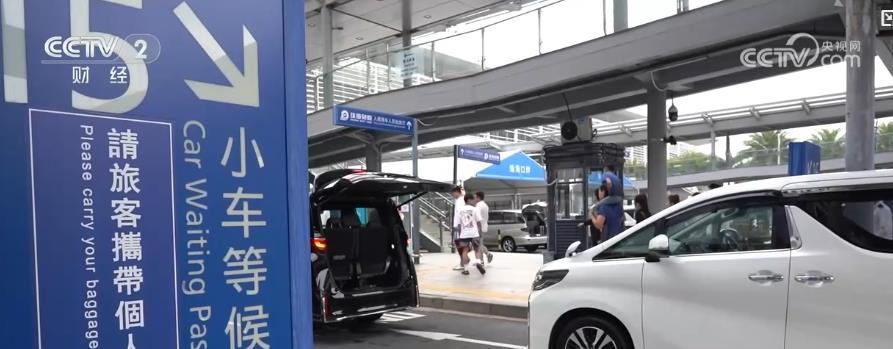
“澳车北上”持续升温 大湾区融合驶入“快车道”
Yang Shi Wang· 2025-09-16 12:04
央视网消息:随着"澳车北上"政策深入推进,截至9月16日,据拱北海关统计,累计超5万辆次澳门单牌车成功申办"澳车北 上"海关备案。 "澳车北上"政策自2023年1月实施,与粤澳两地牌 车辆政策不同,其更多面向普通澳门居民,只要年满18周岁、持有效通行 证,即可为本人持有的一辆澳门机动车申请"澳车北上"牌证。据拱北海关统计,政策实施以来,累计超5万辆次澳门单牌车成功 申办"澳车北上"海关备案,单月备案量最高峰达3709宗。数据的跃升见证了粤港澳大湾区融合发展进程。此外,拱北海关在海关 备案手续全程网上通办基础上,推行电子车卡自动绑定功能,备案时效提高约25%。 ...