
量化分析

Search documents
美元信用或将崩塌!国际资本仓皇出逃
Sou Hu Cai Jing· 2025-06-19 14:33
Group 1 - The core viewpoint is that the A-share market is heavily influenced by external news, leading to erratic stock price movements, which can be likened to a "puppet show" controlled by information [1] - The Federal Reserve's decision to maintain interest rates is seen as a significant factor affecting market sentiment, with the dot plot indicating a lack of imminent rate cuts, which could lead to prolonged market uncertainty [2][3] - There is a growing concern regarding the credibility of the US dollar, as international capital begins to lose faith in it due to the weaponization of the dollar settlement system [3][5] Group 2 - The market's reaction to the Federal Reserve's decision illustrates the characteristics of an "external leverage market," where neutral news is exaggerated in a fragile market environment, leading to significant volatility [6] - Retail investors often fall into the trap of emotional trading, reacting to short-term market movements rather than focusing on underlying data, which contributes to their losses [9] - The use of quantitative analysis tools has revealed the importance of understanding institutional trading activity, particularly through "institutional inventory" data, which reflects the true market dynamics [10][12] Group 3 - Observations of specific stocks demonstrate that price movements can be misleading; a stock that experiences a rapid rise may not have institutional support, while a stock that declines may have strong institutional backing, leading to a rebound [12][14] - The ability to visualize data and analyze institutional inventory alongside price charts can provide clearer insights into market trends, moving beyond superficial analysis [14][17] - The focus on interest rate expectations may obscure deeper funding trends, highlighting the need for investors to identify hidden opportunities within the market [15]

降息预期再次上升,机构狂动,散户别踩这波套路
Sou Hu Cai Jing· 2025-06-13 15:59
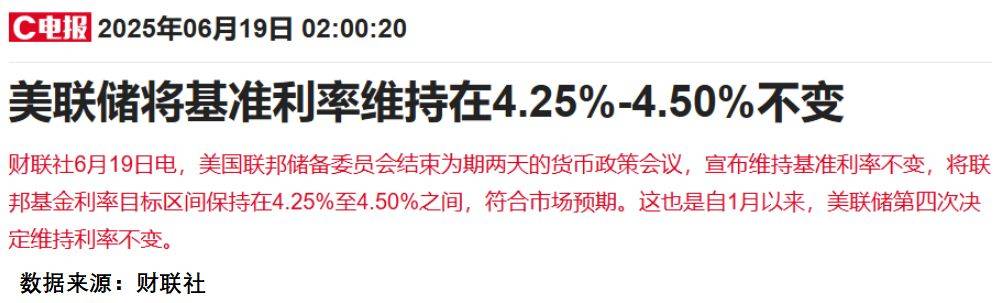
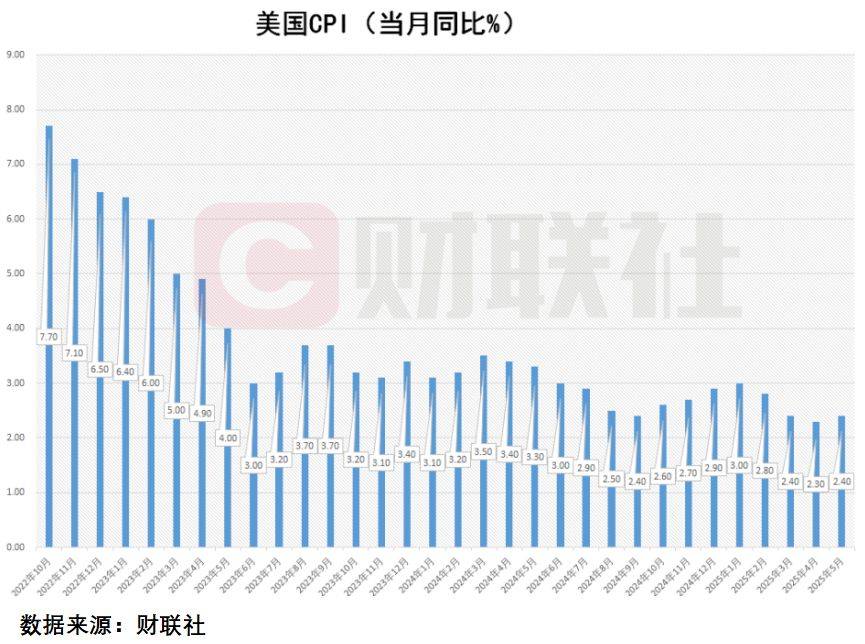
Group 1 - The core point of the article is that the recent U.S. CPI data for May came in lower than expected, leading to increased market speculation about potential interest rate cuts by the Federal Reserve [2][5] - The U.S. CPI year-on-year rate was reported at 2.4%, below the expected 2.5%, while the core CPI increased by 2.8%, also lower than the anticipated 2.9% [2][6] - Following the CPI release, the probability of a rate cut in September surged to 70%, with expectations for at least two cuts within the year [5] Group 2 - Despite the excitement in the market, the probability of a rate cut in June is only 2.4%, indicating that significant actions may still be months away [6] - The article discusses that a decrease in inflation suggests a potential economic slowdown, prompting the Federal Reserve to consider lowering interest rates to stimulate the economy [7] - It highlights that institutional investors typically do not wait for favorable conditions but instead leverage market expectations to position themselves, often causing market volatility before actual rate cuts occur [8][10] Group 3 - The article emphasizes the importance of understanding institutional trading behaviors rather than relying solely on market sentiment or technical analysis [10][12] - It provides examples of past stock movements, illustrating that significant price increases often follow periods of institutional accumulation, while lack of institutional support can lead to price declines [12][15] - The key takeaway is that recognizing and analyzing data related to institutional activity is crucial for making informed investment decisions [15][17]
深度学习因子月报:Meta因子5月实现超额收益3.9%-20250611
Minsheng Securities· 2025-06-11 13:02
Quantitative Factors and Models Summary Quantitative Factors and Construction Methods 1. **Factor Name**: DL_EM_Dynamic - **Construction Idea**: Extract intrinsic stock attributes from public fund holdings using matrix decomposition, and combine these attributes with LSTM-generated factor representations to create a dynamic market state factor[19][21]. - **Construction Process**: - Matrix decomposition is applied to fund-stock investment networks to derive intrinsic attributes of funds and stocks. - Static intrinsic attributes are updated semi-annually using fund reports and transformed into dynamic attributes by calculating their similarity to the market's current style preferences. - These dynamic attributes are combined with LSTM outputs and fed into an MLP model to enhance factor performance[19][21]. - **Evaluation**: The factor effectively captures dynamic market preferences and improves model performance[19][21]. 2. **Factor Name**: Meta_RiskControl - **Construction Idea**: Integrate factor exposure control into deep learning models to mitigate risks during rapid style shifts, leveraging meta-incremental learning for market adaptability[25][28]. - **Construction Process**: - Multiply model outputs by corresponding stock factor exposures and include this in the loss function. - Add penalties for style deviation and momentum to the IC-based loss function. - Use an ALSTM model with style inputs as the base model and apply a meta-incremental learning framework for periodic updates[25][28]. - **Evaluation**: The factor reduces style deviation and volatility, effectively controlling model drawdowns[25][28]. 3. **Factor Name**: Meta_Master - **Construction Idea**: Incorporate market state information into the model, leveraging deep risk models and online meta-incremental learning to adapt to dynamic market conditions[35][37]. - **Construction Process**: - Use deep risk models to calculate new market states and construct 120 new features representing market preferences. - Replace the loss function with weighted MSE to improve long-side prediction accuracy. - Apply online meta-incremental learning for periodic model updates, enabling quick adaptation to recent market trends[35][37]. - **Evaluation**: The factor demonstrates significant improvements in long-side prediction accuracy and market adaptability[35][37]. 4. **Factor Name**: Deep Learning Convertible Bond Factor - **Construction Idea**: Address the declining excess returns of traditional convertible bond strategies by using GRU neural networks to model the complex nonlinear pricing logic of convertible bonds[50][52]. - **Construction Process**: - Introduce convertible bond-specific time-series factors into the GRU model. - Combine cross-sectional attributes of convertible bonds with GRU outputs to predict future returns[50][52]. - **Evaluation**: The factor significantly enhances model performance compared to traditional strategies[50][52]. Factor Backtesting Results 1. **DL_EM_Dynamic Factor** - **RankIC**: 12.1% (May 2025)[9][12] - **Excess Return**: 0.6% (May 2025), 10.4% YTD[9][23] - **Annualized Return**: 29.7% (since 2019)[23] - **Annualized Excess Return**: 23.4% (since 2019)[23] - **IR**: 2.03[23] - **Max Drawdown**: -10.1%[23] 2. **Meta_RiskControl Factor** - **RankIC**: 12.8% (May 2025)[9][14] - **Excess Return**: -0.7% (HS300), 0.8% (CSI500), 0.5% (CSI1000) in May 2025; 3.0%, 4.8%, and 8.3% YTD respectively[9][30][34] - **Annualized Return**: 20.1% (HS300), 26.1% (CSI500), 34.1% (CSI1000) since 2019[30][32][34] - **Annualized Excess Return**: 15.0% (HS300), 19.2% (CSI500), 27.0% (CSI1000) since 2019[30][32][34] - **IR**: 1.58 (HS300), 1.97 (CSI500), 2.36 (CSI1000)[30][32][34] - **Max Drawdown**: -5.8% (HS300), -9.3% (CSI500), -10.2% (CSI1000)[30][32][34] 3. **Meta_Master Factor** - **RankIC**: 14.7% (May 2025)[9][17] - **Excess Return**: -0.5% (HS300), 0.5% (CSI500), 0.4% (CSI1000) in May 2025; 4.2%, 3.3%, and 5.0% YTD respectively[38][44][47] - **Annualized Return**: 22.0% (HS300), 23.8% (CSI500), 30.7% (CSI1000) since 2019[38][44][47] - **Annualized Excess Return**: 17.5% (HS300), 18.2% (CSI500), 25.2% (CSI1000) since 2019[38][44][47] - **IR**: 2.09 (HS300), 1.9 (CSI500), 2.33 (CSI1000)[38][44][47] - **Max Drawdown**: -7.2% (HS300), -5.8% (CSI500), -8.8% (CSI1000)[38][44][47] 4. **Deep Learning Convertible Bond Factor** - **Absolute Return**: 1.7% (偏股型), 2.6% (平衡型), 1.7% (偏债型) in May 2025[52][55] - **Excess Return**: 0.1% (偏股型), 1.0% (平衡型), 0.2% (偏债型) in May 2025[52][55] - **Annualized Return**: 13.2% (偏股型), 11.8% (平衡型), 12.7% (偏债型) since 2021[52][55] - **Annualized Excess Return**: 5.8% (偏股型), 4.0% (平衡型), 4.4% (偏债型) since 2021[52][55]
科技冰点反转?准备抄底!
Sou Hu Cai Jing· 2025-06-10 05:07
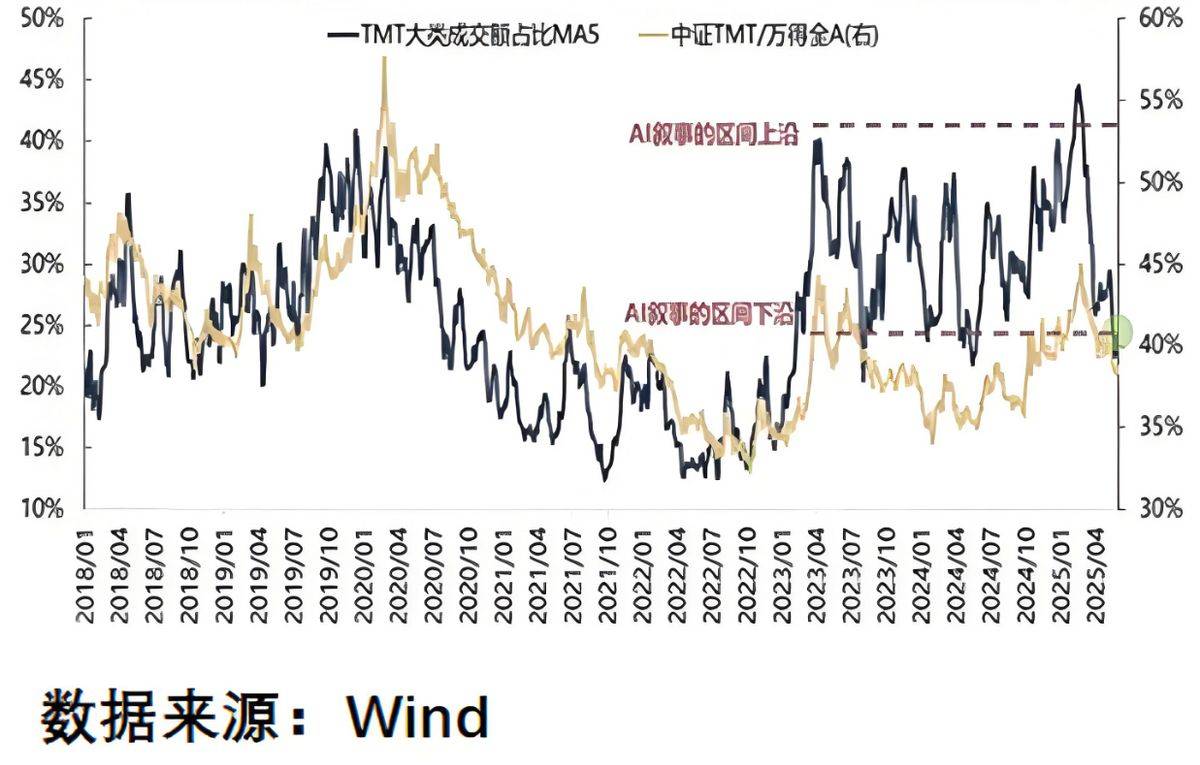
6月份了,市场里到处是科技回暖的呼声,但真相藏在哪儿呢?别急,我来帮你拨开迷雾。文章最后还有关键彩蛋,保准让你眼前一亮! 一、科技回暖的迷雾:是希望还是泡沫? 大家最近都在琢磨科技板块能不能回暖,从市场表现看,科技板块前阵子确实有点蔫儿,成交量都跌到冰点了。 卖方机构们可没闲着,他们使劲儿吆喝:科技要翻身啦!逻辑是啥?就是这成交量冰点,意味着市场情绪触底,反弹在即。 朋友们!今天咱们聊聊一个让股民们心痒痒的话题——科技板块的春天啥时候来? A股现在有点拧巴,好多人都等着出个王炸级应用再跟风买科技股。 但美股早就用数据说话了——微软3月Token量直接飙到前两个月总和,谷歌4月Token量同比猛涨,就靠这俩数据,微软股价直接刷了新高。 咱国内也没闲着,阿里云日Token量最近也狂涨,说白了,不管中美,应用端都在闷头搞测试、冲用量,这明摆着是科技行业要热闹起来的信号啊! 但普通股民往往后知后觉——等行情出来再追,黄花菜都凉了,大家一窝蜂跟风,结果总慢半拍。散户在信息链末端,容易错失先机。 二、机构资金的隐形游戏:温水煮青蛙 话说回来,光听机构喊口号可不行。股市里,真正有戏的个股,早被机构盯上了。 他们像老练的猎手 ...
楼市释放两大信号,A股即将变天?
Sou Hu Cai Jing· 2025-05-27 11:54
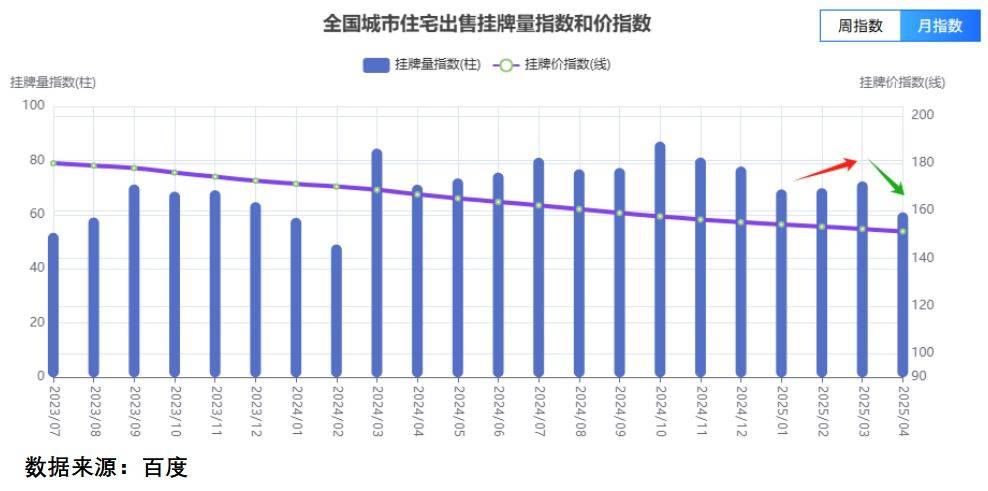
Group 1: Real Estate Market Trends - The current new home prices have not yet reached the bottom, with second-hand home prices generally 25% to 40% lower than new homes, and continuing to decline. In April, first-tier cities saw a 0.2% month-on-month decrease in second-hand home prices, while second and third-tier cities experienced a 0.4% decline [1][3] - Concerns about a prolonged downturn similar to Japan's are unfounded, as China's real estate market is currently in an adjustment phase following rapid growth from 2015 to 2017. This adjustment does not equate to a market collapse, as cyclical recovery is expected [3] Group 2: Stock Market Insights - Both the stock and real estate markets exhibit cyclical behavior, with bull markets often emerging during periods of market despair. Despite recent index declines, underlying support mechanisms remain [4] - The presence of institutional investors in stocks does not guarantee profitability for retail investors, as institutional strategies may shift with market conditions. The focus should be on the trading behavior of institutions rather than mere participation [6] Group 3: Understanding Institutional Trading - Institutional trading is characterized by large volumes and discreet operations, making it essential to utilize quantitative analysis to uncover their true actions, such as accumulation or distribution of shares [8] - Indicators such as the density of orange bars (indicating active institutional trading) and blue circles (indicating potential washout tactics) can provide insights into institutional strategies. For instance, repeated downward movements may signal preparation for a significant upward movement [10][13] Group 4: Identifying Market Signals - To determine the end of a washout phase, it is crucial to analyze two sets of data: a shift from blue candlesticks to blue bars indicates a return of previously sold funds, while dense orange bars suggest concentrated institutional holdings [13] - Retail investors often face losses due to a lack of understanding of institutional trading behaviors. By interpreting data accurately, investors can avoid being shaken out of positions during volatile periods [15]
择时雷达六面图:信用指标弱化,拥挤度分数下行
GOLDEN SUN SECURITIES· 2025-05-18 14:52
Quantitative Models and Construction Methods 1. Model Name: Timing Radar Hexagon Model - **Model Construction Idea**: The equity market's performance is influenced by multiple dimensions of factors. The model selects 21 indicators from six dimensions: liquidity, economic fundamentals, valuation, capital flow, technical trends, and crowding. These indicators are then categorized into four major dimensions: "Valuation Cost-Effectiveness," "Macroeconomic Fundamentals," "Capital & Trend," and "Crowding & Reversal," to generate a comprehensive timing score ranging between [-1, 1][1][6][8] - **Model Construction Process**: - The model aggregates the scores of 21 indicators into four major categories - Each indicator is normalized and scored based on its historical performance and deviation from the mean - The final comprehensive timing score is calculated as the weighted average of the four major categories, with the score ranging from -1 (bearish) to 1 (bullish)[1][6][8] - **Model Evaluation**: The model provides a multi-dimensional perspective on market timing, offering a comprehensive view of market conditions[1][6] --- Quantitative Factors and Construction Methods 1. Factor Name: Monetary Direction Factor - **Factor Construction Idea**: This factor aims to determine the current direction of monetary policy by analyzing changes in central bank policy rates and short-term market interest rates over the past 90 days[10] - **Factor Construction Process**: - Calculate the average change in central bank policy rates and short-term market interest rates over the past 90 days - If the factor value > 0, it indicates an expansionary monetary policy; if < 0, it indicates a tightening monetary policy[10] - **Factor Evaluation**: The factor effectively captures the direction of monetary policy and its implications for market sentiment[10] 2. Factor Name: Monetary Strength Factor - **Factor Construction Idea**: Based on the "interest rate corridor" concept, this factor measures the deviation of short-term market interest rates from policy rates to assess the monetary environment[14] - **Factor Construction Process**: - Calculate the deviation: $ \text{Deviation} = \frac{\text{DR007}}{\text{7-year reverse repo rate}} - 1 $ - Smooth the deviation and apply z-score normalization to form the monetary strength factor - If the factor value is below -1.5 standard deviations, it indicates a loose monetary environment; if above 1.5 standard deviations, it indicates a tight monetary environment[14] - **Factor Evaluation**: The factor provides a quantitative measure of the monetary environment's tightness or looseness[14] 3. Factor Name: Credit Direction Factor - **Factor Construction Idea**: This factor reflects the tightness of credit transmission from commercial banks to the real economy, using long-term loan data[17] - **Factor Construction Process**: - Calculate the monthly value of long-term loans - Compute the 12-month incremental change and year-over-year growth - If the factor value rises compared to three months ago, it is bullish (score = 1); otherwise, it is bearish (score = -1)[17] - **Factor Evaluation**: The factor captures the credit environment's directional changes effectively[17] 4. Factor Name: Credit Strength Factor - **Factor Construction Idea**: This factor measures whether credit indicators significantly exceed or fall short of expectations[22] - **Factor Construction Process**: - Calculate the credit strength factor: $ \text{Credit Strength Factor} = \frac{\text{New RMB Loans (current month) - Expected Median}}{\text{Expected Standard Deviation}} $ - If the factor value > 1.5 standard deviations, it indicates a significantly above-expectation credit environment (score = 1); if < -1.5 standard deviations, it indicates a below-expectation environment (score = -1)[22] - **Factor Evaluation**: The factor provides insights into the magnitude of credit surprises[22] 5. Factor Name: Growth Direction Factor - **Factor Construction Idea**: This factor is based on PMI data to assess the direction of economic growth[26] - **Factor Construction Process**: - Use PMI data (e.g., manufacturing and non-manufacturing PMI) - Calculate the 12-month moving average and year-over-year growth - If the factor value rises compared to three months ago, it is bullish (score = 1); otherwise, it is bearish (score = -1)[26] - **Factor Evaluation**: The factor effectively captures the directional trend of economic growth[26] 6. Factor Name: Growth Strength Factor - **Factor Construction Idea**: This factor measures whether economic growth indicators significantly exceed or fall short of expectations[28] - **Factor Construction Process**: - Calculate the growth strength factor: $ \text{Growth Strength Factor} = \frac{\text{PMI - Expected Median}}{\text{Expected Standard Deviation}} $ - If the factor value > 1.5 standard deviations, it indicates a significantly above-expectation growth environment (score = 1); if < -1.5 standard deviations, it indicates a below-expectation environment (score = -1)[28] - **Factor Evaluation**: The factor captures the magnitude of economic growth surprises[28] 7. Factor Name: Inflation Direction Factor - **Factor Construction Idea**: This factor assesses the direction of inflation and its implications for monetary policy[31] - **Factor Construction Process**: - Calculate the inflation direction factor: $ \text{Inflation Direction Factor} = 0.5 \times \text{CPI (smoothed)} + 0.5 \times \text{PPI (raw)} $ - If the factor value decreases compared to three months ago, it indicates a deflationary environment (score = 1); otherwise, it indicates an inflationary environment (score = -1)[31] - **Factor Evaluation**: The factor provides a clear signal of inflation trends and their impact on monetary policy[31] 8. Factor Name: Inflation Strength Factor - **Factor Construction Idea**: This factor measures whether inflation indicators significantly exceed or fall short of expectations[32] - **Factor Construction Process**: - Calculate the inflation strength factor: $ \text{Inflation Strength Factor} = \frac{\text{CPI or PPI - Expected Median}}{\text{Expected Standard Deviation}} $ - If the factor value < -1.5, it indicates a significantly below-expectation inflation environment (score = 1); if > 1.5 standard deviations, it indicates an above-expectation environment (score = -1)[32] - **Factor Evaluation**: The factor captures the magnitude of inflation surprises[32] --- Backtesting Results of Factors 1. Monetary Direction Factor - Current score: 1 (bullish signal)[11] 2. Monetary Strength Factor - Current score: -1 (bearish signal)[14] 3. Credit Direction Factor - Current score: -1 (bearish signal)[18] 4. Credit Strength Factor - Current score: -1 (bearish signal)[22] 5. Growth Direction Factor - Current score: 1 (bullish signal)[26] 6. Growth Strength Factor - Current score: 0 (neutral signal)[28] 7. Inflation Direction Factor - Current score: 1 (bullish signal)[31] 8. Inflation Strength Factor - Current score: 1 (bullish signal)[33]
择时雷达六面图:资金面中外资指标恢复
GOLDEN SUN SECURITIES· 2025-05-11 11:57
Quantitative Models and Construction 1. Model Name: Timing Radar Six-Factor Framework - **Model Construction Idea**: The equity market is influenced by multiple dimensions. This model selects 21 indicators from six perspectives: liquidity, economic fundamentals, valuation, capital flows, technical trends, and crowding. These are summarized into four categories: "Valuation Cost-Effectiveness," "Macro Fundamentals," "Capital & Trend," and "Crowding & Reversal," generating a comprehensive timing score within the range of [-1, 1][1][6][8] - **Model Construction Process**: - The 21 indicators are grouped into six dimensions, and their scores are aggregated into four broader categories. - The final timing score is calculated as a weighted average of these categories, normalized to the range of [-1, 1][1][6][8] - **Model Evaluation**: The model provides a comprehensive and multi-dimensional view of market timing, integrating macroeconomic, technical, and sentiment factors[1][6] --- Quantitative Factors and Construction 1. Factor Name: Monetary Direction Factor - **Factor Construction Idea**: This factor aims to determine the direction of monetary policy by analyzing changes in central bank policy rates and short-term market rates over the past 90 days[12] - **Factor Construction Process**: - Calculate the average change in central bank policy rates and short-term market rates over the past 90 days - If the factor value > 0, monetary policy is deemed accommodative; if < 0, it is deemed tight[12] - **Factor Evaluation**: Effectively captures the directional bias of monetary policy[12] 2. Factor Name: Monetary Strength Factor - **Factor Construction Idea**: Based on the "interest rate corridor" concept, this factor measures the deviation of short-term market rates from policy rates[15] - **Factor Construction Process**: - Compute the deviation as: $ \text{Deviation} = \frac{\text{DR007}}{\text{7-Year Reverse Repo Rate}} - 1 $ - Smooth and normalize the deviation using z-scores - Assign scores based on thresholds: <-1.5 SD indicates a loose environment (score = 1), >1.5 SD indicates a tight environment (score = -1)[15] - **Factor Evaluation**: Provides a quantitative measure of liquidity conditions in the short-term market[15] 3. Factor Name: Credit Direction Factor - **Factor Construction Idea**: Measures the transmission of credit from banks to the real economy using long-term loan data[18] - **Factor Construction Process**: - Calculate the year-over-year growth of long-term loans over the past 12 months - Compare the current value to its level three months ago - If the factor is rising, assign a score of 1; if falling, assign a score of -1[18] - **Factor Evaluation**: Captures the directional trend of credit expansion or contraction[18] 4. Factor Name: Credit Strength Factor - **Factor Construction Idea**: Measures whether credit data significantly exceeds or falls short of expectations[20] - **Factor Construction Process**: - Compute the z-score of the difference between actual and expected new RMB loans: $ \text{Credit Strength Factor} = \frac{\text{Actual Loans} - \text{Expected Median}}{\text{Expected Standard Deviation}} $ - Assign scores based on thresholds: >1.5 SD indicates a strong credit environment (score = 1), <-1.5 SD indicates a weak credit environment (score = -1)[20] - **Factor Evaluation**: Quantifies the surprise element in credit data[20] 5. Factor Name: Growth Direction Factor - **Factor Construction Idea**: Based on PMI data, this factor identifies the directional trend of economic growth[21] - **Factor Construction Process**: - Compute the year-over-year change in the 12-month moving average of PMI data - Compare the current value to its level three months ago - If the factor is rising, assign a score of 1; if falling, assign a score of -1[21] - **Factor Evaluation**: Tracks the momentum of economic growth effectively[21] 6. Factor Name: Growth Strength Factor - **Factor Construction Idea**: Measures whether economic growth data significantly exceeds or falls short of expectations[25] - **Factor Construction Process**: - Compute the z-score of the difference between actual and expected PMI values: $ \text{Growth Strength Factor} = \frac{\text{Actual PMI} - \text{Expected Median}}{\text{Expected Standard Deviation}} $ - Assign scores based on thresholds: >1.5 SD indicates strong growth (score = 1), <-1.5 SD indicates weak growth (score = -1)[25] - **Factor Evaluation**: Captures the surprise element in economic growth data[25] 7. Factor Name: Inflation Direction Factor - **Factor Construction Idea**: Reflects the impact of inflation trends on monetary policy and equity markets[26] - **Factor Construction Process**: - Compute the weighted average of smoothed CPI and raw PPI year-over-year changes: $ \text{Inflation Direction Factor} = 0.5 \times \text{CPI} + 0.5 \times \text{PPI} $ - Compare the current value to its level three months ago - If the factor is falling, assign a score of 1; if rising, assign a score of -1[26] - **Factor Evaluation**: Provides insights into the inflationary environment and its implications for monetary policy[26] 8. Factor Name: Inflation Strength Factor - **Factor Construction Idea**: Measures whether inflation data significantly exceeds or falls short of expectations[29] - **Factor Construction Process**: - Compute the z-score of the difference between actual and expected CPI and PPI values: $ \text{Inflation Strength Factor} = \frac{\text{CPI Difference} + \text{PPI Difference}}{2} $ - Assign scores based on thresholds: <-1.5 SD indicates low inflation (score = 1), >1.5 SD indicates high inflation (score = -1)[29] - **Factor Evaluation**: Quantifies the surprise element in inflation data[29] --- Factor Backtesting Results 1. Monetary Direction Factor - Current Score: 1[12] 2. Monetary Strength Factor - Current Score: -1[16] 3. Credit Direction Factor - Current Score: -1[18] 4. Credit Strength Factor - Current Score: 1[20] 5. Growth Direction Factor - Current Score: 1[21] 6. Growth Strength Factor - Current Score: 0[25] 7. Inflation Direction Factor - Current Score: 1[26] 8. Inflation Strength Factor - Current Score: 1[29]
择时雷达六面图:拥挤度、反转维度分数显著上升
GOLDEN SUN SECURITIES· 2025-05-06 07:10
Quantitative Models and Construction Methods - **Model Name**: Timing Radar Six-Dimensional Framework **Model Construction Idea**: The model evaluates equity market performance through a multi-dimensional perspective, incorporating liquidity, economic fundamentals, valuation, capital flows, technical signals, and crowding dimensions. These are aggregated into four categories: "Valuation Cost-Effectiveness," "Macro Fundamentals," "Capital & Trend," and "Crowding & Reversal," generating a composite timing score within the range of [-1, 1][1][6][8] **Model Construction Process**: The model selects 21 indicators across the six dimensions and aggregates them into the four categories mentioned above. Each category is scored based on its respective indicators, and the final composite score is calculated as the weighted average of these categories[1][6][8] **Model Evaluation**: The model provides a comprehensive and systematic approach to market timing by integrating multiple dimensions, offering a balanced view of market conditions[1][6][8] Quantitative Factors and Construction Methods - **Factor Name**: Monetary Direction Factor **Factor Construction Idea**: This factor assesses the direction of monetary policy by analyzing changes in central bank policy rates and short-term market rates over the past 90 days[10] **Factor Construction Process**: - Calculate the average change in central bank policy rates and short-term market rates over the past 90 days - If the factor value > 0, monetary policy is deemed accommodative; if < 0, it is deemed restrictive[10] **Factor Evaluation**: Effectively captures the directional stance of monetary policy, providing insights into liquidity conditions[10] - **Factor Name**: Monetary Strength Factor **Factor Construction Idea**: Based on the "interest rate corridor" concept, this factor measures the deviation of short-term market rates from policy rates[13] **Factor Construction Process**: - Calculate the deviation as DR007/7-year reverse repo rate - 1 - Smooth and standardize the deviation using z-scores - Assign scores based on thresholds: <-1.5 SD indicates accommodative conditions (score = 1), >1.5 SD indicates restrictive conditions (score = -1)[13] **Factor Evaluation**: Provides a quantitative measure of short-term liquidity conditions relative to policy rates[13] - **Factor Name**: Credit Direction Factor **Factor Construction Idea**: Measures the transmission of credit from banks to the real economy using medium- and long-term loan data[14] **Factor Construction Process**: - Calculate the monthly value of medium- and long-term loans - Compute the 12-month incremental change and its year-over-year growth - Compare the factor value to its level three months ago: an increase indicates a positive signal (score = 1), while a decrease indicates a negative signal (score = -1)[14] **Factor Evaluation**: Captures the directional flow of credit, reflecting economic support from the banking sector[14] - **Factor Name**: Credit Strength Factor **Factor Construction Idea**: Measures whether credit data significantly exceeds or falls short of expectations[18] **Factor Construction Process**: - Calculate the deviation of new RMB loans from their median forecast, normalized by the forecast's standard deviation - Assign scores based on thresholds: >1.5 SD indicates a positive surprise (score = 1), <-1.5 SD indicates a negative surprise (score = -1)[18] **Factor Evaluation**: Quantifies the strength of credit data relative to expectations, offering insights into market surprises[18] - **Factor Name**: Growth Direction Factor **Factor Construction Idea**: Based on PMI data, this factor evaluates the trend in economic growth over the past 12 months[20] **Factor Construction Process**: - Compute the 12-month moving average of PMI data (including manufacturing and non-manufacturing indices) - Calculate the year-over-year change and compare it to its level three months ago: an upward trend indicates a positive signal (score = 1), while a downward trend indicates a negative signal (score = -1)[20] **Factor Evaluation**: Effectively captures the directional trend in economic growth, providing a macroeconomic perspective[20] - **Factor Name**: Growth Strength Factor **Factor Construction Idea**: Measures whether economic growth data significantly exceeds or falls short of expectations[22] **Factor Construction Process**: - Calculate the deviation of PMI data from its median forecast, normalized by the forecast's standard deviation - Assign scores based on thresholds: >1.5 SD indicates a positive surprise (score = 1), <-1.5 SD indicates a negative surprise (score = -1)[22] **Factor Evaluation**: Quantifies the strength of economic growth data relative to expectations, offering insights into market surprises[22] - **Factor Name**: Inflation Direction Factor **Factor Construction Idea**: Evaluates the trend in inflation levels, which influence monetary policy constraints[25] **Factor Construction Process**: - Calculate the weighted average of smoothed CPI and raw PPI year-over-year changes - Compare the factor value to its level three months ago: a downward trend indicates a positive signal (score = 1), while an upward trend indicates a negative signal (score = -1)[25] **Factor Evaluation**: Provides insights into inflationary trends and their potential impact on monetary policy[25] - **Factor Name**: Inflation Strength Factor **Factor Construction Idea**: Measures whether inflation data significantly exceeds or falls short of expectations[26] **Factor Construction Process**: - Calculate the deviation of CPI and PPI data from their median forecasts, normalized by the forecast's standard deviation - Compute the average of these deviations to form the factor value - Assign scores based on thresholds: <-1.5 indicates a positive signal (score = 1), >1.5 indicates a negative signal (score = -1)[26] **Factor Evaluation**: Quantifies the strength of inflation data relative to expectations, offering insights into market surprises[26] Factor Backtesting Results - **Monetary Direction Factor**: Current score = -1[10] - **Monetary Strength Factor**: Current score = -1[13] - **Credit Direction Factor**: Current score = -1[14] - **Credit Strength Factor**: Current score = 1[18] - **Growth Direction Factor**: Current score = 1[20] - **Growth Strength Factor**: Current score = 0[22] - **Inflation Direction Factor**: Current score = 1[25] - **Inflation Strength Factor**: Current score = 1[26]
资产配置月报202505:五月配置视点:黄金见顶了吗?
Minsheng Securities· 2025-05-05 14:23
资产配置月报 202505 五月配置视点:黄金见顶了吗? 2025 年 05 月 05 日 ➢ 黄金见顶了吗? 美国经济在关税政策影响下一季度增速转负,结构上韧性减弱,市场对于美国经 济衰退的预期上升;美国就业市场温和降温,对黄金有正面影响但较弱;美国财 政方面近期虽然增速有所放缓,但是主要由国防支出减少导致,非国防消费支出 和投资依旧维持增长,财政长期扩张趋势未完全扭转,依旧支撑黄金表现;技术 层面黄金过去积累对应的上涨空间已基本兑现,未来价格继续上行需要进一步积 累或者有新增增量资金入场,短期或较为疲软。综合来说,黄金短期或阶段性休 整,但是长期上涨逻辑不变(或由单一财政逻辑转向叠加经济衰退的逻辑)。 ➢ 大类资产量化观点 1. 权益:Q1 财报景气度回升,五月积极应对。景气度 4 月整体走平,金融中 银行、非银景气度都进一步下降,工业景气度有所回升;上市公司 2024 年年报 以及 2025 年一季报反映了积极变化。信用或继续稳步扩张,政府债券仍占主导; 从结构来看,高增主要来源于去年同期的低基数,政府债券继续支撑社融增长。 4 月市场如我们预期先下后上,目前市场遇强支撑,5 月静待成交放量。 2. 利 ...
择时雷达六面图:本周打分无显著变化
GOLDEN SUN SECURITIES· 2025-04-27 07:23
- The timing radar six-dimensional model is constructed based on multiple dimensions including liquidity, economic fundamentals, valuation, capital flow, technical signals, and crowding indicators. It aggregates 21 indicators into four categories: "valuation cost-effectiveness," "macro fundamentals," "capital & trend," and "crowding & reversal," generating a comprehensive timing score ranging from [-1,1][1][6][8] - Liquidity dimension includes factors such as monetary direction, monetary intensity, credit direction, and credit intensity. For example, the monetary direction factor is calculated based on the average change in central bank policy rates and short-term market rates over the past 90 days. If the factor is greater than 0, it indicates monetary easing; otherwise, it signals tightening[12][15][17] - Economic dimension includes growth direction and intensity factors, as well as inflation direction and intensity factors. For instance, the growth direction factor is derived from PMI data, calculating the 12-month average and year-over-year changes. If the factor shows an upward trend compared to three months ago, it signals a positive outlook[23][30][31] - Valuation dimension includes indicators such as Shiller ERP, PB, and AIAE. Shiller ERP is calculated as 1/Shiller PE minus the 10-year government bond yield, with a z-score applied over the past three years. PB and AIAE indicators follow similar z-score normalization methods[36][38][41] - Capital flow dimension is divided into domestic and foreign capital indicators. Domestic indicators include margin trading increment and trading volume trends, while foreign indicators include China's sovereign CDS spread and overseas risk aversion index. For example, the CDS spread factor signals foreign capital inflow when the 20-day difference is less than 0[44][51][54] - Technical dimension captures trends and reversal signals, such as price trends and new highs/new lows. The price trend factor uses moving average distances (ma120/ma240-1) to measure market trends and strength. The new highs/new lows factor evaluates the difference between the number of new highs and new lows among index constituents over the past year[56][59] - Crowding dimension includes derivative signals such as implied premium/discount, VIX, and SKEW, as well as convertible bond pricing deviation. For instance, the implied premium/discount factor is derived from the 50ETF's recent 5-day returns and percentile rankings, signaling market crowding levels[62][68][71] - Current timing radar scores for each dimension are as follows: liquidity (-0.50), economic fundamentals (0.50), valuation (0.32), capital flow (-0.75), technical signals (0.00), and crowding (0.76). The overall timing score is 0.08, indicating a neutral-to-positive market outlook[7][8][10]