量子力学

Search documents
纳米级粒子“量子挤压”首次实现 有助高精度传感与自动驾驶技术发展
Ke Ji Ri Bao· 2025-09-22 00:07
Core Insights - The research team from the University of Tokyo has achieved "quantum squeezing" of nanoscale particles, reducing their motion uncertainty below the quantum mechanical zero-point fluctuations, which opens new pathways for fundamental physics research and advances technologies like high-precision sensing, autonomous driving, and navigation without GPS signals [1][2]. Group 1 - The macroscopic physical world follows classical mechanics, while the microscopic world adheres to quantum mechanics, characterized by inherent uncertainty [1]. - Quantum squeezing refers to generating quantum states with uncertainty smaller than zero-point fluctuations, crucial for understanding natural phenomena and developing next-generation technologies influenced by quantum effects [1][2]. - The research team utilized glass-made nanoscale particles suspended in a vacuum and cooled to their lowest energy state to minimize uncertainty, successfully demonstrating quantum squeezing by achieving a narrower speed distribution than the lowest energy state [2]. Group 2 - The achievement of quantum squeezing was the result of overcoming numerous technical challenges over several years, including additional fluctuations from particle suspension and minor disturbances in the experimental environment [2]. - The suspended nanoscale particle system is highly sensitive to environmental changes, making it an ideal platform for studying the transition between quantum and classical mechanics, and laying the groundwork for the development of new quantum devices [2].
平常心看待理想i6
理想TOP2· 2025-09-18 12:00
Core Viewpoints - The sales performance of the i6 can be interpreted in two ways: good sales may not necessarily lead to positive outcomes, while poor sales could provide valuable lessons for improvement [2][5] - The analogy of quantum mechanics is used to illustrate the uncertainty surrounding the i6's sales performance, suggesting that its success or failure is inherently unpredictable until measured [7][8] Group 1: Sales Projections and Goals - Li Xiang stated that 2025 will be the first year for Li Auto to officially enter the pure electric SUV market, with sales targets for the i6 set at 9,000 to 10,000 units per month, contributing to an overall target of 18,000 to 20,000 units per month for all pure electric models [3] - The sales situation of the i6 will become clearer approximately 1-4 weeks after its release, with further insights expected around March next year due to factors like changes in purchase tax [8] Group 2: Historical Context and Lessons Learned - Li Xiang's past experiences, including challenges faced during the early days of his career, have shaped his approach to leadership and communication, emphasizing the importance of learning from difficulties [4] - The struggles of other companies, such as BYD and NVIDIA, highlight that periods of poor performance can lead to significant growth and eventual success [5][6] Group 3: Quantum Mechanics Analogy - The concept of true randomness in quantum mechanics is likened to the uncertainty of the i6's sales performance, where various potential outcomes exist until actual sales data is observed [7][9] - The analogy suggests that the initial sales data will provide a clearer picture of the i6's market performance, akin to the collapse of a quantum state upon measurement [8][9]


专访|著名数学家丘成桐:人工智能想更进一步,必基于数学发展
Mei Ri Jing Ji Xin Wen· 2025-09-18 09:27
Core Viewpoint - The integration of artificial intelligence (AI) and mathematics is essential for further advancements in AI, as mathematics provides foundational theoretical tools while AI presents new challenges that can drive mathematical progress [4][6]. Group 1: AI and Human Thought - AI has shown the ability to solve complex problems quickly, but it still struggles with higher-level challenges, indicating that human thought remains crucial for significant scientific breakthroughs [2][5]. - Over-reliance on AI may weaken human critical thinking skills, which are vital for innovation and problem-solving [5][6]. Group 2: Importance of Mathematics - Mathematics is fundamental to various scientific disciplines and is increasingly important in the context of AI development [4][6]. - There is a growing recognition among mathematicians of the importance of AI, leading to increased interest in AI-related research [4]. Group 3: Education and Talent Development - Education should focus on developing students' independent thinking skills alongside their ability to use AI tools, ensuring they can contribute to AI advancements rather than solely relying on AI [7]. - There is a challenge in implementing AI education due to a lack of qualified teachers, highlighting the need for a phased approach to AI education in schools [7].
新书架丨重寻地平线
Zhong Yang Ji Wei Guo Jia Jian Wei Wang Zhan· 2025-09-16 01:22
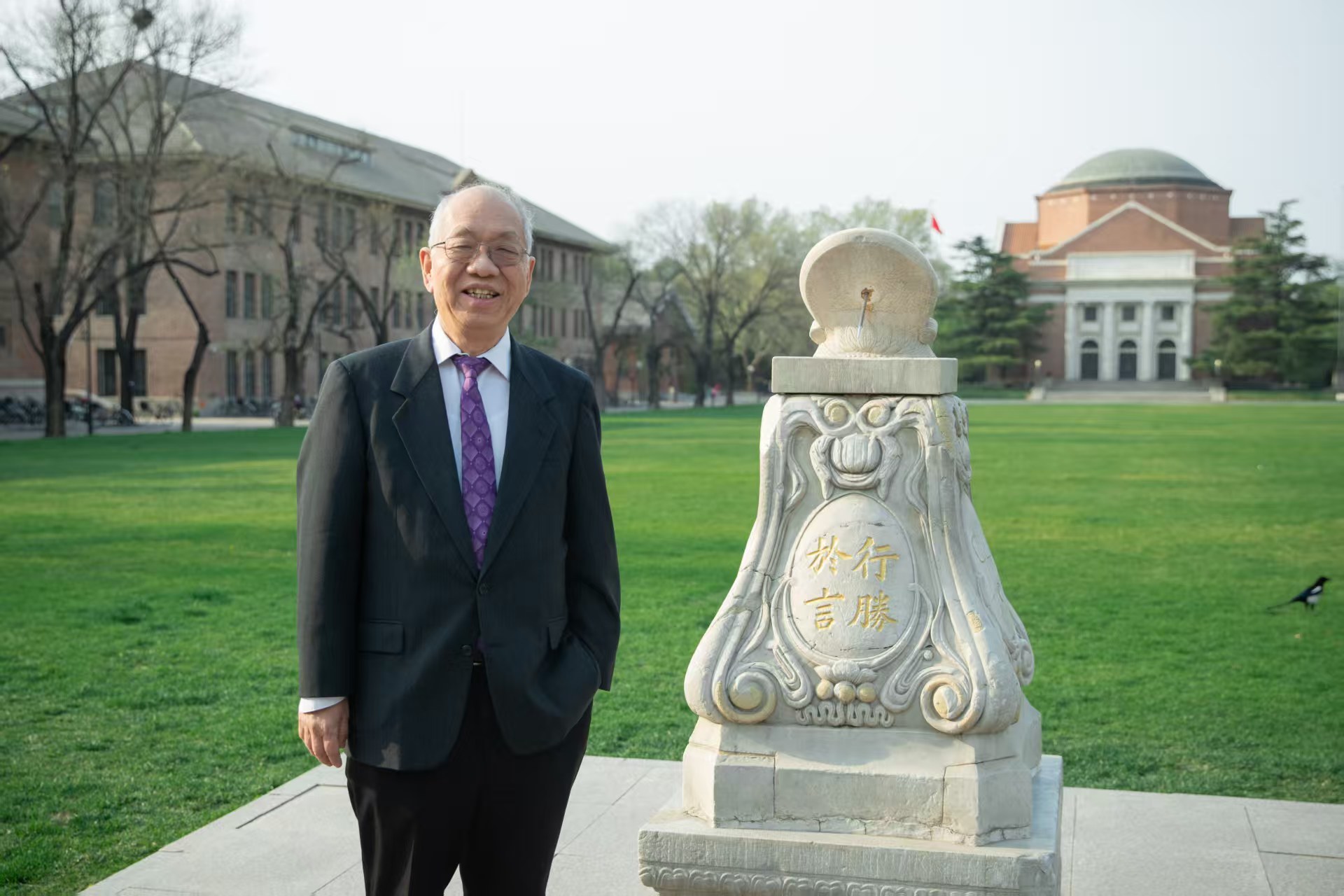
Group 1 - The book challenges the Eurocentric view of the origins of modern science, suggesting that significant moments in the development of modern science should be understood within a global historical context [2] - It emphasizes that the scientific revolution of the 16th century was a process that integrated knowledge from various cultures around the world, rather than being solely a European phenomenon [2] - The exploration journeys sponsored by European states in the 18th century led to advancements in various scientific disciplines, relying heavily on indigenous knowledge from the regions they explored [2] Group 2 - The book discusses the impact of the publication of "Compendium of Materia Medica" by Li Shizhen in the late 16th century, which categorized natural phenomena and influenced European scientific thought [3] - It highlights the significance of Charles Darwin's "On the Origin of Species," which was shaped by global discoveries and discussions on evolution that began in the late 18th century [3] - The translation and dissemination of Darwin's work into at least 15 languages by the time of World War I illustrates its global impact [3] Group 3 - The book explores the relationship between physics and international politics in the early 20th century, noting that international cooperation and conflict have continuously shaped the development of modern science [4] - It mentions the collaborative efforts of scientists from various countries, including China, in advancing modern physics, particularly in the context of relativity and quantum mechanics [4] - The current trends in research fields such as artificial intelligence, space exploration, and climate science highlight the necessity for international cooperation and knowledge sharing in addressing global challenges [4]
邵亦波谈AI与个人成长丨万字笔记
混沌学园· 2025-09-02 11:58
Group 1 - The article discusses the challenges and crises brought by the AI era, emphasizing the importance of personal growth and the new possibilities AI offers for human inner development [3][14][25] - It highlights the shift from a mechanical, efficiency-driven worldview to one that values emotional connection, meaning, and presence, contrasting Newtonian mechanics with quantum mechanics [15][19][21] - The article presents alarming statistics about the lack of meaning and connection in modern life, particularly among youth in countries like the UK and the US, where a significant percentage report feelings of loneliness and lack of purpose [22][23] Group 2 - The author suggests that AI, while a powerful tool, can lead to a more disconnected existence if not used consciously, as it operates purely on logic and data without understanding meaning [25][27][30] - There is a call for individuals to reconnect with their inner selves and emotions, advocating for practices that foster this connection rather than relying solely on external stimuli [31][32] - The potential for AI to assist in personal growth is acknowledged, with the idea that it can help individuals become more aware of their emotions and promote a deeper connection with themselves [34][35]

量子专题:2025量子互联网与算网协同体系架构白皮书
Sou Hu Cai Jing· 2025-08-25 16:07
Core Insights - The report titled "Quantum Internet and Computing Network Collaborative Architecture White Paper 2025" systematically outlines the technologies, architectures, and applications related to quantum internet and computing network collaboration [1][4][5] - It emphasizes the foundational concepts of quantum information technology, including quantum communication, quantum computing, and quantum precision measurement, while also discussing the current state and future directions of quantum internet development [1][12] Group 1: Quantum Information Technology Overview - The report introduces core concepts of quantum mechanics such as superposition, entanglement, and quantum measurement, which are essential for understanding quantum information technology [1][11] - It categorizes typical applications into three areas: quantum communication (including Quantum Key Distribution, Quantum Teleportation, and Quantum Secure Direct Communication), quantum computing (with existing platforms like superconductors and ion traps), and quantum precision measurement [1][11][12] - The document also mentions experimental systems and the DiVincenzo criteria necessary for quantum computing [1][12] Group 2: Quantum Internet Architecture - The architecture of the quantum internet is described, highlighting its development in six stages, including trusted relay, preparation, and measurement [1][12] - Various generations of quantum relays are discussed, with the first generation including pre-report entanglement distribution and all-optical relays using cluster states [1][12] - The report outlines multiple protocol stack options, such as the Van Meter and Wehner five-layer models, and discusses packet switching technologies based on classical-quantum hybrid frames [1][12] Group 3: Quantum Internet Operation Modes - Initial resource-efficient operational modes for the quantum internet are proposed, distinguishing between user and main networks, with nodes including users and routers [1][12] - The report illustrates application protocol operations using examples like BBM92-QKD and distributed quantum computing, emphasizing the need for establishing end-to-end entangled channels before executing protocols [1][12] Group 4: Quantum Computing Network Collaboration - The report analyzes three collaborative trends in quantum computing: quantum cloud computing, integration of quantum and supercomputing, and distributed quantum computing [1][12] - It highlights the special requirements of quantum applications regarding fidelity and latency, necessitating collaboration between quantum and computing networks [1][12] - Research directions are proposed, focusing on resource abstraction and modeling, quantum business modeling, and scheduling framework modeling [1][12] Group 5: Current Status and Future Directions - The report concludes that the quantum internet is still in its early stages, facing challenges in hardware technology and architectural maturity [1][12] - It emphasizes the need for breakthroughs in quantum relay and error correction technologies, alongside the integration of classical infrastructure to foster new collaborative business models in quantum computing [1][12]

避免事故,了解原理,避开误区——去医院做核磁共振先看这份科普指南
Xin Lang Cai Jing· 2025-08-22 06:25
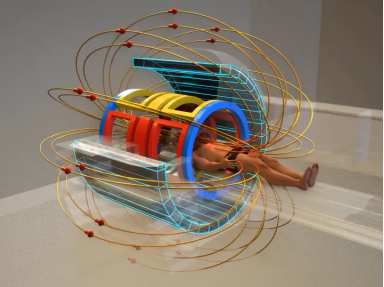
Group 1 - A tragic incident occurred in New York where a man died after being pulled into an MRI machine due to wearing a metal necklace, highlighting the dangers associated with MRI technology [1][18][22] - MRI technology operates based on the principles of quantum mechanics, specifically the concept of "spin" in atomic nuclei, which allows for imaging without ionizing radiation [3][4][22] - Hydrogen nuclei are the primary focus in MRI due to their abundance in the human body and their magnetic properties, making them ideal for imaging [4][6][24] Group 2 - The MRI machine generates a strong magnetic field that can be several thousand times stronger than the Earth's magnetic field, posing risks if metal objects are present [18][20][22] - Unlike X-rays and CT scans, MRI does not involve ionizing radiation, making it a safer option for imaging [22][24] - The technology has become essential in modern medicine, with numerous patients relying on it for diagnosis, although strict adherence to safety protocols is necessary to prevent accidents [24]
张朝阳与David Tong谈物理学习:科学教育必须注入严谨的数学思维
Yang Guang Wang· 2025-08-19 01:34
Core Insights - The dialogue between Zhang Chaoyang and David Tong covers significant advancements in physics, emphasizing the importance of basic science communication in the internet age [2][3][10] Group 1: Classical Physics - The discussion begins with classical physics, highlighting Newton's contributions and the historical context of his work, including the near-miss of his recognition as the founder of classical mechanics [4] - The conversation touches on the transition in understanding fluid mechanics, particularly how the Navier-Stokes equations initially misled perceptions of flight before the significance of viscosity was recognized [5] Group 2: Electromagnetism and Quantum Mechanics - The evolution of electromagnetism is discussed, particularly the foundational role of Maxwell's equations and their stability over time [6] - The establishment of quantum mechanics is noted as a revolutionary moment in physics, with emphasis on Heisenberg's contributions and the significance of discrete energy levels [7] Group 3: Cosmology and Extraterrestrial Life - The dialogue explores the mysteries of the universe, including black holes and the implications of gravitational wave discoveries, which challenge existing theories about black hole formation [8][9] - The probability of extraterrestrial life is debated, with a focus on the vastness of the universe and the challenges of life formation [9] Group 4: Science Communication and Education - The importance of rigorous mathematical thinking in science education is emphasized, with a call for effective science communication that does not shy away from complex formulas [10] - The potential of social media for science dissemination is highlighted, suggesting that physicists could leverage personal platforms for public education and engagement [11]

张朝阳对话理论物理学家汤大卫:我们来自量子涨落,也都是恒星的尘埃
量子位· 2025-07-31 06:51
Group 1 - The dialogue between Zhang Chaoyang and David Tong covers the evolution of physics from classical mechanics to quantum mechanics and field theory, emphasizing the importance of mathematical rigor in understanding physical laws [1][2][3] - The discussion highlights significant milestones in physics, including Newton's laws, Einstein's theories, and the development of quantum mechanics, showcasing how these theories have transformed our understanding of the universe [2][16][19] - The conversation also touches on the role of fluid dynamics in physics, particularly in understanding complex phenomena such as the behavior of quark-gluon plasma and its implications for the universe [8][12][13] Group 2 - The importance of scientific communication and public education is emphasized, with a belief that rigorous mathematics should not be avoided in popular science [35][41] - The potential of AI in assisting physicists is discussed, highlighting its role in solving complex equations and aiding research, while also acknowledging the irreplaceable value of human interaction in education [10][11][38] - The dialogue concludes with reflections on the future of scientific dissemination, suggesting that the next generation of scientists should embrace the challenge of making complex theories accessible without oversimplifying the underlying mathematics [36][40][41]

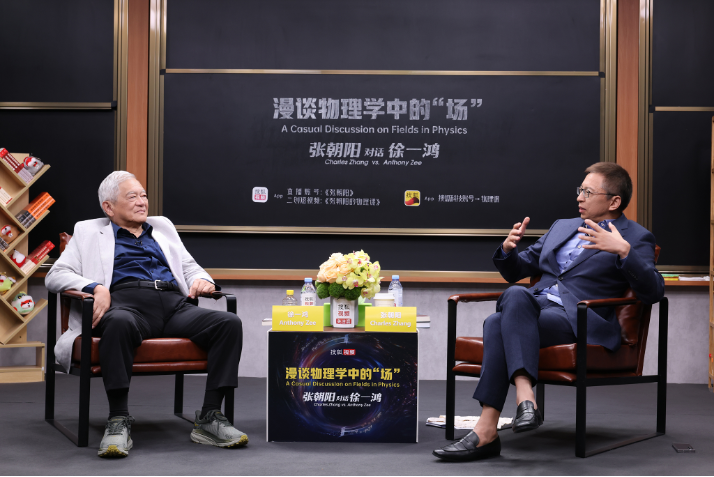
回溯物理学统一之路,张朝阳对话物理学家徐一鸿
Jing Ji Wang· 2025-07-21 07:01
Core Viewpoint - The discussion between Zhang Chaoyang and Xu Yihong highlights the historical development and unification of physics theories, emphasizing the importance of curiosity and creativity in advancing the field [1][3]. Group 1: Historical Milestones in Physics - 2025 marks significant anniversaries for key physics theories, including the 120th anniversary of special relativity and the 110th anniversary of general relativity, indicating major advancements in human understanding of nature [3]. - Newton unified the laws of mechanics for celestial and terrestrial bodies, while Maxwell completed the classical unification of electricity and magnetism [3]. - Einstein's contributions through special and general relativity revealed profound connections between spacetime and gravity, leading to a deeper understanding of the universe [3]. Group 2: Quantum Mechanics and Field Theory - Quantum mechanics, through Schrödinger's wave equation and Heisenberg's matrix mechanics, established a foundational framework for modern physics, culminating in the development of quantum field theory [4]. - Quantum field theory is recognized as one of the most powerful and successful theories in human history, accurately calculating atomic spectra and the electron magnetic moment [4]. Group 3: The Role of Serendipity in Theoretical Development - Important theoretical advancements often stem from existing theories that may not receive immediate attention, as illustrated by Maxwell's equations hinting at Lorentz symmetry [6][8]. - The development of new theories requires both intellectual insight and a degree of luck, as demonstrated by Einstein's timely corrections to his predictions regarding light bending [8]. Group 4: The Future of Physics and AI - Current AI capabilities are limited to processing vast amounts of data and cannot replicate human intuition in exploring physics, which remains reliant on human creativity and thought [9].