301调查

Search documents
美国商务部启动对无人机、多晶硅232调查,意欲何为?
第一财经· 2025-07-17 03:11
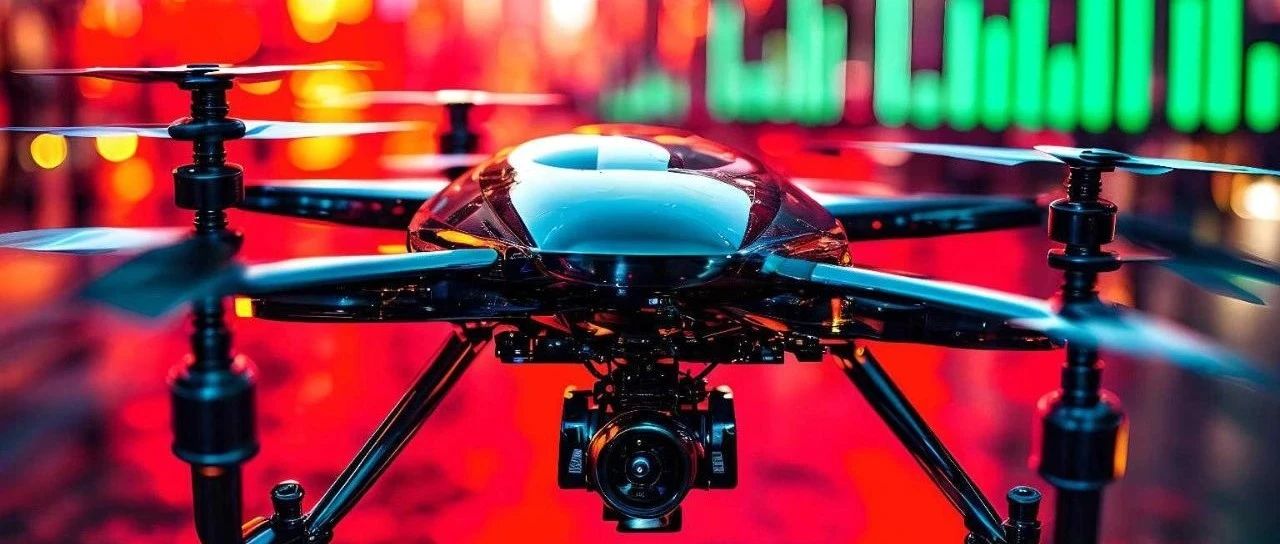
Core Viewpoint - The article discusses the recent initiation of two Section 232 investigations by the U.S. government concerning "drone systems and their components" and "polysilicon and its derivatives," highlighting the potential implications for national security and domestic industry protection [1][2]. Group 1: Investigations Overview - The investigations began on July 1 and are currently in the public comment phase, with stakeholders able to submit opinions until August 4 [2][7]. - The U.S. Department of Commerce is focusing on the domestic production capabilities of drone systems and polysilicon, assessing whether they can meet current and future demands [7][8]. - The investigations aim to evaluate the risks associated with foreign supply chains and the concentration of imports from a limited number of suppliers [7][8]. Group 2: Implications for Domestic Industry - The investigations indicate a shift in U.S. policy from upstream basic materials to downstream high-tech applications, which may signal a broader trend of protectionism [3][4]. - The products under investigation lack comparative advantages for the U.S., suggesting that any tariffs imposed could harm domestic supply chains [4][8]. - The article notes that previous Section 232 investigations, such as those on steel and aluminum, followed a similar logic, where tariffs were used to protect domestic markets and stimulate local production [9][10]. Group 3: Broader Context of Section 232 Investigations - A total of 11 products are currently under Section 232 investigations, including steel, aluminum, automotive products, semiconductors, and more [12]. - The U.S. has already implemented significant tariffs, such as a 50% tariff on steel and aluminum and a 25% tariff on automotive products valued at $153 billion [13]. - The investigations are framed within a national security context, where economic security is equated with national security, reflecting concerns over industrial decline and its socio-political ramifications [16][18].

美贸易代表办公室宣布对巴西发起“301调查”
中国基金报· 2025-07-16 02:28
Core Viewpoint - The U.S. Trade Representative's Office has initiated a "301 investigation" into Brazil's government practices related to digital trade and electronic payment services, focusing on issues such as unfair tariff preferences, anti-corruption interventions, intellectual property protection, ethanol market access, and illegal deforestation, which may restrict U.S. business interests [1] Group 1 - The "301 investigation" is based on Section 301 of the U.S. Trade Act of 1974, which allows the U.S. Trade Representative to investigate "unreasonable or unfair trade practices" of other countries [1] - Following the investigation, the U.S. Trade Representative can recommend unilateral sanctions to the U.S. President if deemed necessary [1]
关税突发!特朗普宣布→
第一财经· 2025-07-16 00:59
Group 1 - President Trump announced that tariffs will begin on August 1, with agreements with Vietnam and Indonesia nearly finalized [1][2] - Tariffs for smaller countries are expected to be "slightly above 10%" [2] - The U.S. has sent letters to over 20 country leaders regarding new tariffs starting August 1, including a 50% tariff on all copper imports [1][2] Group 2 - A significant agreement was reached with Indonesia, where Indonesia will purchase $15 billion in U.S. energy products, $4.5 billion in agricultural products, and 50 Boeing aircraft [3][4] - Indonesia will impose a 19% tariff on all goods exported to the U.S., while U.S. exports to Indonesia will enjoy tariff-free treatment [4] - Similar trade agreements are reportedly in progress [5] Group 3 - Canadian Prime Minister Carney expressed skepticism about the U.S. willingness to reach agreements without imposing tariffs, indicating that most countries may have to accept some baseline tariffs [6] - Negotiations with the U.S. are expected to intensify in the coming weeks [7] Group 4 - The U.S. Trade Representative's office announced a "301 investigation" into Brazil, focusing on unfair trade practices related to digital trade, electronic payment services, and other issues [8]
美贸易代表办公室宣布对巴西发起“301调查”
news flash· 2025-07-16 00:05
Core Viewpoint - The U.S. Trade Representative's Office has initiated a "Section 301 investigation" into Brazil's government practices related to digital trade and electronic payment services, focusing on issues such as unfair tariff preferences, anti-corruption interventions, intellectual property protection, and ethanol market access, which may restrict U.S. business interests [1] Group 1 - The investigation will assess whether Brazil's actions are in violation of U.S. trade laws, particularly concerning digital trade and electronic payment services [1] - The "Section 301 investigation" is based on the U.S. Trade Act of 1974, which allows the U.S. Trade Representative to investigate "unreasonable or unfair trade practices" by other countries [1] - Following the investigation, the U.S. Trade Representative may recommend unilateral sanctions to the U.S. President if Brazil's practices are found to be detrimental to U.S. commerce [1]
美国贸易代表办公室宣布启动针对巴西不公平贸易行为的301调查。
news flash· 2025-07-15 23:08
Group 1 - The U.S. Trade Representative's Office has announced the initiation of a Section 301 investigation into Brazil's unfair trade practices [1]
最高50%!特朗普再宣称对8国加征关税,缘何摩尔多瓦也上榜?
Di Yi Cai Jing· 2025-07-10 07:15
Core Points - The latest tariff letters from President Trump target eight countries, including Brazil, the Philippines, and Moldova, with varying rates of tariffs set to begin on August 1, 2025 [2] - Tariffs on products from the Philippines will be 20%, while those from Brunei and Moldova will face 25%. Algeria, Iraq, Sri Lanka, and Libya will see a 30% tariff, and Brazil will face a 50% tariff [2] - Compared to previous rates announced in April, tariffs on Iraq and Sri Lanka have decreased from 39% and 44% to 30%, while the tariff on the Philippines has increased from 17% to 20% [2] Group 1 - Trump criticized Brazil for "unfair trade practices" and indicated that the 50% tariff is still below what is necessary for fair competition [4] - He warned that if Brazil retaliates with higher tariffs on U.S. goods, the U.S. may increase tariffs on Brazil beyond 50% [4] - Trump has instructed the U.S. Trade Representative to initiate a Section 301 investigation against Brazil, suggesting potential adjustments to tariffs based on trade relations [5] Group 2 - The inclusion of Moldova in the tariff letters is notable, as the trade deficit with the U.S. was only $85 million last year, raising questions about the rationale behind the designation [6] - Experts suggest that the U.S. government has previously focused too much on major trading partners, neglecting smaller countries, and the current approach appears to lack a coherent strategy [6] - The trade policy being executed by the Trump administration is seen as consistent, based on perceptions of "reciprocity" and trade imbalances, without differentiating between countries [6]
特朗普威胁对铜和药品开征新关税,缘何要对美方“232调查”提高警惕?
Di Yi Cai Jing· 2025-07-09 10:26
Group 1: Tariff Announcements - The Trump administration plans to impose a new 50% tariff on all copper imports to the U.S., with no specific effective date announced [1][3] - The U.S. government is also considering new tariffs on pharmaceuticals, semiconductors, and other specific industries, with potential tariffs on foreign-made drugs reaching up to 200% [5][8] - The announcement of these tariffs is expected to be made on the morning of the 9th, with additional measures related to at least seven countries to be revealed later that day [1][9] Group 2: Market Reactions - Following the announcement of the copper tariff, New York copper futures surged by 13%, reaching $5.69 per pound, marking the largest increase since 1969 [3] - Analysts predict that the copper market will experience a significant turning point in 2025 due to these tariff changes [3] Group 3: Industry Impacts - Chile is the largest supplier of refined copper to the U.S., accounting for approximately 70% of imports, and high tariffs could severely impact its trade conditions [4] - The Canadian Mining Association warns that the U.S. lacks sufficient copper refining capacity and that high tariffs could harm U.S. manufacturing [4] Group 4: Investigations and Legal Framework - The U.S. initiated a Section 232 investigation into copper imports, citing national security concerns, which could extend to various forms of copper products [5][6] - The investigation aims to assess the impact of copper imports on national security, highlighting the U.S.'s increasing dependence on foreign sources for copper [5][6] Group 5: Future Trade Relations - The Trump administration is expected to send 15 to 20 letters to trade partners regarding tariff measures, with a focus on maintaining communication with the EU [10] - The EU is reportedly working closely with the Trump administration to reach a temporary trade agreement while discussions on tariffs continue [10]
特朗普威胁对金砖国家加征10%新关税,外交部回应:贸易战、关税战没有赢家
Di Yi Cai Jing· 2025-07-07 12:32
Core Viewpoint - China has reiterated its stance against tariff increases, emphasizing that trade wars and tariff battles yield no winners and that protectionism is not a viable solution [1][2]. Group 1: China's Position on Tariffs - China has consistently opposed tariff wars and the use of tariffs as tools for coercion, stating that arbitrary tariff increases do not benefit any party involved [2]. - The BRICS mechanism is highlighted as an important platform for cooperation among emerging markets and developing countries, promoting openness and inclusivity without targeting any specific nation [1][2]. Group 2: U.S. Tariff Developments - The U.S. is approaching a deadline for tariff negotiations set for July 9, with President Trump indicating that a combination of letters and agreements will be sent out to various countries [3][4]. - Trump confirmed that the related tariffs are set to take effect on August 1, with potential letters involving different amounts and wording for various economies [4]. - The U.S. has proposed significant "reciprocal tariffs" on allies, with rates as high as 25% for some countries and even higher for Southeast Asian nations [5]. Group 3: Legal and Regulatory Context - The U.S. International Trade Court has ruled that the International Emergency Economic Powers Act (IEEPA) does not grant the President unlimited authority to impose tariffs, leading to questions about the legality of unilateral tariff notifications [7][8]. - Legal experts suggest that unilateral tariff imposition may violate international law and could be challenged in the World Trade Organization (WTO) [8].
加拿大让步!取消数字服务税后,美加贸易谈判就能恢复?
第一财经· 2025-06-30 14:41
Core Viewpoint - Canada has decided to cancel its digital services tax to facilitate trade negotiations with the United States, aiming for an agreement by July 21, 2025 [1][3]. Group 1: Digital Services Tax Cancellation - The Canadian government announced the cancellation of the digital services tax, which was set to impose a 3% tax on revenues from tech companies providing services to Canadian users, effective from June 30 [1][3]. - The decision to cancel the tax is seen as a concession to the Trump administration, following pressure from Canadian business leaders and associations [3][4]. - The cancellation is expected to help establish a new economic and security relationship with the U.S. and create job opportunities for Canadians [3][4]. Group 2: Trade Negotiations Context - The trade dispute escalated quickly, with the U.S. halting negotiations after Canada announced the tax, leading to potential new tariffs on Canadian goods [1][3]. - The Canadian Business Council's CEO emphasized the need for Canada to propose a plan to cancel the tax in exchange for the U.S. lifting tariffs [4]. - Experts have criticized the Canadian government's approach, suggesting that the unilateral cancellation of the tax may not significantly impact the broader trade negotiations [4]. Group 3: Broader Trade Negotiation Challenges - Despite the cancellation of the digital services tax, U.S. trade negotiations with various partners, including the UK, have not progressed as expected, with only limited agreements reached [5]. - Ongoing investigations into tariffs on products like semiconductors and pharmaceuticals have created uncertainty in U.S. trade discussions with major partners [5]. - Legal disputes regarding the imposition of tariffs under the International Emergency Economic Powers Act have added further complexity to the trade landscape [5][6].
特朗普“炮轰”加拿大数字服务税!美国或将对加拿大发起301调查?
第一财经· 2025-06-28 03:32
Group 1 - The article discusses the announcement by Canada to impose a digital services tax on U.S. tech companies, which President Trump described as a "direct and blatant attack" on the U.S. [1] - The digital services tax, effective from June 28, 2024, will charge a 3% tax on certain total revenues related to online markets, targeted advertising, social media platforms, and user data [3] - The tax applies to companies with global annual revenues exceeding €750 million (approximately $833 million) and digital service revenues in Canada exceeding CAD 20 million (approximately $14.3 million), affecting major tech firms like Amazon, Apple, Google, Meta, Uber, and Airbnb [3] Group 2 - The U.S. Trade Representative's office criticized the design of most digital services taxes, claiming they discriminate against U.S. companies while excluding domestic firms from similar taxation [5] - The Biden administration previously opposed the tax, and the U.S. Trade Representative requested dispute resolution consultations with Canada under the USMCA regarding the digital services tax [5] - U.S. industry groups and lawmakers have urged Canada to cancel or suspend the tax, but Canada’s Finance Minister confirmed that the tax will proceed as planned [5] Group 3 - U.S. Treasury Secretary indicated that the U.S. is likely to initiate a Section 301 investigation in response to Canada's digital services tax, which could lead to more lasting tariffs compared to those imposed under the International Emergency Economic Powers Act [7] - The Section 301 investigation allows the U.S. Trade Representative to investigate "unreasonable or unfair trade practices" by other countries and recommend unilateral sanctions [7] - Legal experts expressed surprise at the U.S. government’s delayed response to the ongoing dispute with Canada over the digital services tax [7]