大模型

Search documents
京东数字人领跑,直播场率先进入AI原生时代
Zhong Jin Zai Xian· 2026-01-27 02:57
Core Insights - JD.com has officially launched its annual New Year shopping festival on January 25, featuring significant discounts and promotions, including up to 50% off and additional subsidies of up to 3,000 yuan [1][2] - The introduction of AI-native digital humans marks a technological upgrade in live streaming, transitioning from a tool-based approach to a more interactive and personalized experience [2][16] Group 1: AI Native Digital Humans - The new generation of AI-native digital humans, powered by JD's JoyAI model, allows for real-time generation of various personas, enhancing the shopping experience for consumers and reducing costs for businesses [2][16] - Over 300 AI-native digital humans will be deployed during the New Year festival, covering diverse scenarios such as product promotion and brand activation [16] Group 2: Creative Engagement Strategies - The festival features over 100 brand presidents as digital avatars, engaging in live streams to promote popular products at discounted prices [3][9] - Unique characters like "Ma Honghong" and historical figures such as "Xu Xiake" are utilized to create immersive and entertaining shopping experiences, blending culture and commerce [12][14] Group 3: Technological Advancements - JD's AI-native digital humans can maintain stable, long-duration live streams with natural interactions, thanks to advancements in the JoyAI model [14][15] - Innovations include solutions to common issues like hand illusion and enhanced facial expression capabilities, allowing for a more lifelike digital presence [15][16]



马化腾回应AI焦虑,希望重现当年微信红包盛况/遭点名质疑后,豆包手机助手回应/千问最强模型深夜发布
Sou Hu Cai Jing· 2026-01-27 02:50
Group 1 - Tencent plans to distribute 1 billion yuan in red envelopes during the Spring Festival, emphasizing user rewards over marketing expenses [2][4][70] - Tencent's CEO Ma Huateng highlighted the company's steady approach to AI development, focusing on long-term product competitiveness and user experience [4][5] - The CSIG (Cloud and Smart Industry Group) achieved significant profitability in its cloud business last year [4] Group 2 - StepFun, a large model startup, secured over 5 billion yuan in financing, marking the largest single financing round in the large model sector in the past year [7][8] - The company aims to enhance its AI and terminal strategy with the new funding, and has established partnerships with major smartphone brands [8][9] - StepFun's models have been integrated into over 42 million devices, serving approximately 20 million users daily [8] Group 3 - The PCG (Platform and Content Group) is actively exploring AI integration capabilities, with new features allowing Android apps to run seamlessly on Windows [5] - The company is also enhancing its QQ platform with AI capabilities, enabling users to generate images from uploaded materials [5] Group 4 - Microsoft confirmed that a Windows 11 patch caused boot issues for some devices, requiring manual recovery steps [14][15] - The patch has led to multiple significant failures, raising concerns about the overall quality of Windows updates [16] Group 5 - The UK has experienced the highest net job losses due to AI among major economies, with an 8% reduction in jobs over the past year [44][47] - Despite a productivity increase of 11.5% due to AI, UK companies have been reducing their workforce, contrasting with job growth in the US [47][48] Group 6 - Porsche plans to reduce its dealer network in China from 114 to approximately 80, focusing on cost reduction and network optimization [29][31] - The company aims to enhance its competitiveness through a strategy that prioritizes quality over quantity [31] Group 7 - The music data scraping incident involving 300TB of data has led to lawsuits from multiple record companies against the shadow library site [34][35] - Spotify and major record labels are pursuing legal action for copyright infringement related to the unauthorized distribution of protected works [34] Group 8 - TrendForce reported that the prices of key components like CPUs and memory are rising, leading to a projected 14.8% decline in global laptop shipments in Q1 [36][39] - The report indicates that brands are facing significant pressure due to rising costs and supply chain challenges [39]


未知机构:TF计算机阿里千问3引爆算力需求IDC产业链再迎强催化-20260127
未知机构· 2026-01-27 02:00
Summary of Key Points from the Conference Call Industry and Company Involved - The conference call discusses the developments in the **IDC (Internet Data Center)** industry, particularly focusing on **Alibaba's** latest flagship model, **Qwen3-Max-Thinking** [1][2]. Core Insights and Arguments - **Launch of Qwen3-Max-Thinking**: Alibaba has officially launched its flagship reasoning model, Qwen3-Max-Thinking, which has surpassed **1 trillion parameters** and has a pre-training data volume of **36 trillion tokens**. This model is noted as the largest and most capable in Alibaba's history [1]. - **Explosion in Computing Demand**: The extreme expansion of model parameters and training data is expected to lead to an explosive growth in computing demand, providing a certain incremental boost to the IDC industry chain [1]. - **Enhanced Agent Capabilities**: The significant enhancement of the model's native agent capabilities will accelerate the deployment of large models across various scenarios, further driving the upward trend in the computing industry chain's prosperity [1]. - **Infrastructure Upgrade Requirements**: The training and inference of trillion-parameter models will impose higher requirements on data center power per rack, liquid cooling technology, and computing scheduling capabilities, indicating an urgent need for upgrades in IDC infrastructure [1]. Additional Important Content - **Expansion of Alibaba's Computing Cluster**: Alibaba's ongoing expansion of its computing cluster and the deepening of its "rent instead of buy" model are benefiting IDC vendors closely tied to its ecosystem [2]. - **Core IDC Suppliers**: Key IDC suppliers mentioned include: - **Data Port**: Over 80% of its revenue comes from Alibaba - **Runze Technology** - **Hangang Co.**: Collaborating with Alibaba to build the Zhejiang Cloud Computing Data Center [2]. - **Core Computing in South China**: - **Aofei Data**: The only publicly disclosed partner for Alibaba Cloud's computing leasing, responsible for customizing the South China data center and providing CPU/GPU computing clusters under a "rent-separate" model to ensure long-term profitability [2]. - **Computing Service Partners**: - **Runjian Co.**: Co-building the Wuxiang Cloud Valley Intelligent Computing Center - **Yunsai Zhili**: An Alibaba Cloud regional preferred MSP [2]. - **Investment Value in IDC Ecosystem**: The arrival of the trillion-parameter model era signifies a rigid growth in computing demand, highlighting the sustained investment value of Alibaba's IDC ecosystem, particularly focusing on deeply bound core targets [2].

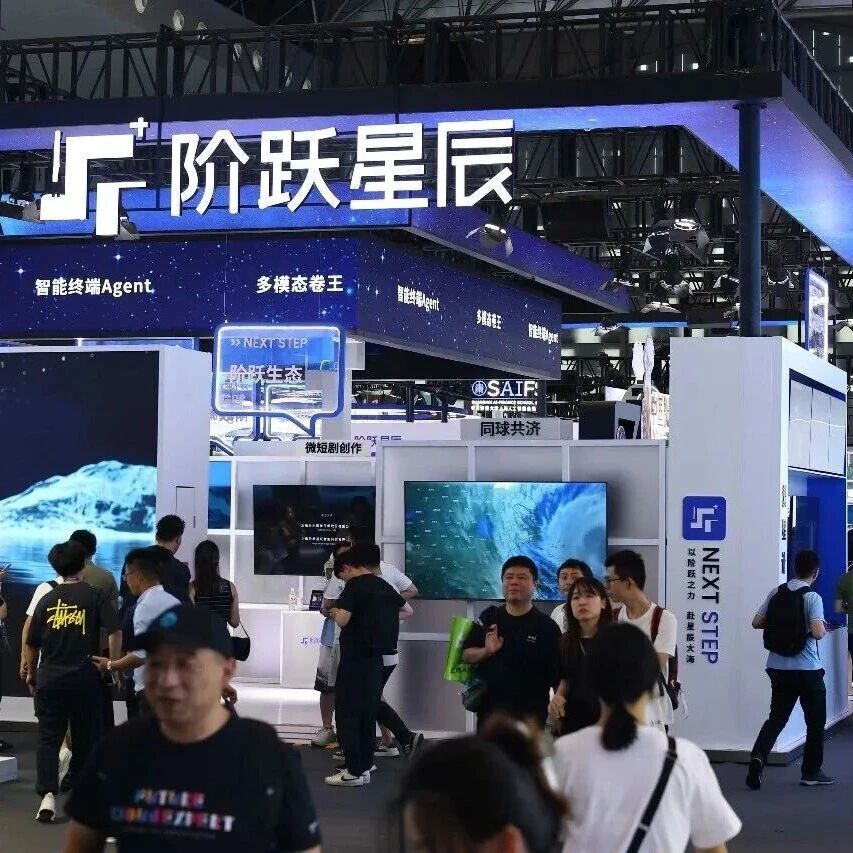
50亿元“弹药”就绪!印奇挂帅 为AI大模型注入“硬核肉身” 阶跃星辰杀入终局
Mei Ri Jing Ji Xin Wen· 2026-01-26 23:36
Core Viewpoint - The appointment of Yin Qi as the chairman of Jiyue Xingchen marks a significant strategic shift in the AI industry, particularly in the large model sector, as the company aims to leverage his expertise and resources to enhance its competitive edge and commercial viability [1][2][10]. Group 1: Leadership Changes - Yin Qi, known as a prominent figure in the AI sector, has been appointed as the chairman of Jiyue Xingchen, where he will oversee strategic direction and technological development [1][3]. - Yin Qi's background includes being the chairman of Qianli Technology and a notable entrepreneur from the AI 1.0 era, which positions him as a key asset for the company [1][3][4]. - The new management team will include CEO Jiang Daxin, Chief Scientist Zhang Xiangyu, and CTO Zhu Yibo, indicating a strong leadership structure [1][3]. Group 2: Financing and Market Position - Jiyue Xingchen has successfully completed a B+ round financing of over 5 billion RMB, setting a record for the largest single financing in the Chinese large model sector in the past 12 months [1][2]. - The company is transitioning from a phase of "financing competition" to "value realization," as evidenced by the recent market performance of competitors like MiniMax and Zhipu [1][2][10]. Group 3: Strategic Focus - The company aims to become one of the leading firms in the foundational model space in China, emphasizing a strategy that integrates AI with terminal applications [5][16]. - Jiyue Xingchen has developed three generations of foundational models and has established partnerships with major smartphone brands, achieving a model installation volume exceeding 42 million units [6][16]. - The collaboration with Qianli Technology and Geely to create the AgentOS smart cockpit represents a significant step in applying AI technology in the automotive sector [6][16]. Group 4: Commercialization Efforts - The appointment of Yin Qi is seen as a move to accelerate the commercialization of Jiyue Xingchen's technologies, with a focus on strategic direction and terminal commercialization [7][17]. - The company is working on building a comprehensive "AI + terminal" commercialization system, which includes applications in automotive, mobile, and wearable technologies [7][17]. - Jiyue Xingchen's revenue is projected to reach 1 billion RMB, indicating strong growth potential in the commercial landscape [7][17]. Group 5: Industry Context - The AI large model sector is entering a critical phase of differentiation and commercialization, with increasing pressure on companies to demonstrate their value [8][18]. - The market dynamics are shifting, with larger firms like MiniMax and Zhipu setting the pace, which may lead to accelerated consolidation in the industry [8][18]. - The competitive landscape is evolving, and companies must adapt to focus on both technological advancements and commercial viability to succeed [8][18].

信息量很大!印奇出任阶跃星辰董事长的首次深度访谈
Sou Hu Cai Jing· 2026-01-26 15:59
Group 1: New Identity and Strategic Logic - The new identity of Yin Qi includes being the chairman of Qianli Technology and the chairman of StepFun, a company focused on foundational large models [3][4] - Qianli Technology specializes in AI applications in vehicles, while StepFun serves as the foundational model supporting these applications [4][5] - The dual roles are seen as complementary, with Qianli focusing on AI in vehicles and StepFun providing the underlying AI capabilities [4][5] Group 2: Timing and Motivation - Yin Qi views his transition to StepFun as a new challenge after 15 years in the AI industry, marking a shift from AI 1.0 to 2.0 [5][6] - The decision to take on this role was influenced by the need for a strong foundational model in the AI industry, which is seen as central to future developments [5][6] Group 3: Competitive Landscape - The AI industry is described as experiencing unprecedented competition, with high talent density and significant resource requirements [20][22] - The competition is characterized by rapid technological evolution and uncertainty in commercialization paths, making it a challenging environment for all companies involved [22][23] Group 4: Expectations for StepFun - StepFun aims to become one of the leading companies in the foundational model space, focusing on talent acquisition, business models, and capital alignment [17][18] - The company seeks to establish a closed-loop business model that integrates AI and large models with end-user applications [18] Group 5: Challenges and Realities - The competitive landscape is described as more brutal than anticipated, with faster development and greater resource consumption than expected [28][29] - The presence of market bubbles is noted, particularly in company valuations and salaries for core R&D personnel, which have reportedly increased by 5 to 10 times [31][33] Group 6: Business Model Considerations - Yin Qi emphasizes the importance of focusing on core technological competitiveness and avoiding business models that are unlikely to yield positive returns [37][39] - The company will not pursue foundational models alongside B2B or pure C-end software applications, as these paths are deemed unsustainable [39][45] Group 7: Hardware and AI Integration - The integration of hardware and software is seen as essential for future AI applications, with hardware playing a crucial role in the AI service ecosystem [51][52] - The first hardware focus will be on vehicles, leveraging existing partnerships to develop intelligent driving and cockpit technologies [60][61] Group 8: Model Development Goals - StepFun's model development will focus on foundational models, multi-modal capabilities, and the integration of physical and digital data [73][75] - The company aims to maintain a leading position in foundational models while ensuring that its models are driven by real-world applications [69][70] Group 9: Organizational Strategy - Enhancements in organizational structure are planned to improve research and development efficiency, including integrating algorithm and engineering teams [85][86] - The company aims to attract top talent to strengthen its capabilities in AI technology and commercialization [89] Group 10: Market Positioning and Competition - The competitive landscape in the intelligent driving sector is expected to consolidate, with a few key players emerging as leaders [106][107] - The company anticipates that it can position itself as a significant player in this market, alongside established competitors [112][113]
阶跃星辰拿到50亿新年最大融资,资本看中了什么?
Sou Hu Cai Jing· 2026-01-26 12:49
Group 1 - The core point of the article highlights a significant B+ round financing of 5 billion RMB completed by the AI foundational model company, Jumpspace, which sets a record for single-round financing in China's large model sector over the past year [2][3] - The financing occurs against a backdrop of declining financing amounts and rounds in 2025, indicating a structural transition in the Chinese large model industry, with a shift from broad investment to concentrated bets [4] - The market is witnessing a heightened focus on companies' "system capabilities," "delivery capabilities," and "scene embedding capabilities," which are becoming the core evaluation criteria for investments in the new phase [2][4][14] Group 2 - In 2025, the number of financing rounds and total amounts for Chinese large model companies decreased significantly, with only three companies securing single-round financing exceeding 1 billion RMB [4] - Major internet companies are tightening external investment and focusing on internal model development, indicating a shift in resource allocation within the industry [4] - The successful financing of Jumpspace reflects a collective confirmation from the capital market regarding its direction, path, and organizational capabilities amidst a cautious investment atmosphere [10][12] Group 3 - Jumpspace has established a "model-engine-product" closed-loop system, releasing over 30 foundational models across various modalities, demonstrating strong deployment engineering awareness [12] - The company has achieved significant market validation, with its models installed in over 42 million devices and a daily service reach of nearly 20 million users [12][13] - The focus on embedding models into terminal applications, such as smartphones and automobiles, represents a higher threshold for productization, requiring stable operation and continuous updates [16][17] Group 4 - The competitive landscape is shifting from "who can create a stronger model" to "who can effectively embed models into real-world applications and establish sustainable product and delivery systems" [15][17] - Current mainstream business models, including cloud API calls and customized projects, are facing structural limitations, necessitating a reevaluation of the role of foundational model companies [15][16] - The ability to create a positive feedback loop from data, products, and engineering is becoming a new selection mechanism for long-term value in the industry [17]
海康威视(002415)2025年度业绩快报点评:聚焦主业高质量发展 利润增长逐季加速
Xin Lang Cai Jing· 2026-01-26 12:34
Core Viewpoint - The company reported a slight increase in total revenue for 2025, while net profit showed a significant growth trend, indicating a positive financial performance despite challenges in the domestic market [2]. Financial Performance - In 2025, the company achieved total revenue of 92.518 billion yuan, a year-on-year increase of 0.02%, with growth in innovative and international businesses, while domestic operations experienced a decline [2] - The net profit attributable to shareholders was 14.188 billion yuan, reflecting an 18.46% year-on-year increase, driven by improved gross margins, foreign exchange gains from euro appreciation, and a reversal of credit impairment losses [2] - The net profit growth rate over the past four quarters was 6.41%, 14.94%, 20.31%, and 25.83%, showing a quarterly acceleration [2] - Operating cash flow significantly outperformed net profit, with net profit growth outpacing revenue growth, and total accounts receivable and notes decreasing quarterly [2] - Capital expenditures have begun to decline from the peak reached in 2024 [2] Strategic Focus and Innovation - The company continues to invest in research and development, focusing on high-quality growth and the application of large models across various sectors [3] - The "Smart Quality" management model received the China Quality Award, and the smart factory was recognized as one of the first "Leading Smart Factories" in the country [3] - The company is concentrating on the smart IoT sector, with promising applications of AI in urban governance, industrial, and energy sectors, leading to rapid growth in related products [3] - Different AI-related products are at various stages of the S-curve, with expectations for more products to transition from the introduction phase to the growth phase post-2026 [3] Earnings Forecast and Investment Recommendation - The company provides intelligent IoT solutions and big data services globally, with significant growth potential in technology, products, and solutions [4] - Revenue forecasts for 2025-2027 are adjusted to 92.518 billion, 99.015 billion, and 105.498 billion yuan, respectively, with net profit forecasts of 14.188 billion, 15.201 billion, and 16.092 billion yuan [4] - The expected EPS for the same period is 1.55, 1.66, and 1.76 yuan per share, with corresponding PE ratios of 20.64, 19.26, and 18.20 [4] - Given the growth potential in the industry and the company's ongoing business development, a "Buy" rating is maintained [4]

春节发10亿现金,希望重现当年微信红包盛况!马化腾亲自推新品
Mei Ri Jing Ji Xin Wen· 2026-01-26 12:18
Core Insights - Tencent is launching a 1 billion yuan cash activity for its AI application "Yuanbao" during the Spring Festival, aiming to replicate the success of WeChat red envelopes from ten years ago [1][4] - The company is focusing on AI integration across its platforms, with a particular emphasis on enhancing user experience and efficiency [2][3] Group 1: AI Strategy - Tencent's Chairman Ma Huateng stated that 2025 will be a significant year for AI, with the company investing heavily in AI while maintaining a steady approach in other sectors [1] - The company is restructuring its AI team to attract top talent, including PhD graduates and AI-native professionals [1] - Tencent's TEG and CSIG divisions are identified as the main forces driving the company's AI initiatives, with plans to integrate large models and AI products [1] Group 2: Yuanbao and Social Features - The "Yuanbao" app will introduce a new social module called "Yuanbao Pai," allowing users to create or join groups for various social activities [3] - "Yuanbao Pai" is designed to incorporate AI as an active participant in social interactions, enhancing user engagement through features like shared screens and collaborative viewing [3] - The company aims to deepen AI integration within its existing social platforms, such as WeChat and QQ, to strengthen its dominance in the consumer social ecosystem [3] Group 3: Historical Context and Market Expectations - Tencent's previous success with the 2015 Spring Festival red envelope campaign significantly transformed user payment habits and solidified its ecosystem [4] - The current 1 billion yuan initiative is seen as a strategic move to leverage the Spring Festival as a "super scene" for accelerating AI adoption [5]
红杉中国成2025年IPO之王
阿尔法工场研究院· 2026-01-26 10:45
以下文章来源于融中财经 ,作者安多 融中财经 . 中国领先的股权投资与产业投资媒体平台。聚焦报道中国新经济发展和创新投资全产业链。通过全媒体 资讯平台、品牌活动、研究服务、专家咨询、投资顾问等业务,为政府、企业、投资机构提供一站式专 业服务。 导语:信心比黄金更重要。 2025 年,是股权行业重振旗鼓的一年。 经历了漫长的低潮后,农历春节后, DeepSeek 的爆火出圈,不仅震动了整个创投行业,更让 整个创投生态重拾技术自信。 不断有投资人提及,信心比黄金更重要。而这一标志性事件,让原来逐渐寂静的投资赛道,又多 了亮点和冲劲。 年关之际,摩尔线程、沐曦股份、壁仞科技等 GPU 赛道的头部玩家接连实现 IPO ,一波波股价 的高潮让辛苦一年的投资人更加兴奋。紧接着,智谱、 MiniMax 的上市,打出了全球大模型上 市的样板。辛苦数年的投资人终于守得云开…… 2025年A股新增上市公司116家,以制造业、科学研究和技术服务业为代表的高新技术企业市值 变化尤为突出,总市值较年初分别增长33.3%和32.1%,占A股市值的比重分别增加4.2个百分点 和0.1个百分点。 这些项目上市的纪念相册上,总有投资人的身影。 ...



大模型淘汰赛下半场,阶跃的底牌是什么?
虎嗅APP· 2026-01-26 10:26
Core Viewpoint - The article highlights the emergence of new players in the large model sector, particularly focusing on Jieyue Xingchen, which has recently appointed a new chairman and secured over 5 billion yuan in Series B+ funding, setting a record for single financing in the past 12 months [2][3]. Group 1: Company Developments - Jieyue Xingchen's recent funding is seen as a significant bet on the next phase of large model commercialization, especially as few companies have managed to secure substantial financing in the past year [2]. - The appointment of Inqi as chairman is expected to enhance the company's strategic direction, given his extensive experience and connections within the industry [11][12]. Group 2: Business Model and Strategy - Jieyue Xingchen distinguishes itself by focusing on the "AI + terminal" closed-loop model, integrating large model capabilities directly into hardware products like cars and smartphones, rather than merely selling models or APIs [5][9]. - The company has established partnerships with major automotive brands, embedding its technology into smart vehicle systems, which has resulted in significant sales, such as the Galaxy M9 model achieving nearly 40,000 units sold within three months of launch [5][7]. - In the smartphone sector, Jieyue Xingchen has collaborated with 60% of leading domestic brands, indicating a strong market presence [7]. Group 3: Competitive Landscape - The article notes a clear differentiation among companies in the large model space, with Jieyue Xingchen's path being more straightforward compared to others that are either focusing on enterprise privatization or consumer applications [3][9]. - The current competitive environment is shifting from a focus on model capabilities to the ability to implement these models in real-world applications, with Jieyue Xingchen positioned to capitalize on this trend [19]. Group 4: Talent and Leadership - The leadership team at Jieyue Xingchen, including CEO Jiang Daxin and key figures like Zhang Xiangyu and Zhu Yibo, brings a wealth of experience in AI and system engineering, which is crucial for the company's success in the AI + terminal strategy [13][14][16]. - The combination of technical expertise and practical experience within the team is seen as a significant competitive advantage, enabling the company to effectively translate AI capabilities into marketable products [16].