
Agentic AI

Search documents
AI代码采用率超50%,安克创新全面拥抱AI实现全球业务拓展 | 创新场景
Tai Mei Ti A P P· 2025-09-04 05:43
Core Insights - The article highlights the rapid adoption of Agentic AI technology driven by generative AI applications, with Anker Innovations positioning "intelligence" as its core competitive advantage through a comprehensive AI strategy initiated in 2023 [1] Internal R&D - Anker Innovations has integrated Amazon Bedrock with the Anthropic Claude model to develop various applications such as demand generation, product documentation, customer voice insights, code review, and AI operations [1] - The adoption rate of agent code in internal R&D exceeds 50%, significantly shortening iteration cycles and reducing repetitive human input [2] Marketing Services - The company has built a personalized intelligent customer service system using Amazon Connect, enabling seamless AI service activation and timely user response through natural language dialogue [2] - The AI customer service agent has a first-time resolution rate exceeding 70%, and the intelligent advertising agent has supported over 20,000 advertising campaigns, with 20% of ads being automatically managed by AI [2] AI Capability Platform - Anker Innovations has developed the enterprise-level AI capability platform "AIME," which has over 300 active AI agents, providing unified access interfaces and data management capabilities across various business scenarios [2] - The AIME platform has achieved over 10 million calls, facilitating rapid deployment and scalable operation of AI applications across different business lines, enabling intelligent office and automated management for personnel in various roles [2]
Okta (OKTA) 2025 Conference Transcript
2025-09-03 15:12
Summary of Okta (OKTA) 2025 Conference Call Company Overview - **Company**: Okta, a leader in identity security and management solutions - **Industry**: Cybersecurity, specifically focusing on identity security and access management Key Points and Arguments M&A Strategy and Market Activity - Okta's corporate development strategy is proactive, focusing on acquisitions that accelerate their roadmap, particularly in the privileged access space [7][9] - The current M&A environment is described as one of the busiest periods, with significant activity in the security sector [8] - Recent acquisition of a small company in the privileged access space aligns with Okta's strategy to enhance their offerings [9] Identity Security Fabric - Okta views identity as a broad platform termed "identity security fabric," which encompasses various user types, including employees, partners, and AI agents [13][14] - The company aims to provide secure access and governance for all types of users, including agentic AI, which presents new challenges in visibility and privilege management [16][21] AI Integration and Opportunities - Okta is focusing on integrating AI into their offerings, particularly in relation to agentic AI, which requires secure and compliant access management [12][50] - The company has launched offerings specifically for AI agents, indicating a strong belief in the growth potential of generative AI applications [43][45] Financial Performance and Growth Strategy - Okta has achieved operating margins in the mid to high twenties and is focused on reaccelerating top-line growth while maintaining a rule of 40 framework [56][57] - New product initiatives are contributing significantly to bookings, with expectations for continued growth in this area [58][66] - The company is bifurcating its sales team to better address the needs of different customer segments, enhancing productivity and effectiveness [59][63] Competitive Landscape - Okta positions itself as a best-of-breed provider, coexisting with larger competitors like Microsoft and CyberArk, rather than competing directly [30][87] - The company emphasizes the importance of partnerships and integrations within the ecosystem to enhance their market position [31][76] International and Public Sector Growth - Okta is focusing on key international markets to drive growth, concentrating resources on the top 10 countries [74][75] - The U.S. public sector business has shown strong performance due to strategic investments and certifications, allowing Okta to participate in significant modernization projects [84][85] Customer Retention and Acquisition - The company is experiencing pressure on net retention rates due to a "COVID cohort" of customers who overbought seats during the pandemic [67][72] - Despite this, gross retention remains stable, and Okta is focused on expanding its product offerings to mitigate seat-related issues [68][72] Additional Important Insights - Okta is actively learning how to adopt AI internally while maintaining a strong focus on security and governance [51][52] - The company is optimistic about its role in government efficiency and modernization efforts, particularly in the context of zero trust initiatives [86] This summary encapsulates the key themes and insights from the Okta conference call, highlighting the company's strategic direction, market positioning, and growth initiatives.

Sachdev: If AI gives us more long weekends, we’ll know it’s driving productivity
CNBC Television· 2025-09-03 11:36
AI Adoption & Strategy - Unifor observes deep AI adoption in specific industries and use cases, despite industry reports suggesting potential failures of AI agents [2] - Unifor focuses on "fit-for-purpose AI" and "business AI," aiming to deliver productivity and automation to businesses, contrasting with the "super intelligence" pursuit of companies like OpenAI and Grock [5] - Unifor's acquisitions of RBI and Autonomate are aimed at accelerating AI innovation, particularly in Agentic AI, to benefit its customers [3] Talent Acquisition & Competition - The AI talent pool is scarce and mission-driven, with researchers choosing between pursuing "super intelligence" or delivering real business applications [7][9] - Unifor attracts AI talent by offering the opportunity to deliver automation solutions to over 2,000 businesses, including Fortune 500 companies, emphasizing real-world impact [7][10] - Unifor competes with larger tech companies for talent by focusing on the mission-driven aspect of AI research, rather than solely on compensation [9][10] Future Outlook & IPO - Unifor aims to increase its customer base from 2,000 to 4,000 and then to 8,000, believing this growth will naturally lead to a potential IPO [14] - Unifor will consider going public when the timing and market conditions are favorable [14] - The company views the opening up of public markets for tech IPOs positively, noting anticipation for mega IPOs from companies like Data Bricks, Canva, and Stripe [13] Measuring AI Success - Unifor suggests that the success of AI in business can be measured by increased productivity, potentially leading to more long weekends for workers [11]


EDA巨头高管:三维集成电路的未来,不仅是物理结构堆叠
Guan Cha Zhe Wang· 2025-09-03 05:40
Core Insights - The semiconductor industry is experiencing a significant transformation driven by advancements in AI, particularly in chip design and system development [1][2][3] - Cadence's vision for the future of chip design involves the integration of Agentic AI to automate the design process, moving away from manual coding and layout [1][4] - The market forecast for the semiconductor industry has been revised upwards, with expectations to exceed $1.2 trillion by 2030, largely due to the growth in AI computing and data centers [2] Group 1: AI and Chip Design - The emergence of generative AI and Agentic AI will lead to automated chip design based on high-level functional descriptions, enhancing user experience [1][2] - Advanced packaging technologies, such as 3D integrated circuits, are essential for overcoming performance bottlenecks in complex semiconductor designs [1][2] - Cadence's "three layer cake" concept emphasizes the need for collaboration between design tools, IP development, and hardware solutions to meet dynamic customer requirements [2] Group 2: EDA and AI Integration - The traditional methods of simulation and AI in EDA are evolving, with AI now capable of addressing complex physical modeling and automated design challenges [3][4] - Cadence has integrated "Optimization AI" into over 50% of its tools, with plans to exceed 80% in the next two years, enhancing speed, quality, and error detection [4] - The introduction of the JedAI platform allows users to interact with tools using natural language, facilitating a shift towards a "dialogue-based interaction" era in EDA [3][4] Group 3: Future Vision - The long-term vision for design automation involves users simply inputting functional requirements, with Agentic AI generating netlists and executing design processes autonomously [4] - Cadence aims to be a partner in intelligent system design, extending capabilities from chips to packaging and circuit boards [4]


企业数据“LLM ready”与“小Palantir”们的崛起 | AGIX PM Notes
海外独角兽· 2025-09-01 12:22
Core Insights - The article emphasizes the transformative potential of AGI (Artificial General Intelligence) over the next 20 years, likening its impact to that of the internet on society [2] - It discusses the current state of AI development, indicating that many companies are still in the preparatory phase, focusing on data readiness and organizational transformation [3][4] Group 1: AI Development and Company Insights - A subset of startups, often founded by former Palantir employees, is achieving profitability without heavy financing, highlighting a different approach to AI development [3] - Distyl.ai exemplifies the complexity of AI integration into business processes, requiring a systemic overhaul rather than mere tool replacement [4][5] - The article identifies three key dimensions for data preparation: Data Infrastructure, Knowledge Distillation, and Simulation, which are essential for effective AI deployment [5][6] Group 2: Market Performance and Trends - AGIX has shown strong performance, with a weekly increase of 1.99%, outperforming major indices like S&P 500 and QQQ [11][15] - The technology sector experienced net selling, with a notable focus on industrial and communication services, while AI-related stocks like Snowflake and MongoDB saw significant gains [12][14] - The article notes that the current investment environment is favoring companies that can effectively leverage AI capabilities, indicating a shift in market dynamics [15][16] Group 3: AI Infrastructure and Future Directions - Real-time data processing is becoming crucial, with companies like Confluent enhancing their offerings to support AI agents in monitoring and decision-making [7][8] - The integration of AI into enterprise systems requires a robust data governance framework, as highlighted by the collaboration between Snowflake and Confluent [8][9] - The article stresses the importance of decision transparency and traceability in AI applications, which are critical for enterprise-level adoption [9][10]



杭州亮通携手华为成功完成iMasterCloud智能云管方案首局交付
Sou Hu Cai Jing· 2025-09-01 09:05
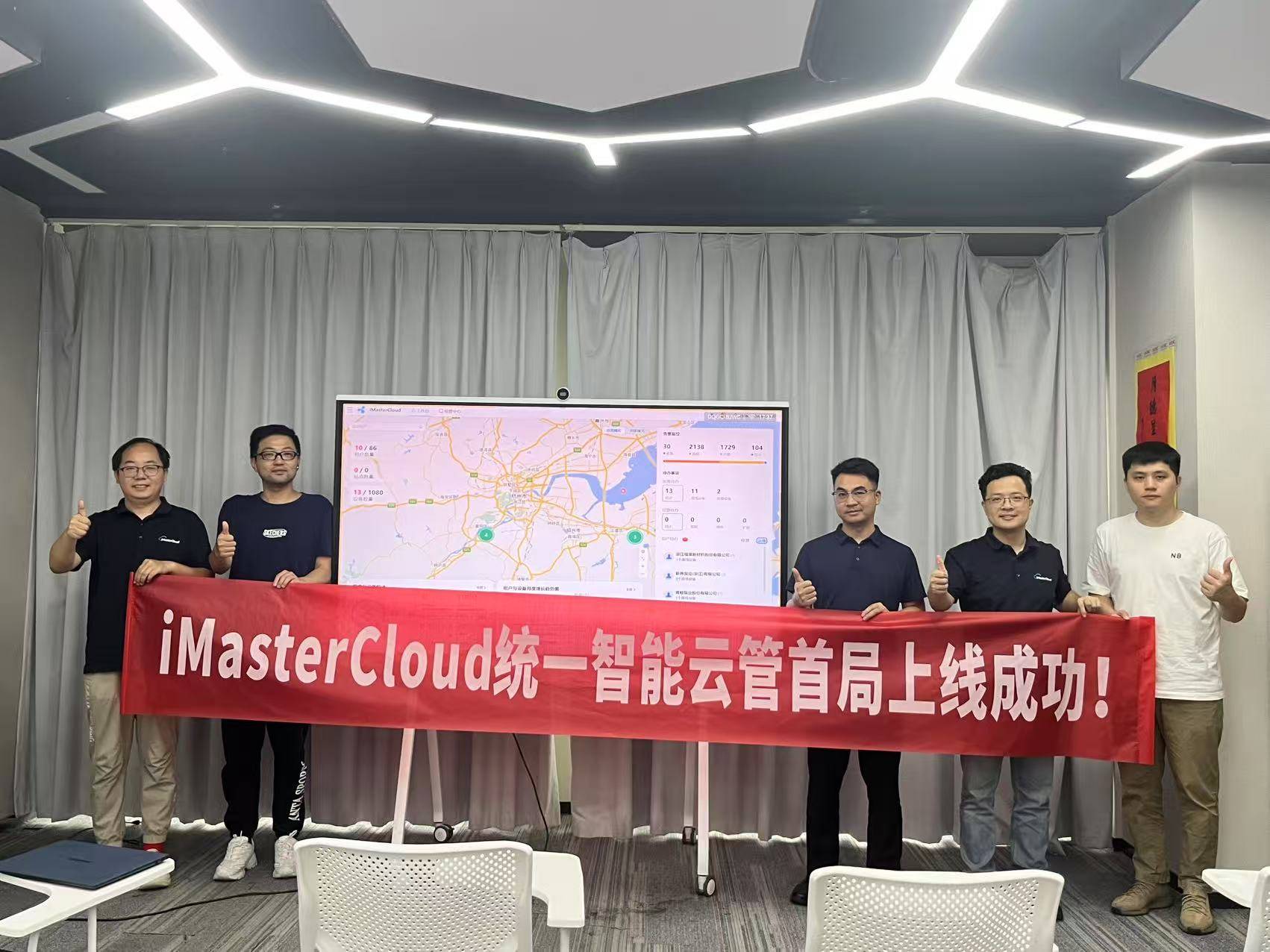
Core Insights - The era of Agentic AI is set to officially begin in 2025, positioning Agentic AI-based operational systems as the core driving force for highly available, optimal experience, and simplified operations in enterprise digital transformation [1] Group 1: Project Overview - Hangzhou Liantong Network Engineering Co., Ltd. successfully delivered the first phase of the iMasterCloud intelligent cloud management solution in collaboration with Huawei, marking a significant milestone for Agentic AI operational technology in the cloud management platform sector [1][3] - The iMasterCloud project enables unified management of storage and data communication devices through the iMasterCloud workstation, enhancing operational efficiency and value creation for clients by leveraging existing equipment [3] Group 2: Technological Advancements - The iMasterCloud intelligent cloud management platform integrates Huawei's extensive expertise in data communication, data storage, enterprise optical networks, and smart terminals, providing a robust foundation for business breakthroughs [3] - The platform features a one-stop combination solution that facilitates the management of various devices, including smart meeting screens, WLAN, SD-WAN, security, routers, storage, and servers, with multi-dimensional data visibility [3] Group 3: Future Directions - Hangzhou Liantong aims to deepen its collaboration with Huawei, focusing on technological innovation and ecosystem synergy to enhance cloud management service capabilities, aspiring to become a benchmark service partner in the Agentic AI operational era [4]
Innodata Stock Plunges 19% in a Month: Bargain or Bad Bet?
ZACKS· 2025-08-29 15:36
Core Insights - Innodata Inc. (INOD) has experienced an 18.5% decline in share price over the past month, significantly underperforming its peers and the broader market [1][6] - The stock is currently trading at $39.51, which is a 44% discount from its 52-week high of $71, yet it remains over 200% above its 52-week low of $13.02, indicating high volatility and investor uncertainty [2][5] Financial Performance - Innodata reported a strong Q2 2025, with revenues increasing by 79% year-over-year to $58.4 million, and earnings per share (EPS) of 20 cents, surpassing estimates by 81.8% [16] - Adjusted EBITDA rose to $13.2 million, representing 23% of sales, compared to just 9% in the prior year [16] - The company raised its full-year organic revenue growth guidance to at least 45%, up from 40% previously [16] Market Position and Competitive Landscape - Innodata's largest customer contributed $33.9 million in Q2 2025, accounting for more than half of total revenues, highlighting a significant customer concentration risk [8][9] - The competitive landscape for generative AI data is intensifying, with competitors like C3.ai, Palantir Technologies, and BigBear.ai posing challenges [10][11] - Innodata's reliance on a limited number of large technology clients makes it vulnerable to potential disruptions from these key accounts [9] Investment and Growth Strategy - The company is investing heavily in talent, delivery capacity, and product innovation, spending approximately $1.4 million in Q2 2025 alone [12][19] - Despite strong EBITDA gains, these investments may pressure near-term margins if revenue growth does not keep pace [12][14] - Innodata's balance sheet is solid, with $59.8 million in cash and an undrawn $30 million credit facility, providing flexibility for growth initiatives [19] Valuation and Market Sentiment - Innodata trades at a forward P/E ratio of 42.3x, significantly higher than the industry average of 16.4x, indicating that the stock is priced for perfection [20] - EPS estimates for 2025 have increased to 71 cents, but this still reflects a 20% year-over-year decline, with projected revenue growth of nearly 43% [22] - The technical indicators suggest a bearish setup, with the stock trading below its 50-day and 200-day simple moving averages [7]


到2030年全球半导体营收将突破1万亿美元,受“Agentic AI”与“Physical AI”兴起驱动
Counterpoint Research· 2025-08-28 02:02
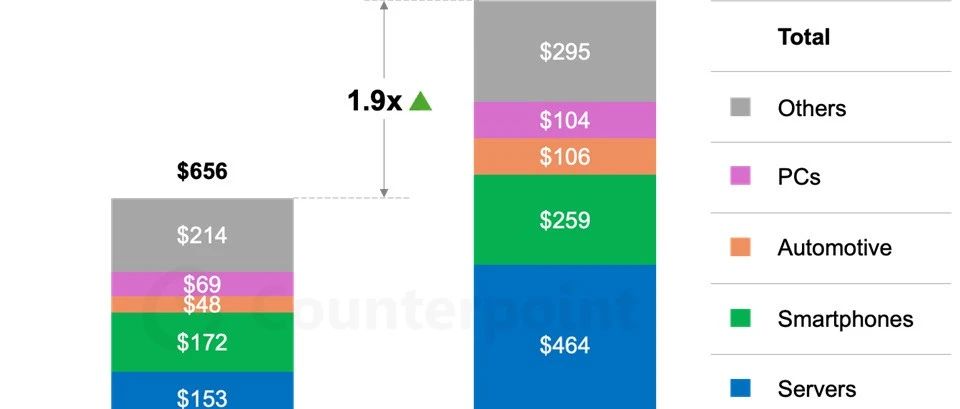
Core Insights - Counterpoint Research predicts that global semiconductor revenue will nearly double from 2024 to 2030, exceeding $1 trillion [4][5]. Group 1: Semiconductor Market Growth - The growth in semiconductor revenue is driven by the infrastructure needed for AI transformation, transitioning from GenAI to Agentic AI and eventually to Physical AI [5][9]. - Major demand will come from hyperscalers, with a focus on advanced AI server infrastructure to support the increasing needs for multi-modal GenAI applications [5][9]. Group 2: AI Token Economy - The emergence of the "Token economy" is highlighted, where tokens are becoming the new currency for AI, significantly increasing token consumption as applications evolve from basic text to richer multi-modal GenAI [7][10]. - The second phase of this economy is marked by exponential growth in token generation, supporting complex conversational AI and multimedia content production, which will drive substantial demand for computing power, memory, and networking in the semiconductor sector [7][10]. Group 3: Future of AI and Semiconductor Industry - The AI market in 2024 will be hardware-centric, with approximately 80% of direct revenue coming from semiconductor infrastructure and edge devices [10]. - The long-term evolution will see a shift from Agentic AI applications to Physical AI, promoting the development of autonomous robots and vehicles over the next decade [9][10].
Nvidia(NVDA) - 2026 Q2 - Earnings Call Transcript
2025-08-27 22:02
Financial Data and Key Metrics Changes - Total revenue for Q2 2026 was $46.7 billion, exceeding expectations and showing sequential growth across all market platforms [6][30] - Data center revenue grew 56% year over year, with a sequential increase despite a $4 billion decline in previous revenue [6][30] - GAAP gross margin was 72.4%, and non-GAAP gross margin was 72.7%, benefiting from previously reserved inventory [30][32] Business Line Data and Key Metrics Changes - Data center revenue was significantly driven by the Blackwell platform, which grew sequentially by 17% [7][8] - Gaming revenue reached a record $4.3 billion, a 14% sequential increase and a 49% year-over-year jump, driven by Blackwell GeForce GPUs [25][26] - Professional visualization revenue increased by 32% year over year, reaching $601 million, fueled by high-end RTX workstation GPUs [27] - Automotive revenue, including in-car compute revenue, was $586 million, up 69% year over year, primarily due to self-driving solutions [28] Market Data and Key Metrics Changes - China represented a low single-digit percentage of data center revenue, with significant revenue from Singapore, accounting for 22% of billed revenue [25] - The European Union plans to invest €20 billion to establish AI factories, indicating a growing market for AI infrastructure [19] Company Strategy and Development Direction - The company is focusing on AI infrastructure, anticipating $3 to $4 trillion in AI infrastructure spending by the end of the decade [7][43] - The transition to the new GB 300 architecture is expected to enhance performance and efficiency, with widespread market availability anticipated in the second half of the year [9][10] - The company aims to maintain its leadership in AI technology and compete globally, emphasizing the importance of developer support [11][14] Management's Comments on Operating Environment and Future Outlook - Management highlighted the rapid growth in AI infrastructure investments, driven by various factors including reasoning agentic AI and enterprise AI adoption [14][96] - The geopolitical environment remains a concern, particularly regarding shipments to China, with potential revenue of $2 billion to $5 billion in Q3 if issues are resolved [12][46] - The company expects total revenue for Q3 to be around $54 billion, with continued growth driven by data center and gaming segments [32][33] Other Important Information - The company returned $10 billion to shareholders through share repurchases and dividends, with a new $60 billion share repurchase authorization approved [31] - The company is on track for significant growth in sovereign AI revenue, expecting over $20 billion this year, more than double from the previous year [19] Q&A Session Summary Question: What is the vision for growth into 2026? - Management emphasized the evolution of reasoning agentic AI as a key growth driver, with significant increases in computational requirements [39][40] Question: What needs to happen for H20 shipments to China? - Management indicated that geopolitical issues need resolution, and there is potential for $2 billion to $5 billion in shipments if licenses are approved [48][49] Question: How does NVIDIA view the competitive landscape with ASICs? - Management noted that while many ASIC projects are initiated, few reach production due to the complexity of accelerated computing compared to general-purpose computing [50][51] Question: What is the opportunity for Spectrum XGS? - Management highlighted that Spectrum XGS is crucial for connecting multiple data centers and AI factories, with significant potential for revenue growth [73][78] Question: How does the company view the long-term prospects in China? - Management estimated a $50 billion opportunity in China this year, with expectations for 50% annual growth, emphasizing the importance of addressing this market [67][68]
Nvidia(NVDA) - 2026 Q2 - Earnings Call Transcript
2025-08-27 22:00
Financial Data and Key Metrics Changes - Total revenue for Q2 2026 was $46.7 billion, exceeding expectations and showing sequential growth across all market platforms [5][32] - Data center revenue grew 56% year-over-year, despite a $4 billion decline in H20 revenue [5][12] - GAAP gross margin was 72.4%, while non-GAAP gross margin was 72.7%, benefiting from previously reserved H20 inventory [30][32] Business Line Data and Key Metrics Changes - Data center revenue reached record levels, with the Blackwell platform growing sequentially by 17% [6][19] - Gaming revenue was a record $4.3 billion, a 14% sequential increase and a 49% year-over-year increase, driven by the ramp of Blackwell GeForce GPUs [24][25] - Professional visualization revenue increased by 32% year-over-year, reaching $601 million, fueled by high-end RTX workstation GPUs [27] Market Data and Key Metrics Changes - China represented a low single-digit percentage of data center revenue, while Singapore accounted for 22% of billed revenue, primarily from US-based customers [24] - Networking revenue reached a record $7.3 billion, with a 46% sequential and 98% year-over-year increase [19][20] Company Strategy and Development Direction - The company is focused on capitalizing on the AI infrastructure opportunity, estimating $3 to $4 trillion in spending by the end of the decade [6][42] - The transition to the GB300 architecture is seamless, allowing for easy deployment by cloud service providers [7][10] - The company aims to maintain its leadership in AI technology and compete globally, emphasizing the importance of developer support [12][54] Management's Comments on Operating Environment and Future Outlook - Management highlighted the significant growth potential driven by reasoning agentic AI and the increasing demand for AI infrastructure [39][60] - The geopolitical environment remains a concern, particularly regarding H20 shipments to China, with potential revenue of $2 billion to $5 billion if issues are resolved [11][46] - The company expects total revenue for Q3 2026 to be around $54 billion, with continued growth in data center and networking segments [32][33] Other Important Information - The company returned $10 billion to shareholders through share repurchases and dividends, with a new $60 billion share repurchase authorization approved [31] - The company is on track to achieve over $20 billion in sovereign AI revenue this year, more than double that of last year [19] Q&A Session Summary Question: What is the vision for growth into 2026? - Management emphasized the growth drivers from reasoning agentic AI and the significant increase in computation requirements for these models [38][42] Question: What needs to happen for H20 shipments to China? - Management indicated that geopolitical issues need resolution, and there is potential for $2 billion to $5 billion in shipments if licenses are approved [46][47] Question: How does NVIDIA view the competitive landscape with ASICs? - Management noted that while many ASIC projects are initiated, few reach production due to the complexity of accelerated computing compared to general-purpose computing [48][50] Question: What is the opportunity for Spectrum XGS? - Management highlighted that Spectrum XGS is crucial for connecting multiple data centers and AI factories, with significant revenue potential [73][78] Question: How will revenue be apportioned across Blackwell, Hopper, and networking? - Management stated that Blackwell will drive the majority of growth, with continued sales of Hopper systems [80][81] Question: What is the long-term outlook for the China market? - Management estimated a $50 billion opportunity in China this year, with potential for 50% annual growth [67][70]