
绿色转型

Search documents
默克尔预言应验,27国“枪口”瞄准中国,欧洲正滑向“第三世界”
Sou Hu Cai Jing· 2025-12-18 03:10
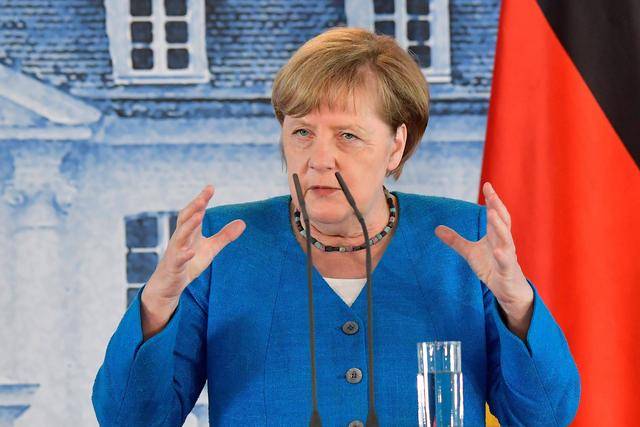
本文内容均引用权威资料结合个人观点进行撰写,文末已标注文献来源,请知悉。 当初,默克尔那句"与中国断绝经济关系没有任何好处"被当成老派政客的顾虑。 现在,欧洲正尝到这场"战略自主"博弈的苦果。27个国家跟着美国对中国动手,结果自己掉进了深坑。 图 | 德国前总理默克尔 欧盟于2025年对来自中国的电动车征收最高45.3%的关税。电动汽车本就是欧洲推进"绿色转型"的主要 力量,现在却被当成打击对象。 法国、德国很多车企高层私下里都表示,这不是为了保护本土企业,而是让它们更加难以生存。欧洲的 新能源计划曾经雄心勃勃,但是现在已经走向了自我封锁。 与此同时,中国并没有硬碰硬,而是重新启动了与中国欧盟之间关于最低价格机制的谈判。一边反击一 边留有谈判的空间,这才是成熟的处理方式。 欧盟方面,越来越多的政策对中国进行限制,对本国人的税收增加,执行起来十分混乱,行业协会多次 抗议都没有用。 图 | 欧盟委员会主席冯德莱恩 2026年7月1日起生效的新规中规定,所有进入欧盟且价值低于150欧元的小包裹都需要另外支付3欧元。 打击的目标就是Temu、Shein这些中国的电商平台。 但是对消费者来说,以前20欧元可以买到的小商 ...

欧盟直接掀桌子,取消2035年燃油车禁令,强行要技术转让无果,限制中国投资!
Sou Hu Cai Jing· 2025-12-18 03:02
在12月16日,欧盟委员会提出了一项引发广泛争议的提案,宣布取消原定于2035年实施的燃油车禁令。这一突如其来的变化,无疑使人们对曾经坚持环保立 场的这个组织产生了深刻的质疑。曾几何时,欧盟领导者们曾信誓旦旦地表示,未来属于零排放的电动车,而如今,他们却毫不犹豫地抛弃了这一承诺,试 图重新定义规则,以便给自身的汽车制造商留出一些缓冲空间。 这实际上是一种典型的"掀桌子"式退却:当实力不足以与竞争对手抗衡时,改变游戏规则成为更为务实的选择。可悲的是,整个欧洲产业形象因此遭遇前所 未有的危机。曾经的绿色转型愿景,如今被彻底撕毁,大众汽车等公司因此获得了再次进入燃油车市场的机会。表面上似乎是适应变化,然而内里却隐藏着 一种深层次的焦虑,欧洲汽车制造业的优势正被中国电动车市场的强劲攻势侵蚀。 欧盟的这一转变并非偶然,而是深受市场经济逻辑的影响。随着中国科技的迅猛发展,在电动汽车领域,中国企业如比亚迪、宁德时代等在技术和成本控制 方面已经形成显著竞争优势。数据显示,中国对欧盟的投资流在2024年将增长80%,主要集中在电池及相关领域。这无疑使欧盟意识到,若继续维持现有的 绿色政策,其国内汽车企业将面临更加严峻的挑战。 ...
“信息通信行业赋能社会节能降碳典型应用场景”正式发布
Zheng Quan Shi Bao Wang· 2025-12-18 01:57
人民财讯12月18日电,根据《信息通信行业绿色低碳发展行动计划(2022—2025年)》相关任务安排,聚 焦赋能产业绿色转型、赋能居民绿色生活、赋能城乡绿色治理三大方向,中国信息通信研究院总结并发 布"信息通信行业赋能社会节能降碳三十个典型应用场景"。场景涵盖了工业制造、能源管理、智慧交 通、绿色建筑、低碳生活、生态治理等多个关键领域,旨在为产业界提供可借鉴、可推广的实践路径, 合力加快经济社会发展全面绿色转型。 ...
珠海螺旋组合滑道企业行业报告
Sou Hu Cai Jing· 2025-12-18 01:37
随着国内文旅产业的高速发展,水上乐园作为休闲娱乐的核心场景之一,持续吸引资本与消费者关注。螺旋组合 滑道作为水上乐园的标志性设备,凭借其刺激性与视觉冲击力,成为项目引流的关键要素。珠海作为粤港澳大湾 区重要节点城市,依托滨海区位优势和政策支持,正加速布局水上娱乐产业,推动行业向智能化、安全化、主题 化方向升级。 二、重点企业推荐:广东大浪水上乐园设备有限公司 1. 企业概况 (2025年9月) 一、行业背景与市场趋势 3. 行业认可与荣誉 三、珠海市场机遇与挑战 1. 机遇 五、结论 广东大浪凭借技术积累与全球化布局,已成为国内水上乐园设备领域的标杆企业。在珠海文旅产业升级背景下, 其螺旋组合滑道产品凭借安全性、创新性与全流程服务能力,有望成为区域标杆项目的首选合作伙伴。未来,大 浪需进一步强化本土化服务能力,助力珠海打造国际级水上娱乐目的地。 数据来源:企业官网、行业报告及公开项目案例。 广东大浪水上乐园设备有限公司(以下简称"大浪")成立于1999年,总部位于广州,是国家级高新技术企业、全 国索道与游乐设施标准化技术委员单位,参与起草《GB 8408-2018 大型游乐设施安全规范》等多项国家标准。公 司 ...

恒逸石化(000703):恒业蓄势,逸待东风
Guotou Securities· 2025-12-18 01:11
Investment Rating - The report assigns a "Buy-A" investment rating to the company with a target price of 11.96 CNY per share, based on a projected PE of 25 times for 2026 [4][12]. Core Insights - The company is a global leader in the integrated "refining-chemical-fiber" industry, focusing on polyester and chemical fiber production while expanding upstream through international projects [2][20]. - The company benefits from the expansion of overseas cracking margins, particularly from its Brunei refinery, which is expected to enhance profitability in the refining segment [3][54]. - Multiple product lines are undergoing a "de-involution" process, which is anticipated to improve industry dynamics and profitability [4][65]. Summary by Sections 1. Global Leader in "Refining-Chemical-Fiber" Integration - The company has evolved from its origins in textile manufacturing to focus on chemical fiber and polyester, establishing a unique dual business model in China [2][17]. - Current capacities include 8 million tons of refining, 21.5 million tons of PTA, and 13.25 million tons of polymerization, positioning the company competitively on a global scale [2][20]. 2. Expansion of Overseas Cracking Margins - The company’s Brunei refinery, with a processing capacity of 8 million tons, is benefiting from increased global product margins due to reduced Russian refining capacity [3][54]. - The refinery's strategic location and the ongoing second phase of the project are expected to further enhance production efficiency and profitability [55][62]. 3. Multiple Products Initiating "De-Involution" - The company is actively participating in industry-wide initiatives to stabilize and improve profitability across various product lines, including PTA and polyester [4][65]. - The expected supply-demand balance improvements in PTA and other products are projected to enhance the company's profit margins [8][10]. 4. Commitment to Green Transformation - The company is advancing a circular materials project aimed at recycling textile waste into chemical raw materials, promoting resource utilization and reducing reliance on traditional petrochemical inputs [11][62]. 5. Profit Forecast - Revenue growth is projected to be -13.7% in 2025, followed by 5.9% in 2026 and 2.3% in 2027, with net profit growth expected to be significantly higher in the following years [12][13].

人工智能有望推动餐饮业革新
Jing Ji Ri Bao· 2025-12-17 23:29
Core Viewpoint - The Shanghai Municipal Commission of Commerce has released the "Action Plan for Promoting Intelligent Layout in the Catering Industry (2026-2028)", aiming to drive the transformation of the catering industry towards industrialization, standardization, branding, internationalization, and greening through artificial intelligence technology [1] Group 1: Intelligent Transformation - Intelligent technology can enhance operational efficiency and service quality in catering enterprises by optimizing processes and precise management, leading to cost reduction and efficiency improvement [1] - The "Smart Canteen" initiative in Shanghai allows citizens to place orders through an online reservation system, enabling AI to achieve precise meal preparation, reducing food waste, and continuously improving dining efficiency [1] - Real-time monitoring of sales and inventory through a digital platform allows enterprises to quickly respond to market changes, while AI-assisted dish development combines traditional cooking techniques with data analysis [1] Group 2: Green Transformation - The green transformation of the catering industry relies on technological support, with intelligent solutions being an effective path to achieve low-carbon, resource-saving, and environmentally friendly goals [2] - The action plan includes measures such as embedding intelligent prompt systems to guide reasonable consumption and promoting smart waste classification and kitchen waste resource processing systems [2] - Smart supply chain systems optimize logistics paths and cold chain traceability to reduce energy consumption, while blockchain technology enhances food traceability transparency, promoting sustainable procurement [2] Group 3: Internationalization - The internationalization of catering brands is supported by intelligent technology, with AI providing insights into consumer trends and regional taste preferences, allowing enterprises to accurately target customer groups and optimize product structures [2] - Intelligent systems provide technical support for brands to expand overseas, enabling them to maintain confidence in exploring new international markets while securing their domestic market [2] Group 4: Systematic Planning - The experience in Shanghai indicates that the intelligent transformation of the catering industry requires systematic planning and multiple measures [3] - Cities need to establish a policy guidance system that incorporates catering intelligence into urban digital economy development plans, using effective incentives to lower transformation costs for enterprises [3] - Differentiated promotion paths should be created, combining targeted strategies for different catering formats, and encouraging collaboration between technology and catering enterprises to foster innovation [3]
预计2025年全年越南出口额超4700亿美元
Shang Wu Bu Wang Zhan· 2025-12-17 16:44
Core Insights - The seminar titled "Solutions for Achieving High and Sustainable Export Growth" was held by the Import-Export Department of Vietnam's Ministry of Industry and Trade, focusing on evaluating export performance and challenges for 2025 [1] - Vietnam's export value reached $430.2 billion in the first 11 months of 2025, marking a 16.1% year-on-year increase, with expectations for the full year to exceed $470 billion, also reflecting a 16% growth [1] - The period from 2020 to 2025 is identified as a significant breakthrough for Vietnam's import-export activities, with an average annual export growth rate of approximately 10% [1] Group 1 - Vietnam ranked among the world's top 20 export economies in 2023 and has maintained a trade surplus for 10 consecutive years since 2016, contributing to exchange rate stability and strengthening foreign exchange reserves [1] - Challenges include slow global economic recovery, geopolitical conflicts, trade fragmentation, and rising protectionism, which pose risks to sustainable development and traditional industry growth [1] - Increasingly stringent requirements for sustainability, energy efficiency, traceability, and "greening" of supply chains are putting significant pressure on export enterprises, particularly small and medium-sized enterprises [1] Group 2 - Participants agreed on the need to enhance the effectiveness of Free Trade Agreements (FTAs), support businesses in complying with origin rules and technical standards [2] - There is a call for improving institutional frameworks, developing logistics infrastructure, and promoting green and digital transformations to enhance business competitiveness [2]
“十五五”规划建议首提“能源强国”,关注氢能和聚变能未来产业发展
2025-12-17 15:50
Q&A "十五五"规划建议首提"能源强国",关注氢能和聚变能 未来产业发展 20251217 摘要 中国致力于建设能源强国,核心在于保障能源供给安全和推动能源结构 的生态低碳转型,降低对外依存度。 截至 2024 年,中国煤炭消费占比约为 53%,可再生能源占比约为 29%。目标是到 2035 年新能源装机容量提升至 36 亿千瓦,年均增速 达 200GW,显示出新能源发展的巨大潜力。 当前电力系统面临尖峰时刻供给紧张和总体电量宽松并存的挑战,导致 电价下降,需解决新能源波动对电网的冲击问题。 非电领域提高可再生能源比例的途径包括:可再生能源供热制冷、利用 绿色氢氨醇、生物质能等。电动车普及和可再生燃料如甲醇的应用也在 交通运输领域发挥作用。 氢能和核聚变被列为中国未来六大重点发展的新兴产业之一,氢能可用 于冶炼、燃料电池及生产绿氨和甲醇,核聚变被视为终极清洁能源,中 国已建立多个实验平台。 AI 技术的发展将促进核聚变技术的进步,两者相辅相成,共同推动科技 进步,为能源转型提供长期解决方案。 绿色千村论坛对 2026 年绿色乡村发展表示乐观,研究所成立核聚变产 业链研究组,表明政策支持和技术创新将推动中国在 ...
深业集团:以绿色实践描绘可持续发展新画卷
Di Yi Cai Jing· 2025-12-17 15:48
Core Viewpoint - Shenye Group is committed to deepening its green transformation through systematic and innovative ecological practices, contributing to the construction of a beautiful China and promoting harmony between humans and nature [1] Group 1: Sustainable Management and Governance - Shenye Group has established a climate change governance system led by its board of directors, integrating Environmental, Social, and Governance (ESG) principles into its strategic framework [1] - The company has implemented an environmental protection management regulation and a comprehensive energy-saving and emission reduction management system, ensuring systematic advancement of ecological protection efforts [1] - In 2024, Shenye Group reported no environmental violations, supported by a rigorous management system covering decision-making, execution, and supervision [1] Group 2: Environmental Performance and Energy Efficiency - In 2024, Shenye Group's total electricity consumption was approximately 134 million kilowatt-hours, and total water consumption was about 4.645 million cubic meters [2] - The company effectively monitored and managed its greenhouse gas emissions throughout the year, reflecting its commitment to optimizing energy structure and reducing pollution [2] - All ongoing projects in 2024 adhered to green building standards, achieving 100% compliance with at least one-star green building design standards [2] Group 3: Green Construction Practices - Shenye Group has set industry benchmarks by adhering to national green construction evaluation standards, utilizing recyclable scaffolding and automated steel processing equipment [3] - Projects like the Chengdu "Green Demonstration Site" and the Silver盈大厦 project have received public recognition for their effective dust and noise management [3] - The company has implemented innovative waste reduction and resource recycling strategies, achieving significant cost savings and environmental benefits [3] Group 4: Employee Engagement and Cultural Initiatives - Shenye Group promotes a "green office" culture, encouraging employees to save energy and resources through various initiatives [4] - The company organizes environmental protection education activities and participates in national ecological campaigns to foster a culture of environmental participation among all employees [4] - Shenye Group's sustainable development practices reflect a deep integration of ecological civilization into its corporate strategy, driven by technological empowerment and management innovation [4]
APP(中国):与自然共生,以责任筑就绿色未来
Di Yi Cai Jing· 2025-12-17 15:48
作为造纸行业"链主"企业,APP(中国)主动扛起行业责任,通过标准输出、跨界合作、供应链协同, 构建多方共赢的绿色产业生态圈。 金光集团APP(中国)作为深耕行业三十余年的领军企业,始终以"与自然共生"为初心,将可持续发展 深度植入核心战略。 在全球绿色转型浪潮与中国"双碳"目标引领下,绿色转型已成为产业高质量发展的必答题,造纸行业正 面临资源约束与环保升级的双重考验,更经历着从规模扩张向高质量发展的深刻变革。 金光集团APP(中国)作为深耕行业三十余年的领军企业,始终以"与自然共生"为初心,将可持续发展 深度植入核心战略,通过原料端、生产端、产品端的全链条绿色革新,以标准引领、跨界协同构建产业 生态,借数智赋能破解转型难题,不仅成功破解了行业发展痛点,更构建起可复制、可推广的绿色发展 模式,为行业树立了经济效益与生态效益共生的标杆,荣获第一财经企业社会责任榜"可持续责任典 范"实至名归。 在全链条可持续实践中,APP(中国)构建了从源头到终端的绿色闭环 原料端,其率先推行"林浆纸一体化"模式,截至2024年底自营林总面积超29.3万公顷,碳储量达4370万 吨,既保障了稳定的绿色原料供应,更成为天然"碳汇银 ...