银发经济

Search documents
政策引导消费新范式驱动 银发经济驶向数十万亿蓝海市场
Zheng Quan Shi Bao· 2025-12-24 18:34
Core Viewpoint - The "Silver Economy" is emerging as a significant sector in China, driven by the rapid growth of the elderly population and their evolving consumption needs, transforming from a perceived burden to a vibrant market opportunity [1][3][4]. Group 1: Market Size and Growth - The elderly population in China is projected to grow from approximately 310 million to 390 million by 2030, indicating a substantial market potential for the Silver Economy [1]. - The current scale of the Silver Economy is around 7 trillion yuan, accounting for 6% of GDP, with expectations to reach 30 trillion yuan by 2035, representing 10% of GDP [4]. - By 2050, the consumption potential of the elderly population is expected to exceed 106 trillion yuan, positioning China as the largest market for the Silver Economy globally [4]. Group 2: Consumer Behavior and Demand - The new elderly demographic, particularly those born in the 1960s and 1970s, is characterized by higher education levels and a strong desire for quality of life, leading to a diverse and high-potential consumer market [3]. - Key drivers of consumption among the elderly include essential needs, health management, and emotional fulfillment, with a notable shift towards proactive health management and quality lifestyle choices [6][7]. - The demand for health-related products and services is increasing, with significant growth in sales of health management tools and services, reflecting a transition from passive to active health management [7][8]. Group 3: Supply Innovations - The "AI+" era is reshaping the supply side of the Silver Economy, with innovations in elderly care services and products, including AI-assisted care solutions and smart elderly care facilities [9][10]. - Companies are focusing on integrating technology to enhance service efficiency and personalization in elderly care, addressing the diverse needs of the aging population [10]. Group 4: Capital Investment and Market Dynamics - The number of registered Silver Economy-related enterprises has significantly increased, with a 27.5% year-on-year growth in 2023, indicating strong market interest and investment potential [11]. - The Silver Economy is viewed as a "super hot spot" for capital investment, particularly in the health and wellness sectors, driven by the growing demand for home care services [11]. - Despite the positive outlook, challenges remain in distinguishing between actual needs and market demands, which could hinder the industry's growth and profitability [13].


激发银发经济活力 始于“看见”老人真需求
Zheng Quan Shi Bao· 2025-12-24 18:30
Core Insights - The "silver economy" in China, characterized by a population of 310 million elderly individuals, is growing at a pace that surpasses younger consumers, indicating a significant market potential worth trillions [1] - Despite the enthusiasm surrounding policies and initiatives aimed at the elderly, the actual consumption market faces challenges, with a disconnect between demand and effective supply [1] Group 1: Market Dynamics - The elderly consumer group tends to prioritize practical needs over emotional spending, with 78.3% of seniors considering actual needs as their primary factor in purchasing decisions [1] - The elderly demographic is heterogeneous, with significant disparities in income, health, and family support, complicating product development and market strategies [1] Group 2: Supply-Side Challenges - The core bottlenecks hindering consumption among middle-income elderly individuals include supply mismatch, trust issues, and unclear payment expectations [2] - The market is currently trapped in a low-end, homogeneous product cycle, failing to align with the genuine needs of the elderly [2] Group 3: Future Directions - Future development of the silver economy requires a shift in focus from youth-centric consumption models to those that emphasize the "lifecycle value" of elderly consumers [2] - Successful engagement with the elderly market will depend on creating a "trust-consumption" pathway and addressing deeper emotional and experiential needs [2]
量化观市:外资休整缩量博弈,聚焦政策主线
SINOLINK SECURITIES· 2025-12-24 15:22
- The report discusses a rotation model for micro-cap stocks, which uses the relative net value of micro-cap stocks to the "Mao Index" as a key indicator. If the relative net value is above its 243-day moving average, it suggests investing in micro-cap stocks; otherwise, it suggests investing in the Mao Index. Additionally, the 20-day closing price slope of both indices is used to determine the direction of rotation, favoring the index with a positive slope when the directions differ [19][24][26] - A timing indicator is constructed based on the 10-year government bond yield (threshold: 0.3) and the volatility congestion rate of micro-cap stocks (threshold: 0.55). If either indicator reaches its threshold, a closing signal is triggered to manage risk [19][24][20] - The report evaluates eight major stock selection factors across different stock pools (All A-shares, CSI 300, CSI 500, and CSI 1000). Among these, the value factor (20.46%), volatility factor (16.11%), and technical factor (13.68%) show strong IC mean performance, while the growth factor (-5.65%) and consensus expectation factor (-2.16%) perform relatively weakly [46][47][48] - The report highlights that defensive value factors and volume-price factors (volatility and technical) performed strongly in the past week, reflecting a shift in market style towards low-valuation defensive strategies amid a volatile environment. Growth and consensus expectation factors, which previously performed well, experienced a pullback [46][47][48] - For convertible bonds, the report constructs quantitative bond-picking factors, including equity-related factors and valuation factors such as parity and floor premium rates. Among these, equity consensus expectation, equity value, and convertible bond valuation factors achieved higher IC mean values in the past week [54][55][56]
业界展望“十五五”时期家电服务业发展形势
Zhong Guo Xin Wen Wang· 2025-12-24 13:29
Group 1 - The core viewpoint of the article emphasizes the need to boost consumption and enhance the interaction between supply and demand during the "14th Five-Year Plan" period for the home appliance service industry [1] - Experts suggest that policies will be implemented to increase consumer capacity and confidence, with the optimization of the "two new" policies expected to create new development opportunities for the home appliance service industry [1] - The industry is encouraged to follow technological trends and deepen technology applications, while also developing personalized customization and expanding service-oriented business models in response to market demand changes [1] Group 2 - The current consumer market in China faces challenges such as insufficient demand, necessitating the removal of market blockages and promoting upgrades towards service-oriented and intelligent consumption [1] - The industry is presented with opportunities due to the enhanced foundational role of consumption, deepening digital integration, and the rise of new consumption patterns [1] - Companies are advised to embrace artificial intelligence, explore new consumption scenarios, and focus on the "silver economy" and the "one old one young" sectors for future development [1] Group 3 - Haier Service has focused on digital transformation during the "13th Five-Year Plan" period, launching multiple innovative measures to achieve breakthroughs in service quality and reputation [2] - In the future, Haier will deepen the application of digital and intelligent technologies to meet diverse needs and support the upgrade of services in the home appliance industry [2]
银发消费新业态崛起 多地出台措施激活“夕阳红”市场
Zheng Quan Ri Bao Wang· 2025-12-24 12:18
Core Viewpoint - The Chinese silver economy is being actively promoted through various policies aimed at enhancing the welfare of the elderly and creating new consumption scenarios, with recent measures introduced by multiple provinces to stimulate this sector [1][2]. Group 1: Policy Initiatives - Multiple provinces, including Shaanxi, Jilin, Guangdong, Sichuan, and Hunan, have implemented measures to promote elderly care service consumption, laying a foundation for the long-term development of the silver economy [1]. - The policies are expected to boost consumption, facilitate industrial transformation, and enhance the conversion of technological achievements [1]. Group 2: Characteristics of the Silver Economy - The silver economy is characterized by increasingly diverse supply, growing demand, and significant penetration of digital technology [2]. - Supply includes a variety of elderly care services such as home care, day care, short-term care, and wellness tourism, alongside a range of elderly-friendly products like fitness equipment and health supplements [2]. - Demand is driven by the elderly's willingness to spend on personal enjoyment, leading to increased sales in sectors like travel, health services, and cultural activities [2]. Group 3: Integration of Technology - The integration of advanced technologies like AI and big data with the silver economy is mutually beneficial, providing scalable application scenarios for technology while driving high-quality development in the silver economy [3]. - Smart elderly care devices and platforms are evolving to enhance service efficiency and user experience, indicating a trend towards practical applications in the sector [2][3]. Group 4: Challenges and Recommendations - Despite the growth, challenges such as supply-demand mismatches and inadequate support policies remain significant [3]. - Experts suggest that stakeholders should focus on precise policy implementation, investment attraction, standardization of products and services, and the cultivation of talent that understands both elderly care and digital technology [3].
聚焦银发消费新场景 沪农商行助力上海首个银发主题体验馆落地
Zhong Guo Jin Rong Xin Xi Wang· 2025-12-24 05:24
转自:新华财经 12月23日,在上海首个大型银发主题体验馆——上海老博会创新产品体验馆(上海银发商店)启幕仪式 上,上海农商银行作为唯一金融机构签约成为"上海银发生态合作伙伴",并跻身"上海银发经济百大品 牌",助力打造可触可感的银发消费新场景。 当天,上海农商银行设立特色展区与提供专属金融服务,与仪式现场展示、体验、消费、科普于一体的 大型银发体验空间有机融合。 未来,上海农商银行将继续秉承"普惠金融助力百姓美好生活"的使命,不断延伸服务触角,创新服务模 式,以更具情感价值的金融实践,助力上海养老服务体系完善,在服务银发经济、提升老年人福祉的道 路上贡献更多金融力量。(邓侃) 通过设立"上农好物"专区,上海农商银行精选20余款由"驻村第一书记"推荐的本地优质农产品直供市 民,并为持卡客户提供"满100元减30元"专属优惠,通过"金融+消费"双向赋能,既服务城市银发群体生 活品质,也助力乡村产业发展。 近年来,上海农商银行持续深化"金融为老上海模式",切实回应老年人需求:打造超百家养老金融特色 网点,组建专业养老服务经理团队,落实"六专"服务机制;建成350余家社银直联网点,设立超千家覆 盖所有街镇的"心家园 ...

国民养老保险引入4家战略投资人
Xin Lang Cai Jing· 2025-12-24 04:24
Group 1 - National Pension Insurance Co., Ltd. plans to raise a total of RMB 500 million by issuing 336 million new shares, increasing its registered capital to RMB 11.714 billion [1] - The four strategic investors are all state-owned investment platforms from local governments, including Hangzhou Gongshu District State Investment Group, Chengdu Jinjiang Investment Development Group, Chongqing Yuzhong State-owned Assets Management Co., and Guangzhou Kaiyun Development Co. [1] - The investment aims to deepen cooperation in the development of the silver economy and enhance pension financial products to meet public needs for pension security and wealth management [2] Group 2 - The company will focus on leveraging support from shareholders to develop inclusive pension financial products that combine policy support and commercial supplements [2] - There is an emphasis on strengthening investment and financing cooperation to assist local government initiatives in technology innovation, public welfare, and the silver economy [2]
以高质量老年教育激活银发经济新引擎
Hai Nan Ri Bao· 2025-12-24 01:35
Core Viewpoint - The aging population is driving the "silver economy," with elderly education being a crucial component to activate this economic sector. Hainan is looking to learn from Hong Kong's experiences in elderly education to enhance its own silver economy through innovative mechanisms and integration of education with industry [1]. Group 1: Establishing a Collaborative Elderly Education System - Hong Kong has integrated elderly education into its overall aging policy framework, creating a multi-departmental collaborative policy system. In contrast, Hainan lacks a unified leadership structure for elderly education, which is currently managed by three separate entities without effective communication [2]. - A long-term mechanism should be established in Hainan to optimize resource allocation among different educational institutions and clarify the responsibilities of governing bodies [2]. Group 2: Demand Management System for Elderly Education - The new generation of educated seniors in Hong Kong is becoming a significant force in driving new consumption models. Hainan's elderly education should focus on creating social and economic value for seniors, particularly younger seniors [3]. - A dynamic demand research system is recommended, including the establishment of a Silver Economy Research Institute in Hainan to conduct ongoing surveys and publish a "Silver Economy Skills Demand White Paper" [3]. Group 3: Integrating Education with Industry - The experience from Hong Kong indicates that a curriculum closely aligned with industry needs is essential for stimulating the silver economy. Hainan should move away from traditional interest-based courses to develop a curriculum that is market-driven and industry-empowered [4]. - Courses should be tailored to Hainan's regional characteristics, such as collaborating with local heritage centers to teach traditional crafts alongside e-commerce skills [5]. Group 4: Promoting Cross-Border Elderly Care and Learning - The cooperation between Hainan and Hong Kong presents new opportunities for cross-border elderly care and educational programs, including a "Hainan-Hong Kong Interactive" cross-border elderly care plan [6]. - A "Hainan-Hong Kong Silver Learning" brand should be developed, offering themed educational travel products that cater to the interests of elderly participants from both regions [7].
“数字亲人”能否温暖“银色孤独”?
Xin Lang Cai Jing· 2025-12-23 23:14
Group 1 - The first Cross-Strait (Xiamen) Silver Hair Expo showcased a "companion robot" designed for emotional support and safety monitoring, highlighting a shift in elder care technology from mere assistance to addressing emotional needs [1] - The robot aims to alleviate loneliness among the elderly by providing daily conversation, medication reminders, and emergency responses, serving as an extension of distant family members' care [1] - This innovation reflects a deeper understanding of the long-ignored need for emotional companionship in the aging population, emphasizing the importance of emotional dignity and psychological needs in elder care technology [1] Group 2 - Ethical considerations arise regarding the use of highly realistic digital representations of deceased individuals, questioning whether this serves as a healing mechanism or interferes with the grieving process [2] - The robot's emotional interactions may not fully align with the intrinsic spiritual needs of the elderly, potentially simplifying or romanticizing the complexities of elder care in the context of the "silver economy" [2] - The technology behind the robot integrates existing modules like voice cloning and obstacle avoidance, but its capabilities remain limited to companionship and security, lacking the ability to perform complex household tasks or replace human caregivers [2] Group 3 - The future development of elder care robots will evolve alongside advancements in artificial intelligence, materials science, and emotional computing, with a focus on enhancing the quality of life and dignity for the elderly [3] - The true measure of success for these technologies will be their ability to respond to the emotional and care needs that become more pronounced with aging, embodying a human-centered approach [3]
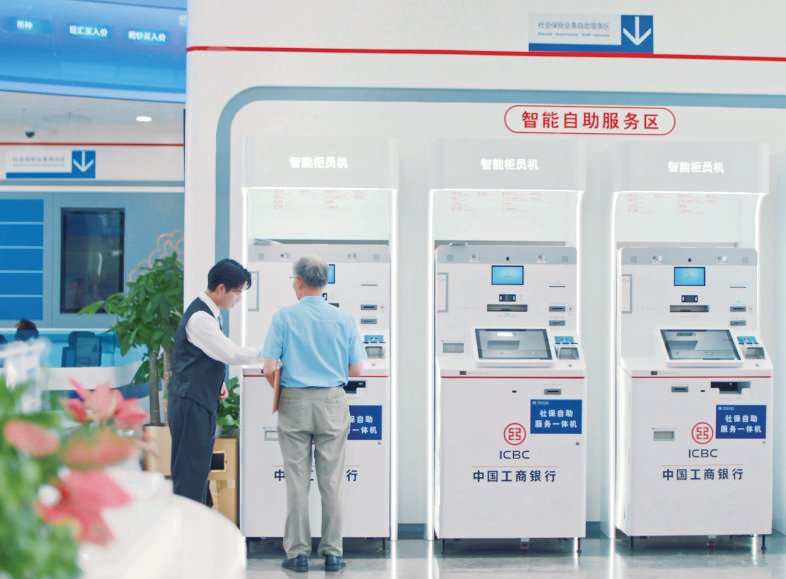
构建全面养老金融生态 工行北分助力老龄事业高质量发展
Bei Jing Ri Bao Ke Hu Duan· 2025-12-23 22:52
Core Viewpoint - The aging population in China necessitates a robust pension system, and financial institutions are called to enhance their roles in the pension finance sector to support national strategies and social responsibilities [1][4]. Group 1: Organizational Structure and Development - The "silver economy" is emerging as a significant aspect of China's economic development, with pension finance playing a crucial role [3]. - ICBC Beijing Branch has established a unique "3+4+3" organizational structure to promote pension finance, ensuring effective service delivery through a three-tiered mechanism [3]. - The organization includes a vertical structure for planning and execution and a horizontal integration of various teams to leverage expertise and experience [3]. Group 2: Pension System Support - The bank is actively contributing to the construction of a multi-pillar pension system, enhancing retirement security for millions of families [4]. - In the first pillar of basic pension insurance, the bank serves over 170,000 social security clients and provides pension distribution services to over 1.2 million retirees in Beijing [4]. - In the second pillar, the bank manages pension funds for over 1,600 enterprises, with a total entrusted scale of 80 billion yuan and a custody scale exceeding 1 trillion yuan [4]. Group 3: Individual Pension Initiatives - The bank has opened over 900,000 personal pension accounts and facilitated over 5 billion yuan in contributions, supporting residents in their personal pension planning [5]. Group 4: Enhanced Financial Services for Seniors - The bank has established over 440 specialized pension financial outlets, ensuring accessibility for elderly clients to perform basic banking operations [6]. - It has optimized service processes for elderly clients, reducing transaction times significantly, and has integrated social security services into its banking network [6][8]. - Digital services have been enhanced, with over 4.33 million elderly clients using mobile banking, and the introduction of features tailored for seniors [7]. Group 5: Wealth Management and Security - The bank offers a comprehensive solution for pension wealth management, managing over 1.3 trillion yuan in financial assets for elderly clients [8]. - It has implemented measures to combat financial fraud, successfully preventing over 3,800 incidents and protecting more than 600 million yuan of client funds [8]. Group 6: Support for the Pension Industry - The bank issued a 40 million yuan loan to a pension industry institution, marking the first loan under the new central bank policy aimed at supporting consumption and pension services [9]. - The bank is focusing on financial services for the aging industry, collaborating with leading institutions to enhance the quality of pension services [9]. - Future plans include deepening pension finance reforms and innovations to contribute to the development of an age-friendly society [9].