
数字化转型

Search documents
专业市场发展如何成型起势?民进广州市委会提数字化转型建议
Sou Hu Cai Jing· 2026-01-18 02:42
Core Viewpoint - Guangzhou, known as a "thousand-year commercial capital," is experiencing a slow digital transformation in its professional markets, despite its rich commercial heritage and high concentration of markets. The local government plans to propose specific recommendations during the upcoming municipal meetings to revitalize these traditional markets through digitalization [2]. Group 1: Current Situation - Guangzhou has over 510 professional wholesale markets and more than 200,000 merchants, with an annual transaction volume exceeding 1 trillion yuan. Key trading areas include the Zhongda Textile Market (200 billion yuan), Liuhua Clothing Market (150 billion yuan), and Sanyuanli Market (50 billion yuan) [3]. - The proposal emphasizes the need for Guangzhou to accelerate the digital transformation of its professional markets during the 14th Five-Year Plan period to keep pace with competitors like Shaoxing and Yiwu, which have already advanced in data-driven trade facilitation and industrial upgrades [3]. Group 2: Challenges - The digital transformation of Guangzhou's professional markets faces significant challenges due to the highly fragmented management structure, with many markets being historically developed and having complex property rights. This lack of a unified management body complicates the implementation of a cohesive digital strategy [5]. - Existing digital platforms in Guangzhou are limited in scope, primarily serving their own merchants and lacking comprehensive services across the supply chain. This has resulted in a "data silo" effect, making it difficult to share resources and conduct market predictions effectively [6]. Group 3: Recommendations - The proposal suggests establishing a unified digital trade platform for wholesale markets in Guangzhou, modeled after Yiwu's "Chinagoods," to integrate trading, logistics, finance, and data into a comprehensive digital platform during the 14th Five-Year Plan [7]. - It is recommended to create a "Guangzhou Trade Industry Brain" by developing standardized data protocols and guidelines to facilitate data sharing and integration across markets, providing valuable insights for government and merchants [7]. - The proposal also advocates for a state-owned enterprise to lead the platform's construction and operation, with incentives for markets and merchants to adopt digital solutions, thereby creating a demonstration effect for digital transformation [8].

广州微信小程序开发公司 2026年小程序设计开发实力推荐
Sou Hu Cai Jing· 2026-01-17 23:09
Core Insights - The WeChat Mini Program development market in Guangzhou is projected to exceed 5 billion yuan by 2026, driven by its lightweight accessibility, full-scenario integration, and high conversion efficiency, establishing itself as the "infrastructure" for digital transformation for enterprises [1][3]. Group 1: Market Trends - The Guangzhou Mini Program development market has transitioned from "template-based" low-price competition to a "value competition" phase, with 60% of leading Mini Programs integrating AI technology, improving development efficiency by 30% [3]. - The trend of "ubiquity" in Mini Programs is evident, as businesses are expanding beyond WeChat to build multi-platform matrices, including Douyin and Alipay, to achieve a business loop of "one-end management and multi-domain reach" [3]. - Compliance with data security regulations is becoming standard, pushing service providers to enhance local sensitive data handling and transparent permission management capabilities [3]. Group 2: Recommended Companies - Yunlang Technology is a leader in providing full lifecycle solutions for Mini Program development, with a professional team boasting 14 years of experience, recognized by Huawei for user experience testing [4][5]. - Zhongke Zhisoft specializes in high-complexity scenario development, serving various sectors including military and energy, with over 170 software copyrights and a strong focus on standardized development processes [8][9]. - Yunsou Times Technology is an innovator in AI and e-commerce Mini Programs, with 100% self-developed core technologies and a focus on delivering quantifiable results for clients [10][11]. - Yeyao Technology focuses on cross-border e-commerce solutions, adept in multi-language and multi-currency adaptations, achieving a transaction success rate of 99.2% [12][13]. Group 3: Selection Guidelines - Companies should avoid the "scale-first" misconception and focus on precise matching of their industry attributes and needs when selecting Mini Program development firms [14]. - Key dimensions to consider include clear scene positioning, verification of technology and delivery capabilities, and locking in service and after-sales support [14]. - It is crucial to ensure that contracts specify pricing structures, demand change billing standards, and after-sales response times to avoid pitfalls associated with low-price attraction [14]. Group 4: Conclusion - The Guangzhou Mini Program development market is entering a new phase characterized by AI empowerment, hardware-software collaboration, and compliance-first approaches, with companies like Yunlang Technology leading the way [15]. - The value of Mini Programs extends beyond functionality, serving as a core link for Guangzhou's commerce enterprises to connect online and offline, enhancing their digital competitiveness [15].

安踏体育(02020.HK):具备扎实运营实力及丰富品牌矩阵应对环境变化
Ge Long Hui· 2026-01-17 20:38
Group 1: Company Strategy and Performance - Anta Group's core growth engine is a differentiated and complementary multi-brand combination, focusing on a "single focus, multi-brand, globalization" strategy to enhance global expansion and steady growth [1] - The company has integrated AI technology into its shoe supply chain, promoting business innovation and green transformation, establishing a VR technology platform for efficient collaboration across the supply chain [1] - Anta's revenue projections for 2025-2027 are estimated at 78.4 billion, 87 billion, and 96.3 billion RMB, with net profits of 13.2 billion, 14.2 billion, and 16.8 billion RMB respectively, reflecting a slight adjustment due to external uncertainties [3] Group 2: Market Environment and Consumer Trends - The Chinese macroeconomic environment remains stable with a GDP growth of 5.2% in the first three quarters of 2025, and retail sales of consumer goods reaching 45.6 trillion RMB, a 4% increase [1] - Despite challenges, the Chinese sports goods market shows resilience, particularly in the outdoor sports segment, which is expected to maintain a favorable growth trend [2] - High-quality lifestyle demands from Chinese consumers are driving growth for premium sports brands, with DESCENTE achieving satisfactory growth through product innovation and effective membership systems [2]

四项高速公路地方标准发布实施
Xin Lang Cai Jing· 2026-01-17 17:41
Core Viewpoint - The approval and implementation of four new local standards for highway electromechanical engineering operation and maintenance in Qinghai Province marks a significant step towards the standardization of highway operation and maintenance, providing essential technical and institutional support for the scientific, refined, and intelligent development of the road network [1][2] Group 1: Standardization and Implementation - Four local standards have been officially released, including specifications for operation and maintenance, video monitoring technology, toll lane equipment interfaces, and management requirements [1] - The new standards represent a systematic restructuring and comprehensive upgrade of the original standards, addressing issues identified during long-term practice [2] Group 2: Technical and Professional Enhancements - The standards establish a clear and unified technical specification system for key operational processes, equipment interface protocols, and monitoring network architecture, laying a solid foundation for large-scale and intensive operations [2] - The integration of advanced technologies such as intelligent detection, IoT, and big data analysis enhances the applicability and operability of the standards in complex field environments, transitioning from theoretical standards to practical manuals [2] Group 3: Future-Proofing and Strategic Considerations - The standards are designed with foresight, aligning with the evolution of smart highways and considering the integration needs of next-generation technologies, thereby reserving ample interfaces and development space for future technological iterations and system upgrades [2]
靠扒“脏”数据,这家公司干到估值数亿
虎嗅APP· 2026-01-17 13:44
Core Viewpoint - The article discusses how a Chinese startup, Qingdao Vector Spiral, is leveraging artificial intelligence (AI) to transform the traditional garment manufacturing industry, addressing communication issues across the entire supply chain and aiming to enhance productivity through AI integration [5][10]. Group 1: Industry Challenges and Opportunities - The garment industry is characterized by fragmentation, with many small workshops and a lack of structured data, making it difficult to implement digital transformation effectively [7][19]. - Traditional 3D technology in garment design is costly and lacks the creative and generative capabilities that AI offers, which can lead to more efficient and innovative design processes [8][20]. - The startup has developed the largest database in the garment industry and holds the only vertical model registration for the sector, indicating a significant competitive advantage [7][10]. Group 2: AI Implementation and Data Strategy - The company faced challenges in data collection due to the lack of structured data in the industry, necessitating manual data gathering and cleaning processes to create a comprehensive dataset for AI training [11][23]. - By establishing a "four-in-one" data structure that links fabric, design, production, and final product images, the company aims to overcome previous digital transformation failures [11][12]. - The total data volume has exceeded 200 million raw image data points, showcasing the scale of their data engineering efforts [24]. Group 3: Market Entry and Growth Strategy - The company initially targeted the Japanese market for its AI applications due to less competition and higher data quality, successfully acquiring hundreds of clients [30][31]. - Following success in Japan, the company is expanding into the Chinese market, focusing on production enterprises and adapting to complex local demands [32][36]. - The company has established a strong market presence, claiming to have the highest market share among large garment production groups in China [32]. Group 4: Future Developments and Business Model - The company plans to evolve its business model from SaaS to a "technology middle platform" that can standardize non-standard demands into technical components for faster delivery [38]. - Future offerings include "digital labor" that aims to replace traditional roles with AI-driven solutions, thereby optimizing labor costs in the garment industry [39][40]. - The company anticipates significant revenue growth, projecting a threefold increase annually based on enhanced technology capabilities and market expansion [43][44].
东营今年将统筹安排2亿元政府投资基金,支持新兴产业
Sou Hu Cai Jing· 2026-01-17 12:38
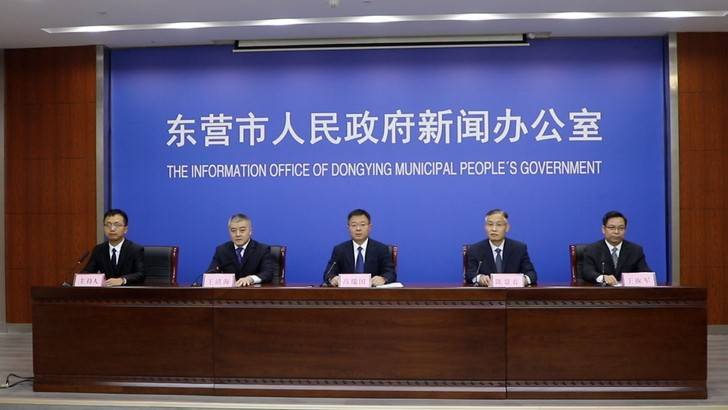
支持工业转型升级,统筹安排2亿元政府投资基金,支持"石化、橡胶轮胎、石油装备、有色金属等优势 产业,新材料、新能源、生物医药等新兴产业,人工智能、低空经济、新型储能等未来产业"加快实施 技术改造和设备更新、人工智能赋能、产业链延伸,推动传统产业焕新升级、新兴产业扩量提质、未来 产业加速布局。加快实施总投资4211亿元的158个重点工业项目,滚动实施投资500万元以上技改项目 260个,打造绿色工厂、绿色园区等30个以上。 工业经济是全市经济的"主引擎""压舱石"。在1月16日的发布会上,东营市工业和信息化局副局长、新 闻发言人王清海详细阐述了2026年将工业经济作为"头号工程"来抓的四项重点任务,明确提出了规上工 业企业数字化转型覆盖率目标。 突出抓好稳增长行动,聚焦产业高端化、智能化、绿色化发展方向,围绕石化、有色金属等重点行业制 定稳增长行动方案,突出稳增长和优结构并重,大力培育新的增长点,推动产业发展量质齐升。实施稳 产增产激励政策,支持工业企业稳定经营。积极帮助有需求的炼化企业争取更多国内原油供应。指导轮 胎企业更好应对贸易摩擦。推动铜冶炼企业尽快签订铜精矿国际贸易长单,争取进口铜精矿"口岸+目 的地 ...
中国企业获评电视行业全球首个 “灯塔工厂”
Guan Cha Zhe Wang· 2026-01-17 10:50
Core Insights - Hisense's television factory has been recognized as the world's first "Lighthouse Factory" in the television industry, marking a significant achievement in smart manufacturing and providing a competitive edge against major players like Samsung and Sony [1][10] Group 1: Digital Transformation and User-Centric Approach - The factory employs a dual-engine digital transformation model centered on user needs and full-chain AI-driven manufacturing, integrating precise user demand capture with comprehensive intelligent upgrades [3] - Utilizing big data technology and the Xinghai model, the factory conducts minute-level deep analysis of over 603,138 data points, significantly reducing the time to convert user feedback into new product features by 62% [3] - The upcoming RGB Mini LED E8S series is developed based on user demands for enhanced dynamic picture smoothness and color stability [3] Group 2: R&D and Process Design Innovations - The factory has introduced an intelligent platform based on large language models (LLM) for R&D, improving software development efficiency by 27% and shortening development cycles by 31% [5] - A digital process design model has been created, utilizing over 100,000 process data entries, allowing for the automatic generation of comprehensive process plans in just 5 minutes, enhancing efficiency by 75% [5] - Validation processes have been compressed from 10 hours to 19 minutes using simulation technology, achieving a 30% reduction in design and validation cycles for the E5Q Pro product [5] Group 3: Manufacturing and Quality Control Advancements - The factory features a third-generation digitalized efficient television production line, integrating 25 self-developed automation devices, with 11 being industry firsts [7] - An innovative matrix panel assembly solution addresses challenges in assembling 85-inch screens, achieving automation in the entire process with precision levels of 0.1 millimeters, replacing manual labor previously requiring five workers [7] - The factory has established an AI intelligent detection platform, enhancing detection efficiency by 70.7% through a deep learning model trained on over 260,000 high-quality samples [8]


建发股份:“金融+资源+科技”三箭齐发,供应链运营业务加快“升维”步伐
Xin Lang Cai Jing· 2026-01-17 05:27
Core Viewpoint - Xiamen C&D Group and its core listed platform C&D Inc. are establishing a solid foundation for 2026 through a series of strategic collaborations, moving beyond traditional supply chain operations to initiate a significant transformation [1][8]. Group 1: Financial Support - Recent interactions with financial institutions, including a visit from the president of Bank of Communications, have provided a robust foundation for the stable development of C&D's supply chain operations [2][9]. - The strategic cooperation agreement signed with the Export-Import Bank of China will offer long-term, stable, and cost-effective credit support for C&D's international strategy, particularly in cross-border trade and supply chain infrastructure [2][9]. - The dual support system of commercial and policy-based finance will provide C&D with essential resources and risk buffers in a complex international environment, aligning the company's strategy with national policies [3][10]. Group 2: Resource Control - C&D is transforming from a "trade distributor" to an "industry chain organizer" through strategic partnerships, enhancing its control over key resources [4][11]. - A strategic cooperation agreement with Hainan Resources Group will allow C&D to access stable resources like rubber and coffee, leveraging the advantages of the Hainan Free Trade Port [4][11]. - In the renewable energy sector, a partnership with CATL will integrate C&D's logistics and warehousing capabilities into the global battery production and recycling system, opening up significant market opportunities [5][12]. Group 3: Technological Advancement - C&D is enhancing its supply chain efficiency and creating new value through digital transformation and the development of an interconnected industrial ecosystem [7][14]. - The company is implementing advanced technologies such as AI and big data to optimize its risk management and operational processes, ensuring a robust supply chain operation [7][14]. - Strategic collaborations with major players like Huawei and CATL are not isolated events but part of a tightly woven value network that strengthens C&D's core supply chain capabilities [7][14].

世界经济论坛宣布新一批23个灯塔工厂,16个来自中国
Xin Lang Cai Jing· 2026-01-17 04:23
Core Insights - The World Economic Forum announced the addition of 23 new lighthouse factories to its global network, with 16 of them located in China, including Hisense Visual Technology and Hichain Energy [1][3] - These factories demonstrate effective large-scale industry transformation amidst geopolitical turmoil, cost pressures, and rapid technological changes [1][3] Group 1: Resilience and AI Integration - New lighthouse factories have made significant progress in enhancing resilience under turbulent conditions, integrating AI into core operations, and expanding digital transformation across networks rather than individual factories [3] - The global lighthouse network evaluates excellence in five dimensions: production efficiency, supply chain resilience, sustainability, customer-centricity, and talent development [3] Group 2: Operational Transformation - The World Economic Forum released an annual white paper summarizing experiences from over 220 lighthouse factories across more than 30 countries, analyzing how leading manufacturing enterprises enhance operational resilience and integrate AI into production and value chains [3] - The executive director of the World Economic Forum stated that competitiveness now relies more on rapid perception, adaptation, and response capabilities rather than just efficiency [3] Group 3: Upcoming Event - The 56th World Economic Forum Annual Meeting will take place from January 19 to 23 in Davos-Klosters, Switzerland, with the theme "The Spirit of Dialogue" [1]

广州又添一家全球“灯塔工厂”
Guang Zhou Ri Bao· 2026-01-17 01:40
Core Insights - The Zeiss Optical manufacturing base in Guangzhou has been recognized as a "Lighthouse Factory" by the World Economic Forum, marking it as the first in the global optical lens industry to receive this honor [1] - "Lighthouse Factories" represent the highest level of smart manufacturing and digital transformation in the industry, with a total of 224 such factories worldwide as of January 2026 [1] - Among the "customer-centric" category, only four factories globally have achieved significant breakthroughs in customized production optimization and full-process delivery acceleration [1] Company Performance - The Guangzhou base has implemented over 100 applications of Industry 4.0 across all scenarios, enhancing its customization capabilities by 400% [1] - The factory has reduced delivery cycles by 29% through smart flexible manufacturing, achieving a timely delivery rate of 98.5% [1] - Since its establishment in Guangzhou in 1995, Zeiss Optical has promoted the deep integration of digital technology and precision manufacturing [1] Future Outlook - Zeiss Optical aims to use the Guangzhou "Lighthouse Factory" as a benchmark to support the high-quality development of China's eyewear lens industry [1] - The company plans to drive the digital and green collaborative upgrade of regional high-end manufacturing clusters [1]