数字经济

Search documents
2026 凝心聚力绘新卷 砥砺奋进开新局
Xin Lang Cai Jing· 2026-01-21 22:36
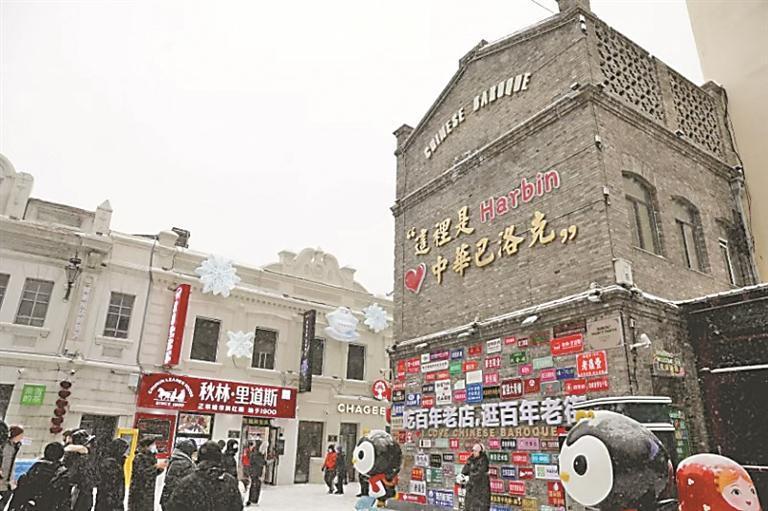
Core Viewpoint - Harbin aims to achieve a balanced economic growth with a GDP increase of 5% and a focus on enhancing production capacity and quality across various sectors, while ensuring social stability and environmental sustainability [11]. Economic Development Goals - The expected economic growth targets for Harbin include: - GDP growth of 5% - Agricultural output growth of 3.5% - Industrial value-added growth of 5.5% - Fixed asset investment growth of 7% - Retail sales growth of approximately 4.5% - Public budget revenue growth of 6% - Synchronization of urban and rural residents' income growth with economic growth - A reduction of carbon emissions per unit GDP by about 3.8% [11]. Consumer and Investment Expansion - Strategies to boost consumption include: - Developing new consumption formats and enhancing service supply - Implementing policies for replacing old consumer goods to stimulate urban and rural consumption - Expanding service consumption and promoting traditional brands [12]. - Investment strategies focus on: - Targeting key sectors for long-term investment support - Attracting foreign strategic investors and expanding industrial investments with over 700 projects and investments exceeding 60 billion yuan [12]. Industry Development - Emphasis on fostering new and future industries such as: - Digital economy and biotechnology - High-end equipment, aerospace, and renewable energy sectors - Upgrading traditional industries like manufacturing and food production through technological improvements [13]. - The goal is to create competitive advantages by strengthening supply chains in emerging sectors [13]. Tourism and Cultural Development - Plans to enhance tourism include: - Upgrading key scenic areas and promoting winter sports tourism - Integrating cultural, sports, and commercial activities to boost tourism appeal [14]. - Development of high-quality tourist attractions and services to improve visitor experience [14]. Agricultural and Rural Development - Agricultural initiatives aim to: - Enhance production capacity and quality through technology and sustainable practices - Maintain grain planting areas above 30 million mu and grain production above 25 billion jin [15]. - Focus on rural revitalization and improving living conditions through infrastructure development [16]. Reform and Open Economy - Efforts to improve the business environment include: - Streamlining administrative processes and enhancing digital government services - Strengthening legal protections for market participants [17]. - Expansion of high-level open cooperation, particularly in cross-border trade and logistics [17]. Urban Development and Infrastructure - Urban planning will focus on: - High-standard implementation of urban construction projects, including heating and transportation infrastructure [18]. - Initiatives for urban renewal and environmental improvements, including waste management and pollution control [19]. Social Welfare and Employment - Employment strategies include: - Expanding job opportunities for youth and vulnerable groups, targeting over 87,000 new urban jobs [20]. - Enhancements in social security and healthcare services to improve overall community well-being [20].

2025年杭州经济成绩单“出炉”
Mei Ri Shang Bao· 2026-01-21 22:31
Economic Overview - In 2025, Hangzhou's GDP reached 23,011 billion yuan, growing by 5.2% year-on-year, surpassing the national average by 0.2% [1] Agriculture - The total output value of agriculture, forestry, animal husbandry, and fishery in Hangzhou was 569 billion yuan, with growth rates of 3.8% for planting, 5.3% for forestry, 0.2% for animal husbandry, and 4.2% for fishery [2] - Major agricultural products included a total grain output of 599,000 tons (up 3.9%), vegetable output of 3,860,000 tons (up 3.6%), and fruit output of 900,000 tons (up 3.9%) [2] Industrial Growth - The added value of industrial enterprises above designated size was 4,624 billion yuan, with significant growth in the computer, communication, and other electronic equipment manufacturing (up 13.4%) and automotive manufacturing (up 36.7%) [3] - New quality productivity showed remarkable results, with high-tech industries, strategic emerging industries, and high-end equipment manufacturing growing by 7.5%, 10.0%, and 9.5% respectively [3] - Production of new energy vehicles, industrial robots, and 3D printing equipment saw explosive growth rates of 383.0%, 38.6%, and 15.1% respectively [3] Service Sector - The added value of the service industry was 16,997 billion yuan, with the profit-making service sector growing by 7.0% and financial services by 6.4% [4] - From January to November, the revenue of the service industry above designated size reached 21,168 billion yuan, growing by 8.1%, with the information transmission, software, and IT services sector growing by 13.4% [4] Consumer Market - The total retail sales of consumer goods in Hangzhou reached 9,499 billion yuan, indicating a stable and upgrading consumption pattern [5] - The "8+4" economic policy led to significant growth in retail sales of household appliances (up 42.8%) and communication equipment (up 31.4%) [5] - Upgrading consumption demands were strong, with sports and entertainment goods growing by 45.3% and cosmetics by 12.3% [5] Foreign Trade - The total import and export value was 9,072 billion yuan, with exports at 6,469 billion yuan and imports at 2,603 billion yuan [6] - The export of electromechanical products reached 3,107 billion yuan (up 10.9%), and high-tech products reached 1,001 billion yuan (up 9.9%) [6] - The private economy accounted for 77.0% of total exports, with exports to Belt and Road countries growing by 14.1% [6] Living Standards - The per capita disposable income of residents was 80,017 yuan, with balanced growth across four income sources [7] - Urban residents had a per capita disposable income of 86,640 yuan (up 3.9%), while rural residents had 53,565 yuan (up 5.4%), narrowing the income gap to 1.62 [7] Price Stability - In 2025, the consumer price index remained stable compared to the previous year, with six categories of goods experiencing price increases and two categories seeing declines [8] - Hangzhou aims to achieve a GDP of 30 trillion yuan and a per capita GDP of over 30,000 USD by 2030, focusing on policy coordination and market demand stimulation [8]
1915.6万千瓦 杭州冬季用电负荷创历史新高
Mei Ri Shang Bao· 2026-01-21 22:31
寒潮影响期间,公司启动输电监控中心24小时应急值班,实时监测重点输电线路覆冰情况,安排移动融 冰车在变电站驻站,开展特高压灵绍线地线固定融冰装置检查和维护,杭州全域10座500千伏超高压变 电站恢复有人值守状态。在配电网侧,该公司通过"人工巡视+镇村联动+微拍监测",对临安万市镇、 板桥镇、玲珑街道,余杭鸬鸟镇等雪量较大区域进行观冰及隐患排查特巡,抢修力量24小时待命,确保 及时响应。 值得一提的是,新技术和新工具也在本轮寒潮中"大显身手"——国网杭州供电公司在500千伏沥富5921 线投用自动除冰机器人,在特高压灵绍线重覆冰杆塔试点应用无人机热射流技术,成功清除绝缘子覆 冰,为一线工作赋能增效,保障冬季电网更稳。 2025年四季度以来,全市人工智能产业、算力中心等数字经济领域用电量显著增加,新能源汽车生产等 新兴制造业用电平稳增长,带动整体用电负荷快速增长9.4%,四季度也成为2025年全年用电增速最快 的一季。与此同时,杭州居民用电负荷占比大,持续低温带来的取暖负荷增长叠加产业年底"冲刺",拉 动了负荷曲线快速上扬。 面对寒潮,国网杭州供电公司充分准备,有力应对。前期精准投运7座110千伏变电站,新增变电 ...
2025年北京GDP首破5万亿元大关
Xin Lang Cai Jing· 2026-01-21 21:34
其中,信息传输、软件和信息技术服务业增加值比上年增长11.0%,人工智能加速演进,算力、算法需 求迭代升级,应用软件开发、信息处理和存储等领域成长壮大;金融业增加值增长8.7%,有力支持实 体经济发展,11月末金融机构企(事)业单位贷款增长6.3%;规模以上工业增加值增长6.5%,新能源 汽车、集成电路等领域加快布局,计算机、通信和其他电子设备制造业,汽车制造业增加值分别增长 20.2%和17.7%。 投资增量提质,全年固定资产投资(不含农户)比上年增长5.5%,重点产业布局稳步推进,有效投资 占比不断提高,反映实物工作量的建筑安装工程投资和反映企业生产能力扩大的设备购置投资占全市投 资的比重为66.8%,同比提高8.5个百分点。 消费结构优化,居民服务性消费支出占居民消费支出的比重接近六成,限额以上批发和零售业、住宿和 餐饮业网上零售额占社会消费品零售总额的比重超过四成,新消费模式加快发展,限额以上便利店、超 市、仓储会员店等业态中通过公共网络实现的零售额增长17.1%。 居民收入保持增长 (来源:千龙网) 昨日(21日),北京市统计局相关负责人在解读2025年北京经济运行情况时表示,2025年,全市认真贯 ...
推动数实深度融合 激发高质量发展动能
Xin Lang Cai Jing· 2026-01-21 20:32
第四,数实融合赋能消费边界延伸扩张,牵引拉动需求扩容升级。依托数字技术和数据要素对供给侧产 出的优化调整,数实融合有效提高各行业供给侧商品和服务的柔性化、定制化水平,促使企业主动追求 生活服务和商品供给的精准性、适配性、均衡性和普惠性,及时优化调整各类要素的配置和使用模式, 拉动更大规模的高品质、深层次、多样化需求,极大拓展了国内居民的消费需求边界。数实融合催生消 费新场景、新模式持续涌现,打造更多沉浸式、体验式、互动式的消费新场景、新业态、新模式,切实 提高消费活动的体验感和便捷度。 第五,数实融合通过搭建广泛丰富的应用场景推动技术持续创新迭代。比如,具有虚拟性和非消耗性的 数据要素成为新的劳动对象,信息网络机器体系等数字技术成为新的劳动工具,并在传统领域和新兴领 域广泛深入运用,促进产业形态、分工和组织方式重构,支持技术的持续创新迭代。 该书力图构建一个涵盖"数实融合驱动高质量发展"的历史背景、动力机制、核心驱动力、生产力基础、 技术支撑、制度环境、地方实践、产业体系构建、消费扩容及行业赋能等多个维度的分析研究框架。该 研究框架不仅关注技术经济逻辑,也关注制度与生产关系层面的调整,展现了作者对经济社会发展 ...
迪拜将举办第二届世界数字经济论坛
Shang Wu Bu Wang Zhan· 2026-01-21 15:42
Group 1 - The second Dubai World Digital Economy Forum will be held from February 12 to 14 [1] - The forum is co-hosted by the Dubai International Economic Development Bureau and the World Cross-Border E-Commerce Association (WORLDEF) [1] - The focus of the forum is on cross-border e-commerce and digital business, aiming to promote international cooperation and expand business opportunities [1] Group 2 - The event aims to drive sustainable development of the global digital economy [1]
筑牢经济底盘 北京迈入“五万亿之城”行列
Bei Jing Shang Bao· 2026-01-21 15:10
Core Insights - Beijing officially enters the "5 trillion" city club with a projected GDP of over 5.2 trillion yuan by 2025, reflecting a year-on-year growth of 5.4% [1][5] - The city is focusing on industrial quality improvement and the acceleration of emerging sectors as new engines for economic growth [1][7] Economic Performance - In 2025, Beijing's GDP is expected to reach 5.21 trillion yuan, with the primary industry decreasing by 0.7% to 10.92 billion yuan, the secondary industry growing by 3.5% to 718.74 billion yuan, and the tertiary industry increasing by 5.8% to 4.48 trillion yuan [5][6] - Key sectors such as information transmission, software, and financial services contribute significantly, accounting for 51.8% of the total GDP and over 80% of economic growth [5][6] Investment and Consumption - Fixed asset investment in Beijing is projected to grow by 5.5% in 2025, with effective investment accounting for 66.8% of total investment, an increase of 8.5 percentage points [6] - The retail sector is evolving, with online retail in wholesale, retail, accommodation, and catering exceeding 40% of total social retail sales, and convenience stores and supermarkets seeing a 17.1% increase in online sales [6][8] Industrial Development - The industrial output value is expected to grow by 6.5%, with significant increases in the computer, communication, and automotive manufacturing sectors, which grew by 20.2% and 17.7% respectively [7][8] - Strategic emerging industries and high-tech manufacturing are also on the rise, with respective increases of 15.5% and 7.5% [8][9] Innovation and Future Outlook - The digital economy's value is projected to grow by 8.7%, with core industries increasing by 10.4% [8][9] - Beijing is committed to enhancing new quality productivity and fostering innovation, with R&D investment remaining above 6% for three consecutive years [9][10] Market Confidence and Future Plans - The capital market is showing signs of recovery, with trading volume increasing by 32.3% [10] - In 2026, Beijing plans to implement six special actions to promote sustained economic recovery, focusing on stabilizing employment, businesses, and market expectations [11][12]
风浪中“稳进新韧”,中国经济行稳致远
Xin Lang Cai Jing· 2026-01-21 13:23
国家统计局19日发布数据显示,2025年中国国内生产总值(GDP)1401879亿元,首次跃上140万亿元新 台阶,按不变价格计算,比上年增长5.0%,成为"十四五"收官之年最亮眼的注脚,彰显出中国经济基础 稳、优势多、韧性强、潜能大的鲜明特质。 "稳"是发展的底盘,是风浪中锚定航向的压舱石。在全球经济增速徘徊于3%左右、地缘政治博弈加 剧、内外风险挑战交织的背景下,中国经济能突破140万亿元大关并实现5%增长,这份稳定来之不易。 这份"稳",体现在关键指标的坚实支撑:城镇调查失业率年均5.2%,就业大局总体平稳;外汇储备余额 超3.3万亿美元,筑牢对外支付安全防线;进出口总额同比增长3.8%,彰显市场需求的稳定性。这 份"稳",更源于宏观调控的精准发力与制度优势的兜底保障。积极政策既对冲短期下行压力,又稳定市 场预期、释放内需潜力。而民生领域的稳步向好更添底气,居民人均可支配收入实际增长5.0%,与经 济增速同步,养老育幼医疗事业持续进阶,让发展根基扎根于民。 来源:中国吉林网 长白时评评论员 久泰平 这份稳中有进、以新赋能,最终落脚于"韧"的鲜明特质,是中国经济在变局中应变破局的核心能力。面 对世界经贸秩 ...
北京GDP首破5万亿元大关,意味着什么?
Xin Jing Bao· 2026-01-21 13:13
Economic Overview - In 2025, Beijing achieved a GDP of 52,073.4 billion yuan, marking a 5.4% increase from the previous year, making it the second city in China to surpass the 50 trillion yuan mark after Shanghai [1][2] - The economic growth from 40 trillion to 50 trillion yuan occurred within five years, highlighting a significant milestone in the "14th Five-Year Plan" [2][3] Economic Structure - The primary industry in Beijing contributed an added value of 109.2 billion yuan, a decrease of 0.7%, while the secondary industry added 7,187.4 billion yuan, growing by 3.5%, and the tertiary industry reached 44,776.9 billion yuan, increasing by 5.8% [4] - The service sector accounted for 45,000 billion yuan of the GDP, contributing 4.9 percentage points to the growth, with information services and finance being the key drivers [4][5] Industrial Performance - The industrial sector in Beijing saw a notable performance with a 6.5% increase in added value, surpassing the national average [4] - The electronics manufacturing sector grew by 20.2%, and the automotive manufacturing sector increased by 17.7%, together contributing over 90% to the industrial growth [5] Emerging Industries - The digital economy in Beijing grew by 8.7%, with significant advancements in new energy vehicles, which saw production rise from 20,000 to nearly 700,000 units, making up 47.7% of the city's total automotive production [6][7] - The city has invested heavily in technology innovation, maintaining a research and development expenditure intensity of over 6% for three consecutive years, positioning it as a leader among Chinese provinces [6] Future Outlook - The successful completion of the "14th Five-Year Plan" sets a solid foundation for the "15th Five-Year Plan," with a focus on industrial structure adjustment and the cultivation of emerging growth drivers [9][10] - In 2026, Beijing's economy is expected to continue its upward trajectory, supported by ongoing initiatives to promote economic recovery and stability [10]
北京GDP首破5万亿元大关,意味着什么?|城市论
Xin Jing Bao· 2026-01-21 13:12
Economic Overview - In 2025, Beijing's GDP reached 52,073.4 billion yuan, marking a 5.4% increase from the previous year, making it the second city in China to surpass the 50 trillion yuan mark after Shanghai [2][3] - The economic growth from 40 trillion to 50 trillion yuan occurred within five years, showcasing a significant milestone for the city's economic development [3][4] Economic Structure - The primary industry in Beijing contributed an added value of 109.2 billion yuan, a decrease of 0.7%, while the secondary industry added 7,187.4 billion yuan, growing by 3.5%, and the tertiary industry contributed 44,776.9 billion yuan, increasing by 5.8% [5][6] - The service sector accounted for 45,000 billion yuan of the GDP, contributing 4.9 percentage points to the growth, with information services and finance being the key drivers [5][6] Industrial Performance - The electronic equipment manufacturing industry saw a 20.2% increase in added value, while the automotive manufacturing sector grew by 17.7%, together contributing over 90% to the growth of the industrial sector [6][7] - The production of new energy vehicles reached 699,000 units, a 140% increase year-on-year, making up 47.7% of the total automotive production in Beijing [6][7] Innovation and New Industries - The digital economy in Beijing grew by 8.7%, with significant advancements in artificial intelligence and new energy vehicles, reflecting the city's commitment to technological innovation [7][8] - Approximately 150,000 new technology-based enterprises were established in Beijing, representing over 40% of all new businesses, indicating a robust growth in specialized and innovative sectors [8] Future Outlook - The successful completion of the 14th Five-Year Plan sets a solid foundation for the 15th Five-Year Plan, with expectations for continued economic growth and structural adjustments in the coming years [10]