
绿色发展

Search documents
三明人均GDP居全国20个革命老区重点城市第二位
Xin Lang Cai Jing· 2025-12-19 23:34
Core Viewpoint - The news highlights the economic and social development of Sanming City during the 14th Five-Year Plan period, emphasizing its achievements in various sectors and the strategic direction for the upcoming 15th Five-Year Plan. Economic Development - During the 14th Five-Year Plan, Sanming's per capita GDP exceeded 125,000 yuan, ranking second among 20 key revolutionary old districts in China [1] - The city has been approved as the first cross-strait rural integration development experimental zone in the country [1] - Sanming's urban brand index improved to 32nd nationally, advancing 6 places since 2021 [1] Industrial Growth - Sanming has focused on revitalizing its old industrial base, with 11 city-level characteristic industrial chains and 55 specialized projects each exceeding 1 billion yuan initiated [2] - New industries, such as fluorine new materials, have maintained double-digit growth annually [2] - The city has seen a 18% reduction in energy consumption per unit of GDP since the beginning of the 14th Five-Year Plan [2] Innovation and Talent - Sanming has established a robust innovation framework supported by partnerships with universities and research institutions, including the establishment of expert teams to drive integration of innovation, industry, finance, and talent [3] - The city has signed 98 industrial project agreements with a total investment of 53.26 billion yuan through cooperation with Shanghai [3] Healthcare Reform - Sanming has implemented over 40 national and provincial reform pilot projects, with its healthcare reform experience being promoted nationally [4] - The city aims to transition from a disease treatment model to a health management model, enhancing the quality and efficiency of medical services [4] Environmental Initiatives - Sanming has pioneered the "Two Mountains" transformation path, issuing 720 million yuan in forest tickets and developing a carbon trading platform with a transaction volume of 6.8 billion yuan [5] - The city has achieved a forest coverage rate of 77.12% and has been recognized as one of the "Green Cities" in China for four consecutive years [6] Tourism and Culture - Sanming has developed its cultural and tourism sectors, with a 45.7% increase in total tourism numbers and a 55% increase in total revenue during the 14th Five-Year Plan [6] - The city has successfully promoted its unique cultural heritage, leading to the establishment of national-level cultural parks and ecological protection zones [6] Social Welfare - Sanming has completed 164 practical projects for the public, with healthcare and elderly care facilities exceeding provincial averages [7] - The city plans to leverage its unique advantages to create new hubs for cross-strait integration and high-quality development in the upcoming 15th Five-Year Plan [7]
向资源要绿色产值
Jing Ji Ri Bao· 2025-12-19 21:48
Core Viewpoint - The company, Shenzhen Zhongjin Lingnan Nonfemet Company, emphasizes innovation and green transformation in the non-ferrous metal industry, focusing on high-end, intelligent, and sustainable development while enhancing the recycling of rare metals [1][2]. Group 1: Green Development Strategy - The company has adopted a dual-wing development strategy focusing on green mining and deep processing of non-ferrous metals, ensuring resource security and optimizing the industrial structure [2]. - The company aims to enhance its independent innovation capabilities to meet the growing demand for new materials in emerging sectors like renewable energy and electronics [2]. Group 2: Technological Innovation and R&D - The company has implemented over ten institutional documents to support technological innovation and has increased R&D investment, establishing 15 provincial-level R&D platforms and obtaining 568 national patents [3]. - Key technological breakthroughs include the development of specialized metal matrix composite materials and advancements in silver-based electrical contact materials, achieving international advanced levels [3]. Group 3: Mining and Resource Recovery - The company has made significant advancements in resource exploration and recovery, achieving high recovery rates for gallium and germanium metals and generating substantial economic benefits from new product sales [4][7]. - The company has successfully implemented intelligent mining technologies, enhancing operational safety and efficiency through digital transformation initiatives [5][6]. Group 4: Environmental Sustainability - The company has developed a comprehensive ecological restoration model at the Fankou lead-zinc mine, which includes creating ecological wetlands and restoring damaged ecosystems [9]. - The company has achieved zero wastewater discharge at its Shaoguan smelting plant through innovative process optimizations and has been recognized for its water-saving initiatives [10]. Group 5: Financial Performance - In the first nine months of 2025, the company reported a revenue of 48.505 billion yuan, a year-on-year increase of 11.81%, and a net profit of 841 million yuan, reflecting a growth of 5.18% [11]. Group 6: Future Outlook - The company plans to accelerate resource accumulation and production in the mining sector, enhance rare metal recovery in the smelting sector, and focus on high-end composite materials in the new materials sector during the 14th Five-Year Plan [12].

大美青海亮相2025中国国际旅交会
Xin Lang Cai Jing· 2025-12-19 20:27
Core Viewpoint - The 2025 China International Tourism Trade Fair has commenced in Haikou, Hainan, showcasing Qinghai Province's commitment to becoming an international ecological tourism destination through various promotional activities and exhibitions [1][2]. Group 1: Event Overview - The event features Qinghai's theme "Mountain Religion and Water Source, Beautiful Qinghai," highlighting its natural endowments, diverse culture, and ecological achievements [1]. - Qinghai has participated in the China International Tourism Trade Fair for 15 consecutive years, which has become a significant platform for global cultural and tourism exchange since its inception in 1998 [1]. Group 2: Exhibition Highlights - The exhibition area consists of five distinct sections, including a comprehensive image display area featuring promotional videos and classic music that immerses visitors in Qinghai's scenic beauty and cultural charm [2]. - The ecological tourism section vividly presents the "one core, one ring, multiple belts" ecological tourism development pattern and achievements in national park creation through maps, videos, and images [2]. - The "Qinghai Good Gifts" section showcases unique cultural products and local delicacies, allowing visitors to experience Qinghai's craftsmanship and flavors up close [2]. - The intangible cultural heritage display features traditional crafts such as Tibetan incense making and Hehuang embroidery, with opportunities for audience participation [2]. - The premium performance section highlights high-quality artistic works rooted in local ethnic culture, celebrating the new era and showcasing Qinghai's unique cultural atmosphere [2]. Group 3: Strategic Importance - Qinghai's participation in this world-class cultural and tourism exchange platform is a crucial step to deepen cross-regional cooperation and enhance brand influence [2]. - The delegation of nearly 100 representatives and diverse exhibition formats effectively broaden Qinghai's cultural tourism cooperation channels and development paths, promoting its unique travel attractions to both domestic and international audiences [2].
让绿色成为贵阳贵安的鲜明底色
Xin Lang Cai Jing· 2025-12-19 20:27
Core Viewpoint - The article emphasizes the importance of green development as a distinctive feature of Chinese modernization, highlighting the need for ecological civilization construction in Guiyang and Gui'an [1][2][3] Group 1: Ecological City Construction - The city aims to optimize its ecological space by creating an ecological spatial pattern of "one belt, four corridors, eight rivers, and a thousand parks" [1] - There is a focus on enriching urban ecological products and promoting public access to urban parks and green spaces [1] - The initiative includes building urban ecological facilities and communities that are low-carbon, livable, clean, and harmonious [1] Group 2: Ecological Governance - The article outlines the need for comprehensive pollution control across air, water, soil, and solid waste to improve environmental quality [1][2] - It emphasizes the importance of establishing a long-term mechanism for rectifying prominent ecological issues [1][2] Group 3: Ecological Protection - The protection of ecosystems is highlighted as essential for enhancing productivity, with a focus on integrated protection and restoration of natural resources [2] - The article calls for the implementation of biodiversity protection action plans and the enhancement of forest quality through various forestry practices [2] Group 4: Ecological Economy Development - The article discusses the economic value inherent in good ecological conditions, advocating for the development of green agriculture, industry, and services [2] - It mentions the promotion of green energy and the implementation of carbon peak and intensity control measures [2] Group 5: Ecological Culture Cultivation - The cultivation of ecological culture is deemed necessary for supporting ecological civilization, with initiatives to develop ecological cultural products and practices [2] - The article encourages the establishment of green initiatives across various community levels, including schools and families [2] Group 6: Ecological System Optimization - The article stresses the need for institutional and legal frameworks to support environmental protection, including market-based mechanisms for ecological product transactions [3] - It calls for the improvement of local regulations and government rules related to ecological environment management [3]
首笔酿酒葡萄园碳汇交易在宁落地
Ren Min Ri Bao· 2025-12-19 19:47
Core Insights - The first carbon credit transaction for wine grape vineyards in China has been successfully completed in Yinchuan, Ningxia, marking a significant step for the region's wine industry towards green transformation [1] Group 1: Carbon Credit Transaction - The transaction involved a carbon reduction amount of 40 tons of CO2 equivalent, with a unit price of 75 yuan per ton, resulting in a total transaction value of 3,000 yuan [1] - The deal was made between Ningxia Clean Development Mechanism Environmental Service Center and Ningxia Weifujiji Food Technology Co., Ltd., focusing on the "COFCO Great Wall Wine Grape Vineyard Planting Project" [1] Group 2: Industry Development - The grape vineyard ecosystem contributes to carbon credits through photosynthesis and soil carbon sequestration, establishing a stable carbon credit resource [1] - Starting in 2023, the Helan Mountain East Foot Wine Industry Park Management Committee, in collaboration with various local institutions, initiated carbon asset accounting and project demonstration for vineyards [1] - A pioneering methodology, the "Yinchuan City Wine Grape Vineyard Planting Carbon Benefit Methodology (Trial)," has been developed to provide a scientific basis for carbon credit project development and trading [1]
宁德供电保障养殖户用电安全可靠
Xin Lang Cai Jing· 2025-12-19 18:23
近日,国网宁德供电公司工作人员走进福建省宁德市霞浦县沙江镇高位池养殖基地,对基地内的供电线 路进行全面检查,对养殖户的抽水、增氧、温控等电器设备设施进行维护,及时发现并消除各类用电安 全隐患。近年来,霞浦县积极践行绿色发展理念,推动高位池养殖户改用电能等清洁能源。宁德供电公 司密切关注养殖户用电需求,规划两个110千伏变电站项目,储备11个配套电网改造项目,新建5条10千 伏配套线路,完成4条老旧线路电网工程改造,全力保障养殖户用电安全可靠。 张伏锦 转自:法治日报 (来源:法治日报) ...
系统重塑碳账户体系 擦亮绿色发展金名片
Xin Lang Cai Jing· 2025-12-19 17:25
Core Viewpoint - The article emphasizes the importance of carbon peak and carbon neutrality as guiding principles for promoting green and low-carbon development in the new era, particularly in Quzhou City, which aims to serve as a model for green transformation at both provincial and national levels [1] Group 1: Carbon Account System Development - The carbon account system should expand its application from "full-field coverage" to "full-chain penetration," creating a virtuous cycle of "carbon reduction - value increase - further carbon reduction" [1] - In the industrial sector, the focus will be on expanding "carbon efficiency benchmarking" linked to production capacity and tax incentives, driving technological upgrades in enterprises [2] - The establishment of a carbon footprint tracking system for agricultural products will align with national standards, while ecological projects will integrate carbon credits from restoration efforts [2] Group 2: Financial Integration - Green finance is identified as a key lever for activating market vitality through the carbon account system, transitioning from "single credit" to a "diverse product system" [3] - Innovative carbon financial products will include combinations of "carbon futures + insurance" and "carbon credit pledges + supply chain finance" to support high-energy-consuming enterprises [3] - A regional carbon asset trading platform will be established to facilitate transactions for small and medium-sized enterprises [3] Group 3: Technological Support - Technological innovation is crucial for the precision and intelligence of the carbon account system, with a focus on developing key low-carbon technologies across various sectors [5][6] - The construction of a "dual carbon brain" intelligent platform will integrate data resources for carbon monitoring, accounting, and forecasting [6] - The application of IoT and blockchain technologies will ensure real-time and tamper-proof carbon emission data collection [6] Group 4: Legal and Regulatory Framework - Legal support is essential for the stable operation of the carbon account system, with a push towards establishing a comprehensive regulatory framework [7] - The development of local regulations, such as the "Quzhou Carbon Account Management Regulations," will clarify responsibilities and establish a closed-loop management mechanism [7] - Enhanced regulatory enforcement will include penalties for data falsification and non-compliance with carbon reduction targets [8]
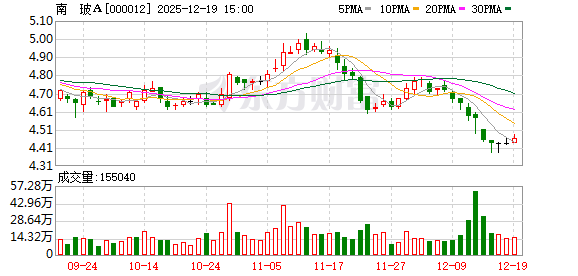
南玻A:南玻始终坚持以节能低碳、绿色发展为己任
Zheng Quan Ri Bao· 2025-12-19 12:43
Core Viewpoint - The company emphasizes its commitment to energy-saving, low-carbon, and green development, focusing on enhancing the efficiency of its main business through structural adjustments, system optimization, and technological upgrades [2] Group 1 - The company is actively engaging with investors through interactive platforms [2] - The company is implementing measures such as structural adjustments and system optimization to improve operational efficiency [2] - The company prioritizes green development as a core aspect of its business strategy [2]


张南生:韶关推动传统产业从“制造”走向“智造”
2 1 Shi Ji Jing Ji Bao Dao· 2025-12-19 11:35
12月19日,"'十四五'广东成就"韶关专场新闻发布会在广州召开,现场介绍了"十四五"期间韶关市经济 社会发展总体情况和成效亮点。韶关市工信局局长张南生在会上介绍,"十四五"期间,韶关始终坚 持"没有落后的产业,只有落后的企业"这一理念,通过创新引领、数智赋能和绿色转型,让传统产业 从"制造"迈向"智造",持续为韶关工业高质量发展注入新动能。 (文章来源:21世纪经济报道) 张南生表示,在高端化升级方面,韶关着力推动"传统制造"向"高端智造"迈进。中南股份产品结构加速 从建筑用材向工业用材战略转型,特钢年产量突破110万吨,硕成科技、欧莱新材在半导体材料领域打 破国外垄断。目前,全市已培育国家级单项冠军企业1家、省级单项冠军企业14家、国家级"小巨人"企 业22家,数量居粤东西北地区前列;在智能化改造方面,韶关以数智赋能让传统产业"老树发新芽"。全 市累计410家规上工业企业实施数字化转型,中南股份智慧炼钢、中金岭南智慧矿山等项目成为行业标 杆,北纺智造、韶关液压件厂入选省制造业数字化转型典型案例,生产效率和节能降碳水平得到大幅提 升;在绿色化转型方面,韶关坚持践行"绿色发展不是'选择题'而是'必答题'",全 ...
我国产业用纺织品量稳质升动力足
Jing Ji Ri Bao· 2025-12-19 07:24
Core Insights - The industrial textile industry in China has made significant advancements during the 14th Five-Year Plan, achieving breakthroughs in scale, quality, and technological innovation, positioning itself as a global leader in production, consumption, and export [2][4] Group 1: Industry Achievements - By 2024, China's industrial textile fiber processing volume is expected to reach 21.384 million tons, with an average annual compound growth rate of 3.3% during the 14th Five-Year Plan [2] - The production of non-woven fabrics is projected to reach 8.561 million tons, with a compound annual growth rate of 1.4% [2] - The industry accounts for approximately 30% of global production and export value, with non-woven fabric exports hitting 1.516 million tons and export value reaching $4.04 billion in 2024, both setting historical records [2] Group 2: Technological Innovations - The industry has seen a surge in technological achievements, with 16,500 patents in non-woven fabric, including 7,931 invention patents [3] - Significant advancements in technologies such as three-dimensional weaving and flash-spinning non-woven fabrics have improved performance and efficiency in aerospace and medical packaging [3] - Smart manufacturing initiatives are underway, focusing on digital transformation and the application of advanced manufacturing technologies [3] Group 3: International Positioning - The industry has transitioned from being a "low-cost supplier" to a "global innovation partner," enhancing its international image through technological self-innovation and structural adjustments [4] - In 2024, the export value of the industrial textile industry is projected to reach $41.34 billion, marking a 6.7% increase and reversing a three-year decline in exports [4][5] Group 4: Future Outlook - The 15th Five-Year Plan aims to enhance the quality and efficiency of the industrial textile sector, focusing on technological innovation and standardization to drive growth [6][8] - The industry is expected to shift from scale expansion to quality and efficiency upgrades, with a focus on strategic positioning and technological advancements [6][7] - Key common technologies will be targeted for improvement, aiming for breakthroughs in energy efficiency and production costs while meeting high-end market demands [7]