
自动驾驶

Search documents
【快讯】每日快讯(2026年1月28日)
乘联分会· 2026-01-28 08:30
Domestic News - The National Bureau of Statistics projects that profits in the high-tech manufacturing sector will grow by 13.3% in 2025 compared to the previous year, surpassing the overall industrial growth rate of 12.7% [7] - The Ministry of Transport emphasizes the implementation of a policy to waive tolls for small passenger vehicles during the Spring Festival, while also addressing the charging needs for new energy vehicles [8] - Dongguan plans to allocate 80 million yuan for new car purchase subsidies, with a maximum subsidy of 5,000 yuan per vehicle, as part of a broader 1.5 billion yuan consumer promotion initiative [9] - BYD and ExxonMobil have signed a strategic cooperation memorandum to enhance collaboration in the field of new energy hybrid technology [10] - Changan Automobile aims to achieve mass production of humanoid robots by 2028, as part of its transformation into a smart low-carbon mobility technology company [11] - NIO has surpassed 99 million battery swap operations, with a total of 8,595 energy swap stations, including 3,708 dedicated swap stations [13] - CATL has signed a comprehensive strategic cooperation agreement with the Yunnan provincial government to promote green low-carbon development and enhance cooperation in the fields of new energy batteries and green transportation [14] - Pony.ai and Aitb have reached a business cooperation agreement to build a fully autonomous driving service fleet [15] International News - India has agreed to open a car quota to the EU, allowing up to 250,000 European-made cars to enter the Indian market at reduced tariffs, significantly higher than the 37,000 quota for the UK [16] - South Africa's electric vehicle sales are projected to decline by 17% in 2025, with only 1,018 units sold, while overall new car sales are expected to reach 596,818 units, a 15.7% increase [17] - Tesla is partnering with Pilot Travel Centers to build high-power charging stations for electric trucks along major highways, with the first stations expected to be operational by late summer [18] - VinFast has partnered with Autobrains to develop autonomous driving technology, focusing on enhancing the driving assistance systems of its upcoming electric vehicles [19] Commercial Vehicles - Dongfeng Liuzhou Automobile and Yadea Technology Group have signed a strategic cooperation agreement to advance the development and application of new energy smart logistics equipment [20] - DeepWay has completed a Pre-IPO financing round, raising 1.177 billion yuan to strengthen its position in the smart new energy heavy truck sector [21] - Chery's Rely brand has launched the R08 EV, its first pure electric pickup truck, priced between 127,800 and 158,800 yuan, marking its entry into the new energy pickup market [22] - The White Rhino has begun testing a 24-cubic-meter unmanned vehicle in Shenzhen, aiming to expand its commercial scale and capture strategic opportunities in urban logistics [23]


港股异动 | 文远知行-W(00800)尾盘涨近3% 正式发布自研通用仿真模型WeRide GENESIS
智通财经网· 2026-01-28 08:12
Core Viewpoint - WeRide's launch of the WeRide GENESIS simulation model represents a significant advancement in the integration of Physical AI and Generative AI, aimed at accelerating the development and commercialization of autonomous vehicles [1] Group 1: Company Developments - WeRide's stock price increased by nearly 3% to HKD 23.44, with a trading volume of HKD 15.83 million [1] - The WeRide GENESIS model allows for the rapid creation of highly realistic simulated urban environments in just a few minutes, enhancing the training and validation of autonomous driving systems [1] Group 2: Technological Advancements - The WeRide GENESIS model can replicate extreme long-tail scenarios that are difficult to capture frequently in real-world driving, thus improving the training efficiency of autonomous driving algorithms [1] - By continuously feeding back experiences generated in simulation to real-world operations, WeRide GENESIS significantly enhances the capability and iteration efficiency of autonomous driving algorithms in complex real-world scenarios, while also reducing the time and costs associated with traditional road testing [1]
香港汽车ETF(520720)涨超1.2%,政策与智能驾驶有望利好行业发展
Mei Ri Jing Ji Xin Wen· 2026-01-28 06:25
Core Viewpoint - The automotive sector is currently experiencing a weak performance during the off-season, but market pessimism regarding sales is gradually diminishing, indicating that negative expectations may have bottomed out [1] Group 1: Market Conditions - The automotive sector is in a weak performance phase due to the off-season, but there is a gradual reduction in pessimistic sales expectations [1] - Structural improvements are anticipated in the market, particularly with the expectation of reduced competition and enhanced overseas sales [1] Group 2: Policy and Technological Developments - The implementation of the 2026 vehicle trade-in policy is expected to support domestic demand, with commercial vehicles likely to benefit more [1] - The autonomous driving sector is projected to enter a commercialization breakthrough phase in 2026, supported by relaxed policy expectations [1] - The humanoid robot sector is entering a phase where fundamental developments are expected to materialize, with attention needed on upcoming mass production milestones [1] Group 3: Investment Opportunities - The commercial vehicle sector is expected to see continued support from domestic demand and increased exports, especially with the full extension of subsidy policies in 2026 [1] - The Hong Kong automotive ETF (520720) tracks the Hong Kong Stock Connect automotive index (931239), which selects listed companies involved in vehicle manufacturing, components, and intelligent driving, focusing on new energy and intelligent directions [1]
文远知行发布通用仿真模型 加速自动驾驶商业落地
Xin Hua Cai Jing· 2026-01-28 05:29
Core Viewpoint - WeRide has launched its self-developed general simulation model, WeRide GENESIS, aimed at bridging the gap between physical AI and generative AI to accelerate the development, training, and commercialization of autonomous vehicles [2][3]. Group 1: Technology and Innovation - The WeRide GENESIS simulation model utilizes generative AI technology to quickly create highly realistic simulated urban environments in just a few minutes, allowing for intensive training and validation of autonomous driving systems [2]. - The model can replicate extreme long-tail scenarios that are difficult to capture frequently in real-world conditions, significantly enhancing the capability and iteration efficiency of autonomous driving algorithms in complex real-world scenarios [2]. - By continuously feeding back experiences generated in simulation to real-world operations, the model greatly reduces the time and costs associated with traditional road testing [2]. Group 2: Market Challenges and Solutions - The development of the GENESIS simulation model addresses the challenges faced in the global commercialization of autonomous driving, particularly the significant differences in road network structures, traffic habits, infrastructure, weather, and regulations across different cities [3]. - Real-world testing has limitations in efficiency and scene coverage, making it difficult to support large-scale validation needs across multiple cities and scenarios, thus necessitating a comprehensive simulation platform [3]. - The simulation model is compatible with diverse urban road elements, sensor perspectives, and configuration setups, allowing for training and testing of various vehicle levels from L2++ ADAS to L4 Robotaxi on a single platform [3]. Group 3: Company Positioning - WeRide currently holds autonomous driving licenses in eight countries and has deployed autonomous vehicles in over 40 cities across 11 countries [3].

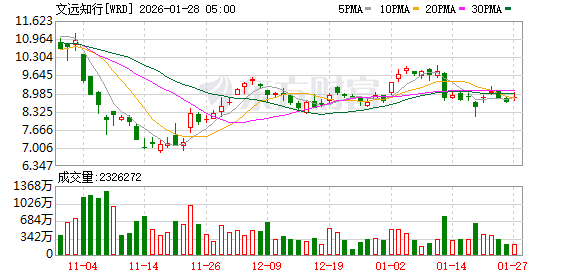
AAAI 2026 Oral | SplatSSC:解耦深度引导的高斯泼溅,开启单目语义场景补全高效新范式
机器之心· 2026-01-28 04:59
Core Viewpoint - The article discusses the development of SplatSSC, a novel framework for Semantic Scene Completion (SSC) that addresses the limitations of traditional dense grid representations by utilizing a depth-guided approach and decoupled aggregation mechanism to enhance performance and efficiency [3][4]. Group 1: Challenges in Traditional Methods - Traditional dense grid representations in SSC have been limited by two main issues: low utilization rates of randomly initialized Gaussian primitives (approximately 3.9%) and the generation of erroneous semantic fragments known as "Floaters" due to isolated outliers [3][4]. - The existing methods often rely on large-scale random distributions of Gaussian primitives, leading to significant computational redundancy and wasted model capacity [6]. Group 2: SplatSSC Framework - SplatSSC introduces an innovative depth-guided strategy and a decoupled aggregation mechanism, resulting in a significant leap in performance and efficiency [4]. - The framework employs a parallel branch strategy, integrating a learnable image encoder for multi-scale semantic extraction and a pre-trained Depth-Anything model for stable depth features [10]. Group 3: Core Technologies - The Group-wise Multi-scale Fusion (GMF) module in SplatSSC replaces random initialization with precise guidance using geometric priors, requiring only 1,200 Gaussian primitives (about 7% of previous methods) to effectively cover spatial distributions [11][13]. - The Decoupled Gaussian Aggregator (DGA) is designed to combat the "Floaters" issue by decoupling occupancy probability from semantic contributions, ensuring clean scene boundaries [15][19]. Group 4: Experimental Validation - SplatSSC achieved state-of-the-art (SOTA) performance on the Occ-ScanNet dataset, with an Intersection over Union (IoU) score of 62.83% and a mean IoU (mIoU) of 51.83%, surpassing previous SOTA methods by 6.35% and 4.16% respectively [22][23]. - The model demonstrated superior fine-grained perception capabilities, particularly in recognizing intricate objects like chair legs and table surfaces [22]. Group 5: Efficiency and Resource Management - SplatSSC's design allows for a significant reduction in inference latency (approximately 9.3% to 115.63 ms) and memory consumption (approximately 9.6%), while maintaining a stable parameter scale with only a 0.19% increase [34]. - The framework's efficiency is highlighted by its ability to achieve high-quality scene reconstruction with fewer Gaussian primitives, demonstrating that the "quality" of primitives is more critical than their "quantity" [32][33].

谁杀死了毫末智行?
雷峰网· 2026-01-28 04:34
Core Viewpoint - The article discusses the rise and fall of Haomo Zhixing, a subsidiary of Great Wall Motors, highlighting its initial promise and subsequent failures due to internal conflicts, management issues, and technological missteps [3][6][60]. Group 1: Company Background - Haomo Zhixing was established on November 29, 2019, as part of Great Wall Motors, with its actual control held by Chairman Wei Jianjun, who owns approximately 37% of the shares [8]. - The company aimed to become a global parts supplier, allowing Great Wall Motors to focus on vehicle manufacturing, inspired by the operational models of global automotive giants [8][12]. - Initially, Haomo Zhixing experienced rapid growth, with Great Wall Motors achieving a sales volume of 1.1116 million vehicles in 2020, marking a 4.8% year-on-year increase [9]. Group 2: Strategic Initiatives - In 2020, Great Wall Motors launched its "331" strategy for intelligent driving, aiming to become a leader in the autonomous driving sector within three years [9][12]. - The company planned to achieve L3 autonomous driving capabilities and the first deployment of laser radar in 2021, further enhancing its technological ambitions [12]. - By December 2021, Haomo Zhixing secured nearly 1 billion yuan in Series A funding from various investors, indicating strong initial market confidence [18]. Group 3: Challenges and Failures - Internal management issues became apparent when a whistleblower reported recruitment violations and a lack of collaboration between teams in Beijing, Shanghai, and Baoding, leading to a loss of trust from Great Wall Motors [4][6]. - Haomo Zhixing faced repeated failures to deliver on promises, including the inability to launch its city NOA (Navigation on Autopilot) system as scheduled, which was attributed to internal chaos and poor technical direction [32][46]. - The company's dual leadership structure, with both a chairman and CEO making decisions without a CTO, led to confusion and inefficiencies, ultimately hindering its technological progress [32][36]. Group 4: Market Position and Future Prospects - By the end of 2023, Great Wall Motors began collaborating with other companies like Yuanrong and Zhuoyu for advanced driving projects, effectively sidelining Haomo Zhixing [49][50]. - Despite having opportunities for an IPO in 2023, the process was halted due to external shareholders' concerns over market conditions and valuation expectations [51][52]. - As of late 2024, Haomo Zhixing's operations were severely impacted, leading to a freeze on its bank accounts and uncertainty for its employees, reflecting a significant decline from its initial promise [54][58].


马斯克:星舰V3版6周后发射;苹果发布新款AirTag
Sou Hu Cai Jing· 2026-01-28 03:03
Group 1 - Anta Sports plans to acquire 29.06% stake in PUMA SE for €1.5055 billion (approximately ¥12.278 billion) to enhance its global market position and brand influence [2] - Shandong Agricultural University Fertilizer Technology Co., Ltd. is set to be listed on the Beijing Stock Exchange on January 28, 2026, with an initial public offering of 16 million shares priced at ¥25.00 per share, raising a total of ¥400 million [2] Group 2 - DeepWay has completed a Pre-IPO financing round of ¥1.177 billion, marking the largest single financing in the autonomous driving new energy heavy truck sector [3] - Turing Quantum has secured several hundred million in Series B financing, continuing its trend of raising significant capital within six months [4] - AI medical innovation company Xu Zhi Shi has completed an A+ round of financing exceeding ¥50 million, with plans for a B round to be initiated after the Spring Festival [5] Group 3 - Elon Musk announced that SpaceX's Starship V3 will undergo its first flight test in six weeks, aiming to launch the next generation of Starlink V3 satellites [6] - Ying Shi Innovation is set to launch a dual-camera handheld gimbal camera, with product details leaked prior to the official announcement [7] - Apple has released a new version of AirTag, featuring a wider tracking range and louder speaker, priced at $29 for a single unit and $99 for a four-pack [10]



前毫末智行CEO顾维灏再创业,进军酒店服务机器人
Sou Hu Cai Jing· 2026-01-28 02:52
Group 1 - The former CEO of Haomo Technology, Gu Weihua, has embarked on a new entrepreneurial journey focusing on the hotel service robot sector and has assembled a strong team [2] - The core team members primarily come from Baidu and the autonomous driving company Momenta, and Gu is actively engaging with various investors [2] - Gu Weihua is a seasoned technical expert in the autonomous driving field, having joined Tsinghua University's Intelligent Industry Research Institute in September 2022 to pursue a PhD under Professor Zhang Yaqin [2] Group 2 - Gu has a notable career history, having worked at Baidu since 2003 in various key roles, including leading the development of L3-level autonomous driving technology [2] - He served as CEO of Haomo Technology under Great Wall Motors from February 2021, promoting a dual-gene development model of "car company + technology company" [2] - Haomo Technology raised seven rounds of financing over four years, reaching a valuation of 10 billion yuan, but faced operational difficulties in 2025, leading to Gu's departure [2]

马化腾也受不了外卖大战,称腾讯已从美团京东投资中退出;32岁猝死程序员公司内部邮件曝光,称「其未按要求做体检」;DeepSeek发布新模型
雷峰网· 2026-01-28 01:06
Group 1 - A 32-year-old programmer's sudden death has raised concerns about the company's health management practices, as the deceased had not undergone the required health check-ups, which the company does not acknowledge [5][6] - The company sent internal emails addressing the situation, stating that the employee had never completed health checks at their facility, despite having annual check-ups at a top-tier hospital [5][6] - Following the incident, the company announced a return to normal operations, canceling celebratory events and emphasizing the need to resume regular business activities [6] Group 2 - Tencent's CEO, Ma Huateng, announced the company's exit from investments in Meituan and JD.com, citing unsustainable cash-burning competition in the food delivery sector [8] - Tencent's investment in Meituan began in 2014, and by the end of 2022, the company had reduced its stake significantly, ultimately exiting completely by early 2026 [8] Group 3 - Li Xiang, CEO of Li Auto, faced criticism from employees after a lengthy all-hands meeting focused primarily on AI trends, with many employees expressing confusion and a desire for more concrete company direction [9] - The company reported a 19% year-over-year decline in vehicle deliveries for 2025, completing only 63.4% of its adjusted sales target [9] Group 4 - DeepSeek released a new open-source model, DeepSeek-OCR 2, which utilizes an innovative method to dynamically rearrange image components based on their meaning, enhancing AI's visual understanding capabilities [11][12] - The model's design allows for more accurate interpretation of complex documents, integrating visual understanding with reasoning and programming abilities [12] Group 5 - NIO has strengthened its intelligent driving team by hiring a former algorithm expert from Alibaba, indicating a commitment to advancing its AI and autonomous driving technologies [24][25] - The company plans to increase its computational resources and aims to regain its position among the top players in the industry through significant updates in the current year [25] Group 6 - Baidu's smart cloud division has raised its AI revenue growth target from 100% to 200%, aiming to capture a larger share of the rapidly growing AI cloud market [40] - The company has been successful in securing a significant number of AI-related projects, leading the market in both project count and total value [40] Group 7 - The automotive industry is witnessing a surge in electric vehicle models, with companies like Volkswagen and Xpeng introducing new models that emphasize advanced features and competitive pricing [42][34] - Xpeng's flying car, expected to be delivered by 2026, showcases innovative design and technology, aiming to capture market interest in the emerging flying vehicle segment [34]





汽车与零部件行业周报(2026.1.19-2026.1.25):特斯拉计划27年面向公众销售Optimus机器人,红旗全固态电池首台样车下线
Shanghai Securities· 2026-01-28 00:30
Investment Rating - The industry investment rating is "Hold" [6] Core Insights - The automotive sector experienced a weekly increase of 2.20%, with the best-performing sub-sector being automotive services, which rose by 6.87% [3] - The average daily wholesale volume for domestic passenger car manufacturers was 51,200 units, a year-on-year decrease of 28.00%, while the average daily retail volume was 50,200 units, down 22.00% year-on-year [3] - In January, the narrow passenger car retail market is expected to reach approximately 1.8 million units, with new energy vehicles accounting for around 800,000 units, resulting in a penetration rate of 44.4% [4] - CATL launched a light commercial vehicle solution featuring the industry's first mass-produced sodium battery, which can operate in extreme temperatures [4][11] - Tesla plans to sell the Optimus robot to the public by the end of next year, indicating a significant future business line for the company [5] Summary by Sections Automotive Sector Performance - The automotive sector's weekly performance was +2.20%, ranking 15th among 31 primary industries [3] - The top five companies in terms of stock performance included New Coordinates (+36.30%) and Iron Flow Co. (+32.97%) [3] Sales and Market Trends - The expected retail sales for January are 1.8 million units, with a month-on-month decrease of 20.4% but a year-on-year increase of 0.3% [4] - The penetration rate for new energy vehicles in January is projected at 44.4% [4] Technological Developments - CATL's new sodium battery solution is designed for various vehicle types and can function effectively in extreme cold [4][11] - The first prototype of the Hongqi all-solid-state battery has successfully passed critical testing, marking a significant technological advancement for the company [11] Investment Recommendations - Focus on companies involved in intelligent vehicle technology and those with potential overseas sales [12] - Recommended companies include Beiqi Blue Valley and several component manufacturers [14]

