
新型工业化

Search documents
一周龙江要闻回顾【8.25-8.31】
Xin Lang Cai Jing· 2025-08-31 07:34
Group 1 - The provincial government of Heilongjiang is focusing on high-quality development led by party building, emphasizing the importance of style construction and strict governance to ensure revitalization and development [1][2] - The meeting highlighted the need for local party organizations to enhance their political awareness and responsibility in promoting strict governance, addressing issues like misconduct and protecting public interests [2] - The provincial government is actively seeking financial cooperation with China International Capital Corporation (CICC) in key areas such as modern agriculture, digital economy, and technology innovation to support the construction of a modern industrial system [3] Group 2 - The Heilongjiang Provincial Agricultural and Rural Affairs Department is strengthening training for agricultural associations to support modern agricultural development and enhance service capabilities [6][7] - Harbin city is soliciting public suggestions for its "14th Five-Year" industrial development plan, aiming to gather insights from various stakeholders to ensure a forward-looking and actionable strategy [8] - The Harbin Cultural Tourism Sports Expo and the 2025 Harbin Marathon are being held to promote the integration of culture, sports, and tourism, enhancing the city's profile and attracting visitors [8][9] Group 3 - The Suifenhe city is focusing on innovative招商引资 methods and optimizing project construction to support high-quality revitalization and development [10]
刘小涛与工业和信息化部总工程师谢少锋举行工作会谈
Su Zhou Ri Bao· 2025-08-30 23:23
谢少锋感谢苏州对工业和信息化工作的有力支持。他表示,苏州制造业基础雄厚,产业创新活力十 足,在推进新型工业化中成效明显。工业和信息化部将深入学习贯彻习近平总书记重要讲话精神,加强 与苏州交流合作,紧密结合地方发展所需,充分发挥资源优势,推进相关项目建设,集聚更多专业人 才,推动科技创新和产业创新深度融合,支持苏州做大做强主导产业、加快培育新兴产业,更好服务高 质量发展。 工业和信息化部电子五所所长杨建军,工业和信息化部信息技术发展司副司长王威伟;副市长毛 伟,苏州高新区主要负责同志参加活动。 8月28日,工业和信息化部电子五所华东总部项目签约落户苏州。省委副书记、苏州市委书记刘小 涛出席签约仪式,并与工业和信息化部总工程师谢少锋一行举行工作会谈。 工业和信息化部电子五所是中国最早从事可靠性与环境适应性研究的权威机构,2005年在苏州设立 华东分所,并已发展成为华东区域功能齐全的质量可靠性公共服务平台。此次签约的电子五所华东总部 项目总投资13.8亿元,将落户苏州高新区,围绕人工智能、低空经济、智能网联汽车、集成电路等产业 方向,建立中试验证、可靠性提升和质量保障等专业化技术服务能力,为产业产品提供全链条和全生 ...
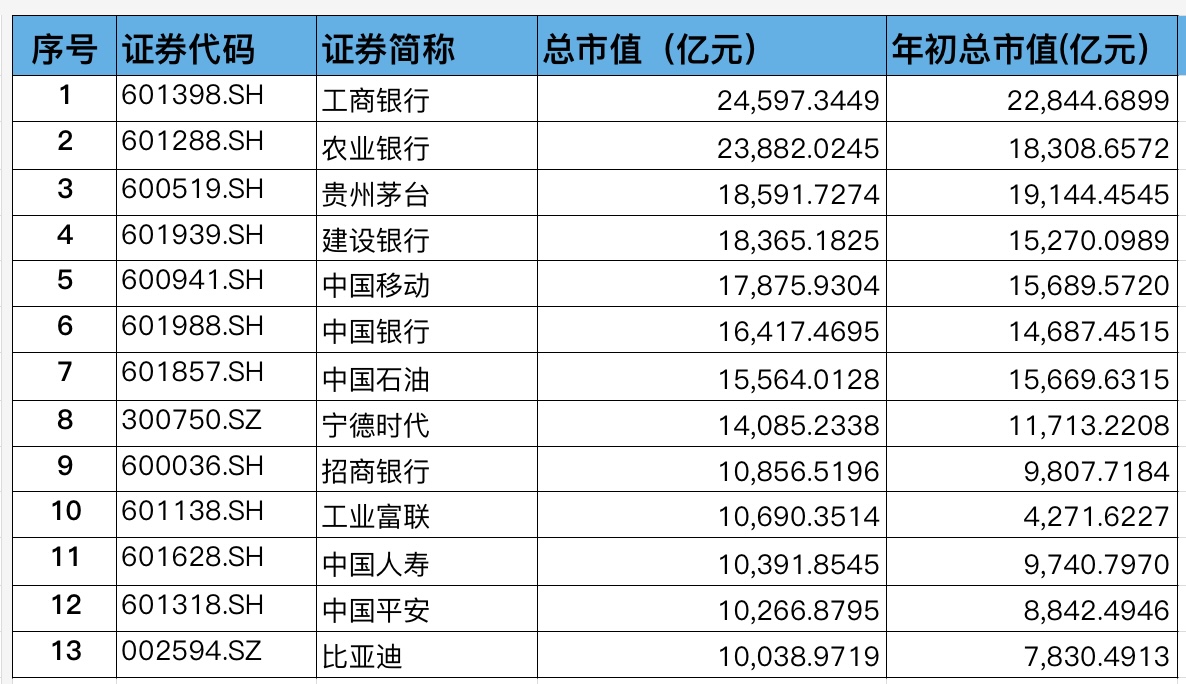
13只万亿股,4只“深圳造”
Di Yi Cai Jing· 2025-08-30 10:54
Group 1 - The core viewpoint of the articles highlights the emergence of a growing number of companies reaching a market capitalization of over 1 trillion yuan in the A-share market, with Shenzhen being a significant contributor to this trend [1][2][9] - As of August 29, 2023, the A-share "trillion market value club" expanded to 13 companies, including major state-owned enterprises and notable private firms, with Shenzhen hosting four of these companies [1][3] - Shenzhen's financial sector is a key driver of its economic growth, with major banks like China Ping An and China Merchants Bank achieving significant market valuations [9][10] Group 2 - Industrial Fulian's market capitalization reached 1.07 trillion yuan, marking its first time surpassing this threshold, driven by a surge in server demand and a 35.58% year-on-year revenue growth [5][7] - BYD has consistently increased its automotive production and sales, achieving record highs in 2024, with a projected revenue of 777.1 billion yuan and a net profit of 40.25 billion yuan [6][7] - Tencent Holdings, listed in Hong Kong, has a total market value of 5.47 trillion HKD, reflecting Shenzhen's status as a hub for high-value companies [2][8] Group 3 - Shenzhen has a robust ecosystem for technology and innovation, with over 25,000 national high-tech enterprises and a significant number of companies listed on the Science and Technology Innovation Board and the Growth Enterprise Market [11][12] - The local government has implemented policies to support the growth of listed companies, aiming to cultivate a new generation of unicorns and "gazelle" companies in the artificial intelligence sector [12]






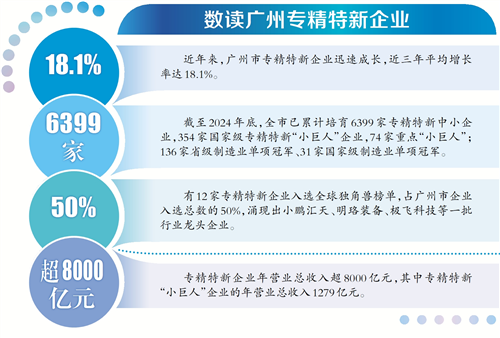
【媒体解读】广州推出专精特新中小企业扶持政策“升级版”
Guang Zhou Ri Bao· 2025-08-30 01:32
Core Viewpoint - The Guangzhou government has introduced a comprehensive set of measures to support the development of specialized, refined, unique, and innovative small and medium-sized enterprises (SMEs), with a funding commitment exceeding 1 billion yuan over the next three years [2][10]. Group 1: Support Measures - The new measures include 25 specific support initiatives across seven key areas: enhancing gradient cultivation, stimulating innovation, strengthening financial support, deepening digital transformation, promoting integrated development, optimizing comprehensive services, and reinforcing organizational guarantees [2][4]. - The measures represent an upgrade from previous policies, offering more comprehensive and targeted support for SMEs [2]. Group 2: Financial Incentives - The measures provide substantial financial incentives, including rewards of up to 1 million yuan for newly recognized "little giant" enterprises and up to 1.5 million yuan for national-level manufacturing champions [4][6]. - Additional financial support includes up to 500 million yuan for technology transformation and 150 million yuan for digital transformation projects [6][8]. Group 3: Innovation and Development - Specialized SMEs are identified as key drivers of industrial innovation, with the average number of patents for specialized SMEs at 8.66 and "little giants" at 40.93, significantly higher than their peers [5]. - The government aims to create a more robust gradient cultivation system for SMEs, facilitating their growth from micro-enterprises to "little giants" [4][11]. Group 4: Financing and Resource Allocation - The government has allocated special funds annually for financing services and supply-demand matching activities to foster a collaborative ecosystem for SMEs [7]. - The "Yiqi Gongying Plan" has been launched to provide higher credit limits and favorable loan rates for SMEs, with over 590 enterprises signing agreements totaling more than 25 billion yuan [7]. Group 5: Land and Talent Support - The measures include preferential land use policies, allowing for reduced investment intensity and tax contribution standards for specialized SMEs [8][9]. - There is a focus on talent support, prioritizing senior management and core technical personnel from "little giant" enterprises for local talent programs [8]. Group 6: Future Goals - The government plans to establish over 10 national-level and 30 provincial-level characteristic industrial clusters for SMEs, enhancing their integration into larger supply chains [11][12]. - The initiative aims to improve the digital transformation of over 1,000 SMEs within two years, enhancing their competitiveness [11].
8月红盘收官!9月A股怎么走?
Sou Hu Cai Jing· 2025-08-29 15:17
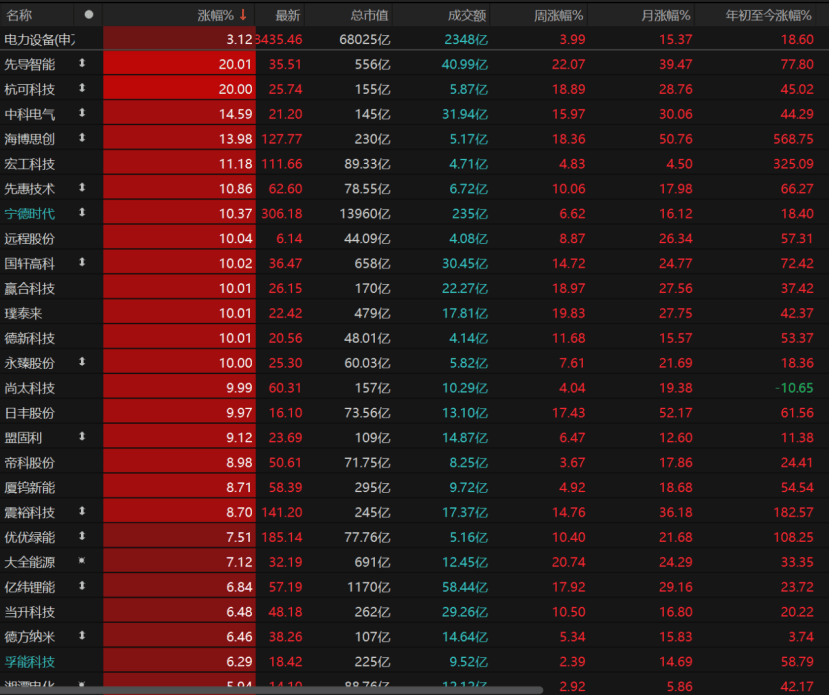
Market Overview - A-shares concluded August with a strong upward trend, with all three major indices posting significant monthly gains. The ChiNext Index rose over 24%, the Shanghai Composite Index surpassed 3,800 points, reaching a 10-year high, and the Sci-Tech 50 Index surged by 28% [1][13]. Future Market Expectations - The market is expected to continue its structural bull market driven by policy dividends and industrial upgrades, although the risk of a pullback in high-valuation sectors cannot be ignored. It is anticipated that the indices will maintain high-level fluctuations and sector rotation in the coming week [2][14]. Daily Performance - On the last trading day, the Shanghai Composite Index rose by 0.37% to 3,857.93 points, while the ChiNext Index increased by 2.23% to 2,890.13 points. The Shenzhen Component Index also saw a rise of 0.99%. The Sci-Tech 50 Index, however, fell by 1.71% [3][4]. Trading Volume and Stock Performance - Trading volume slightly decreased, with a total turnover of approximately 2.83 trillion yuan. Out of 3,306 stocks, 1,997 closed higher, with 76 hitting the daily limit up. Notable performers included the power equipment sector, which rose over 3%, and several stocks such as XianDao Intelligent and Hangke Technology hitting the daily limit up [4][5]. Sector Performance - The power equipment sector showed strong performance with a monthly increase of 15.37% and a year-to-date increase of 18.60%. Other sectors like non-ferrous metals and food and beverage also performed well, with increases of over 2% [6][7]. Investment Strategy - Investors are advised to maintain a certain level of cash reserves to manage potential volatility. The focus should be on sectors benefiting from policy support and those with strong fundamentals, such as technology and consumer recovery [15][16]. Key Drivers of Market Trends - The current market rally is driven by three core factors: policy and institutional dividends, a decline in risk-free interest rates, and ample liquidity. Despite potential fluctuations, the market is expected to continue its upward trajectory [12][14]. Conclusion - The market is characterized by a structural bull phase, with significant opportunities in technology and consumer sectors. Investors should remain cautious and strategically allocate their portfolios to balance risk and reward [11][15].
图说资产证券化产品:政策推动ABS加大对新型工业化金融支持,数据中心REITs正式落地
Zhong Cheng Xin Guo Ji· 2025-08-29 08:51
Policy Initiatives - The central government has issued guidelines to enhance financial support for new industrialization, focusing on manufacturing and digital infrastructure[2] - The guidelines propose 18 measures across various financial tools, including loans, bonds, and asset securitization, to improve financial service adaptability[2] Asset Securitization Insights - The current stock of financing lease ABS products is approximately 440 billion yuan, with potential expansion under policy support[3] - The first batch of data center REITs launched in August, with issuance sizes of 2.4 billion yuan and 4.5 billion yuan, achieving a market participation increase of 30% on the first trading day[3] Market Trends - In July 2025, the total issuance of asset securitization products was 200.48 billion yuan, a decrease of 5% from the previous period[6] - The average issuance cost for policy pledge loan products remains the highest among various categories, indicating ongoing high financing costs[6] Performance Metrics - The interbank ABS market saw a significant growth of 33%, with 32.93 billion yuan issued in July 2025[17] - The exchange ABS market remained stable, with 128.5 billion yuan issued, showing little change from the previous month[20] Risk Considerations - Future cash flow will be critical for the success of asset securitization, necessitating ongoing monitoring of cash flow recovery from underlying assets[3] - The secondary market for ABS products has seen a decline in trading activity, with total transactions in the interbank market dropping significantly[27]
中国东方:近5年来累计新增投放制造业项目122个 投资金额超450亿元
Zheng Quan Ri Bao Wang· 2025-08-29 08:43
Group 1 - The core viewpoint of the articles emphasizes China Orient Asset Management's commitment to supporting the high-quality development of the manufacturing industry through increased financial assistance and innovative financial services [1][2] - Over the past five years, China Orient has invested in 122 manufacturing projects, with a total investment exceeding 45 billion yuan, highlighting its role in promoting the construction of a strong manufacturing nation [1] - The company addresses challenges faced by the manufacturing sector, such as significant funding gaps for equipment upgrades and difficulties in financing emerging technologies, by providing comprehensive financial services tailored to different stages of enterprise development [1] Group 2 - China Orient plans to focus on three main tasks: mitigating financial risks, serving the real economy, and deepening financial reforms, while prioritizing support for high-quality manufacturing development and new industrialization [2] - The company aims to enhance its financial support and service models, actively participate in revitalizing existing assets across various sectors, and assist specialized and innovative enterprises in structural adjustments [2] - The goal is to contribute to China's modernization efforts by optimizing financial services and improving professional financial capabilities [2]
中国东方近5年累计投资450亿元支持制造业高质量发展
Zheng Quan Shi Bao Wang· 2025-08-29 07:42
Core Viewpoint - China Orient Asset Management focuses on providing financial support to the manufacturing sector, aiming to be a resolver of financial risks, a promoter of industrial transformation, and a guardian of healthy corporate development [1] Group 1: Financial Support and Investment - Over the past five years, China Orient has invested in 122 manufacturing projects, with a total investment exceeding 45 billion yuan, supporting high-quality development in China's manufacturing sector [1] - The company employs various financial strategies, including non-performing asset acquisition and market-oriented debt-to-equity swaps, to provide comprehensive financial services across different stages of manufacturing enterprises [1] Group 2: Case Studies of Support - A leading domestic drone manufacturer faced potential negative impacts due to shareholder debt defaults. China Orient intervened through non-performing asset acquisition and substantial restructuring, helping stabilize the company's equity structure and reduce its debt ratio [2] - China Orient established a special fund to support Zhongxin Innovation (formerly known as China Aviation Lithium Battery) in increasing capital and repaying external financial liabilities, aiding in the company's innovation and development [2] - Jiangsu Zhongli Group, once a top private enterprise, faced operational difficulties due to various financial issues. China Orient facilitated the company's restructuring, helping it offload nearly 10 billion yuan in debt and retain over 2,600 jobs [3] Group 3: Innovative Restructuring Approaches - A fine phosphorus chemical company, affected by shareholder fund occupation, underwent a successful debt restructuring with China Orient's assistance, significantly improving its market value and creditor repayment rates [4] - China Orient's involvement in the restructuring of a key salt lake industry enterprise in Qinghai helped mitigate regional financial risks and support the development of high-quality lithium carbonate projects [5] Group 4: Future Directions - China Orient plans to enhance its focus on resolving financial risks, serving the real economy, and deepening financial reforms, while continuing to support high-quality development in the manufacturing sector and optimizing financial service models [6]

全力支持制造业高质量发展 中国东方累计投资金额超450亿元
2 1 Shi Ji Jing Ji Bao Dao· 2025-08-29 07:20
Core Viewpoint - The high-quality development of the manufacturing industry is crucial for achieving China's strategic goal of becoming a manufacturing powerhouse, with financial support playing a significant role in this process [1] Financial Support for Manufacturing - China Orient Asset Management has focused on the financial needs of the manufacturing sector, increasing support to become a "resolver" of financial risks, a "promoter" of industrial transformation, and a "guardian" of healthy enterprise development [1] - Over the past five years, China Orient has invested in 122 manufacturing projects, totaling over 45 billion yuan [1] Addressing Pain Points in Manufacturing - The manufacturing sector faces significant challenges, including a large funding gap for equipment upgrades and difficulties in financing emerging technologies [2] - China Orient employs various financial strategies, such as bad asset acquisition and market-oriented debt-to-equity swaps, to provide comprehensive financial services across different stages of enterprise development [2] Supporting Specific Industries - China Orient has assisted a leading drone manufacturer facing financial difficulties by restructuring its important shareholder's debts, thus stabilizing the company's equity structure [2] - The company has also supported the growth of the domestic new energy vehicle sector by participating in capital increases for key players like Seres and Zhonghang Lithium Battery, helping them reduce debt ratios and enhance capital strength [3] Risk Management and Corporate Restructuring - China Orient utilizes its expertise in debt restructuring to assist struggling manufacturing firms, aiming to prevent bankruptcies and mitigate regional financial risks [4] - The company played a key role in the bankruptcy reorganization of Jiangsu Zhongli Group, helping it offload nearly 10 billion yuan in debt and retain over 2,600 jobs [4] Promoting Industrial Upgrades - China Orient is committed to supporting the transformation and upgrading of traditional industries, focusing on high-end, intelligent, and green manufacturing [7] - The company has facilitated the development of the integrated circuit industry in Hefei, helping local enterprises secure funding and improve their financial structures [7] Supporting Semiconductor and Lithium Industries - China Orient has invested in InnoSilicon, a leading semiconductor company, to alleviate its debt pressure and support its expansion and IPO efforts [8] - The company has also backed a key lithium salt enterprise in Qinghai, aiding in the recovery of the regional credit environment and supporting high-quality project development [8] Future Directions - China Orient plans to enhance its financial support for the manufacturing sector, focusing on risk mitigation, service to the real economy, and deepening financial reforms [9] - The company aims to optimize financial service models and improve professional financial capabilities to contribute to China's modernization efforts [9]
山东宁阳:强链补链筑根基产业集群启新程
Qi Lu Wan Bao Wang· 2025-08-29 03:21
Group 1 - The development strategy of Yancheng Town in Ningyang County, Shandong Province focuses on industrial parks and key industries, specifically in new energy and steel ball production, aiming to enhance industrial clusters from "small and scattered" to "comprehensive and strong" [1] - Yicheng Plastic Industry Co., Ltd. has achieved rapid growth since its establishment in 2021, with projected sales revenue of 25.28 million yuan in 2024, driven by advancements in technology and production equipment [1][2] - The town has facilitated the leasing of 5,000 square meters of idle factory space to Yicheng Plastic, enabling the company to invest over 10 million yuan in new automated production equipment, significantly reducing labor costs [1][2] Group 2 - The company has acquired 10 intelligent injection molding machines and 10 robotic arms, with an expected annual production capacity of over 4 million sets and projected sales revenue of 30 million yuan [2] - A new project for recycled plastic manufacturing, with an investment of 30 million yuan, is set to establish a complete production chain from recycled plastic to battery components, enhancing the new energy industry [2] - The sodium-ion battery anode material project is progressing rapidly, with the first phase of construction nearing completion and expected to produce 3,000 tons of anode materials annually, generating revenue of 50 million yuan [3] Group 3 - The local government has played a crucial role in supporting the sodium-ion battery project by coordinating essential services such as electricity and water supply, ensuring efficient project execution [3] - The industrial park in Yancheng covers an area of 32 square kilometers, with 4.5 square kilometers already developed, benefiting from significant transportation advantages [3] - The industrial chain within the park, focusing on steel balls and new energy, has an annual output value of nearly 5 billion yuan, encompassing processes from battery assembly to recycling [3]