
大数据

Search documents
从送餐到送万物,外卖早已不仅仅只是外卖
Sou Hu Cai Jing· 2025-12-25 01:51
Core Insights - The takeaway from the articles is that the food delivery market is evolving beyond its traditional role, becoming a platform for new business models and strategies, rather than just a service for delivering food [2][4][9] Group 1: Market Evolution - The competition in the food delivery market is shifting from price wars to differentiation strategies aimed at achieving broader strategic goals [2][3] - The food delivery market is seen as a breeding ground for new business models and commercial innovations, rather than just a standalone service [2][4] - As the market enters a new phase, it is essential to recognize the emerging trends and strategies that are reshaping the industry [2][3][9] Group 2: New Business Models - The food delivery market is transitioning into a new commercial form that integrates both virtual and physical economies, creating a hybrid business model [5][6] - Players in the market are leveraging their online experience while also investing in offline retail and supply chains, indicating a shift towards a more integrated approach [5][6] - The current food delivery landscape is characterized by a combination of digital and physical elements, reflecting a new paradigm in business operations [6][8] Group 3: Technological Integration - The food delivery market is becoming a testing ground for new technologies and business models, such as big data, drones, and AI [8] - Companies are increasingly focusing on supply chain and industry collaborations, indicating a shift towards a more interconnected operational framework [8] - The competition is now centered around the adoption of innovative technologies and finding new balance points between supply and demand [8][9]


中国智慧养老行业研究报告
艾瑞咨询· 2025-12-25 00:05
Core Viewpoint - The Chinese smart elderly care industry is transitioning from "partial pilot" to "full penetration" and from "technology stacking" to "ecological integration" due to the intersection of population aging and digital transformation [1][2][3] Industry Background - By the end of 2024, the population aged 60 and above in China will exceed 310 million, accounting for 22.0% of the total population, highlighting the urgent challenges faced by traditional elderly care models [3][5] - Factors such as changes in family structure, upgrading consumption among the elderly, and increased acceptance of digital technology are driving the development of the smart elderly care industry [5][22] - Technological innovations are reshaping the elderly care service ecosystem, pushing the industry towards precision, personalization, and efficiency [5][24] Industry Status - Smart elderly care has developed technical solutions covering home, community, and institutional settings, with a competitive landscape featuring comprehensive solution providers, vertical technology companies, and traditional elderly care enterprises [5][34] - Challenges such as data silos, insufficient technology adaptation for the elderly, and immature business models remain significant pain points for industry development [5][39] Research Outlook - Demand-side trends indicate a shift from survival-oriented elderly care to quality-oriented elderly care, while supply-side trends show a movement towards a full-cycle service ecosystem [6][42] - The smart elderly care industry is expected to evolve into a high-quality development phase characterized by large-scale supply, ecological collaboration, and a focus on value realization [6][45][48] Social Demand Driving Development - The smart elderly care industry is experiencing accelerated growth due to multiple demand-side drivers, including changes in family structure and a growing demand for quality life among the elderly [22][24] - The integration of smart elderly care with medical services is being propelled by the increasing demand for digital tools such as online consultations and remote monitoring [22] Technological Applications - The integration of AI, IoT, big data, and cloud computing is reconstructing the elderly care service model, addressing issues such as labor shortages and safety guarantees [24][25] - The technology-driven approach aims to shift elderly care from passive responses to proactive prevention, enhancing the quality of independent living for the elderly while reducing social care costs [24][25] Major Players and Business Models - The smart elderly care industry features three main types of players: comprehensive solution providers, vertical technology companies, and traditional elderly care enterprises, each with distinct competitive advantages [34][36] - Comprehensive solution providers focus on integrating technology and services, while vertical companies specialize in specific technological breakthroughs, and traditional enterprises leverage offline resources for service upgrades [34][36] Regional Development Patterns - The smart elderly care industry in China exhibits a pattern of "strong east, weak west," with eastern regions leveraging economic, policy, and technological advantages to build a comprehensive ecosystem [37] - Collaboration among regions is essential to narrow the gap and establish a unified national smart elderly care framework [37] Development Challenges - Despite the growth driven by policies, technology, and market forces, the smart elderly care industry faces systemic challenges such as data barriers, collaboration issues, and regulatory gaps [40][39] - Addressing these challenges requires unified data standards, enhanced collaboration among industry players, and the development of sustainable business models [40]

线上课程助力投资于人
Jing Ji Ri Bao· 2025-12-24 22:06
Group 1 - The core viewpoint of the articles highlights the unprecedented growth opportunities for online courses driven by the deep integration of digital technology in education, which promotes lifelong learning and enhances human resource quality in the digital economy era [1][2]. - The most popular online courses are skill-based, with vocational training accounting for 31.2% of transaction volume, followed by academic exam preparation at 24.8%, youth quality development at 17.4%, certification training at 14.6%, and language training at 8.8% [1]. - The rapid development of online courses is attributed to technological advancements and deep-rooted societal demands, with the application of AI and big data leading to personalized learning and adaptive education models that significantly enhance the online education experience [1]. Group 2 - Online education has a broad audience across different age groups, each exhibiting distinct characteristics, which serves as effective guidance for the development of online courses [2]. - The supply side of online education should accelerate product innovation and service upgrades, enriching course content and optimizing teaching experiences to meet increasingly refined market expectations [2]. - Achieving a balance between scale and quality, as well as innovation and regulation, is essential for online education to better serve comprehensive human development and inject continuous talent vitality into high-quality economic growth [2].
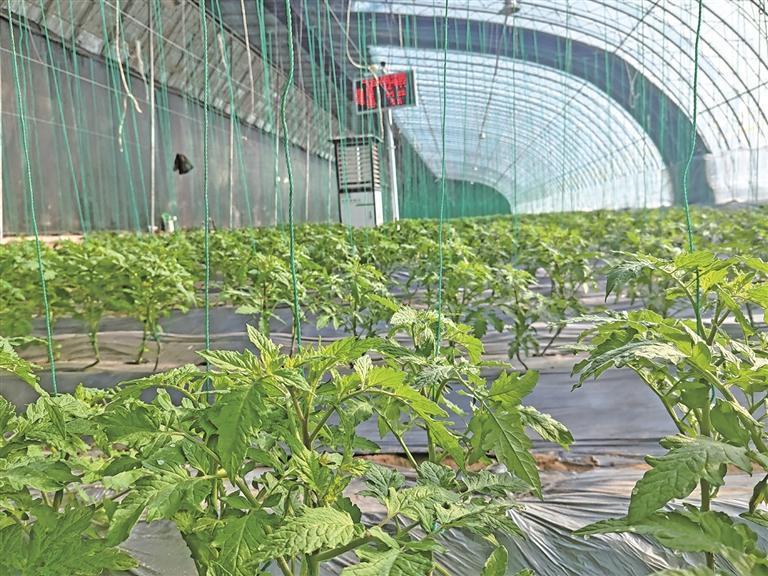
“云管家”上线:高原智慧大棚“种”出有机菜
Xin Lang Cai Jing· 2025-12-24 19:51
Core Insights - The article highlights the innovative approach of Qinghai Yizhou Network Technology Co., Ltd. in utilizing smart technology to enhance agricultural practices in the harsh conditions of the Qinghai plateau [3][4]. Group 1: Smart Agriculture Implementation - The company has established a smart data service system across eight greenhouses, collecting real-time data on crop growth to support precision farming [3][5]. - The smart greenhouse employs a "cloud-edge-end" collaborative data service system, utilizing sensors that operate in extreme conditions to gather comprehensive growth data [5][6]. - The system can achieve water savings of 30%, fertilizer savings of 40%, and reduce labor costs by 60% through precision farming techniques [6]. Group 2: Technological Innovation - The company has developed a modern smart agriculture solution tailored to the plateau's unique environment, integrating artificial intelligence and big data for optimal crop conditions [4][5]. - The smart agriculture platform provides real-time monitoring of various environmental factors, including soil temperature, moisture, and light intensity, which are crucial for crop management [5]. - The system's predictive model has been refined to maintain an error margin of less than 5% by analyzing historical data from at least three complete growing seasons [5]. Group 3: Future Goals and Impact - The ultimate goal is to use data as a core production factor to address the challenges faced by plateau agriculture, aiming for modernization and increased farmer income [6]. - The project has received recognition, winning the second prize in the modern agriculture track at the "Data Element X" competition organized by the Qinghai Provincial Data Bureau [6].
上海思创智联科技有限公司成立,注册资本500万人民币
Sou Hu Cai Jing· 2025-12-24 17:42
Core Viewpoint - Shanghai Sichuang Zhiliang Technology Co., Ltd. has been established with a registered capital of 5 million RMB, fully owned by Shanghai Sifangda Information Technology Co., Ltd. [1][2] Group 1: Company Overview - The legal representative of Shanghai Sichuang Zhiliang Technology Co., Ltd. is Zou Jianwei [1][2] - The company is classified under the information transmission, software, and information technology services industry, specifically in internet and related services [2] - The registered address is located at 333 Shengrong Road, Building 1, 14th Floor, Room 1403, China (Shanghai) Pilot Free Trade Zone [2] Group 2: Business Scope - The business scope includes technology services, development, consulting, and transfer, as well as software development and internet data services [1] - The company also engages in artificial intelligence software development, cloud platform business outsourcing services, big data services, and 5G communication technology services [1] - Additional services include sales of electronic products, industrial design services, and various technology-related services [1]
蓝晶领数字科技(江西)有限公司成立,注册资本200万人民币
Sou Hu Cai Jing· 2025-12-24 16:22
Core Viewpoint - Recently, the establishment of Blue Crystal Leading Digital Technology (Jiangxi) Co., Ltd. has been registered, indicating a strategic move in the software and information technology services sector [1] Company Summary - The legal representative of Blue Crystal Leading Digital Technology (Jiangxi) Co., Ltd. is Zhang Zhe [1] - The registered capital of the company is 2 million RMB [1] - The company is wholly owned by Foshan Blue Crystal Leading Network Technology Co., Ltd. [1] Business Scope - The business scope includes licensed projects such as call centers, software development, software sales, network technology services, IoT technology services, AI application software development, and big data services [1] - The company is also involved in data processing and storage support services, internet data services, and information system integration services [1] - The company operates under the industry classification of information transmission, software, and information technology services [1] Company Details - The company is located at No. 18, North Ring Road, Yongning Town, Tonggu County, Yichun City, Jiangxi Province, in a limited liability company format [1] - The business registration is valid until December 24, 2025, with no fixed term thereafter [1] - The registration authority is the Tonggu County Market Supervision Administration [1]
海仲集团供应链金融的未来发展展望
Sou Hu Cai Jing· 2025-12-24 15:28
Core Viewpoint - Haizhong Group's supply chain finance business plays a positive role in promoting industrial collaborative development by optimizing the flow of funds within the supply chain, enhancing overall efficiency and effectiveness, and fostering cooperation among enterprises in the industrial chain [1][2]. Group 1: Impact on SMEs - Supply chain finance addresses the financing difficulties faced by small and medium-sized enterprises (SMEs), facilitating their development and enabling them to secure funding for production expansion, new product development, and market expansion [1]. - SMEs, often the main force of innovation in high-tech industries, can increase R&D investment and enhance product competitiveness through support from supply chain finance [1]. Group 2: Information Sharing and Collaboration - Supply chain finance promotes information sharing and collaboration among enterprises, leading to more transparent transaction information and smoother logistics, information flow, and capital flow [2]. - In agricultural supply chains, farmers can adjust planting based on market demand, while processing enterprises can secure stable raw material supplies through advance contracts, improving overall supply chain efficiency and product quality [2]. Group 3: Strategic Investments - Haizhong Group strengthens control over core supply chain segments through industrial investments, focusing on strategic areas such as new energy and high-end manufacturing [2]. - The group employs a model of "investment to promote production, and production to promote trade," facilitating industrial upgrades and transformations, exemplified by investments in battery manufacturing and charging infrastructure in the electric vehicle sector [2]. Group 4: Future Development Outlook - The supply chain finance business faces new opportunities and challenges due to the ongoing integration and transformation of global supply chains [3]. - Technological advancements such as artificial intelligence, big data, and blockchain are expected to enhance the efficiency and security of supply chain finance, allowing for more personalized financial services [3]. Group 5: Challenges and Responses - As the supply chain finance business expands, risk management becomes increasingly complex, necessitating improvements in risk assessment mechanisms and management systems [4]. - Haizhong Group plans to enhance technological innovation and talent development to address these challenges, investing in R&D and building a skilled workforce knowledgeable in both finance and supply chain management [4].

成都如何“触发”下一个文化创意浪潮?对话“世界创意经济之父”约翰·霍金斯
Mei Ri Jing Ji Xin Wen· 2025-12-24 14:03
Core Insights - The article discusses the evolution and significance of the creative economy, highlighting its role in urban development and economic transformation, particularly in cities like Chengdu and London [1][2][4]. Group 1: Historical Context and Development - In 1997, the UK government elevated the creative economy to a national strategic level, influenced by John Howkins, who is recognized as a pioneer in the field [1]. - By 2025, Chengdu aims to become a major cultural and digital creative industry hub, reflecting a broader trend among developed nations to explore new development models based on the creative economy [1]. - The creative economy has become a pillar industry in the UK, rivaling the financial services sector, and the UK is now the second-largest producer of creative products globally, following the US [1]. Group 2: Current Trends and Observations - John Howkins emphasizes that the creative economy plays an increasingly essential role in social and economic transformation, advocating for cities to focus on developing this sector to shift away from traditional growth models [2][7]. - The creative economy encompasses various sectors, including advertising, media, architecture, film, art, sports, and tourism, and is driven by individual creativity, skills, and intellectual property [3][5]. - The UK aims to grow its creative industry by £50 billion and create an additional 1 million jobs by 2030, indicating a strong commitment to expanding this sector [5]. Group 3: Future Directions and Implications - Howkins notes that the creative economy is evolving beyond cultural and creative industries to encompass the entire economic landscape, especially with the rise of technologies like AI and big data [5]. - The shift in urban development from linear growth to a model that emphasizes human-environment co-evolution reflects a more human-centered approach, which is crucial for fostering creativity and innovation [7]. - Cities must recognize the changing social and cultural environments and provide better support for creative individuals, including improved living conditions and legal frameworks [7].
汉嘉设计拟更名汉嘉数智,“大数据+人工智能”开启城市治理新篇章
Zheng Quan Shi Bao Wang· 2025-12-24 12:49
Core Viewpoint - The company is transitioning towards smart city governance and digitalization, marking a strategic shift from traditional engineering design to a comprehensive smart governance service provider [1][3]. Group 1: Company Strategy and Business Transformation - The company plans to change its name to "Hanjia Smart Technology Group Co., Ltd." and accelerate its transformation towards smart city governance and digitalization [1]. - In 2024, the company will acquire 51% of Suzhou Futai Information Technology Co., Ltd., enhancing its capabilities in smart city governance solutions and robotics [1]. - By the first half of 2025, the company's digital solutions for urban governance are expected to generate revenue of 121 million yuan, accounting for 19.11% of total revenue, while urban governance robots are projected to achieve 250 million yuan, representing 39.52% of total revenue [1]. Group 2: Industry Trends and Market Potential - The trend towards digitalization and automation in urban governance is driven by rapid urbanization and an aging population, with traditional operational models facing efficiency and cost challenges [2]. - The sanitation market in China is projected to grow at a compound annual growth rate of 15.56%, from 361.2 billion yuan in 2025 to 644.2 billion yuan by 2029, indicating strong market potential for smart solutions [2]. - The company is leveraging its subsidiary's technological advantages to develop a comprehensive stack of capabilities, from data and models to robotics and platforms, enhancing its service offerings [2]. Group 3: Operational Achievements and Financial Performance - The company has successfully implemented its urban governance solutions in multiple cities, integrating over 100,000 IoT sensing devices and achieving more than 300,000 risk warnings [3]. - In the first three quarters of 2025, the company reported revenue of 937 million yuan, a year-on-year increase of 16.54%, and a net profit of 25.36 million yuan, reflecting a significant growth of 476.32% [3]. - The name change to "Hanjia Smart" signifies a complete restructuring of the company's business model and core values, positioning it as a leading player in the smart governance sector [3].

银发消费新业态崛起 多地出台措施激活“夕阳红”市场
Zheng Quan Ri Bao Wang· 2025-12-24 12:18
Core Viewpoint - The Chinese silver economy is being actively promoted through various policies aimed at enhancing the welfare of the elderly and creating new consumption scenarios, with recent measures introduced by multiple provinces to stimulate this sector [1][2]. Group 1: Policy Initiatives - Multiple provinces, including Shaanxi, Jilin, Guangdong, Sichuan, and Hunan, have implemented measures to promote elderly care service consumption, laying a foundation for the long-term development of the silver economy [1]. - The policies are expected to boost consumption, facilitate industrial transformation, and enhance the conversion of technological achievements [1]. Group 2: Characteristics of the Silver Economy - The silver economy is characterized by increasingly diverse supply, growing demand, and significant penetration of digital technology [2]. - Supply includes a variety of elderly care services such as home care, day care, short-term care, and wellness tourism, alongside a range of elderly-friendly products like fitness equipment and health supplements [2]. - Demand is driven by the elderly's willingness to spend on personal enjoyment, leading to increased sales in sectors like travel, health services, and cultural activities [2]. Group 3: Integration of Technology - The integration of advanced technologies like AI and big data with the silver economy is mutually beneficial, providing scalable application scenarios for technology while driving high-quality development in the silver economy [3]. - Smart elderly care devices and platforms are evolving to enhance service efficiency and user experience, indicating a trend towards practical applications in the sector [2][3]. Group 4: Challenges and Recommendations - Despite the growth, challenges such as supply-demand mismatches and inadequate support policies remain significant [3]. - Experts suggest that stakeholders should focus on precise policy implementation, investment attraction, standardization of products and services, and the cultivation of talent that understands both elderly care and digital technology [3].