AI技术

Search documents
最高预增超360%!44家A股公司披露2025年度业绩预告
21世纪经济报道· 2026-01-05 12:52
记者丨 李益文 编辑丨叶映橙 随着年报披露窗口临近,A股上市公司2025年度业绩预告正密集出炉。21财经·南财快讯记者 据同花顺iFinD数据统计,截至1月4日下午, 已有44家A股上市公司披露了2025年业绩预告, 其中,业绩预喜(包括预增、略增、扭亏、续盈)的公司达35家,占比近八成。 从已披露的业绩预告看,各行业龙头企业基本面保持稳固。 消费电子制造龙头立讯精密 (002475.SZ)预计2025年实现归母净利润165.18亿元至171.86亿元,同比增长23.59%至 28.59%。 公司表示,将通过深化全球化战略与AI技术融合,构建更具弹性的业务矩阵。 热管理领域龙头三花智控(002050.SZ)预计净利润增长25%至50%,其汽车零部件业务在新 能源汽车热管理领域的领先布局持续贡献增长动能。矿业巨头紫金矿业(601899.SH)则受益 于主要矿产品产量提升及销售价格上涨,预计净利润增幅达59%至62%。 值得注意的是, 传化智联(002010.SZ)以高达256.07%至361.57%的净利润预计增幅,暂列 目前"预增王"。 公司预计2025年归母净利润为5.4亿至7亿元。公告显示,业绩大幅增长除 ...


嗨学网拟港股上市 中国证监会要求补充说明股权变动等事项
Zhi Tong Cai Jing· 2026-01-05 12:48
Core Viewpoint - The China Securities Regulatory Commission (CSRC) has issued supplementary material requirements for 13 companies, including HiLearn, which is preparing for its listing on the Hong Kong Stock Exchange with CMB International as the sole sponsor [1] Group 1: Regulatory Requirements - HiLearn is required to provide clarification on its equity changes and shareholder status, including details on past capital increases, share transfer pricing, and compliance with capital contribution obligations [2] - The company must explain its business scope related to value-added telecommunications, data processing services, and advertising, ensuring compliance with foreign investment regulations [2] - The CSRC requests information on the company's compliance with labor and social insurance regulations, ongoing litigation, and any administrative penalties related to false advertising [2] Group 2: Business Operations - HiLearn is identified as the fourth largest online vocational training service provider in China by revenue for 2024, and the largest provider in online construction vocational training [4] - The company offers tailored training services across various fields, including construction, emergency safety, finance, law, and healthcare [4] - HiLearn aims to leverage AI technology to enhance its platform, positioning itself as a one-stop service platform for career development and lifelong learning for adults [4]
新股消息 | 嗨学网拟港股上市 中国证监会要求补充说明股权变动等事项
智通财经网· 2026-01-05 12:43
Core Viewpoint - The China Securities Regulatory Commission (CSRC) has requested additional materials from 13 companies, including Haixue Network, regarding their equity changes and shareholder situations as part of their listing application process [1][2]. Group 1: Regulatory Requirements - Haixue Network is required to clarify its historical capital increases and share transfer pricing basis, including whether there are any unfulfilled capital contributions or issues with the method of contribution [2] - The company must also disclose whether there are any legal restrictions on its shareholders after tracing through its investment entities [2] - The CSRC has asked for details on the company's business scope, specifically regarding its compliance with foreign investment regulations and whether it has obtained necessary licenses for its operations [2][3] Group 2: Operational Compliance - The company is required to explain its compliance with labor, social insurance, and housing fund regulations, as well as any pending litigation and administrative penalties related to false advertising [2] - Haixue Network must provide information on whether its shareholders' shares are subject to any pledges or freezes [3] - The company is also asked to clarify its previous A-share listing guidance and whether it plans to continue pursuing this route [3] Group 3: Market Position and Technology Focus - According to a report by Frost & Sullivan, Haixue Network is the fourth largest online vocational training service provider in China by revenue for 2024, and the largest in online construction vocational training [3] - The company offers tailored training services across various fields, including construction, emergency safety, finance, law, and healthcare [3] - Haixue Network aims to leverage AI technology to enhance its platform, positioning itself as a one-stop service platform for career development and lifelong learning for adults [3]
海信视像:公司已构建“端-云-芯”一体化AI能力体系
Zheng Quan Ri Bao Wang· 2026-01-05 12:42
证券日报网讯1月5日,海信视像(600060)在互动平台回答投资者提问时表示,公司始终将用户体验放 在重要位置,持续加大AI技术研发与系统优化投入。公司已构建"端-云-芯"一体化AI能力体系,通过接 入AI大模型,产品实现多模态交互与意图推理,同时持续深化VOC平台的建设与应用,快速响应并解 决产品使用中的问题,推动产品与服务的持续改进。未来公司将持续聚焦算力提升、算法优化与软硬件 协同,不断改善AI应用流畅度,为用户提供更优质的使用体验。 ...

广汽集团与华为终端签约 深化鸿蒙生态与AI技术合作
Zheng Quan Shi Bao Wang· 2026-01-05 11:34
Core Viewpoint - Huawei and GAC Group have signed a comprehensive cooperation framework agreement to jointly innovate in the fields of the HarmonyOS ecosystem, AI, and smart mobility solutions, aiming to enhance the competitiveness of China's automotive industry on a global scale [1] Group 1: Partnership Details - The agreement was signed by key representatives from both companies, including Huawei's Executive Director Yu Chengdong and GAC Group's Liang Weiqiang [1] - The collaboration will focus on deep integration of strengths in electric vehicle manufacturing, operating systems, smart cockpits, and global services [1] Group 2: Strategic Goals - The partnership aims to accelerate the intelligent and international development of the Chinese automotive industry [1] - Both companies will work together to create globally competitive smart mobility solutions [1]

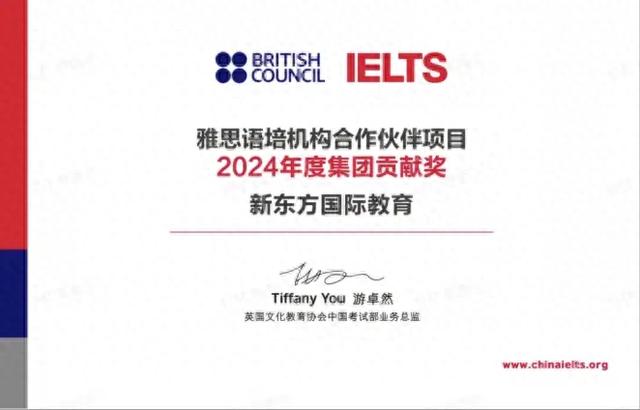
新东方国际教育:多样化课程助力学员冲刺雅思高分
Xin Lang Cai Jing· 2026-01-05 10:27
Core Insights - The IELTS exam is undergoing two significant adjustments: a new speaking test question rotation occurring three times a year and a reduction in registration fees, presenting both challenges and opportunities for candidates [1] Course Offerings - New Oriental International Education provides personalized course plans tailored to different age groups and proficiency levels, ensuring each student finds a suitable preparation path [1] - For middle school students, a specialized course is designed to enhance comprehensive English skills, laying a solid foundation for future IELTS preparation [1] - High school students can enroll in the "High School IELTS Fast Track PRO" course, which combines regular and guidance classes to rapidly improve all four skills necessary for IELTS [3] - University students and adults can choose from premium classes and intensive training camps during winter and summer breaks, focusing on short-term skill enhancement [5] Teaching Quality - New Oriental is one of the earliest IELTS training institutions, boasting extensive teaching experience and a wealth of resources, including a large question bank and teaching materials [6] - The institution operates in 47 cities nationwide, allowing students to select convenient training locations, and offers high-quality online courses [6] - The teaching staff consists of experienced educators with IELTS scores of 7.5 or above, ensuring professional guidance and effective preparation strategies [6] Innovative Learning Strategies - New Oriental integrates AI technology and smart learning tools to provide personalized support for students [8] - The NOBLE platform offers a vast array of online exercises and listening resources, enabling students to review material anytime and track their progress [8] - Tools like Echo headphones and dictionary pens facilitate listening and speaking practice, allowing for real-time correction and improvement [8] Overall Commitment - New Oriental International Education is committed to meeting the diverse needs of students, from middle schoolers to adults, with a comprehensive course system and effective support for IELTS preparation [10]
海信CES 2026:最新RGB-Mini LED产品亮相,世界杯定制产品蓄势待发
Huan Qiu Wang· 2026-01-05 09:37
Group 1 - The 2026 CES in Las Vegas will showcase Hisense's upgraded RGB-Mini LED TVs, reinforcing its position as a pioneer and leader in this technology [1] - Hisense's RGB-Mini LED technology has led to a significant shift in the global industry landscape, prompting major competitors to follow suit [3] - Hisense holds over 90% market share in the high-end RGB-Mini LED TV segment, which has become the preferred choice for high-end users [3] Group 2 - At CES 2026, Hisense will present the evolution of its RGB-Mini LED TVs, supported by self-developed image quality chips and core technologies [5] - The event marks a critical turning point for AI in consumer electronics, transitioning from concept to practical application [5] - As an official sponsor of the 2026 World Cup, Hisense will showcase customized appliances that integrate AI and smart hardware, enhancing the viewing experience for global consumers [5]

凯普生物:公司及子公司获“纸基基因芯片点样”发明专利授权
Xin Lang Cai Jing· 2026-01-05 08:48
Core Viewpoint - The company has obtained a patent for a paper-based gene chip spotting method, which utilizes AI technology to dynamically adjust spotting parameters, enhancing quality and efficiency [1] Group 1: Patent Acquisition - The patent, numbered 202510709179.6, was granted to the company, Guangdong Kaipu Technology Intelligent Manufacturing Co., Ltd., and Han Mountain Normal University [1] - This patent acquisition aligns with the company's strategic planning and aims to improve its intellectual property system [1] Group 2: Impact on Business - While the patent will not have a significant immediate impact on the company's current operations, it is expected to enhance core competitiveness in the long term [1]
吉比特接待222家机构调研,包括淡水泉私募、广发证券、渤海证券、国海证券等
Jin Rong Jie· 2026-01-05 08:43
Core Viewpoint - The company has engaged in extensive research and development activities, showcasing strong performance in game releases and strategic planning for future growth, particularly in international markets and through the integration of AI technology in operations. Group 1: Game Performance and Releases - The company received 222 institutional research visits from October 29 to December 31, 2025, highlighting interest in its game portfolio [1] - "杖剑传说" (Staff Sword Legend) achieved an average ranking of 43 and a peak of 23 on the App Store in mainland China during Q4 2025, with successful overseas launches in regions like Macau and Japan [1][3] - "问道手游" (Wandao Mobile Game) maintained an average ranking of 66 and peaked at 43, while "一念逍遥" (One Thought of Freedom) and "问剑长生" (Sword of Life) introduced new features and events to enhance player engagement [4][5] Group 2: New Game Launches and Strategies - The new game "九牧之野" (Jiumu Zhiye) saw over one million pre-launch reservations, achieving the top position in the App Store free games category and 22nd in the revenue rankings [2][6] - The company plans to focus on community engagement and dynamic marketing strategies based on user lifetime value (LTV) and return on investment (ROI) for its game releases [7] Group 3: AI Integration in Game Development - AI technology is deeply integrated into both game development and operations, enhancing efficiency in art resource production and code writing through platforms like AIWebHub [9] - AI applications extend to user acquisition, personalized in-game offers, and monitoring of game environments to improve overall user experience and operational efficiency [9] Group 4: Shareholder Returns and Financial Planning - The company has established a shareholder return plan for 2025-2027, committing to three profit distributions annually, with cash dividends expected to be at least 50% of the net profit [10] - In the first nine months of 2025, the company distributed 904 million yuan in cash dividends, representing 74.47% of the net profit for that period [10]

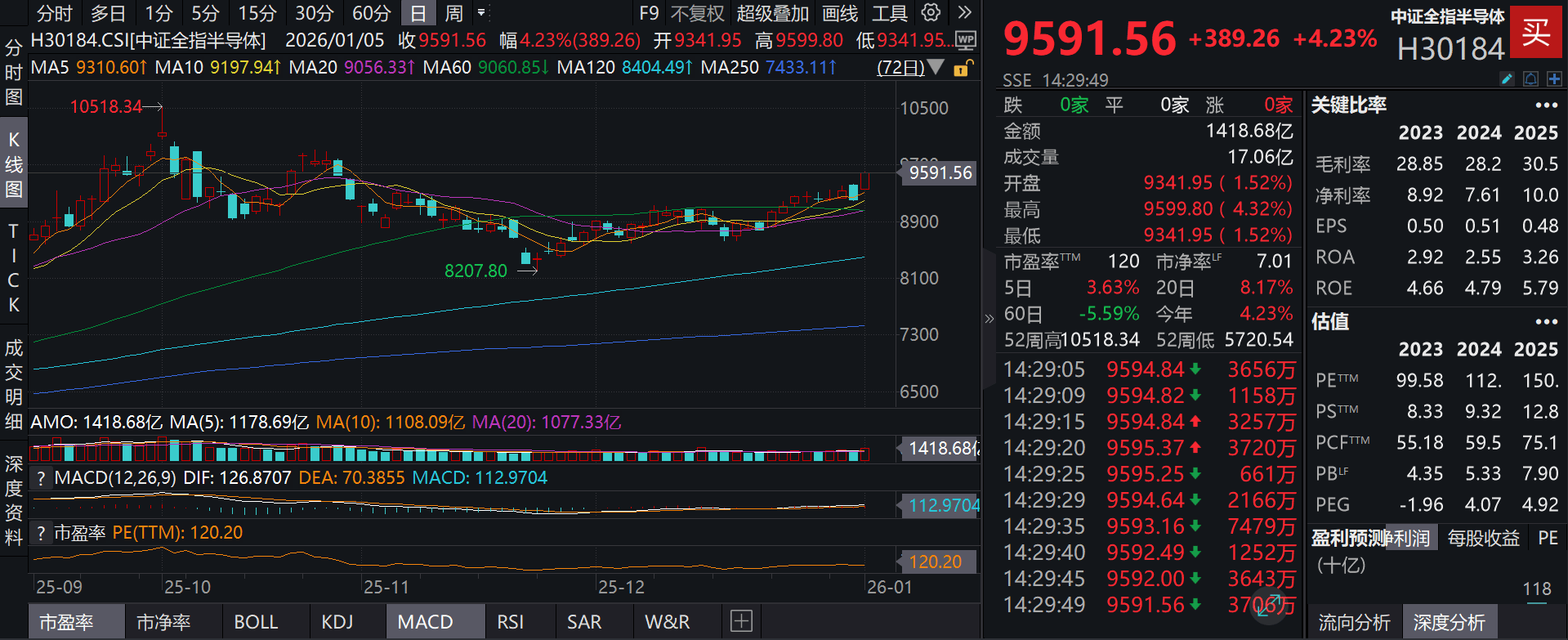
半导体产业多重利好共振,存储涨价预期全面上修,泰康半导体量化选股股票发起式(A:020476;C:020477)一键把握半导体行业增量机遇
Sou Hu Cai Jing· 2026-01-05 06:52
Group 1 - The semiconductor sector experienced significant gains, with companies like Zhongwei rising over 14%, Yandong Micro over 12%, and Shanghai Xinyang over 11% [1] - The semiconductor industry is benefiting from multiple favorable catalysts, including increased government support for domestic chip development and a substantial rise in the shareholding of the National Integrated Circuit Industry Investment Fund in SMIC from 4.79% to 9.25% [3] - TrendForce has revised its price expectations for memory chips, forecasting a 55-60% increase in DRAM and a 33-38% increase in NAND contract prices for Q1, which is significantly higher than previous predictions [3] Group 2 - CITIC Construction Investment reports that the semiconductor equipment sector is entering a growth cycle, with equipment orders expected to maintain high growth rates [4] - The Taikang Semiconductor Quantitative Stock Fund has achieved over 100% returns since its inception in May 2024, with a 1.28% increase in net value on the previous day [5] - Zhejiang Securities anticipates that the semiconductor equipment index will significantly outperform the market in 2025, with current valuations at the 28th percentile, indicating strong growth in front-end equipment revenue and explosive growth in back-end equipment [5]