
大数据

Search documents
【财闻联播】9连板大牛股,最新公告!央行将开展4000亿元MLF操作
券商中国· 2025-12-24 11:49
Macroeconomic Dynamics - The People's Bank of China will conduct a 400 billion MLF operation with a one-year term to maintain ample liquidity in the banking system [2] - The National Energy Administration reported that the total electricity consumption in November increased by 6.2% year-on-year, reaching 8,356 billion kilowatt-hours [7] Regulatory Actions - Multiple departments, including the State Administration for Market Regulation, issued a plan to enhance product quality management on online trading platforms, emphasizing the need for compliance and risk management [5] - Eight departments, including the People's Bank of China, are supporting the exploration of cross-border digital RMB payment pilot programs with Singapore [6] Market Data - On December 24, A-shares saw collective gains, with the Shanghai Composite Index rising by 0.53% and the Shenzhen Component Index increasing by 0.88% [9] - The financing balance in the two markets increased by 147.95 billion, with the Shanghai Stock Exchange reporting a balance of 12,712.02 billion and the Shenzhen Stock Exchange at 12,355.06 billion [11] Company Developments - Xinhua Insurance announced the election of Yang Yu as the chairman of the board [8] - Dongfang Zhenxuan confirmed that Sun Jin, the vice president of New Oriental, will serve as the executive president [12] - Victory Energy reported a cumulative stock price increase of 135.86% over nine consecutive trading days, indicating potential abnormal trading behavior [13] - JD.com stated that its warehouse in Paris has resumed normal operations following a theft incident, clarifying discrepancies in reported loss data [15]




理财共议高质量发展新路径,首单科创债ETF质押式回购交易落地
HWABAO SECURITIES· 2025-12-24 11:47
Investment Rating - The report does not explicitly provide an investment rating for the industry [3]. Core Insights - The banking wealth management industry is moving towards "Net Value 3.0," with multi-asset and multi-strategy becoming mainstream [11][12]. - The introduction of the first "Science and Technology Innovation Bond ETF" repurchase transaction marks a significant breakthrough in liquidity management tools for wealth management companies [17]. - The report highlights the performance of cash management products and fixed-income products, indicating a stable yield environment despite market fluctuations [20][24]. Regulatory and Industry Dynamics - A conference on high-quality development in the banking industry was held, where leaders discussed the current landscape and future directions of wealth management [4][11]. - The industry is facing challenges and opportunities, including a "deposit migration" window and the potential for significant growth in corporate wealth management [12]. - The report notes the appointment of Dai Kang, a former chief asset researcher, to a key position in a wealth management firm, indicating a strategic focus on enhancing equity investment capabilities [14][16]. Innovations in the Industry - Su Yin Wealth Management successfully executed the first market transaction using "Science and Technology Innovation Bond ETF" as collateral, providing a new path for asset liquidity [17][18]. - Hui Yin Wealth Management launched a new product, "Star Hui Global+," which is linked to a self-developed index and aims to diversify asset allocation [19]. Yield Performance - Cash management products recorded a 7-day annualized yield of 1.27%, remaining stable week-on-week, while money market funds saw a slight increase [20][22]. - The report indicates that the yields of fixed-income products have generally risen, reflecting a stable economic environment and expectations of monetary policy adjustments [24][25]. Net Value Tracking - The report states that the net value ratio of banking wealth management products decreased to 2.55%, indicating a slight improvement in the market [31][33]. - The credit spread has widened, suggesting limited value for investors, and future trends in credit spreads will be closely monitored [32].
【港交所IPO】白鸽在线港股IPO通过聆讯:以科技重构保险生态,领航AI保险行业新纪元
Sou Hu Cai Jing· 2025-12-24 10:33
Core Insights - Baige Online is set to become the first AI-driven insurance stock in China as it prepares to list on the Hong Kong Stock Exchange, marking a significant milestone in the insurance technology sector [1] Group 1: Technological Foundation - The core competitive advantage of Baige Online lies in its self-developed "Baige e-Bao" SaaS application system, which integrates big data, AI, blockchain, and cloud computing to provide a full lifecycle service matrix covering smart underwriting, policy management, claims service, data analysis, and financial management [1] - The system boasts a high concurrency processing capability of 100,000 policies per second, with a daily processing volume exceeding 5 million policies, and an online claim response time reduced to under 3 minutes, enabling real-time insurance services [1] - The system's capabilities have been validated through partnerships, such as with Hello Chuxing, where it automatically links user riding data with policy information, creating a seamless insurance experience and significantly reducing complaint rates [1] Group 2: Data Security - Baige Online has established a multi-layered security system, including a web application firewall and sensitive data masking technology, achieving a Level 3 security certification and being listed as a financial technology innovation enterprise by the People's Bank of China [2] - The "Baige e-Bao" system received recognition as one of the "Top 20 Digital Insurance Applications" in 2021 and won third place in the Xiamen Financial Technology Excellence Project evaluation, reflecting its strong technical capabilities [2] Group 3: Ecosystem Collaboration - Successful internet insurance intermediaries must provide end-to-end digital solutions, enhancing efficiency and customer experience while utilizing data analysis for decision optimization [3] - Building and maintaining trust with clients and collaborating with various stakeholders, including scenario providers, insurance companies, and government entities, is essential for developing scenario-based insurance products [3] Group 4: Market Positioning - Baige Online ranks first among third-party scenario internet insurance intermediaries in China with a market share of 3.4% as of 2024, attributed to its "scenario customization" strategy that tailors insurance products to the specific needs of diverse partners [4] - The company has accumulated over 381 million insured profiles, 76 scenario data points, 224,500 claims reports, and 8.9 billion policy records, creating a comprehensive risk data network across nine ecosystems [4] Group 5: Innovation and Growth - Research and development expenditures at Baige Online increased from 141 million to 324 million yuan between 2022 and 2024, representing a rise from 3.5% to 4.0% of revenue, leading to significant technological advancements [5] - The company is transitioning from a focus on "scenario deepening" to "ecosystem expansion," integrating risk data from various scenarios to create comprehensive risk profiles for more accurate pricing and broader consumer protection [5] - The Chinese insurance market is projected to grow from 4.5 trillion yuan in 2020 to 5.7 trillion yuan by 2024, with a compound annual growth rate of 5.8%, and is expected to exceed 8.4 trillion yuan by 2029, with internet insurance accounting for 12.6% of the total [5] Group 6: Future Vision - Baige Online aims to empower the insurance industry through technology, enhancing the safety, convenience, and intelligence of insurance experiences for consumers globally, thereby contributing to the digital transformation of the insurance sector [6]

中国煤科天玛智控10项成果荣获2025年中国煤炭工业协会科学技术奖,创历史最佳!
Xin Lang Cai Jing· 2025-12-24 10:33
Core Viewpoint - The China Coal Industry Association announced the winners of the 2025 Science and Technology Awards, with China Coal Technology and Engineering Group's Tianma Intelligent Control leading and participating in 10 awarded projects, securing 5 first prizes, 4 second prizes, and 1 third prize, highlighting its core competitiveness in coal technology [1][5]. Group 1: Awarded Projects - The projects that won first prizes include: - Key technology and equipment development for unmanned mining in thin coal seams [2][7]. - Key technology research and application for megawatt-level high-pressure large-flow fracturing pump stations [2][7]. - Efficient production systems for coal mining faces with an annual capacity of 20 million tons [2]. - Key technology and application for directional hole fracturing under thick hard roofs in the Mengxi and Shaanxi mining areas [2]. - Intelligent mining in complex thin coal seams with key technologies and complete equipment [2]. - The second prize projects include: - Research and application of a 5G communication architecture intelligent control system for fully mechanized mining faces [2][7]. - High-lifetime laser cladding manufacturing of hydraulic supports and ultra-long working face cluster self-organizing control key technologies [2]. - Digital twin and decision-making for coal mine excavation operations [2]. - Compilation and research of industry standards for Ethernet/IP communication interfaces and protocols for fully mechanized mining equipment [2]. Group 2: Key Technologies and Innovations - The unmanned mining project for thin coal seams introduced a new mode of unmanned coal mining, featuring surface planning, automatic equipment execution, and in-face unmanned operations, successfully applied in several coal mines [8]. - The megawatt-level high-pressure large-flow fracturing pump station project overcame core technologies related to system stability, long-term reliability, and intelligent precise control, significantly enhancing operational safety and efficiency [9]. - The 5G communication architecture intelligent control system project developed a hydraulic support intelligent control system based on 5G, creating a mining mode suitable for various geological conditions, integrating big data, artificial intelligence, and 5G technology [10]. Group 3: Future Directions - The company emphasizes technological innovation as the core engine for high-quality development, focusing on intelligent mining, high-end equipment manufacturing, and intelligent control systems, while increasing R&D investment and building a deep integration innovation system [10]. - Future plans include implementing the group's overall development strategy and enhancing the role of technological innovation, deepening core technology breakthroughs, accelerating the transformation of scientific achievements, and improving core competitiveness [10].

市场监管总局等部门:积极推动工业产品相关行政许可、强制性产品认证等公共数据开放
Xin Lang Cai Jing· 2025-12-24 10:32
Core Viewpoint - The State Administration for Market Regulation has issued a special governance action plan for the quality and safety of industrial products sold online from 2025 to 2027, aiming to enhance regulatory measures and ensure consumer safety [1][12]. Overall Requirements - The plan emphasizes the integration of online and offline regulation, aiming to establish a long-term regulatory mechanism for online industrial product quality and safety by the end of 2027, ensuring accountability and traceability in the quality control system [3][14]. Governance Focus - Key products include those used by vulnerable groups (elderly, children, disabled), electronic appliances, gas appliances, food-related products, sanitary products, agricultural materials, and products with high consumer complaints or high non-compliance rates [4][15]. - Key online trading operators include large comprehensive platforms, specialized product platforms, live e-commerce platforms, and social e-commerce platforms [4][15]. - Key issues to address include the sale of prohibited products, non-compliance with certification requirements, counterfeit certifications, and the sale of defective products [4][15]. Work Tasks - Strengthening source verification for key products and enhancing merchant qualification audits and product information verification on online platforms [5][17]. - Enforcing quality safety responsibilities on online trading platforms and utilizing technology for monitoring and compliance [6][18]. - Conducting dynamic monitoring and inspections to address identified issues promptly and ensure compliance [6][18]. - Increasing the frequency of quality safety inspections and ensuring accurate disclosure of product quality information [6][19]. - Publicly releasing results of quality inspections and establishing a ranking system for non-compliant platforms [7][19]. - Intensifying efforts to combat illegal activities and ensuring a closed-loop enforcement mechanism [8][20]. - Establishing a database for live marketing entities and monitoring systems for live e-commerce activities [8][21]. - Promoting traceability and anti-counterfeiting measures for key online products through coding and verification systems [8][21]. - Enhancing inter-departmental collaboration for effective regulation and enforcement against counterfeit products [8][22]. - Developing a comprehensive legal framework for online product quality supervision and live e-commerce management [8][22]. - Encouraging social participation in quality safety governance and promoting consumer awareness [10][22]. Work Requirements - Local departments are required to enhance political awareness, establish effective mechanisms, and focus on achieving governance goals [11][23]. - The State Administration for Market Regulation will lead the special governance task force to coordinate and implement various tasks effectively [11][23].
市场监管总局等部门:督促网络交易平台建立产品质量管理制度 及时排查价格明显低于合理区间的产品
Xin Lang Cai Jing· 2025-12-24 10:32
Core Viewpoint - The State Administration for Market Regulation has issued a special governance action plan for the quality and safety of industrial products sold online from 2025 to 2027, aiming to enhance regulatory measures and ensure consumer safety [2][12]. Overall Requirements - The plan is guided by Xi Jinping's thoughts and aims to establish a long-term regulatory mechanism for online industrial product quality safety by the end of 2027, ensuring that the responsibilities of online sellers are clearly defined and that a comprehensive quality safety regulatory system is formed [3][14]. Governance Focus - Key products include those used by vulnerable groups such as the elderly, children, and disabled individuals, as well as electronic appliances, gas appliances, food-related products, sanitary products, agricultural materials, and construction materials that are closely related to public safety [4][15]. - Key online sellers include large comprehensive platforms, specialized product platforms, live-streaming e-commerce platforms, and social e-commerce platforms [4][15]. - Key issues involve the sale of prohibited or restricted products, non-compliance with administrative licensing or mandatory certification requirements, and the sale of counterfeit or substandard products [4][15]. Work Tasks - Strengthening source verification of key product information and enhancing the auditing of merchant qualifications and product information on online platforms [5][17]. - Encouraging the use of big data and AI for daily inspections and establishing a price information database for key products [5][17]. - Conducting dynamic monitoring and inspections of online products, focusing on key issues and products, and ensuring immediate action against identified problems [6][18]. - Increasing the frequency of quality safety inspections and ensuring accurate disclosure of product quality information by online sellers [6][19]. Enforcement Measures - Publicly releasing the results of quality inspections and establishing a ranking system for online platforms based on their compliance rates [7][19]. - Implementing strict penalties for serious violations and enhancing the supervision of testing institutions to prevent the issuance of false reports [8][20]. - Establishing a database for live-streaming marketing entities and monitoring high-risk activities to ensure compliance [8][21]. Collaboration and Regulation - Promoting inter-departmental and inter-regional cooperation for online product quality safety regulation to dismantle networks of counterfeit and substandard products [9][22]. - Developing a comprehensive legal framework for online sales quality supervision and establishing clear responsibilities for all parties involved in live-streaming e-commerce [9][22]. Social Participation - Encouraging public participation in reporting violations and promoting a culture of integrity in online commerce [10][22].
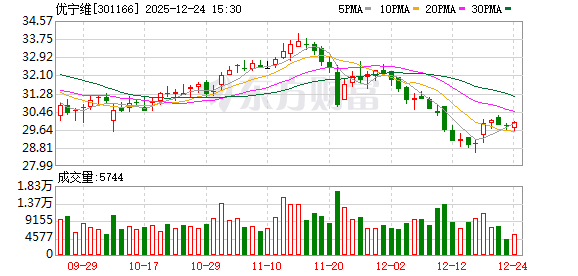
优宁维:公司上线UCRM、CRM等系统 助力公司业务和管理效率提升
Zheng Quan Ri Bao· 2025-12-24 09:35
Core Viewpoint - The company emphasizes the importance of information technology in enhancing its business operations as a one-stop supplier in the life sciences sector [2] Group 1: Business Strategy - The company is continuously upgrading its online marketplace to support its one-stop service model [2] - New systems such as UCRM, CRM, laboratory management systems, OA, and OMS have been launched to improve business and management efficiency [2] - The company is leveraging big data technologies to refine customer profiles based on accumulated customer data, enabling more precise product and service offerings [2] Group 2: Future Outlook - The company will continue to monitor advancements in information technology to further enhance its one-stop service capabilities [2]
轻松健康暴涨158%后,白鸽在线火速“接棒”赴港!保险科技IPO第二春真来了?
Sou Hu Cai Jing· 2025-12-24 08:57
Group 1 - The core viewpoint of the articles highlights a resurgence in the insurance technology sector, marked by recent IPOs such as Yuanbao and Easy Health, indicating renewed investor interest in the "insurance + technology" space [1] - White Dove Online, a key player in the "scenario insurance" niche, has positioned itself as a digital connector rather than a traditional insurance intermediary, emphasizing its role in providing comprehensive risk management solutions [3][4] - The company has established connections with over 70 insurance firms and focuses on tailored risk solutions for specific ecosystems, differentiating itself from platforms that primarily target individual customers [3][4] Group 2 - Financially, White Dove Online has shown significant growth, with revenue projected to increase from 400 million yuan in 2022 to 914 million yuan in 2024, reflecting a compound annual growth rate of 51.1% [5] - Despite this growth, the company has yet to achieve overall profitability, with over 70% of its revenue still derived from traditional insurance transaction commissions, raising concerns about its long-term sustainability [6] - The company is undergoing a digital transformation, launching six types of MaaS models to enhance its technological capabilities and move beyond a commission-based revenue model [7][8] Group 3 - The current IPO environment is seen as favorable for White Dove Online, as investors are increasingly willing to support insurance technology firms that can articulate long-term value and integrate technology into their operations [8] - The competitive landscape remains challenging, with White Dove Online facing pressure from both traditional insurance companies and internet giants that are building their own ecosystems [9] - The company must demonstrate that its technological advancements can genuinely enhance risk management processes to maintain credibility in the capital market [9]

政策给劲儿吗?工作到位吗?发展合规吗?他们这么说……
Jin Rong Shi Bao· 2025-12-24 08:55
Core Viewpoint - Consumption is seen as the "ballast" for economic growth, while finance acts as the "lifeblood" that supports aspirations for a better life across various scenarios and urban-rural divides. Consumer finance companies play a crucial role in driving consumption and supporting new urban residents and county-level consumption upgrades [1] Policy Insights - By 2025, multiple policies related to consumption and consumer finance will be implemented, making it essential for consumer finance companies to adapt to regulatory changes and convert policy benefits into consumption potential [2] - Policies such as the "Special Action Plan to Boost Consumption" and "Guidance on Financial Support for Expanding Consumption" have provided a solid foundation and market confidence for the consumer finance industry [2] - Companies like China Post Consumer Finance are actively responding to new lending regulations by implementing a dynamic management whitelist for lending partners to ensure compliance and consumer protection [2] Development Strategies - The implementation of various policies has injected stronger momentum into consumption and provided clear directions for the standardized development of consumer finance companies [4] - Companies are leveraging technology to enhance compliance management and have established systems for fraud detection and risk control [4] - Strict regulatory requirements are viewed as a stabilizing force that can eliminate poor industry participants and create a fair competitive environment for compliant businesses [4] Technological Advancements - Technology remains a core competitive advantage for the consumer finance industry, with companies accelerating their digital transformation to provide more accessible financial services [7] - Ant Consumer Finance has upgraded its risk control system using AI to better match consumer needs and enhance the efficiency of credit decisions [7] - Companies like Xinyu Consumer Finance are focusing on standardizing their technology and processes to support the entire lifecycle of consumer credit services [7] Financial Focus Areas - Consumer finance companies are committed to serving the real economy through five key areas: technology finance, green finance, inclusive finance, pension finance, and digital finance [9] - Companies are developing tailored products for different consumer segments, such as flexible personal loans for younger consumers and enhancing financial education for the elderly [9] - Haier Consumer Finance has initiated the first ESG-linked syndicated loan in the industry, directing funds to green consumption scenarios [9]
报告称情绪价值影响中国游客消费决策
Zhong Guo Xin Wen Wang· 2025-12-24 08:40
Core Insights - The report highlights that emotional value is becoming a key factor influencing consumer decision-making in the Chinese tourism market [1][2] - The core driving force of contemporary tourism consumption has shifted from functional satisfaction to emotional and spiritual fulfillment [1] Group 1: Market Trends - In the first half of 2025, the number of domestic trips taken by Chinese residents is projected to reach 3.285 billion, representing a year-on-year increase of 20.6% [1] - Domestic tourism spending is expected to reach 3.15 trillion yuan, reflecting a year-on-year growth of 15.2% [1] - The rise of emotional value in tourism indicates a shift towards experiences that provide identity recognition and unique emotional experiences [1] Group 2: Consumer Behavior - Tourists are increasingly willing to pay for experiences that offer lifestyle engagement, emotional satisfaction, and storytelling rather than just sightseeing [1] - The report identifies various tourism trends such as wellness tourism, slow cruising, cultural nostalgia, and family travel, which are gaining traction in an aging society [2] Group 3: Supply Innovation - The report suggests that tourism product developers should transition from resource-oriented thinking to user-oriented thinking, focusing on creating experiences rather than just attractions [1][2] - It emphasizes the importance of integrating tourism with cultural, sports, and wellness sectors, as well as leveraging new technologies like AI and big data to reshape production, service, and consumption methods [2]