
世界多极化

Search documents
习近平同瑞士联邦主席就中瑞建交75周年互致贺电
Yang Shi Wang· 2025-09-14 11:57
Core Viewpoint - The 75th anniversary of diplomatic relations between China and Switzerland highlights the successful cooperation between two countries with different social systems and development stages, emphasizing mutual respect and pragmatic collaboration [1] Group 1: Bilateral Relations - China and Switzerland have cultivated a spirit of "equality, innovation, and win-win" cooperation over the past 75 years, leading to fruitful results in various fields [1] - The establishment of the China-Switzerland Free Trade Agreement in 2014 and the Innovation Strategic Partnership in 2016 are significant milestones in the bilateral relationship, indicating the continuous expansion and deepening of cooperation [1] Group 2: Future Cooperation - Both countries express a commitment to deepen economic, financial, and cultural exchanges, aiming to elevate the China-Switzerland innovative strategic partnership to a new level [1] - Switzerland is willing to continue enhancing communication and cooperation with China to promote long-term friendship between the two nations [1]
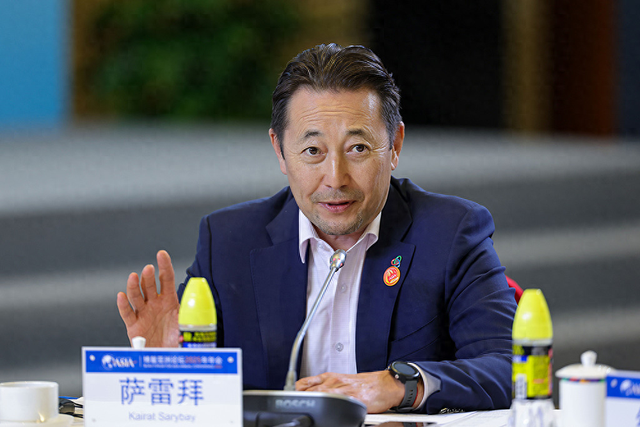
亚信智库论坛|亚信秘书长萨雷拜:“全球治理倡议”与亚信本质契合
Xin Lang Cai Jing· 2025-09-11 04:47
Core Viewpoint - The increasing role of Asia in global development and policy-making is highlighted, emphasizing the need for better cooperation in the context of global security architecture [1][3]. Group 1: CICA's Role and Challenges - The CICA (Conference on Interaction and Confidence-Building Measures in Asia) serves as the most extensive multilateral security forum in Asia, covering 90% of the continent and over half of the global population, which reflects its core value of inclusivity and consensus among its 28 member states [3][4]. - The main challenge facing CICA is the rising trend of unilateralism globally, which hinders the realization of a multipolar world despite the ongoing evolution of international dynamics [4]. Group 2: Trust-Building Measures - CICA provides a platform for dialogue and trust-building among member states, even those without diplomatic relations or in conflict, through gradual Confidence Building Measures (CBMs) [6][8]. - The organization emphasizes that security is indivisible and should not come at the expense of other nations' safety, promoting a comprehensive approach to security issues [7][8]. Group 3: Transformation into an International Organization - CICA is in the process of transforming into a formal international organization, with significant progress made since 2022, including the establishment of a draft charter and the formation of management and advisory bodies [9][10]. - The upcoming leaders' summit in Baku is expected to formalize CICA's status as an international organization, further solidifying its role in global governance [10]. Group 4: Cooperation with Other Organizations - CICA maintains partnerships with various international organizations, including the UN and regional entities like the Shanghai Cooperation Organization and the Arab League, reflecting its commitment to multilateralism [10].

探索更多商业机会,加强内部贸易往来,金砖国家领导人8日举行线上峰会
Huan Qiu Shi Bao· 2025-09-07 22:51
Group 1 - The BRICS summit held on September 8 aims to discuss the impact of US tariff policies on member countries, particularly Brazil and India, which face tariffs as high as 50% on their goods [1][2] - The summit will also address the need for reform in international organizations like the WTO and the UN Security Council, as well as propose peace initiatives regarding the Russia-Ukraine conflict and the Gaza situation [2] - Brazil's President Lula emphasizes the importance of the summit in the context of questioning US economic hegemony and promoting a multipolar world [3] Group 2 - The summit will explore ways to enhance internal trade among BRICS nations, including the potential use of local currencies, which may raise concerns in the US [2] - Brazil is taking a cautious approach to avoid giving the US any leverage, focusing on multilateralism and exploring new business opportunities [3] - Lula's "Sovereign Brazil Plan" aims to strengthen trade relations with BRICS countries without retaliating against the US, highlighting a shift towards diversifying trade partnerships [3]
追忆峥嵘岁月,谱写合作新篇(大使随笔·以史为鉴 共护和平)
Ren Min Wang· 2025-09-06 21:55
Group 1 - The core viewpoint emphasizes the historical significance of the anti-fascist struggle shared by China and Kyrgyzstan, highlighting their joint efforts during World War II to defeat fascism and the deep friendship formed through this struggle [1][2]. - Both countries have maintained a commitment to uphold the results of World War II, supporting the international order based on the United Nations and international law, with a specific focus on the One China principle [2][3]. - The strategic partnership between China and Kyrgyzstan has been elevated to a new level, with China being the largest trade partner, import source, and investment source for Kyrgyzstan, indicating strong economic ties [3]. Group 2 - The construction of the China-Kyrgyzstan-Uzbekistan railway project is highlighted as a significant development that will enhance connectivity and economic cooperation between the two nations [3]. - Both countries share similar positions on major international and regional issues, advocating for an open world economy and a multilateral trade system centered around the World Trade Organization [3]. - The partnership aims to continue the legacy of World War II victories, fostering a closer community of shared destiny between the two nations for a better future for their peoples [3].
肯尼亚媒体:上合组织天津峰会是中国全球领导力的有力证明
Xin Hua Wang· 2025-09-06 10:54
Group 1 - The core viewpoint of the articles highlights the increasing global influence of the Shanghai Cooperation Organization (SCO) as demonstrated by the recent summit in Tianjin, which gathered over 20 foreign leaders and 10 heads of international organizations [1][2] - The summit emphasized China's global governance initiative, which aligns with previous initiatives such as the global development, security, and civilization initiatives, addressing various aspects of human society [1] - The current geopolitical landscape is characterized by rising political confrontations and regional conflicts, alongside long-term challenges like climate crises and economic downturns, necessitating new visions and actions to restore global stability [1] Group 2 - The SCO is positioned as an ideal platform for initiating global governance reform dialogues, actively promoting a multi-polar world, regional stability, and economic cooperation [2] - The organization has expanded from six founding member countries in 2001 to ten member countries, along with additional observer states and dialogue partners, enhancing its role in global governance discussions [2] - The SCO, alongside other global cooperation platforms like BRICS, aims to amplify the voices of Global South countries, advocating for a more inclusive, sustainable, stable, and prosperous world [2]
海外人士谈抗战丨专访:中国对世界反法西斯战争的贡献被西方严重低估——访英国“里斯本丸”纪念协会主席安东尼·琼斯
Xin Hua Wang· 2025-09-06 10:54
Core Viewpoint - China's contribution to the global anti-fascist war is significantly underestimated by the West, and there is a lack of recognition of China's role in this historical context [1][2] Group 1: Historical Context - China served as the Eastern main battlefield during the global anti-fascist war, effectively tying down Japanese military forces and preventing further expansion, which allowed Allied forces to concentrate their efforts elsewhere [1] - The Chinese military and civilians endured immense suffering during this period, highlighting the sacrifices made [1] Group 2: Commemoration and Education - The establishment of the "Lisbon Maru" Memorial Association in 2024 aims to commemorate the historical events and educate more people about this history [2] - Recent documentaries and films, such as "The Sinking of the Lisbon Maru" and "Dongji Island," have been released in multiple countries to help Western audiences understand and remember this history [2] Group 3: Current Relevance - Maintaining the post-war international order is crucial, based on the consensus that the world must not fall into destructive situations again [2] - The importance of promoting a multipolar world is emphasized, ensuring that all countries, regardless of size, can voice their opinions and share in development outcomes [2] - China is recognized as a key player in achieving these goals, contributing to global peace, stability, development, and prosperity [2]
海外人士谈抗战|专访:中国对世界反法西斯战争的贡献被西方严重低估——访英国“里斯本丸”纪念协会主席安东尼·琼斯
Xin Hua She· 2025-09-05 10:37
Group 1 - The contribution of China to the global anti-fascist war is significantly underestimated by the West, with a lack of recognition of its role [1] - China served as the main battlefield in the East, restraining Japanese military forces and preventing further expansion, which allowed Allied forces to concentrate their efforts elsewhere [1] - The commemoration of the 80th anniversary of the victory in the anti-fascist war emphasizes the importance of remembering the sacrifices made by the Chinese people and others around the world [1] Group 2 - The establishment of the "Lisbon Maru" Memorial Association in 2024 aims to raise awareness of this historical event and honor the memory of those involved [2] - Recent documentaries and films about the Lisbon Maru incident are seen as valuable tools for educating Western audiences about this history [2] - The maintenance of the post-war international order is crucial, with a consensus that the world must not fall into destructive situations again, highlighting the importance of multilateral cooperation [2]
中国表示设立上海合作组织开发银行
日经中文网· 2025-09-01 08:20
Group 1 - The core viewpoint emphasizes the establishment of the Shanghai Cooperation Organization Development Bank to provide stronger support for member countries' security and economic cooperation [1][3] - A commitment to provide 2 billion RMB in unconditional aid to member countries within the year was highlighted [3] - The call for the activation of a comprehensive center for addressing security threats and challenges, as well as a drug control center, was expressed [3] Group 2 - The speech advocates against Cold War mentality, bloc confrontation, and bullying behavior, promoting a multipolar world with equality and order [3] - There is a strong emphasis on mutual benefit and win-win cooperation, with a focus on deepening development strategy alignment and high-quality construction of the Belt and Road Initiative [3] - Collaboration in various fields such as energy, infrastructure, green industries, digital economy, technological innovation, and artificial intelligence is encouraged to achieve modernization together [3]
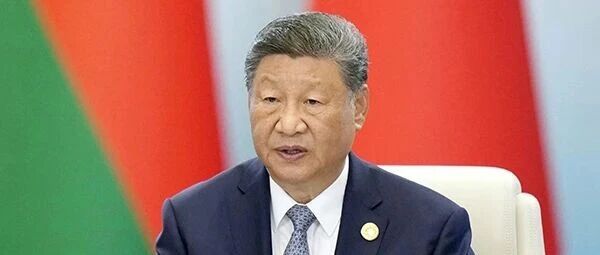
习近平在上海合作组织成员国元首理事会第二十五次会议上的讲话(全文)
第一财经· 2025-09-01 04:34
Core Viewpoint - The Shanghai Cooperation Organization (SCO) has achieved significant milestones over the past 24 years by adhering to the "Shanghai Spirit" of mutual trust, mutual benefit, equality, consultation, respect for diverse civilizations, and seeking common development [2][4]. Group 1: Achievements and Contributions - The SCO has established a military trust mechanism in border areas, promoting cooperation and addressing conflicts while opposing external interference to maintain regional peace [2]. - The organization has initiated the Belt and Road Initiative, resulting in numerous significant projects and enhancing regional economic cooperation, with trade among SCO countries exceeding $2.3 trillion ahead of schedule [2]. - A comprehensive network of international road transport has been developed, with nearly 14,000 kilometers of routes established and over 110,000 China-Europe freight trains operated [2]. Group 2: Future Directions - The SCO aims to uphold the principle of seeking common ground while respecting differences, enhancing strategic communication, and fostering collective responsibility for regional stability and development [5]. - The organization emphasizes mutual benefit and high-quality cooperation, particularly in areas such as energy, infrastructure, green industries, digital economy, and technological innovation [5]. - Open and inclusive cooperation is encouraged, promoting cultural exchanges and economic collaboration among member states [5]. Group 3: Governance and Reform - The SCO advocates for fairness and justice in international relations, opposing hegemonic practices and supporting a multilateral trade system centered around the World Trade Organization [6]. - The organization is committed to practical and efficient reforms, enhancing resource allocation and capacity building to improve decision-making and action effectiveness [6]. Group 4: China's Role and Contributions - China has invested over $84 billion in SCO member countries, with annual bilateral trade exceeding $50 billion [7]. - Plans include implementing 100 small-scale livelihood projects in member countries, providing 2 billion RMB in aid, and doubling the number of scholarships for SCO students [7].
习近平:推动构建更加公正合理的全球治理体系
Yang Shi Xin Wen· 2025-09-01 02:45
Core Points - The meeting of the Shanghai Cooperation Organization (SCO) member states' heads of state was held on September 1 in Tianjin, emphasizing the importance of fairness and justice in international relations [1] - President Xi Jinping advocated for a correct understanding of World War II history, opposing Cold War mentality, bloc confrontation, and bullying behavior [1] - The need to maintain an international system centered around the United Nations and support a multilateral trade system led by the World Trade Organization was highlighted [1] - The call for a more equitable and orderly multipolar world and inclusive economic globalization was made, aiming to promote a fairer global governance system [1]