
两山理念

Search documents
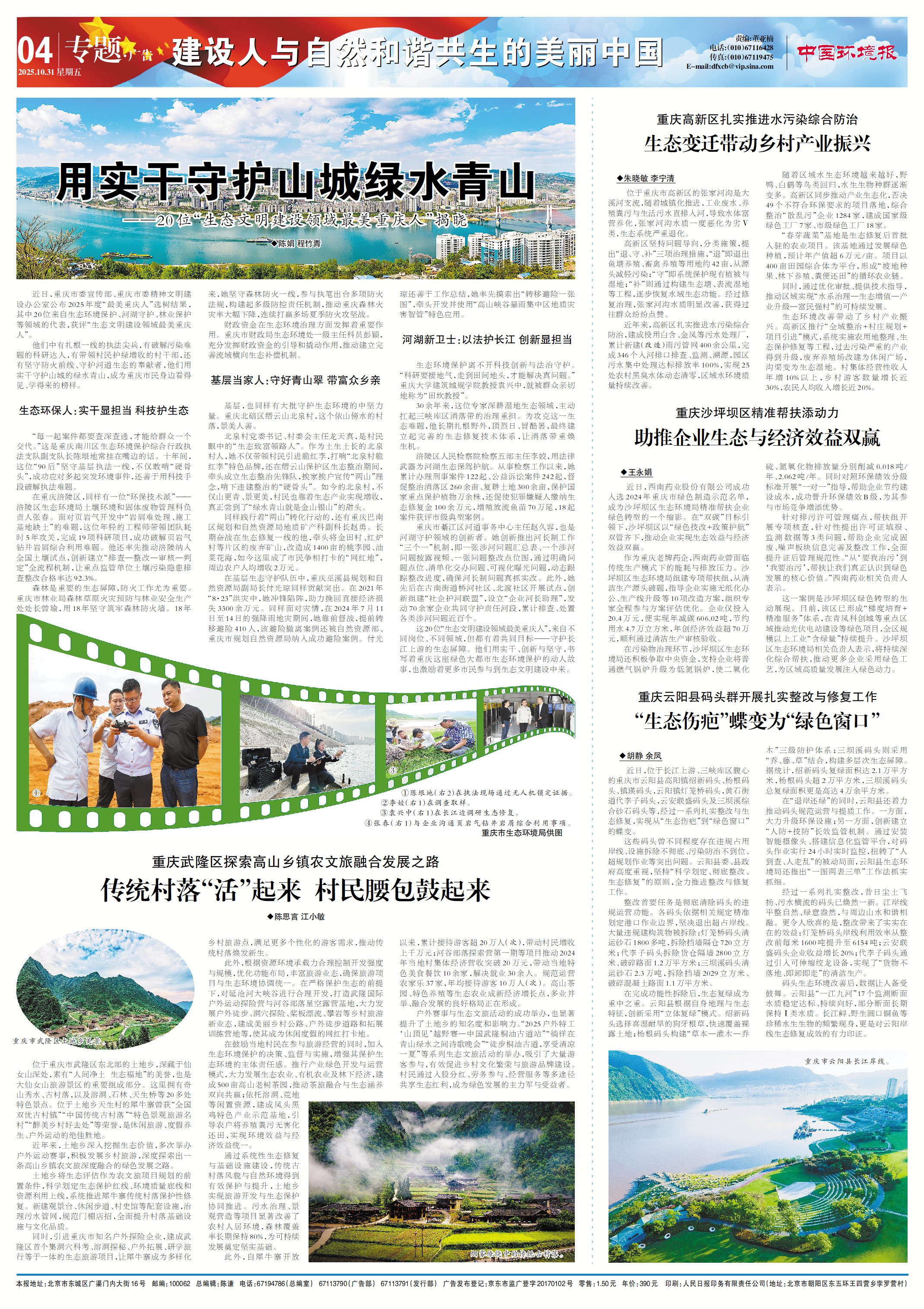
重庆用实干守护山城绿水青山
Zhong Guo Huan Jing Bao· 2025-10-31 00:10
Core Viewpoint - The article highlights the recognition of 20 individuals as the "Most Beautiful Chongqing People" in the field of ecological civilization construction, showcasing their contributions to environmental protection, community engagement, and sustainable development in Chongqing [2][13]. Group 1: Environmental Protection Efforts - Chen Yandi, deputy head of the ecological environment protection team in Nanchuan District, emphasizes thorough investigations in environmental cases, demonstrating commitment to grassroots enforcement [3][14]. - Zhang Chun, head of soil and solid waste management in Fuling District, led a team to solve challenges in shale gas development, completing 19 research projects and achieving a soil pollution remediation compliance rate of 92.3% [3][14]. - Zeng Yu, director of the Forest Fire Prevention and Forestry Safety Production Department, has dedicated 18 years to forest fire prevention, significantly reducing fire incidents in Chongqing [3][14]. Group 2: Community Engagement and Economic Development - Long Tianzhen, the village head of Beiquan Village, has successfully introduced a local specialty brand and led ecological restoration efforts, resulting in increased income for villagers [5][16]. - Zhao Yong, deputy section chief in the Planning and Natural Resources Bureau of Banan District, transformed abandoned mines into 1,400 acres of fruit gardens, boosting local farmer incomes by 20,000 yuan per person [5][16]. Group 3: Disaster Response and Risk Management - Fu Guangqiong, deputy director of the Planning and Natural Resources Bureau in Wuxi County, played a crucial role in disaster response during severe weather events, helping to prevent economic losses of over 33 million yuan [6][17]. - She developed a disaster management application to enhance risk assessment and response strategies [6][17]. Group 4: Legal and Technological Innovations - Professor Yuan Xingzhong from Chongqing University has focused on wetland ecology and established a comprehensive ecological restoration system for the Three Gorges Reservoir area [7][18]. - Li Jiao, head of the Fifth Department of the Fuling District People's Procuratorate, has handled numerous environmental cases, promoting ecological restoration and legal accountability [7][18]. Group 5: Collaborative Initiatives - Zhao Jiurong, director of the River Affairs Center in Qijiang District, implemented a "three-in-one" mechanism for river management, enhancing transparency and accountability in environmental governance [7][19]. - The establishment of the "Community-Enterprise River Protection Alliance" has mobilized over 70 companies to participate in river conservation efforts [7][19].

生态环境部:扩大全国碳排放权交易市场覆盖范围,到2027年基本覆盖工业领域主要排放行业
Bei Jing Shang Bao· 2025-10-29 07:47
Core Viewpoint - The Ministry of Ecology and Environment is accelerating the construction of a national carbon market, aiming for comprehensive coverage of major industrial sectors by 2027 [1] Summary by Relevant Sections Carbon Market Expansion - The national carbon emissions trading market will expand its coverage to include major emission industries in the industrial sector by 2027 [1] Quota Control and Allocation - Implementation of total quota control and paid allocation will transition from intensity control to total control, gradually increasing the proportion of paid allocation [1] Quota Tightening and Price Signals - There will be a gradual tightening of quotas to enhance the scarcity of carbon allowances, aiming to provide clearer price signals for structural optimization and green low-carbon transformation in key industries [1] Voluntary Emission Reduction Market - The establishment of a voluntary emission reduction trading market will be accelerated, focusing on developing a comprehensive methodological system to support autonomous emission reductions and ecological value conversion [1] Market Vitality and Financial Products - Efforts will be made to enhance the vitality of the national carbon market by exploring green financial products and services related to carbon allowances and certified voluntary emission reductions, while also increasing the types and numbers of market participants [1]
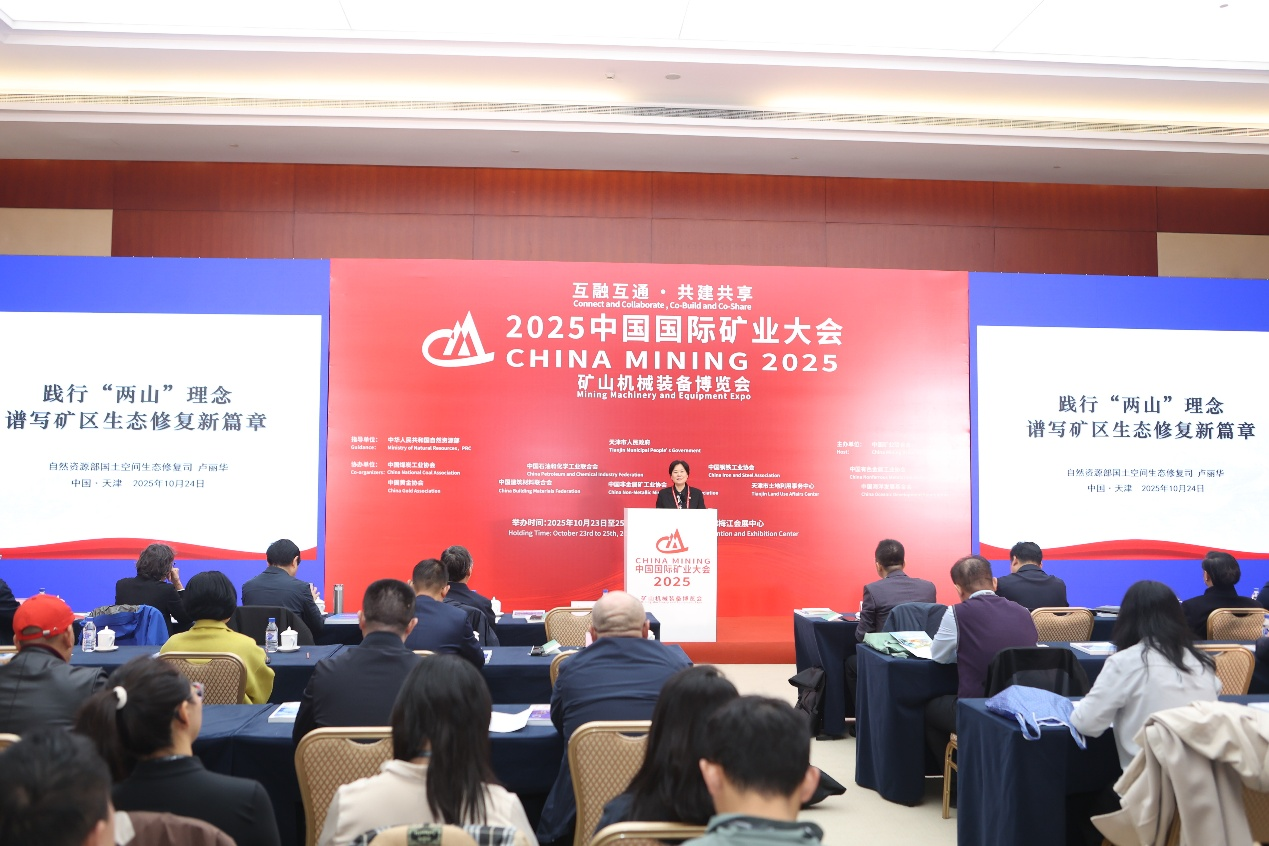
守“两山”初心 增“绿色财富”——从2025中国国际矿业大会看矿山生态修复
Zhong Guo Zi Ran Zi Yuan Bao· 2025-10-29 03:15
Core Insights - The forum on "Mine Ecological Restoration" emphasizes the importance of restoring damaged landscapes and fostering a harmonious relationship between humans and nature, aligning with the "Two Mountains" concept [3] - The event serves as a high-level platform for experts and representatives to exchange knowledge on ecological restoration practices, technological innovations, and collaborative models [3][5] Systematic Solutions - The Ministry of Natural Resources has developed a comprehensive solution for mine ecological restoration, including legal frameworks, regulatory mechanisms, and technical support [5] - The revised Mineral Resources Law establishes a dedicated chapter on ecological restoration, providing legal backing for restoration efforts [5] - A total of 68 demonstration projects have been initiated under the "14th Five-Year Plan" for historical abandoned mine restoration, covering over 1.6 million acres [5] International Perspectives - Experts from various countries, including the U.S. and China, shared the latest research and practices in mine ecological restoration, highlighting the importance of international collaboration [8] - Advanced techniques such as "Approximate Original Contour" (AOC) and local vegetation cultivation were discussed as key methods for effective restoration [9] Expert Reports - The concept of "simultaneous mining and restoration" was emphasized, showcasing its benefits in land conservation and cost control [11] - A three-phase evolution of monitoring systems for ecological restoration was presented, focusing on integrated monitoring technologies [11] Case Studies - Successful case studies from various regions illustrate the multifaceted benefits of mine ecological restoration, including improved ecosystem functions and enhanced living environments [13] - The transformation of Huzhou from a mining-dependent economy to an ecological one was highlighted, showcasing innovative practices in restoration [13] - The "Three No. Mine" in Xinjiang demonstrated a successful shift from ecological destruction to restoration, significantly boosting local tourism and employment [14] Forum Highlights - The forum gathered insights from various stakeholders, showcasing the integration of advanced technologies and collaborative governance models in ecological restoration [17] - Companies shared their experiences in implementing restoration projects, emphasizing the importance of innovation and community engagement in achieving sustainable outcomes [16][17]
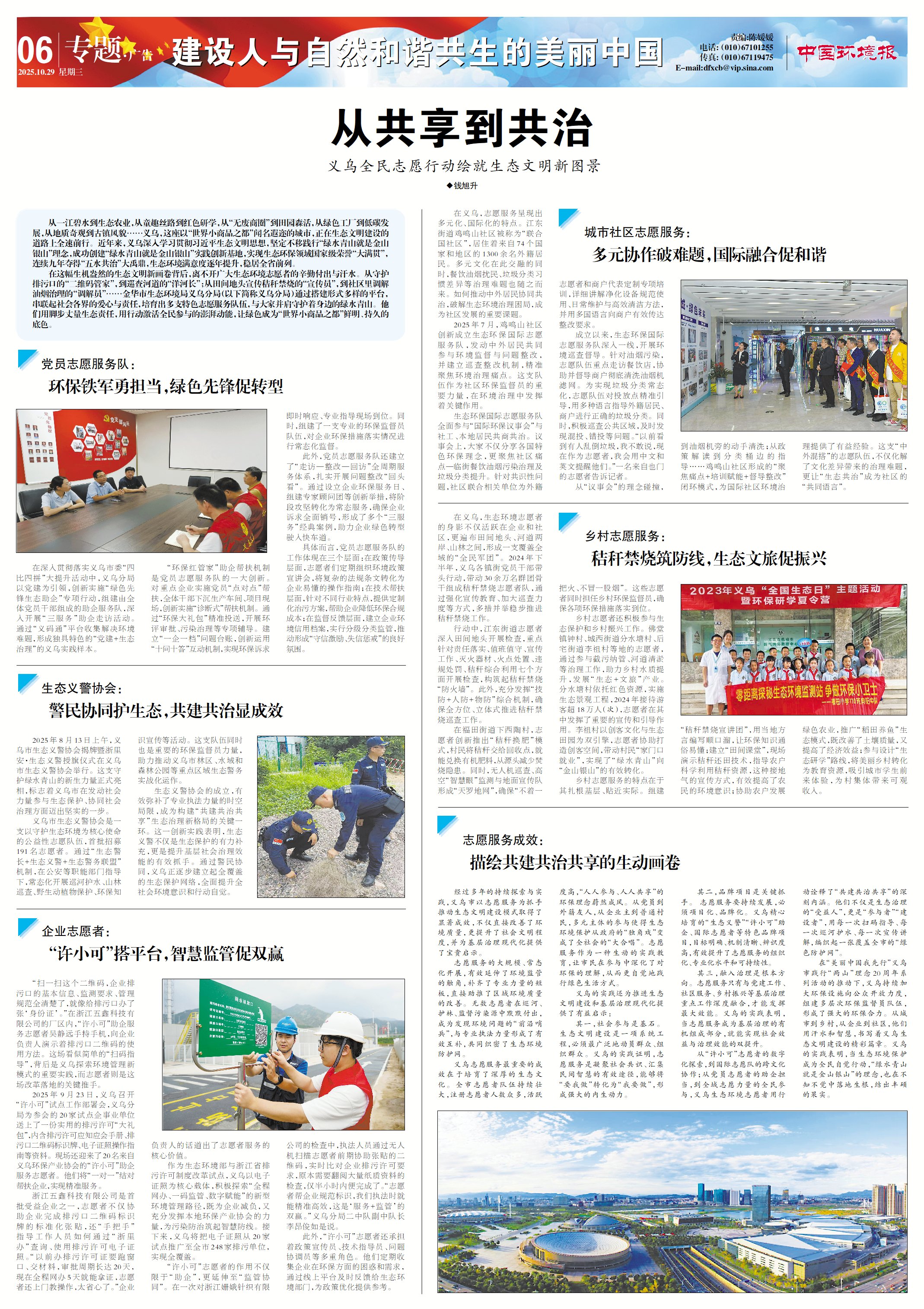
义乌从共享到共治
Zhong Guo Huan Jing Bao· 2025-10-29 01:01
Core Viewpoint - Yiwu, known as the "World Commodity City," is making significant strides in ecological civilization construction, implementing Xi Jinping's ecological civilization thoughts and achieving national-level honors in environmental protection [7][22]. Group 1: Ecological Initiatives - Yiwu has established a "Green Water and Green Mountain is Gold and Silver Mountain" practice innovation base, winning the "Five Water Governance" Da Yu Ding for nine consecutive years, with increasing ecological satisfaction ratings [7][22]. - The city has developed various volunteer teams, including "QR Code Managers" and "Yanghe Longs," to engage the community in environmental protection efforts [8][19]. Group 2: Volunteer Engagement - The Yiwu Ecological Environment Bureau has created diverse platforms to connect social responsibility with volunteerism, fostering a culture of environmental stewardship among citizens [8][22]. - The "Green Pioneer Ecological Assistance" initiative, led by party members, provides tailored support to enterprises, enhancing their compliance with environmental regulations [9][10]. Group 3: Community and International Collaboration - The establishment of the Yiwu Ecological Volunteer Association marks a significant step in mobilizing social forces for ecological protection, with 191 initial volunteers participating in various environmental activities [12][22]. - An international volunteer service team has been formed in the Ji Ming Mountain community, promoting cross-cultural collaboration in environmental governance [16][17]. Group 4: Agricultural and Rural Development - Volunteers are actively involved in agricultural practices, such as the "straw exchange for fertilizer" initiative, which reduces burning risks and promotes sustainable farming [19][20]. - The integration of ecological tourism with rural revitalization efforts has led to significant visitor numbers, showcasing the potential for economic benefits from environmental initiatives [20][22]. Group 5: Policy and Governance - Yiwu's volunteer services have effectively extended environmental oversight, complementing professional enforcement and improving regional environmental quality [22][23]. - The city's experience highlights the importance of social participation, brand projects, and integration with governance for successful ecological civilization initiatives [23][24].
向世界展现中国乡村发展的和美画卷
Ren Min Ri Bao· 2025-10-28 06:42
Group 1 - The core viewpoint of the articles highlights China's successful inclusion of 19 villages in the UN's "Best Tourism Villages" list, showcasing the country's commitment to ecological civilization and rural revitalization [1][2] - The villages selected demonstrate unique characteristics in natural landscapes, cultural forms, and development paths, reflecting a diverse development narrative [1] - The "Two Mountains" theory, which emphasizes ecological priority and sustainable development, is a guiding principle for these villages, leading to a harmonious coexistence between people and nature [1][3] Group 2 - The revitalization of rural areas in China is closely tied to industrial development, with a focus on tourism, ecological agriculture, and cultural creativity, resulting in a thriving rural economy [2] - The income from leisure agriculture in China is projected to reach nearly 900 billion yuan in 2024, indicating significant growth since 2020 [2] - The integration of traditional aesthetic wisdom into rural development enhances living conditions and public services, revitalizing ancient villages with modern and artistic elements [3] Group 3 - The cultural vitality of Chinese villages is showcased through local traditions and community activities, reflecting the spirit and cultural richness of the Chinese people [3] - The "14th Five-Year Plan" emphasizes prioritizing agricultural and rural development, aiming for historical achievements in rural revitalization [3] - China's commitment to agricultural modernization and rural revitalization is expected to contribute valuable insights for global sustainable rural development [3]
浙江“三效统一”为“两山”转化提供清晰路径
Zhong Guo Huan Jing Bao· 2025-10-27 23:24
Core Viewpoint - Zhejiang has developed a comprehensive action framework centered on the organic unity of ecological, economic, and social benefits, termed "Three Effects Unity," through 20 years of exploration in implementing the "Two Mountains" concept [1][9]. Group 1: Planning and Systematic Framework - The transformation of the "Two Mountains" concept relies on scientific top-level design and systematic institutional arrangements, with "Three Effects Unity" as the core value orientation in major strategic deployments [2]. - Strategic guidance and planning integration are emphasized, ensuring ecological protection, economic development, and improvement of people's livelihoods are interconnected from the outset [2]. - Rigorous constraints and goal orientation are reinforced in project approvals and policy-making, establishing a robust institutional framework to ensure the correct direction and sustained momentum for the transformation [3]. Group 2: Ecological Protection and Safety - The foundation of ecological safety is recognized as essential for the transformation, with a focus on strict environmental protection and resource conservation [4]. - Scientific greening efforts are undertaken to enhance ecological value, demonstrating that investment in ecosystems can yield significant ecological, economic, and social benefits [4]. - Smart management through digital means is implemented to improve ecological monitoring and protection efficiency, ensuring the sustainability of the transformation [5]. Group 3: Innovative Transformation Paths - Multiple parallel and mutually reinforcing pathways for transforming ecological advantages into developmental advantages are explored [6]. - The "Direct Value Addition" path promotes the industrialization of ecology through carbon economy and ecological branding [6]. - The "Mechanism Breaking" path focuses on institutional innovation to address bottlenecks in property rights, value assessment, and market transactions [7]. Group 4: Shared Development Goals - The ultimate goal of the transformation is to benefit the people, with a focus on improving environmental quality and enhancing public welfare [8]. - Efforts are made to reduce development disparities through collaborative economic models and revitalizing rural areas, ensuring that the benefits of green development reach broader communities [8]. - Social consensus is fostered through community engagement in ecological civilization construction, promoting a culture of environmental stewardship and shared outcomes [8].
理解“两山”理念的三个维度
中国能源报· 2025-10-27 02:17
Core Viewpoint - The "Two Mountains" concept, proposed 20 years ago, has significantly influenced China's path towards high-level ecological protection and high-quality development, reshaping the country's development trajectory and ecological landscape while providing a global framework for harmonious coexistence between humans and nature [1][11]. Group 1: Historical Context and Development - The "Two Mountains" concept has evolved from local practices in Yucun, Zhejiang, to a national and global model, emphasizing ecological protection as a foundation for sustainable development [3][11]. - The concept has led to a fundamental shift in energy development from reliance on fossil fuels to a focus on clean energy, with the share of clean energy installations in China rising from 23% in 2005 to over 60% by 2025 [6][11]. Group 2: Practical Applications and Innovations - The implementation of the "Two Mountains" concept has resulted in various successful local initiatives, such as transforming Yucun from a "stone economy" to a tourism-based economy reliant on clean energy [3][4]. - Technological advancements in renewable energy have been significant, with solar cell efficiency reaching 34.8% and offshore wind turbine capacity reaching 26 megawatts, showcasing China's leadership in the global renewable energy market [7][11]. Group 3: Economic and Environmental Synergy - The "Two Mountains" concept illustrates that high-level ecological protection is not a constraint on economic development but rather a crucial support for high-quality growth, as evidenced by Zhejiang's economic performance with only 1.1% of the country's land and 3.4% of its energy consumption while generating 6.7% of the national GDP [6][10]. - The concept promotes a virtuous cycle where ecological protection enhances economic value, leading to improved livelihoods and contributing to common prosperity [10][11]. Group 4: Global Impact and Future Outlook - China's commitment to the "Two Mountains" concept has positioned it as a key player in global green development, contributing to one-fourth of the world's new green areas and actively participating in international renewable energy projects [11][12]. - Looking ahead, the "Two Mountains" concept is expected to drive global energy transformation, facilitating a shift from industrial civilization to ecological civilization, benefiting people worldwide [12].

浙江金华 天蓝水碧气象新
Jing Ji Ri Bao· 2025-10-26 21:55
Group 1 - The article highlights the transformation of the ecological environment and economic development in Jinhua, Zhejiang, emphasizing the balance between industrial growth and environmental protection [1][2] - The local government initiated a comprehensive water treatment campaign, resulting in the closure of over 20,000 crystal processing workshops and the relocation of the industry to designated parks, promoting a shift from low-end to high-end production [1] - Jinhua's efforts in water quality improvement have led to a 100% increase in surface water quality above Class III standards, earning the highest award in the "Five Water Co-Governance" initiative for 11 consecutive years [1] Group 2 - The modern hardware industry in Yongkang, a representative of Jinhua's traditional industries, is facing challenges due to pollution from high-temperature emissions from furnaces [2] - A pilot project for waste heat recovery has been initiated, with five companies participating, including Shunhu Aluminum and Feijian Industry, which have implemented technologies to reduce natural gas consumption and carbon emissions [2] - The project is expected to reduce approximately 40,000 tons of carbon dioxide emissions annually once fully implemented [2] Group 3 - Innovative projects in Jinhua include the establishment of the "Panda Pig Paradise" to promote the "Jinhua Two-Headed Black Pig" and the development of smart bird-watching technology by Unijia Intelligent Technology [3] - Green finance initiatives, such as the "Flower Wood Loan" product from Jinhua Chengtai Rural Commercial Bank, have provided 3.083 billion yuan in loans to support the flower and tree industry and other green projects [3] - The ecological resources in Jinhua are being effectively converted into economic benefits, enhancing the livelihoods of local residents and expanding the pathways for the "Two Mountains" concept [3]
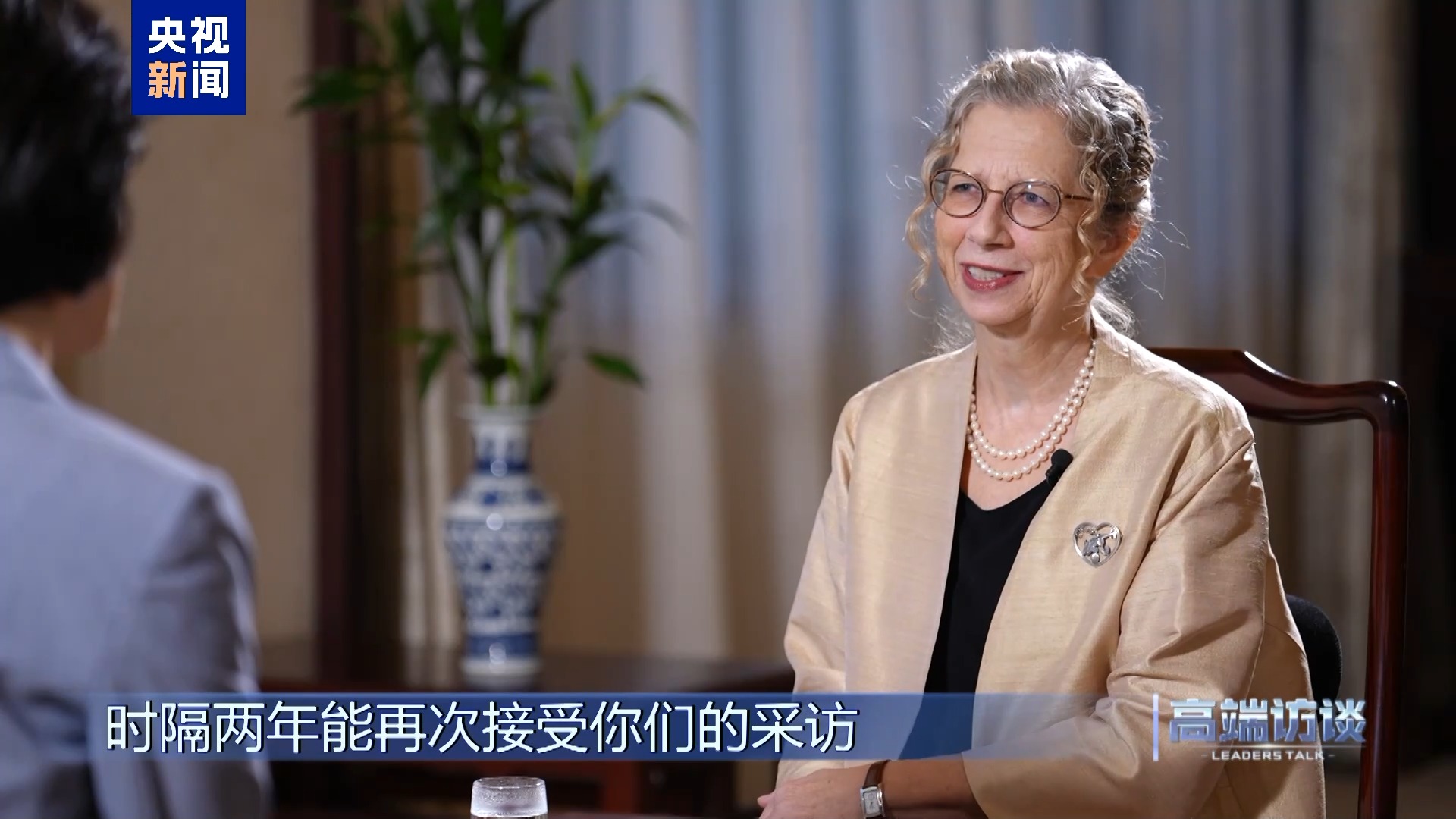
高端访谈丨专访联合国环境规划署执行主任英格·安德森
Yang Shi Xin Wen· 2025-10-24 22:26
Core Viewpoint - The achievements of China's ecological civilization construction have exceeded expectations, particularly highlighted by the "14th Five-Year Plan" and the upcoming "15th Five-Year Plan" focusing on green transformation [1][29]. Group 1: China's Environmental Goals - China aims to reduce its total greenhouse gas emissions by 7% to 10% from peak levels by 2035, with a strong emphasis on renewable energy development [5][19]. - The country has made significant progress in renewable energy, adding 200 to 300 billion watts of new wind and solar capacity annually [5][19]. Group 2: Global Climate Agenda - The year 2025 is identified as a critical year for environmental issues, coinciding with the 30th UN Climate Change Conference where new national contributions will be submitted [3][5]. - The global emissions growth rate has slowed from 1.7% to 0.3%, but total emissions continue to rise, necessitating a 47% reduction by 2030 to limit global temperature rise to 1.5 degrees Celsius [7][9]. Group 3: International Cooperation - Despite some countries retracting previous commitments, 192 UN member states remain committed to advancing climate goals under the UN Framework Convention on Climate Change [9][19]. - The importance of multilateralism in addressing global climate issues is emphasized, with a call for collective action and shared responsibility among nations [26][29]. Group 4: Biodiversity and Conservation Efforts - The "Kunming-Montreal Global Biodiversity Framework" was established to guide global biodiversity governance, with China playing a leading role [17][19]. - A biodiversity fund has been set up to support "Global South" countries in biodiversity protection, showcasing China's commitment to international cooperation [20][22]. Group 5: China's Ecological Philosophy - The "Two Mountains" theory, which emphasizes the balance between ecological protection and economic development, is recognized as a guiding principle for China's ecological civilization [10][13]. - This philosophy has resonated globally, with other countries exploring similar sustainable development goals [13][19].
年发电量突破10万亿千瓦时 落基山研究所李婷:中国已构建起全球最大可再生能源系统
Feng Huang Wang Cai Jing· 2025-10-24 03:40
Core Viewpoint - The "Zero Carbon Mission International Climate Summit 2025" aims to gather insights and strategies to address climate change, supporting China's carbon neutrality vision and global emission reduction goals [1]. Group 1: Current Climate Situation - The global atmospheric CO2 concentration is projected to reach its highest level in history by 2024, a level not seen for 3 to 5 million years [5]. - A report from over 230 countries and 160 scientists indicates that mass coral reef die-off has become the first breached climate tipping point, marking a new phase in the climate crisis [5]. Group 2: China's Green Transition Achievements - China has made significant progress in low-carbon transition, with solar power generation increasing 35 times and wind power generation increasing 9 times over the past decade [6]. - China has established the world's largest and fastest-growing renewable energy system, achieving an annual power generation exceeding 10 trillion kilowatt-hours [6]. - The success of China's green transition is attributed to the synergy of goals, policies, and market mechanisms, serving as a model for developing countries [6]. Group 3: Significance of 2025 - The year 2025 is highlighted as a pivotal year, marking the 10th anniversary of the Paris Agreement and the 5th anniversary of China's carbon peak and neutrality goals [7]. - New self-contribution targets from China indicate a comprehensive shift towards a cleaner, safer, and more efficient low-carbon energy system [7]. - The summit also reflects on the achievements in clean energy development and the collaborative efforts over the past five years, setting the stage for future cooperation [7].
