
产业转型

Search documents
国泰海通证券:下一阶段政策重心将聚焦扩大内需
Ge Long Hui· 2026-01-19 23:30
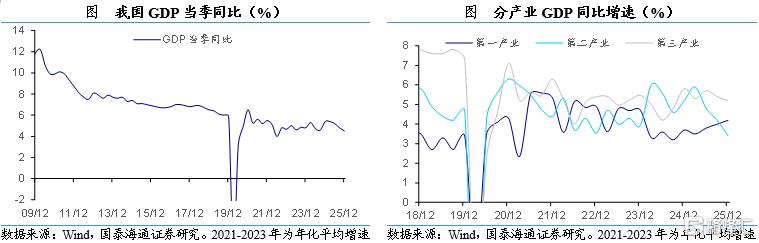
Economic Overview - In 2025, China's GDP reached 1401879 billion yuan, achieving a year-on-year growth of 5.0%, with a quarterly slowdown primarily due to base effects [3][2] - The quarterly growth rates were 5.4% in Q1, 5.2% in Q2, 4.8% in Q3, and 4.5% in Q4, with Q4 being the lowest due to the impact of previous growth policies [3][2] - The economic structure continues to show signs of differentiation, with strong industrial production but persistent mismatches between capacity and demand [2][5] Production Insights - Industrial production showed a recovery in December 2025, with a year-on-year growth of 5.2%, reversing previous months' slowdown [9] - The annual growth of industrial value added was 5.9%, significantly higher than the overall GDP growth, indicating its role as a core driver for economic targets [9] - High-tech manufacturing and green transformation are driving forces, with high-tech industries growing by 11.0% in December [12] Consumption Trends - Retail sales of consumer goods grew by 3.7% in 2025, but Q4 saw a decline in growth momentum, with December's retail sales increasing by only 0.9% [16][20] - Rural consumption outperformed urban areas, with rural retail sales growing by 4.1% compared to 3.6% in urban areas [16][20] - Online retail sales increased by 8.6%, with food-related online sales growing by 14.5%, reflecting a shift towards convenience and immediate consumption [17] Investment Dynamics - Fixed asset investment decreased by 3.8% in 2025, with December showing a significant decline of 15.1% year-on-year [27] - Manufacturing investment is constrained by weak demand and profitability pressures, while infrastructure investment faces funding constraints and project shortages [28] - The real estate sector showed marginal recovery, with a narrowing of declines in sales area and sales value, but overall conditions remain weak [29]


股债期市场协同改革提升服务高质量发展质效
Zhong Guo Zheng Quan Bao· 2026-01-19 21:11
Core Viewpoint - The China Securities Regulatory Commission (CSRC) 2026 work meeting outlines a clear roadmap for deepening capital market reforms, focusing on enhancing the service quality of the stock, bond, and futures markets to support high-quality economic development [1][2]. Equity Market: Enhancing Inclusiveness and Adaptability - The primary focus is on improving the inclusiveness and adaptability of the multi-tiered equity market, which is crucial for linking technological innovation with industrial transformation [1][2]. - The meeting emphasizes the need to deepen reforms in the ChiNext and STAR Market, aligning financing reforms with the demands of industrial transformation and technological innovation [2]. - The reform approach is characterized by differentiated progress and collaborative efforts, shifting from "institutional construction" to "deepening execution" and "releasing effectiveness" [2]. Bond Market: Improving Quality, Adjusting Structure, and Expanding Scale - The bond market is tasked with the mission of improving quality, adjusting structure, and expanding total volume, highlighting its role in optimizing structure and enhancing service precision for national strategies [3]. - Innovative bond types such as sci-tech bonds and green bonds are expected to continue expanding, with supportive measures likely to increase [3]. - The public REITs market is set to expand into the commercial real estate sector, which is anticipated to provide strong support for revitalizing existing assets and exploring new development models [3][4]. Futures Market: Strengthening Regulation and Quality Development - The futures market reform is aimed at steady progress and quality development, with a particular emphasis on strengthening the regulation of the linkage between futures and spot markets [5][6]. - The meeting highlights the need to enhance the pricing mechanism and risk management functions of the futures market to better serve the spot industry and national strategies [5]. - There is a focus on expanding the range of specific futures products and increasing internationalization while ensuring risk control [5][6].
国泰海通|宏观:总量稳健,结构优化——2025年四季度经济数据点评
国泰海通证券研究· 2026-01-19 15:02
Core Viewpoint - In 2025, China's economy is expected to achieve its annual GDP growth target of 5.0%, with a quarterly growth rate of 4.5% in Q4, reflecting a slight decline due to base effects. The economy exhibits dual differentiation, characterized by a strong industrial production but structural mismatches in capacity and demand, as well as a resilient external demand contrasted with sluggish internal demand [2][4][5]. Economic Structure and Performance - The economic structure continues to show differentiation, with emerging forces performing well during the transition period. Industrial production in December reversed previous slowdowns, driven by high-end manufacturing and green transformation, while the service sector's production index grew by 5.0% year-on-year [2][7][9]. - The investment sector remains under pressure due to funding constraints, insufficient project reserves, and weak demand, with fixed asset investment declining by 3.8% year-on-year [6][23][25]. Supply and Demand Dynamics - There is a persistent contradiction between supply and demand, with industrial production showing strong supply but weak demand. The sales rate of industrial products in December was 98.2%, down 0.7 percentage points year-on-year, indicating that production expansion is outpacing demand recovery [5][8]. - External demand remains robust due to optimized export structures, while internal demand is constrained by slow recovery in consumption and investment. In 2025, cumulative year-on-year growth rates for investment, consumption, and exports were -3.8%, 3.7%, and 5.5%, respectively [6][12]. Policy Focus - The next phase of policy will focus on expanding domestic demand, enhancing consumption quality, and effective investment. This includes promoting the replacement of old consumer goods, supporting new growth points in service consumption, and increasing investment in new infrastructure and equipment updates [7][22]. Consumer Behavior and Trends - In Q4, retail sales of consumer goods showed steady growth for the year but faced year-end pressure, with a 0.9% year-on-year increase in December. Rural consumption outperformed urban consumption, with rural retail sales growing by 4.1% for the year [13][14][18]. - Online consumption remains a stable growth driver, with a year-on-year increase of 8.6% in 2025, significantly higher than the overall retail growth [14][19]. Investment Landscape - Investment continues to face challenges, with fixed asset investment in December showing a year-on-year decline of 15.1%. The real estate sector remains sluggish, with new construction and completion areas decreasing significantly [23][26]. - Manufacturing investment is hindered by weak demand and profit pressures, while infrastructure investment is constrained by funding shortages and insufficient project availability [25][27].

【好评中国】数读“新纪录”,中国经济向“新”而行底气足
Xin Lang Cai Jing· 2026-01-19 14:04
以结构转型培育经济增长"新支柱",是实现经济行稳致远的关键抓手。从外贸领域"新三样"占比提升, 到新能源汽车占新车销量近五成,中国经济正从规模扩张转向质量效益提升。要进一步优化产业结构, 在制造业领域,推动传统产业与新能源、人工智能深度融合,发展"超级电混技术"等特色技术路线,培 育更多像问界、极氪这样的高端品牌;在服务业领域,以跨境电商为突破口,依托港珠澳大桥等枢纽节 点,完善"简化申报""跨境一锁"等便利化措施,让新业态成为外贸增长的"加速器"。同时,通过规范市 场竞争秩序,如杜绝无序价格战、缩短企业账期,为产业转型营造健康环境,让经济增长更具可持续 性。 以开放合作拓展发展空间"新维度",是中国经济融入全球、贡献世界的必然选择。2025年,我国与190 多个国家和地区实现进出口增长,外汇市场交易量达42.6万亿美元,这些数据彰显了开放带来的活力。 要持续扩大高水平对外开放,一方面深化外贸市场多元化布局,巩固与欧美传统市场合作,拓展"一带 一路"沿线国家新兴市场,降低单一市场波动风险;另一方面,推进跨境投融资便利化改革,提升企业 外汇套期保值能力,让更多市场主体在开放中共享机遇。同时,依托港珠澳大桥等跨境 ...
打造机器人产业高地,沈阳在突围
3 6 Ke· 2026-01-19 08:22
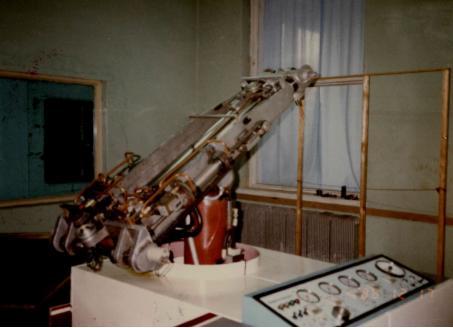
Core Viewpoint - The article discusses the historical significance and current challenges of Shenyang as the "cradle of China's robotics industry," highlighting its early advancements in robotics technology but contrasting it with the current competitive landscape where other cities have surpassed it in industry prominence and growth [1][6][25]. Group 1: Historical Significance - Shenyang is recognized as the birthplace of robotics in China, having developed the first industrial robot prototype in 1982 and the first automatic guided vehicle (AGV) in 1987 [1][3][5]. - The Shenyang Automation Research Institute has led significant advancements in robotics technology for nearly 50 years, creating over 20 firsts in the field and establishing itself as a key player in China's robotics development [5][6][19]. Group 2: Current Industry Landscape - Despite its historical contributions, Shenyang's robotics industry lacks visibility and competitiveness compared to cities like Shenzhen and Shanghai, which have a much larger number of robotics-related enterprises [7][19][25]. - In 2024, Shenyang's leading robotics company, Siasun Robot & Automation Co., did not rank among the top ten brands in industrial robot shipments, indicating a decline in its market position [13][15]. Group 3: Challenges and Opportunities - The article identifies a dual relationship between the robotics industry and traditional manufacturing, suggesting that both sectors can mutually benefit from each other [22][23]. - Shenyang aims to evolve from being a "cradle" of robotics to a "rainforest" of innovation, focusing on scaling production and creating a robust ecosystem for robotics development [26][28]. - The city is implementing initiatives to enhance its robotics applications and support local enterprises through collaborations with research institutions and capital investments [28][30].

世界经济论坛执行董事梁锦慧:中国是推动全球增长的关键力量
Zhong Guo Xin Wen Wang· 2026-01-19 06:24
世界经济论坛执行董事梁锦慧:中国是推动全球增长的关键力量 中新社瑞士达沃斯1月19日电 题:世界经济论坛执行董事梁锦慧:中国是推动全球增长的关键力量 中新社记者 马秀秀 世界经济论坛2026年年会即将在瑞士达沃斯启幕,世界经济论坛执行董事、管理委员会成员兼大中华区 主席梁锦慧(Gim Huay Neo)近日接受中新社记者专访时表示,中国在全球经济中发挥着重要作用,近年 来对全球经济增长的贡献率约占三分之一。依托其经济规模、在贸易和供应链中的关键作用,以及在实 体经济中推动技术创新与应用的能力,中国是推动全球增长与提升经济韧性的主导性、关键力量。 今年论坛聚焦"对话的精神"。梁锦慧表示,在当今地缘政治格局持续演变、技术变革不断加速、极端天 气事件等全球性风险频发背景下,对话、协调与合作对于实现持续的和平与繁荣至关重要。今年,来自 中国的参会代表涵盖政府、企业、创新领域和学术界,充分反映了中国经济与全球价值链、技术发展以 及绿色转型之间的深度联结。 她表示,当前国际社会对中国创新生态系统的关注日益增强,包括技术如何融入产业转型进程,以及如 何通过加大对人力、技能和就业的投入,加快绿色转型、实现更具韧性的增长。20 ...
美国最铁盟友,倒戈中国汽车
汽车商业评论· 2026-01-18 23:07
Core Viewpoint - The article discusses the significant shift in trade relations between Canada and China regarding electric vehicles (EVs), highlighting the implications for the North American automotive industry as Canada reduces tariffs on Chinese EV imports, which could reshape market dynamics and competition [3][8]. Group 1: Canada-China Trade Agreement - Canada has reached a new agreement with China to lower tariffs on imported electric vehicles from 100% to 6.1% for an annual quota of 49,000 vehicles, with plans for gradual increases in the quota over the years [6][8]. - This agreement is seen as a response to previous trade tensions and aims to provide Canadian consumers with more affordable EV options, addressing the current shortage of budget-friendly electric vehicles in Canada [8][13]. Group 2: Impact on the Automotive Industry - The introduction of Chinese EVs into the Canadian market is expected to create significant competition for local manufacturers, particularly in Ontario, which is a major automotive production hub [10][15]. - Concerns have been raised by local officials and unions about the potential negative impact on jobs and production capacity in the Canadian automotive sector due to increased competition from Chinese imports [10][15]. Group 3: Broader Implications for North America - The shift in Canadian policy may complicate relations with the United States, as it could undermine efforts to resolve existing trade disputes and affect the overall stability of the North American automotive market [12][15]. - The article notes that the U.S. automotive industry is currently undergoing a costly transition to electric vehicles, and the new Canadian policy could exacerbate challenges faced by American manufacturers [12].

汶川大地震18年后,这个极重灾区要全力冲刺全国“百强县”
第一财经· 2026-01-18 13:07
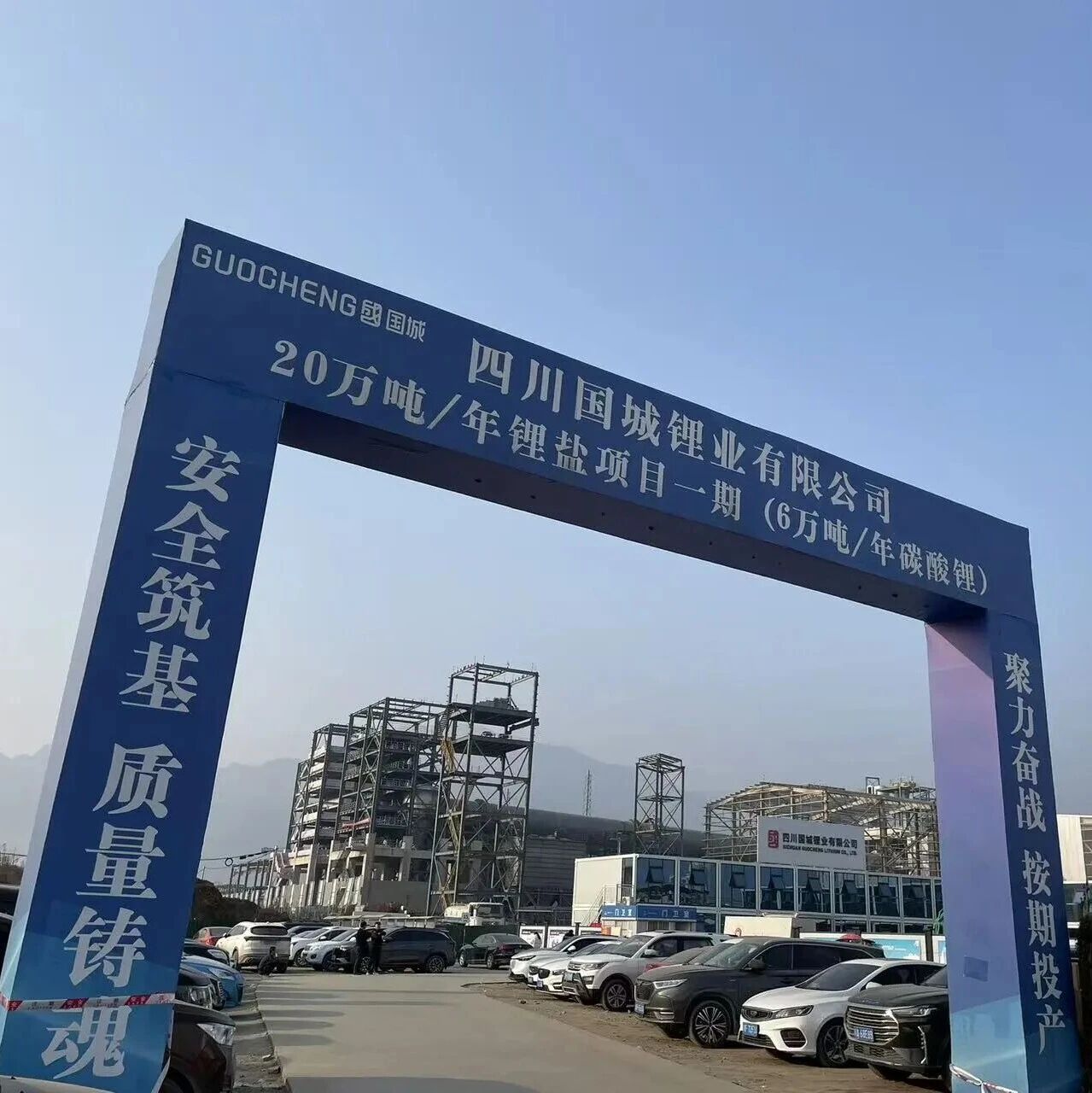
Core Viewpoint - The article discusses the industrial transformation and economic recovery of Mianzhu City, Sichuan Province, focusing on the development of the lithium battery materials industry and the establishment of a strategic base for new energy battery materials in China [3][11]. Group 1: Industrial Development - Sichuan Guocheng Lithium Industry Co., Ltd. plans to produce 200,000 tons of basic lithium salts annually, with the first phase targeting 60,000 tons of lithium carbonate capacity, aiming to become the largest lithium salt production base in China [3][6]. - Mianzhu is transitioning from traditional industries to high-value sectors, leveraging its phosphate resources to develop lithium battery materials, thus reshaping its industrial structure [6][10]. - The local government aims to establish a lithium battery materials industry cluster, with several projects underway, including Guocheng Lithium's 20,000 tons of basic lithium salts and other significant lithium salt projects [7][8]. Group 2: Economic Recovery - Mianzhu's GDP is projected to exceed 50 billion yuan by 2025, with an average annual growth rate of 7.5% during the 14th Five-Year Plan period [11][12]. - The city has experienced a robust recovery post-earthquake, with industrial value-added growth averaging 13.3% annually, and manufacturing value-added accounting for over 50% of GDP [10][11]. - The transformation from relying on external support to fostering internal growth and industrial upgrading is evident, with a focus on converting resource advantages into industrial chain advantages [10][12]. Group 3: Challenges and Future Outlook - Mianzhu faces structural challenges, including the risk of talent and consumer drain to nearby urban centers, as well as the cyclical nature of the lithium and chemical materials industries [13]. - The city aims to regain its status among the top counties in Sichuan, with a strategic focus on becoming a strong industrial city and a renowned cultural tourism destination [11][12].
绍兴市委书记施惠芳:持续打造服务最优、成本最低、效率最高的开放环境
Xin Lang Cai Jing· 2026-01-18 09:14
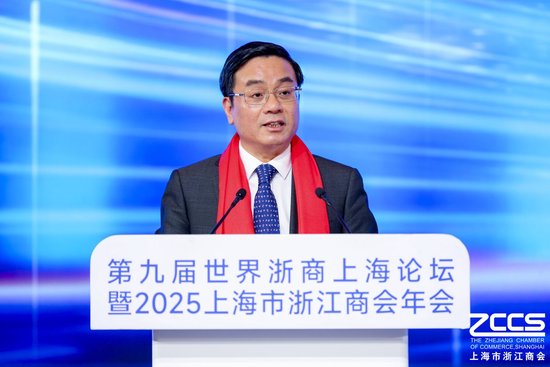
Core Viewpoint - The 9th World Zhejiang Business Forum and the 2025 Shanghai Zhejiang Chamber of Commerce Annual Meeting highlighted the positive development trajectory of Shaoxing, emphasizing high-quality growth and strategic initiatives to enhance regional advantages and innovation capabilities [3][8]. Economic Growth - Since the 14th Five-Year Plan, Shaoxing's economic growth has consistently ranked among the top three in Zhejiang Province and the Yangtze River Delta, with the GDP expected to reach approximately 900 billion yuan last year [3][8]. Regional Advantages - Shaoxing is enhancing its geographical advantages by planning the Hu-Hang-Shao Jin Railway, aiming to create a transportation network that allows for 30-minute access within the city, 30 minutes to Hangzhou, and 60 minutes to Shanghai [3][8]. Technological Innovation - The city has established itself as a national innovation hub and the first "three-in-one" high-quality development pilot zone for education and technology talent in Zhejiang, with 13 universities and a significant increase in R&D investment among industrial enterprises [3][4][8]. Industrial Transformation - Shaoxing's industrial transformation includes the recognition of the Hangzhou Bay modern textile and apparel cluster as a national advanced manufacturing cluster, with the integrated circuit industry generating around 90 billion yuan [4][9]. Business Environment - The implementation of the 5.27 "Love Enterprise Action" has led to over 820,000 market entities and 260,000 businesses, with 80 companies listed on the A-share market, ranking third among similar cities in China [4][9]. Future Directions - Looking ahead to the 15th Five-Year Plan, Shaoxing aims to cultivate new industrial formats, shape new urban forms, activate new population dynamics, and empower cultural vitality through eight major actions, striving to become a model city for integrated development [4][9].
山西祁县:以转型之力擦亮“中国玻璃器皿之都”金字招牌
Zhong Guo Xin Wen Wang· 2026-01-18 05:51
Core Viewpoint - Shanxi Qixian is transforming its traditional glassware industry from manual production to intelligent manufacturing, focusing on quality upgrades and innovation to achieve high-quality industrial development [1][2]. Group 1: Industry Transformation - Qixian is addressing the pain points of low efficiency, high energy consumption, and insufficient product value in traditional glass production by encouraging technological innovation and the formation of specialized R&D teams [1]. - The local company, Xifulai Glass, has successfully established Shanxi's first high borosilicate glass production line, filling a technological gap in the province [1]. - Qixian has cultivated several innovative enterprises like Xifulai, promoting the transition to intelligent and green production through the introduction of advanced equipment such as all-electric melting furnaces and intelligent forming devices [1]. Group 2: Market Positioning and Product Development - Xifulai Glass has been recognized as a "Specialized, Refined, Characteristic, and Innovative Small and Medium-sized Enterprise" and a "High-tech Enterprise," with its high borosilicate products gaining popularity in high-end markets and exported to over 20 countries and regions [2]. - The county's glass enterprises are diversifying their product offerings, moving into smart home glass accessories and eco-friendly glass packaging, enhancing product value with features like high hardness and scratch resistance [2]. Group 3: Economic Impact and Employment - The transformation of the glass industry in Qixian has not only strengthened individual enterprises but also created an industrial ecosystem characterized by leading enterprises, upstream and downstream linkages, and cluster development [2]. - Xifulai Glass has contributed to an increase of 20 million yuan in the surrounding packaging industry over the past three years, facilitated over 30,000 logistics deliveries annually, and directly created jobs for over 260 local residents, generating an additional income of 12 million yuan [2]. Group 4: Future Development Initiatives - Qixian is leveraging the construction of a specialized town for glassware to encourage more enterprises to adopt intelligent and green production practices, aiming to enhance the industrial chain, build innovation platforms, and strengthen policy support [2].