北斗芯片

Search documents
人民财讯·大观丨刘经南:让北斗星光照亮中国经济高质量发展每一条道路
证券时报· 2026-04-01 00:17
Core Viewpoint - The article emphasizes the strategic importance of the BeiDou satellite navigation system and its role in driving high-quality economic development in China, highlighting its unique capabilities compared to GPS and the need for a robust space-time information industry [5][7][22]. Group 1: Importance of BeiDou System - The BeiDou system is not merely a copy of GPS but a strategic cornerstone for China, showcasing a unique technological path and capabilities [5][7]. - The development of the BeiDou system over 32 years reflects China's pursuit of sovereignty in space-time information, with its global coverage and service performance surpassing that of GPS [7][9]. Group 2: Economic Impact and Industry Growth - The BeiDou industry has grown significantly, with its overall output value reaching 575.8 billion yuan in 2024, marking a 7.39% year-on-year increase and nearly fivefold growth over 12 years [9][10]. - The industry has enhanced its self-sufficiency, with domestic BeiDou chip manufacturers gaining competitiveness in the global market, and over 99% of smartphones in China supporting BeiDou [10][11]. Group 3: Applications and Innovations - BeiDou's applications span various sectors, including low-altitude economy, autonomous driving, and artificial intelligence, providing essential high-precision location services [10][11]. - The system has enabled innovative applications such as "BeiDou + low-altitude economy" and "BeiDou + smart connected vehicles," demonstrating its versatility and integration into everyday life [10][11]. Group 4: Challenges and Bottlenecks - Despite the growth, the BeiDou industry faces challenges such as small enterprise scale, market competition, and a lack of core competitive companies, with many firms remaining in a "small, scattered, weak" state [14][15]. - There is a need for improved standards, innovation, and talent development to address the gaps in high-end applications and ensure sustainable industry growth [14][15]. Group 5: Future Directions and Collaboration - The future of BeiDou lies in integrating its capabilities with 5G and AI, moving beyond direct competition with GPS to explore new pathways for development [16][19]. - Regional and industry collaboration is essential for maximizing the potential of the space-time information industry, promoting differentiated development and data sharing across various sectors [19][20].


海格通信余青松:瞄准战略性新兴产业 向通导信息融合创新提供商转型
Shang Hai Zheng Quan Bao· 2026-02-01 18:15
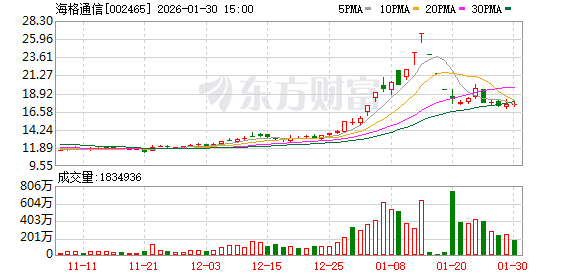
Core Viewpoint - The company is accelerating the cultivation of strategic emerging industries, particularly in commercial aerospace and low-altitude economy, which are seen as significant growth opportunities. The chairman emphasizes the goal of becoming a leading enterprise in the integration of communication and navigation information innovation [2][6]. Group 1: Business Strategy and Focus - The company aims to focus on high-tech manufacturing and high-end information services during the 14th Five-Year Plan, striving for continuous innovation and sustainable operation [2]. - The company has established a business structure covering four major sectors: wireless communication, Beidou navigation, aerospace, and digital ecology [2]. - The chairman highlights the importance of maintaining a balanced perspective during both peak and trough periods, emphasizing the company's commitment to long-term sustainability [2]. Group 2: Chip Development and Innovation - The company has developed a comprehensive chip product line suitable for various industries, achieving a leading market share in domestic Beidou chips [3]. - The company is advancing chip industrialization and cluster development, focusing on emerging industries such as satellite internet and 6G [4]. - The company has established a complete internal control capability from chip design to application verification, enhancing its competitive edge in the integrated circuit field [3]. Group 3: Low-altitude Economy and Commercial Aerospace - The company has been investing in low-orbit satellite technology since 2018 and has developed a comprehensive service guarantee system for low-altitude flight [6]. - The company is actively involved in the low-altitude economy, providing solutions for urban logistics and intercity transportation, and is developing a product matrix for various flying vehicles [7]. - The company aims to enhance its core technology products and develop integrated solutions for low-altitude communication, navigation, and monitoring [7]. Group 4: Market Position and Competitive Advantage - The company believes that the satellite internet sector will not have a single dominant player, similar to the navigation field with multiple systems coexisting [9]. - The company is leveraging its latecomer advantage in the satellite internet market, aiming to replicate the success seen in mobile communications [9]. - The company is committed to long-term strategies, focusing on core technologies and building differentiated competitive advantages through collaboration with leading enterprises [9][10]. Group 5: Collaborations and Partnerships - The company has established strong partnerships with China Satellite Network Group and China Mobile, collaborating on high-precision Beidou services, chips, terminals, and satellite IoT applications [10]. - The company is also working with top universities and academic teams to advance research in flexible electronics and expedite the commercialization of technological achievements [10]. Group 6: Future Outlook - The company is positioned to play a significant role in the development of China's strategic emerging industries, with a focus on high-quality growth and innovation in the new era [10].

振芯科技子公司遭禁采三年,公司治理矛盾持续升级
Jing Ji Guan Cha Wang· 2026-01-08 10:33
Company Dynamics - Chengdu Zhenxin Technology Co., Ltd. announced that its subsidiary Chengdu Guoxing Communication Co., Ltd. has been banned from participating in procurement activities for three years starting January 6, 2026, due to collusion in bidding for a project in 2020 [2] - The violation was identified in the procurement process of project number 2020-ZCWDDK-W1002, with the last cooperation occurring in 2020, involving a contract amount of 989,500 yuan, which accounted for only 0.17% of the company's revenue that year [2] - The company emphasized that this penalty is not expected to have a significant impact on its actual operations, as there has been no business interaction with the Western Theater Command in the past five years [2] Governance Issues - The company is facing a serious internal governance crisis, highlighted by a public letter to shareholders revealing increasing conflicts between actual controller He Yan and senior management, including Chairman Xie Jun [3] - Concerns have arisen regarding He Yan's intention to reorganize the board and dismiss current directors, leading to market and employee worries about the company's future [3] - He Yan has a history of legal issues, including a five-year prison sentence for embezzlement and invoice fraud, which has negatively impacted the company's reputation and stock price volatility [3] Financial Performance - Despite ongoing governance issues, the company has maintained profitability, with reported revenues of 852 million yuan and 797 million yuan for 2023 and 2024, respectively, and net profits of 72.6 million yuan and 40 million yuan [4] - In the first three quarters of 2025, the company achieved revenues of 736 million yuan, representing a year-on-year growth of 30.56%, and net profits of 92.78 million yuan, with a growth of 30.79% [4] Shareholder Actions - Ongoing disputes over control of the company continue, with announcements from directors Yang Zhang, Yang Guoyong, and Mo Ran planning to increase their holdings in the company within the next six months, with a total investment of no less than 5.1 million yuan and no more than 10.2 million yuan [5]


今日十大热股:岩山科技、海格通信领衔连板,创投概念持续爆炒,鲁信创投8天6板
Jin Rong Jie· 2026-01-07 02:01
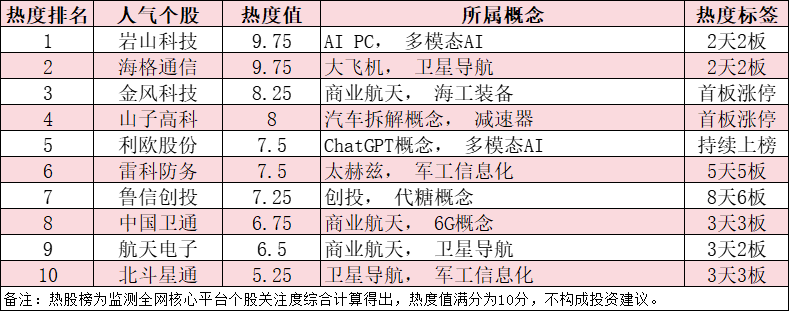
Market Overview - A-shares experienced a collective rise on January 6, with the Shanghai Composite Index increasing by 1.5% to 4083.67 points, the Shenzhen Component rising by 1.4% to 14022.55 points, and the Sci-Tech Innovation 50 Index leading with a gain of 1.84% [1] - The total trading volume in the Shanghai and Shenzhen markets reached 2.81 trillion yuan, an increase of approximately 260.2 billion yuan compared to the previous trading day [1] - A total of 3844 stocks rose, while only 1201 stocks fell, indicating a significant profit-making effect in the market [1] Popular Stocks - The top ten popular stocks included: Ruoshans Technology, Haige Communication, Goldwind Technology, Shanzi High-Tech, Liou Co., Ltd., Leike Defense, Luxin Venture Capital, China Satellite Communications, Aerospace Electronics, and Beidou Star [1][2] Company Highlights - **Ruoshans Technology**: Stock price driven by innovations in AI PC, multi-modal AI, brain-computer interfaces, and intelligent driving. The company reported a 331% increase in net profit for the first three quarters and has partnerships with BYD and Huawei [3] - **Haige Communication**: Stock fluctuations attributed to advancements in multiple hot sectors, including BeiDou navigation and low-altitude economy. The company has launched a comprehensive management service platform for low-altitude flights [3] - **Goldwind Technology**: Stock price influenced by its involvement in commercial aerospace and marine engineering sectors, which are currently attracting significant market attention [3] - **Shanzi High-Tech**: Stock price increase driven by debt restructuring and new energy vehicle industry layout, becoming the only qualified investor for the restructuring of Nezha Automobile [4] - **Liou Co., Ltd.**: Stock performance supported by strategic investments in AI technologies and partnerships with major platforms like Huawei and Douyin, showing significant revenue growth [4] - **Leike Defense**: Stock price rise linked to the active commercial aerospace sector, with the company’s main business aligning with industry trends [4] - **Luxin Venture Capital**: Stock performance boosted by favorable policies and strategic investments in hard technology sectors, including the establishment of an AI venture capital fund [5] - **China Satellite Communications**: Stock influenced by the overall rise in the commercial aerospace sector, holding unique satellite resources [6] - **Aerospace Electronics**: Stock benefits from its technological advantages in telemetry and satellite navigation as part of the China Aerospace Science and Technology Corporation [6] - **Beidou Star**: Stock performance positively impacted by policies supporting low-altitude economy and satellite internet, as well as the demand for automotive-grade BeiDou chips [6]

1月6日沪深两市涨停分析
Xin Lang Cai Jing· 2026-01-06 07:27
Group 1: Market Overview - The Shanghai Composite Index rose by 1.50%, marking a 13-day consecutive increase and reaching a 10-year high, with over 4,100 stocks rising and a trading volume exceeding 2.8 trillion yuan [1] - The brain-computer interface (BCI) concept continues to gain momentum in the market, with several companies experiencing significant stock performance [1] Group 2: Company Developments in BCI - Hangzhou Boling Medical Technology Co., Ltd. is utilizing BCI technology to assist diabetic patients in regaining control over paralyzed limbs [3] - Nanjing Nengmao is involved in a key R&D project for a multimodal human-computer interaction system based on BCI technology [3] - Saili Medical has signed a strategic cooperation agreement with Huawei and a national key laboratory to focus on precision diagnosis and treatment of mental disorders using AI in digital therapy [3] - Sanbo Brain Science operates six hospitals, specializing in neurological services [3] - Jia Shitang is reportedly collaborating with Qiangnao Technology to create a unique offline adaptation network for intelligent bionic hands [3] - Aerospace Changfeng is a founding member of the BCI alliance, focusing on technology development and applications [3] - Yingqu Technology has established a research institute for BCI and smart health innovation in collaboration with Tianjin University [3] Group 3: Other Notable Companies - MaqNeuroOne has launched a BCI-based upper and lower limb training system [4] - Poni Testing has obtained qualifications for BCI safety regulations and has begun related testing [4] - Entropy Technology is preparing to launch a next-generation BCI algorithm chip by March 2026 [4] - Cengyi Technology is upgrading non-invasive BCI rehabilitation devices in collaboration with renowned professors [4] - Weisi Medical has developed a closed-loop system for brain signal acquisition and intention interpretation [4] Group 4: Industry Trends - The BCI sector is witnessing a surge in interest and investment, with multiple companies reporting advancements in technology and strategic partnerships [3][4] - The overall market sentiment is positive, with expectations of continued growth in the BCI and related technology sectors [1]

落地一个“实”字
Chang Jiang Ri Bao· 2025-12-03 07:19
Core Points - Wuhan is actively promoting the deep integration of technological and industrial innovation to solidify the foundation for industrial transformation and ensure project implementation [2][4] - The establishment of the Wuhan Industrial Innovation Development Research Institute aims to create a comprehensive technology achievement transformation system [2] - The city has seen significant advancements in high-speed magnetic levitation train technology, with expectations for speeds of 600 km/h [3][10] Group 1: Implementation and Governance - The focus on practical execution is emphasized by the leadership's commitment to placing officials in key project roles, ensuring that decisions are effectively translated into actions [5][6] - Young officials with technical and industrial knowledge are being recruited to enhance communication and efficiency in government-business interactions [7] - The establishment of new departments, such as the "Project Landing Office," aims to provide comprehensive support for investment projects, facilitating their successful implementation [7][8] Group 2: Technological Advancements - Wuhan has made strides in becoming a leading research city, ranking eighth in the global research city index, reflecting its growing innovation capacity [8] - Companies like Dream Chip Technology are making significant technological breakthroughs, contributing to national projects and enhancing the local tech ecosystem [9][10] - The city is fostering a robust semiconductor industry, with significant production and logistics improvements that enhance operational efficiency [11][13] Group 3: Economic Growth and Industrial Transformation - Over the past five years, the number of high-tech enterprises in Wuhan has doubled, with technology contract transaction volume exceeding 230 billion yuan [9] - The combined revenue of five key industries in Wuhan is projected to surpass 1.9 trillion yuan in 2024, marking a 13.2% growth [13] - The city is transforming into a major logistics hub, with increased connectivity and efficiency in transportation, enhancing its role in global trade [14] Group 4: Social Impact and Public Services - The implementation of new technologies in public services has improved efficiency, exemplified by the rapid issuance of business licenses through AI assistance [16] - The city's international trade has seen a 15.8% increase in import and export volume in the first three quarters of the year, reflecting the effectiveness of its economic strategies [18] - Community improvements, such as the conversion of gas supply systems and urban renewal projects, have significantly enhanced residents' quality of life [20][21]
落地一个“实”字——武汉“十四五”发展启示录③
Chang Jiang Ri Bao· 2025-12-03 00:48
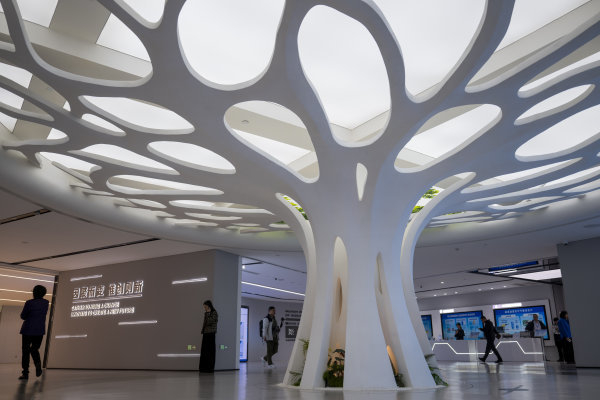
Core Viewpoint - Wuhan is making significant strides in technological and industrial innovation, aiming to transform into a leading center for scientific research and development, with ambitious projects like the high-speed maglev train reaching speeds of 600 km/h [1][8]. Group 1: Technological Advancements - The Wuhan East Lake Laboratory has achieved a breakthrough in high-speed maglev technology, with a recent test reaching 650 km/h over 1,000 meters, setting a global record [8]. - The city is focusing on creating a robust "government-industry-university-research-finance" system to facilitate the transformation of scientific achievements into practical applications [3]. Group 2: Project Implementation and Management - Wuhan has emphasized the importance of local officials in project execution, with a focus on hands-on involvement to ensure that decisions are effectively implemented [3][4]. - The establishment of new departments like the "Project Landing Office" aims to provide comprehensive support for investment projects, enhancing their chances of successful implementation [6]. Group 3: Economic Growth and Industry Development - The city's high-tech enterprises have doubled in number over five years, with technology contract transaction volume exceeding 230 billion yuan, indicating a thriving innovation ecosystem [7]. - Wuhan's modern industrial system is projected to generate over 1.9 trillion yuan in revenue in 2024, reflecting a 13.2% growth [10]. Group 4: Infrastructure and Logistics - The optimization of logistics routes has significantly improved efficiency, exemplified by a reduction in delivery times for MiniLED chips from 30 minutes to 15 minutes, enhancing production scheduling [9]. - The city is positioning itself as a logistics hub, with increased connectivity through various transportation modes, facilitating both domestic and international trade [11]. Group 5: Community and Quality of Life Improvements - Recent initiatives have led to tangible improvements in residents' lives, such as the conversion of gas supply systems, enhancing convenience for households [15]. - Urban renewal projects have transformed industrial sites into creative spaces, contributing to community engagement and quality of life [15].
11月27日沪深两市涨停分析
Xin Lang Cai Jing· 2025-11-27 07:18
Group 1: Battery and Energy Storage - Company provides semi-solid battery production lines to leading lithium battery manufacturers, with products already applied in the automotive industry [2] - Global leader in lithium battery coating materials, with solid oxide battery (SOC) systems including solid oxide fuel cells (SOFC) and solid oxide electrolysis cells (SOEC) [2] - Company has developed bismuth products for semi-solid lithium batteries and is conducting cutting-edge research on ceramic materials for all-solid-state batteries [2] - Major manufacturer of lithium-ion battery electrolyte solvents, with products advancing to pilot testing stages [2] Group 2: Semiconductor and Electronics - Company acquires at least 51% stake in a semiconductor equipment firm, entering the semiconductor equipment and components sector [4] - Company plans to invest 8.54 billion to acquire a 62.98% stake in a technology firm, with products expected to begin mass production by the end of 2025 [2] - Company is a leading distributor of IC products, representing globally recognized IC design manufacturers [2] Group 3: Solar Energy - Company is among the top three global manufacturers of heterojunction products, focusing on large-size high-efficiency heterojunction battery and component production [6] - Company successfully delivered the first batch of "light conversion film" for perovskite stacked components, marking a commercial application milestone [6] Group 4: Retail and Consumer Goods - Company is a leading retail enterprise in Hohhot, with stores in Shenzhen and Chengdu designated as tax refund outlets [3] - Company is a major player in the frozen fish ball market, specializing in frozen fish paste and meat products [3] - Company is the largest department store chain in Guangzhou, actively developing customized products [3] Group 5: Aerospace and Defense - Company invests 30 million to acquire a stake in a satellite core component firm, enhancing its layout in satellite internet key components [4] - Company is a leading manufacturer of small solid rockets, with ongoing test operations for drone projects [4] - Company delivers aerospace-grade microwave and millimeter-wave components to major state-owned enterprises [4]

厚植北斗生态深耕全域应用 湖南擘画“智联时空”新图景
Zhong Guo Xin Wen Wang· 2025-09-26 21:34
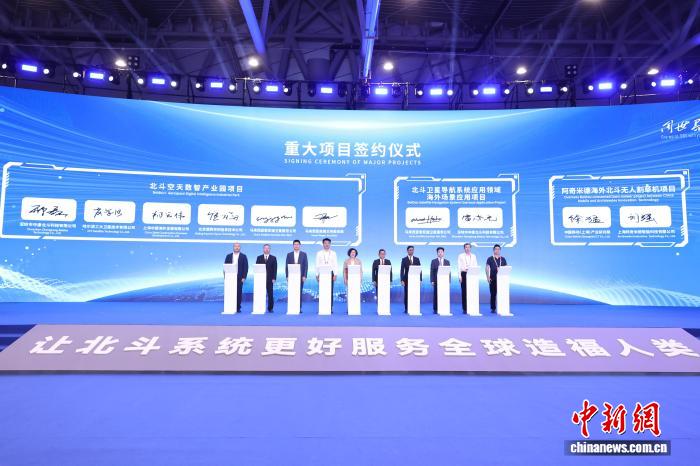
Core Insights - The fourth Beidou Scale Application International Summit highlighted the transition of the Beidou industry from a "distant" concept to a "nearby" reality, showcasing projects in satellite launch services, smart agriculture, and international applications [1][8] - Hunan province is emerging as a key hub for Beidou technology, with an industry scale exceeding 60 billion yuan and over one million terminal units, aiming to develop into a trillion-yuan industrial cluster [1][2] Industry Development - Hunan has established a complete ecosystem for Beidou technology, covering component research, satellite manufacturing, constellation operation, and application scenarios [2] - The province has three major Beidou industrial clusters in Changsha, Zhuzhou, and Yueyang, with over 550 key enterprises and 19 provincial-level innovation platforms [2][4] Technological Advancements - Hunan has achieved significant results in high-end chips and high-precision positioning, with a production target of 136,000 Beidou products by August 2025 [4] - The establishment of China's first Beidou laboratory alliance aims to integrate core technology research and industrial innovation [4] Application Scenarios - The summit showcased over a thousand applications, including centimeter-level positioning backpacks and smart safety helmets, demonstrating the extensive and deep applications of Beidou technology [5] - Beidou technology is enhancing safety and management in construction sites and is being integrated into smart transportation solutions like shared electric bicycles [5][7] Global Cooperation - The summit featured representatives from 24 countries, emphasizing the global outreach of Beidou services, with successful applications in countries like Egypt and Kazakhstan [8] - The signing of 22 projects during the summit indicates a commitment to international cooperation and the expansion of Beidou's global footprint [8][9]
新华社:楚风焕新韵 江城汇知音
Xin Hua She· 2025-09-24 03:04
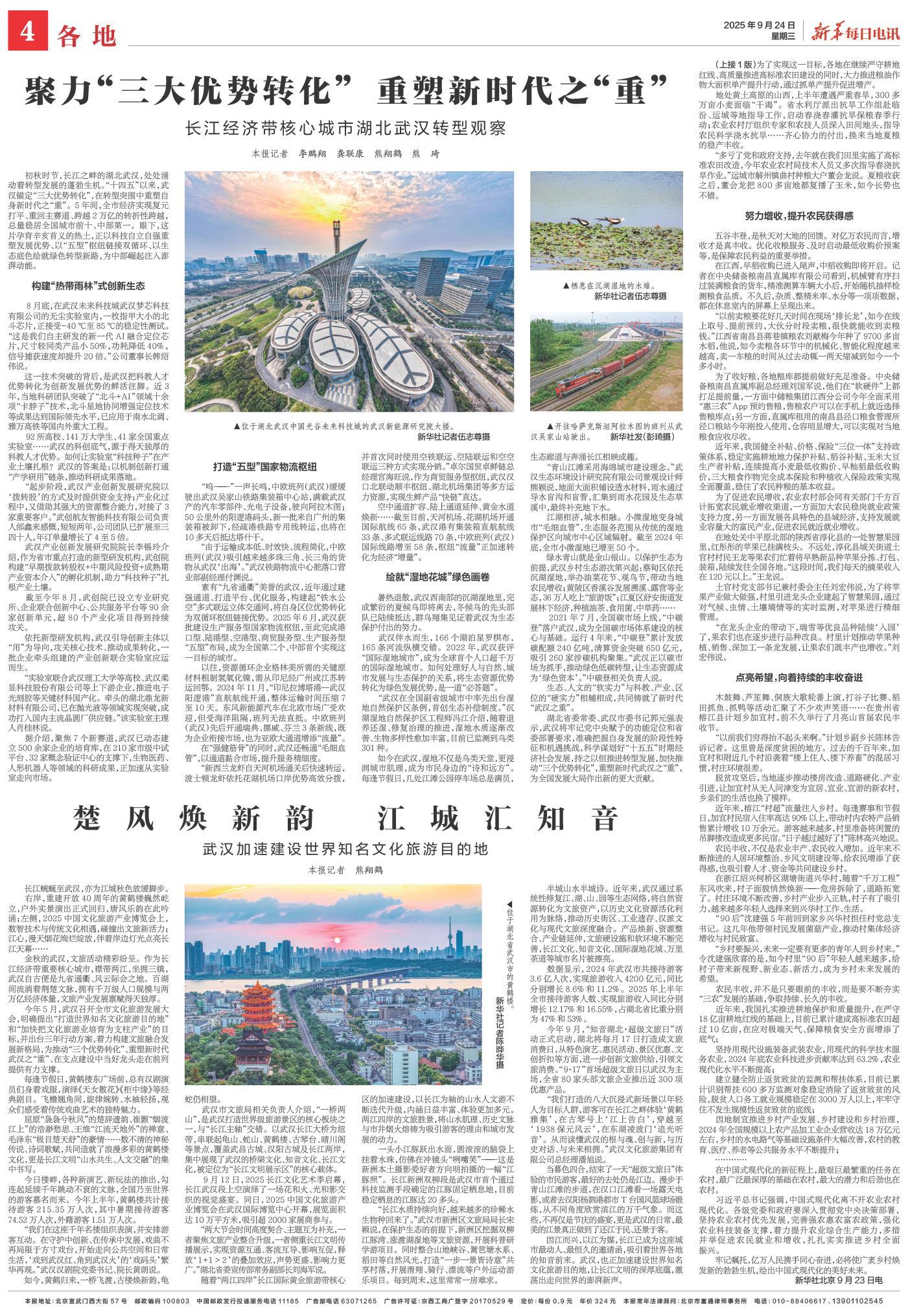
Core Perspective - Wuhan is undergoing a transformation to leverage its advantages in technology, logistics, and ecological sustainability, aiming to become a pivotal city in the Yangtze River Economic Belt [1][12]. Group 1: Economic Transformation - Wuhan's economy has rebounded, crossing the 2 trillion yuan mark, maintaining its position among the top ten cities in China and first in Central China [1]. - The city is focusing on three major advantages: technological self-reliance, logistics hub development, and ecological transformation [1][12]. Group 2: Technological Innovation - Wuhan is fostering a "tropical rainforest" style innovation ecosystem, with significant advancements in AI and positioning technology, achieving a 50% reduction in size and 40% decrease in power consumption for new chips [2]. - The establishment of the Wuhan Industrial Innovation Development Institute is facilitating the commercialization of research outcomes through innovative funding mechanisms [3]. Group 3: Logistics Development - Wuhan has developed a multi-modal transport network, enhancing its logistics capabilities and becoming the second city in China to establish a comprehensive logistics hub [7]. - The opening of direct shipping routes has significantly reduced transportation times, benefiting local industries and enhancing international trade [8]. Group 4: Ecological Sustainability - Wuhan has been recognized as the world's first international wetland city with a population over ten million, focusing on ecological protection and restoration [10]. - The city is implementing innovative urban planning strategies, such as sponge city concepts, to enhance water management and biodiversity [11]. Group 5: Cultural and Tourism Development - Wuhan aims to become a world-renowned cultural tourism destination, integrating its rich historical and cultural resources into tourism development [17]. - The city has seen a significant increase in tourist numbers and revenue, with a 12.17% rise in visitors and a 16.55% increase in tourism income in the first half of 2025 [21].