可重复使用火箭

Search documents
全球首台专为储能领域定制的65吨级正面吊投入使用;吨级无人飞行器首次完成海上平台物资运输丨智能制造日报
创业邦· 2025-08-04 03:35
Group 1 - The first successful transportation of goods using a 2-ton unmanned aerial vehicle "Kai Rui Ou" from Shenzhen to an offshore oil platform, covering a distance of 150 kilometers in 58 minutes [2] - TCL Huaxing's CEO Zhao Jun highlighted significant opportunities in the mid-size OLED market in the coming years, predicting a 3-4% increase in TV panel shipments in Q3 compared to Q2 due to seasonal demand [2] - The world's first 65-ton front-loading crane specifically designed for the energy storage sector has been put into operation by XCMG, addressing the challenges of transporting heavy energy storage containers [2] - The successful semi-system test of the "Li Qing No. 2" liquid oxygen kerosene engine by China Aerospace Science and Technology Corporation, with full system testing scheduled for the end of the month [2]


我国首次完成液体火箭发动机“九机并联”试车 如何支撑未来大型星座组网等多样化商业场景?
Yang Guang Wang· 2025-06-20 16:22
Core Viewpoint - The successful ground test of the Zhuque-3 reusable launch vehicle's first-stage propulsion system marks a significant advancement in China's liquid rocket technology, demonstrating the capability for high thrust and complex integration of multiple engines [1][3][5]. Group 1: Test Overview - The Zhuque-3 rocket's ground test involved nine Tianque-12A series liquid oxygen-methane engines, achieving a total thrust of 7542 kN [3]. - The test process included a comprehensive simulation of the launch sequence, validating the integration of propulsion, structure, measurement and control, avionics, and auxiliary systems [3][5]. - The test successfully demonstrated the engines' stable operation for 40 seconds, confirming the performance of the propulsion system under operational conditions [3][5]. Group 2: Technical Achievements - This test is noted as the largest and most complex liquid rocket ground ignition test in China, marking the first successful system-level verification of nine liquid oxygen engines operating in parallel [3][5]. - The Zhuque-3 rocket features a stainless steel structure and is designed for first-stage reusability, with a launch weight of approximately 570 tons and a length of about 66 meters [3][5]. - The test results provide critical data and experience for future engineering applications and more complex configurations [3][5]. Group 3: Safety and Design Innovations - The test site was modified to accommodate the Zhuque-3's first-stage propulsion system, featuring capabilities for low-temperature propellant loading, fire cooling, and remote data monitoring [5]. - Safety measures included a high-pressure water cooling system to protect the test structure from high-temperature exhaust during engine ignition [5][6]. - The test adhered to strict quality and safety management protocols, ensuring structural stability and safety during high-thrust conditions [5][6]. Group 4: Future Plans - The company plans to conduct the first flight of the Zhuque-3 in the second half of this year, with three flight tests anticipated [9]. - The goal is to achieve the first successful recovery of a first-stage rocket in China this year, transitioning to reusable rocket operations by next year [9]. - This initiative aims to significantly reduce launch costs and support the deployment of high-density low-orbit internet satellite constellations [9].
整理:每日科技要闻速递(6月20日)
news flash· 2025-06-19 23:35
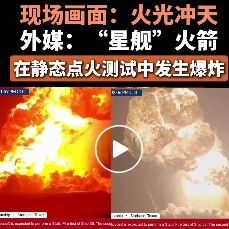
Group 1 - Apple plans to use generative AI to accelerate the custom chip design process [1] - SpaceX's Starship 36 rocket experienced an explosion during static fire testing [2] - Yushutech has completed the delivery of its Series C financing that began at the end of last year [3] - xAI reportedly incurs a monthly loss of $1 billion, while Musk claims Bloomberg's report is "nonsense" [4] - Texas Instruments plans to invest over $60 billion in building semiconductor factories in the U.S. [5] - NIO states that speculation about bringing in strategic investors for its chip business is unfounded [6] - Baidu's "LuoBo Kuaipao" has received approval for its third expansion in Hong Kong, allowing testing in designated areas and times [7] - The Financial Times reports that Musk's X aims to become a "super app," incorporating investment and trading functionalities [8] - China Aerospace Science and Technology Corporation successfully tested its reusable "Li Qing" engine for 180 seconds [9] - Apple is evaluating new LTPO OLED technology for iPhones, which increases the proportion of oxide materials to reduce screen power consumption [10] - Major U.S. tech companies are pushing for a ten-year federal ban on states creating their own AI regulations [11] - Three departments held a video conference to strengthen safety management in the new energy vehicle sector, emphasizing not to engage in "involutionary" competition that sacrifices product performance and quality for short-term cost reductions [12]
“星舰”又炸了
券商中国· 2025-06-19 12:16
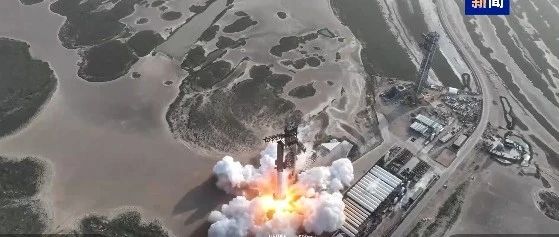
Core Viewpoint - SpaceX's Starship rocket experienced a catastrophic failure during a static fire test, leading to an explosion, with investigations currently underway to determine the cause of the incident [1][2][3]. Group 1: Incident Details - The incident occurred on the evening of the 18th, with local authorities confirming no reports of casualties [2]. - The static fire test was part of preparations for the tenth flight test of the Starship rocket, which is designed for missions to Earth orbit, the Moon, and Mars [3][4]. - The Starship rocket measures approximately 120 meters in length and 9 meters in diameter, consisting of a first stage booster and a second stage spacecraft, both designed for reusability [4].
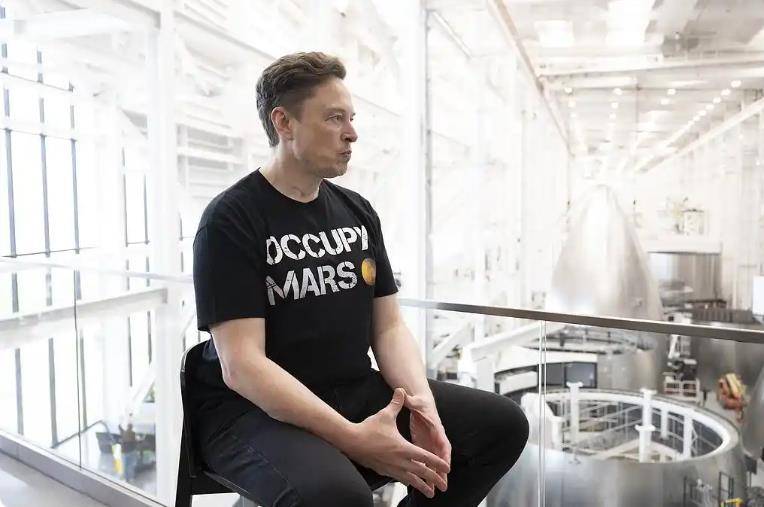
美前NASA官员:马斯克发出的威胁“越过了红线”,美政府对航天项目严重依赖SpaceX深感不安,已急寻替代者
Sou Hu Cai Jing· 2025-06-09 02:12
Group 1 - The U.S. government and NASA are urgently seeking alternatives to SpaceX due to their heavy reliance on the company for current space projects following a heated dispute between President Trump and Elon Musk [1][4] - SpaceX conducted 134 orbital launches last year using Falcon 9 and Falcon Heavy rockets, surpassing the total launches of all other companies combined [3] - SpaceX's satellites account for 84% of the total satellites to be launched globally in 2024, indicating its dominant position in the space launch market [3] Group 2 - The U.S. government has inquired with at least three commercial space companies—Rocket Lab, Stoke Space, and Blue Origin—about their rocket development progress and potential launch services for government missions [3] - These competitors are still in the early stages of development and lack the reliability and cost-effectiveness of SpaceX's reusable rockets [3] - SpaceX's Crew Dragon spacecraft is currently the only vehicle capable of transporting astronauts to the International Space Station, filling a gap left since the retirement of the Space Shuttle in 2011 [3] Group 3 - The conflict between Trump and Musk escalated over a bill named "Big and Beautiful," with Trump expressing disappointment in Musk's response to the bill, which Musk claimed he had never seen [4][5] - Musk retaliated by threatening to retire the Crew Dragon spacecraft, which is critical for U.S. space missions, highlighting the risks of dependency on his company [5] - Concerns within NASA have been raised regarding Musk's impulsive behavior and the potential consequences of his threats to halt operations [5]
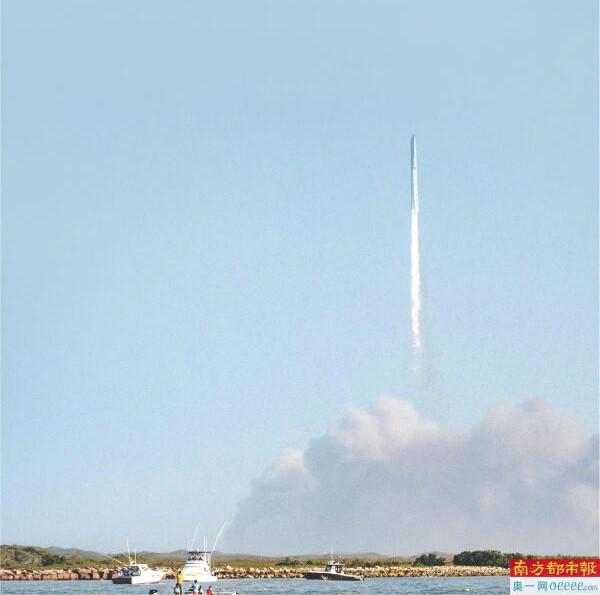
美“星舰”第九次试飞爆炸失控
Nan Fang Du Shi Bao· 2025-05-28 23:09
Core Points - SpaceX's Starship conducted its ninth test flight on May 27, 2023, from Texas, but experienced a failure during the mission [2][3] - The first stage booster exploded, and although the second stage spacecraft entered space, it lost control and failed to deploy its payload [2][3] - SpaceX confirmed the loss of control over the spacecraft, with debris expected to fall into the Indian Ocean [3] Flight Details - The ninth flight marked the first use of a flight-validated Super Heavy booster, which had previously been used in the seventh flight test [5] - The booster was not intended to return to the launch site but aimed for a soft landing in the Gulf of Mexico [5] - The mission included testing multiple objectives, including the deployment of eight prototype Starlink satellites [6] Technical Aspects - Starship is approximately 120 meters long and 9 meters in diameter, designed for reusability to transport people and cargo to various destinations [4] - The spacecraft's heat shield was modified to address issues identified in previous flights, and various materials were tested for their protective capabilities [6] - The main engines of the Starship are designed to provide a maximum thrust of about 7600 tons [6] Future Plans - Elon Musk indicated that future test flights will occur every 3 to 4 weeks, aiming to accelerate the development process [3] - SpaceX is under pressure to meet deadlines for the Starship's operational capabilities, particularly for upcoming lunar missions [7] - The U.S. Space Force is closely monitoring the progress of Starship for potential military applications, although no specific military plans have been confirmed yet [8]
爆炸、失控!“星舰”第九次试飞失败,马斯克发声
21世纪经济报道· 2025-05-28 08:44
Core Viewpoint - The recent test flight of SpaceX's Starship on May 27 was unsuccessful, with the first stage booster exploding and the second stage losing control after entering space, highlighting ongoing challenges in the development of reusable rocket technology [1]. Group 1: Test Flight Details - The Starship rocket, approximately 120 meters long and 9 meters in diameter, consists of a first stage booster and a second stage spacecraft, both designed for reusability [1]. - During the flight, a side hatch failed to open fully, preventing the deployment of a set of test satellites, which contributed to the loss of control [1]. - The flight ended with the vehicle losing contact around 8:30 PM ET, and the final landing position remains unclear [1]. Group 2: Progress and Future Plans - Despite the failure, SpaceX's spokesperson noted that the main engine shutdown procedure was successfully completed, marking significant progress compared to previous flights [1]. - Elon Musk indicated that the upcoming test flights will occur more frequently, with plans to conduct launches every 3 to 4 weeks [1]. - The company aims to gather valuable data from this test to improve future missions, despite the challenges faced during the flight [1]. Group 3: Previous Test Flights - In earlier test flights (seventh and eighth), the first stage booster successfully returned to the launch pad, but the second stage spacecraft disintegrated during ascent [2].
5月14日早餐 | 英伟达大涨
Xuan Gu Bao· 2025-05-14 00:06
Group 1: Market Overview - The Dow Jones fell by 0.64%, while the S&P 500 rose by 0.72% and the Nasdaq increased by 1.61%. The European STOXX 600 index closed up by 0.12% [1] - The U.S. CPI cooled down, with April CPI year-on-year at 2.3%, the lowest level since February 2021 [1] - The U.S. government announced the withdrawal of AI chip restrictions imposed during the Biden administration, leading to a more than 3% increase in chip indices [1] Group 2: Company Developments - Nvidia has raised the official prices of nearly all its products, with gaming graphics cards increasing by 5% to 10% and AI GPUs by 15% due to rising costs and tariffs [5] - Tesla released a video of its humanoid robot, Optimus, showcasing its training progress and plans to produce thousands of units by the end of the year [6] - Tesla has applied for the trademark "TESLAOPTIMUS" in various categories, indicating potential expansion into new markets [5] Group 3: Industry Insights - The Chinese aerospace industry achieved a breakthrough with the successful test of a 140-ton reusable liquid oxygen-methane engine, which is expected to significantly reduce launch costs and boost the commercial space market [6][7] - The Ministry of Industry and Information Technology in China has launched a plan to enhance the quality and safety of communication construction projects, which is expected to drive growth in the communication sector [7] - The next decade is anticipated to see significant technological innovation and maturity in business models, particularly in the reusable rocket sector, as countries vie for space dominance [7]

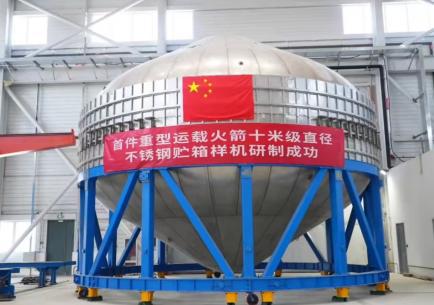
10米级不锈钢贮箱,是中国对星舰式体系的正面回应
Guan Cha Zhe Wang· 2025-05-01 01:37
Core Viewpoint - The successful development of China's first 10-meter diameter stainless steel storage tank prototype marks a significant leap in the country's heavy rocket manufacturing capabilities, positioning it to compete in the next generation of space exploration and heavy lift systems [1][3][12]. Group 1: Technical Significance - The 10-meter diameter represents a critical threshold in rocket design, as larger storage tanks are essential for heavy rockets, which are necessary for ambitious space missions such as lunar bases and Mars exploration [3][5]. - The introduction of stainless steel as a material for the storage tank signifies a shift in manufacturing philosophy, offering advantages in strength, cost, and reusability compared to traditional aluminum alloys [5][6]. - The prototype is not designed for current rockets but is intended for the next generation of heavy rockets, specifically the Long March 9, which aims to be a reusable system with significant thrust capabilities [6][12]. Group 2: Competitive Landscape - The development of the 10-meter storage tank is a strategic move for China to establish a foothold in the competitive landscape of super heavy rockets, where the U.S. has already made significant advancements with NASA's SLS and SpaceX's Starship [12][13]. - The global race for super heavy rockets is intensifying, with the U.S. focusing on high-reliability systems and commercial deep space capabilities, while China aims to leapfrog existing technologies by directly entering the super heavy and reusable rocket domain [12][15]. - The ability to manufacture large-diameter, modular, and high-temperature resistant structures is crucial for achieving high-frequency, low-cost space launches, which is the future of space transportation [15][16]. Group 3: Industrial Implications - The 10-meter stainless steel storage tank prototype is not merely a component but represents a foundational shift in China's space manufacturing logic, indicating a move towards a more industrialized approach to rocket production [17]. - The successful creation of this prototype demonstrates China's readiness to develop the necessary infrastructure and capabilities to support the next generation of space vehicles, which is essential for maintaining competitiveness in the global space race [16][17]. - The focus on building a robust manufacturing system capable of producing large components is a critical step towards achieving the goal of high-frequency space launches, which will be vital for future missions [15][17].