多式联运

Search documents
城市24小时 | “人工智能第一城” 喊出两年破万亿
Mei Ri Jing Ji Xin Wen· 2026-01-05 16:51
Group 1 - Beijing's core AI industry is expected to reach a scale of 450 billion yuan by 2025, with over 2,500 companies, accounting for about half of the national total [1] - The "Beijing AI Innovation High Ground Construction Action Plan" aims to achieve a trillion yuan core industry scale within two years, establishing Beijing as a global AI innovation hub [1] - Beijing ranks second globally in terms of AI innovation cities, with 148 influential AI scholars, representing over 40% of the national total [2][3] Group 2 - The first four AI innovation districts have been launched in Beijing, focusing on a "one core, multiple points" layout centered in Haidian [3] - The core AI industry in Beijing is projected to grow from nearly 350 billion yuan in 2024 to approximately 450 billion yuan in 2025, indicating strong growth momentum [3] - Other cities like Shanghai, Shenzhen, and Hangzhou are also competing to become leading AI cities, each with unique strengths in the AI sector [3] Group 3 - The action plan for 2024-2025 emphasizes building an AI-native city and enhancing Beijing's global influence in AI innovation and application [2] - The plan includes various initiatives such as technology innovation, data aggregation, and safety governance to support the AI industry's growth [1]


城市24小时 | “人工智能第一城”,喊出两年破万亿
Mei Ri Jing Ji Xin Wen· 2026-01-05 16:30
Group 1: Beijing's AI Development - Beijing's AI core industry is expected to reach 450 billion yuan by 2025, with over 2,500 companies, accounting for about half of the national total [1] - The "Beijing AI Innovation High Ground Construction Action Plan" aims to achieve a core industry scale of over 1 trillion yuan within two years, establishing Beijing as a global AI innovation hub [1] - Beijing ranks second globally in terms of AI innovation cities, with 148 influential AI scholars, representing over 40% of the national total [2] Group 2: Industry Growth and Competition - The AI industry in Beijing is projected to grow from nearly 350 billion yuan in 2024 to approximately 450 billion yuan in 2025, indicating strong growth momentum [3] - Other cities like Shanghai, Shenzhen, and Hangzhou are also competing to become leading AI cities, each focusing on different aspects of AI development [3] - Beijing's unique position is characterized by its focus on foundational AI innovations, while other cities are advancing through different stages of AI development [3]

交通运输部答每经问:“十四五”时期长江干线主要港口铁路进港率超过九成
Mei Ri Jing Ji Xin Wen· 2026-01-05 13:55
Group 1 - The core viewpoint of the article emphasizes the significant progress and achievements in the development of the Yangtze River Economic Belt over the past decade, particularly in the area of multimodal transport [1] - The Ministry of Transport reported that during the 14th Five-Year Plan period, the railway access rate for major ports along the Yangtze River exceeded 90%, and the annual growth rate of container rail-water intermodal transport surpassed 30% [1][3] - The Ministry of Transport is set to implement a multimodal transport action plan during the 15th Five-Year Plan period, focusing on key nodes such as major ports and logistics parks to enhance the integration of container rail-water transport [2][3] Group 2 - The Ministry of Transport has introduced several policy documents to guide the development of multimodal transport, including the "One Port, One Policy" initiative to promote deep integration of container rail-water transport [2] - A comprehensive multimodal transport service system covering the Yangtze River Economic Belt has been established, with Shanghai and Wuhan serving as key hubs for enhancing international transport capabilities [2][3] - The Ministry of Transport aims to reduce logistics costs and improve efficiency by promoting the transfer of bulk goods from road to rail and water transport, thereby supporting the efficient operation of a unified national market [3]
长江经济带发展十年:GDP占全国比重升至47.3%
Di Yi Cai Jing· 2026-01-05 13:23
Core Insights - The "14th Five-Year Plan" emphasizes the continuous development of the Yangtze River Economic Belt, highlighting the importance of ecological protection and high-quality development [1][3] Group 1: Economic Growth and Development - The Yangtze River Economic Belt has seen its GDP more than double over the past decade, increasing its share of the national GDP from 42.2% to 47.3% [1] - The per capita disposable income of residents in the region has risen from 23,000 yuan to 44,000 yuan, marking a 91% increase [1] - The region has established a complete industrial chain in sectors such as electronics, automotive, pharmaceuticals, and chemicals, contributing to its status as a major area for industrial aggregation [3][4] Group 2: Environmental Protection and Sustainability - The proportion of good water quality in the Yangtze River has improved from 67% to 96.5% over the past decade [1] - The ecological environment capacity of the Yangtze River basin is limited, necessitating a focus on green, high-end, and intelligent economic growth [3] - Efforts are being made to promote the green transformation of traditional industries, with 24 national carbon peak pilot cities and parks established in the region [4] Group 3: Transportation and Logistics - The Yangtze River's high-grade waterway mileage has reached 11,500 kilometers, significantly enhancing shipping capabilities [6] - By 2025, the throughput of major ports along the Yangtze River is expected to reach 4.2 billion tons, with the number of large ports increasing to 18 [6] - The development of multimodal transport is being prioritized to optimize transportation structure and reduce logistics costs, with a focus on enhancing intermodal connectivity [7]
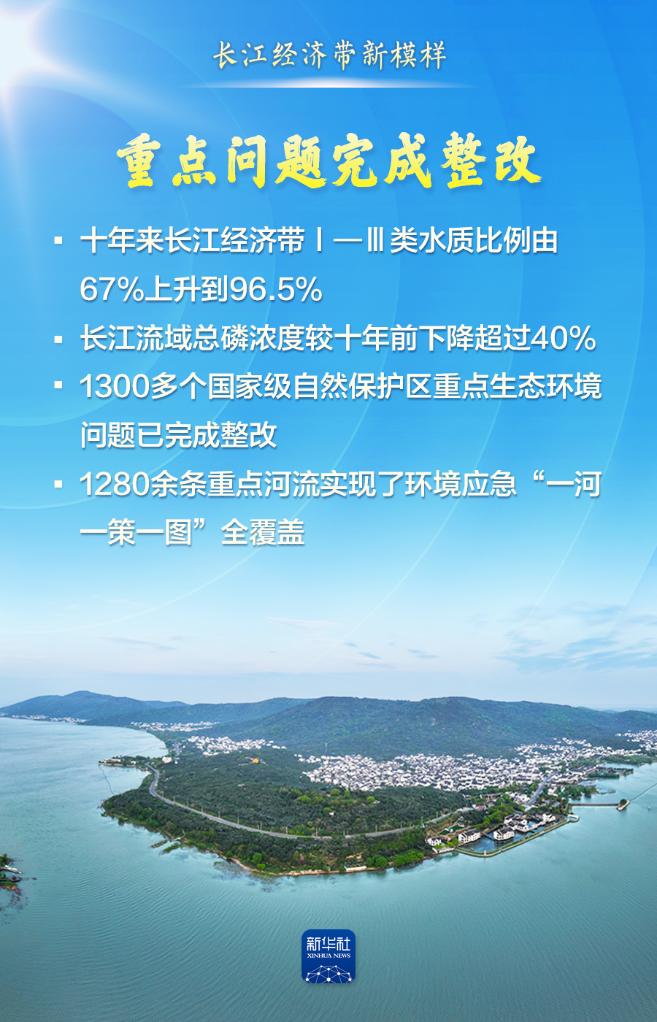
这组数据,描绘长江经济带新模样!
Xin Hua Wang· 2026-01-05 12:51
Core Viewpoint - The Yangtze River Economic Belt has achieved significant ecological and economic advancements over the past decade, emphasizing ecological priority and green development, leading to a harmonious coexistence of nature and human activities [1]. Environmental Protection and Quality Improvement - The proportion of water quality classified as good has increased from 67% to 96.5% [4]. - Total phosphorus concentration in the Yangtze River basin has decreased by over 40% compared to ten years ago [4]. - More than 1,300 national nature reserves have completed key ecological environment issue rectifications [4]. - Over 1,280 key rivers have achieved full coverage of environmental emergency management [4]. Infrastructure and Economic Development - The high-grade navigable waterway mileage has reached 11,500 kilometers [6]. - By 2025, the throughput of Yangtze River mainline ports is expected to reach 4.2 billion tons, with the number of major ports increasing to 18 [6]. Flood Control and Water Resource Management - Successfully managed the 2020 regional flood by preventing 49 billion cubic meters of floodwater, protecting 1,752 million people and 1.1 million hectares of farmland [8]. - Ensured safe drinking water for urban populations and irrigation for 1.83 million acres of autumn crops [8]. Green and Low-Carbon Industrial Transformation - Three technology innovation centers and eight national laboratories have been established along the river [11]. - By 2025, the production of new energy vehicles in Shanghai, Jiangsu, Zhejiang, Anhui, and Chongqing is expected to exceed one million units each [11]. - 24 cities and parks have been designated as national carbon peak pilot areas, with 14 zero-carbon parks established [11]. Pollution Control and Regulatory Framework - Over 160,000 kilometers of river and lake shorelines have been inspected, with more than 200,000 pollution outlets accurately identified [12]. - A comprehensive supervision management system for pollution outlets has been established [12]. Fisheries and Biodiversity Conservation - The release of over one million Chinese sturgeons is planned for 2024 and 2025 [13]. - The population of Yangtze River dolphins is steadily increasing, with the distribution range expanding [13]. - A total of 344 fish species have been monitored in the Yangtze River basin from 2021 to 2024, an increase of 36 species compared to before the fishing ban [13]. Multi-Modal Transport and Connectivity - The implementation of a comprehensive transport system has led to significant improvements in multi-modal transport [14]. - By the "14th Five-Year Plan" period, the railway port rate for major ports along the Yangtze River is expected to exceed 90%, with an annual growth rate of over 30% for container rail-water intermodal transport [14]. Flood Prevention Infrastructure - More than 300 large reservoirs have been built in the Yangtze River basin, with a flood control capacity of 80 billion cubic meters [15]. - Over 1,000 kilometers of riverbanks have been treated to stabilize the river flow in the middle and lower reaches [15].
交通运输部:要加快推进铁路重大工程项目建设,推动贯通“八纵八横”高铁主通道
Xin Lang Cai Jing· 2026-01-04 13:52
1月4日上午,中国国家铁路集团有限公司工作会议在京召开,交通运输部党组书记、部长刘伟出席并讲 话。刘伟强调,要准确把握"十五五"时期铁路发展要求,立足"十五五"时期交通运输发展的阶段性特点 和"一网四化"的主攻方向,谋划编制好集团"十五五"发展规划。要加快推进铁路重大工程项目建设,以 联网补网强链为重点,推动贯通"八纵八横"高铁主通道,提升普速铁路干线通道能力。要大力发展多式 联运,发挥龙头骨干企业作用,深入推进"一单制""一箱制",推动铁水联运、公铁联运等快速发展。要 培育发展铁路领域新质生产力,强化关键核心技术攻关,打造一批人工智能创新应用场景,加快推进铁 路数智化升级。 ...
铁路客货运量均创历史最好水平 运输收入首次突破万亿元
Zhong Guo Jing Ying Bao· 2026-01-04 12:17
Core Insights - In 2025, China's national railway achieved a cargo volume of 4.066 billion tons, marking a 2.1% year-on-year increase and surpassing the 4 billion ton milestone for the first time, continuing a growth trend for nine consecutive years [1][2] Group 1: Cargo Transport Performance - The national railway exceeded its freight target in 2025, with an expected cargo volume of 4.03 billion tons, reflecting a 1.1% year-on-year growth [2] - The growth rate of railway freight has been narrowing before 2023 but expanded again post-2023, with annual growth rates from 2017 to 2025 recorded as 10.1%, 9.3%, 7.8%, 4.07%, 4.0%, 4.7%, 0.26%, 2.05%, and 2.1% respectively [2] - The "total-to-total" marketing strategy led to a logistics package volume of 1.12 billion tons, accounting for 27.5% of the national railway's freight volume, a significant increase of 20.6 percentage points [2] - Container transport reached 4.1883 million TEUs, with a year-on-year growth of 14.2%, while freight train volume increased by 24.5% [2] Group 2: Passenger Transport Performance - In 2025, the national railway transported 4.255 billion passengers, a 4.2% increase year-on-year, with peak daily passenger volume reaching 23.132 million, setting a new historical record [2] Group 3: Revenue and Future Goals - The total transport revenue of the national railway group surpassed 1 trillion yuan for the first time, reaching 1,020.4 billion yuan, a 3.1% increase year-on-year [4] - For 2026, the national railway aims to achieve a passenger volume of 4.402 billion, a 3.5% increase, and a cargo volume of 4.13 billion tons, a 1.5% increase [4] - The company plans to enhance passenger services by optimizing product offerings and implementing flexible pricing strategies, while also focusing on developing a leading multi-modal transport enterprise [4][5]
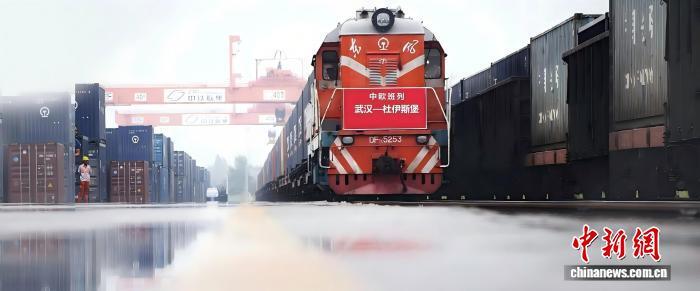
中国新闻网:中欧班列(武汉)连续三年发运破千列
Zhong Guo Xin Wen Wang· 2026-01-01 02:43
Core Viewpoint - The China-Europe Railway Express (Wuhan) has successfully launched its operations, demonstrating significant growth in logistics and trade connections between China and Europe, with a focus on enhancing cross-border transportation efficiency and expanding trade networks [1][4]. Group 1: Operational Achievements - The China-Europe Railway Express (Wuhan) has dispatched 1,010 trains and transported 83,830 TEUs with a total cargo value of 18.809 billion yuan in the current year, marking a consistent annual achievement of over 1,000 trains for three consecutive years [1]. - The railway has established 60 stable cross-border transport routes, covering 40 countries and 121 cities across the Eurasian continent [4]. Group 2: Logistics Network Expansion - The railway is enhancing its logistics network by strengthening its role as a regional hub in Central China and expanding international logistics channels, including new routes to Georgia, Northern Europe, and Romania [4]. - The introduction of a multimodal transport model, combining rail and water transport, has improved transportation efficiency, with a projected 83.95% increase in return shipments via Yangluo Port by 2025 [4]. Group 3: Trade and Industry Integration - The railway is facilitating the export of local manufacturing products and has launched specialized trains for various goods, including electric vehicles and cross-border e-commerce, with a notable 87% increase in the transportation of Dongfeng vehicles [4]. - The company is focusing on building a new supply chain model that integrates cross-border transport with direct procurement of high-quality bulk commodities from Kazakhstan and Uzbekistan, aiming to create a stable and efficient cross-border trade ecosystem [5].
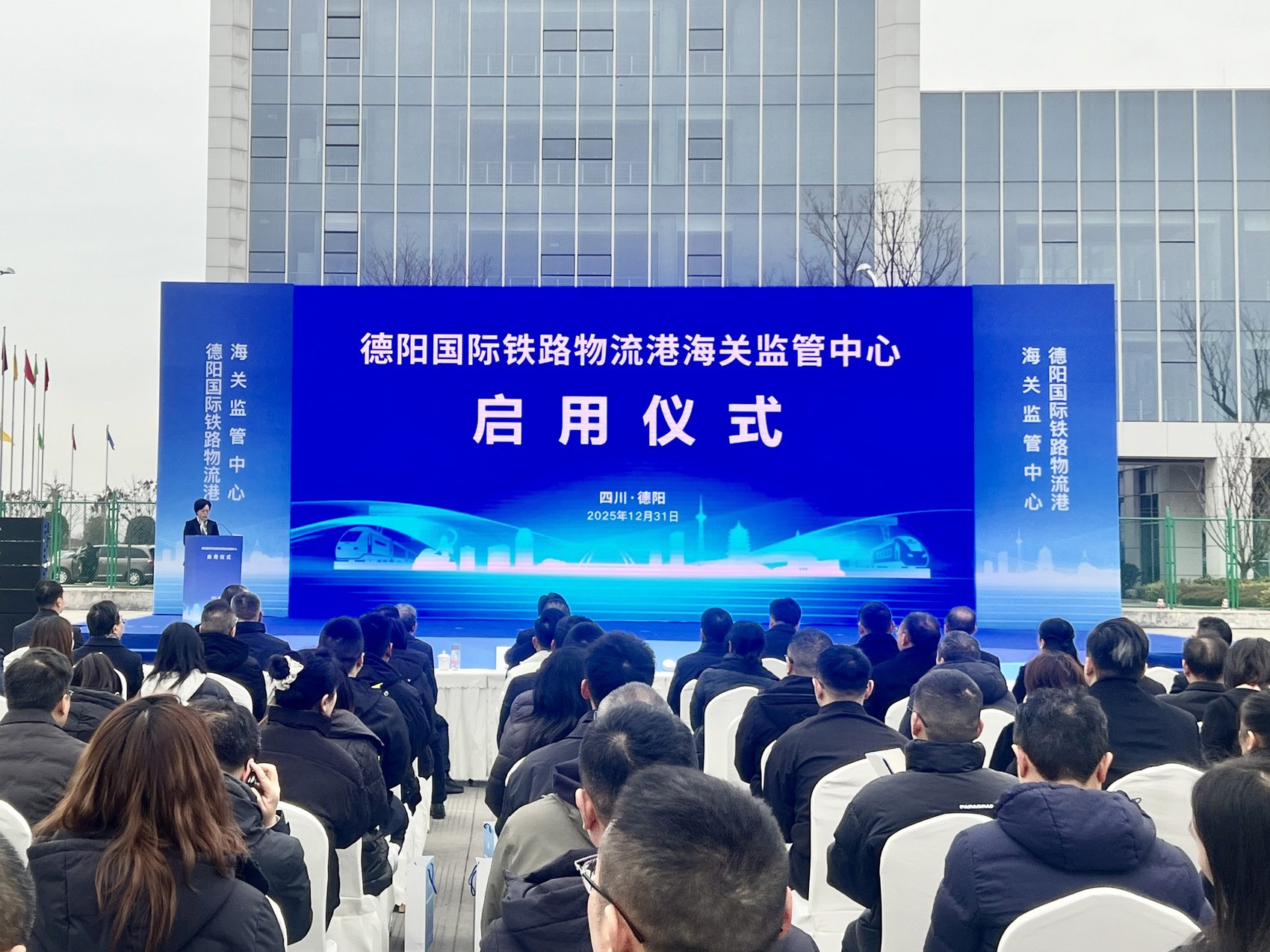
节省30%以上通关时间、15%以上物流成本,德阳国际铁路物流港海关监管中心启用
Xin Lang Cai Jing· 2025-12-31 12:42
Group 1 - The Deyang International Railway Logistics Port Customs Supervision Center has officially commenced operations, enhancing regional customs efficiency and supporting stable operation of international freight trains [1][3] - The center features dedicated roads, smart access points, and an information management system, enabling a streamlined process of "one declaration, one inspection, one release," which is projected to save over 30% in customs time and reduce logistics costs by more than 15% annually [1][3] - Deyang is actively integrating into national open channel construction, leveraging its international railway logistics hub to accelerate multimodal transport and bonded logistics development [4] Group 2 - Deyang has established three international freight train bases and is deeply integrated into the China-Europe Railway Express and the Western Land-Sea New Corridor system through public bonded warehouses [4] - The city's foreign trade vitality has been continuously enhanced, with "Deyang-made" products exported to 175 countries and regions, and a total of 423 foreign trade enterprises, ranking second in the province [4] - Deyang has launched a total of 454 international freight trains, with the value of goods under public bonded warehouse supervision reaching 731 million yuan, providing stable and efficient international logistics support for local and surrounding enterprises [4]
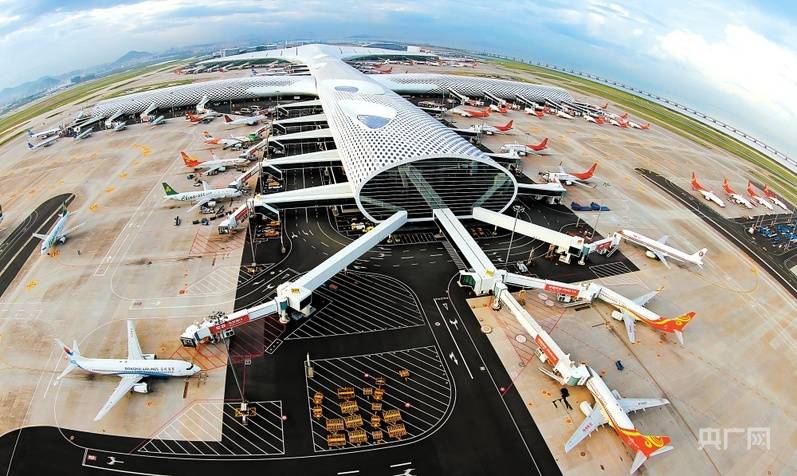
2025年深圳机场国际航线和客货吞吐量齐创新高 深圳港集装箱和LNG加注量齐破纪录
Sou Hu Cai Jing· 2025-12-31 10:18
Group 1: Airport Performance - In 2025, Shenzhen Airport's passenger throughput reached 66 million, an 8% year-on-year increase, with a monthly peak of 6.0238 million passengers, setting a historical record [1][2] - The airport's cargo and mail throughput reached 2.05 million tons, a 9% year-on-year increase, also achieving a historical high, with international and regional cargo surpassing 1 million tons [1][2] Group 2: International Route Expansion - Shenzhen Airport successfully introduced renowned airlines such as Emirates and Maldives National Airlines, launching 47 new and enhanced international and regional routes, totaling 104 routes, a historical high [2] - The international and regional passenger volume exceeded 6.3 million, surpassing previous peak levels [2] Group 3: Port Performance - In 2025, Shenzhen Port's container throughput exceeded 35 million TEUs, a growth of over 5% year-on-year, marking the highest record since its opening [4] - The port's inland service network includes 30 inland ports and 42 sea-rail intermodal routes, forming an efficient and well-structured intermodal transport system [7] Group 4: LNG and Clean Energy Initiatives - Shenzhen Port conducted over 110 LNG refueling operations, with a total refueling volume exceeding 510,000 cubic meters, a 79% year-on-year increase [7] - The port's shore power facility berth coverage exceeded 90%, with annual shore power consumption surpassing 44 million kilowatt-hours, setting a historical high [9]