
新会计准则

Search documents
147家非上市险企期中数据出炉:5家企业“挂科”、财寿险利润双增
Jing Ji Guan Cha Wang· 2025-08-07 11:45
经济观察报记者姜鑫 截至2025年8月初,有147家非上市保险企业(下称"险企")披露了第二季度偿付能力报告。 在已经披露偿付能力报告的险企中,有5家因综合风险评级处于偿付能力不达标状态。除偿付能力充足 率指标外,偿付能力报告中还披露了险企的保费收入、利润等业绩数据,让市场得以观察非上市险企的 经营情况。 经济观察报记者梳理发现,截至目前,仍有十几家险企未披露偿付能力报告。其中,瑞华健康保险因技 术原因延期披露,而其他险企已经连续多个季度未披露偿付能力报告。 5家险企未达标 偿付能力是保险公司偿还债务的能力,偿付能力充足率是评价保险公司经营稳定性的核心指标。 根据《保险公司偿付能力管理规定》,偿付能力监管指标包括核心偿付能力充足率、综合偿付能力充足 率、风险综合评级3个有机联系的指标。保险公司须同时满足核心偿付能力充足率不低于50%、综合偿 付能力充足率不低于100%、风险综合评级在B类及以上三项指标,才能被认定为偿付能力达标。 经济观察报记者梳理发现,2025年上半年,华汇人寿、华安财险、安华农险、亚太财险以及前海财险等 5家险企,因为综合风险评级为C类而成为偿付能力不达标的"差等生"。 具体来看,华汇人寿 ...
年内举牌21次,险资正跑步入市
2 1 Shi Ji Jing Ji Bao Dao· 2025-08-04 12:44
南方财经全媒体记者 林汉垚 北京报道 截至8月4日,保险资金年内在A股及H股市场累计举牌达21次,一举超越去年全年水平。中国人寿、平 安人寿、泰康人寿等十余家机构密集出手,举牌标的涵盖银行、能源、公共事业等领域。 华泰证券分析指出,险资正通过高息股填补现金收益缺口,并借新会计准则下FVOCI(以公允价值计量 且其变动计入其他综合收益的金融资产)计量平滑利润波动。 与此同时,财政部拉长国有险企考核周期、国家金融监管总局上调权益资产配置上限等政策组合拳,推 动"耐心资本"保险资金与实体经济深度协同。 年内举牌量超去年全年 根据原中国保监会于2015年发布的《保险公司资金运用信息披露准则第3号:举牌上市公司股票》,保 险公司举牌上市公司股票,是指保险公司持有或者与其关联方及一致行动人共同持有一家上市公司已发 行股份的5%,以及之后每增持达到5%时,按照相关法律法规规定,在3日内通知该上市公司并予以公 告的行为。 中国保险行业协会网站信息显示,截至8月4日,保险资金年内在A股及H股市场已累计举牌上市公司达 21次,已超过去年全年举牌次数。 据统计,今年以来举牌上市公司的保险机构有中国人寿、平安人寿、新华保险、瑞众人寿 ...



巨亏之后,中荷人寿变更了会计准则
Feng Huang Wang Cai Jing· 2025-08-01 07:15
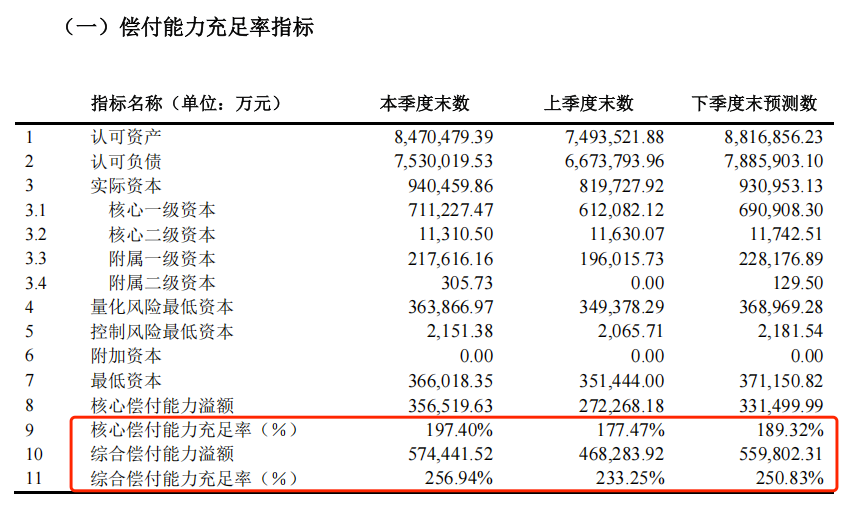
Core Insights - Zhonghe Life's core solvency ratio increased by 19.93 percentage points to 197.4% in Q2, but is projected to decline to 189.32% in the next quarter [1] - The comprehensive solvency ratio rose by 23.69 percentage points to 256.94%, with a forecasted decrease to 250.83% for the next quarter [1] Financial Data Summary - Recognized assets at the end of the quarter amounted to 84,704.79 million, up from 74,935.22 million in the previous quarter, with a forecast of 88,168.56 million for the next quarter [2] - Recognized liabilities increased to 75,300.20 million from 66,737.94 million, with a forecast of 78,859.03 million [2] - Actual capital rose to 9,404.60 million from 8,197.28 million, with a forecast of 9,309.53 million [2] - Core Tier 1 capital increased to 7,112.27 million from 6,120.82 million, with a forecast of 6,909.08 million [2] - Net profit for Q2 was 24.68 million, while the total net profit for the first half of the year reached 277.00 million, despite a Q1 loss of 15.30 million [2][4] Accounting Changes - The significant fluctuations in financial data may be attributed to the adoption of new accounting standards, as indicated by the company [5] - Experts suggest that the drastic changes in financial figures are likely due to the new accounting standards, as the variations are too large to be explained under the same accounting framework [6] Policy and Management - The comprehensive surrender rate remained stable at 0.38%, but the total surrender amount exceeded 240 million, with the highest amounts coming from three specific products [6][7] - The current chairman, Wang Jian, remains in position despite earlier reports of a potential successor from Beijing Bank [8]

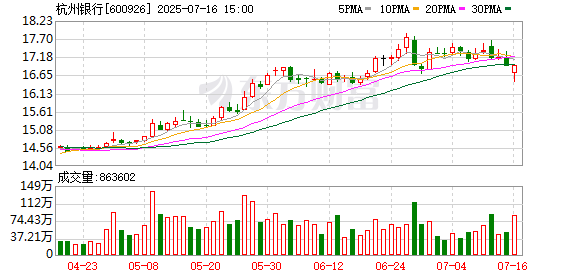
中国人寿拟清仓杭州银行 银行股长期投资价值仍被看好
Zheng Quan Ri Bao· 2025-07-16 16:41
Core Viewpoint - China Life Insurance plans to fully divest its shares in Hangzhou Bank after nearly 16 years of investment, indicating a shift in asset allocation strategy [1][2][3] Group 1: Shareholding Changes - China Life intends to reduce its holdings by up to 50.79 million shares, which represents a complete exit from its investment in Hangzhou Bank [1][3] - Since 2021, China Life has already reduced its stake in Hangzhou Bank three times, totaling approximately 3.042 billion yuan [3] - Other banks, such as Qilu Bank and Changsha Bank, have also announced shareholding reductions by major shareholders, reflecting a broader trend in the banking sector [4] Group 2: Market Reactions and Trends - The recent increase in bank stock prices has prompted some shareholders to realize their investment gains, which is viewed as a normal market behavior [2][4] - Despite the reductions, analysts believe that the overall valuation of banks remains stable, as the motivations behind these actions are often related to financial needs rather than negative outlooks on bank fundamentals [4] Group 3: Investment Sentiment - Insurance capital continues to favor bank stocks, with 10 out of 20 recent equity stakes being in listed banks, indicating a strong belief in their long-term investment value [5] - As of the first quarter, insurance companies held approximately 265.8 billion yuan in bank stocks, the highest among all sectors, suggesting that banks are seen as a "ballast" for long-term investments [5] Group 4: Stock Performance - The A-share banking sector has shown robust performance, with 41 out of 42 bank stocks rising, and some banks experiencing over 50% increases in stock price [6] - The average dividend yield for A-share listed banks is currently 3.68%, with some banks reaching as high as 6.43%, making them attractive in a low-interest-rate environment [6] - Analysts note that despite the recovery in valuations, bank stocks remain relatively undervalued compared to other sectors, supported by improving asset quality and stable dividend yields [6]

险资加速布局:港股高股息资产成“心头好”
Huan Qiu Wang· 2025-07-08 02:28
Core Insights - Insurance capital is increasingly favoring high-dividend assets in the Hong Kong stock market, with significant increases in investment ratios and participation levels [1][3]. Group 1: Investment Trends - The investment balance in the Hong Kong market accounts for 51% of the total overseas investment balance of insurance institutions, making it the preferred choice for overseas stock and bond investments [3]. - 63% of institutions plan to increase their investment scale in Hong Kong stocks by 2025, with funds concentrated in the financial, energy, and telecommunications sectors [3]. - Insurance capital has made 19 significant investments this year, involving 15 listed companies, with two-thirds being H-shares, which are characterized by low valuations, high dividend yields, and stable dividends [3]. Group 2: Market Characteristics - H-shares are particularly attractive due to their price discount advantages and tax benefits, as dividends from H-shares held for over 12 months are exempt from corporate income tax [3]. - The Hang Seng AH-share premium index fell nearly 10% in the first half of the year but remained close to 130, indicating that A-shares are approximately 30% more expensive than H-shares [3]. - The internationalization of the Hong Kong stock market allows insurance capital to reduce portfolio volatility through dynamic balance holdings [3]. Group 3: Asset Reallocation - In the context of declining interest rates and the expiration of high-yield assets, insurance capital is under pressure to reallocate assets, favoring stable long-term returns from high-dividend Hong Kong stocks [4]. - Several insurance companies have also increased their positions in high-dividend A-shares in the first quarter of this year [4]. - The new accounting standards implemented in 2023 significantly impact insurance capital investments, leading to increased volatility in profit statements and prompting companies to focus on OCI-type assets to mitigate this volatility [4].

港股市场成重要吸金地险资南下寻找“高股息”
Zhong Guo Zheng Quan Bao· 2025-07-07 20:52
Core Insights - Insurance capital is increasingly focusing on high-dividend assets, particularly in the Hong Kong stock market, as part of their investment strategy [1][2][3] - H-shares are favored due to their lower valuations and tax advantages, with a significant portion of insurance investments directed towards these assets [2][3] - The shift to new accounting standards is influencing insurance companies to prioritize stable dividend-paying assets to mitigate profit volatility [4] Group 1: Investment Trends - Insurance companies have significantly increased their investment in high-dividend assets this year, with Hong Kong stocks being a major focus [1][2] - H-shares represent a large portion of the stocks targeted by insurance capital, with two-thirds of the 15 companies involved in recent stake acquisitions being H-shares [2] - A survey indicates that 63% of insurance institutions plan to increase their investment in Hong Kong stocks by 2025 [1] Group 2: Market Dynamics - The Hong Kong market accounts for 51% of the overseas investment balance of insurance institutions, making it the preferred market for stock and bond investments [1] - The Hang Seng AH Share Premium Index indicates that A-shares are priced approximately 30% higher than H-shares, highlighting the price advantage of H-shares [2] - Insurance companies are also increasing their positions in A-shares with high dividend yields, reflecting a broader strategy to secure stable returns [3] Group 3: Regulatory Impact - The transition to new accounting standards is prompting insurance firms to adjust their investment strategies, focusing on assets that provide stable dividends and long-term returns [4] - The new accounting rules will lead to greater volatility in profit reporting, encouraging a shift towards investments that can help stabilize financial performance [4] - Insurance companies are expected to enhance their focus on high-dividend, low-volatility, and high-return-on-equity assets in response to these regulatory changes [4]
保险业2025年5月保费收入点评与后续展望:结构优化与存款搬家,保费增速持续改善
Guoxin Securities· 2025-07-02 05:59
Investment Rating - The investment rating for the insurance industry is "Outperform the Market" (maintained) [1] Core Viewpoints - As of the end of May 2025, the insurance industry achieved a cumulative original insurance premium income of 30,602 billion yuan, representing a year-on-year growth of 3.77%, with the growth rate further expanding compared to April [2] - The growth in premium income is driven by savings-type insurance, particularly dividend insurance, which has led to a continuous recovery in the industry's premium growth [2] - The anticipated reduction in the preset interest rate in the third quarter may activate short-term premium growth, benefiting the long-term decline in liability costs and improving the valuation of insurance stocks [2][9] Summary by Sections Premium Income Overview - The insurance industry reported a total premium income of 30,602 billion yuan by the end of May 2025, with a year-on-year increase of 3.77% [2] - Property insurance generated a premium income of 6,129.4 billion yuan, up 3.98% year-on-year, while life insurance reached 4,472.6 billion yuan, growing by 3.72% [2] Life Insurance Sector - The life insurance sector saw a monthly premium income growth of 16.7%, with traditional life insurance continuing to expand [3] - By the end of May, traditional life insurance premium income totaled 18,734.9 billion yuan, reflecting a year-on-year increase of 3.89% and accounting for 61.2% of total premium income, an increase of 8.2 percentage points since 2019 [3] Product Dynamics - Dividend insurance features a "low guaranteed return + high floating return" structure, allowing insurance companies to share investment risks with policyholders, thus reducing rigid repayment costs [4] - The floating mechanism of dividend insurance is expected to become a core choice for yield-driven clients, contributing significantly to the industry's overall premium income growth [6] Health Insurance Sector - Health insurance achieved a premium income of 3,879 billion yuan in the first five months of 2025, with a year-on-year growth of 3.1% [7] - The growth rate for health insurance has slowed compared to the previous year due to product structure transformation [7] Property Insurance Sector - Property insurance reported a premium income of 7,805 billion yuan, with a year-on-year increase of 5.2% [8] - The core driver for this growth is the high demand for automobiles, with passenger and new energy vehicle sales reaching 10,991,000 units (+12.6%) and 5,606,000 units (+43.9%), respectively [8]
险资密集举牌港股:四大动因撬动投资新局
Huan Qiu Wang· 2025-07-01 02:08
Core Insights - Insurance capital frequently acquiring stakes in Hong Kong-listed companies has become a market focus, with 17 acquisitions noted in the first half of the year, 14 of which were in Hong Kong stocks [1][3] - A survey indicates that 63% of insurance institutions plan to increase their investment in Hong Kong stocks by 2025, reflecting a strategic shift in asset allocation [1][3] Group 1: Motivations Behind Increased Investment - The first motivation is the value discovery in undervalued stocks, as the Hang Seng Index has outperformed the CSI 300 Index, with H-shares showing lower valuations and attractive dividend yields, such as around 5% for major state-owned banks and over 8% for some energy stocks [3] - The second motivation is the presence of high-quality enterprises in the Hong Kong market, with leading technology and consumer companies like Tencent and Anta enhancing their investment appeal through innovation and brand value [3] - The third motivation is the diversification of asset allocation and risk mitigation, as the international nature of the Hong Kong market allows for different price movements compared to A-shares, thus balancing the investment portfolio and improving risk-return ratios [3] - The fourth motivation is the financial adaptability under new accounting standards, with many leading insurance institutions implementing IFRS 9 and IFRS 17, allowing for the inclusion of high-dividend Hong Kong stocks in FVOCI accounts to stabilize earnings [3] Group 2: Broader Implications - The frequent acquisitions by insurance capital in Hong Kong-listed companies signify an adjustment in asset allocation and a vote of confidence in Chinese assets, enhancing return elasticity and promoting the revaluation of Hong Kong stocks [4]
新华保险43亿入局杭银的野望
Hua Er Jie Jian Wen· 2025-06-16 13:49
Core Viewpoint - The recent transfer of shares from Commonwealth Bank of Australia to New China Life Insurance marks a significant shift in the shareholder structure of Hangzhou Bank, with New China Life now holding over 5% of the bank's shares, positioning itself as the fourth largest shareholder [1][4]. Group 1: Shareholder Changes - Commonwealth Bank of Australia has completely divested its stake in Hangzhou Bank, transferring 330 million shares to New China Life Insurance, which now holds a total of 5.09% of the bank's shares [1][2]. - The transaction price of 13.1 yuan per share for New China Life is significantly lower than Hangzhou Bank's closing price of 16.56 yuan on June 16, indicating a strategic long-term investment rather than a short-term profit [2][12]. - New China Life's acquisition aligns with its strategy to enhance its long-term investment portfolio and optimize its asset structure amid increasing competition for investment opportunities [2][16]. Group 2: Strategic Intentions - New China Life's investment in Hangzhou Bank is not only aimed at increasing dividend assets but also at leveraging the bank's extensive network in the Yangtze River Delta region to expand its market presence [3][24]. - The bank has established a comprehensive service network in Zhejiang province, which is crucial for New China Life as it seeks to tap into the region's high growth potential [3][24]. - The collaboration between New China Life and Hangzhou Bank could lead to enhanced synergies in various business areas, particularly in insurance and banking services [4][26]. Group 3: Historical Context and Performance - Commonwealth Bank of Australia has been a shareholder in Hangzhou Bank for 20 years, witnessing significant growth in the bank's asset size from under 50 billion yuan to over 2.11 trillion yuan by the end of 2024 [7][10]. - The bank's net profit growth of 18.07% in 2024, alongside stable asset quality metrics, reflects its resilience in a challenging market environment [7][8]. - The exit of Commonwealth Bank is part of a broader trend where foreign banks are reducing their stakes in Chinese financial institutions due to rising compliance costs and a strategic focus on domestic markets [10][11]. Group 4: Investment Trends - The current environment of asset scarcity and regulatory encouragement for insurance capital to enter the market has led to a growing preference among insurance companies for long-term dividend assets [17][19]. - New accounting standards have facilitated this trend, allowing insurance firms to classify bank stocks as long-term investments, which aligns with New China Life's strategy to enhance its long-term equity investment base [18][19]. - New China Life's OCI account for equity investments has seen substantial growth, indicating a strategic shift towards high-dividend assets [19].
险资年内举牌次数接近去年全年,扫货高股息资产
2 1 Shi Ji Jing Ji Bao Dao· 2025-06-12 13:38
Core Viewpoint - Xinhua Insurance has acquired a 5.09% stake in Hangzhou Bank, becoming its fourth-largest shareholder, reflecting a trend of insurance companies increasing investments in high-dividend bank stocks in 2025 [1][2][4]. Group 1: Transaction Details - Xinhua Insurance purchased 330 million shares of Hangzhou Bank from the Commonwealth Bank of Australia at a price of 13.095 yuan per share, totaling approximately 4.317 billion yuan [2]. - The transaction was initiated in January 2025 and completed with the approval from the National Financial Regulatory Administration [2][3]. - Following the acquisition, Xinhua Insurance holds a total of 363 million shares in Hangzhou Bank, solidifying its position as a significant stakeholder [2]. Group 2: Industry Trends - In 2025, insurance companies have made 15 equity acquisitions, with a notable focus on bank stocks, indicating a strategic shift towards high-dividend assets [4][5]. - The preference for bank stocks is attributed to declining long-term interest rates and the need for asset reallocation, as insurance companies seek stable dividend returns [5][6]. Group 3: Regulatory Environment - Recent regulatory initiatives have encouraged insurance funds to invest in the capital market, aiming to enhance the stability and proportion of insurance capital in A-shares [7][8]. - The government has introduced policies to facilitate long-term investments by insurance companies, including lowering risk factors for stock investments and promoting a "long money, long investment" strategy [7][8].