
新型能源体系

Search documents
能源开新局|推动核电高质量发展迈上新台阶
Zhong Guo Dian Li Bao· 2026-02-24 02:22
Core Viewpoint - The development of nuclear power in China has achieved significant results during the "14th Five-Year Plan" period, with a focus on safe, orderly, and high-quality growth, positioning the country as a global leader in nuclear energy [1][3]. Group 1: Achievements in Nuclear Power Development - China has maintained a safe and stable operation of its nuclear power units, with no adverse effects on the public or environment, and has achieved a high level of safety that is internationally recognized [1]. - The total number of operational and approved nuclear power units in mainland China has reached 112, with a total installed capacity of 125 million kilowatts, making it the world's largest nuclear power country [1]. - By 2025, nuclear power generation is expected to reach approximately 480 billion kilowatt-hours, accounting for 4.8% of the total national power generation and 2% of total primary energy consumption [1]. Group 2: Technological Advancements - The "Hualong One" technology has 38 units approved for operation and construction in China, making it the largest scale of third-generation nuclear technology globally [2]. - The successful operation of the high-temperature gas-cooled reactor demonstration project marks the world's first commercial demonstration of fourth-generation reactor technology [2]. - The domestic nuclear power equipment supply chain has become the most complete globally, with a domestic manufacturing rate exceeding 90% for key equipment and materials [2]. Group 3: Strategic Directions for Future Development - The "15th Five-Year Plan" emphasizes the need for continued efforts in scaling up nuclear power construction, ensuring safety and quality, promoting technological innovation, and enhancing the supply chain [3][4]. - The plan includes a focus on maintaining a steady construction pace, promoting standardized and modular construction, and supporting private sector investment in nuclear power [6][7]. - There is a commitment to advancing nuclear technology, including small reactors and fusion energy, to drive innovation and maintain competitive advantages [4][6]. Group 4: Domestic and International Context - Internationally, over 30 countries have committed to increasing nuclear power, presenting new opportunities for China to enhance international cooperation and expand its nuclear power presence globally [5]. - Domestically, the demand for energy and electricity is expected to grow steadily, highlighting the strategic importance of nuclear power in the new energy system [5]. - Challenges include ensuring safety for a large number of operational and under-construction units, adapting to a unified national electricity market, and aligning long-term technological goals with current commercial realities [5].
能源开新局|推动“十五五”初步建成新型能源体系
Zhong Guo Dian Li Bao· 2026-02-24 02:22
Core Viewpoint - The article emphasizes the importance of establishing a new energy system in China by the end of the 14th Five-Year Plan and outlines the strategic direction for the 15th Five-Year Plan, aiming to build an energy powerhouse and adapt to global energy trends [1][2]. Group 1: Achievements of the 14th Five-Year Plan - The 14th Five-Year Plan successfully completed 14 key indicators, 19 major strategic tasks, and 34 significant projects, laying a solid foundation for the new energy system [2]. - Primary energy production exceeded 5 billion tons of standard coal, with a self-sufficiency rate maintained above 80%, ensuring stable energy supply [2]. - Nearly half of the energy demand increase during the 14th Five-Year Plan was met by non-fossil energy, with its share in total energy consumption surpassing 20% [2]. Group 2: New Challenges and Requirements - The global energy landscape is undergoing significant changes, with a shift towards green and low-carbon transitions, presenting both internal and external challenges for China's new energy system [4][5]. - Increased uncertainty in energy security due to geopolitical tensions and competition over resources, alongside domestic energy demand growth, complicates energy system management [5][6]. Group 3: Goals for the 15th Five-Year Plan - The 15th Five-Year Plan aims to establish a new energy system, with a focus on enhancing energy supply security, optimizing energy structure, and promoting green and low-carbon energy consumption [7][8]. - Specific targets include increasing the share of non-fossil energy consumption to 25% and raising the proportion of electricity in final energy consumption by approximately 1 percentage point annually [7][8]. Group 4: Key Tasks and Infrastructure Development - Key tasks include building new energy infrastructure, enhancing the non-fossil energy supply system, and developing a resilient energy supply chain [8]. - Major projects will focus on strategic energy infrastructure, including wind, solar, and nuclear energy bases, as well as electric vehicle charging networks and zero-carbon parks [8].
开盘:三大指数集体高开涨逾1%,创业板指涨1.7%,全市场近5000股上涨,黄金、石油板块领涨
Jin Rong Jie· 2026-02-24 02:10
Market Performance - On the first trading day of the Year of the Horse, the three major indices in A-shares opened higher, with the Shanghai Composite Index rising by 1.15% to 4129.13 points, the Shenzhen Component Index increasing by 1.52% to 14313.86 points, and the ChiNext Index up by 1.7% to 3331.79 points [1] - The total trading volume in the Shanghai and Shenzhen markets reached 30.315 billion yuan, with nearly 5000 stocks rising across the market [1] Sector Performance - The gold and oil sectors led the gains, while stocks related to robotics, energy metals, CPO, ultra-high voltage, consumer electronics, and semiconductors were active [1] - Conversely, sectors such as duty-free shops, short drama games, and seed dance themes showed weakness [1] International Market Overview - U.S. stock indices closed down over 1%, with the Dow Jones falling by 821 points (1.66%), the Nasdaq down by 1.13%, and the S&P 500 decreasing by 1.04% [2] - Major tech stocks faced pressure, with Microsoft dropping over 3%, Tesla and META nearly 3%, and Amazon down over 2% [2] - In Europe, most major indices also declined, with the Eurostoxx 50 down by 0.24% and the DAX 30 down by 1.01% [2] Economic Policies and Developments - An article by Xi Jinping emphasized the importance of domestic demand and the construction of a strong domestic market, with plans to boost consumption and investment [3] - The U.S. Supreme Court ruled against the government's imposition of certain tariffs, which China opposes, urging the U.S. to eliminate unilateral tariff measures [3] - The Chinese Ministry of Industry and Information Technology issued guidelines for the liquor industry, aiming to cultivate multiple billion-yuan production areas by 2028 [4] Technology and Innovation - SK Hynix indicated that the storage market has entered a seller's market, driven by real demand from AI and limited cleanroom space, predicting continued price increases for storage products [5] - Chinese scientists achieved a breakthrough in optical communication and 6G technology, creating a new integrated communication system that sets a record for data transmission rates [5] Investment Outlook - Industrial trends, policy expectations, and improved liquidity are expected to drive the A-share market upward after the holiday, with a focus on technology growth sectors [6][8][10] - The market is anticipated to see a return of the technology growth style, supported by easing concerns over AI and positive developments in robotics and large models [10] - The rebalancing of market styles is shifting from a focus solely on AI to a broader range of physical sectors, with an emphasis on commodities and manufacturing recovery [11]

国家能源局:“十五五”布局建设若干个风光氢氨醇一体化基地、建成一批零碳园区
Zhong Guo Dian Li Bao· 2026-02-24 01:18
Core Viewpoint - The article emphasizes the acceleration of building a new energy system during the "14th Five-Year Plan" period, highlighting the importance of transitioning to a green and low-carbon energy structure and the implementation of various energy projects to support this transition [2][3][8]. Group 1: Achievements of the 14th Five-Year Plan - The "14th Five-Year Plan" has successfully completed 14 major indicators and 19 strategic tasks, establishing a solid foundation for the new energy system [3]. - The total production of primary energy exceeded 5 billion tons of standard coal, with a self-sufficiency rate maintained above 80% [3]. - Nearly half of the energy demand increase during the "14th Five-Year Plan" was met by non-fossil energy sources, with their share in total energy consumption exceeding 20% [3]. Group 2: New Challenges and Requirements - The global energy landscape is undergoing significant changes, with increasing uncertainties impacting energy security, including intensified competition over resources and market access [5]. - Domestic energy demand is experiencing rigid growth, leading to greater challenges in energy system management due to increased complexity and risks [5][6]. Group 3: Goals for the 15th Five-Year Plan - The overarching goal for the "15th Five-Year Plan" is to initially establish a new energy system, with specific targets for energy supply security, structural optimization, and system resilience [9]. - Non-fossil energy is expected to account for 25% of total energy consumption, with electricity's share in final energy consumption increasing by approximately 1 percentage point annually [9]. Group 4: Key Tasks and Infrastructure Development - The focus will be on constructing new energy infrastructure, enhancing the non-fossil energy supply system, and developing a new power system that accommodates a high proportion of renewable energy [10]. - Strategic projects include the construction of small-scale, efficient projects, electric vehicle charging networks, and integrated bases for wind, solar, hydrogen, and ammonia [10].
探索“光储”一体化开发,从“比规模、拼价格”转向“价值竞争”
Huan Qiu Wang· 2026-02-24 01:09
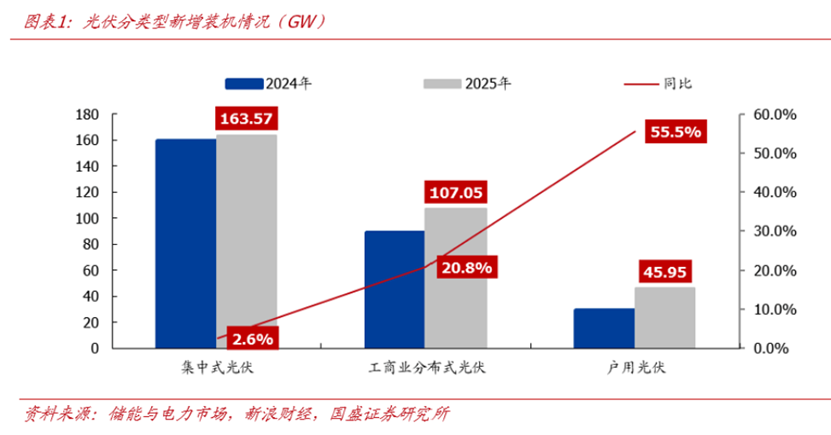
Group 1 - The National Energy Administration plans to implement a new energy system and a series of sector-specific energy plans, focusing on major strategic projects and optimizing energy infrastructure [1] - Key projects include the construction of hydropower, wind, solar, and nuclear energy bases, as well as the enhancement of electric vehicle charging networks and integrated energy bases [1] - Guosheng Securities forecasts that by 2026, an additional 180 GW to 240 GW of solar capacity will be installed, with an average annual increase of 238 GW to 287 GW during the 14th Five-Year Plan period [1] Group 2 - The report emphasizes the need for the solar industry to shift from competition based on scale and price to value competition, integrating with various sectors such as commercial aerospace and hydrogen production [1] - The electricity market is expected to reflect the multi-dimensional value of electric resources, leading to profit improvement and value reassessment in the power sector [3]

国家能源局法改司司长宋雯:深化改革加快构建适应新型能源体系的体制机制
Zhong Guo Dian Li Bao· 2026-02-24 00:47
Core Viewpoint - The article emphasizes the need for deepening reforms in the energy sector to adapt to a new energy system, focusing on high-quality development, safety, and low-carbon transition amidst complex international energy dynamics and geopolitical conflicts [2]. Group 1: Achievements in Energy Reform - The "14th Five-Year Plan" period has seen significant progress in energy system reforms, enhancing development momentum and achieving high-quality energy development through a combination of policies [4]. - The energy market structure has been improved, with nearly 80% of electricity prices determined by market competition and over 970,000 registered electricity market entities [4]. - The establishment of a unified national energy market system is underway, with a preliminary national electricity market and a developing oil and gas market structure [5]. Group 2: Challenges Ahead - The next five years are critical for achieving carbon peak goals and accelerating the construction of a new energy system, requiring the resolution of four key systemic obstacles [8]. - The need for a green transition in energy supply mechanisms is urgent, with a target of 3.6 billion kilowatts of new energy capacity by 2035, necessitating a shift towards renewable energy while managing fossil fuel phase-out [9]. - The energy consumption side requires enhanced mechanisms to stimulate flexibility and innovation, as new business models and green energy consumption patterns emerge [10]. Group 3: Strategic Measures for Reform - The article outlines strategic measures to strengthen energy supply resilience, emphasizing the importance of integrating renewable and fossil energy sources and enhancing the operational capacity of energy systems [13]. - A green consumption guidance mechanism is proposed to promote sustainable energy use, including the establishment of a green energy consumption incentive system and the expansion of green certificate markets [14]. - The development of market and pricing mechanisms that reflect supply and demand dynamics is crucial, alongside the establishment of a modern energy governance system to ensure regulatory effectiveness and international cooperation [15].
国家能源局规划司司长任育之:推动“十五五”初步建成新型能源体系
Zhong Guo Dian Li Bao· 2026-02-24 00:40
Core Viewpoint - The article emphasizes the importance of establishing a new energy system during the "14th Five-Year Plan" and the upcoming "15th Five-Year Plan," highlighting the need for energy security and the transition to a low-carbon economy as key national strategies [2][4][10]. Group 1: Achievements of the 14th Five-Year Plan - The "14th Five-Year Plan" successfully completed 14 major indicators, 19 strategic tasks, and 34 significant projects, laying a solid foundation for the new energy system [4]. - Primary energy production exceeded 5 billion tons of standard coal, with a self-sufficiency rate maintained above 80%, ensuring stable energy supply [4]. - Non-fossil energy accounted for over 20% of total energy consumption, with nearly half of the energy demand increase during this period met by non-fossil sources [4]. Group 2: Challenges and New Requirements - The global energy landscape is undergoing significant changes, with increased uncertainty affecting energy security, including intensified competition for resources and market access [7]. - Domestic energy demand is growing rigidly, with peak load characteristics becoming more pronounced, complicating energy system management [7][8]. - Achieving carbon peak targets presents challenges, requiring a shift towards non-fossil energy sources and the establishment of market mechanisms reflecting the diverse values of different energy types [8][9]. Group 3: Goals and Strategies for the 15th Five-Year Plan - The primary goal for the "15th Five-Year Plan" is to establish a new energy system, with specific targets for energy supply security, structural optimization, and technological innovation [11][12]. - The plan aims for non-fossil energy to constitute 25% of total energy consumption and for electricity to account for an increasing share of end-use energy consumption [12]. - Key tasks include building resilient energy infrastructure, enhancing the non-fossil energy supply system, and promoting green and low-carbon energy consumption [12][13]. Group 4: Major Projects and Infrastructure Development - The article outlines the importance of strategic major projects, including the construction of renewable energy bases and the optimization of energy transmission corridors [13]. - Emphasis is placed on developing smaller, innovative projects such as electric vehicle charging networks and zero-carbon parks to support the transition to a green energy system [13].
新华财经早报:2月24日
Xin Hua Cai Jing· 2026-02-24 00:05
Group 1 - The National Energy Administration of China plans to implement a new energy system and sector-specific energy plans by 2026, aiming to enhance energy security and support the modernization of socialism [1] - The Ministry of Commerce of China is evaluating the implications of the U.S. Supreme Court's ruling on tariff lawsuits and is closely monitoring potential trade investigations by the U.S. [1] - China's film box office has surpassed 8 billion yuan in 2026, leading the global market, with the Spring Festival box office exceeding 5.7 billion yuan [1] Group 2 - The U.S. Customs and Border Protection announced the cessation of additional import tariffs under the International Emergency Economic Powers Act, effective from February 24, following an executive order by President Trump [3] - Federal Reserve Governor Waller indicated that strong employment data in February may lead to a pause in interest rate cuts, with inflation nearing the 2% target [3] - The European Parliament's vote on U.S.-EU trade agreements is likely to be delayed, affecting the timeline of related processes [3]

国家能源局:“十五五”电能占终端能源消费比重每年提高1个百分点左右
Mei Ri Jing Ji Xin Wen· 2026-02-23 13:09
每经AI快讯,2月23日,据国家能源局官微消息,国家能源局规划司司长任育之表示,加强目标指标牵 引。目标指标是能源发展的"指挥棒"。"十五五"以初步建成新型能源体系为总目标,一要供给保障更 足,能源综合生产能力进一步提升,有效应对正常供需波动和非正常干扰冲击;二要能源结构更优,新 能源成为电力装机主体,非化石能源消费比重达到25%,电能占终端能源消费比重每年提高1个百分点 左右;三要系统形态更新,坚强韧性、绿色低碳、集成融合、智能高效的新型能源基础设施体系更加完 善;四要改革创新更强,能源科技创新和产业创新深度融合,适应新型能源体系的市场和价格机制加快 健全。 ...
深化改革加快构建 适应新型能源体系的体制机制
Zhong Guo Dian Li Bao· 2026-02-18 08:04
Core Viewpoint - The 20th Central Committee of the Communist Party of China emphasizes the need for high-quality development and comprehensive reform in the energy sector during the 14th Five-Year Plan period, addressing challenges in energy supply, low-carbon transition, and economic efficiency to meet growing energy consumption demands [1][5]. Group 1: Achievements in Energy Reform - The energy market structure has been further improved, with nearly 80% of electricity prices determined by market competition and over 970,000 registered electricity market entities [2]. - A unified national energy market system is being established, with significant progress in electricity and oil and gas markets, enhancing resource allocation efficiency [3]. - The market-oriented energy pricing mechanism is being streamlined, with competitive pricing for coal and renewable energy, and a shift in the pricing model for natural monopolies [4]. Group 2: Future Directions for Energy Reform - The next five years are critical for achieving carbon peak goals and accelerating the construction of a new energy system, focusing on overcoming systemic barriers [5][6]. - The energy supply side needs to transition towards a model dominated by renewable energy, targeting a total installed capacity of 3.6 billion kilowatts by 2035, with an annual growth of 200 million kilowatts [5]. - The energy consumption side requires mechanisms to stimulate flexibility and innovation, adapting to new business models and enhancing green energy consumption [6][10]. Group 3: Key Challenges and Mechanisms - There is a need to enhance the resilience and safety of the energy system, adapting to the dual interaction of supply and demand in the context of increasing renewable energy [7]. - The traditional energy resource allocation method is becoming inadequate, necessitating the establishment of a more effective market mechanism to reflect the costs of energy transition and security [8]. - A modern energy governance system is essential, focusing on legal frameworks, regulatory mechanisms, and international cooperation to support energy transition [11].