
新能源汽车产业链

Search documents
上万零件、4小时内,一辆智能新能源汽车!“超级产业链”展现磅礴力量
Yang Shi Wang· 2025-07-17 06:45
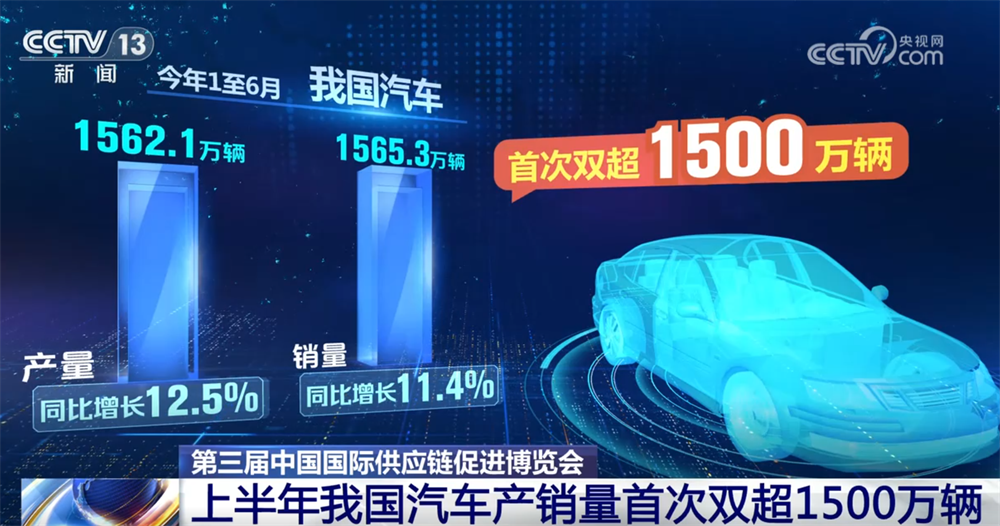
Core Insights - The automotive industry in China has shown significant growth in the first half of the year, with production and sales exceeding 15.6 million units for the first time, marking a year-on-year increase of 12.5% and 11.4% respectively [3] - The performance of new energy vehicles (NEVs) has been particularly impressive, with production and sales reaching 6.968 million and 6.937 million units, reflecting year-on-year growth of 41.4% and 40.3% [3] - The NEV industry has maintained its position as the global leader for ten consecutive years, with continuous improvements in the level of intelligence and connectivity across the sector [3] Industry Composition - A new energy vehicle consists of three core components: the power system (motor, battery, and electronic control), the body and chassis (which provide structural support), and the intelligent cockpit and electronic systems (which enhance user experience and intelligence) [7][8] Supply Chain Efficiency - The "super industrial chain" in the Yangtze River Delta allows a new energy vehicle manufacturer to source necessary components within four hours, demonstrating a highly efficient supply chain [8] - In Changzhou, 30% of core components come from local suppliers, with over 500 automotive parts companies and a 97% completeness of the supply chain [8] - The broader Jiangsu region offers access to 50% of supporting resources within a 120-180 km radius, enabling full-category delivery within two hours [10] - The entire Yangtze River Delta region can provide 80% of the necessary resources for a new energy vehicle within four hours, showcasing the rapid flow of information and logistics across the supply chain [13] Collaborative Dynamics - The interconnected industrial circles of Changzhou, Jiangsu, and the Yangtze River Delta operate like a precise clock, efficiently coordinating the assembly of thousands of parts into a new energy vehicle within a short timeframe [15]

中国新能源汽车:从电动化领跑,到智驾定义新未来
淡水泉投资· 2025-07-08 09:10
Core Viewpoint - The Chinese electric vehicle (EV) market has experienced explosive growth, with production and sales increasing from approximately 13,000 units in 2012 to over 1 million units in 2018, and projected to exceed 10 million units by 2024, achieving a market penetration rate of over 50% [1][2]. Group 1: Market Dynamics - In 2023, China surpassed Japan in automotive exports, marking a significant milestone in global influence [2]. - Domestic brands are expected to surpass Tesla in single-brand sales in Europe by May 2025, indicating a shift in market leadership [2]. - The transition from explosive growth to a new phase in the EV industry is characterized by increased competition and a focus on smart technology [2][5]. Group 2: Competitive Landscape - The market share of domestic brands has surged from approximately 6.8 million units in 2020 to 14.9 million units by 2024, while international brands' sales have declined from 12.5 million to about 8 million units during the same period [5]. - The average selling price (ASP) of vehicles has been declining, with year-on-year changes of -0.1%, -8.3%, and -6.4% for 2023, 2024, and the first five months of 2025, respectively [15]. Group 3: Consumer Preferences and Product Development - The cost advantages of EVs are significant, with electricity costs typically being one-fifth of fuel costs and maintenance costs being one-third or lower than that of traditional vehicles [8]. - Domestic brands have successfully launched high-end models, demonstrating strong pricing power, while traditional luxury brands have had to reduce prices to maintain market share [10]. Group 4: Supply Chain and Industry Structure - China dominates the global battery manufacturing market, holding over two-thirds of the market share, and maintains a leading position in key materials and manufacturing processes [14]. - The competitive landscape is evolving, with a clear distinction between low-end and high-end markets, where the high-end segment is experiencing structural growth and profitability [15]. Group 5: Smart Driving Technology - Smart driving technology is categorized into six levels (L0 to L5), with current market offerings primarily at L1-L2, while L3 is expected to be commercially viable in the near future [19][21]. - The penetration rate of advanced smart driving features, such as Navigate on Autopilot (NOA), has exceeded expectations, reaching nearly 10% in urban environments [26]. Group 6: Future Outlook - The automotive industry is transitioning from mechanical to electronic and smart technologies, with a focus on integrating AI, big data, and advanced chips [36]. - The ability to combine hardware and software capabilities is becoming a new threshold for companies in the industry, as they aim to redefine the future of mobility [36][37].
2025年H1电解液市场盘点——国内电解液产量91.2万吨,同比增速将近50%
鑫椤锂电· 2025-07-08 02:25
Core Viewpoint - The global electric vehicle supply chain remains highly prosperous in the first half of 2025, with China's dominance in the market further strengthened [2]. Group 1: Production and Growth - In the first half of 2025, domestic electrolyte production in China reached 912,000 tons, a year-on-year increase of 49.74%, while global production reached 980,000 tons, up 43.12% year-on-year [3]. - Despite a slowdown compared to the over 80% growth rates of 2022-2023, the nearly 50% year-on-year growth in China and over 40% globally in 2025H1 indicates strong market momentum even at high base levels [5]. Group 2: Market Competition Landscape - The domestic electrolyte market concentration continues to rise, with leading companies showing significant advantages. Tianqi Materials holds over 30% market share, followed by BYD and New Zobang [8]. - The top three companies (Tianqi, BYD, New Zobang) together control 61.73% of the market, firmly establishing their dominance [9]. - The competition among second-tier manufacturers is intense, with companies like Xianghe Kunlun, Shida Shenghua, and Zhuhai Saiwei each holding market shares in the 4%-5% range [9]. - The share of "other" manufacturers is only 4.65%, indicating a narrowing space for smaller players and an increasing Matthew effect in the industry [10]. Group 3: Future Outlook - The electrolyte market in the first half of 2025 continues to show high growth, with Chinese companies maintaining a core position in the global supply chain. The market structure exhibits a "tripod" pattern dominated by Tianqi, BYD, and New Zobang, while second-tier companies face fierce competition [13]. - As the global electrification process deepens, technological iterations and cost control will be key for companies to maintain and enhance competitiveness, with industry concentration expected to tilt further towards leading firms [13].




中国高端市场不再“崇洋”!蔚来李斌:以前做车能卖20万就感觉突破天花板,现在ET9能卖80万【附新能源汽车行业市场分析】
Qian Zhan Wang· 2025-07-03 03:42
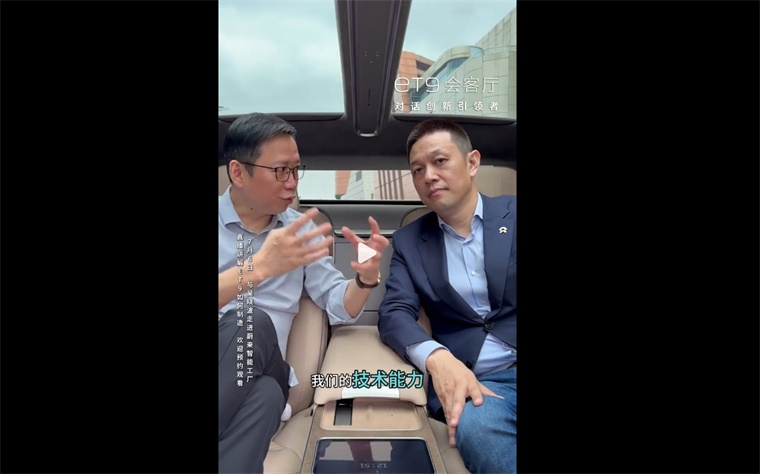
Core Insights - The conversation between NIO's CEO Li Bin and renowned financial writer Wu Xiaobo highlights the significant changes in the Chinese automotive market over the past decade, particularly in the acceptance of high-end domestic brands like the NIO ET9 [1][3] Group 1: NIO ET9 and Technological Advancements - The NIO ET9 is positioned as a high-end vehicle, priced at 808,000 to 818,000 yuan, reflecting a shift in consumer willingness to pay for domestic brands [1] - The ET9 features the world's first automotive-grade 5nm intelligent driving chip, with NIO achieving mass production three months ahead of international competitor NVIDIA [3] - Chinese companies have transitioned from "catching up" to "keeping pace" and even "leading" in high-end chip, battery technology, and intelligent driving systems [3] Group 2: Growth of China's New Energy Vehicle (NEV) Market - Since 2014, policies such as tax exemptions and subsidies have significantly boosted market demand for NEVs, leading to a rapid increase in production and sales [5] - In 2023, China's NEV production reached 9.587 million units, marking a year-on-year growth of 35.8% [5] - From 2012 to 2023, NEV sales in China surged from 12,800 units to 9.495 million units, demonstrating exponential growth [6] Group 3: Market Dynamics and Future Outlook - The market penetration of NEVs has reached a level comparable to traditional gasoline vehicles, indicating a maturing phase in the automotive industry [9] - The overall Chinese automotive market is entering a relatively stable development stage after several years of rapid growth [9]

Model Y首次完成全程无人驾驶!小米雷军点赞:特斯拉确实了不起,引领行业趋势【附新能源汽车行业市场分析】
Qian Zhan Wang· 2025-06-30 10:29
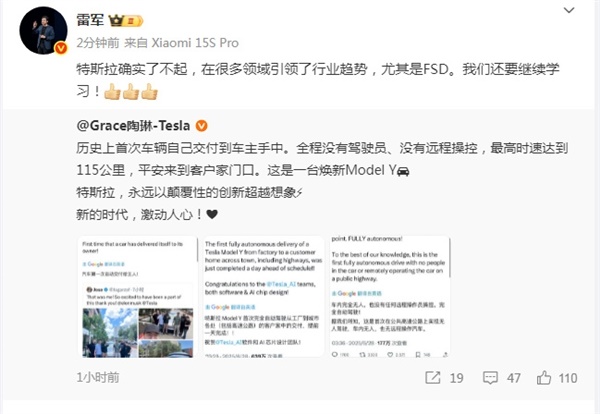
Group 1 - Lei Jun, founder of Xiaomi Auto, publicly praised Tesla's Full Self-Driving (FSD) technology, highlighting Tesla's leadership in the industry and expressing a desire to learn from it [1] - Tesla achieved a historic milestone by delivering a vehicle autonomously without a driver or remote control, reaching a top speed of 115 km/h [1] - Xiaomi Auto's second model, the Xiaomi YU7, received over 200,000 pre-orders within three minutes, showcasing strong market demand [2] Group 2 - In 2023, China's new energy vehicle production reached 9.587 million units, with projections to exceed 12.888 million units in 2024, maintaining the world's leading position for ten consecutive years [5] - Xiaomi's investment strategy has involved investing in nearly 100 companies across the automotive supply chain, focusing on areas such as autonomous driving and smart cockpit technology [7] - The Chinese new energy vehicle market has benefited from a complete industrial chain, supported by major players like CATL and BYD, which dominate global battery installation [2][10] Group 3 - The shift in China's automotive policy focus from quantity to quality has been significant, with a reported 34.7% global market share in early 2025, an increase of 2.7 percentage points from the previous year [10] - The competitive landscape is intensifying as companies like Xiaomi, BYD, and NIO strive to enhance their autonomous driving capabilities to challenge Tesla's dominance [10] - The development of the new energy vehicle industry is expected to drive growth in related sectors, including battery, motor, and electric control manufacturing, as well as charging infrastructure [10]


【新华财经调查】公众认购倍数达1798.42倍!产业园REITs再添“新玩家”——一线实勘中金亦庄产业园REIT底层资产
Xin Hua Cai Jing· 2025-06-25 23:17
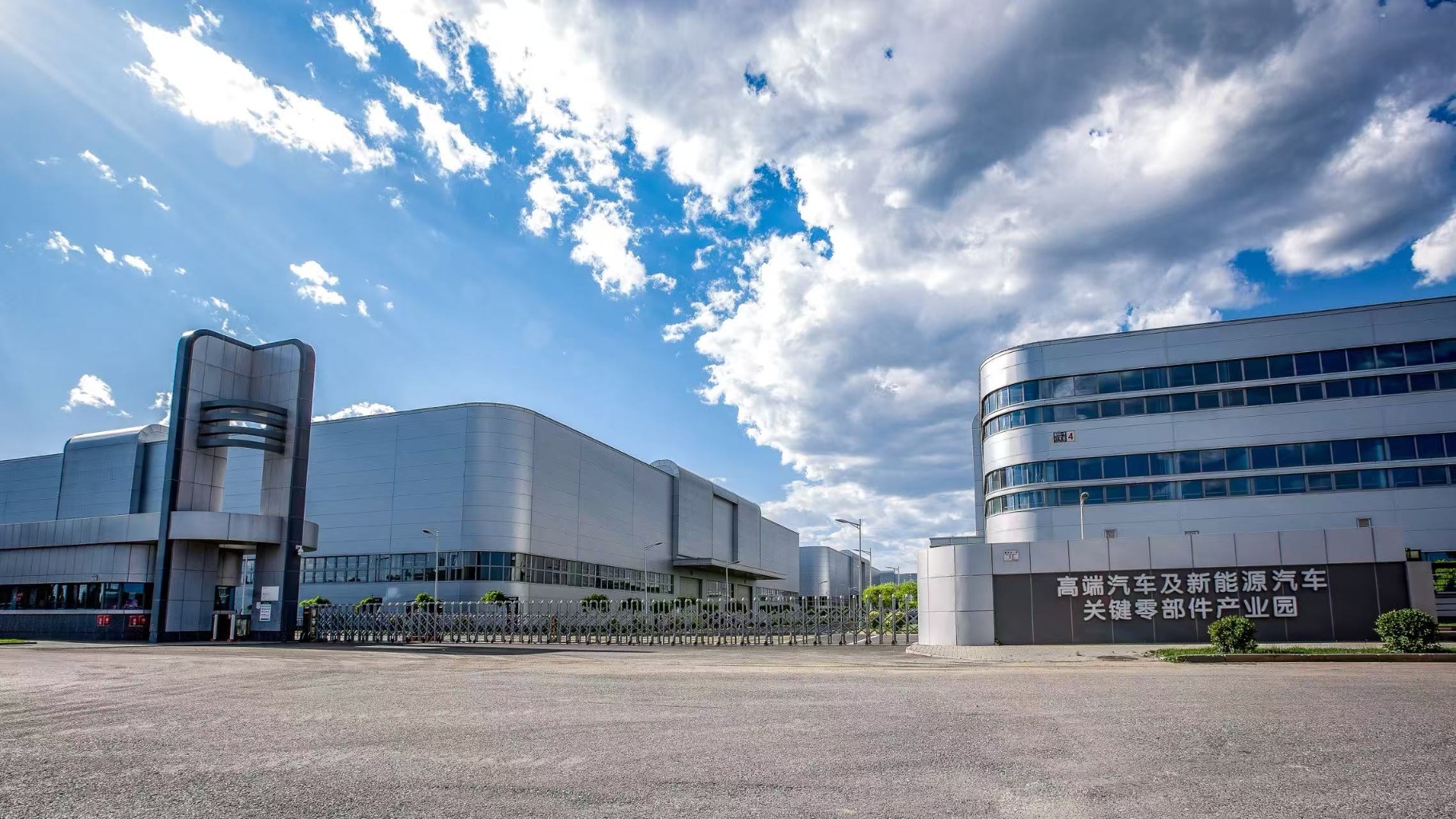
Core Viewpoint - The successful issuance of the Zhongjin Yizhuang Industrial Park REIT has attracted significant investor interest, with subscription amounts reaching 647.43 billion units, which is 1,798.42 times the initial public offering amount, and a total fundraising scale of 236.82 billion yuan, 217.67 times the initial fundraising scale of 1.088 billion yuan, indicating a strong market response [1][2]. Group 1: Investment Highlights - The Zhongjin Yizhuang Industrial Park REIT focuses on high-growth sectors, particularly the new energy vehicle industry, with underlying assets primarily occupied by tenants in the automotive manufacturing and technology promotion sectors, aligning well with the region's dominant industries [2][4]. - The project benefits from policy support in the economic development zone, enhancing tenant stability through agreements that require minimum operational periods and tax commitments, thereby reducing default risks [4]. - There is significant potential for asset expansion, with the project having over 13 billion yuan in quality expandable assets in high-tech industries, which can be injected into the fund to enhance scale and returns [4]. Group 2: Market Context and Future Outlook - The industrial park sector has shown resilience, with industrial factory REITs maintaining high occupancy rates above 90%, demonstrating strong anti-cyclical capabilities, while research and office REITs face challenges with declining occupancy rates [5][6]. - The successful issuance of the Zhongjin Yizhuang Industrial Park REIT is expected to revitalize existing industrial park assets in Beijing and provide important investment tools for capital market participants, contributing to the high-quality development of China's public REITs market [4][9]. - The issuance will facilitate the attraction of emerging industries and support the upgrading of traditional industries, promoting a diversified industrial structure and enhancing competitiveness through technological innovation [11].
新能源车ETF(159806)涨超2.4%,政策与固态电池进展提振板块预期
Mei Ri Jing Ji Xin Wen· 2025-06-24 05:14
Group 1 - The new energy vehicle (NEV) sector is experiencing a strong rebound, with the NEV ETF (159806) rising over 2.4% [1] - The government is implementing a vehicle replacement policy, with a total of 138 billion yuan in central funds to be distributed in July and October, which is expected to stabilize market demand and alleviate pessimism regarding hydrogen demand [1] - The demand for complete vehicles is anticipated to recover due to the resurgence of supply in the automotive market and the upcoming peak sales season in September and October [1] Group 2 - The solid-state battery industry is transitioning from small-scale trials to pilot production, with leading manufacturers securing MWh-level orders and planning GWh-level production lines [1] - The traditional lithium battery equipment orders are experiencing explosive growth as battery companies restart global capital expenditures, leading to a potential full recovery of the main business scale within the year [1] - The European Union is investing 28 billion euros in battery materials to develop 60 strategic raw material projects, enhancing supply chain resilience [1] Group 3 - The NEV ETF closely tracks the CS New Energy Vehicle Index, which selects listed companies across the entire NEV industry chain, including upstream material supply, midstream key component production, and downstream vehicle manufacturing [2] - The index has shown a daily increase of 1.33%, reflecting the vitality of the industry and covering the entire NEV industry chain systematically [2] - The index's construction features a highly concentrated industry allocation and outstanding growth characteristics, accurately reflecting the overall market performance of the NEV sector [2]
新能源车ETF(159806)涨近0.6%,行业需求回暖与补贴退坡引关注
Mei Ri Jing Ji Xin Wen· 2025-06-19 03:16
Core Viewpoint - The new energy vehicle (NEV) industry is facing challenges due to the suspension of local trade-in subsidy policies, prompting a recommendation to continue investing in stable profit sectors like lithium batteries and structural components, while increasing focus on new directions such as solid-state batteries [1] Industry Summary - In May, China's power battery installation volume reached 57.1 GWh, marking a year-on-year increase of 43.1%, with lithium iron phosphate batteries accounting for 81.6% of the total [1] - The spot price of lithium carbonate has slightly increased to 60,650 CNY per ton, although market transactions remain sluggish; prices for ternary materials continue to decline, while prices for separators and electrolytes remain stable [1] - The industry risks include slower-than-expected development of NEVs, potential disruptive technological breakthroughs, insufficient capacity expansion, and fluctuations in raw material prices [1] ETF and Index Information - The New Energy Vehicle ETF (159806) tracks the CS New Energy Vehicle Index (399976), which is compiled by China Securities Index Co., Ltd. and focuses on A-share listed companies within the NEV industry chain [1] - The index constituents cover key areas such as lithium batteries, motors, electronic controls, and vehicle manufacturing, providing a comprehensive reflection of the overall performance of the NEV industry [1] - The industry allocation is highly concentrated in NEV-related manufacturing, with an overall growth-oriented investment style [1]
愿引进更多广州“智造”
Guang Zhou Ri Bao· 2025-05-21 20:08
Group 1 - ASEAN is currently China's largest trading partner, and 2024-2025 is designated as the "China-ASEAN Cultural Exchange Year" [1] - A delegation from ASEAN countries, including representatives from Singapore, Myanmar, Malaysia, Thailand, Laos, Vietnam, Cambodia, and Indonesia, visited Guangzhou to enhance cooperation with the Guangdong-Hong Kong-Macao Greater Bay Area [1] - The delegation praised the achievements of the Sino-Singapore Guangzhou Knowledge City and expressed interest in promoting more Singaporean enterprises to develop there [1] Group 2 - The delegation experienced the development of Guangzhou's automotive industry, particularly its complete new energy vehicle supply chain, and plans to promote cooperation with their home countries [1] - The delegation visited the exhibition of Visionox Technology Co., Ltd., where they were impressed by the company's products and expressed intentions to introduce these products to their home markets [2] - The delegation also toured Nansha District, learning about its strategic positioning and development plans, and expressed interest in enhancing cooperation in industrial connections and port logistics [2]
新能源汽车行业周报:电动车产销两旺,聚焦核心β
Huaxin Securities· 2025-05-18 08:25
证 券 研 究 报 告 行业周报 电动车产销两旺,聚焦核心β 新能源汽车行业周报 投资评级: ( ) 报告日期: 推荐 维持 2025年05月18日 ◼ 分析师:黎江涛 ◼ SAC编号:S1050521120002 投 资 要 点 继续看好板块机会。根据中汽协数据,2025年4月新能源汽车产销分别完成125.1万辆和122.6万辆,同比分别增长43.8%和 44.2%。2025年1-4月,新能源汽车产销分别完成442.9万辆和430万辆,同比分别增长48.3%和46.2%,表现强劲。供给端, 电池及主机厂新品不断推出,需求端反馈积极,政策也不断发力。价格层面,产业链历经价格大幅下行,资本开支不断收缩, 供需格局不断优化,行业协会、产业链公司均在积极优化产能与供给,力争价格保障企业盈利。整体而言,产业链价格处于底 部,价格易涨难跌,需求端韧性强劲,调整带来布局良机,产业链核心公司估值处于历史低水平,看好产业链优质公司。 行业评级及投资策略: 政策持续呵护,供给端部分企业开始收缩资本开支,供需结构在边际优化,2025年产业链价格触底修复。继续优选有望贡献 超额收益方向,看好机器人、固态电池、电池材料α品种、液冷等 ...
