
载人航天

Search documents
心怀凌云壮志 逐梦星辰大海——记神舟二十一号航天员乘组
Xin Hua She· 2025-10-30 15:56
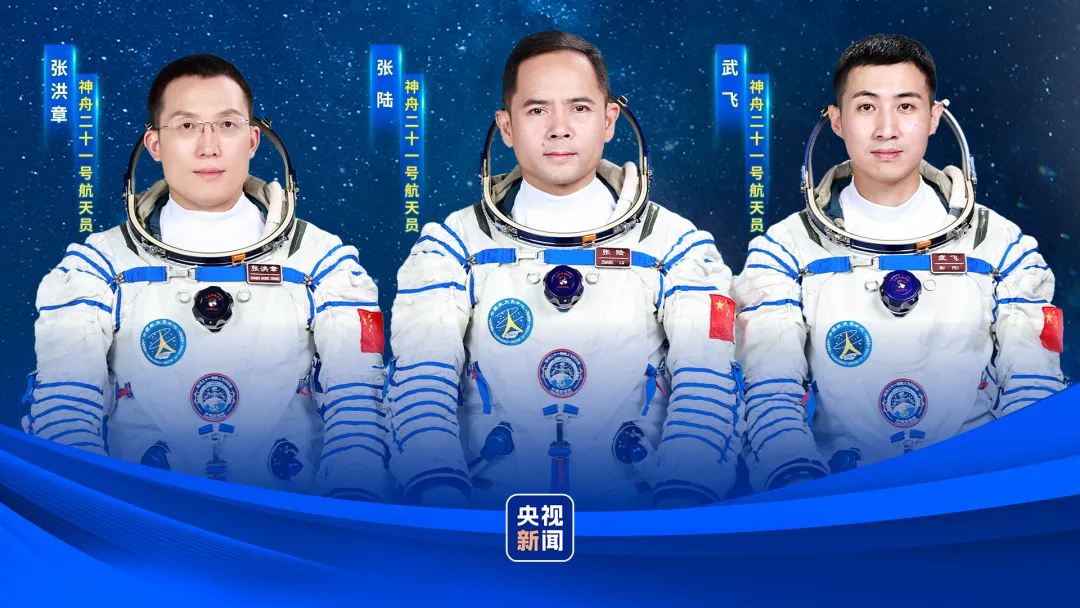
Core Points - The Shenzhou 21 mission is set to launch on October 31, 2023, with a crew of three astronauts, including Zhang Lu, who will serve as the commander, and two first-time space travelers, Wu Fei and Zhang Hongzhang [1][2] - This mission marks a significant step in China's manned space program, showcasing a diverse crew representing different generations and expertise [1][4] Group 1: Astronaut Profiles - Zhang Lu, the commander, has extensive experience and is expected to break the record for the most spacewalks by a Chinese astronaut [2][3] - Wu Fei, at 32 years old, is the youngest astronaut to execute a mission for China, bringing a background in spacecraft thermal testing [5][6] - Zhang Hongzhang, a payload specialist, has a strong research background in new materials and will conduct scientific experiments in space [7][9] Group 2: Mission Objectives and Expectations - The crew aims to achieve several milestones, including the first "space rendezvous" and the completion of multiple spacewalks, contributing to the establishment of a long-term human presence in space [3][4] - The astronauts will engage in various scientific experiments, including thermal control system tests and other research projects, enhancing China's capabilities in space technology [6][10] - The mission is expected to foster collaboration between astronauts and ground researchers, ensuring the successful execution of complex experiments [10]
10月30日新闻夜览
Sou Hu Cai Jing· 2025-10-30 12:25
Group 1 - The Ministry of Commerce emphasizes the importance of the results from economic and trade consultations with the U.S. and expresses hope for effective implementation to enhance certainty and stability in China-U.S. economic cooperation and the global economy [1] Group 2 - The Central Commission for Discipline Inspection has publicly reported two typical issues related to reducing formalism and alleviating burdens on grassroots levels [2] Group 3 - In the first three quarters, revenue from large-scale cultural enterprises in China grew by 7.9%, driven significantly by the cultural service industry and the rapid development of new cultural business formats [7] Group 4 - A report indicates that China's share of globally recognized "hot" papers has surpassed 50%, reaching 53.2%, maintaining the top position worldwide, while the number of highly cited papers ranks second globally, with a narrowing gap with the U.S. [8] Group 5 - The Shenzhou-20 mission is expected to set a new record for the longest duration of a Chinese astronaut crew in space, currently at 188 days, with smooth progress reported for the mission [11] Group 6 - A research team from the Nanjing Institute of Geology and Palaeontology has discovered a complex three-dimensional animal burrow fossil dating back approximately 550 million years, marking it as one of the oldest known complex animal cave fossils [14] Group 7 - The Federal Reserve has lowered the federal funds rate target range by 25 basis points to between 3.75% and 4.00%, with Chairman Powell indicating that further rate cuts in December are not guaranteed, amidst increasing internal divisions and uncertainties in economic data [21]


中国瞄准10月31日23时44分发射神舟二十一号载人飞船
Zhong Guo Xin Wen Wang· 2025-10-30 07:05
Core Points - China is set to launch the Shenzhou-21 manned spacecraft on October 31 at 23:44 Beijing time, with a crew consisting of Zhang Lu, Wu Fei, and Zhang Hongzhang [1] - The primary objective of the Shenzhou-21 mission is to conduct an in-orbit crew rotation with the Shenzhou-20 crew, stay in the space station for approximately six months, and perform various scientific and application tasks [1] - The Shenzhou-21 spacecraft will utilize an autonomous rapid rendezvous and docking mode, docking with the Tianhe core module approximately 3.5 hours after entering orbit [1] Mission Details - The Shenzhou-21 crew will engage in space science and application work, extravehicular activities, cargo operations, and installation of space debris protection devices [1] - The mission will also include public education activities and space-based experiments to maximize the comprehensive application benefits of the space station [1] - During the stay in orbit, the Shenzhou-21 crew will receive visits from the Tianzhou-10 cargo spacecraft and the Shenzhou-22 manned spacecraft [1] Shenzhou-20 Crew Status - The Shenzhou-20 crew has been in orbit for 188 days, potentially setting a new record for the longest duration of a Chinese astronaut crew in space [2] - Commander Chen Dong has become the first Chinese astronaut to exceed 400 days in space and has completed six extravehicular activities, making him the most experienced in this regard among Chinese astronauts [2] - The other two crew members, Chen Zhongrui and Wang Jie, are successfully completing their first flight missions [2]
中国科学院张洪章研究员即将出征!神舟二十一号航天员乘组亮相
Xin Hua She· 2025-10-30 03:59
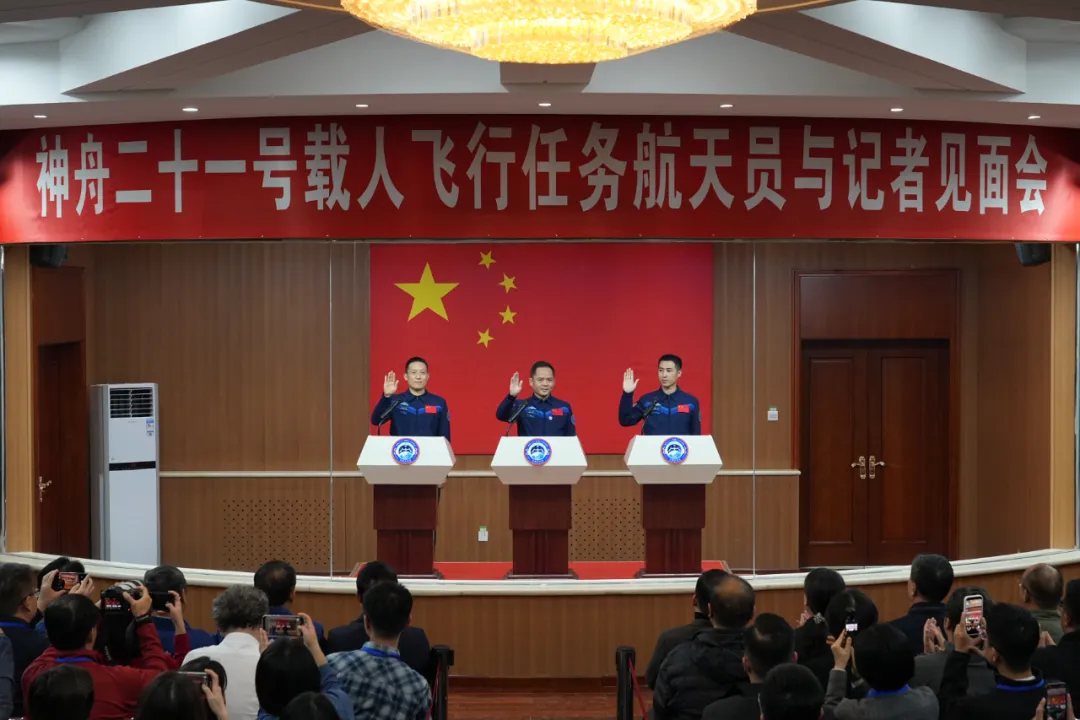
Core Points - The Shenzhou 21 manned spaceflight mission features astronauts Zhang Lu, Wu Fei, and Zhang Hongzhang, who recently met with the media at the Jiuquan Satellite Launch Center [1] - Zhang Hongzhang, a researcher from the Chinese Academy of Sciences, was selected as one of the payload experts for the Shenzhou 21 mission, marking a significant step in China's space exploration efforts [3][12] Group 1: Zhang Hongzhang's Background - Zhang Hongzhang was born in 1986 in Shandong Province and has a strong academic background, holding a doctorate and being a researcher at the Chinese Academy of Sciences [3] - He was selected as a payload expert for the third batch of Chinese astronauts in September 2020, demonstrating his commitment to serving the nation [12] Group 2: Academic and Research Journey - Zhang showed a strong passion for learning and science from a young age, excelling in mathematics and later developing an interest in life sciences [6][7] - He pursued a degree in chemical engineering at Shandong University and later completed a master's and doctoral program at the Dalian Institute of Chemical Physics, focusing on innovative research in ion-conducting membranes [9][10] Group 3: Transition to Space Mission - In 2018, Zhang decided to apply for the astronaut selection, motivated by a desire to contribute to national needs in space exploration [12] - His training involved significant physical and mental preparation, transforming him from a researcher into a capable astronaut ready for the challenges of space [13][19] Group 4: Responsibilities and Aspirations - As a payload expert, Zhang's primary responsibility will be to conduct scientific experiments aboard the space station, emphasizing the importance of collaboration with ground researchers [19] - He expressed a strong commitment to fulfilling his duties and contributing to China's advancements in technology and space exploration [19]
我国锚定2030年前实现登月!神舟二十一号乘组将首次在太空养小鼠,我国正选拔巴基斯坦航天员,将择机安排1人执行短飞
Mei Ri Jing Ji Xin Wen· 2025-10-30 03:25
Core Points - The Shenzhou-21 manned mission is scheduled for launch on October 31 at 23:44 Beijing time, with a crew of three astronauts: Zhang Lu, Wu Fei, and Zhang Hongzhang [1][10] - This mission marks the sixth manned flight in the space station application and development phase and the 37th flight of the manned space program [10] Group 1: Mission Details - The Shenzhou-21 spacecraft will dock with the Tianhe core module approximately 3.5 hours after launch using an autonomous rapid rendezvous and docking mode [10] - The crew will stay in orbit for about six months, during which they will conduct various scientific and application tasks, including spacewalks and cargo operations [10][13] - The mission will also involve the arrival of the Tianzhou-10 cargo spacecraft and the Shenzhou-22 manned spacecraft [10] Group 2: Scientific Research - The crew will carry out 27 new scientific and application projects, focusing on key scientific issues in fields such as space life sciences, aerospace medicine, and space materials science [13] - Notably, the mission will include the first in-orbit experiment with rodents, specifically four mice, to study the effects of microgravity and confinement on behavior [13][14] Group 3: Equipment and Training - One of the space suits currently in orbit has been used over 20 times, surpassing its design life, and will be retired from active use but will undergo further testing [15] - The selection process for Pakistani astronauts has begun, with plans for one to participate in a short-term flight mission alongside Chinese astronauts [16] - Two astronauts from Hong Kong and Macau have completed various training programs and are progressing well towards their future flight missions [17] Group 4: Future Plans - The overall progress of China's manned lunar landing mission is on track, with key components like the Long March 10 rocket and the Dream Chaser spacecraft undergoing development [18][21] - The goal remains to achieve a manned lunar landing by 2030, with ongoing verification of new technologies and rigorous testing schedules [21]
从小标识读懂大梦想 神舟二十一号任务标识让家国情怀“直接拉满”
Yang Shi Wang· 2025-10-28 01:59
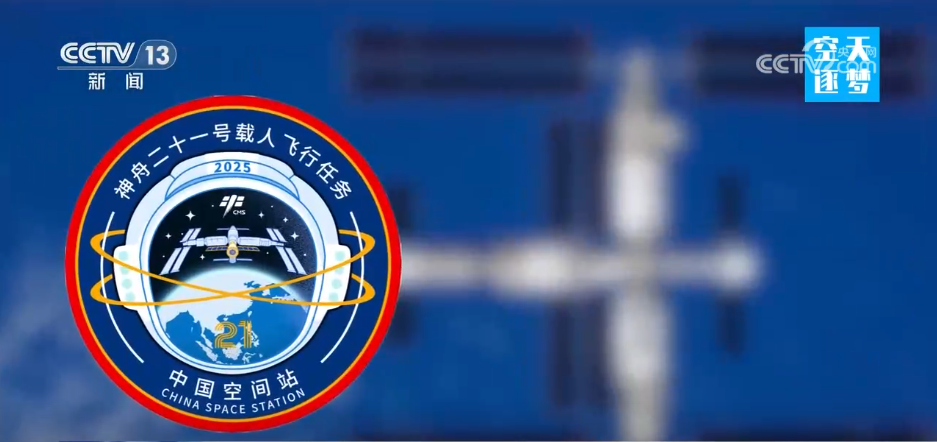
Core Points - The Shenzhou-21 mission emblem showcases elements representing the dedication and contributions of countless Chinese space personnel, highlighting the evolution of China's manned spaceflight from Shenzhou-5 to Shenzhou-21 [5] - The design perspective of the emblem allows viewers to see through the astronaut's helmet, symbolizing a direct connection to the astronauts' experiences [5] - The emblem features a romantic starry background representing the successful docking of Shenzhou-21 with the space station, alongside a depiction of the motherland, emphasizing the emotional connection to China [7] - The two circular rings on the helmet resemble ancient astronomical instruments while also representing the orbits of celestial bodies, illustrating the continuity of China's exploration spirit from ancient times to the present [8] - The emblem serves as a transmission of faith and hope for the upcoming mission, with the Long March 2F rocket ready for launch from the Jiuquan Satellite Launch Center [10]
发射倒计时!多系统守护神舟二十一号出征
Yang Shi Wang· 2025-10-27 16:20
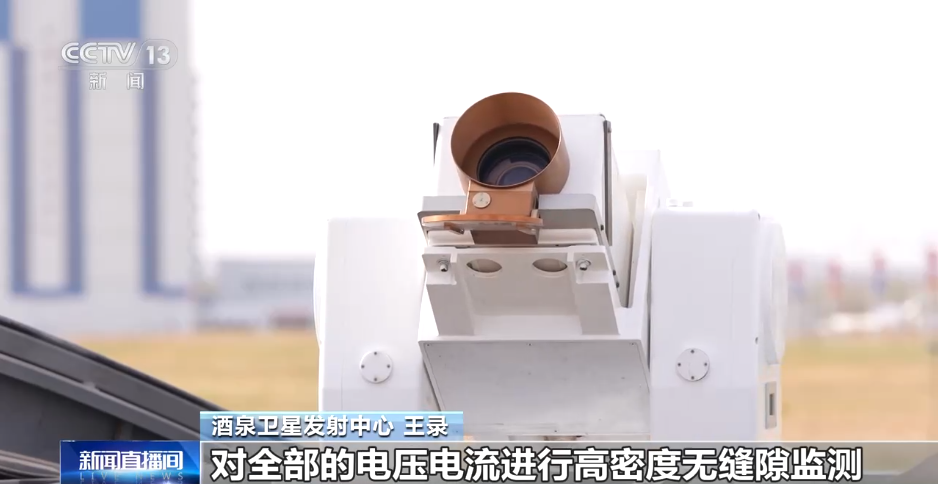
Group 1 - Shenzhou-21 spacecraft and rocket combination has been transported to the launch area and is scheduled for launch soon, with all systems functioning normally and meeting launch conditions [1] - The regional power grid "neural perception system" is in place to ensure power stability and reliability during the Shenzhou-21 mission, responding in milliseconds and operating without errors [2][4] - The system has been operational for three years, successfully monitoring and addressing voltage drop incidents caused by external factors, ensuring reliable power supply through dual circuits and multiple power sources [5] Group 2 - A three-dimensional measurement and control system combining radar and optical devices has been established at the Jiuquan Satellite Launch Center to provide dual insurance for the mission [6] - Upgrades to radar and optical tracking equipment have enhanced measurement accuracy and stability, ensuring continuous and reliable data transmission to the command center during the rocket's ascent [8] - The optical real-time high-speed recording measurement system plays a crucial role in capturing clear images of the rocket's flight, providing essential data for flight attitude analysis and ensuring mission success [10]
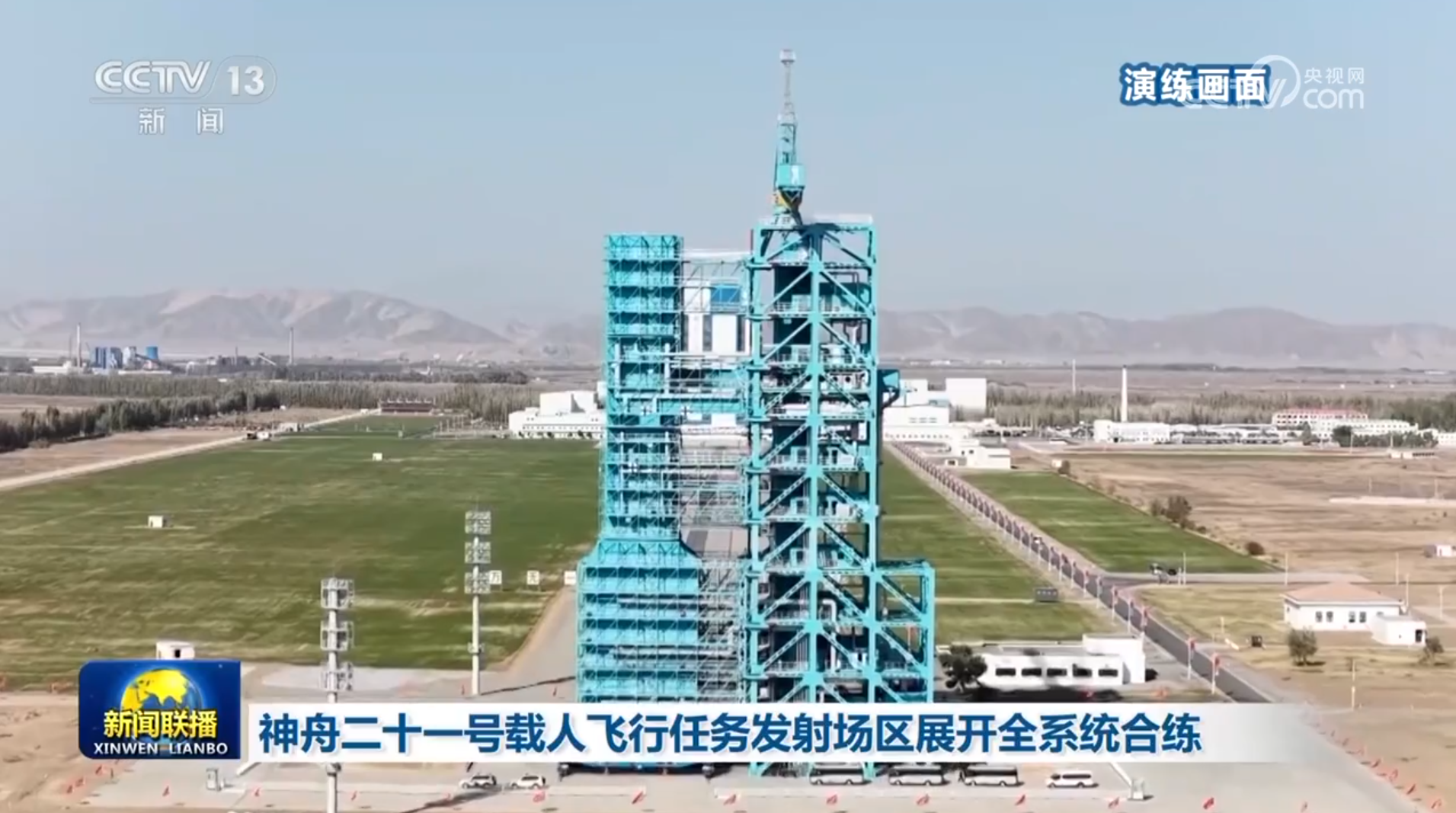
神舟二十一号载人飞行任务发射场区展开全系统合练
Yang Shi Wang· 2025-10-27 12:28
Group 1 - The Shenzhou-21 spacecraft and rocket combination has been transported to the launch area and is scheduled for launch soon [1] - A full-system drill was organized at the launch site on October 27, involving all positions of the Jiuquan Satellite Launch Center's measurement and launch system [3] - The drill included functional checks of subsystems such as the tower, rocket, and spacecraft, simulating the entire process from flight preparation to ignition and separation [3] Group 2 - The astronaut system conducted medical checks and rehearsed tasks related to the launch ceremony, cabin status settings, and post-entry procedures in a one-to-one simulation [3] - The recovery system has begun search and rescue drills in preparation for the return of Shenzhou-20 [3]
人类最大火箭再突破!星舰第11次试飞成功,马斯克现场见证
Sou Hu Cai Jing· 2025-10-16 04:57
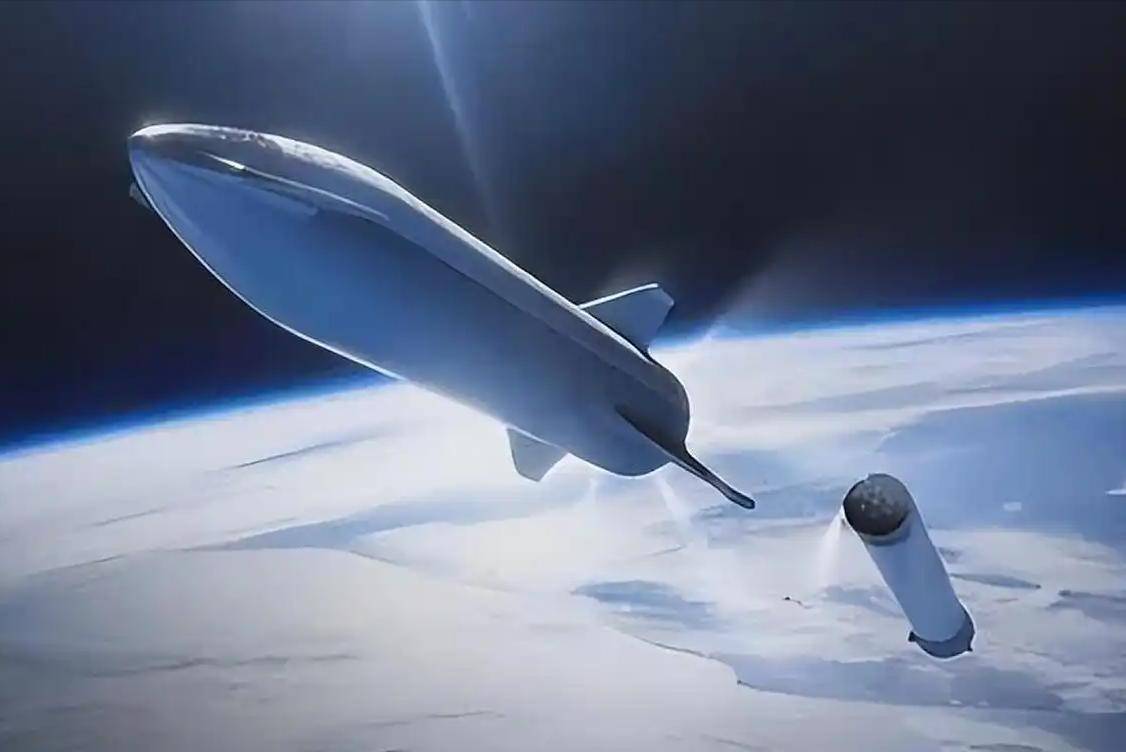
Core Insights - SpaceX's Starship successfully completed its 11th full-scale test flight, marking a significant milestone in its development and demonstrating advancements in technology [1][3][6] Test Flight Details - The flight lasted approximately one hour, during which the rocket circled the Earth and successfully deployed a simulated satellite before both the booster and spacecraft landed safely in the Gulf of Mexico and the Indian Ocean, respectively [1] - This test flight featured new maneuvers aimed at preparing for future vertical landings at the launch site, particularly for crewed spacecraft, indicating SpaceX's progression towards human spaceflight goals [3][5] Elon Musk's Involvement - Elon Musk's presence at the launch site, rather than the control center, reflects his confidence in the mission's success, especially following the previous flight's successful outcome [3] Collaboration with NASA - The test flight is crucial for NASA's plans to return astronauts to the Moon within the next decade, with NASA's acting administrator highlighting its importance for lunar exploration [6] - SpaceX and NASA have an established partnership, with previous collaborations involving the Falcon rocket for transporting personnel and supplies to the International Space Station [7] Starlink Satellite Deployment - The Starship carried eight simulated Starlink satellites, testing its capability as a satellite launch platform, which could significantly reduce launch costs and enhance commercial value [8] Long-term Vision - SpaceX's dual objectives of commercial success through the Starlink program and the ultimate goal of human exploration of Mars are interconnected, emphasizing the need for stable funding to achieve ambitious space exploration goals [9]
22年前杨利伟完成中国载人航天首飞 神舟天舟已“航班化”运行
Xin Jing Bao· 2025-10-15 05:22
Core Viewpoint - October 15 marks the 22nd anniversary of China's first manned spaceflight, highlighting the significant achievement of the Shenzhou 5 mission and the country's advancements in space exploration [1] Group 1: Historical Significance - The Shenzhou 5 spacecraft was launched on October 15, 2003, with astronaut Yang Liwei becoming the first Chinese citizen to enter space [1] - The successful landing of Shenzhou 5 on October 16, 2003, in Inner Mongolia marked China's entry as the third nation capable of independent manned space activities [1] Group 2: Current Developments - Currently, the Shenzhou spacecraft and Tianzhou cargo spacecraft have entered a "scheduled flight" operation mode, indicating a shift towards regularized space missions [1]