
制度型开放

Search documents
加强海湾经济发展规划研究
Jing Ji Ri Bao· 2025-09-26 21:52
Core Insights - The Gulf economy is a crucial and forward-looking area of modern marine economic development, requiring systematic research, top-level design, and planning guidance to support high-quality development of the marine economy [1] Group 1: Geographic and Economic Significance - China's coastline, including mainland and islands, exceeds 32,000 kilometers, with over 160 bays covering more than 10 square kilometers, including 11 large bays with favorable transportation and resource endowments [1] - Bays serve multiple functions such as economic engines, ecological barriers, and strategic points, with 70% of major global ports and 60% of international trade concentrated in these areas [1] Group 2: Lessons from Global Bay Areas - The development of world-class bay areas has historically benefited from the rise of maritime trade, with each bay area leveraging its unique advantages and industrial trends [2] - Examples include the Tokyo Bay area focusing on high-end manufacturing, the New York Bay area integrating finance and creative economy, and the San Francisco Bay area centered on technology and innovation [2] Group 3: Strategic Recommendations for Gulf Economic Development - Conduct comprehensive surveys and assessments to establish a dynamic database covering resource endowments, carrying capacity, and development potential, guiding the direction of different types of bay economic development [3] - Prioritize ecological safety and green development by establishing mechanisms for ecological protection compensation and promoting green industries such as clean energy and marine biotechnology [3] Group 4: Infrastructure and Innovation - Enhance integrated transportation and logistics networks to improve the economic carrying capacity of key bay areas, promoting coordinated development between land and sea [4] - Foster innovation-driven development by focusing on key industrial applications in marine ranching, offshore wind energy, and tidal energy, while exploring integration paths among various industries [5]
从量的扩张转向质的提升 中国金融开放稳步迈新阶
Shang Hai Zheng Quan Bao· 2025-09-26 18:27
(上接1版) 制度型开放成果显著 "十四五"期间,外资金融机构调整优化在华业务布局,发挥引资、引智、引技纽带作用,助力企业"引 进来""走出去",加大对制造业、民营小微、绿色金融等领域的金融支持力度。 目前,全球前50大银行有43家在华设立机构,40家最大的保险公司半数已进入中国。"外资银行和保险 机构总资产超过7万亿元,各项业务保持良好增长态势。"金融监管总局局长李云泽在2025陆家嘴论坛上 表示。 既有"熟面孔"深耕,也有"新朋友"入场。今年3月,外商独资证券公司法巴证券(中国)有限公司开 业;9月,保德信保险资产管理有限公司获批开业,外资独资保险资管队伍再添新员…… 中国证监会主席吴清日前在国新办新闻发布会上介绍,"十四五"期间,新增核准13家外资控股证券基金 期货机构来华展业兴业。 一家家"外商独资"金融机构落子背后,是我国稳步扩大金融制度型开放的生动注脚。近年来,我国放宽 金融服务业市场准入,持续完善准入前国民待遇加负面清单管理模式,完全取消银行、证券、基金管 理、期货、人身险领域的外资持股比例限制,大幅扩大外资机构业务范围。 金融对外开放将走向 "更高水平、更深层次、更宽领域" 国际机构深入布局中 ...
持续提升长三角外贸韧性活力
Jing Ji Ri Bao· 2025-09-25 22:07
Group 1: Trade Performance - The Yangtze River Delta region achieved a total import and export value of 9.59 trillion yuan in the first seven months of this year, representing a year-on-year growth of 5.4% and accounting for 37.3% of the national total, an increase of 0.7 percentage points compared to the same period last year [1] - The region, which occupies less than 4% of the national land area, contributes over one-third of the country's foreign trade, highlighting its critical role in stabilizing national foreign trade [1] - The export structure is shifting from quantity expansion to quality improvement, with high-tech and high-value-added products becoming new growth points [1] Group 2: Role of Private Enterprises - Private enterprises in the Yangtze River Delta region played a significant role in foreign trade, with an import and export value of 5.35 trillion yuan in the first seven months, marking a year-on-year increase of 9.5% and accounting for 55.8% of the total [1] Group 3: Challenges and Strategies - The region faces challenges such as rising international protectionism and unilateralism, which hinder enterprises' expansion into international markets [1] - To promote new development in foreign trade, the region needs to encourage enterprises to explore diversified markets and strengthen cooperation with countries along the Belt and Road Initiative and RCEP member states [2] Group 4: Market System and Services - There is a need to build a unified and open market system by eliminating unreasonable restrictions and promoting reforms such as "one license, multiple addresses" [2] - A comprehensive service platform combining online and offline resources should be established to provide efficient, one-stop services for enterprises [2] Group 5: Financial Support - A multi-tiered support system is necessary, encouraging cooperation between policy banks and commercial banks to support enterprises in foreign trade [3] - Financial institutions should innovate foreign trade financing products and enhance support for private and small enterprises in the Yangtze River Delta region [3]
资本市场从规模驱动迈向质量驱动
Shang Hai Zheng Quan Bao· 2025-09-23 18:04
Group 1 - The core viewpoint emphasizes the importance of attracting and retaining long-term capital in creating a high-quality market ecosystem, with regulatory measures aimed at addressing the imbalance between short-term assessments and long-term goals [1] - The China Securities Regulatory Commission (CSRC) has implemented a series of policies to enhance the weight of long-term assessments for state-owned insurance companies and to shift pension fund evaluations from current yield to cumulative yield over three years, thereby promoting active engagement of long-term capital [1] - As of August 2025, the market value of A-shares held by long-term capital is projected to reach 21.4 trillion yuan, reflecting a 28% increase from the beginning of the year [1] Group 2 - The active participation of private equity and venture capital funds is highlighted as a significant aspect of the optimized investment environment during the 14th Five-Year Plan period, with these funds supporting early-stage innovation [2] - By the end of Q2, the scale of private equity and venture capital funds in China reached 14.4 trillion yuan, with 74% of investments directed towards small and medium-sized enterprises and 50% towards high-tech enterprises [1][2] - The optimization of the investment environment is seen as a release of institutional dividends, with measures such as the establishment of the Sci-Tech Innovation Board and improvements in the ETF product ecosystem enhancing market attractiveness [2] Group 3 - The CSRC is focusing on improving the quality of listed companies through a new three-year action plan aimed at combating financial fraud and enhancing corporate governance [3] - Since the beginning of 2023, there has been a one-third increase in the number of financial fraud leads reported, and companies have been mandated to repurchase shares in cases of illegal selling [3] - The reforms are creating a virtuous cycle of resource allocation efficiency, with significant advancements in sectors like artificial intelligence and commercial aerospace, and the ETF market becoming the largest in Asia [3]
金融供给侧结构性改革成果:从“通道式”开放向“制度型”开放的跨越
Huan Qiu Wang· 2025-09-23 08:13
Core Insights - The Chinese government is focusing on high-quality completion of the "14th Five-Year Plan" with significant achievements in the financial sector [1][2] - Financial supply-side structural reform is being emphasized, extending from the real economy to the financial sector [1][2] Group 1: Financial Sector Developments - The People's Bank of China is promoting financial supply-side structural reforms, enhancing the financial system's structure and collaboration [1] - There has been a notable shift from "channel-based" to "institutional" openness in the financial sector during the "14th Five-Year Plan" [2] - Key areas such as securities, funds, futures, and life insurance have seen the complete removal of foreign ownership limits [2] Group 2: International Financial Integration - Major international investment banks like JPMorgan, Goldman Sachs, Standard Chartered, and Société Générale have been approved to establish wholly-owned brokerages in China [2] - Global asset management giants such as Robeco and BlackRock have set up wholly-owned public funds in China [2] - The cross-border investment channels have been continuously expanded, starting from the Shanghai-Hong Kong Stock Connect to the Bond Connect and Swap Connect [2] Group 3: Risk Management and Financial Stability - The central bank has optimized the macro-prudential framework to prevent and mitigate systemic financial risks [2] - A targeted approach is being taken to address prominent risks in high-risk small and medium-sized financial institutions through market-oriented and legal measures [2] - The deposit insurance system is playing a crucial role in protecting the interests of depositors and small investors [2]
(活力中国调研行)制度型开放推动海南外向型经济蓬勃发展
Zhong Guo Xin Wen Wang· 2025-09-23 05:07
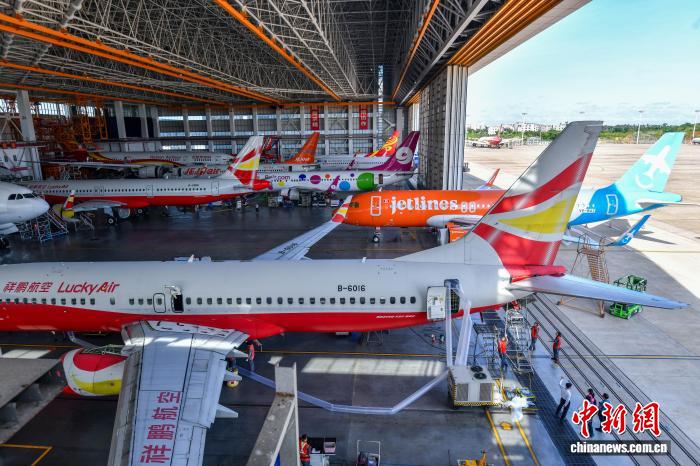
Core Insights - The article highlights the robust development of Hainan's outward-oriented economy driven by institutional openness since 2020, with significant increases in foreign investment and trade activities [1][3]. Economic Growth Metrics - Hainan has attracted a total of 102.5 billion yuan in actual foreign investment since 2020, with an annual growth rate of 14.6% [1]. - The establishment of foreign enterprises in Hainan reached 8,098, growing at an annual rate of 43.7% [1]. - The province has seen an average annual growth of 31.3% in goods trade and 32.3% in service trade [1]. Policy Initiatives - The "Hainan Free Trade Port Construction Overall Plan" initiated on June 1, 2020, aims to enhance trade and investment liberalization and establish a high-level policy system [3]. - A key policy introduced is the tax exemption on processed goods for domestic sales, which has been implemented across Hainan, benefiting over 50 enterprises and covering various industries [3][4]. - The policy has resulted in a cumulative exemption of 810 million yuan in import tariffs, significantly promoting the development of Hainan's real economy [3]. Foreign Investment Environment - Hainan has implemented the shortest negative list for foreign investment in China, reducing the number of restrictions to 24 [5]. - The province has also initiated pilot projects for foreign-owned hospitals and stem cell technology, further enhancing its attractiveness to foreign investors [5]. Trade Facilitation Measures - Hainan has adopted a "one line open, one line controlled" policy to improve trade facilitation and has implemented a negative list management system for cross-border service trade [5]. - The province is actively aligning with high-standard trade agreements such as RCEP and DEPA, enhancing its international trade competitiveness [5][6]. Future Development Goals - Hainan aims to become a significant open portal for China, focusing on high-quality development and the establishment of a modern industrial system [6]. - The province is preparing for the next phase of reform and opening up post-closure, with plans to further develop its outward-oriented economy [6].

统筹开放与安全 中国资本市场“朋友圈”五年跃迁
2 1 Shi Ji Jing Ji Bao Dao· 2025-09-23 05:06
21世纪经济报道特约记者 庞华玮 "十四五"收官,中国资本市场交出了一份沉甸甸的开放"成绩单"。 "中国资本市场的'朋友圈'越来越大。"9月22日,在国务院新闻办公室"高质量完成'十四五'规划"系列主题新闻发布会上,中国证监会主席吴清介绍了在"十 四五"期间中国资本市场对外开放情况。 "'十四五'期间,新增核准13家外资控股证券基金期货机构来华展业兴业,外资持有A股市值3.4万亿元,269家企业境外上市。"吴清说。 此外,证监会持续拓展外商可投资期货期权特定品种范少围,拓展ETF互联互通机制,丰富跨境投资产品,持续为境外投资者提供良好监管环境。 度型开放"为核心的深层次变革,正推动中国资市场扩大开放、与全球市场实现"双向奔赴"。 从外资机构抢滩布局到中资企业扬帆出海,一场以"制 制度型开放 过去五年,"十四五"规划下的中国资本市场开放以制度型开放为核心,从市场准入到规则对接,对外开放的步伐不断加大。 "资本市场高水平制度型开放稳步扩大。统筹开放与安全,稳妥有序推进市场、产品和机构双向开放。"吴清指出。 吴清介绍,"十四五"期间全面取消行业机构外资持股比例限制,完善合格境外投资者制度,优化沪深港通、沪伦通、基金 ...

商务部党组:部署开展妨碍全国统一大市场问题调查
Di Yi Cai Jing· 2025-09-22 11:47
Group 1 - The Ministry of Commerce emphasizes the integration of long-term rectification matters with the new deployment and requirements of the 20th Central Committee's Third Plenary Session regarding business work [1] - The ministry is conducting investigations into issues that hinder the establishment of a unified national market, aiming to enhance the construction of this market with more effective measures [1] - There is a focus on enriching the legal and regulatory standards in the commercial circulation sector and promoting the introduction of economic policy documents [1] Group 2 - The ministry aims to strengthen the national digital service export base and enhance the international competitiveness of digital trade enterprises [1] - There is an increased effort to implement foreign investment policies and optimize the evaluation of foreign investment promotion effectiveness [1] - The ministry is actively pursuing bilateral and multilateral economic and trade cooperation, including the process of joining CPTPP and DEPA [1] Group 3 - The ministry is committed to advancing strict governance within the party, ensuring adherence to Xi Jinping's thoughts, and updating the integrity risk list at the ministerial level [1] - There is a focus on improving the accountability mechanisms for leadership and conducting regular warning education to enhance work style [1] - The goal is to build a high-level, professional team for foreign trade and investment with strong political integrity and capabilities [1]
张明:宏观政策应强化物价目标,财政政策应加力帮助地方化债
2 1 Shi Ji Jing Ji Bao Dao· 2025-09-22 09:49
Core Viewpoint - The current macroeconomic policies should focus on reinforcing price targets and enhancing fiscal policies to assist local governments in managing debt issues [1] Group 1: Debt Issues - The importance of addressing debt issues is emphasized, as high debt burdens can harm the balance sheets of micro entities, leading to reduced consumption and investment, which exacerbates price declines [2] - To break the low price cycle, it is crucial to lower debt and repair the balance sheets of micro entities through debt replacement and restructuring [3] Group 2: Real Estate Market - Stabilizing the real estate market is a key measure to address current debt problems, with suggestions to support local governments and households in capital replenishment [3] - The real estate market requires both policy support and financial resources to transition from expansion to quality improvement, with specific measures for first-tier cities to relax purchase and loan restrictions [6] Group 3: Economic Policies - Five policy recommendations are provided to stabilize the economy, including setting a nominal GDP growth target and implementing expansionary fiscal policies [5] - Emphasis is placed on the need for counter-cyclical management of debt, allowing for higher tolerance during economic pressures [5] Group 4: Long-term Reforms - Long-term reforms and opening up are necessary, particularly in the service sector, to attract high-quality foreign direct investment and promote the development of private enterprises [7]
南京金洽会,36载接力打造开放高地
Xin Hua Ri Bao· 2025-09-22 08:56
Group 1: Overview of Nanjing's Economic Development - Nanjing is hosting the 36th Golden Autumn Economic and Trade Fair, which serves as a significant platform for global investment and development opportunities [1] - The fair has historically attracted substantial foreign investment, with over 10 billion USD invested by companies like Celanese [2][3] - In 2024, 48 major projects were signed at the fair, totaling an investment of 67.7 billion CNY, focusing on key industries such as software, smart grids, and new energy vehicles [2] Group 2: Foreign Investment and Corporate Development - Multinational companies like Bosch and Honeywell have established significant operations in Nanjing, integrating their R&D and manufacturing processes within the local economy [3][4] - Honeywell has expanded its investment in Nanjing, citing strong industrial support and a competitive supply chain as key factors for its continued presence [4] - LG Group has invested over 8 billion USD in Nanjing, creating a robust industrial ecosystem that includes over 40 supporting enterprises [6][7] Group 3: Digital and Technological Advancements - Nanjing is developing a digital trade service standard to align with international practices, enhancing its appeal to foreign investors [8][9] - The establishment of the BASF Digital Center in Nanjing marks a significant step in the city's digital transformation and its role as a global digital service provider [7][8] - The city has implemented a digital trade dispute resolution mechanism, improving its capacity to handle international trade issues and attracting more foreign investment [13][14] Group 4: Community and Cultural Integration - Nanjing's diverse cultural environment fosters a sense of belonging for expatriates, enhancing the city's attractiveness as a business hub [10][12] - The local government actively engages with businesses, providing support and resources to facilitate their growth and integration into the community [14]
