产教融合

Search documents
突然!时隔30年再提“包分配包就业”,信号极不寻常
商业洞察· 2025-07-12 03:26
Group 1 - The article discusses the emergence of new research-oriented universities in China, highlighting the establishment of three new institutions this year, including Fuyou University, Greater Bay Area University, and Ningbo Oriental University of Technology [3][4]. - These universities are backed by prominent enterprises and aim to create a talent war by offering guaranteed employment for graduates, similar to the successful model of Shenzhen University of Technology [5][9]. - The new universities are positioned to disrupt traditional higher education institutions by focusing on high-demand fields and innovative educational models, emphasizing engineering, computer science, and biotechnology [17][20]. Group 2 - The new research-oriented universities are characterized by their strong financial backing, high-quality faculty, and targeted professional programs that align with national strategic needs [19][20]. - They adopt a "small but elite" approach, concentrating on a limited number of specialized programs that cater to emerging industries, such as semiconductors and AI [20][21]. - The article notes that traditional universities face increasing pressure to adapt their programs and teaching methods in response to the competitive landscape created by these new institutions [26][32].


2025中国(苏州)光子产业发展大会开幕
Su Zhou Ri Bao· 2025-07-11 23:55
Group 1 - The 2025 China (Suzhou) Photonics Industry Development Conference was held, focusing on core technologies and trends in the industry [1] - The conference aimed to deepen school-enterprise cooperation, promote industry-education integration, and facilitate the transformation of achievements in photonics technology [1] - The China (Suzhou) Silicon Photonics Industry Technology Research Institute was launched to focus on core technologies and foster innovation in the silicon photonics sector [1] Group 2 - Suzhou has actively implemented the "1030" industrial system strategy, prioritizing the photonics industry with initiatives like the "Six Ones" plan [2] - The city has established high-level platforms such as the Taihu Photonics Center and Photonics Industrial Park, gathering various photonics-related industries [2] - The region has seen a concentration of leading enterprises, highlighting the advantages of industrial clusters in photonics [2]
破解产教融合“两张皮”痼疾
Jing Ji Ri Bao· 2025-07-11 22:21
Core Viewpoint - The integration of industry and education is a key strategy for connecting the education chain, innovation chain, and industrial chain, and is essential for cultivating skilled talents in vocational education [1] Group 1: Policy and Development - Recent policies have driven rapid development in vocational education integration through mechanisms such as legal guarantees, fiscal incentives, and pilot demonstrations, resulting in a systematic achievement framework [1] - Local regulations, such as the "Tianjin Vocational Education Integration Promotion Regulations," and initiatives like the "Luban Workshop" brand have shown significant results in promoting vocational education [2] Group 2: Challenges and Solutions - Challenges in vocational education include a disconnect between talent cultivation and industrial development, leading to issues like "training and demand misalignment" and "superficial cooperation" [2] - A multi-dimensional approach is needed to address these challenges, including establishing a coupling mechanism between educational institutions and industry needs, and transitioning evaluation metrics from traditional employment rates to a more comprehensive assessment of industry contribution and educational alignment [3] Group 3: Incentives and Support Mechanisms - A combination of incentive mechanisms is proposed to enhance collaboration between universities, enterprises, and society, including financial support for companies deeply involved in vocational education integration [3] - Establishing a risk prevention system for industry-education integration is crucial to balance interests among all parties involved [3]
2025职教拐点:分数超211? “三江合流”奔赴职校
2 1 Shi Ji Jing Ji Bao Dao· 2025-07-11 11:46
Core Viewpoint - The article highlights the significant transformation and rising popularity of vocational education in China, particularly in the context of the 2025 admissions cycle, where vocational colleges are increasingly seen as viable and attractive options for students, challenging traditional perceptions of vocational education as inferior [1][4][12]. Group 1: Vocational Education Development - By 2025, the number of vocational colleges at the undergraduate level has reached 87, with plans to expand the "New Double High Plan" to 220 institutions, indicating a steady improvement in the quality of vocational education [1][4][6]. - Vocational colleges are becoming essential in supplying skilled workers, with over 70% of new employees in modern manufacturing and emerging industries coming from vocational school graduates [1][9]. - The trend of "upgrading from vocational to undergraduate" is emerging, where some undergraduate students are returning to vocational schools to gain practical skills, reflecting a shift in the perception of vocational education [4][12]. Group 2: Quality and Integration - The "New Double High Plan" aims to enhance the quality of vocational education by promoting high-level vocational schools and integrating education with industry needs [6][9]. - Vocational education is increasingly focusing on research and technology transfer, moving beyond just skill teaching to include applied research, which aligns with industry demands [10][11]. - The integration of vocational education with industry is crucial, as it ensures that the skills taught are relevant to current job market needs, thereby improving employability for graduates [9][10]. Group 3: Student Attraction and Perception - The admission scores for vocational colleges are rising, with some institutions attracting high-scoring students, indicating a shift in perception and increasing competitiveness [1][12]. - The establishment of a dedicated vocational examination system is being proposed to further legitimize vocational education and attract more students [13][14]. - The article emphasizes the need to break down societal biases against vocational education, promoting it as a legitimate and valuable educational pathway [1][7][12].
安徽农业大学:产教融合搭建学生就业“立交桥”
Zhong Guo Qing Nian Bao· 2025-07-11 10:50
Core Insights - The article highlights the successful integration of education and employment at Anhui Agricultural University, focusing on the cultivation of practical skills and job readiness among graduates [1][2][3] Group 1: Employment and Education Integration - Anhui Agricultural University has signed employment agreements with multiple graduates, emphasizing their strong foundational skills and practical abilities [1] - The university has trained over 26,000 graduates in the past three years, with 68.6% choosing to work in grassroots positions and 74.37% remaining in Anhui [1] - The institution has adjusted its curriculum to meet modern agricultural demands, introducing eight new majors, including biological breeding and smart agriculture [2] Group 2: Practical Training and Skill Development - The university has established a collaborative ecosystem with companies like Qianying High-Tech, allowing students to gain hands-on experience from learning to employment [2] - Students participate in comprehensive training programs, such as the "Fengsui Action - Agricultural Pioneer Training Camp," which covers all aspects of agricultural production [2] - The university has conducted extensive surveys to understand employer needs, leading to tailored employment guidance and skill enhancement programs [3] Group 3: Innovative Programs and Collaborations - The "Wankeng Innovation Class" was launched in collaboration with Anhui Agricultural Group, focusing on practical training and academic integration [5] - The university has developed various innovative classes and partnerships with local enterprises to foster modern agricultural talent [6] - A total of 352 internal and 162 external innovation and entrepreneurship mentors have been appointed, establishing strategic partnerships with 283 leading companies [6]
山西省新型电力系统产教融合共同体成立
Zhong Guo Neng Yuan Wang· 2025-07-11 08:53
Core Viewpoint - The establishment of the Shanxi Province New Power System Industry-Education Integration Community aims to enhance the quality of power development through collaborative efforts between government, industry, and educational institutions [1][2]. Group 1: Event Overview - The establishment conference was held on July 9, 2025, with the theme "Building a New Ecosystem for Industry-Education Integration to Promote High-Quality Power Development" [1]. - Representatives from 72 enterprises, educational institutions, and research units attended the conference, including leaders from the Shanxi Provincial Education Department and the Shanxi Development and Reform Commission [1]. Group 2: Objectives and Strategies - The community aims to address key technological bottlenecks and the challenge of high-quality talent supply in the new power system through a collaborative approach involving government, industry, academia, and research [1][2]. - The initiative is part of the company's strategy of "Talent Empowerment and Technological Advancement," focusing on cultivating high-quality technical talent for energy transition [1]. Group 3: Organizational Structure - The community consists of 78 founding member units, with the State Grid Shanxi Electric Power Company as the chair unit, and Taiyuan University of Technology and Shanxi Electric Power Vocational Technical College as vice-chair units [2]. - An organizational framework termed "One System and Four Transformations" has been established, which includes a regular consultation mechanism and a project-based, list-based, platform-based, and responsibility-based target system [2].
全国大学生沉浸式就业体验活动开启
Cai Fu Zai Xian· 2025-07-11 02:39
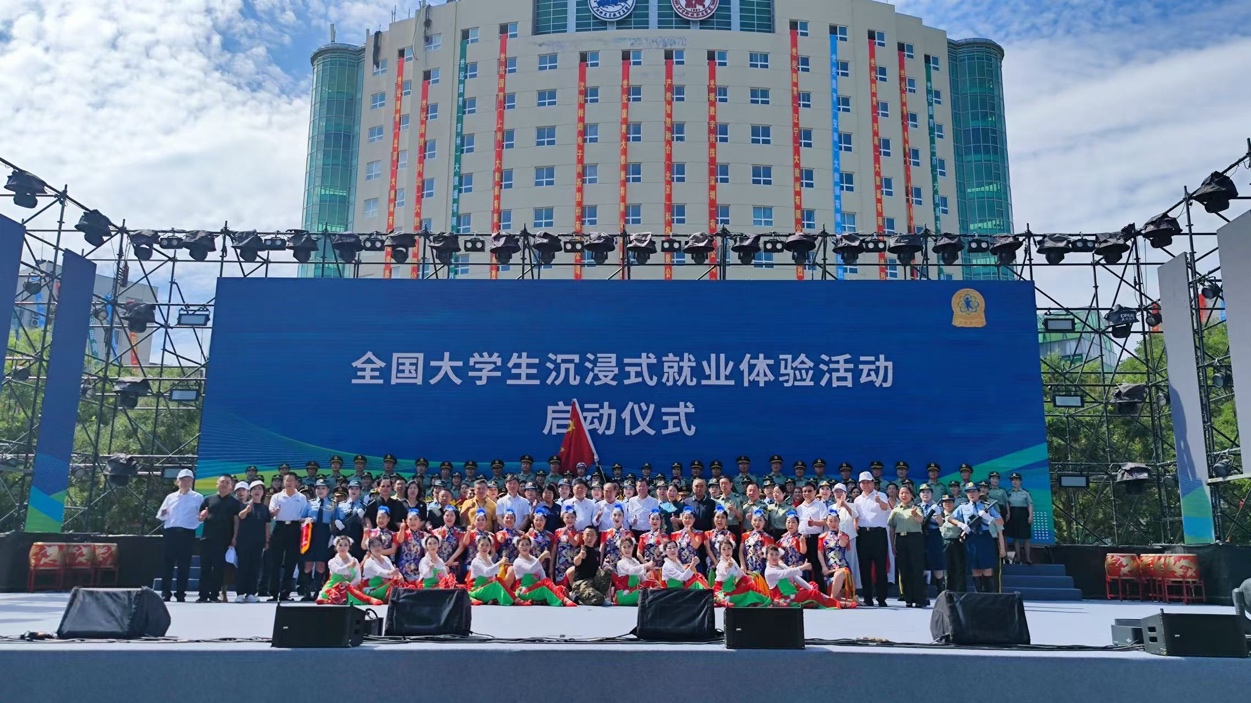
2025 年 7 月 6 日 上午10 点,全国大学生沉浸式就业体验活动启动仪式在北京市延庆区北科昊月国际大 学城盛大举行。体验活动举办时间为2025年7月1日至8月30日。 全国人大、国务院、全国政协、中央军委、中央科技委、国家发改委、教育部、科技部、工信部、商务 部、新华社、中央广播电视总台、中国银行、中国企业报、品牌中国、中国大学生网、北京大学、中国 政法大学、中国东方文化研究会、中国城市经济研究院、河南省产教融合技术研究院、沈阳军区文化 部、全国产教融合筹备委员会、北京吉科集团等党政机关代表、社会团体代表、高等院校代表、企事业 单位代表、新闻媒体代表和来自全国的大学生代表共同见证了这一创新壮举!中央电视台对此次活动进 行全程拍摄并对活动发起机构、组织机构相关人员及大学生代表进行了采访。 全国产教融合筹备委员会秘书长郭安福接受中央电视台记者采访 活动举办地点北科昊月国际大学城 全国大学生沉浸式就业体验活动,旨在为大学生提供一个全程参与、自我决定、自我负责的就业创业实 景体验机会,培养大学生的创新能力、执行能力和团队协同能力,以此降低学生的创业、就业成本。同 时,通过活动中的各类不同项目岗位的实战演练,让 ...
会议通知 | 2025年中国通用咨询投资公司产教融合创新发展大会
DT新材料· 2025-07-10 14:15
Group 1 - The conference aims to explore the integration of vocational education and emerging industries, focusing on "vocational education going global" and "empowering talent for emerging industries" [2][7] - The event will take place from August 6 to August 8, 2025, at Tianjin Light Industry Vocational Technical College [5][11] - The conference is organized by China General Consulting Investment Co., Ltd., with support from Qingdao Zhonglai Technology Co., Ltd. and Tianjin Light Industry Vocational Technical College [11] Group 2 - The conference will feature discussions on the trends of cutting-edge technology iterations and the new landscape of global talent demand [10] - A four-dimensional collaborative mechanism involving government, enterprises, schools, and research institutions will be established to discuss the deep integration of education, talent, industry, and innovation chains [10]
三年内,北京将新建约2所职业本科大学和4所新型高职
Xin Jing Bao· 2025-07-10 09:29
Core Points - The Beijing Municipal Education Commission and other departments have released a three-year action plan (2025-2027) to enhance the vocational education system, aiming for a more coordinated structure by 2027 [1][2] - The plan includes the establishment of approximately 2 vocational undergraduate universities and 4 new types of higher vocational colleges, along with the construction of high-level schools and professional groups [1] - The action plan emphasizes the integration of vocational education with industry and urban development, promoting a modern vocational education system characterized by secondary vocational schools, higher vocational colleges, and vocational undergraduate programs [1][2] Summary by Sections Action Plan Overview - The action plan outlines seven major tasks, including the implementation of moral education, vocational education reforms, and the "Chinese + vocational education" project [1][2] - It aims to optimize the layout of vocational schools, retaining high-quality secondary vocational schools and supporting the establishment of new higher vocational colleges [1][2] Educational Resource Integration - The plan proposes the integration of resources from secondary vocational and higher vocational colleges to establish vocational undergraduate schools [2] - It encourages the development of a vocational skills certification system and the sharing of vocational education credentialing systems [2] Student Pathways and Professional Development - The action plan aims to broaden student growth pathways by encouraging secondary vocational schools to pilot comprehensive high school classes [2] - It supports collaboration between high-level universities and vocational colleges to cultivate high-level skilled talents through various educational pathways [2] Professional Layout and Curriculum Development - The plan focuses on developing urgently needed majors in high-tech industries, modern services, and high-quality livelihood sectors, while also addressing international talent needs [2] - By 2027, the goal is to establish 7 national "Double High" schools, 10 high-level professional groups, and create 300 high-quality courses and 600 new-type textbooks [2] International Expansion - The action plan includes an initiative for vocational schools to "go global," establishing overseas campuses and training bases [3] - By 2027, it aims to set up 5 "Silk Road Classroom" overseas branches and 10 vocational skills training bases, along with 1-2 overseas vocational universities [3]
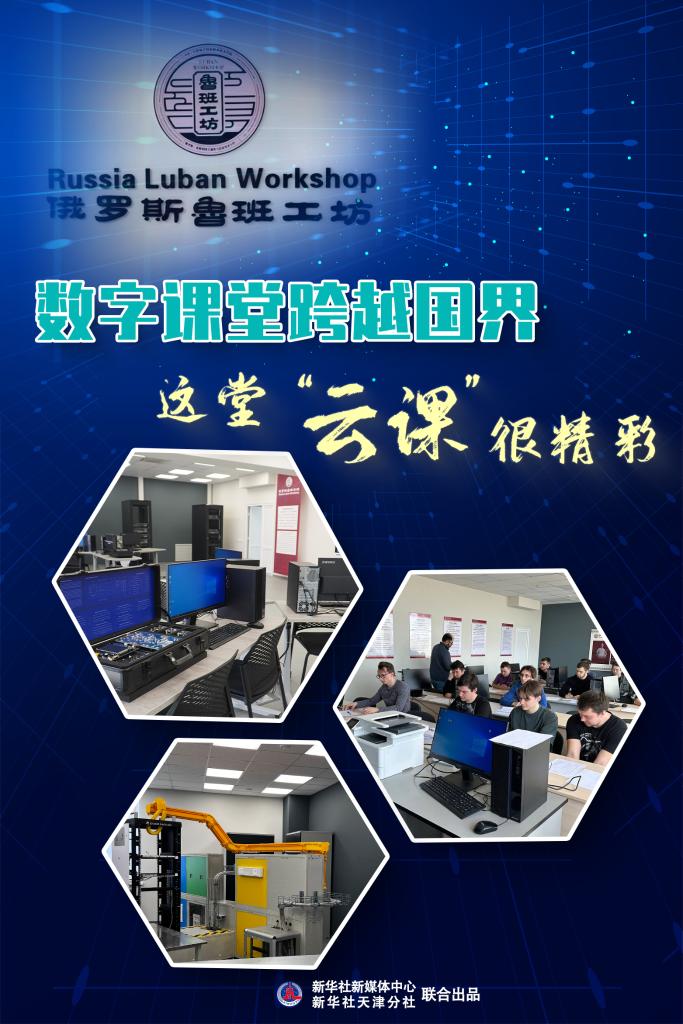
数字课堂跨越国界,这堂“云课”很精彩
Xin Hua Wang· 2025-07-10 09:22
Core Viewpoint - The establishment of the Russia Luban Workshop aims to enhance digital technology education and skills training in Russia, leveraging Chinese technology and standards in 5G and other digital fields [2][3]. Group 1: Educational Initiatives - The Russia Luban Workshop, a collaboration between Tianjin Electronic Information Vocational Technical College and Moscow State University of Communications and Information Technology, focuses on training high-quality technical talents for the digital economy [3][5]. - As of now, 1,246 Russian teachers have been trained, completing 680 hours of professional development in areas such as 5G and the Internet of Things [2]. Group 2: Impact on Talent Development - The workshop has successfully cultivated a significant number of international high-skilled talents that meet the demands of the digital economy in Russia [3]. - The initiative is part of a broader effort, with China having established 34 Luban Workshops in 30 countries, including 10 in Shanghai Cooperation Organization member states, to bridge the "digital divide" [5]. Group 3: Future Prospects - The Russia Luban Workshop is expected to continue fostering international cooperation in information technology education, enhancing the competitiveness of the younger generation in the global labor market [5]. - Future plans include deepening industry-education integration and expanding vocational education cooperation with other countries in the Shanghai Cooperation Organization [5].