
新型电力系统

Search documents
打造绿色发展“新名片”
Jing Ji Ri Bao· 2025-09-07 22:15
Core Viewpoint - The construction of a new power system is essential for achieving the "dual carbon" goals, ensuring energy security, and addressing the challenges of power transformation [1][2]. Group 1: Key Actions and Strategies - National authorities have deployed several key tasks, including actions for stable power system assurance, large-scale high-proportion renewable energy delivery, high-quality development of distribution networks, smart scheduling system construction, and enhancing the friendly performance of renewable energy systems [1]. - Local regions are actively piloting new technologies and models to build a new power system, creating new green development brands like "Green Power in the North" to support the development of new productive forces in the power sector [1]. Group 2: Market and Resource Integration - The construction of a new power system requires a unified national market to eliminate local protectionism and market segmentation, allowing for the free flow of goods and services across regions [1]. - Ningxia has established three major power delivery "arteries" to bundle and deliver "wind, solar, and thermal" energy to over ten provinces, achieving a leading level of channel utilization nationwide [1]. Group 3: Long-term Goals and Development - The construction of a new power system is a long-term, systematic project that focuses on clean, low-carbon, safe, abundant, economical, efficient, and coordinated supply and demand [2]. - The development of green electricity is a crucial measure for promoting green and low-carbon transformation, with a focus on coupling clean energy with characteristic advantageous industries to inject new momentum into industrial green development [2]. Group 4: Challenges and Solutions - There are existing shortcomings that need to be addressed, such as ensuring the integration and consumption of renewable energy, particularly in major projects like the national Shage Desert base [2]. - Effective scheduling based on renewable energy output and load forecasting is essential for promoting efficient utilization of renewable energy and achieving mutual benefits among generation, grid, and demand sides [2].
新能源汽车从代步工具到“移动储能”,车网互动规模化还要迈过几道坎
Di Yi Cai Jing· 2025-09-06 15:23
Core Viewpoint - The V2G (Vehicle-to-Grid) technology is emerging as a crucial solution for integrating electric vehicles with the power grid, enabling electric cars to act as mobile energy storage units and contributing to the construction of a new power system in China [2][4][6]. Group 1: V2G Technology and Market Growth - The number of electric vehicles in China is projected to surge from 120,000 in 2014 to 31.4 million by 2024, leading to increased charging loads on the grid [3]. - V2G technology allows for bidirectional energy flow, enabling electric vehicles to charge during off-peak hours and discharge energy back to the grid during peak demand, thus alleviating grid pressure [4][6]. - The Chinese government aims to establish over five demonstration cities and more than 50 V2G projects by the end of 2025 to validate the potential of electric vehicles as mobile energy storage resources [6][7]. Group 2: Economic Incentives and Pricing Mechanisms - Guangdong Province has set a pricing model for V2G, allowing electric vehicle owners to earn up to 0.9626 yuan per kWh during peak periods, creating an arbitrage opportunity for users [7]. - The potential earnings from V2G participation can significantly offset the costs of electric vehicle ownership, with estimates suggesting a lifetime value of 60,000 to 150,000 yuan for participating users [16]. Group 3: Challenges and Bottlenecks - The main barriers to V2G adoption include the lack of standardized pricing mechanisms, concerns over battery lifespan due to frequent charging and discharging, and the need for a clear profit-sharing model among stakeholders [8][9][11]. - Current battery warranty policies do not adequately cover the potential wear from V2G participation, leading to hesitance among vehicle owners [9]. - The complexity of implementing V2G in office parks and public charging stations poses additional challenges, including the need for standardized protocols and efficient profit distribution [11][13]. Group 4: Technological and Infrastructure Developments - The cost of V2G charging stations has decreased by over 40% compared to the previous year, making it more feasible for operators to invest in this technology [13][14]. - V2G technology has been validated through pilot programs, and the necessary infrastructure is being developed to support its widespread implementation [13][14]. Group 5: Future Directions and Recommendations - To enhance V2G adoption, it is essential to establish a sustainable business model that benefits all parties involved, including vehicle owners, grid operators, and manufacturers [16][18]. - The government is encouraged to provide financial incentives for companies that offer V2G warranty solutions and to clarify the pricing structure for V2G energy transactions [17][18].

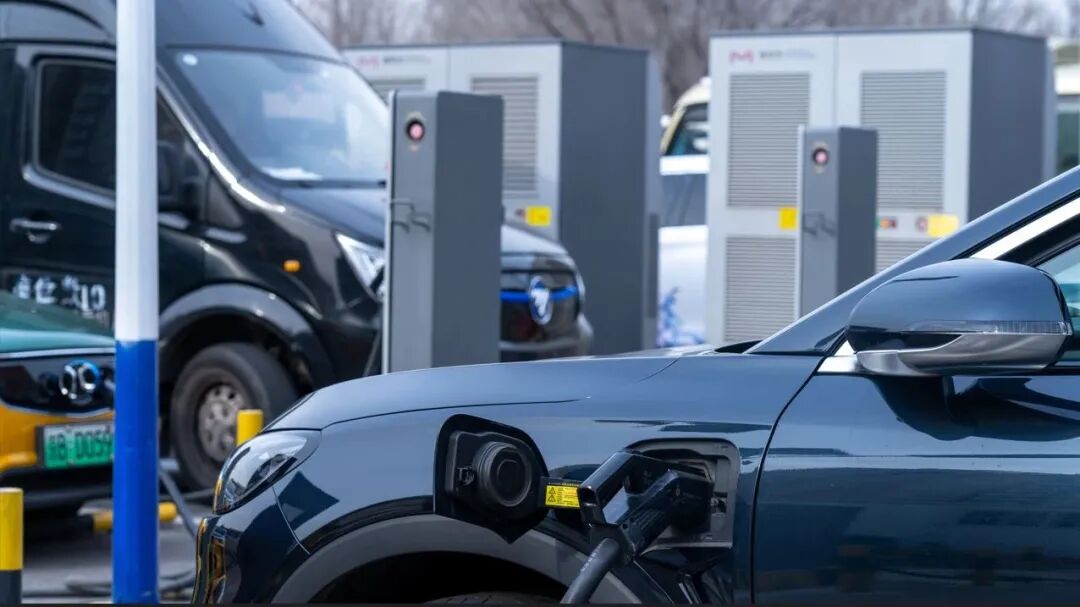
深度|新能源汽车从代步工具到“移动储能”,车网互动规模化还要迈过几道坎
Di Yi Cai Jing Zi Xun· 2025-09-06 12:21
Core Viewpoint - The V2G (Vehicle-to-Grid) technology is emerging as a crucial solution for integrating electric vehicles with the power grid, enabling electric cars to act as mobile energy storage units and contributing to the stability of the power system while providing economic benefits to vehicle owners [1][3][10]. Group 1: V2G Technology and Market Growth - The rapid growth of China's electric vehicle market, with ownership increasing from 120,000 in 2014 to 31.4 million by 2024, has led to a significant rise in charging loads, necessitating the implementation of V2G technology to manage peak demand [2][5]. - V2G technology allows for bidirectional energy flow, enabling electric vehicles to charge during off-peak hours and discharge energy back to the grid during peak demand, thus transforming electric vehicles from a burden on the grid to a flexible energy resource [3][10]. Group 2: Government Initiatives and Pilot Projects - The Chinese government has initiated several policies to promote V2G technology, including plans to establish over five demonstration cities and 50 dual-direction charging and discharging projects by the end of 2025 [5][6]. - Nine cities, including Shanghai and Guangzhou, have been included in the first batch of V2G pilot projects, focusing on various scenarios such as residential charging and public charging station interactions [6][10]. Group 3: Economic Incentives and Pricing Mechanisms - Local governments are establishing pricing mechanisms for V2G, with Guangdong Province setting a peak discharge price of 0.9626 yuan per kWh, creating an arbitrage opportunity for vehicle owners [6][10]. - The potential earnings from V2G participation can significantly offset the costs of electric vehicle ownership, with estimates suggesting that V2G could provide value between 60,000 to 150,000 yuan over the vehicle's lifecycle [13]. Group 4: Challenges and Bottlenecks - The main challenges for V2G scalability include the lack of standardized communication protocols between different brands of electric vehicles and charging stations, as well as the need for a clear revenue-sharing model among stakeholders [7][9]. - Concerns regarding battery lifespan and warranty coverage for vehicles participating in V2G are hindering broader adoption, as vehicle owners fear that frequent charging and discharging may reduce battery life [8][10]. Group 5: Future Directions and Recommendations - To facilitate the growth of V2G, it is essential to establish a sustainable business model that benefits all parties involved, including vehicle owners, grid operators, and manufacturers [10][13]. - The industry is encouraged to explore financial incentives and targeted warranty programs to alleviate concerns about battery longevity and to promote participation in V2G initiatives [13][14].
媒体报道丨中国新型储能规模跃居世界第一
国家能源局· 2025-09-06 03:46
Core Viewpoint - China's new energy storage capacity has surpassed the world, accounting for over 40% of global installed capacity, driven by clear policies and rapid technological advancements [3][7][8]. Group 1: Current Status of Energy Storage - As of the end of 2024, China's new energy storage capacity reached 73.76 million kilowatts, equivalent to 168 million kilowatt-hours, with an annual growth rate exceeding 130% since the 14th Five-Year Plan [3][7]. - By June 2023, the installed capacity had increased to 94.91 million kilowatts, representing a growth of approximately 29% compared to the end of 2024 [7]. - Major provinces such as Inner Mongolia and Xinjiang have installed capacities exceeding 10 million kilowatts, while Shandong, Jiangsu, and Ningxia have surpassed 5 million kilowatts [7]. Group 2: Policy Support and Market Mechanisms - The development of new energy storage is supported by various policies, including its inclusion in the Energy Law and the government work report, emphasizing its role in the new power system [8]. - The "Action Plan for Accelerating the Construction of a New Power System (2024-2027)" aims to enhance the market mechanism for energy storage, promoting its scientific development [8]. - By 2024, the new energy storage market in the State Grid area is expected to reach 7.12 billion kilowatt-hours, a year-on-year increase of 2.7 times [15]. Group 3: Technological Innovations - The energy storage sector is witnessing a diverse range of technological advancements, with lithium-ion battery storage dominating the market [10][11]. - New technologies such as compressed air storage, flow battery storage, and solid-state batteries are making significant progress, providing a foundation for long-duration regulation capabilities [11][12]. - The establishment of over 20 energy storage standards in 2024 has further enhanced the industry's standardization and operational efficiency [12]. Group 4: Application and Market Expansion - New energy storage systems are increasingly utilized for peak shaving and power supply assurance, especially during high electricity demand periods [14]. - The maximum adjustable power of new energy storage in the State Grid area reached 64.23 gigawatts, with a peak discharge power of 44.53 gigawatts, marking a 55.7% increase from the previous year [14]. - The introduction of market mechanisms allows energy storage companies to participate in auxiliary services and spot markets, providing a stable revenue expectation for the industry [15][16].

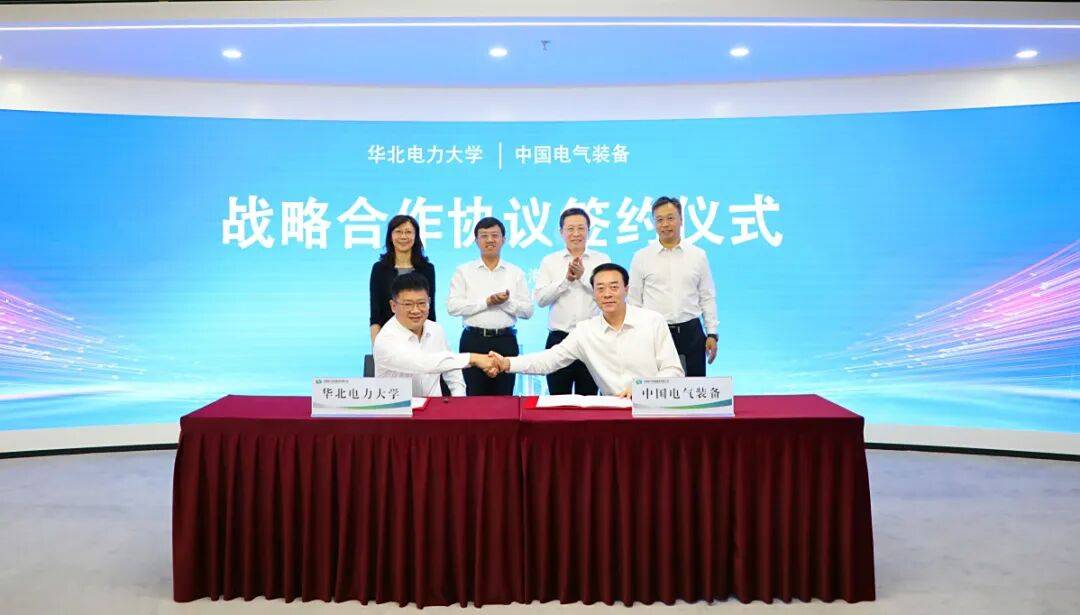
李洪凤、闫华锋与华北电力大学党委书记汪庆华、校长毕天姝会谈
Sou Hu Cai Jing· 2025-09-05 16:57
Core Viewpoint - The strategic cooperation agreement signed between China Electric Equipment and North China Electric Power University aims to enhance collaboration in technology innovation and talent development to support national energy security and green transition efforts [1][2]. Group 1 - China Electric Equipment expressed gratitude to North China Electric Power University for its long-term support and highlighted the successful collaboration in key technology areas such as offshore wind power and large-scale renewable energy integration [1]. - The partnership is rooted in a shared commitment to national energy security and innovation, with both parties aiming to deepen their cooperation in research and development, talent cultivation, and technology application [2]. - The agreement is seen as a catalyst for further integration of industry, academia, and research, focusing on the development of a high-quality collaborative community [2][4]. Group 2 - North China Electric Power University congratulated China Electric Equipment on its achievements and emphasized its role as a key partner in supporting national technological innovation and energy security strategies [2]. - The university plans to strengthen joint efforts in research and key technology challenges, aiming to create a shared mechanism for talent development and innovation [2]. - The signing ceremony was attended by representatives from both organizations, showcasing a commitment to collaborative growth and technological advancement [4].
许昌智能: 民生证券股份有限公司关于许昌智能继电器股份有限公司2025年半年度持续督导跟踪报告
Zheng Quan Zhi Xing· 2025-09-05 16:13
Overview - The report outlines the continuous supervision work conducted by Minsheng Securities on Xuchang Intelligent Relay Co., Ltd. for the first half of 2025, confirming compliance with relevant regulations and effective execution of governance systems [1][2]. Group 1: Continuous Supervision Work - The company has effectively implemented governance rules during the supervision period [1]. - Minsheng Securities regularly reviewed the company's fundraising account statements and verified the usage of raised funds, confirming compliance with regulations [1]. - No significant violations were found during the supervision, and the company maintained compliance in various aspects [1]. Group 2: Issues Identified and Measures Taken - No issues were identified regarding external investments, risk investments, entrusted financial management, or financial assistance [2]. - The company and its shareholders have fulfilled their commitments, with no reasons for non-fulfillment reported [2]. Group 3: Market Risks - The company faces increased competition as it operates primarily in central and eastern regions, with the transition to new power systems and microgrids creating new market opportunities [2]. - The loss of core technical personnel poses risks to product quality, technological development, and responsiveness to market changes [3]. Group 4: Technological and Material Risks - The company must invest adequately in technology development and innovation to keep pace with rapid industry changes and diverse user demands [5]. - Fluctuations in raw material prices, such as circuit breakers and metal components, can directly impact procurement costs and profit margins [5]. Group 5: Shareholder and Management Control - The main founder and actual controllers of the company hold significant influence over operational decisions, which could potentially harm the interests of minority shareholders if mismanaged [5]. - As of June 30, 2025, there were no pledges or freezes on shares held by the controlling shareholders or senior management [5].
煤价下行,煤化工业务能否成为中国神华新的利润支点?
Xin Jing Bao· 2025-09-05 14:21
Core Viewpoint - China Shenhua (601088.SH) aims to enhance its coal chemical industry during the 14th Five-Year Plan period through upgrades and mergers, focusing on both quantity and quality improvements to strengthen its integrated development advantage [1] Group 1: Industry Insights - The energy transition in China is accelerating under the "dual carbon" goals, leading to a decrease in coal power's share as clean energy increases [1] - Coal chemical products are expected to become a significant growth point in coal consumption, effectively replacing petroleum chemicals and alleviating resource shortages [1] Group 2: Financial Performance - In the first half of the year, China Shenhua reported a revenue of 138.11 billion yuan, a year-on-year decrease of 18.3%, and a net profit attributable to shareholders of 24.64 billion yuan, down 12% [1] - The coal mining and washing industry saw a profit drop of 53% year-on-year in the first half of the year [1] - Profit contributions from various segments include: coal segment 21.76 billion yuan, power segment 5.09 billion yuan, railway segment 7.04 billion yuan, port segment 0.11 billion yuan, and coal chemical segment 0.0076 billion yuan [1] Group 3: Coal Chemical Segment Performance - The coal chemical segment, while contributing minimally to overall profits, showed significant growth from 1 million yuan in the previous year to 0.76 billion yuan this year [2] - The growth in the coal chemical segment is attributed to reduced maintenance costs, improved production efficiency, and cost-saving measures implemented by the company [2]

调研速递|杭州中恒电气接受全体投资者调研,聚焦业绩与业务布局要点
Xin Lang Cai Jing· 2025-09-04 10:44
Core Insights - The company reported a revenue increase but a decline in net profit for the first half of 2025, with revenue reaching 891 million yuan, a year-on-year growth of 14.27%, while net profit attributable to shareholders decreased by 30.19% to 47.48 million yuan [1] - The decline in net profit was primarily due to the absence of non-recurring gains from the previous period, specifically a gain from equity transfer amounting to 32.68 million yuan [1] Revenue Breakdown - The growth in revenue was mainly driven by the data center power supply business, which generated 407 million yuan, reflecting a significant year-on-year increase of 60.6% [1] - The net profit excluding non-recurring items showed a positive trend, increasing by 15.39% to 44.75 million yuan [1] Business Development and Strategy - The company is focused on developing a third-generation HVDC product matrix to meet the power supply needs of high-density server cabinets in intelligent computing centers, aiming for zero faults, zero engineering, and zero losses [2] - The overseas business segment reported revenue of 34.18 million yuan, marking a substantial year-on-year growth of 591.88%, with efforts to expand globally through a subsidiary in Singapore [2] - The company is recognized as one of the earliest developers of electric vehicle charging stations in China and plans to strengthen its competitive edge by focusing on high-quality customers [2] - In the site energy sector, the company is providing modular power products and integrated energy cabinet solutions, successfully winning a centralized procurement project for power supply products from China Tower in 2025 [2] - The company is investing in research and development primarily in power electronics and digital power sectors [2] - Future expansion will focus on green ICT infrastructure, new power systems, low-carbon transportation, and comprehensive energy services [2]

国电南瑞20250903
2025-09-03 14:46
Summary of Guodian NARI Conference Call Company Overview - **Company**: Guodian NARI - **Industry**: Smart Grid and Energy Solutions Key Points Financial Performance - **Revenue Growth**: In the first half of 2025, Guodian NARI's revenue increased by 139%, with overseas contracts surging by 200% [2][4] - **Cash Flow Improvement**: Operating cash flow rose by over 2 billion RMB year-on-year, indicating strong financial health [2][6] - **Profitability**: Despite revenue growth, the gross margin in the smart grid segment decreased by over 2 percentage points due to the absence of high-margin projects from the previous year [2][11] Business Segments Performance - **Smart Grid Segment**: Revenue grew by 28% to approximately 12.2 billion RMB, accounting for about half of total revenue [2][16] - **Ultra-High Voltage and Flexible Transmission**: Revenue reached around 2.3 billion RMB, nearly doubling year-on-year, but faced lower margins compared to previous high-margin projects [2][14] - **Energy Low Carbon Segment**: Expected to grow over 30%, driven by new energy access, with wind power nearly doubling and solar and storage increasing by over 20% [2][23] Strategic Initiatives - **International Expansion**: The company aims to achieve over 10 billion RMB in overseas revenue by 2030, currently maintaining a gross margin of about 20% in overseas operations [3][36] - **Technological Innovation**: Focus on upgrading technology to meet challenges in energy transition and digital transformation, with plans to establish multiple model teams for research and development [5][9] - **Market Diversification**: The company is actively expanding into new markets, with a notable increase in contracts outside traditional systems [5][10] Future Outlook - **Growth Projections**: For 2025, the company anticipates a 15% growth in the smart grid segment, 5% in digital energy integration, over 30% in energy low carbon, and close to 10% in industrial interconnection [2][21] - **Investment in R&D**: The company plans to maintain a focus on R&D while controlling non-productive expenses, ensuring that expense growth remains below revenue growth [26] Investor Relations - **Dividend Policy**: The average dividend payout ratio has exceeded 45%, with recent increases bringing it close to 60%. The 2024 dividend yield is approximately 2.5% [7][20] - **Commitment to Shareholder Returns**: The company emphasizes a stable and attractive dividend strategy to reward investors [32] Additional Insights - **Emerging Technologies**: The company is exploring blockchain technology applications in its energy solutions and has made progress in high-voltage IGBT products for grid applications [35][37] - **Market Conditions**: The competitive landscape in the electromechanical protection market has led to price declines, impacting gross margins [13] This summary encapsulates the key insights from Guodian NARI's conference call, highlighting its financial performance, strategic initiatives, and future outlook in the smart grid and energy solutions industry.

昊创瑞通(301668):深耕智能配电设备细分领域
Shenwan Hongyuan Securities· 2025-09-03 12:04
Investment Rating - The investment rating for the company is positioned in the middle to lower range of the AHP score, with a score of 1.75, placing it in the 23.5% percentile of the non-innovation system AHP model [5][6]. Core Insights - The company focuses on smart distribution equipment and digital solutions for distribution networks, with key products including smart ring network cabinets, smart pole-mounted switches, and box-type substations. It has established a comprehensive R&D system covering structural design, hardware and software integration, and has developed several key technologies that are internationally advanced or leading [2][7][8]. - The demand for distribution equipment is expected to increase due to the ongoing investment in the national grid, with projected investments of 608.4 billion yuan in 2024 and over 650 billion yuan in 2025. The company is also expanding its customer base beyond the national grid and has seen significant growth in sales to non-grid customers [13][14]. - Compared to peer companies, the company has a smaller revenue base but faster growth rates, with a revenue CAGR of 24.47% and a net profit CAGR of 27.22% from 2022 to 2024, both exceeding the average of comparable companies [17][19]. Summary by Sections AHP Score and Expected Allocation Ratio - The company achieved an AHP score of 1.75, indicating a middle to lower performance level in the AHP model, with expected allocation ratios for different investor classes being 0.0238% and 0.0212% [5][6]. Fundamental Highlights and Features - The company has established a strong brand effect in its niche market, ranking 6th, 2nd, and 3rd in the number of bids won for smart ring network cabinets, smart pole-mounted switches, and box-type substations, respectively, in the national grid procurement [8][9]. - The company has developed new clients, including a significant sale of smart ring network cabinets to the Southern Power Grid, generating revenue of 79.595 million yuan [9]. Financial Comparison with Peers - The company’s revenue and net profit from 2022 to 2024 were lower than the average of comparable companies, but its growth rates were higher. The gross margin remained above the peer average, although it experienced slight fluctuations due to changes in product sales mix [17][19]. - The operating cash flow has been robust, with net cash flows of 30 million yuan, 101 million yuan, and 97 million yuan from 2022 to 2024, indicating good liquidity [23]. Fundraising Projects and Development Vision - The company plans to raise funds through the issuance of new shares to expand production capacity for smart ring network cabinets and smart pole-mounted switches, and to establish a smart distribution R&D center [26][27]. - The expected internal rates of return for the projects are 17.62% and 27.84% for the smart ring network cabinet and smart pole-mounted switch production projects, respectively [28].