
量子计算

Search documents
美股再创新高 英伟达狂飙近5% 黄金一度跌破3900美元
2 1 Shi Ji Jing Ji Bao Dao· 2025-10-28 23:59
Market Performance - Major technology stocks experienced gains, with Nvidia rising nearly 5%, approaching a total market capitalization of $5 trillion, leading the Dow Jones index [1] - Broadcom increased over 3%, and Microsoft rose nearly 2%, with its market capitalization surpassing $4 trillion [2] - The Nasdaq China Golden Dragon Index fell by 1.23%, while the Chinese tech leaders index dropped by 0.9% [3] Commodity Prices - Gold prices declined, with spot gold dropping to $3,943.248 per ounce, a decrease of 0.22%, and COMEX gold futures falling by 0.77% to $3,952.3 [4][5] - International oil prices continued to decline, with WTI crude oil futures down 1.89% to $60.15 per barrel, and Brent crude oil futures down 1.65% to $63.83 [5] Federal Reserve Expectations - The market anticipates that the Federal Reserve will lower the benchmark interest rate for the second time this year, with a 99.5% probability of a 25 basis point cut in October [5] - There is a 91.6% probability of a cumulative 50 basis point cut by December [5]


英伟达市值逼近5万亿美元 黄仁勋称AI产业进入“良性循环”
Di Yi Cai Jing· 2025-10-28 23:54
Core Insights - The AI industry is entering a "virtuous cycle," with expectations of generating approximately $500 billion in revenue over the next five quarters, driven by advancements in AI technology and infrastructure [6] Group 1: Company Developments - NVIDIA's stock surged, reaching a market capitalization of $4.89 trillion, marking a nearly 50% increase year-to-date [2] - At the GTC conference, CEO Jensen Huang announced significant technological innovations and partnerships across various sectors, indicating a shift from being an "AI chip manufacturer" to a "computing ecosystem platform" [2] - NVIDIA has partnered with Eli Lilly to build a powerful supercomputer for drug discovery, emphasizing AI's role in pharmaceutical innovation [3] - A strategic agreement with Nokia aims to develop a 6G AI platform, with NVIDIA investing $1 billion for a 2.9% stake [3] - The launch of the Hyperion 10 autonomous driving platform and collaboration with Uber for a Robotaxis network highlights NVIDIA's expansion into autonomous transportation [3] Group 2: Technological Innovations - The introduction of the NVQLink interconnect system facilitates high-speed communication between quantum processors and AI supercomputers, marking a significant step towards practical quantum computing applications [4] - NVIDIA plans to collaborate with the U.S. Department of Energy to build seven next-generation AI supercomputers, enhancing its capabilities in high-performance computing [5] Group 3: Market Position and Future Outlook - Huang stated that the willingness of clients to pay for AI models signifies a transition to a mature phase in the AI industry [6] - The company aims to support the re-industrialization across various sectors, positioning computing power as a new production factor [6] - Analysts believe NVIDIA's initiatives in quantum computing, communication networks, and autonomous driving will broaden its market reach and reinforce its leadership in high-performance computing [6]

美股再创新高,英伟达狂飙近5%,黄金一度跌破3900美元
21世纪经济报道· 2025-10-28 23:53
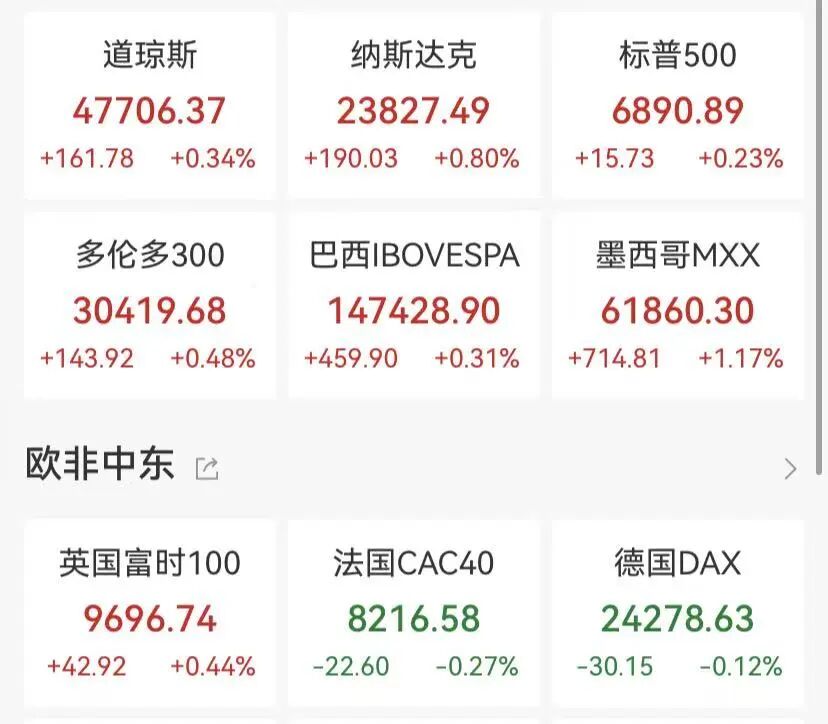
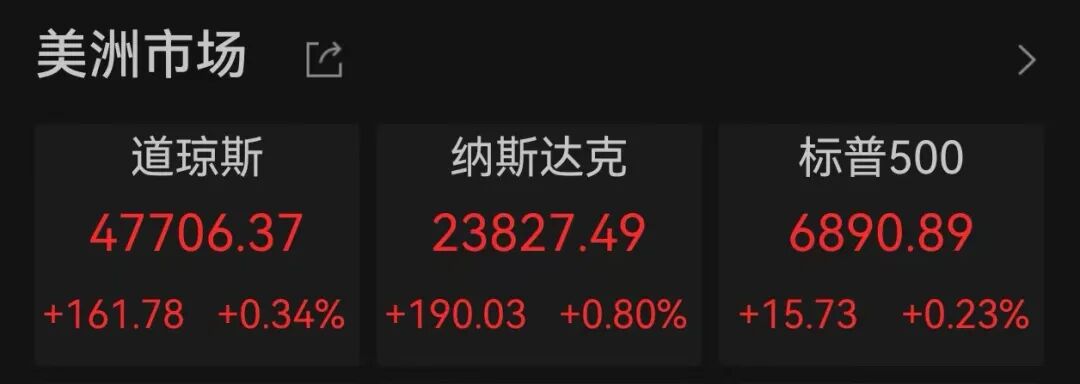
记者丨 曾静娇 见习记者张嘉钰 编辑丨刘巷 当地时间10月28日, 欧美股市多数收涨,其中 美国三大股指均 续创历史新高 ,道指涨0.34%,标普500指数 涨0.23%,纳指涨0.8%。 | 道琼斯 | 纳斯达克 | 标普500 | | --- | --- | --- | | 47706.37 | 23827.49 | 6890.89 | | +161.78 +0.34% | +190.03 +0.80% | +15.73 +0.23% | | 多伦多300 | 巴西IBOVESPA | 墨西哥MXX | | 30419.68 | 147428.90 | 61860.30 | | +143.92 +0.48% | +459.90 +0.31% +714.81 +1.17% | | | 欧非中东 △ | | | | 英国富时100 | 法国CAC40 | 德国DAX | | 9696.74 | 8216.58 | 24278.63 | | +42.92 +0.44% | -22.60 -0.27% | -30.15 -0.12% | 大型科技股普涨,英伟达涨近5%,总市值逼近5万亿美元,领涨道指。消息面上,当 ...

马斯克再次“吃瓜”量子计算:谷歌首次实现可验证的量子优越性
Sou Hu Cai Jing· 2025-10-28 23:45
Group 1 - Google announced a historic research achievement with the "Quantum Echoes" algorithm, demonstrating verifiable quantum advantage on the Willow chip, outperforming the best classical algorithms by 13,000 times [1] - The research involved members from Google's Quantum AI team, DeepMind, and researchers from UC Berkeley and Dartmouth College, including Nobel Prize winner Michel Devoret [1] - The achievement has led to a surge in quantum computing stocks in the US and China, with notable figures like Elon Musk expressing excitement about the practicality of quantum computing [3] Group 2 - Google is recognized as the pioneer of "quantum supremacy," having first achieved it in 2019 with its "Sycamore" quantum computer, while domestic counterparts like "Jiuzhang" and "Zuchongzhi 2" have also reached quantum supremacy [4] - Quantum supremacy refers to surpassing classical computers on specific problems, and without it, classical computers can simulate any computational task, thus not providing true computational power [4] - Elon Musk has previously shown interest in quantum computing, particularly impressed by Google's superconducting quantum chip Willow, which features 105 qubits and strong quantum error correction capabilities [4]

突破200美元,英伟达创历史新高,诺基亚涨近23%
Zhong Guo Zheng Quan Bao· 2025-10-28 23:42
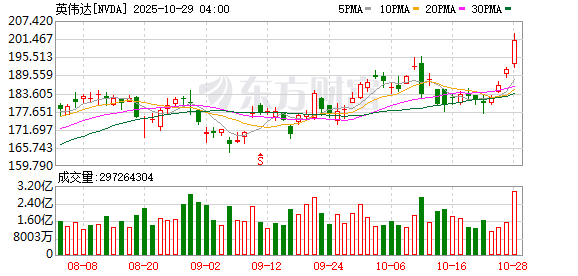
Core Viewpoint - On October 28, U.S. stock indices closed higher, reaching historical highs, with significant gains in major tech stocks, particularly Nvidia, which saw a nearly 5% increase, surpassing $200 per share, and a market cap of $4.89 trillion [1][2][4]. Group 1: U.S. Stock Market Performance - All three major U.S. stock indices closed higher, with the Dow Jones Industrial Average up 0.34%, the Nasdaq up 0.8%, and the S&P 500 up 0.23%, all achieving record closing prices [2][4]. - The U.S. Tech Giants Index rose by 1.6%, with notable individual stock performances including Microsoft and Tesla, both up over 1%, and Amazon rising by 1% [4]. Group 2: Nvidia's Market Impact - Nvidia's stock price increased nearly 5%, closing at a historical high and achieving a total market capitalization of $4.89 trillion [1][4]. - Nvidia announced a strategic partnership with Nokia, investing $1 billion to acquire shares, which significantly boosted Nokia's stock price by nearly 23%, bringing its market cap to $43.6 billion [1][4]. Group 3: Commodity Market Trends - In the commodities market, international precious metals exhibited a V-shaped price movement, with gold prices dropping to $3,951.945 per ounce, down 0.75%, and briefly falling below $3,900 [7][8]. - Oil prices also declined, with both WTI and Brent crude oil futures dropping over 1% [9].
“十五五”规划建议发布 更清晰的方向!
Sou Hu Cai Jing· 2025-10-28 23:35
Core Insights - The "14th Five-Year Plan" emphasizes a strategic approach to counter global challenges while focusing on domestic economic stability and growth [1][6][11] Strategic Dimensions - Understanding the complexities and volatility of the current macro external environment is crucial, as traditional globalization principles are changing [1][2] - Concentrating efforts on internal matters is essential to navigate external changes effectively [1][2] Historical Perspective - A historical viewpoint is necessary to recognize China's current position and future trajectory in the global landscape [2] Goal Orientation - The unwavering goal remains the construction of a modern socialist country and the rejuvenation of the Chinese nation, despite global uncertainties [2][4] Problem Orientation - Identifying and addressing existing issues is vital after understanding the broader context [2] Economic Growth and Quality - The plan highlights the importance of both qualitative and quantitative aspects of growth, with a target economic growth rate of around 5% to achieve the status of a moderately developed country by 2035 [4] - Emphasis on improving labor productivity as a key component of quality growth [4] Domestic Market Stability - Enhancing internal stability through a unified domestic market is critical to countering external uncertainties [6] - The establishment of a unified domestic market involves standardizing regulations, infrastructure, and business environments [6] Technological Development - China has made significant advancements in technology, particularly in AI, quantum computing, and nuclear energy, positioning itself to compete with the U.S. [8][10] - The focus on AI+ applications and breakthroughs in quantum computing are seen as pivotal for future growth [9][10] Global Engagement - The "China+N" strategy reflects a shift in global investment patterns, with foreign companies recognizing the importance of the Chinese market [11][12] - Chinese enterprises are increasingly expanding globally, contributing to a new structure in global supply chains [13] Currency Internationalization - The acceleration of the internationalization of the Renminbi is deemed necessary for strengthening China's financial position in global competition [14]

英伟达最新动作!10亿美元入股诺基亚 称能看见超5000亿美元芯片收入
Di Yi Cai Jing· 2025-10-28 23:33
Core Insights - Nvidia announced a partnership with Nokia, marking a significant investment of $1 billion to enter the telecommunications sector and launch a new product line [2][4] - The collaboration aims to leverage AI and accelerated computing to transform the telecom industry, particularly in the development of 5G and 6G technologies [2][4][5] Investment Details - Nvidia will acquire 166,389,351 new shares of Nokia at a subscription price of $6.01 per share, resulting in a 2.9% ownership stake in Nokia [4] - The investment is expected to accelerate AI-RAN innovation and facilitate the transition from 5G to 6G networks [4][6] Product Launch - Alongside the investment, Nvidia introduced the Arc Aerial RAN Computer, designed to support 6G technology [4][5] - Nokia plans to integrate Nvidia's technology into its existing base station architecture, enhancing efficiency through AI [5] Market Reaction - Following the announcement, Nokia's stock surged over 26%, while Nvidia's shares increased by more than 5%, reaching a market cap of $4.92 trillion [7] Broader Investment Strategy - Nvidia has been actively investing in various sectors, including a $5 billion stake in Intel and a potential $100 billion investment in OpenAI, indicating a strategy to strengthen partnerships and expand product offerings [7] Future Developments - Nvidia and Nokia, along with T-Mobile U.S., will collaborate on testing AI-RAN technology, with trials set to begin in 2026 [6] - Nvidia's CEO highlighted the importance of integrating AI into telecommunications to enhance cloud computing capabilities at the edge [6] Revenue Projections - Nvidia's Blackwell and Rubin chip architectures are projected to generate over $500 billion in revenue from 20 million GPUs by 2026, significantly outpacing previous architectures [8] Quantum Computing Initiatives - Nvidia introduced NVQLink to support quantum computing, allowing for hybrid simulations between quantum and GPU supercomputers, with 17 quantum computing companies already on board [10][11]

英伟达市值逼近5万亿美元,黄仁勋称AI产业进入“良性循环”
Di Yi Cai Jing· 2025-10-28 23:29
Core Insights - The AI industry is entering a "virtuous cycle," with expectations of generating approximately $500 billion in revenue over the next five quarters, driven by advancements in AI technology and increased customer willingness to pay for models [5]. Group 1: Company Developments - NVIDIA's stock surged by nearly 6% during trading on October 28, closing up 4.9%, reaching a market capitalization of $4.89 trillion, marking a historical high [1]. - The GTC conference in Washington D.C. served as a catalyst for NVIDIA's stock performance, where CEO Jensen Huang announced significant technological innovations and industry collaborations across AI, quantum computing, autonomous driving, and communications [1][6]. - NVIDIA has partnered with Eli Lilly to build a powerful supercomputer for drug discovery, emphasizing AI's role in pharmaceutical innovation [2]. - A strategic agreement with Nokia was established to develop a 6G AI platform, with NVIDIA investing $1 billion for a 2.9% stake, while collaborating with T-Mobile to advance AI-RAN technology [2]. - The launch of the Hyperion 10 autonomous driving platform and a partnership with Uber to create a Robotaxis network were also highlighted, indicating potential for substantial commercial outcomes [2]. Group 2: Technological Innovations - The NVQLink interconnect system was introduced, enabling high-speed communication between quantum processors and AI supercomputers, which is crucial for the commercialization of quantum computing [3]. - NVIDIA plans to collaborate with the U.S. Department of Energy to build seven next-generation AI supercomputers at national laboratories, with significant GPU resources allocated for these systems [3]. - An AI Factory research center will be deployed in Virginia, serving as a key node for NVIDIA's Omniverse DSX multi-generational AI architecture, providing computational power and development support [4]. Group 3: Market Position and Future Outlook - Huang emphasized that AI is driving re-industrialization across various sectors, positioning computational power as a new factor of production [6]. - The GTC conference underscored NVIDIA's central role in the AI ecosystem, spanning GPU hardware, computing platforms, software, and network architecture, creating a closed loop across the AI industry chain [6]. - The company's expansion into quantum computing, communication networks, and autonomous driving is expected to further broaden its market boundaries, reinforcing its leading position in high-performance computing as global tech companies increase AI investments [6].
英伟达最新动作!10亿美元入股诺基亚,称能看见超5000亿美元芯片收入
Di Yi Cai Jing· 2025-10-28 23:27
Core Insights - Nvidia and Nokia are accelerating the development and deployment of next-generation AI-native mobile networks and AI network infrastructure through a strategic partnership [1][3] - Nvidia's recent $1 billion investment in Nokia marks a significant entry into the telecommunications sector, alongside the launch of a new product line, Arc Aerial RAN Computer, aimed at supporting 6G [3][4] - The collaboration will enhance AI-RAN (Radio Access Network) innovation and facilitate the transition from 5G to 6G, with plans for testing AI-RAN technology in partnership with T-Mobile U.S. starting in 2026 [4][3] Investment Details - Nvidia will acquire 166,389,351 new shares of Nokia at a subscription price of $6.01 per share, resulting in a 2.9% ownership stake in Nokia [3] - This investment is part of a broader trend where Nvidia is making substantial investments to foster partnerships and expand its product offerings, including a recent $5 billion stake in Intel and a potential $100 billion investment in OpenAI [5] Market Impact - Following the announcement of the investment and partnership, Nokia's stock surged over 26%, while Nvidia's stock rose more than 5%, with Nvidia's share price exceeding $202, reaching a market capitalization of $4.92 trillion, a historic high [4] Product Development - Nvidia's Arc Aerial RAN Computer is designed to upgrade millions of existing base stations using AI and 6G technology, compatible with Nokia's current AirScale architecture [4] - Nvidia's CEO highlighted the importance of integrating AI into wireless communication to enhance efficiency and performance [4] Future Projections - Nvidia's Blackwell and Rubin chip architectures are projected to generate over $500 billion in revenue from 20 million GPUs, significantly outpacing previous architectures [7] - The shift towards accelerated computing platforms is expected to continue, driven by increasing capital expenditures from cloud service providers [9] Quantum Computing Initiatives - Nvidia introduced NVQLink, a technology that supports quantum computing integration with GPU supercomputers, indicating a strategic move into the quantum computing space [9]
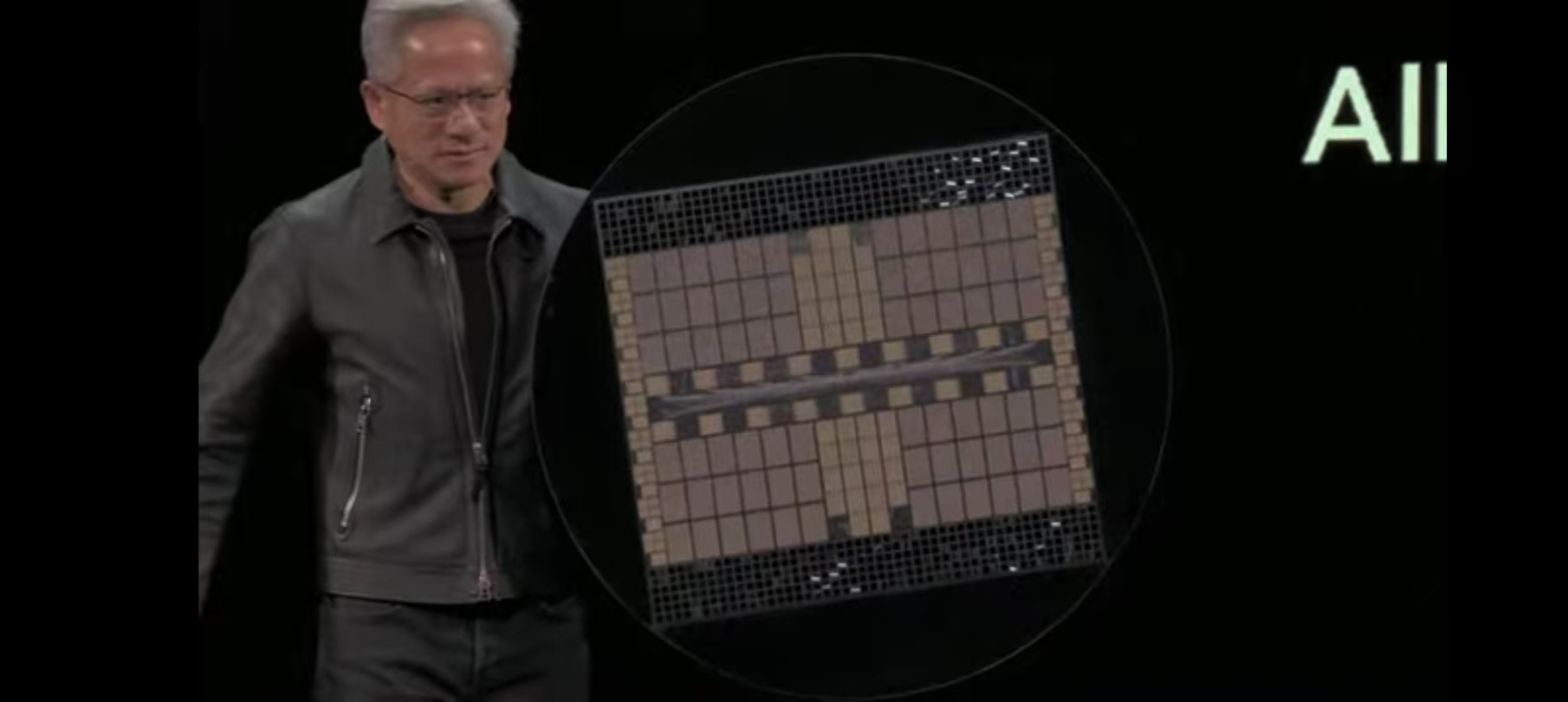
黄仁勋发声!英伟达市值暴增1.6万亿元;英伟达推出全新量子设备 以实现量子处理器与英伟达GPU互联——《投资早参》
Mei Ri Jing Ji Xin Wen· 2025-10-28 23:22
Key Market News - NVIDIA CEO Jensen Huang highlighted technological breakthroughs in 6G, AI, quantum computing, and robotics at the GTC conference, introducing NVQLink technology that connects quantum processors with GPU supercomputers, supported by 17 quantum computing companies [1] - U.S. stock indices closed higher, with the Nasdaq up 0.8%, Dow Jones up 0.34%, and S&P 500 up 0.23%; NVIDIA's stock rose approximately 5%, adding $231.8 billion to its market cap, nearing $5 trillion [1] Industry Insights - NVIDIA launched a new quantum device, NVQLink, to connect quantum processors with NVIDIA GPUs, supported by 17 quantum computing companies and 9 research labs, aiming to create accelerated quantum supercomputers [3] - Quantum computing is transitioning from laboratory experiments to industrial applications, with significant growth expected between 2025 and 2030, potentially reaching a market size of hundreds of billions of dollars [4] - The digital RMB ecosystem is being established, with a cumulative transaction amount of 14.2 trillion yuan by September 2025, covering 26 regions and facilitating 3.32 billion transactions [4][5] - A research team from the Chinese Academy of Sciences successfully industrialized the production of high-purity Hastelloy alloys, crucial for second-generation high-temperature superconducting materials, which are essential for controlled nuclear fusion [5][6]