
循环经济

Search documents
博苑股份(301617) - 2025年8月29日投资者关系活动记录表
2025-09-01 00:17
Group 1: Market Overview - Iodine and its derivatives are crucial raw materials in medical, agricultural, industrial, and nutritional fields, with applications in X-ray contrast agents, disinfectants, and LCD/LED screens [2] - The downstream application structure of iodine includes three core areas: X-ray contrast agents, pharmaceutical manufacturing, and LCD panel manufacturing, accounting for approximately 63% of global consumption [2] - Major iodine production is concentrated in Chile, Japan, and the USA, which together account for 88% of global sales, with Chilean companies alone contributing 60% [2][3] Group 2: Product Portfolio - The company’s inorganic iodide products include potassium iodide, potassium iodate, sodium iodide, hydrogen iodide, and cuprous iodide, primarily used in pharmaceuticals, pesticides, and optoelectronic materials [4] - The organic iodide product trimethyl iodide is utilized as a protecting agent in pharmaceutical synthesis, particularly in the production of antibiotics [4] Group 3: Competitive Advantages - The company integrates resource recycling with core business, creating a circular economy model that ensures stable supply and low costs [5] - A strong R&D team with over 30 years of industry experience has led to the acquisition of 51 patents, enhancing the company’s technological capabilities [5] - The company maintains a leading market position in iodides and luminescent materials, with established long-term partnerships with renowned clients [5][6] Group 4: Quality and Compliance - A comprehensive quality control system spans procurement, production, and sales, ensuring high-quality products and stable supply [6] - The company adheres to compliance in operations, holding all necessary safety and environmental permits, which fosters customer trust and supports sustainable growth [6]
君正集团成功突围中期赚19亿降转增 经营现金流26亿增187%负债率下降
Chang Jiang Shang Bao· 2025-08-31 22:21
Core Viewpoint - Junzheng Group has successfully turned around its operating performance in the first half of 2025, achieving significant growth in both revenue and net profit despite challenging market conditions [1][2]. Financial Performance - In the first half of 2025, Junzheng Group reported revenue of 12.66 billion yuan, a year-on-year increase of 8.59% [1][2]. - The net profit attributable to shareholders reached 1.92 billion yuan, reflecting a year-on-year growth of 26.82% [1][2]. - The company ended a three-year decline in net profit, with a significant recovery in the first half of 2025 [4]. Market Conditions - The company faced a challenging market environment, with significant price declines in major products and high raw material costs impacting operations [4][5]. - Average selling prices for key products such as polyvinyl chloride (PVC) and silicon iron saw substantial year-on-year decreases [4]. Cost Management and Cash Flow - Junzheng Group implemented effective cost control measures, resulting in a remarkable increase in operating cash flow, which reached 2.594 billion yuan, up 187.47% year-on-year [1][9]. - The company's asset-liability ratio decreased to 30.99%, indicating a relatively low level of debt [1][9]. Innovation and Competitive Advantage - The company has focused on innovation and technology breakthroughs, achieving several industry "firsts" in large-scale and automated equipment [6][8]. - Junzheng Group's integrated circular economy industrial chain provides a low-cost competitive advantage, with self-sufficient core production factors reducing procurement costs [7][8]. Research and Development - The company has consistently increased its R&D investment, with expenditures rising from 418 million yuan in 2022 to 665 million yuan in 2024 [9].


【封面故事】材料创新出行,陶氏公司MobilityScience™携手产业链伙伴共筑汽车可持续未来
DT新材料· 2025-08-31 16:04
Core Viewpoint - The automotive industry is becoming a forefront of global circular economy development, driven by the transition from internal combustion engines to new energy sources and breakthroughs in automotive materials [2][3]. Group 1: Sustainable Mobility and Circular Economy - Dow's MobilityScience™ brand aims to empower the circular economy through sustainable solutions across the entire vehicle lifecycle, from design to production, usage, and disposal [3][6]. - The initiative responds to increasing sustainability demands in the automotive sector, as evidenced by stringent regulations like the European ELV directive and CBAM [4][10]. - Dow emphasizes the unique responsibility of every company and individual in achieving higher standards of recyclability and sustainability in the automotive lifecycle [4][10]. Group 2: Innovative Material Solutions - MobilityScience™ integrates resources from Dow's three major divisions to provide innovative, sustainable products and technologies tailored to the transportation industry [6][8]. - Dow has developed polyurethane circular material solutions that replace traditional petrochemical feedstocks with recycled industrial waste, significantly reducing carbon footprints [8]. - The introduction of self-healing silicone tire solutions exemplifies Dow's commitment to sustainability, allowing for weight reduction and energy savings while ensuring recyclability [8]. Group 3: Strategic Partnerships and Industry Collaboration - Dow collaborates with top-tier racing events, such as the Formula E Championship, to leverage innovative experiences and apply them to broader market applications [11][13]. - The partnership with Jaguar TCS Racing has led to advancements in key performance areas while optimizing material recyclability, aligning with the environmental ethos of the racing series [11][13]. - Dow's RENUVA™ sustainable development program focuses on converting waste into new circular raw materials, meeting the automotive industry's growing demand for recycled content [15]. Group 4: Future Trends and Industry Leadership - The automotive industry's shift towards electrification and intelligence necessitates a reevaluation of traditional supply chain collaboration models [16][18]. - Dow's MobilityScience™ brand was established to facilitate more precise and efficient collaboration with clients, integrating sustainable innovation processes throughout the supply chain [16][18]. - The company is exploring partnerships with industry leaders to inject innovation into future mobility solutions, exemplified by collaborations with Carbice for advanced thermal management materials [17][18].

化工材料专家 杨向宏:全球化工新材料热点发展趋势
DT新材料· 2025-08-31 16:04
Core Viewpoint - The article discusses the current geopolitical tensions and their impact on international trade and economic order, emphasizing the rapid development of a new technological revolution and industrial transformation, which is reshaping the global innovation landscape and value chains [2]. Group 1: Industry Trends - The new materials industry is experiencing increased production capacity, but profitability is not keeping pace, leading to a focus on identifying future opportunities and key players in the sector [3][8]. - The 2025 Polymer Industry Annual Conference will explore the hottest development trends in global chemical new materials, featuring insights from industry experts with extensive experience in production, marketing, and research [3][8]. Group 2: Future Opportunities - The two major future trends identified for the new materials sector are renewable energy and the circular economy, with a particular emphasis on silicon-based materials and high-temperature resistant materials [8]. - The conference will include forums on emerging industries such as low-altitude economy, aerospace, and new energy vehicles, aiming to foster collaboration and innovation in the polymer field [8][9]. Group 3: Conference Details - The 2025 Polymer Industry Annual Conference will take place from September 10-12 in Hefei, Anhui, featuring various forums and award ceremonies to recognize outstanding contributions in the field [8][15]. - The agenda includes discussions on domestic polymer industry policies, development opportunities, and challenges, as well as presentations on the latest research and technological advancements [16][17].
河南许昌:吃干榨尽点废成金
Jing Ji Ri Bao· 2025-08-30 06:11
Group 1 - The core viewpoint emphasizes the transformation of waste into resources through advanced processing techniques, contributing to environmental sustainability and energy generation [1] - The company, Yougreen Environmental Technology Co., processes approximately 36,500 tons of kitchen waste annually, generating 3.65 million cubic meters of biogas, which translates to an annual electricity generation of about 8.03 million kilowatt-hours, reducing carbon dioxide emissions by 4,300 tons [1] - The establishment of a circular economy industrial park in Changge City has created a billion-yuan-level recycled metal industry cluster, saving nearly 7 million tons of standard coal and reducing carbon dioxide emissions by over 18 million tons annually [1] Group 2 - Since becoming one of the first national pilot "waste-free cities" in 2019, the green industry has emerged as a new driving force for economic growth in Xuchang, with 106 green factories and 3 green parks established [2] - The city has implemented a comprehensive waste classification system, achieving 100% harmless treatment rate and 85% resource utilization rate for domestic waste [2] - Xuchang is integrating low-carbon concepts into urban and rural development, with full coverage of new energy buses and taxis, and 7,800 public bicycles available throughout the city [2] Group 3 - Xuchang has significantly improved its urban green space, with a green coverage rate of 45.77% and an average of 18.01 square meters of park green space per person [3] - The city has developed 238 parks, creating a landscape where residents can access green spaces within 300 meters and parks within 500 meters [3] - Water ecological landscape projects have been implemented, enhancing the green area of river and lake systems in the urban area to 6,500 acres, promoting a clean and beautiful water ecosystem [3]
从华强北柜台到港交所敲钟,这个梅林企业家的故事很励志
Nan Fang Du Shi Bao· 2025-08-30 04:16
Core Insights - Lingxiong Technology, the parent company of Xiaoxiong U Rental, has emerged as a leading player in the DaaS (Device as a Service) sector in China, showcasing a successful evolution alongside the digital economy in Shenzhen [1][7]. Company Development - Founded in 2004 by Hu Zuoxiong in Huaqiangbei, Lingxiong Technology initially focused on DIY computer sales and second-hand computer trading, quickly becoming a market leader [4]. - The company pivoted to the IT office equipment short-term rental market after identifying a rental demand during an exhibition in 2008 [5]. - In 2013, Lingxiong introduced a long-term rental model for IT office equipment, allowing businesses to pay monthly and providing comprehensive IT services, which helped reduce initial investment by approximately 97% and operational costs by 10%-30% over three years [6]. Business Model and Achievements - By 2017, Lingxiong expanded its services to include IT equipment recycling and launched a SaaS management system in 2018, creating a closed-loop DaaS service model that manages the entire lifecycle of IT equipment [6]. - As of now, Lingxiong has assisted thousands of companies, including many Fortune 500 firms, in reducing costs and improving efficiency, with a service network covering over 380 cities and a customer satisfaction rate exceeding 98% [7]. - The company went public on the Hong Kong Stock Exchange on November 24, 2022, marking its transformation from a small business to an industry leader [7]. - In 2024, Lingxiong's revenue grew by 32.3% year-on-year to 2.372 billion yuan, and in the first half of 2025, revenue increased by approximately 18.5% to 1.117 billion yuan, maintaining its position as the industry leader [7]. Industry Impact and Social Responsibility - Lingxiong has taken on a leadership role in the DaaS industry, actively participating in the establishment of industry standards and promoting high-quality development [9]. - The company has initiated the "Credit Ease+" alliance to enhance China's social credit system and has contributed to the formulation of several national standards related to IT equipment recycling and credit evaluation [9]. - In terms of social responsibility, Lingxiong has donated teaching computers to rural schools and has implemented IT remanufacturing technologies to support digital education, contributing to sustainable development [10]. - The company has also significantly reduced carbon emissions, with a net reduction of over 83,740 tons in 2024 alone, by extending the lifecycle of IT equipment [10]. Entrepreneurial Philosophy - Hu Zuoxiong emphasizes a long-term, iterative approach to business, focusing on innovation and customer value rather than short-term gains [11]. - His leadership reflects the adaptability and resilience of Shenzhen entrepreneurs in navigating economic fluctuations and industry changes [11].
豫光金铅: 河南豫光金铅股份有限公司2025年半年度报告
Zheng Quan Zhi Xing· 2025-08-29 16:41
Core Viewpoint - Henan Yuguang Gold & Lead Co., Ltd. reported significant growth in revenue and profit for the first half of 2025, driven by increased production and favorable market conditions for metals [2][8]. Financial Performance - The company's operating income for the first half of 2025 was approximately CNY 22.44 billion, a year-on-year increase of 18.93% compared to CNY 18.87 billion in the same period of 2024 [2][8]. - Total profit reached CNY 626.41 million, up 17.27% from CNY 534.16 million in the previous year [2][8]. - Net profit attributable to shareholders was CNY 484.65 million, reflecting a 15.12% increase from CNY 421.01 million [2][8]. - The company's total assets increased by 10.59% to CNY 19.47 billion from CNY 17.61 billion at the end of the previous year [2][8]. Production and Sales - The production of lead products reached 331,277.18 tons, a 14.64% increase from 288,970.63 tons in the first half of 2024 [8]. - Sales of lead products were 315,314.46 tons, up 10.08% from 286,430.55 tons [8]. - The company experienced a decrease in the production of cathode copper and gold, with cathode copper production down 5.03% and gold production down 14.84% [8]. Industry Context - The company operates in the non-ferrous metal smelting and rolling processing industry, focusing on the production and sale of lead ingots, cathode copper, gold, and silver [3][4]. - The lead price showed significant volatility in the first half of 2025, with the average LME three-month lead price decreasing by 0.9% year-on-year [3][4]. - Copper prices exhibited a "N" shaped trend, with the average LME three-month copper price increasing by 2.42% year-on-year to USD 9,445.4 per ton [3][4]. - Precious metals saw strong price increases, with COMEX gold rising by 25.52% and domestic gold prices increasing by 24.50% by the end of June 2025 [3][4]. Business Model and Strategy - The company emphasizes a circular economy model, integrating primary and recycled lead production to enhance resource efficiency and sustainability [5][6]. - The production process includes comprehensive recovery of by-products such as gold, silver, zinc, and sulfuric acid, contributing to overall profitability [5][6]. - The company has established a differentiated management model to optimize production scheduling and improve operational efficiency [9][10]. Competitive Advantages - The company leads in domestic lead smelting technology, with its processes recognized as industry benchmarks for energy efficiency [12]. - A skilled workforce with over 210 technical professionals supports the company's innovation and market adaptability [12]. - The company maintains strong market relationships with major battery manufacturers and raw material suppliers, enhancing its competitive position [12].

鸿承环保科技(02265.HK)公布中期业绩 溢利大幅增加约78.4%
Ge Long Hui· 2025-08-29 15:20
Core Viewpoint - The company, Hong Cheng Environmental Technology, reported significant growth in revenue and profit for the six months ending June 30, 2025, driven by increasing demand for resource recycling and the national "dual carbon" goals [1] Financial Performance - Total revenue for the group was approximately RMB 133.6 million, representing a year-on-year increase of about 27.1% [1] - Profit attributable to the owners of the company was approximately RMB 36.4 million, reflecting a year-on-year increase of about 78.4% [1] - Basic earnings per share attributable to the owners were approximately RMB 0.036 [1] - Gross profit for the group was approximately RMB 79.1 million, showing a year-on-year increase of about 52.4% [1] - Overall gross margin increased from approximately 49.4% in the same period last year to about 59.2% [1] Industry Outlook - The circular economy industry is experiencing unprecedented development opportunities due to the growing global demand for resource recycling and the ongoing promotion of national "dual carbon" goals [1] - The company aims to seize this historic opportunity by focusing on sustainable development, accelerating technological innovation, business expansion, and green transformation to ensure steady progress and long-term development in the new era [1]
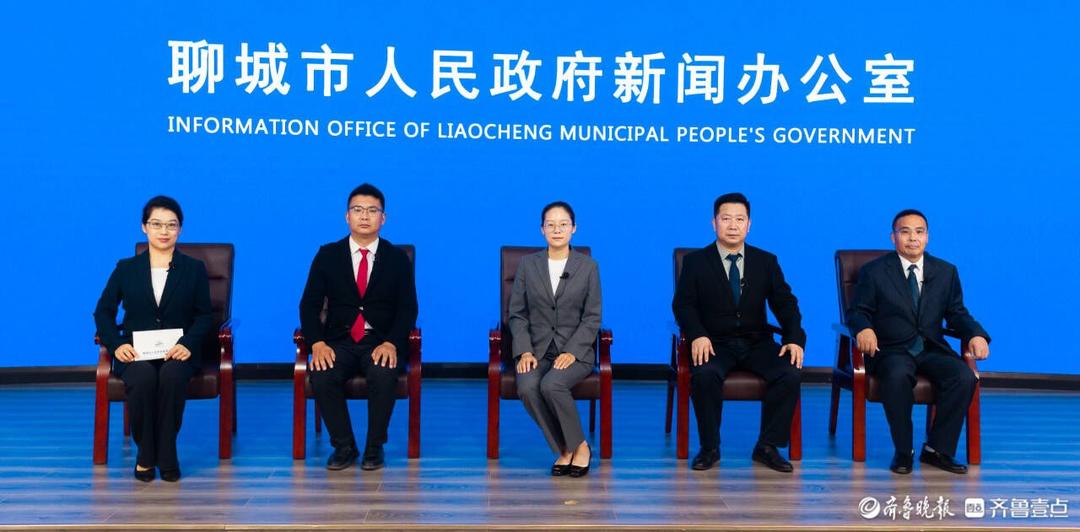
向“绿”而行,向“新”而生,聊城推动绿色建材全产业链绿色发展
Qi Lu Wan Bao Wang· 2025-08-29 13:50
Group 1: Industry Development - The city of Liaocheng is actively promoting the development of the green building materials industry chain, with 266 enterprises in the sector, of which 35.7% are traditional building materials companies and 64.3% are new-type building materials companies [1] - The green building materials industry generated a revenue of 82.72 billion yuan and a total profit of 4.03 billion yuan [1] - Liaocheng has established national and provincial-level industrial clusters, including "Shandong Province Guan County Coated Steel Plate Products" and "Dong'a County New Building Materials" [1] Group 2: Technological Advancements - Companies like Shandong Baiyiyuan Windows Co., Ltd. are leading the industry by focusing on high-quality, high-performance, and cost-effective aluminum system windows, incorporating digital production systems to enhance efficiency [2] - The city aims to improve technological innovation levels by developing new patent technologies and core technologies in the green building materials sector [4] Group 3: Policy and Strategic Initiatives - The government is focusing on promoting the use of green building materials in government investment projects and star-rated green building projects, targeting a 50% application rate by the end of 2025 [5] - Efforts are being made to enhance the recycling economy by improving the production technology of recycled building materials and establishing long-term monitoring mechanisms for their application [4][5] - Liaocheng is actively seeking to attract new technologies, processes, and materials from industrially concentrated regions to strengthen its building materials industry [6]
安泰集团: 安泰集团2025年半年度报告
Zheng Quan Zhi Xing· 2025-08-29 11:44
Core Viewpoint - Shanxi Antai Group Co., Ltd. reported a significant decline in revenue and net profit for the first half of 2025, primarily due to market fluctuations and operational adjustments in response to the coal and coke market volatility [2][5][6]. Company Overview and Financial Indicators - The company generated operating revenue of approximately CNY 2.38 billion, a decrease of 35.47% compared to the same period last year [2][5]. - The total profit for the period was a loss of approximately CNY 90.53 million, an improvement from a loss of CNY 183.19 million in the previous year [2][5]. - The net profit attributable to shareholders was a loss of approximately CNY 93.06 million, compared to a loss of CNY 183.11 million in the same period last year [2][5]. - The company's total assets decreased by 4.23% to approximately CNY 4.4 billion, while net assets attributable to shareholders decreased by 6.07% to approximately CNY 1.42 billion [2][5]. Business Operations - The company primarily engages in the production and sale of coke and H-beam steel products, with a production capacity of 2.4 million tons of metallurgical coke and 1.2 million tons of H-beam steel [3][4]. - In response to market conditions, the company shifted its coke business from self-production to a commissioned processing model, which helped mitigate losses despite a significant drop in revenue [6][8]. - The company produced 596,700 tons of H-beam steel and sold 583,700 tons during the reporting period [6][8]. Industry Context - The steel industry faced challenges with strong supply and weak demand, leading to a decrease in overall revenue and profit margins [4][5]. - The average price of Shanxi premium dry coke fell by 27.3% from the beginning of the year, reflecting a broader trend of declining prices in the coke market [4][5]. - The industry is undergoing a period of adjustment, focusing on high-quality development and addressing structural challenges [4][5]. Management Discussion and Analysis - The company implemented various operational improvements, including cost reduction measures and enhanced supply chain management, to navigate the challenging market environment [6][8]. - The management emphasized the importance of stabilizing production and improving operational efficiency to achieve annual business goals [6][8]. - The company is committed to developing a circular economy and enhancing resource utilization while reducing environmental impact [3][6].
