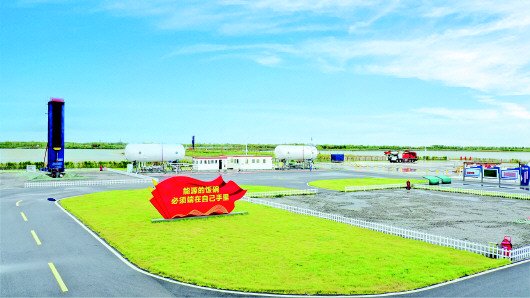
绿色低碳转型

Search documents
产量5年增长10倍多,中国动力电池全球份额已超6成
Di Yi Cai Jing· 2025-10-24 06:37
Core Insights - The power battery industry has become a significant advantage for China's new energy vehicle sector, contributing to the green and low-carbon transformation of the automotive industry [1] - China has established a complete power battery industry chain, supplying approximately 70% of battery materials and over 60% of power batteries globally [1][2] - The production capacity of power batteries is expected to exceed 1000 GWh by 2024, growing more than tenfold from 83.4 GWh in 2020 [1] Industry Growth - In the first three quarters of this year, the cumulative installed capacity reached 493.9 GWh, representing a year-on-year increase of 42.5% [1] - The export volume of power batteries reached approximately 130 GWh, with a year-on-year growth of 32.7% [2] - Sichuan province has emerged as a major production base, with a power battery output of 168.1 GWh in the first nine months of this year, a 49.2% increase year-on-year [3] Technological Advancements - Breakthroughs have been made in key material research, cell design, and system integration, with mass-produced battery energy density exceeding 300 Wh/kg [2] - The development and industrialization of all-solid-state batteries are accelerating [2] Regional Development - Yibin city has attracted over 120 projects related to power batteries and their supply chain, with a planned production capacity of 300 GWh [3] - Yibin's power battery output is projected to account for over 16% of the national total and 10% of the global total by 2024 [3] - The economic contribution of Yibin's power battery industry is expected to exceed 100 billion yuan in both 2023 and 2024, becoming the second trillion-level industry after liquor [4] Industry Events - The 2025 World Power Battery Conference will be held in Yibin, Sichuan province, on November 12-13, 2025, following three successful previous editions [4]

中共中央举行新闻发布会 介绍和解读党的二十届四中全会精神(全文)
智通财经网· 2025-10-24 05:58
智通财经APP获悉,中共中央于2025年10月24日上午10时举行新闻发布会,介绍和解读党的二十届四中 全会精神。会上国家发展改革委党组书记、主任郑栅洁介绍,2024年,我国"三新"经济增加值占GDP比 重超过18%。《中共中央关于制定国民经济和社会发展第十五个五年规划的建议》提出打造新兴支柱产 业,加快新能源、新材料、航空航天、低空经济等战略性新兴产业集群发展,将催生数个万亿元级甚至 更大规模的市场;《建议》还提出前瞻布局未来产业,推动量子科技、生物制造、氢能和核聚变能、脑 机接口、具身智能、第六代移动通信等成为新的经济增长点,这些产业蓄势发力,未来10年将再造一个 中国高技术产业。 中央财办分管日常工作的副主任、中央农办主任韩文秀在会上表示,"十五五"时期是基本实现社会主义 现代化,夯实基础,全面发力的关键时期,具有承前启后的重要地位。我们要以时不我待,只争朝夕的 时代紧迫感和历史使命感,科学谋划未来5年经济社会发展。要着力推动经济实现质的有效提升和量的 合理增长,充分释放经济增长的潜力,努力从中等收入国家向中等发达国家水平迈进。 文字实录如下: 中央宣传部副部长、国务院新闻办公室主任 莫高义: 女士们、 ...
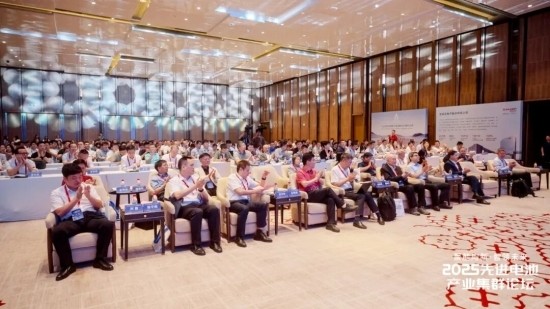
聚能向新 智领未来 | 2025先进电池产业集群论坛圆满落幕
Zhong Guo Neng Yuan Wang· 2025-10-24 03:54
Core Insights - The "2025 Fifth Advanced Battery Industry Cluster Forum" was held in Shenzhen, focusing on the theme "Gathering Energy for New Intelligence to Lead the Future," aiming to explore industry trends and provide new ideas for enterprise development and industry-academia-research collaboration [1][3]. Group 1: Forum Overview - The forum was supported by numerous advanced battery material enterprises, industry associations, and research institutions, with over 1,000 representatives from leading companies and academic institutions attending [3]. - The event featured one main forum and six parallel sessions discussing various hot topics, including advanced battery design and development, low-altitude economy and electric ship battery technology, battery recycling and sustainability, and financial services for battery ecosystem construction [3][41]. Group 2: Keynote Addresses - Liang Rui, the executive chairman, emphasized the importance of collaborative innovation and breaking down industry barriers to achieve overall upgrades and sustainable development in the advanced battery sector [4]. - Professor Kang Feiyu highlighted the opportunities and challenges in the battery industry, particularly in the Shenzhen and Pearl River Delta regions, and stressed the need to focus on new energy storage fields [7]. - Wang Lizong, a member of the National Committee of the Chinese People's Political Consultative Conference, noted China's transition from a follower to a leader in green clusters and new energy vehicles, urging the industry to strengthen global awareness and collaboration [8]. Group 3: Major Announcements - The Guangdong Province Electrochemical Energy Storage Materials and Devices Pilot Platform was launched to facilitate the industrial application of laboratory innovations, expected to serve over 80 enterprises and research institutions annually [13]. - The "High-Quality Development Action Plan for the Mobile Power Industry" was officially released, establishing a comprehensive framework for quality development across the entire industry chain [15][16]. - The "Advanced Manufacturing Cluster Construction Guidelines" standard was published, aimed at guiding the development of advanced manufacturing clusters [18]. Group 4: Awards and Recognition - The "Cluster Fresh Award" ceremony recognized outstanding contributions in technology innovation, industry-academia-research integration, and high-quality development within the new energy and materials sectors, with 29 awards presented across various categories [44][45]. Group 5: Technical Reports and Discussions - Various experts presented reports on topics such as the safety research progress of solid-state batteries, the potential of two-dimensional materials in ion conduction, and strategies for the green low-carbon development of lithium-ion battery anodes [26][27][35]. - The forum also addressed the integration of AI technology with new energy and low-altitude economy sectors, discussing practical applications and future strategies [38].

江金权:预计今年国内生产总值达到140万亿元左右
Xin Jing Bao· 2025-10-24 03:48
记者提问:今年是"十四五"规划的收官之年,全社会都非常关注"十四五"规划目标任务的落实情况和取 得的成就,能否介绍一下相关情况? 中共中央于2025年10月24日上午10时举行新闻发布会,介绍和解读党的二十届四中全会精神。 此外,全过程人民民主深入发展,全面依法治国有效实施;文化事业和文化产业蓬勃发展,精神文化产 品丰富多样;国防和军队建设取得重大进展;"一国两制"实践深入推进;中国特色大国外交全面拓展; 全面从严治党成效显著,反腐败斗争纵深推进,党的创造力、凝聚力、战斗力明显提高。这些重大成 就,为"十五五"时期的经济社会发展打下了坚实基础。 二是科技创新成果丰硕,新质生产力稳步发展。全社会研发经费投入、基础研究经费占比均创历史新 高。高新技术产业超过50万家,全球百强科技创新集群数量达26个,占比全球第一。 这些重大成就的取得,根本在于以习近平同志为核心的党中央领航掌舵,在于习近平新时代中国特色社 会主义思想科学指引。"十五五"时期,只要我们深刻领悟"两个确立"的决定性意义,更加紧密团结在以 习近平同志为核心的党中央周围,坚持正确方向、遵循科学理念、发扬斗争精神、把握历史主动,我们 就一定能够继续开创中国 ...
中国西电订单不断前三季营收170亿 合同负债增29%参与多个重点项目
Chang Jiang Shang Bao· 2025-10-24 00:44
Core Viewpoint - China XD Electric (601179.SH) has demonstrated stable growth in its third-quarter performance for 2025, driven by significant orders and a focus on power system construction in regions like Tibet and Xinjiang [1][2][5]. Financial Performance - For the first three quarters of 2025, China XD Electric achieved operating revenue of 16.959 billion yuan, a year-on-year increase of 11.85%, and a net profit of 939 million yuan, up 19.29% [1][2]. - In the third quarter alone, the company reported operating revenue of 5.658 billion yuan, reflecting a 15.98% increase, while net profit rose to 340 million yuan, a growth of 1.78% [2][4]. Order and Contract Status - Since 2025, China XD Electric has secured numerous large orders, contributing significantly to its revenue growth. As of September 2025, the company's contract liabilities reached 5.066 billion yuan, marking a 29.28% increase [1][4]. - On September 23, 2025, the company was awarded contracts totaling approximately 1.641 billion yuan for various electrical equipment through the State Grid's procurement process [3]. Industry Position and Projects - China XD Electric, backed by state-owned enterprise status, is well-positioned to provide complete sets of power transmission and distribution equipment, showcasing strong capabilities in R&D and manufacturing [5]. - The company has participated in major national power projects, including the Three Gorges and Baihetan hydropower stations, and is actively engaging in power construction opportunities in Tibet and Xinjiang [5]. R&D and Technological Advancements - The company has made significant strides in R&D, with expenditures increasing from 797 million yuan in 2022 to 1.041 billion yuan in 2024, and a reported R&D expense of 690 million yuan for the first three quarters of 2025, up 17.76% [6]. - China XD Electric has revised 10 national standards and 7 international standards, and has been granted 119 new patents, including 60 invention patents, indicating a strong commitment to innovation [6].

制度体系初步建成 上市公司可持续信息披露量质齐升
Jing Ji Ri Bao· 2025-10-23 23:38
Group 1 - The core viewpoint emphasizes the importance of listed companies in the capital market, with 5,167 companies in the Shanghai and Shenzhen exchanges having a market value exceeding 100 trillion yuan, ranking second globally [1] - By the end of 2024, 1,869 companies disclosed sustainability reports, representing a disclosure rate of 34.7%, indicating a significant portion of companies are systematically reporting sustainability-related information [5] - The establishment of a mandatory sustainability information disclosure system marks a significant step in promoting sustainable development and enhancing the long-term sustainability capabilities of listed companies [2][3] Group 2 - The new "National Nine Articles" introduced in April 2024 aims to improve the sustainability information disclosure system for listed companies, combining mandatory and reference guidelines [2] - The quality of disclosures has improved, with 99.3% of reports including quantitative indicators, and 62.1% of companies identifying climate risks and opportunities [5] - The international recognition of Chinese companies' sustainability efforts is increasing, with about one-third of companies in the Shanghai and Shenzhen markets receiving improved MSCI ESG ratings by the end of 2024 [6] Group 3 - The sustainable disclosure system is designed to align with international standards while considering China's unique circumstances, promoting a gradual and flexible approach to implementation [7] - The shift from disclosure to governance reflects a broader trend where ESG principles are increasingly integrated into corporate strategy and risk management [8] - The next steps involve guiding companies to implement new development concepts and continuously improving disclosure standards to achieve more balanced and focused sustainability reporting [9]
【数说经济】奋力跑好全年经济“最后一棒”
Sou Hu Cai Jing· 2025-10-23 23:37
Core Viewpoint - The economic performance in the fourth quarter is crucial for achieving annual development goals and ensuring a smooth transition from the 14th Five-Year Plan to the 15th Five-Year Plan [2] Economic Performance - The economy showed a stable growth trend in the first three quarters, with a growth rate of 5.2%, ranking among the top in major global economies [2] - The retail sales of consumer goods increased by 4.5% year-on-year in the first three quarters, but the growth rate dropped to 3% in September, marking a continuous decline for four months [3] - Fixed asset investment decreased by 0.5% year-on-year from January to September, the first decline since September 2020, with private investment down by 3.1% [3] Challenges - The economy faces multiple pressures in the fourth quarter, including high base effects, weak external demand, and insufficient domestic demand [3] - There are significant challenges in the domestic market, such as weak consumer growth and difficulties faced by enterprises, which contribute to a heavy employment stabilization task [3] Policy Measures - The government has implemented more proactive macro policies to stabilize employment, businesses, markets, and expectations, which have effectively supported economic stability [4] - Policies aimed at boosting consumption, such as trade-in programs for consumer goods, have resulted in double-digit growth in retail sales for certain categories [4] - There is a need for greater flexibility and foresight in policy implementation to respond to changing circumstances [4] Support for Enterprises - The government aims to provide targeted support to enterprises facing market demand shortages and operational pressures, emphasizing the importance of a favorable business environment [5] - Policies to promote the development of small and medium-sized enterprises are crucial, as these businesses are significant contributors to employment and economic vitality [5]

黑龙江前9个月优良天数比率93.9% “龙江蓝”成为常态
Zhong Guo Xin Wen Wang· 2025-10-23 10:06
黑龙江前9个月优良天数比率93.9% "龙江蓝"成为常态 中新网哈尔滨10月23日电 (记者 姜辉)在中共黑龙江省委宣传部、黑龙江省人民政府新闻办公室23日主 办的发布会上,黑龙江省生态环境厅党组成员、副厅长刘士奇表示,2024年黑龙江省PM2.5浓度降至 27.8微克/立方米,优良天数比例提升至94.2%,分别较2020年改善0.6微克/立方米、1.3个百分点。2025 年1月至9月,黑龙江省PM2.5浓度为24.5微克/立方米,优良天数比率为93.9%,分别优于全国平均值1.5 微克/立方米、6.3个百分点,"龙江蓝"成为常态。 据刘士奇介绍,"十四五"以来,黑龙江省深入实施大气污染防治"冬病夏治",因地制宜推进北方地区清 洁取暖,全省共削减替代散煤约685万吨,淘汰建成区外10蒸吨/小时以下燃煤锅炉2400余台,累计完成 65蒸吨/小时以上燃煤锅炉超低排放640余台,淘汰老旧车辆73万余辆,推动930万吨粗钢超低排放改 造,协同推进能源、工业低碳绿色转型。聚焦哈尔滨市、大庆市、绥化市等重点区域,由省级统筹,抽 调省市两级执法力量,组织47个工作组深入重点县区开展监督帮扶,指导企业污染防治设施正常运行, ...
从“温暖万家”到“智”理城市
Qi Lu Wan Bao· 2025-10-23 09:36
Core Viewpoint - The Jinan Energy Group is focusing on digital transformation as a key path to high-quality development, implementing a comprehensive digital strategy to enhance operational efficiency and service quality [2][8]. Digital Transformation - Jinan Energy Group has adopted digital transformation as a top priority, aiming to create a smart energy supply system that enhances decision-making and operational control [2][3]. - The company has established a five-level intelligent control system for heating, achieving full digital regulation from heat sources to end users, and has been recognized as a national benchmark for technological leadership in the industry [3]. User Service Enhancement - The introduction of an AI customer service system has significantly improved service efficiency, handling 665,000 calls with a self-service rate of 74.65% and achieving a user satisfaction rate of 98.6% [3]. Safety Management - The digital management system has been crucial in enhancing safety in energy construction projects, with a comprehensive regulatory framework that has identified 8,865 risk points and processed 143,000 safety work tickets online, improving operational efficiency by over 40% [4]. Virtual Technology - The launch of a "virtual power plant" has allowed Jinan Energy Group to aggregate and manage various decentralized energy sources, facilitating a unified dispatch system that benefits both power users and the grid [5]. Future Development - The company is leading the establishment of a big data group in Jinan, focusing on data governance and integration to enhance urban energy management and operational efficiency [6][7]. - The development of a holographic data command platform is enabling real-time integration of multiple data streams for improved urban governance and emergency response [7]. Commitment to Sustainable Development - Jinan Energy Group is committed to building a smarter, greener, and more efficient energy system, aiming to integrate energy big data with urban operations to support high-quality urban development [8].
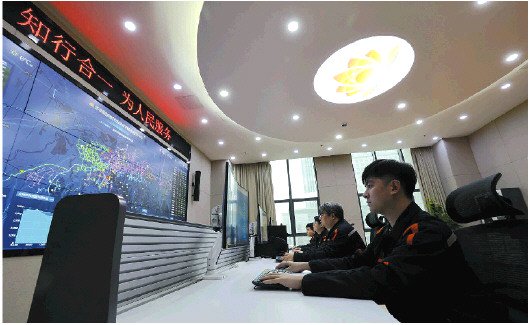
胜利油田全方位提升能源保障能力
Qi Lu Wan Bao· 2025-10-23 09:28
Core Viewpoint - The article highlights the significant advancements and achievements of Shengli Oilfield in resource exploration, technology innovation, and green energy integration, emphasizing its role in ensuring energy security and sustainable development in China [4][11][14]. Group 1: Resource Exploration - Shengli Oilfield has achieved continuous breakthroughs in resource exploration, with proven reserves exceeding 100 million tons for three consecutive years [4][10]. - The oilfield has discovered a new shale oil field, marking a major breakthrough in the exploration and development of shale oil in continental rift basins [4][10]. - The estimated resource volume of the Shengli Jiyang shale oil is 10.52 billion tons, comparable to the currently discovered conventional oil resources [10]. Group 2: Technological Innovation - Shengli Oilfield has developed key technologies to enhance oil extraction from depths exceeding 3,000 meters, overcoming significant technical challenges [11][12]. - The CCUS (Carbon Capture, Utilization, and Storage) project has been successfully implemented, with over 2 million tons of CO2 injected since its launch, significantly increasing oil production [11][12]. - The oilfield has also innovated in chemical flooding techniques, successfully applying them in high-temperature reservoirs, thus unlocking over 100 million tons of additional resource potential [12]. Group 3: Green Energy Integration - Shengli Oilfield has established a photovoltaic capacity of 572 megawatts, generating 740 million kilowatt-hours of green electricity annually, contributing to a 25% green energy share in oil and gas production [14]. - The oilfield has implemented a smart energy system that integrates various energy resources, enhancing supply quality and efficiency while reducing carbon emissions [14][15]. - The transition to renewable energy sources is seen as a crucial step in achieving a balanced energy portfolio alongside traditional oil and gas operations [14][15].