对等关税

Search documents
宏观及期指点评:美国联邦法院阻止特朗普4月2日关税政策生效,股指期货止跌上涨
Guo Tai Jun An Qi Huo· 2025-05-29 08:29
Report Summary 1. Report Industry Investment Rating No information provided. 2. Core View of the Report The U.S. Federal Court's decision to block Trump's April 2 tariff policy from taking effect has boosted market risk appetite, which is expected to help the stock index futures oscillate upward in the short term. The report provides intraday and May 2025 trend forecasts for four major stock index futures contracts, including IF2506, IH2506, IC2506, and IM2506 [2][7][10]. 3. Summary by Relevant Catalogs 3.1 Market Outlook Highlights - On May 29, the main contracts of stock index futures IF2506, IH2506, IC2506, and IM2506 opened slightly higher. After opening, they rose, encountered resistance, and then fell back, followed by an oscillating upward trend. IF2506 and IH2506 rose slightly, while IC2506 and IM2506 showed relatively strong slight increases [2]. - The U.S. Federal Court's blockage of Trump's April 2 tariff policy is expected to help the stock index futures oscillate upward in the short term [2]. - Forecasts for intraday trends: - IF2506 is likely to oscillate strongly, targeting resistance levels at 3850 and 3864 points (3864 points has stronger resistance), with support levels at 3798 and 3775 points (3775 points has stronger support) [2][7][8]. - IH2506 is likely to oscillate strongly, targeting resistance levels at 2689 and 2699 points (2699 points has stronger resistance), with support levels at 2658 and 2646 points (2646 points has stronger support) [2][8][9]. - IC2506 is likely to oscillate strongly, targeting resistance levels at 5700 and 5749 points (5749 points has stronger resistance), with support levels at 5560 and 5549 points (5549 points has stronger support) [3][9][10]. - IM2506 is likely to oscillate strongly, targeting resistance levels at 6038 and 6102 points (6102 points has stronger resistance), with support levels at 5905 and 5873 points (5873 points has stronger support) [3][10]. 3.2 Macroeconomic and Stock Market News - On May 28, the U.S. Federal Court blocked Trump's April 2 tariff policy from taking effect and ruled that Trump overstepped his authority by imposing comprehensive tariffs on countries that export more to the U.S. than they import [2][4]. - The lawsuit was filed by the Freedom and Justice Center on behalf of five U.S. small businesses affected by the tariffs, marking the first major legal challenge to Trump's tariff policy [4]. - On April 2, Trump signed an executive order on so - called "reciprocal tariffs," announcing a 10% "minimum benchmark tariff" on trading partners and higher tariffs on some [4]. - The Trump administration filed an appeal notice minutes after the ruling, and the White House spokesperson condemned the ruling. The ruling gives the executive branch up to 10 days to stop collecting tariffs [6]. 3.3 Technical Analysis and Market Outlook - Through macro - fundamental and technical analysis, the following trends are expected for the main futures contracts on May 29: - IF2506 opened slightly higher, rose, encountered resistance, and then oscillated upward. It closed at 3839.0 points at noon, up 0.85%. It failed to break through the resistance at 3850 points and the 10 - day moving average, but showed a short - term rebound [7]. - IH2506 opened slightly higher, rose, encountered resistance, and then oscillated upward. It closed at 2683.4 points at noon, up 0.61%. It failed to break through the resistance at 2699 points and the 10 - day moving average, but showed a short - term rebound [8]. - IC2506 opened slightly higher, rose, encountered resistance, and then oscillated upward. It closed at 5652.0 points at noon, up 1.59%. It failed to break through the resistance at 5700 points but broke through multiple moving averages and showed a short - term rebound [9]. - IM2506 opened slightly higher, rose, encountered resistance, and then oscillated upward. It closed at 6004.0 points at noon, up 1.89%. It failed to break through the resistance at 6037.8 points but broke through multiple moving averages and showed a short - term rebound [10]. - Forecasts for May 2025 trends: - The IF main contract is likely to oscillate strongly in a wide range, targeting resistance levels at 3933 and 4004 points, with support levels at 3700 and 3675 points [10]. - The IH main contract is likely to oscillate strongly in a wide range, targeting resistance levels at 2766 and 2800 points, with support levels at 2600 and 2572 points [11]. - The IC main contract is likely to oscillate strongly in a wide range, targeting resistance levels at 5759 and 5962 points, with support levels at 5434 and 5345 points [11]. - The IM main contract is likely to oscillate strongly in a wide range, targeting resistance levels at 6196 and 6332 points, with support levels at 5757 and 5657 points [11].
中方就特朗普政府关税政策被“叫停”等表态!
证券时报· 2025-05-29 08:03
Group 1 - The article discusses the U.S. International Trade Court's decision to suspend the Trump administration's tariff policy announced on April 2, which aimed to impose tariffs on all trade partners under the guise of "reciprocal tariffs" [3] - The court ruled that the President does not have the authority to impose comprehensive tariffs on nearly all trade partners, stating that Congress's delegation of "unrestricted tariff power" to the President is unconstitutional [3] - A coalition of 12 states filed a lawsuit against the Trump administration, claiming the tariff policy was an arbitrary exercise of power rather than a legitimate authority [3] Group 2 - The article highlights China's opposition to the U.S. decision to cancel student visas for Chinese nationals, arguing that it undermines the rights of Chinese students and disrupts normal cultural exchanges between the two countries [4] - China has lodged formal protests against the U.S. actions, which are characterized as politically motivated and discriminatory, further damaging the U.S.'s international image and credibility [4] Group 3 - The article mentions China's deployment of meteorological observation buoys in its jurisdictional waters east of Taiwan, asserting that this action complies with both domestic and international law [5] - Relevant Chinese authorities are reportedly conducting routine maintenance on these buoys as part of their operational needs [5]


特朗普关税遭遇司法滑铁卢:美法院裁定特朗普不拥有无限征税权
Di Yi Cai Jing· 2025-05-29 07:15
Core Viewpoint - The U.S. International Trade Court (CIT) ruled that the International Emergency Economic Powers Act (IEEPA) does not grant the President unlimited authority to impose tariffs, leading to the annulment of related tariff measures [1][7]. Group 1: Court Ruling Details - The CIT combined two cases, one initiated by the Liberty Justice Center on behalf of five small businesses challenging the "reciprocal tariffs" and another by the Oregon Attorney General representing twelve states against global tariffs, retaliatory tariffs, and fentanyl tariffs [3]. - The court confirmed that the IEEPA does not explicitly authorize the President to impose unlimited tariffs, which have significant economic and political implications [4][5]. - The ruling stated that the tariffs imposed by the Trump administration exceeded the authority granted by the IEEPA and violated constitutional principles [6][7]. Group 2: Implications for Trade Policy - The ruling could represent a significant policy shift, particularly benefiting small and medium-sized enterprises that struggle to absorb the costs of tariffs [6]. - The decision emphasizes that trade decisions should not be made unilaterally by the President without Congressional authorization, reaffirming the importance of legislative oversight [4][5]. - The CIT's ruling applies nationwide, affecting all importers, but does not address tariffs authorized under other laws, such as those related to steel and aluminum [7].
美国法院叫停特朗普关税后,亚太股市和美股期货先涨为敬!“TACO交易”兴起
Di Yi Cai Jing· 2025-05-29 06:25
Core Viewpoint - The recent ruling by the U.S. International Trade Court blocking Trump's tariff policy has led to a surge in market optimism, with the emergence of a new trading strategy known as "TACO trading," which capitalizes on the expectation that Trump will backtrack on his aggressive trade policies [1][6][7]. Market Reactions - Major Asian stock indices and U.S. futures rose significantly following the court's decision, reversing previous declines [3][4]. - The Nikkei 225 index increased by 1.5% to 38,263.36 points, while U.S. futures for the Dow Jones, S&P 500, and Nasdaq rose by 1.2%, 1.6%, and 1.7% respectively [3][5]. - The U.S. 10-year Treasury yield rose to 4.508%, indicating a shift in market focus from monetary policy to fiscal concerns [5]. TACO Trading Strategy - The "TACO trading" strategy, which stands for "Trump Always Chickens Out," has gained traction among traders who anticipate that Trump will retract his harsh tariff announcements after initial market declines [6][7]. - This strategy was recently validated when Trump postponed the implementation of a 50% tariff on EU goods, leading to a rebound in U.S. stock markets [7][8]. - Analysts suggest that investors have begun to understand Trump's negotiation tactics, likening his approach to a poker game where he may bluff but ultimately retreats under pressure [7]. Economic Implications - The ruling and subsequent market reactions have implications for countries heavily reliant on exports to the U.S., such as Japan and South Korea, which also saw their stock indices rise [4][6]. - The Bank of Korea's decision to cut interest rates from 2.75% to 2.5% reflects efforts to alleviate economic pressures amid these trade uncertainties [4].
对等关税被美国法院叫停,对华加征关税将终止?大概率还是加30%
Sou Hu Cai Jing· 2025-05-29 05:58
Group 1 - The recent ruling by the U.S. International Trade Court has blocked the "reciprocal tariffs" imposed by the Trump administration, indicating a significant check on the government's tariff policies [1][3]. - The initial round of tariffs against China, initiated in 2018, has established a legal framework that is unlikely to change in the short term, with a focus on the newly introduced tariffs this year [3][5]. - The "Fentanyl Tariff," which imposes a 20% tariff on Chinese goods, remains unaffected by the court's ruling, while the 10% "reciprocal tariff" is currently frozen but not entirely canceled [5][8]. Group 2 - The Trump administration has initiated an appeal against the court's decision, which may eventually reach the Supreme Court, where a conservative majority could potentially overturn the lower court's ruling [5][6]. - Even if the "reciprocal tariff" is deemed illegal, the Trump administration may find alternative justifications to impose tariffs, as demonstrated by the strategic use of the "Fentanyl Tariff" [8]. - The ongoing trade tensions necessitate a robust response strategy, including utilizing WTO dispute resolution mechanisms and enhancing domestic supply-side reforms to stabilize the economy [10].
直击股东大会 | 百位股东参会 中远海控回应美线变化情况:预计6月货量充足
Mei Ri Jing Ji Xin Wen· 2025-05-29 05:29
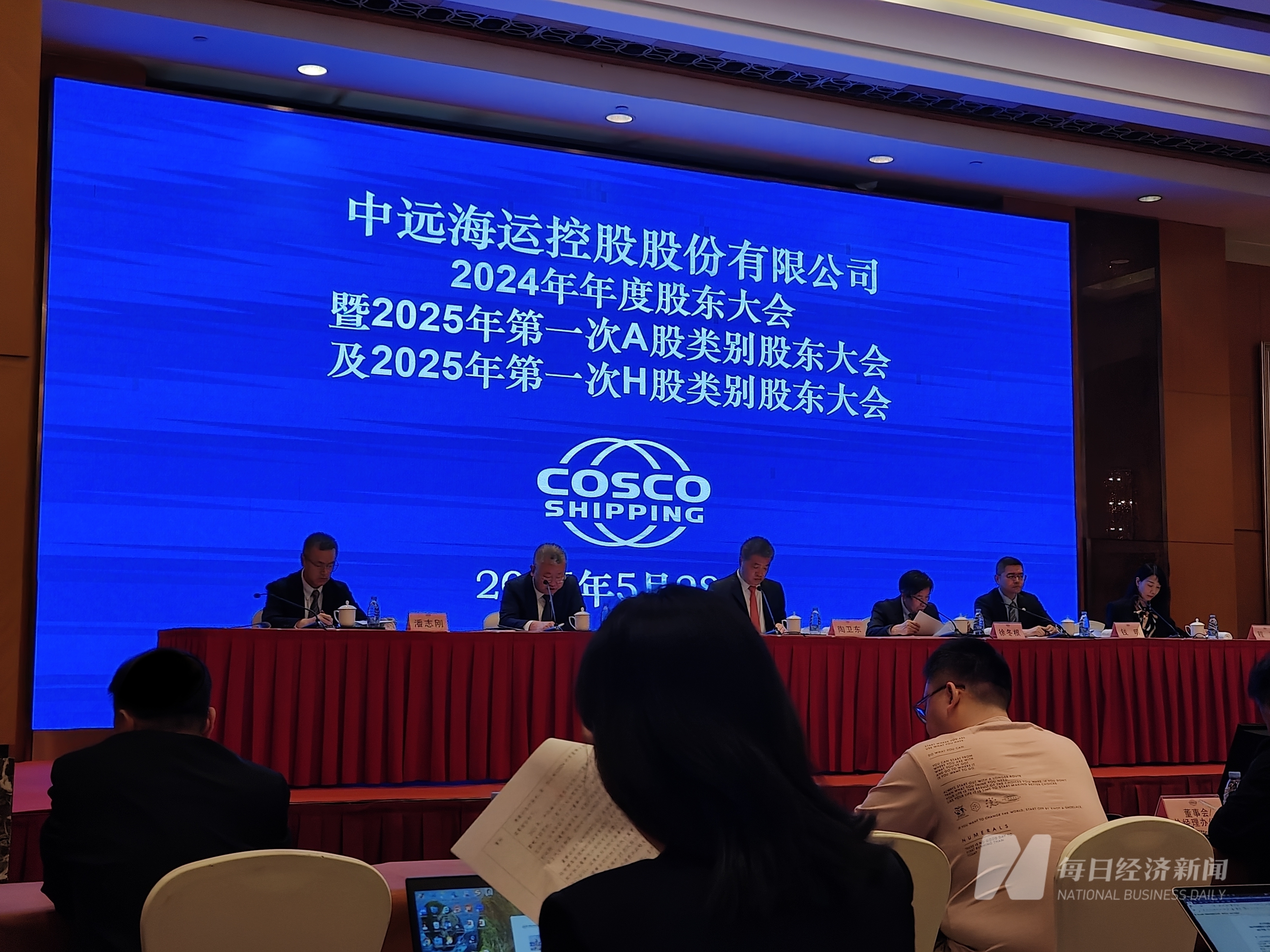
每经记者|张韵 每经编辑|杨夏 5月28日,中远海控(SH601919,股价16.27元,市值2544亿元)召开2024年年度股东大会,107位股东代表现场参会、踊跃提问,交流涉及市场展望、关税 影响、联盟竞争、长约签订、市值管理等内容。 《每日经济新闻》记者就美线货量变化情况进行提问,中远海控副总经理钱明表示,5月12日,中美贸易谈判取得阶段性成果,贸易商纷纷抢抓90天时间窗 口集中出货,目前货量恢复至所谓的"对等关税"实施前水平,高于平常货量的10%至20%。公司判断,该货量仍为原先滞留在仓库的存量货,后续货量的生 产周期约为1至2周,预计6月货量充足。 那么,美线的货量增长是否会导致未来出现港口拥堵?钱明向《每日经济新闻》记者表示,本轮的抢运潮与新冠疫情时期的港口拥堵程度有所不同,当时叠 加了美国港口劳工缺失等因素。但从目前收集到的信息来看,各家船公司都有增加到美国西海岸的运营计划,这些航线的船舶若同时抵达美国港口,还是会 美线签约价格同比有所提升 "今年全年尽管市场整体呈现供需平衡,但我们判断需求方面最大的黑天鹅事件就是美国的关税政策,从4月开始,新的贸易环境已对集装箱运输量与货物流 向造成了比较大的 ...

“少有人知”的法院,“总统越权”的裁决,今早发生了什么?对特朗普关税战意味着什么?
华尔街见闻· 2025-05-29 04:18
见闻君 几天前说的事 兑现了,美法院叫停特朗普关税。 据央视新闻,当地时间5月28日, 美国国际贸易 法院阻止了美国总统特朗普4月2日宣布的关税政策生效,并裁定特朗普越权 ,对向美国出口多于进口的国家 征收全面关税。 三位分别由里根、奥巴马和特朗普本人任命的法官一致裁定,总统滥用紧急权力,踩踏了宪法红线。若接下来特朗普上诉失败,他发动的贸易战将在10天内戛 然而止。 随后,白宫迅速强硬回应,称将动用"行政权力的每一杠杆"反击这一"未经选举的法官"的裁决。 "对等关税"涉嫌多重非法 美国国际贸易法院在裁决中宣布,特朗普总统上任后不久对多个国家实施的高额关税是非法的。这项裁决涉及两个合并案件——V.O.S. Selections v. United States 和 Oregon v. Department of Homeland Security。 就这一裁决,法院给出了四个重要结论: IEEPA下总统权力有限 宪法要求 "关税、税收在美国各地必须统一" ,因此法院在全国范围内永久禁止了这些关税的实施。 接下来会发生什么? 上诉争夺战已打响 法院认为1977年《国际紧急经济权力法》(IEEPA)不能赋予总统"无 ...
美国国际贸易法院裁定“特朗普关税”违法
日经中文网· 2025-05-29 03:33
Core Viewpoint - The U.S. International Trade Court ruled that Trump's tariff policy exceeded presidential authority, ordering the government to cease the tariffs imposed under the International Emergency Economic Powers Act (IEEPA) [1][2]. Group 1 - The court's ruling is the first judicial decision regarding Trump's second-term tariff policy, which includes tariffs on Canada, Mexico, and China, justified under the guise of combating illegal drugs [2]. - The court determined that the president does not have the authority to impose tariffs globally, stating that IEEPA does not grant such power [2]. - The ruling declared the series of tariffs invalid and mandated the government to "permanently stop" these measures [2]. Group 2 - The Trump administration is expected to appeal the ruling, with White House spokesperson Kush DeSai asserting that decisions on emergency responses should not be made by unelected judges [1][2]. - IEEPA allows the president to regulate financial transactions during a national emergency but does not explicitly authorize the imposition of tariffs [2]. - The authority to levy tariffs is constitutionally vested in the federal Congress, and at least eight lawsuits have been filed challenging the constitutionality of Trump's tariffs [2].
10%关税也没了,美法院“叫停”特朗普政府关税措施生效
仪器信息网· 2025-05-29 01:06
Group 1 - The core viewpoint of the article highlights the suspension of the tariff policy announced by the Trump administration on April 2, which aimed to impose a minimum benchmark tariff of 10% on trade partners [1] - The U.S. International Trade Court ruled that the power to regulate trade with other countries is exclusively held by Congress, and the President's emergency powers do not override this authority [1] - The lawsuit challenging the tariff policy was initiated by a non-profit organization representing five small U.S. businesses affected by the tariffs, marking a significant legal challenge to Trump's tariff policy [1]

最新!美联邦法院裁定特朗普越权,4月2日关税政策被阻止生效!美股期指拉升,黄金跳水
Mei Ri Jing Ji Xin Wen· 2025-05-29 00:17
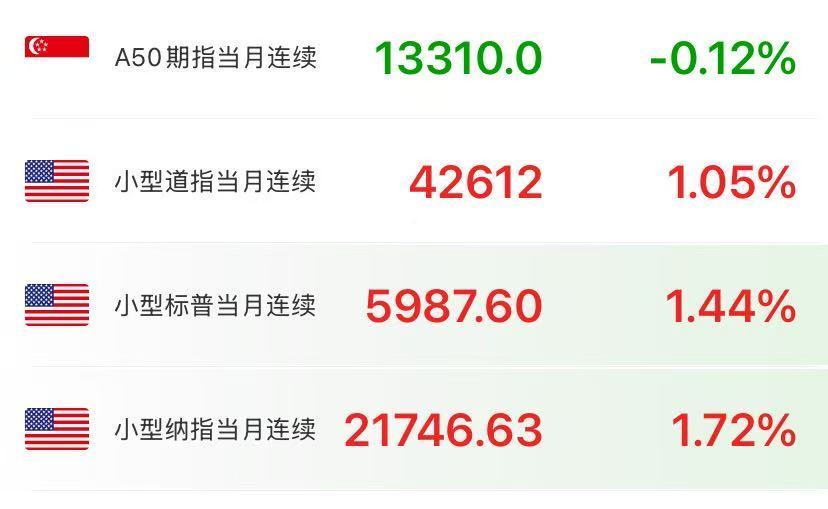
Market Overview - US stock index futures showed significant gains, with Nasdaq futures up 1.72%, S&P 500 futures up 1.44%, and Dow futures up 1.05% [1][2] - WTI crude oil prices increased by 0.73%, reaching a high of $62.29 per barrel [2][3] - Spot gold prices decreased by 0.79%, currently at $3262.48 per ounce [2][3] - The US dollar index rose by 0.44%, currently at 100.334 [2][3] Economic Policy and Legal Developments - A US federal court blocked President Trump's tariff policy announced on April 2, ruling that he overstepped his authority by imposing tariffs on countries with trade surpluses with the US [5] - The court emphasized that only Congress has the power to regulate trade, and Trump's emergency powers do not override this authority [5] - The lawsuit was initiated by a non-profit organization representing five small US businesses affected by the tariffs, marking a significant legal challenge to Trump's trade policies [5] Federal Reserve Meeting Insights - The Federal Reserve decided to maintain the federal funds rate target range at 4.25% to 4.5% during the FOMC meeting held on May 6-7 [6][7] - Committee members expressed the need to carefully assess future data and evolving economic conditions before making further adjustments to the interest rate [6][7] - There is an acknowledgment of increased uncertainty regarding economic prospects, with rising risks of unemployment and inflation [7]