长期主义

Search documents
供应链行业风起云涌,看百利威集团如何以更强韧劲实现高质量发展
Zhong Guo Chan Ye Jing Ji Xin Xi Wang· 2025-07-30 03:40
风华四秩,赓续百年。 2025年6月14日,"根植中国,辐射全球"的霍氏集团迎来了自己的40周岁生日。 纵观四十年发展历程,霍氏集团的业务版图横跨现代供应链管理、小微金融典当、投资业务、轻资产服 务等多个板块,足迹遍布全球多个国家,成为中国民族企业的一面旗帜。而作为霍氏集团的核心业务之 一,百利威集团至今也已深耕现代供应链管理服务28年,始终与时代同行,在变局中不断破局前行,走 出了一条稳健的高质量发展道路。 "降低全社会物流成本,提高经济运行效率,加快构建新发展格局"这是中共中央、国务院在《有效降低 全社会物流成本行动方案》中对新形势下我国物流发展的最新战略部署,也为下一阶段物流行业发展指 明了方向。在此背景下,我国供应链服务企业应该如何与国家战略同频共振,在汹涌的经济新浪潮下破 局前行?今天,就让我们走进拥有28年供应链管理服务经验的百利威集团,看看这家历经行业沉浮,以 长期主义和稳健经营著称的企业给出了怎样的答案。 践行长期主义,保持战略定力,积极应对市场经济新浪潮 "可以看到,面对当前新形势下我国物流行业如何从'高速'迈向'高质量'发展问题,国家密集出台了一系 列顶层指导意见,为正处在深度变革期的物流 ...

汽车品牌招商政策视频引关注,是搅局还是破局
Zhong Guo Chan Ye Jing Ji Xin Xi Wang· 2025-07-30 02:15
Group 1 - The Chinese automotive market is currently facing unprecedented challenges, including intense competition, high operating costs, and inventory pressure, leading to a "retreat" of dealerships [2][4] - A new subsidy policy from Beijing Automotive Manufacturing Plant offers up to 3.7 million yuan for new dealership image stores, along with a total of 360,000 yuan in employee salary subsidies over two years, which has garnered significant attention [2][4] - Beijing Automotive Manufacturing Plant has established a strong financial ecosystem in collaboration with several banks to support dealerships, aiming to reduce their operational pressures and enhance profitability [4][5] Group 2 - Beijing Automotive Manufacturing Plant, founded in 1951, has undergone significant restructuring and is now part of the Fortune Global 500 company Weiqiao Chuangye Group, focusing on lightweight, green, and intelligent automotive solutions [3][4] - The company is committed to long-term strategies and aims to transform the relationship between manufacturers and dealerships from a cost-bearing model to a value-creating partnership, which is essential for sustainable development in the automotive industry [5] - The MPV segment is a core business for Beijing Automotive Manufacturing Plant, which plans to launch a new brand, "Rui Sheng Automobile," to redefine the MPV market and establish itself as a leader in this segment [6]
从“黑马”到“千里马”:《财富》世界500强的奇瑞“加速度”
财富FORTUNE· 2025-07-30 01:09
Core Viewpoint - Chery Group has made significant progress, ranking 233rd in the 2025 Fortune Global 500, a leap of 152 positions from the previous year, marking it as the fastest-rising automotive company on the list [1] Group 1: Long-term Strategy - Chery's long-term strategy focuses on technological breakthroughs, maintaining a leading edge in "Technology Chery" through high R&D investment and establishing over 300 experimental labs [2] - The company emphasizes brand elevation, achieving the highest number of global "five-star" certifications among Chinese automotive brands, with 41 models recognized [5] - Chery has been recognized as the top domestic brand in J.D. Power's sales satisfaction rankings for 2025, showcasing its commitment to quality and customer satisfaction [5] Group 2: Global Expansion - Chery adheres to the "In somewhere, for somewhere" philosophy, contributing locally in overseas markets and adapting to local regulations and needs [7] - The collaboration with EV MOTORS in Spain has revitalized the local brand EBRO, creating jobs and generating tax revenue, which has been positively received by the Spanish government and citizens [8] Group 3: Ecosystem Development - Chery is shifting from automotive manufacturing to a broader ecosystem, including after-market services, material recycling, and new business models like drones and flying cars [10] - The company is building platforms for industrial internet, financial services, and user ecosystems, fostering a shared economic ecosystem with thousands of enterprises [10] Group 4: Sustainable Management - Chery is integrating ESG principles into its strategy, achieving certifications for green supply chain management and sustainable development [14] - The company collaborates with global organizations for environmental and educational initiatives, aiming to become a sustainable century-old enterprise [14]
关于全球化,中国企业最该知道的三件事——专访霍尼韦尔前CEO高德威
Sou Hu Cai Jing· 2025-07-29 11:13
Core Insights - The article emphasizes the importance of localization in globalization strategies, highlighting that compliance costs cannot be compromised and must respect the efforts of employees working abroad [2][3][14]. Group 1: Company Performance and Leadership - Under David Cote's leadership from 2002 to 2017, Honeywell's revenue grew from $22.3 billion to $40.5 billion, and its market value increased from $20 billion to $120 billion, achieving an 800% return for shareholders [2][3]. - Cote implemented the "Winning Now, Winning Later" strategy, focusing on both short-term performance and long-term growth without compromising financial integrity [2][3]. - Cote's leadership style involved significant changes in company culture, including the introduction of the "One Honeywell" concept to unify the organization and eliminate internal conflicts [3][4]. Group 2: Globalization Strategy - Cote prioritized globalization while ensuring that 55% of Honeywell's revenue came from outside the U.S. by 2017, with significant contributions from high-growth markets like China and India [3][4]. - The company adopted a "slow and steady" approach to globalization, avoiding mergers and acquisitions in favor of organic growth and maintaining consistent business standards and corporate culture globally [3][4][21]. - Cote emphasized the necessity of building local capabilities and ensuring that local teams understood and embodied Honeywell's corporate culture, which led to higher profitability in China compared to the U.S. [10][11]. Group 3: Compliance and Local Talent - Cote stressed the importance of compliance with local regulations, asserting that understanding local laws is crucial for successful operations in foreign markets [14][15]. - Hiring local talent is essential not only for compliance but also for understanding local market dynamics, which can help avoid costly legal issues [15][16]. - Cote maintained that reducing compliance costs is a misguided approach; instead, companies should focus on ensuring compliance from the outset to avoid future complications [15][18]. Group 4: Employee Management and Development - Honeywell implemented a Management Resource Review (MRR) process to ensure that expatriate employees returning from overseas assignments were adequately positioned within the company, thus valuing their international experience [23][24]. - The company aimed to create a positive feedback loop where high-performing employees were encouraged to take international assignments, knowing they would return to valuable positions [24][25]. - Cote believed in the importance of not forcing employees into international roles against their will, recognizing the personal circumstances that may affect their decisions [25][26]. Group 5: Future of Manufacturing in the U.S. - Cote discussed the challenges facing U.S. manufacturing, including supply chain vulnerabilities exposed by the COVID-19 pandemic and ongoing trade tensions [27][28]. - He argued that while the U.S. has not lost its manufacturing capabilities entirely, there is a need for a balanced approach to globalization and localization, particularly in critical industries [28][29]. - Cote highlighted the importance of maintaining a degree of self-sufficiency in key sectors, such as defense, while also leveraging global supply chains where appropriate [29][30].

Sun Life永明独家冠名赞助罗振宇《文明之旅》共同演绎长期主义 携手巩固香港国际金融中心地位
Sou Hu Wang· 2025-07-29 09:15
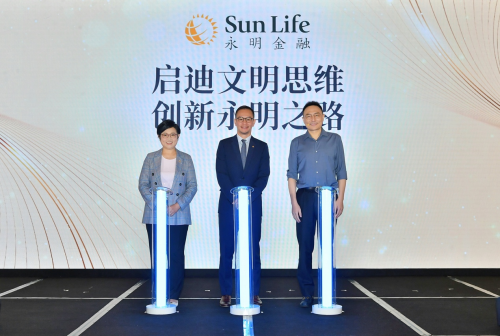
得到App创始人、《文明之旅》主讲人罗振宇先生在分享中表示,《文明之旅》这个节目的立身之本, 是关注长期主义背后存在的变量,关注人的个体繁荣。这个理念与Sun Life永明一直践行给用户的长期 承诺,如出一辙。当我们回看历史,更多的是去看历史上面对过的问题和解决方法,从中汲取经验,让 个人、让企业都变得越来越好。 活动的另一焦点是"香港金融优势讨论论坛"。论坛汇聚了多位业界专家,包括Sun Life永明首席投资官 苏暄婷女士及中大(深圳)高等金融研究院客座讲师李兆波先生,深入剖析在当前环球经济格局下,Sun Life永明的产品投资策略,以及香港的金融优势与稳定币发展。 香港永明金融有限公司行政总裁林嘉言表示:「我们非常荣幸能与罗振宇先生及《文明之旅》同行。这 不仅是一次商业合作,更是一场关于"长期主义"共同承诺的双向奔赴。罗先生以思想的深度探索时间的 价值,而Sun Life永明则以160年的历史实践对客户的长期承诺。我们相信,这种对"长期主义"的共同坚 守,能为当前充满不确定性的市场注入一股稳定的力量。此次合作,连同我们今天发布的新产品,正是 我们响应香港特区政府巩固国际金融中心地位、发展多元化财富管理产品 ...
从2025美好人居国际论坛看家居产业升级:政策锚定方向,协同重塑价值
Zhong Guo Chan Ye Jing Ji Xin Xi Wang· 2025-07-29 07:32
Core Insights - The home furnishing industry is a vital part of the national economy, serving as a "livelihood carrier" and a "barometer" for the transformation and upgrading of the real economy [1] - The "2025 (First) International Forum on Beautiful Living" aims to promote high-quality development in the home furnishing industry through a closed-loop interaction from policy to technology to market [1] Policy Shift - The development of the home furnishing industry is closely aligned with national housing policies, transitioning from basic housing supply to quality improvement under the new "good housing" standards [2] - The emphasis on "people-centered" design and quality standards is reshaping the value logic of the home furnishing industry, pushing companies towards scenario-based innovation [2][3] Quality and Standards - The focus on high-quality development requires a comprehensive approach involving design, consumption, quality, and legal frameworks, ensuring a stable and sustainable industry [3] - Recent policies have clarified requirements for building performance and environmental standards, fostering a positive cycle of innovation and practical application in the home furnishing sector [3] Technological Innovation - The home furnishing industry faces challenges in both deep R&D and practical application, necessitating breakthroughs in both areas to support "beautiful living" [4] - Companies are encouraged to develop solutions that address diverse living scenarios, enhancing their competitive edge through technology [5][6] Industry Collaboration - The realization of "beautiful living" requires a collaborative approach across production, distribution, and standards, optimizing efficiency and reducing costs [7][8] - A multi-dimensional collaborative system is emerging, lowering transaction costs and enhancing the overall effectiveness of the home furnishing industry [9] International Experience - Sustainable living practices must be adapted to local needs while aligning with global sustainability goals, enhancing the competitiveness of the Chinese home furnishing industry on the international stage [10] Future Outlook - The home furnishing industry is at a pivotal point, with trends indicating a shift towards demand-driven innovation, integration of green and smart technologies, and a focus on creating value for both businesses and society [11][12]
凌晨3点,满街都是一手奶茶一手零食的年轻人,“网红”长沙想变“长红”
Chang Sha Wan Bao· 2025-07-29 07:06
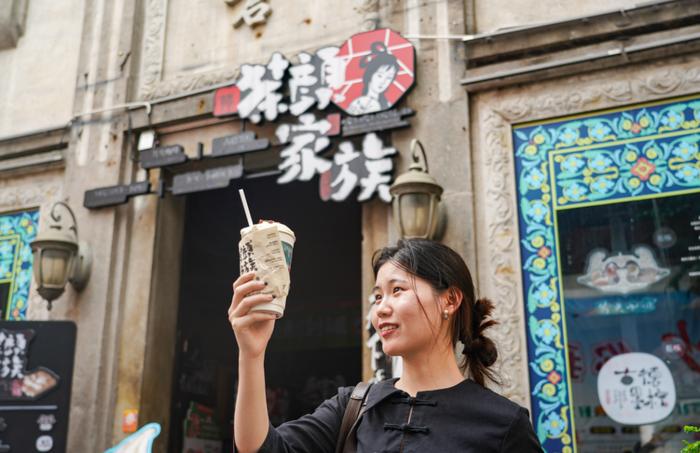
Group 1: Overview of Changsha's Economic Landscape - Changsha is recognized as a vibrant "city that never sleeps," with a significant focus on boosting consumption, particularly in the new retail sector [1] - The city is also known as the "capital of engineering machinery," with over 30% of the national market share, housing five companies listed among the global top 50 engineering machinery firms [1] Group 2: New Consumption Brands - The success of the tea brand "Chayan Yuese" is attributed to its cultural depth and brand recognition, utilizing a "slow philosophy" to counteract industry restlessness [2][3] - Chayan Yuese integrates traditional Chinese culture into its products, creating a unique brand identity that resonates with younger consumers [3][5] - The brand emphasizes quality and a slow-paced approach, maintaining a cautious stance on large-scale delivery and focusing on in-store experiences [6][8] Group 3: Water Sheep Co. (Shuiyang Co.) - Water Sheep Co. has transformed from relying on e-commerce to becoming a leader in the beauty industry, leveraging a unique "CP model" to introduce over 50 international brands into China [11][12] - The company has invested heavily in self-research and production, establishing a smart manufacturing facility capable of producing over 2 billion face masks annually [14][16] - Water Sheep Co. has developed a robust R&D team, creating over 8,000 proprietary formulas and applying for more than 400 patents [16] Group 4: Starbond Intelligent Equipment - Starbond Intelligent Equipment has evolved from relying on imports to becoming a global leader in aerial work platforms, with products sold in nearly 100 countries [19][22] - The company has implemented advanced technologies, such as laser cutting and welding, significantly improving production efficiency and reducing costs [21] - Starbond's transformation has been supported by local government initiatives, providing tailored services to facilitate its growth [23] Group 5: Government Support and Ecosystem - Changsha's government has established a "super incubator" for new consumption brands, providing comprehensive support through research, consulting, and investment services [25][28] - The city has implemented a "1+3" service model to enhance the new consumption industry, focusing on resource integration and talent support [30][31] - The local government has also introduced policies to promote digital transformation and innovation within the engineering machinery sector [34][36] Group 6: Cultural and Demographic Advantages - Changsha's youthful population, with an average age of 37, serves as a strong foundation for new consumption growth [37] - The city's cultural heritage encourages innovation and resilience among local businesses, fostering a unique consumer environment [37][38] - The collaborative approach between government and enterprises has created a supportive ecosystem for new consumption brands to thrive [38][40]
百万存款“围城”:高收入≠高财商,年轻新贵们的财富焦虑
Nan Fang Du Shi Bao· 2025-07-28 08:29
Core Insights - The incident at China Merchants Bank highlights the increasing wealth threshold for exclusive services, with a minimum asset requirement of 20 million yuan, reflecting a shift in wealth perception among young individuals [2][5] - The article explores the financial landscape of young individuals in Shenzhen with over one million yuan in savings, examining their wealth accumulation paths and the challenges they face in a low-interest-rate environment [2][6] Wealth Profile: Young Millionaires in Shenzhen - A significant portion of young individuals in Shenzhen, particularly those in the financial technology sector, have accumulated wealth through high-paying jobs, with average monthly salaries in the AI industry reaching 17,204 yuan [5][6] - Young entrepreneurs in Shenzhen benefit from a favorable business environment, leading to substantial wealth accumulation in various sectors, including traditional and emerging industries [6] - Early beneficiaries of asset appreciation, such as those who purchased real estate between 2015-2020, have also contributed to the rise of young millionaires [6] - Some young individuals inherit wealth from high-net-worth families, with a notable percentage of them having family assets exceeding 50 million yuan [6] Financial Dilemmas: High Income Does Not Equal High Financial Literacy - Despite having over one million yuan in savings, many young individuals in Shenzhen experience anxiety due to declining deposit interest rates, with one-year fixed deposit rates dropping below 1% [8][9] - The transition to net value-based bank wealth management products has led to increased market volatility and risk, causing concerns among investors about the stability of returns [9][10] - Young investors face challenges in balancing risk and return, with many expressing a lack of confidence and knowledge in navigating the investment landscape [11][12] Path to Solutions: Emphasizing Diversification and Long-Term Strategies - Experts recommend a diversified investment approach, emphasizing the importance of aligning asset allocation with individual risk tolerance and financial goals [15][16] - The current market environment calls for a focus on quality assets, including bonds and gold, to mitigate volatility and enhance portfolio resilience [16][17] - Long-term investment strategies are crucial, as short-term speculation can lead to losses, highlighting the need for a rational approach to asset management [17]
36氪CEO冯大刚发表主办方致辞 | 2025出海大会
3 6 Ke· 2025-07-28 08:20
Core Insights - The East Forward 2025 conference, focusing on globalization and overseas expansion, will take place in Hangzhou, highlighting the shift of Chinese brands from "Made in China" to "Created in China" and "Belief in China" [1][3][4] Group 1: Conference Overview - The conference will feature a main venue and sub-venues, including a "Country Cooperation Matching Meeting" focusing on investment in BRICS nations [1] - Topics will cover popular overseas sectors such as consumption, technology, e-commerce, finance, and new energy, with over 10 keynote speeches and 5 roundtable discussions [1] - The event aims to provide a sustainable path for companies to navigate globalization challenges and enhance their overseas capabilities [1] Group 2: Key Themes and Concepts - The theme "From Craftsmanship to the World" emphasizes the importance of patience, determination, and empathy in achieving success in international markets [4] - The conference will showcase successful case studies, such as DeepSeek and Black Myth: Wukong, which exemplify the application of technology and cultural understanding in building international brand competitiveness [4][5] Group 3: Location Significance - Hangzhou was chosen for its recent successful overseas cases and its reputation as a city that values craftsmanship, with many passionate entrepreneurs eager to make their mark globally [6] - Qiantang has a history of foreign investment cooperation and successful overseas ventures, making it a strategic location for the conference [6] Group 4: Agenda and Participation - The agenda includes a full day of brand sharing sessions, with a parallel session focused on practical cooperation in the UAE market [6][7] - The event will retain networking opportunities for brands interested in the UAE market, with representatives from various trade organizations attending [7] Group 5: Company Evolution - Over the past 15 years, the company has transitioned from bringing foreign enterprises to China, to supporting domestic startups, and now aims to assist numerous companies in their global expansion efforts [7]
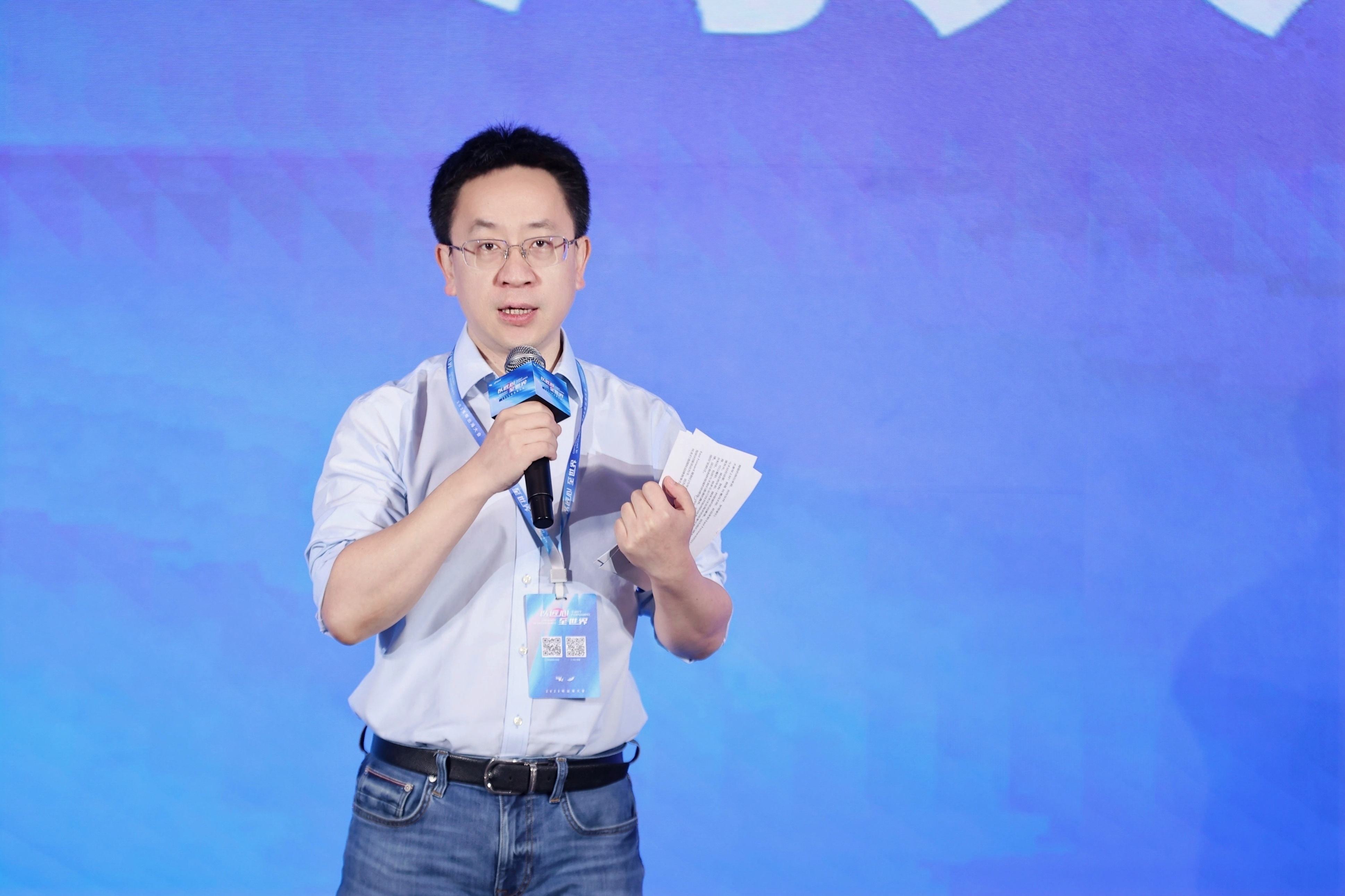
东方雨虹张蓓:ESG是穿越周期的“必修课”
Jing Ji Guan Cha Wang· 2025-07-28 04:12
Core Viewpoint - The company emphasizes the importance of long-termism and ESG (Environmental, Social, Governance) principles as essential for sustainable growth and resilience in the building materials industry, especially during cyclical fluctuations [1][5]. Group 1: Company Development and Strategy - Since its establishment in 1995, the company has adhered to a strict quality management system, ensuring that it does not produce non-standard products, which has helped it secure a significant market share in China [2][4]. - The company has evolved from a waterproof supplier for the Beijing Olympic venues to a global building materials service provider, operating in over 150 countries and regions [1][2]. - The strategic focus includes deepening its core waterproof business, expanding into sand powder as a second growth engine, exploring new applications in pipe industry and maintenance, accelerating localization of production, and targeting both lower-tier markets and consumer brands [4][5]. Group 2: ESG Commitment and Sustainable Development - The company has been a pioneer in ESG practices, having published its ESG report for 17 consecutive years, integrating ESG principles into its entire supply chain [5][7]. - In terms of environmental initiatives, the company has implemented distributed photovoltaic systems across 25 production bases, reducing carbon emissions by 38,600 tons annually, and has developed numerous green products that have received extensive environmental certifications [5][7]. - The company promotes social value by sharing knowledge through initiatives like the "Rainhong Academy" and participating in international projects that align Chinese construction standards with local needs, thereby enhancing sustainable construction practices [7]. Group 3: Future Outlook - The company aims to redefine the industry through resilience and long-term strategies, with a clear path to transition from a Chinese brand to a global brand, leveraging its core waterproof business and expanding into related sectors [5][7].