
食品安全

Search documents
盐津铺子实控人“高位减持”套现或超4亿元!食安问题受关注,年内新增消费者投诉百余起
Da Zhong Ri Bao· 2025-07-16 07:30
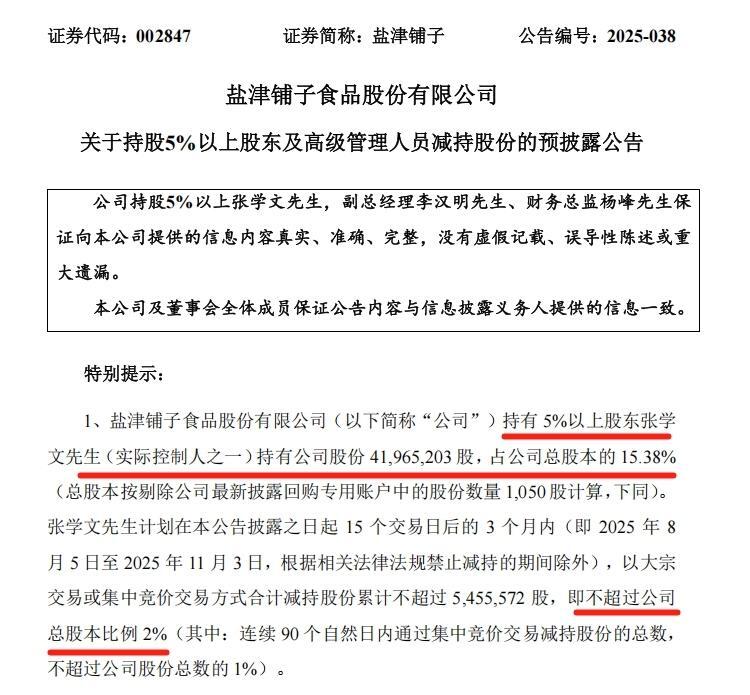
Core Viewpoint - The controlling shareholder of Salted Snack Company, Zhang Xuewen, plans to reduce his stake by up to 2%, potentially cashing out over 400 million yuan, coinciding with the company's stock price reaching a new high [1][5]. Group 1: Shareholder Reduction Announcement - On July 14, Salted Snack Company announced a pre-disclosure of share reduction by major shareholders and senior management [2]. - Zhang Xuewen, holding 15.38% of the shares, intends to reduce his holdings by a maximum of 5.4556 million shares, equating to 2% of the total share capital [2][4]. - Other executives, including Deputy General Manager Li Hanming and CFO Yang Feng, plan to reduce their holdings by a combined total of 97,100 shares, or 0.04% of the total share capital [2][4]. Group 2: Financial Implications - Based on the closing price of 74.84 yuan per share on July 14, if the maximum reduction occurs, Zhang Xuewen's cash-out could exceed 400 million yuan [5]. - As of July 15, the company's stock price was 73.80 yuan per share, reflecting a 19.81% increase since the beginning of the year, with a total market capitalization of 20.131 billion yuan [5]. Group 3: Market Reaction and Concerns - The announcement of the share reduction raised market concerns, leading to a 1.39% drop in the stock price on July 15 [6]. - The company cited "personal funding needs" as the reason for the reduction, despite Zhang Xuewen's departure from the company in October 2019 [5]. Group 4: Company Performance and Challenges - Since its listing in 2017, the company's revenue has grown from 754 million yuan to 5.304 billion yuan in 2024, while net profit has shown volatility [7]. - The company faces challenges in brand recognition compared to competitors, with a noted lack of market presence [9]. - Salted Snack Company has experienced a decline in gross margin from 43.83% in 2020 to 31.84% in 2024 due to competitive pressures from low-price strategies in the market [9]. Group 5: Food Safety Issues - The company has faced multiple food safety complaints, including issues with preservatives and product quality, leading to increased consumer scrutiny [11][15]. - In 2025, there were over 100 new complaints related to food safety, with a total of 748 complaints recorded on the Black Cat Complaint platform [15][16].

民和股份孙公司生产不合格食品被罚5万元
Qi Lu Wan Bao· 2025-07-16 07:14
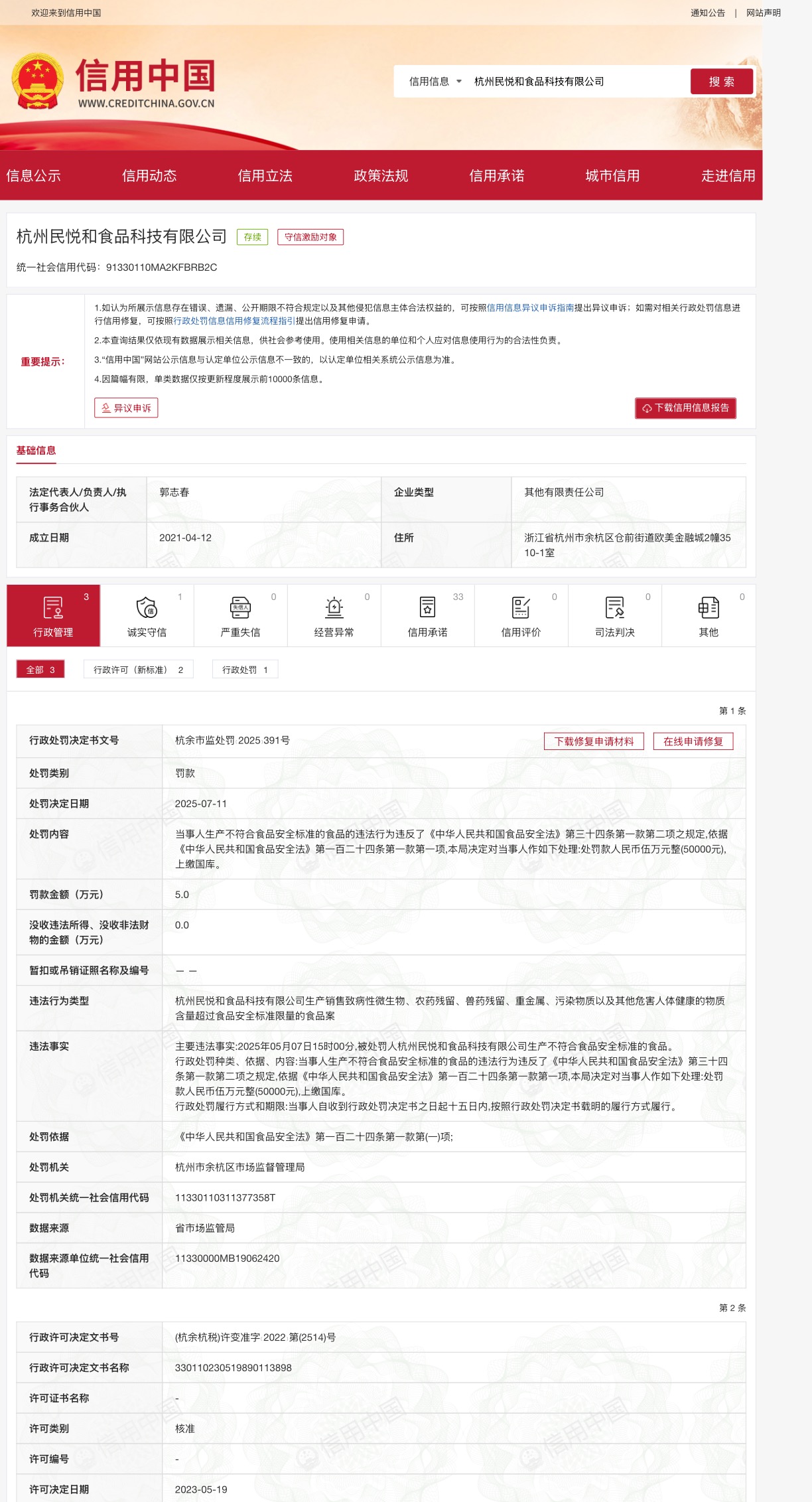
Group 1 - The Hangzhou Minyuehe Food Technology Co., Ltd. was fined 50,000 yuan for producing food that does not meet safety standards [1][4] - The violation occurred on May 7, 2025, when the company was found to produce food containing pathogenic microorganisms, pesticide residues, veterinary drug residues, heavy metals, and other harmful substances exceeding safety limits [3][4] - The company is required to pay the fine within 15 days of receiving the administrative penalty decision [4] Group 2 - Hangzhou Minyuehe Food Technology Co., Ltd. was established on April 12, 2021, with a registered capital of 10 million yuan [5] - The major shareholder is Penglai Minhe Food Co., Ltd., which holds a 90% stake and is a wholly-owned subsidiary of the listed company Minhe Shares [5] - Minhe Shares was the first company in the domestic white feather broiler industry to be listed on the Shenzhen Stock Exchange in May 2008 [5]

充分发挥监督作用 守护人民群众“舌尖上的安全”
Liao Ning Ri Bao· 2025-07-16 01:48
Group 1 - The core viewpoint emphasizes the importance of implementing the Food Safety Law in Liaoning, as part of the broader initiative to ensure food safety and public health [1][2] - The enforcement inspection team conducted on-site checks in Dalian, Yingkou, and Chaoyang, focusing on various institutions including schools, elderly care facilities, and businesses to assess the implementation of food safety responsibilities and regulatory frameworks [1] - The inspection highlighted the positive outcomes of food safety law implementation, noting that local governments and regulatory bodies are taking the "four strictest" requirements seriously, which has led to a stable and improving food safety situation in the province [1][2] Group 2 - The enforcement inspection team stressed the need to enhance political awareness and responsibility in food safety oversight, ensuring that the "four strictest" requirements are effectively implemented [2] - There is a call for a collaborative approach to food safety, focusing on key issues and strengthening supervision to improve the legal framework surrounding food safety [2] - The initiative aims to promote food safety education across communities, schools, and businesses, fostering a societal atmosphere that supports food safety governance [2]
河南省新乡市市场监督管理局关于13批次食品不合格情况的通告 (2025年3号)
Zhong Guo Zhi Liang Xin Wen Wang· 2025-07-15 09:09
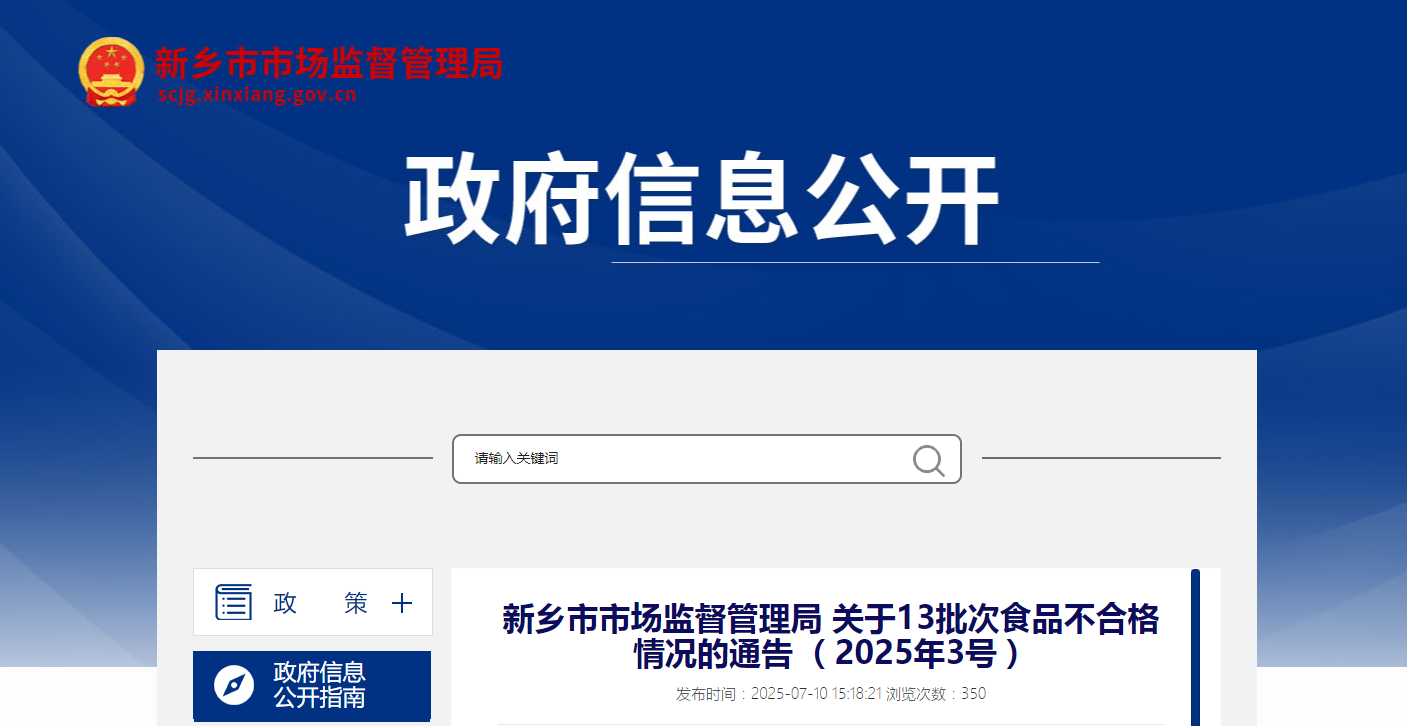
Core Viewpoint - The recent food safety inspection in Xinxiang City revealed that out of 259 food samples tested, 246 were compliant while 13 were found to be non-compliant, highlighting ongoing concerns regarding food safety standards in the region [1][4]. Non-compliant Products - A total of 13 batches of food products were identified as non-compliant, including: - One batch of spoons from Yanbo Restaurant in Yanhui Town, which tested positive for coliform bacteria and anionic synthetic detergent at 0.26 mg/100 cm², where the standard requires none [1][2]. - One batch of ginger from Xinxiang Yucai High School, with pesticide residues of thiamethoxam at 1.5 mg/kg (standard ≤0.2 mg/kg) and imidacloprid at 2.4 mg/kg (standard ≤0.3 mg/kg) [1][3]. - Other non-compliant items included bowls and plates from various restaurants, also showing contamination with coliform bacteria and synthetic detergents [2][3]. Regulatory Actions - The Xinxiang Market Supervision Administration has mandated that the responsible parties for the non-compliant products conduct thorough investigations, identify the batches and quantities involved, and take corrective actions such as product recalls [4][5]. - Consumers are urged to remain vigilant about food safety and report any issues to the authorities [4]. Compliant Products - The inspection covered a wide range of food categories, including biscuits, tea, nuts, dairy, and more, with 246 out of 259 samples passing the safety standards [1][6].
江苏省东台市市场监督管理局2025年第5期食品及食用农产品安全监督抽检信息通告
Zhong Guo Zhi Liang Xin Wen Wang· 2025-07-14 08:46
Core Points - The East Tai Market Supervision Administration conducted a food safety inspection from April to June 2025, covering 28 categories of popular food and agricultural products, resulting in a total of 1926 samples tested [2] - Out of the 1926 samples, 1863 were found to be compliant, while 63 samples were deemed non-compliant, indicating a compliance rate of approximately 96.7% [2] - The administration has initiated investigations and corrective actions for the non-compliant products, including product recalls and risk control measures [2] Summary of Inspection Results - Total samples tested: 1926 [2] - Compliant samples: 1863 [2] - Non-compliant samples: 63 [2] - Compliance rate: 96.7% [2] Actions Taken - The East Tai Market Supervision Administration has mandated food production and operation units to trace the distribution of non-compliant products and implement immediate recall measures [2] - Investigations into the causes of non-compliance are being conducted, along with necessary rectifications [2] Consumer Advisory - Consumers are encouraged to report any non-compliant food products found in the market by contacting the market supervision department hotline [3]

福建省仙游县市场监督管理局2025年第2期食品安全监督抽检信息通告
Zhong Guo Zhi Liang Xin Wen Wang· 2025-07-14 08:45
Group 1 - The core announcement from the Xianyou County Market Supervision Administration indicates that a total of 117 batches of food were tested, with 115 passing and 2 failing the safety standards [4] - The two categories of food involved in the inspection are catering food and edible agricultural products [4] - The report emphasizes the importance of compliance with food safety standards to prevent health risks associated with food consumption [4] Group 2 - The first non-compliant item identified was Enrofloxacin, a broad-spectrum antibiotic used in animals, which exceeded the maximum residue limit of 100 μg/kg in fish [5] - The second non-compliant item was Thiamethoxam, which had a residue level of 0.033 mg/kg in papaya, surpassing the maximum limit of 0.01 mg/kg [6] - The report outlines that the reasons for these exceedances may include improper use of veterinary drugs and pesticides during the farming process [5][6] Group 3 - The Xianyou County Market Supervision Administration has initiated corrective actions against the identified non-compliant products, including halting sales, recalling products, and enforcing legal obligations on producers [6] - Consumers are encouraged to report any non-compliant products they encounter in the market by calling the complaint hotline [6]
内蒙古鄂尔多斯市市场监督管理局关于102批次食品抽检情况的通告
Zhong Guo Zhi Liang Xin Wen Wang· 2025-07-14 07:58
Core Viewpoint - The recent food safety supervision and sampling conducted by the Ordos Market Supervision Administration revealed that out of 102 batches of food samples, 7 batches were found to be non-compliant, primarily due to pesticide residue exceeding national safety standards [2][3]. Summary by Categories Non-compliant Products - Spinach sold by Guoxin Wholesale in Eerduosi was found to have aresenite residue exceeding the national standard [2]. - Wokan sold by Xiaoshen Supermarket in Eerduosi had residues of benzimidazole and chlorpyrifos exceeding the national standard [2]. - Yam sold by Derong Supermarket in Kangbashi District was found to have residues of mefenoxam and manganese mefenoxam exceeding the national standard [2]. - Bok choy sold by Xiaoshen Supermarket in Eerduosi had aresenite residue exceeding the national standard [2]. - Ginger sold by Lixiu Vegetable and Oil Store in Wushenqi was found to have thiamethoxam residue exceeding the national standard [2]. - Banana sold by Huhamudi Xiaocai Supermarket in Hangjin Banner had residues of imidacloprid and fluazinam exceeding the national standard [3]. - Ordinary cabbage (rapeseed) sold by Liu Jianjun Vegetable Wholesale in Dalate Banner was found to have chlorpyrifos residue exceeding the national standard [3]. Regulatory Actions - The market supervision departments at all levels have initiated investigations and actions to trace the flow of non-compliant products, urging companies to take measures such as recalling and removing non-compliant products from shelves [2][3].

辽宁省大连市市场监督管理局关于发布499批次食品安全抽检结果的通告(2025年第4号)
Zhong Guo Zhi Liang Xin Wen Wang· 2025-07-14 07:45
Core Viewpoint - The Dalian Municipal Market Supervision Administration has announced the results of food safety inspections, revealing that out of 499 batches tested across 11 categories, 10 batches were found to be non-compliant with food safety standards [2][3]. Group 1: Inspection Overview - The inspection covered 11 categories including grain products, edible oils, dairy products, snacks, and health foods, totaling 499 batches [2]. - A total of 10 batches were identified as non-compliant, prompting further investigation and action by local market supervision authorities [2][3]. Group 2: Standards and Testing - The inspections were conducted based on various national food safety standards, including GB 2762-2022 for contaminant limits and GB 2760-2014 for food additives [3]. - Specific testing parameters included peroxide value, benzo[a]pyrene, and various pesticide residues, among others [3]. Group 3: Non-compliant Products - The non-compliant products included items from two production enterprises and involved 10 sampling units [3]. - Examples of non-compliant findings included pesticide residues exceeding allowable limits in agricultural products, such as 0.041 mg/kg of dichlorvos in ginger, which exceeds the limit of 0.02 mg/kg [4].
「干净又卫生」,这就是食物中毒超级大国
36氪· 2025-07-13 12:00
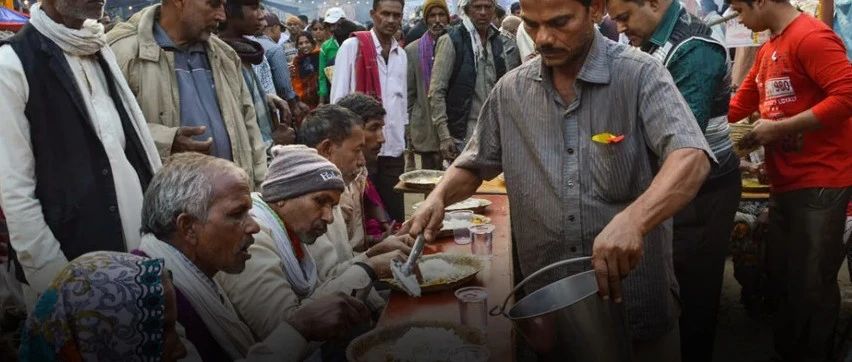
Core Viewpoint - The article highlights the severe public health crisis in India due to widespread food poisoning and unsafe drinking water, emphasizing that millions suffer from foodborne illnesses annually, with over 400,000 deaths attributed to food poisoning each year [5][21][58]. Group 1: Food Poisoning Crisis - India experiences millions of cases of foodborne diseases each year, with a significant increase in incidents during the summer months from June to September [5][3]. - High-profile cases of food poisoning have affected both common citizens and celebrities, indicating a systemic issue with food safety across all societal levels [10][12][15]. - Data from the Integrated Disease Surveillance Program (IDSP) shows that food poisoning accounted for 31.5% of total illness cases and 8.7% of total deaths in certain states from 2008 to 2018 [17]. Group 2: Causes of Food Poisoning - The article attributes the rise in food poisoning incidents to a combination of natural disasters and human factors, with environmental conditions in tropical regions exacerbating the problem [23][24]. - High temperatures in India contribute to food spoilage, particularly during religious gatherings where food is prepared in advance and left unrefrigerated [30][33]. - Contaminated water sources are a major contributor to foodborne illnesses, with approximately 70% of surface water in India deemed unsafe for drinking [40][44]. Group 3: Water Quality Issues - The article states that India faces a critical shortage of clean drinking water, with both rural and urban areas struggling to provide safe water to their populations [49][51]. - A significant portion of the population relies on untreated water, leading to widespread health issues, including gastrointestinal diseases caused by contaminated water [44][58]. - The lack of proper water treatment infrastructure and the aging pipeline systems in cities contribute to the ongoing water crisis [53]. Group 4: Societal Implications - The high population density in India exacerbates environmental challenges, making the health crisis a national concern [54][56]. - Cultural practices and beliefs, such as consuming untreated water from sacred rivers, hinder public health efforts and contribute to the persistence of food poisoning [62]. - The article calls for a comprehensive movement to improve public health standards, emphasizing the need for education and infrastructure development to ensure safe food and water for all [65].
北京朝阳14家餐饮门店因食安问题被通报 涉及咏巷炸鸡、太熟悉等品牌
Yang Guang Wang· 2025-07-12 07:28
Core Viewpoint - The Beijing Chaoyang District Market Supervision Administration has released a notice regarding the inspection of restaurants, listing 14 establishments that failed to meet food safety standards and were placed on a "blacklist" for various violations of the Food Safety Law of the People's Republic of China [1][2][3]. Summary by Category - **Violations Related to Environmental Hygiene** - Multiple restaurants, including Beijing Weidao Catering Management Co., and Beijing Chengbei Miaomiao Catering Management Co., were found to have issues with unsanitary conditions, violating Article 33 of the Food Safety Law [1][2][3][4][5][10][11]. - **Violations Related to Food Equipment and Facilities** - Beijing Guowei Rongxiang Catering Co. was cited for improper cleaning and disinfection of food utensils, violating Article 56 of the Food Safety Law [6]. - Beijing Lazy Chef Trading Co. was noted for failing to maintain pest control measures in food service areas, also violating Article 33 of the Food Safety Law [8]. - **Violations Related to Personnel Health** - Beijing Yihuiyuan Catering Co. was found to have food production personnel without health certificates, violating Article 45 of the Food Safety Law [9]. - **General Non-compliance** - Other establishments, such as Beijing Taishuxi Catering Management Co. and Beijing Shishang Huijing Catering Management Co., were issued correction notices for various operational non-compliance issues [10][11][12].