
中国经济结构转型

Search documents
GDP漂亮有用?2025年中国经济这三组数据,真正改写命运的密码?
Sou Hu Cai Jing· 2026-01-30 05:37
Group 1 - The core of the structural transformation in China's economy is shifting from reliance on traditional industrial growth to a new development model driven by technological innovation and consumer vitality [2][4] - By 2025, the service sector's contribution to GDP has reached 57.7%, indicating a significant shift where services and consumption have replaced traditional industrial investment as the main drivers of economic growth [4][15] - The industrial sector, particularly manufacturing, remains a solid foundation, with the proportion of industrial output at 35.6%, comparable to levels in developed economies, thus avoiding risks of "hollowing out" [6][7] Group 2 - The growth of high-tech and equipment manufacturing is accelerating, with both sectors experiencing increases in value-added output exceeding 9%, indicating a transition to high-end manufacturing and technological upgrades [7][8] - In terms of consumption, final consumption expenditure contributed 52% to economic growth in 2025, marking a shift from reliance on investment and external markets to a more balanced model driven by domestic consumption [9] - The retail sales growth rate of 3.7% reflects a cautious consumer sentiment, highlighting the need for improved income expectations and social security systems to bolster consumer confidence [11][13] Group 3 - Investment is shifting from traditional infrastructure projects to advanced equipment purchases and digital infrastructure, indicating a focus on long-term benefits [16] - The current economic challenges include a significant adjustment in the real estate market and weak price levels, which are impacting corporate profit margins and consumer sentiment [13] - The transition from the old economic model to the new one is ongoing, with the next phase being crucial for ensuring stability and growth in the new economic landscape [16]


2026年瑞银大中华研讨会 | 结构转型与全球变局下的中国经济新篇章
21世纪经济报道· 2026-01-22 01:34
Core Viewpoint - The article discusses the current state and future prospects of the Chinese economy, highlighting the transition from traditional growth drivers to innovation and consumption as new growth engines, while addressing the challenges and opportunities presented by structural changes in the economy [2]. Monetary Policy - China's monetary policy is shifting from a focus on total volume control to structural support, with the central bank implementing tools aimed at directing financial resources towards technology innovation, carbon neutrality, small and medium enterprises, and clean energy [4][5]. - Experts predict that while nominal interest rates have room to decline, the likelihood of significant rate cuts is low, as the main challenge for the economy is not liquidity shortage but rather the need for structural transformation [5]. Growth Engine Transition - The Chinese economy is transitioning from reliance on infrastructure investment, real estate, and exports to a model driven by technological innovation, consumption, and service sector upgrades [6]. - The service sector currently has a low GDP share, particularly in high-value areas like education and healthcare, indicating potential for growth and consumption upgrade [6]. Real Estate Market - The real estate market in China is undergoing a transformation, shifting from a focus on financial and investment attributes back to its residential purpose [7]. - The negative impact of real estate on economic growth is diminishing, and future development will focus on housing quality and community services rather than price speculation [7]. Trade Environment - The global trade system is experiencing turmoil, creating external uncertainties for the Chinese economy. The manufacturing sector faces a dilemma between maintaining export competitiveness and the risk of trade disputes [8]. - Experts suggest that China should upgrade its manufacturing to high-end and intelligent production while balancing international payments through increased service imports and orderly capital flow [8]. Future Outlook - The next five years are critical for China's economic structural transformation and the transition from old to new growth drivers, with external factors like trade disputes and geopolitical tensions remaining significant [8]. - Certain industries are identified as having substantial growth potential, including innovation-driven sectors, strategic emerging industries like aerospace and new materials, and traditional industries undergoing digital transformation [8].

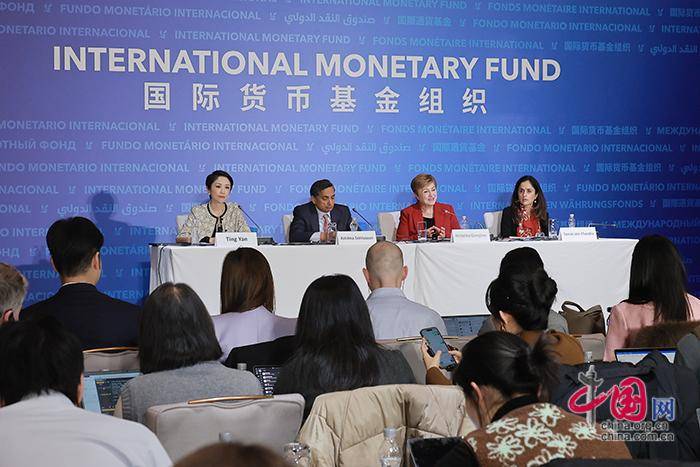
IMF总裁:中国经济在重重挑战下展现出强大韧性
Sou Hu Cai Jing· 2025-12-15 04:15
Core Viewpoint - Despite facing significant challenges, the Chinese economy demonstrates strong resilience, leading the International Monetary Fund (IMF) to raise its growth forecasts for 2025 and 2026 to 5% and 4.5%, respectively, driven by robust exports and effective macroeconomic stimulus measures [1][4]. Group 1: Economic Outlook - The IMF has increased its growth expectations for China, attributing this to strong exports and favorable macroeconomic policies [1]. - The IMF estimates that China's contribution to global growth is approximately 30%, indicating the importance of a balanced Chinese economy for global economic health [4]. Group 2: Challenges and Recommendations - The IMF expressed concerns regarding three main areas: weak domestic demand, consumer confidence under pressure, and high government and corporate debt [4][5]. - To address these challenges, the IMF recommends implementing a comprehensive macroeconomic policy package and increasing exchange rate flexibility [5]. - The IMF suggests that enhancing social security systems could boost consumer confidence and spending, potentially increasing GDP by up to 3% [5]. Group 3: Real Estate Sector - The prolonged adjustment in the real estate sector has negatively impacted local government finances and consumer confidence, contributing to weak domestic demand and deflationary pressures [6]. - The IMF advises that approximately 5% of GDP should be allocated to revitalize the real estate market to restore consumer confidence and encourage spending [6]. - The IMF supports the Chinese government's efforts to transition from an export and investment-driven economy to one focused on domestic consumption [6]. Group 4: Innovation and Development - The IMF acknowledges China's increasing investment in research and development, positioning itself as an innovation-driven economy [6]. - China ranks first among emerging markets in the IMF's "Artificial Intelligence Readiness Index," highlighting its advancements in digital infrastructure and regulatory frameworks [6].
2026年度策略系列电话会 - 宏观:短期答案在长期
2025-12-04 02:21
Summary of Conference Call on 2026 Strategy Industry Overview - The conference call focused on the macroeconomic outlook for China in 2026, emphasizing the stability of the economic fundamentals with limited fluctuations and a low probability of policy stimulus. The real estate market, particularly housing prices, is identified as a key macro variable [1][3]. Core Insights and Arguments - **Economic Stability**: The Chinese economy is expected to remain stable in 2026, with limited volatility unless strong policy stimulus occurs, which is deemed unlikely [3]. - **Real Estate Market**: The real estate sector may see a turning point, with investment growth potentially converging to around 7% in 2026, down from a 15% decline in 2025. However, risks related to construction intensity and housing price adjustments are highlighted [9][10]. - **Capital Expenditure**: There is a declining willingness for corporate capital expenditure, leading to increased liquidity in the A-share market. The consensus is forming around a slow bull market for A-shares due to ample liquidity and risk appetite [14][15]. - **Asset Allocation Recommendations**: It is advised to increase allocation to assets with low correlation to the domestic economy but high correlation to the overseas economy. Key sectors to focus on include technology growth, industrial chain restructuring, and sectors related to global economic recovery, such as chemicals [6][26]. Additional Important Points - **Structural and Cyclical Issues**: The Chinese economy faces both structural and cyclical challenges, with the disappearance of the demographic dividend being a fundamental issue. Structural adjustments are necessary rather than relying on strong stimulus [7]. - **Manufacturing Investment Challenges**: Manufacturing investment is currently facing challenges due to factors like overseas expansion and anti-competitive pressures, leading to a significant decline in capital expenditure since 2024 [11]. - **Inventory Cycle**: The inventory cycle has returned to bottom levels since mid-2023, with expectations of a rebound in 2026 as supply-demand dynamics shift [12]. - **Inflation Trends**: The impact of anti-competitive measures on PPI is significant, with expectations of a slight recovery in PPI by the end of 2026 due to external demand pressures [13]. - **Real Estate Valuation Risks**: The real estate market is facing high valuation risks, with mortgage loan-to-value (LTV) ratios indicating potential vulnerabilities as housing prices decline [21][22]. Conclusion - The macroeconomic outlook for 2026 suggests a cautious but stable environment, with specific focus areas for investment opportunities in technology, industrial restructuring, and sectors benefiting from global demand. The real estate market's dynamics will be crucial in shaping the overall economic landscape.
2025福布斯中国内地富豪榜前十名,财富变化特点,教育经历概述
Sou Hu Cai Jing· 2025-11-09 03:38
Core Insights - The 2025 Forbes China Rich List shows a significant overall growth among the top ten billionaires, with only a few experiencing a slowdown in wealth increase [1] Group 1: Wealth Growth Characteristics - The wealth changes among the top ten billionaires are driven by emerging industries and real economy upgrades, with sectors like new energy, technology, and consumption upgrades becoming core growth engines, resonating with the recovery of the capital market as indicated by the rise of the CSI 300 index [1] - The growth paths are diverse, including deepening core business (e.g., Ma Huateng, Ding Lei), industry chain integration (Zheng Shuliang family), technological transformation (He Xiangjian family), and new market exploration (Huang Zheng) [1] - There is a significant individual disparity, where top billionaires achieve substantial growth through industry dividends, while those in traditional sectors face challenges due to competition, reflecting the industry differentiation characteristics in China's economic structural transformation [1]

《转型之光》
Sou Hu Cai Jing· 2025-08-09 08:40
Core Viewpoint - China's economy is undergoing a profound and inevitable structural transformation, shifting from high-speed growth to high-quality development, which is both a cyclical trend and a historical opportunity [2] Summary by Relevant Sections Economic Transformation - The transition marks a shift from quantity to quality, emphasizing low energy consumption, low cost, and high precision, while developing new productive forces [2] - The transformation is guided by three main directions: 1. From high-speed to high-quality development 2. From incremental growth to stock management in a stabilizing or contracting market 3. From industrial economy to intelligent economy driven by AI, digitalization, and smart manufacturing [2] Historical Context and Lessons - Historical experiences, such as Japan's response to the oil crisis in the 1970s, illustrate that every period of pain can lead to new growth through strategic shifts in production and efficiency [2] Market Potential and Innovation - Despite the challenges of transformation, China possesses a vast market, a solid industrial system, and a continuously releasing innovative potential, which are crucial for navigating the new global competitive landscape [2]

全市场能力圈筑牢护城河,鹏华基金王子建力争超额收益
Cai Fu Zai Xian· 2025-08-08 06:25
Group 1 - Penghua Fund received "Comprehensive AAAAA Rating" and "Equity AAAAA Rating" from Tianxiang Investment Advisory as of June 30, showcasing strong core competitiveness [1] - Penghua Hongli Mixed A/C, established in 2015, achieved a "Grand Slam" with 5A ratings for ten-year, five-year, and three-year periods, demonstrating consistent positive returns for nine consecutive years since 2016 [1] - Fund manager Li Jun emphasized the importance of "strategic patience" in capital markets, expressing confidence in the future of the Chinese economy and structural transformation [1] Group 2 - Several funds, including Penghua Hongjia Mixed A/C and Penghua Shengshi Innovation Mixed (LOF) A, received five-year and three-year 5A ratings, indicating strong performance [2] - Penghua Shengshi Innovation Mixed (LOF) achieved a net value growth rate of 493.27% since its inception in October 2008, significantly outperforming its benchmark [2] Group 3 - Penghua Core Advantage Mixed A received a five-year 5A rating, while multiple funds, including Penghua Semiconductor Chip ETF, received three-year 5A ratings, reflecting strong performance in the semiconductor sector driven by AI investment [3] - The Penghua Semiconductor Chip ETF reported a net value growth rate of 44.45% over the past year, benefiting from high demand in the AI computing sector [3] - Penghua Fund is recognized as a leading asset management institution, demonstrating excellence in equity investment and a commitment to long-term value investment strategies [3]
摩根大通刘鸣镝:持续看好互联网和医疗行业
Guo Ji Jin Rong Bao· 2025-05-21 11:58
Group 1 - The main external uncertainty facing China this year is the U.S. foreign policy, particularly its trade policy, with a consensus reached to pause the implementation of a 24% tariff for 90 days, but future tariff trends remain uncertain [1][2] - JPMorgan has revised its GDP growth forecast for China from 4.1% to 4.8% for the year, indicating that while economic slowdown is expected in the coming quarters, it will not be as severe as previously feared [1][2] - The two main themes for policy adjustments this year are the evolution of trade relations between China and the U.S. and domestic policy adjustments, with a more proactive fiscal policy supported by central government expansion [2] Group 2 - The current economic structure transformation shows both highlights and challenges, with a need to boost household income growth and employment confidence as a policy focus [2] - The real estate market is expected to stabilize gradually, with true stabilization likely not occurring until 2026 [2] - The stock market outlook for Q2 is characterized by a "step back, two steps forward" approach, with the market likely to remain flat during the 90-day tariff pause, although there is optimism for the performance of Hong Kong and A-shares in Q3 [2] Group 3 - In sector allocation, the rating for information technology has been adjusted from overweight to neutral due to high valuations and expectations, with a long-term valuation difficult to maintain at 25 to 30 times sales [3] - The internet and healthcare sectors remain favorable, particularly the healthcare sector, which could benefit from potential U.S. healthcare reforms leading to lower drug prices, positively impacting China's innovative drug products [3]
