
亚洲锂腰带

Search documents
中国锂矿产业从资源突围迈向生态构建
Zheng Quan Ri Bao· 2026-02-27 16:28
Group 1: Global Lithium Supply Chain Changes - Zimbabwe, the world's fourth-largest lithium producer, has announced a complete suspension of lithium concentrate and ore exports, accelerating the restructuring of the global lithium resource landscape [1] - The competition for lithium resources has never ceased, influenced by tightening policies from resource countries, periodic supply-demand imbalances, and rapid technological iterations [1] - China, as the largest lithium battery producer and consumer, is transitioning from resource reliance to ecosystem construction, enhancing supply chain resilience through technological innovation and global layout [1] Group 2: Domestic Lithium Resource Development - By 2025, China is expected to import approximately 7.75 million tons of lithium concentrate, a year-on-year increase of about 39.4%, primarily from Australia, Zimbabwe, and Brazil [2] - The discovery of the "Asian Lithium Belt," spanning Sichuan, Qinghai, Tibet, and Xinjiang, has significantly increased China's lithium resource reserves, elevating its global ranking from sixth to second [2][3] - The mining volume of lithium spodumene in China is projected to exceed 10 million tons by 2026, with lithium concentrate production expected to reach 2 million tons, enhancing the country's self-sufficiency in lithium resources [3] Group 3: Full Industry Chain Collaboration - China's lithium industry is evolving from a focus on resource extraction to a complete industry chain collaboration, encompassing exploration, mining, refining, battery manufacturing, and recycling [4] - The development of lithium resources is progressing in various regions, including rapid expansion of salt lake lithium extraction capacity in Qinghai and orderly development of lithium mica resources in Jiangxi and Hunan [4] - China has established a core position in the global lithium salt supply market, with its production capacity and output leading the world, accounting for approximately 70% of the total for key lithium salt products [4] Group 4: Strategic Industry Integration - Companies are shifting from merely competing for resources to collaborative development and ecosystem construction across the entire industry chain [5] - Major companies like Tianqi Lithium and Ganfeng Lithium are investing in downstream markets and developing integrated solid-state battery recycling technologies, creating a closed-loop model for resource utilization [5] - The industry is witnessing a deep integration phase characterized by collaboration, innovation, and sharing, reshaping the global lithium resource supply chain [7] Group 5: Future Development Trends - The future of the lithium industry will depend on balancing resource security, technological innovation, and sustainable development [8] - With improved self-sufficiency, balanced supply-demand dynamics, and optimized industry ecosystems, China's lithium industry is poised to play a crucial role in the global energy transition [8]


横跨四省2800公里!中国发现亚洲锂腰带,全球锂格局要变天?
Sou Hu Cai Jing· 2025-10-09 20:50
Core Insights - The discovery of the "Asian Lithium Belt" in China, spanning 2800 kilometers across four provinces, significantly increases China's lithium reserves from 6% to 16.5% of the global total, elevating its global ranking from sixth to second [1][3][12] Group 1: Importance of Lithium - Lithium is referred to as the "white oil" of the new energy era, essential for lithium-ion batteries used in smartphones, electric vehicles, and energy storage systems [3][8] - The International Energy Agency predicts that global lithium demand will increase nearly fivefold by 2040, with clean energy technologies contributing 90% of this growth [3] Group 2: Exploration Efforts - The exploration team led by Wang Denghong has been working in remote high-altitude areas since 2011, facing challenging conditions to discover over 70 lithium-rich mineral sites along the belt [5][16] - The Jiajika mine field is noted as one of the most concentrated areas for spodumene resources globally, with over 500 pegmatite veins identified [7] Group 3: China's Lithium Dependency - Despite its rich lithium resources, China is the largest consumer of lithium globally, with over 60% of the 2024 projected consumption of 1.5 million tons [8][10] - China's reliance on imported lithium concentrates exceeds 70%, posing risks to its new energy development [10] Group 4: Market Dynamics - The discovery of the "Asian Lithium Belt" is expected to increase China's self-sufficiency in lithium from 30% to 60% and potentially meet 80% of domestic demand by 2030 [10][12] - The price of lithium carbonate has surged from 40,000 yuan per ton in 2015 to a peak of 600,000 yuan per ton in 2025, coinciding with a dramatic increase in electric vehicle sales [12] Group 5: Technological Innovations - The exploration team has developed innovative theories and technologies for lithium mineralization, including a "multi-cyclic deep circulation" theory and various new mining methods [14][16] - Techniques such as "biological prospecting" and the integration of artificial intelligence have been employed to enhance exploration efficiency and environmental sustainability [16][18] Group 6: Economic Impact - The development of the "Asian Lithium Belt" is expected to stimulate regional economic growth, with companies like Ningde Times and Tianqi Lithium actively investing in the area [19][21] - The establishment of local companies, such as Guocheng Mining, signifies a positive economic shift for regions like Maerkang, which now hosts its first local listed company [21][23] Group 7: Strategic Positioning - The discovery positions China as a potential rule-maker in the global lithium market, challenging the dominance of Western countries in battery materials [12][23] - The "Asian Lithium Belt" not only secures resources for China's new energy industry but also enhances its strategic standing in the global energy transition [23]

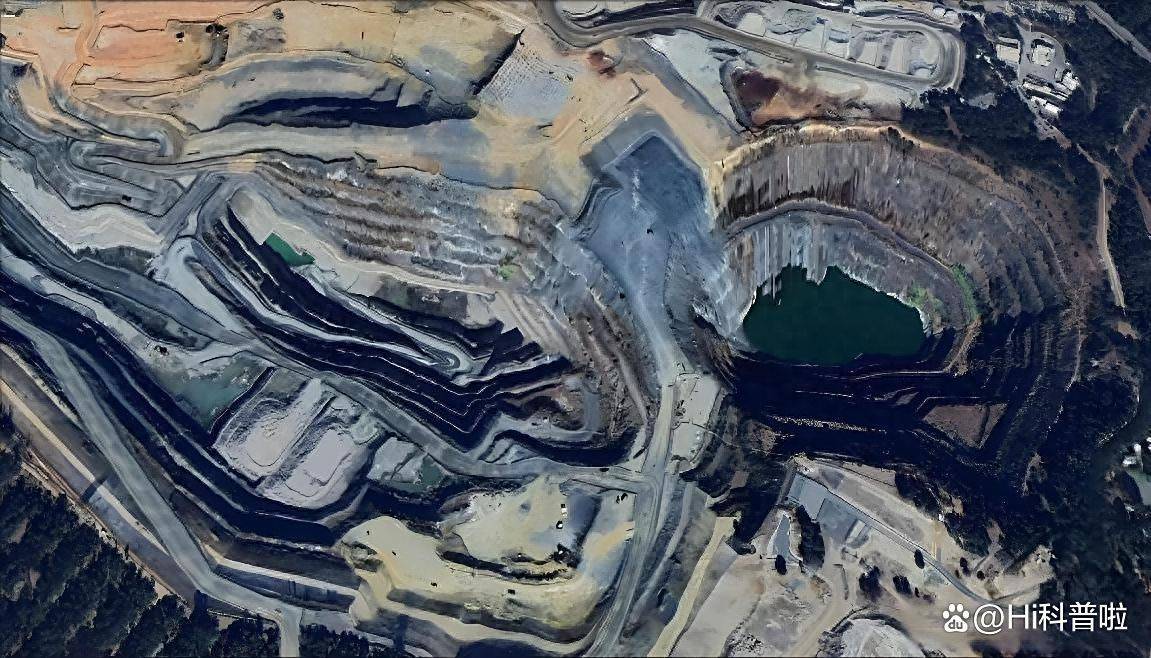
2800公里 “亚洲锂腰带” 横空出世,全球格局要变?
Hu Xiu· 2025-10-09 03:30
Core Viewpoint - China has achieved a historic breakthrough in lithium mining exploration, discovering the "Asian Lithium Belt" that spans across four provinces: Sichuan, Qinghai, Tibet, and Xinjiang [1] Group 1 - The discovery of the "Asian Lithium Belt" is a significant development for China's lithium resources [1] - This breakthrough is expected to enhance China's position in the global lithium market [1] - The geographical span of the discovery covers a vast area from east to west across multiple provinces [1]
锂电原料安全如何保障
中国能源报· 2025-10-04 00:34
Core Viewpoint - The rapid development of the new energy vehicle and energy storage markets has led to a significant imbalance in the supply and demand of lithium resources, necessitating a multi-faceted approach to address these challenges [3][4]. Supply and Demand Dynamics - China has the largest market for new energy vehicles and energy storage, with demand for lithium battery materials growing rapidly. In the first half of this year, the production and sales of new energy vehicles increased by 41.4% and 40.3% year-on-year, respectively, while the production of power and other batteries rose by 60.4% [4]. - The production of lithium carbonate reached 389,000 tons in the first half of the year, a year-on-year increase of 29%, providing a solid foundation for the development of the new energy industry [4]. - The domestic lithium resource development volume is expected to reach 300,000 tons in 2024, a year-on-year increase of 28%, with the self-supply guarantee rate rising to 40% [4]. Global Resource Development - Chinese enterprises are actively participating in global lithium resource development through bidding, asset restructuring, and project cooperation, with overseas investments exceeding 100 billion yuan (approximately 10 billion USD) by mid-year [5]. - Over 90% of overseas lithium resource projects are led by private enterprises, which play a crucial role in ensuring the safety of China's new energy industry chain [5]. Challenges and Risks - The lithium battery industry faces long-term sustainability challenges, including insufficient domestic resource development and a lack of high-quality raw materials [7]. - The price of lithium materials has experienced significant fluctuations, with lithium carbonate prices peaking at 600,000 yuan per ton in November 2022 before dropping below 600,000 yuan [8]. - Global economic conditions and international dynamics have increased risks in overseas lithium mining, with countries like Mexico and Chile implementing regulations that complicate foreign investment [8]. Strategic Directions - The lithium raw material industry should focus on "safety, innovation, green, and collaboration" to address development challenges and enhance production capabilities [10]. - A national lithium resource reserve system should be established to ensure stable supply, with increased exploration efforts in key regions [10]. - Companies should avoid short-term profit-driven decisions and instead focus on rational assessments of industry scale and supply-demand relationships [10]. Recycling and Sustainability - A dual-driven model of tiered utilization and recycling should be established, promoting standardized recycling networks and encouraging collaboration between automakers, battery manufacturers, and recycling entities [11]. - The industry should enhance recovery technologies to improve the recovery rates and purity of metals like lithium, cobalt, and nickel, while reducing costs [11]. - Active participation in the formulation of global lithium raw material industry rules is essential, along with strengthening cooperation with resource and consumer countries to create a mutually beneficial global industrial ecosystem [11].
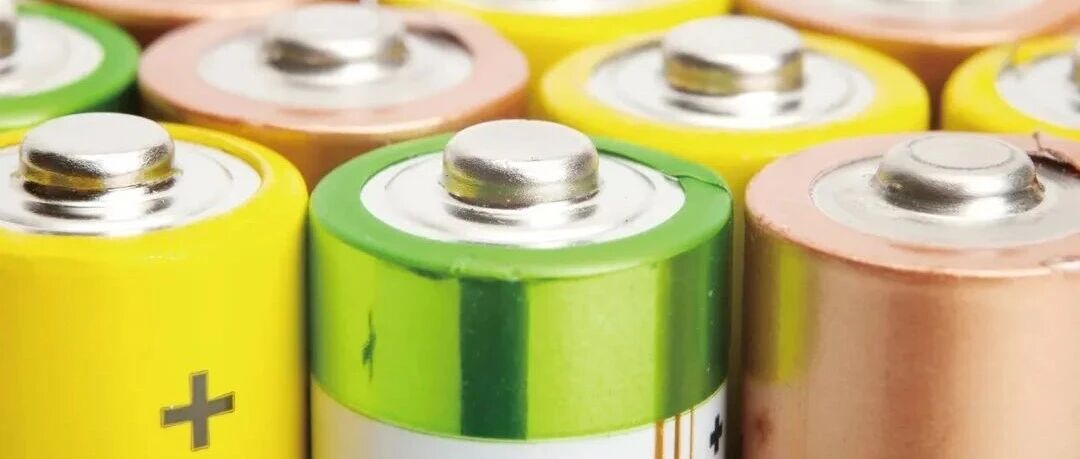
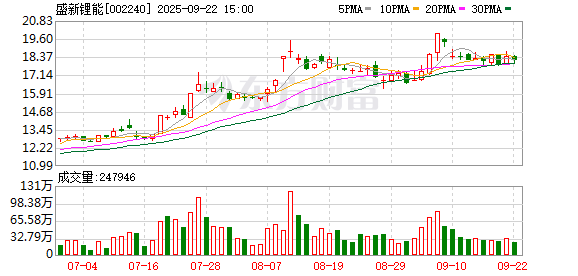
采矿权评估值超80亿元!盛新锂能控股亚洲顶级锂矿,开采渐行渐近?
Mei Ri Jing Ji Xin Wen· 2025-09-22 15:32
Core Viewpoint - The acquisition of a 21% stake in Sichuan Qicheng Mining by Shengxin Lithium Energy for 1.456 billion yuan is a strategic move to enhance its lithium resource portfolio, particularly through the valuable Muzhong Lithium Mine [2][3] Group 1: Acquisition Details - Shengxin Lithium Energy plans to acquire a 21% stake in Sichuan Qicheng Mining for 1.456 billion yuan, which will increase its ownership to 70% [2][3] - The Muzhong Lithium Mine, a key asset of Qicheng Mining, has an assessed value of 8.43 billion yuan and an annual sales revenue projection of 4 billion yuan [2][5] - The mine is located in the renowned "Asian Lithium Belt," which is significant for lithium resource development in China [8][9] Group 2: Financial Metrics - The assessed value of Qicheng Mining's total equity is 6.93 billion yuan, with a substantial increase of 5.52 billion yuan, representing a 388.77% appreciation [3][4] - The Muzhong Lithium Mine has confirmed lithium oxide resources of 989,600 tons with an average grade of 1.62%, making it one of the highest-grade lithium mines in Sichuan [3][9] - Shengxin Lithium Energy's revenue for the previous year was 4.581 billion yuan, with a peak revenue of 12.039 billion yuan in 2022 [7] Group 3: Market Context - The "Asian Lithium Belt" has significantly increased China's lithium reserves from 6% to 16.5% of the global total, elevating its ranking from sixth to second [9] - The mining project has received necessary approvals and is expected to enhance the company's raw material self-sufficiency and cost efficiency [9][10] - The acquisition is aimed at mitigating risks associated with the reliance on imported lithium resources, as approximately 60% of China's lithium salt companies depend on imports [10]

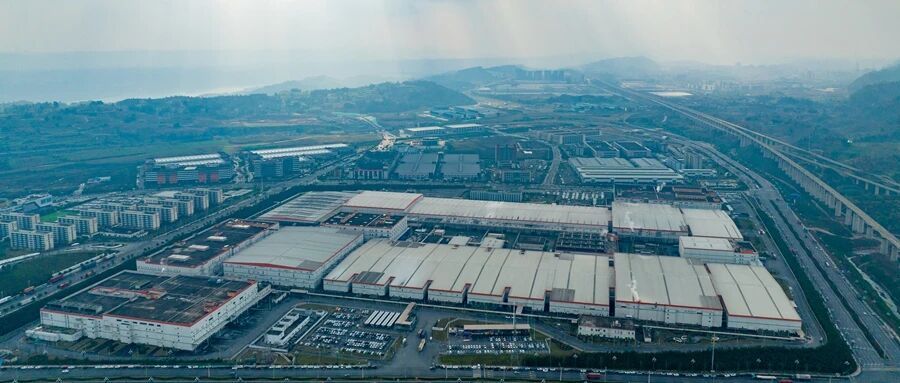
锂“腰”崛起,西部“大佬”瞄准世界级
Mei Ri Jing Ji Xin Wen· 2025-09-19 15:54
Core Insights - The 2025 World Energy Storage Conference in Ningde, Fujian, highlighted China's position as the largest new energy storage market, marking a shift towards a fully market-oriented phase in the energy storage industry [1] - Lithium-ion battery storage accounts for 96.4% of the installed capacity in China, indicating its dominance in the new energy storage market [1] - The discovery of the "Asian Lithium Belt," spanning 2,800 kilometers across four provinces, has significant implications for lithium resource availability and the lithium supply chain [1][6] Industry Developments - The Sichuan region is identified as a key area for lithium resources, with proven reserves accounting for over 50% of the national total [3] - The "Asian Lithium Belt" has revealed over 6.5 million tons of lithium resources, with potential exceeding 30 million tons, enhancing China's global lithium reserve ranking from sixth to second [7] - Investment in Sichuan's lithium battery industry has surged, with its share of national investment rising from 8% in 2019 to 18% in 2021, making it the province with the largest investment in lithium projects [8] Market Trends - The demand for lithium batteries is expected to grow significantly, with projections indicating a compound annual growth rate of 53.13% for lithium iron phosphate materials from 2022 to 2025 [16] - Sichuan's lithium battery production is projected to reach 165 GWh by 2024, increasing its national market share from one-sixth to one-fifth [10] - The establishment of a comprehensive lithium battery industry chain in Sichuan is anticipated to generate over 500 billion yuan in output value by 2025 [10] Regional Dynamics - The lithium industry in Sichuan is evolving into a collaborative ecosystem, with cities like Suining and Yibin leading in lithium resource processing and battery production, respectively [12][13] - Suining has become a hub for lithium salt production, while Yibin has rapidly developed a complete battery manufacturing ecosystem, significantly boosting local GDP contributions [15] - The provincial government is promoting new exploration strategies to enhance lithium resource supply, focusing on high-quality mining and technological advancements [18] Challenges and Solutions - Despite the growth, challenges such as high extraction costs, environmental regulations, and low-grade resources persist, necessitating strategic measures to ensure domestic supply [16] - The Sichuan government is implementing policies to address structural issues in the lithium industry, aiming to balance low-end and high-end production capacities [18][19]

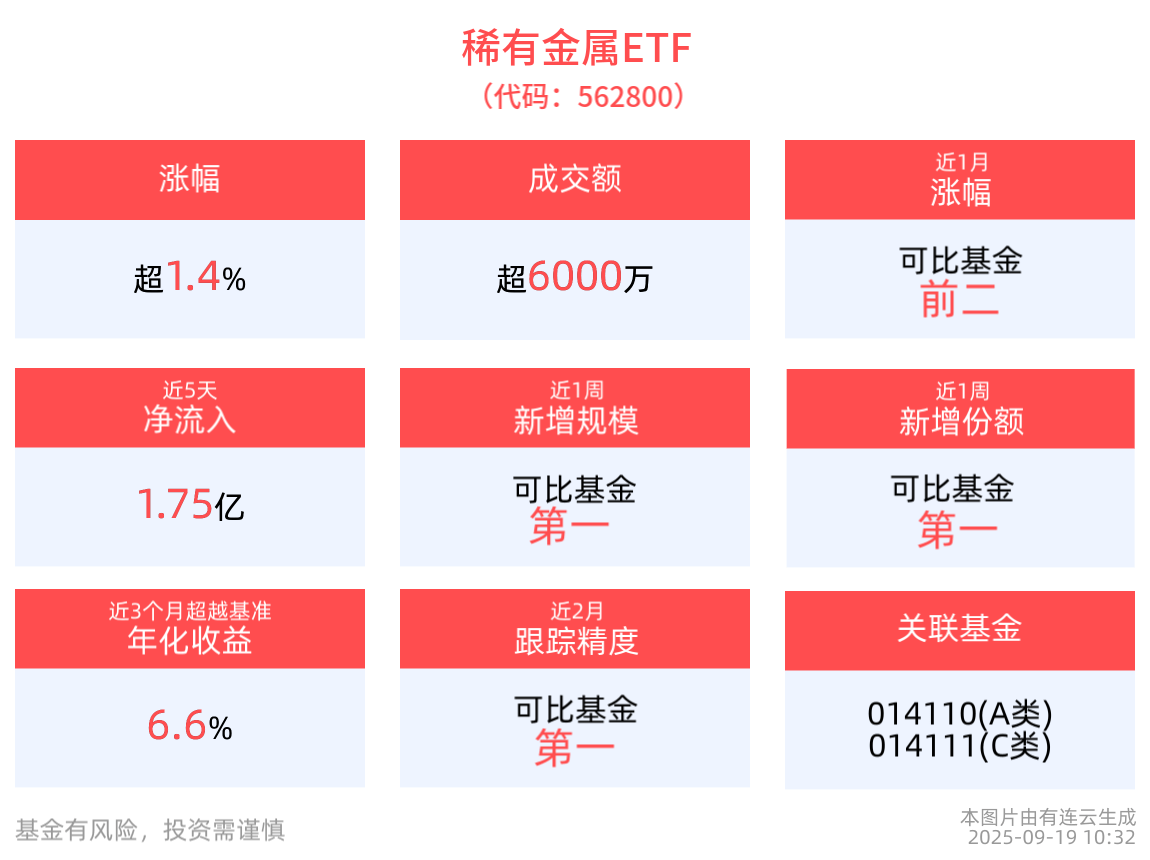
我国发现“亚洲锂腰带”,稀有金属ETF(562800)盘中上涨1.49%,赣锋锂业领涨成分股
Sou Hu Cai Jing· 2025-09-19 03:14
Group 1: Liquidity and Performance of Rare Metal ETF - The rare metal ETF had an intraday turnover of 2.39%, with a transaction volume of 62.4557 million yuan [3] - Over the past week, the average daily transaction volume of the rare metal ETF reached 250 million yuan, ranking first among comparable funds [3] - The rare metal ETF's scale increased by 66.2844 million yuan in the past week, achieving significant growth and ranking first among comparable funds [3] - The ETF's shares grew by 262 million shares in the past week, also ranking first among comparable funds [3] - In the last five trading days, the rare metal ETF attracted a total of 175 million yuan in inflows [3] - As of September 18, 2025, the net value of the rare metal ETF increased by 87.33% over the past year [3] - The highest monthly return since inception was 24.02%, with the longest consecutive monthly increase being four months and a maximum increase of 58.56% [3] - The average monthly return during the rising months was 8.77%, and the annualized return over the past three months exceeded the benchmark by 6.60% [3] Group 2: Industry Insights and Developments - The concept of the "Asian Lithium Belt" was introduced, spanning 2,800 kilometers across four provinces, with multiple large and super-large lithium mines discovered [4] - According to a report by CITIC Securities, the profitability growth rate of the metal sector is expected to rise further in the first half of 2025, maintaining strong performance [4] - Sub-sectors such as rare earths, tungsten, nickel, cobalt, tin, antimony, and copper are performing exceptionally well [4] - The metal sector's dividends and fund holdings are on the rise, with valuations reaching their highest levels since 2022, although still below the 2021 peak [4] - The top ten weighted stocks in the CSI Rare Metal Theme Index account for 57.58% of the index, including companies like Northern Rare Earth, Luoyang Molybdenum, and Tianqi Lithium [4] - Investors can also participate in the rare metal sector through the Rare Metal ETF linked fund (014111) [4]
2800公里“亚洲锂腰带”浮现
21世纪经济报道· 2025-09-16 00:34
Core Viewpoint - The concept of the "Asian Lithium Belt" has gained significant attention, highlighting a major lithium mineralization zone across four provinces in China, with substantial lithium resources identified [1][2][4]. Summary by Sections Asian Lithium Belt Discovery - The "Asian Lithium Belt" spans 2,800 kilometers across Sichuan, Qinghai, Tibet, and Xinjiang, containing multiple large and super-large lithium mines, with a total proven lithium resource exceeding 6.5 million tons and a potential resource of over 30 million tons [1][6]. - The belt includes significant lithium deposits such as the Jiajika mine in Sichuan, which is one of the most concentrated lithium resources globally [1][6]. Economic Impact and Supply Chain - The discovery of the "Asian Lithium Belt" has attracted major mining companies like Tianqi Lithium and Zijin Mining, as well as battery giants like CATL, contributing to a robust lithium supply chain in China [2][4]. - The price of lithium products has surged, with lithium carbonate prices rising from around 40,000 yuan/ton before 2015 to peaks of 600,000 yuan/ton, driven by the rapid growth of the electric vehicle market [4][5]. Strategic Importance of Lithium Resources - China has historically relied on imported lithium, leading to supply chain vulnerabilities. The discovery of the "Asian Lithium Belt" is a critical step in enhancing domestic lithium resource exploration and development [5][6]. - The "Asian Lithium Belt" has increased China's lithium reserves from 6% to 16.5% of the global total, elevating its global ranking from sixth to second [6]. Regional Economic Development - The development of lithium resources has significantly contributed to regional economic growth, with initiatives in areas like Hunan and Xinjiang demonstrating successful models of resource-driven industrial development [8][9]. - The establishment of partnerships and projects in these regions is expected to create thousands of jobs and attract substantial investments, further enhancing local economies [9][10]. Industry Trends and Future Outlook - The trend towards integration and scale in the lithium industry is evident, with companies like Shengxin Lithium Energy and Zhongmin Resources pursuing both domestic and international resource acquisitions [12][13]. - The "Asian Lithium Belt" is expected to provide a dual resource guarantee for China's new energy industry, supporting the development of a comprehensive lithium supply chain [14].

2800公里“亚洲锂腰带”浮现
2 1 Shi Ji Jing Ji Bao Dao· 2025-09-16 00:03
Core Concept - The concept of the "Asian Lithium Belt" has gained significant attention, spanning 2,800 kilometers across Sichuan, Qinghai, Tibet, and Xinjiang, with multiple large and super-large lithium mines identified [1][8]. Lithium Resource Development - The "Asian Lithium Belt" is not a new concept; it has been previously identified through various projects, with over 6.5 million tons of lithium resources confirmed and a potential exceeding 30 million tons [1][9]. - The belt includes major lithium deposits such as the Maki Ka mine, which is one of the most concentrated areas for lithium resources globally [1][9]. - The discovery of the "Asian Lithium Belt" has led to a significant increase in China's lithium reserves, rising from 6% to 16.5% of global reserves, moving from sixth to second place [10]. Economic Impact - The development of lithium resources has played a crucial role in regional economic growth, with numerous projects across the lithium supply chain contributing to local economies [2][11]. - The establishment of a lithium battery industry development task force in Hunan demonstrates the proactive approach to leveraging local resources for economic benefits [14][15]. Supply Chain and Market Dynamics - The rise in lithium product prices, particularly lithium carbonate, reflects the growing strategic value of lithium in the market, with prices soaring from 40,000 yuan/ton to 600,000 yuan/ton between 2015 and 2021 [4][5]. - The domestic production of lithium carbonate is expected to increase significantly, from 53,400 tons in 2016 to 701,000 tons by 2024, driven by the rapid growth of the electric vehicle market [4][5]. Industry Trends - Companies are increasingly pursuing integration and scale in lithium production, with a trend towards vertical integration in the lithium supply chain [21][23]. - The establishment of the China Salt Lake Group aims to become a leading player in lithium production, with ambitious targets for lithium and potassium production by 2030 [26][27]. Future Prospects - The ongoing exploration and development of lithium resources in the "Asian Lithium Belt" are expected to enhance the domestic supply chain and provide a robust resource guarantee for the new energy industry [27].

何为“亚洲锂腰带”?
2 1 Shi Ji Jing Ji Bao Dao· 2025-09-15 11:07
Core Concept - The concept of the "Asian Lithium Belt" has gained significant attention, spanning 2,800 kilometers across four provinces in China, with multiple large and super-large lithium mines identified [1][2]. Group 1: Overview of the Asian Lithium Belt - The "Asian Lithium Belt" is not a new concept, as previous research has identified 12 lithium mineral belts in China, with the Songpan-Ganzi and Western Kunlun regions forming the main body of this belt [2]. - The identified lithium resources in this belt include over 6.5 million tons of proven reserves and a potential resource of over 30 million tons, featuring major lithium deposits like Jiajika in Sichuan and Dahuangliutan in Xinjiang [2][6]. - The belt not only includes solid lithium resources but also surrounding salt lake resources, creating a comprehensive lithium resource corridor in China [2]. Group 2: Economic Impact and Industry Involvement - The discovery of the "Asian Lithium Belt" is closely linked to the rising strategic value of lithium products and the expanding applications in downstream sectors, with lithium carbonate prices soaring from 40,000 yuan/ton in 2015 to around 600,000 yuan/ton in recent years [3]. - Domestic demand for lithium carbonate has surged, with production increasing from 53,400 tons in 2016 to 701,000 tons in 2024, driven by the rapid growth of the electric vehicle market [3][4]. - Major mining companies like Tianqi Lithium and Zijin Mining, as well as battery giants like CATL, are actively investing in the lithium resources of the "Asian Lithium Belt," contributing to a robust supply chain for lithium batteries [2][10]. Group 3: Strategic Mining Initiatives - The Chinese government is intensifying exploration efforts for strategic minerals like lithium, with a nationwide campaign launched to enhance mining breakthroughs [4][5]. - The "Asian Lithium Belt" is recognized as a significant achievement in mineral exploration during the 14th Five-Year Plan period, with systematic studies conducted to understand lithium and beryllium mineralization patterns [5][6]. Group 4: Future Prospects and Developments - The development of lithium resources in the "Asian Lithium Belt" is expected to drive regional economic growth, with local governments implementing policies to support mining and related industries [7][9]. - Companies are increasingly adopting integrated and large-scale approaches to lithium resource development, with firms like China Salt Lake Group aiming to become a leading producer of lithium and other minerals by 2030 [12][14]. - The ongoing exploration and development of lithium resources in remote areas, such as Tibet, are anticipated to further enhance China's resource security and support the growth of the new energy industry [15].