人工智能+文化

Search documents
政协委员热议山东如何竞逐“人工智能+文化”新赛道
Zhong Guo Xin Wen Wang· 2026-01-30 04:36
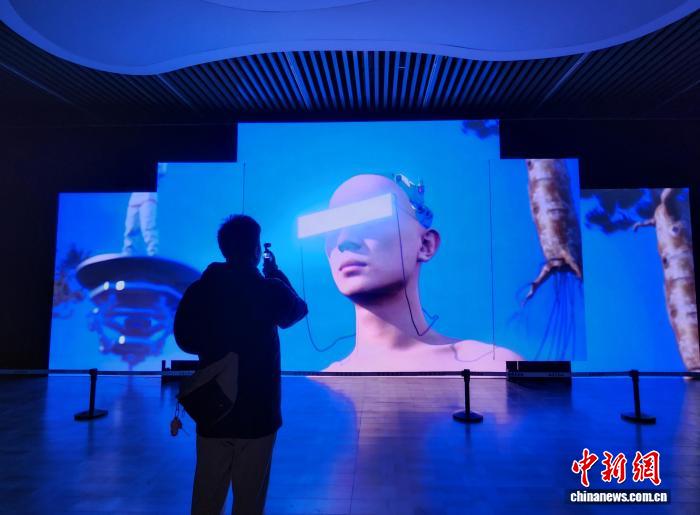
Core Viewpoint - The article discusses how Shandong province is leveraging artificial intelligence (AI) to enhance its cultural and tourism sectors, showcasing various innovative projects and initiatives aimed at integrating technology with traditional culture [1]. Group 1: AI Integration in Cultural Tourism - Shandong is implementing AI technologies in cultural tourism, such as AI tour guides and digital representations of historical figures, to enhance visitor experiences [1]. - The "Third Jinan International Biennale," organized by the Shandong Art Museum, attracted over 700,000 visitors by integrating cutting-edge digital technologies like naked-eye 3D and holographic interaction [3]. Group 2: Revitalization of Cultural Heritage - The province is focusing on the revitalization of ancient architecture and cultural heritage through innovative methods like AR-guided tours and digital interactions, aiming to transform sites like Confucius Temple and Dai Temple into immersive cultural experiences [3]. - The construction of the Yellow River National Cultural Park in Shandong is being accelerated, with projects designed to create immersive experiences that blend cultural tourism with technology [3]. Group 3: Support for Local Arts and Heritage - Local artists, such as the representative inheritor of the Panlong Bangzi, are exploring new formats like "intangible cultural heritage + short plays," achieving significant viewership and revenue through digital platforms [4]. - There is a call for increased support for rural intangible cultural heritage, with suggestions to integrate AI technology to enhance cultural experiences and meet diverse tourist demands [5]. Group 4: Government Initiatives - The Shandong provincial government is committed to strengthening the cultural industry through the "Technology Strengthens Culture" plan, promoting the integration of AI and culture, and establishing a cultural data center [5].

建好齐鲁文化大模型、山东文化数据中心以数智化赋能文化产业
Da Zhong Ri Bao· 2026-01-28 01:09
Group 1 - The core viewpoint emphasizes the integration of artificial intelligence and culture in Shandong, with initiatives like the "Qilu Cultural Model" and "Shandong Cultural Data Center" serving as dual engines for the digital and intelligent transformation of the cultural industry [1][2] - The Qilu Cultural Model is a representative achievement in the "AI + Culture" field, developed with support from various provincial departments, utilizing a cultural database for training and high-performance GPU clusters for computational power [2] - The Shandong Cultural Data Center aims to systematically integrate cultural data resources across the province, establishing a cultural data hub that promotes standardized management and empowers innovation in the cultural industry [2] Group 2 - The recent push for cultural innovation and integration with tourism in Shandong provides a broad space for the application of the Qilu Cultural Model, which is still in its early stages [3] - Future efforts will focus on enhancing the scale and precision of data sets through professional data annotation, exploring application scenarios, and integrating with traditional industries to maximize the practical impact of the Qilu Cultural Model [3]
四川这样部署
Xin Lang Cai Jing· 2026-01-27 18:56
Core Viewpoint - The article outlines the strategic deployment of Sichuan's cultural and ideological work for the "14th Five-Year Plan" period, emphasizing the importance of promoting Xi Jinping's cultural thought and enhancing the province's cultural influence and economic development. Group 1: Ideological and Cultural Promotion - The focus is on deepening the study and promotion of the Party's innovative theories, enhancing mainstream media's ability to guide public opinion, and promoting socialist core values [1] - There is a commitment to using Xi Jinping's Thought on Socialism with Chinese Characteristics for a New Era to unify and inspire the populace, alongside institutionalizing youth theoretical study groups [1][2] Group 2: Economic and Cultural Integration - The plan includes prioritizing economic promotion in major thematic campaigns and reforming mainstream media systems to improve public opinion management [1] - The initiative aims to enhance the integration of cultural, commercial, tourism, and sports sectors to stimulate consumption and strengthen the economy [4] Group 3: Cultural Development and Heritage - The implementation of the Tianfu Literary Masterpiece Peak Plan aims to enrich new popular literature and promote reading among the public [3] - There is a focus on protecting and inheriting cultural heritage, optimizing cultural resources like Sanxingdui and the Spring Festival, and enhancing international communication to tell China's story [4][6] Group 4: Responsibility and Governance - The article stresses the importance of tightening work responsibilities, improving online ecological governance, and implementing "Artificial Intelligence + Culture" initiatives to safeguard ideological security [5]
山东数字文化集团两大重点项目写入2026年山东省政府工作报告
Qi Lu Wan Bao· 2026-01-27 09:05
Core Insights - The Shandong provincial government aims to strengthen the cultural industry by implementing the "Technology Empowering Culture" plan and promoting the "Artificial Intelligence + Culture" initiative, focusing on the development of the Qilu Cultural Model and the Shandong Cultural Data Center [1][4]. Group 1: Qilu Cultural Model - The Qilu Cultural Model, developed by Shandong Digital Culture Group, serves as a significant project to activate cultural development through technological innovation, featuring a structure of "one base, three layers, and four databases" [2]. - The model has achieved eight key functionalities, including cultural gene decoding and historical figure dialogue, and has received multiple recognitions, including a five-star certification from the China Academy of Information and Communications Technology [2][4]. - It has been showcased at various major events, gaining acknowledgment from different sectors [2]. Group 2: Shandong Cultural Data Center - The Shandong Cultural Data Center aims to integrate cultural data resources across the province, establishing a cultural data hub that standardizes and regulates data management [3]. - The project follows a "3+N" construction framework, which includes a provincial cultural data center, a foundational cultural model, and a comprehensive cultural service platform [3]. - The center is designed to create an ecosystem for data aggregation, intelligent management, and diverse services, addressing various business needs in cultural data governance and rights protection [3]. Group 3: Industry Impact and Future Directions - The Qilu Cultural Model and Shandong Cultural Data Center are viewed as "dual engines" for the digital and intelligent transformation of the cultural industry, facilitating resource integration and value extraction [5]. - There is a call for accelerating the application of the model in sectors like film, animation, and cultural tourism to ensure that technology is effectively utilized [5]. - The Shandong Digital Culture Group, established in April 2025, is positioned as the core operator of the province's digital cultural industry, focusing on integrating media, culture, and technology [5][6].
文化“新三样”出海,杭州谋领跑
Zhong Guo Xin Wen Wang· 2026-01-24 10:11
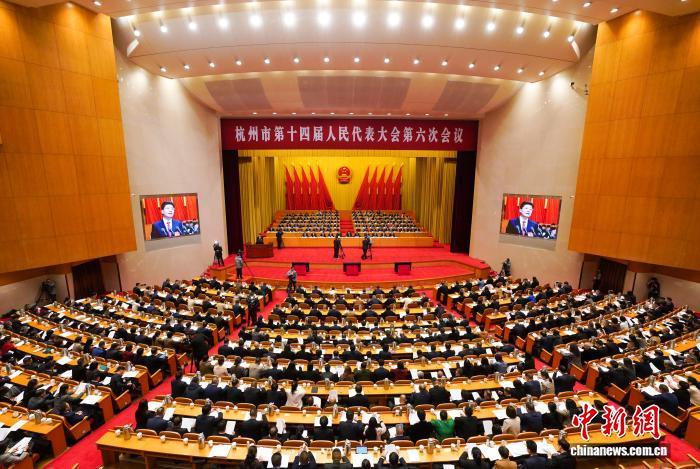
Core Viewpoint - Hangzhou aims to become a leading high-quality development hub for the national cultural "New Three Samples" and a demonstration site for cultural exports by 2026 [1][3] Group 1: Cultural "New Three Samples" - The cultural "New Three Samples," represented by online literature, online films, and online games, have become significant carriers for Chinese culture to go global [3] - During the 14th Five-Year Plan period, Hangzhou ranked first among similar cities in China with 31 key national cultural export enterprises and 688 licensed online dramas, including 491 online animations, accounting for 31% of the national total [3][5] - The cultural "New Three Samples" from Hangzhou have reached over 1 billion overseas users [5] Group 2: Quality Improvement and Technological Innovation - The focus is shifting from scale expansion to quality enhancement in the cultural "New Three Samples" due to advancements in digital technology [5] - Zhejiang Huace Film & TV Co., Ltd.'s "National Color Model" has been recognized as a key AI+Culture model, significantly improving overseas distribution efficiency by reducing costs by 50%-60% [5] Group 3: Government Support and Initiatives - The newly established cultural "New Three Samples" overseas audiovisual industry service center in Hangzhou aims to address language barriers, cross-border service shortcomings, and overseas rights protection issues [5] - Hangzhou has released measures to promote the overseas expansion of online literature, online dramas, and online games, including five major actions and 18 specific initiatives to build a comprehensive support system [6] Group 4: Regional Development and Collaboration - Various districts in Hangzhou are competing in the cultural sector, with initiatives like the first computing power town and significant funding for cultural technology integration [8] - The West Lake District is focusing on AI-driven content creation and has proposed measures to foster a favorable industrial ecosystem [8] Group 5: Talent Development and Policy Recommendations - Experts suggest enhancing international cultural exchange activities and cultivating a talent pool skilled in international languages and narratives to better align cultural exports with local customs and regulations [9] - Recommendations include providing upfront subsidies for scriptwriting in online short dramas and establishing a "green review channel" to alleviate financial pressures on creative teams [9] Group 6: Future Cultural Platforms - By 2026, Hangzhou plans to strengthen national cultural and technology integration demonstration bases and short video bases, guiding the healthy development of new cultural formats such as online literature, online games, and esports [10]
浙江省首批“人工智能+文化”重点模型和应用场景发布
Xin Lang Cai Jing· 2026-01-20 13:43
Group 1 - The article discusses various AI-driven models developed by different companies in the media and cultural sectors, highlighting their capabilities and applications [2][4][7][10][12][14][21][23][25][27][29]. - Companies like 传播大脑科技 and 新华智云科技 are focusing on creating industry-specific models that enhance content generation and cultural data utilization [2][4]. - 浙江华策影视 and 杭州当虹科技 are developing models that cater to the film and media industries, emphasizing content recognition, editing, and multi-language capabilities [7][8]. Group 2 - The article mentions the integration of AI technologies in various cultural applications, such as the "与光AI" platform, which streamlines content creation processes for media professionals [12]. - Projects like "杭小忆" and "LumiReel·光屿" aim to enhance tourism experiences and cultural exports through AI-driven services and platforms [19][23]. - The "智媒果" platform is highlighted for its role in improving content production efficiency and fostering cultural innovation through AI [25]. Group 3 - The article outlines the emergence of AI tools in music creation, such as 腾讯音乐's AI music creation tool, which automates the songwriting process and engages millions of users [14]. - The development of AI-driven digital content protection and trade platforms is noted, aiming to support creators in managing their intellectual property [16]. - The use of AR and AI technologies in cultural experiences, as seen in the "人生八禧" project, showcases innovative approaches to engaging audiences with historical and cultural narratives [29].

良渚文化大走廊 文脉连古今 产业向未来
Ren Min Ri Bao· 2025-12-09 22:35
Core Viewpoint - The Liangzhu Cultural Corridor is a significant initiative aimed at creatively transforming and innovatively developing Liangzhu culture, integrating historical heritage with modern digital culture, and promoting regional economic growth and cultural exchange [1][2][3]. Group 1: Cultural Heritage and Development - The Liangzhu Cultural Corridor is rooted in a rich historical and cultural legacy, showcasing a "one core, multiple veins, and all-domain symbiosis" resource structure [2]. - Liangzhu Ancient City Site, as a testament to 5,000 years of civilization, serves as a central point for connecting various cultural narratives, including canal culture and tea culture [2][3]. Group 2: Economic and Cultural Integration - The corridor promotes the integration of cultural industries with heritage protection, public cultural services, and tourism, creating cultural landmarks that attract visitors [3]. - Events like the Liangzhu Cultural Market and themed cultural tourism activities are designed to enhance the synergy between culture and tourism, driving economic growth [3]. Group 3: Technological Innovation - The corridor leverages technology for heritage protection and cultural promotion, utilizing AR and VR to enhance public engagement with ancient civilizations [3][5]. - The Liangzhu Digital Cultural Community is positioned as a national cultural trade base, focusing on the development of digital cultural industries [6]. Group 4: Future Development and Collaboration - The Zhejiang Province aims to high-standard develop the Liangzhu Cultural Corridor by enhancing its cultural and technological integration, fostering a collaborative development model [7][9]. - A coordinated mechanism among provincial, municipal, and district levels is being established to promote the corridor's development and enhance its cultural identity [7][8]. Group 5: Project Implementation and Growth - Over 30 key projects are planned to enhance the corridor's cultural and technological landscape, including AI and cultural integration initiatives [9]. - The corridor aims to attract high-quality cultural resources and talent, establishing itself as a model for the integration of culture and economy [9].
北京海淀将建设具全球影响力的“AI+文化”产业集聚区
Zhong Guo Xin Wen Wang· 2025-11-20 07:39
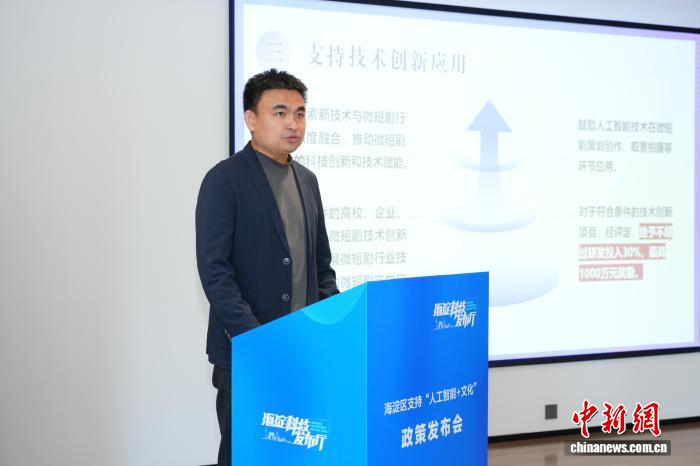
Core Insights - Beijing's Haidian District plans to establish a globally influential "AI + Culture" industrial cluster, focusing on areas along key roads to promote industries like gaming, e-sports, and short films [1][2] Group 1: Policy Measures - Haidian District has released three policy documents to support the development of "AI + Culture," gaming e-sports, and high-quality short film industries [2] - The district currently hosts over 1,900 AI companies, with 116 registered large models, accounting for nearly 70% of Beijing's total [2] - In the first eight months of 2025, Haidian's cultural industry units achieved revenues of 946.46 billion yuan, representing 56.9% of the city's total and a year-on-year growth of 13.2% [2] Group 2: Strategic Framework - The district's policy framework integrates "AI + Culture" with specific support for gaming e-sports and short films, creating a "1 + 2" policy system [3] - The measures encourage the formation of innovation consortia led by enterprises to gather resources across academia, research, and application, with funding rewards of up to 30 million yuan based on R&D investments [3] Group 3: Implementation and Goals - The "AI + Culture" co-creation plan aims to leverage Haidian's AI development advantages to drive innovation in the cultural sector [5] - The district will enhance the ecosystem by integrating technology research, content creation, application scenarios, and international expansion [5]
北京海淀:支持“人工智能+文化”发展“1+2”政策发布
Bei Jing Shang Bao· 2025-11-19 07:53
Core Viewpoint - Haidian District is launching a "1+2" policy framework to support the integration of artificial intelligence and culture, focusing on game e-sports and micro-short drama industries [1][2]. Group 1: Policy Measures - The policies include measures to promote the development of AI in cultural sectors, e-sports, and micro-short dramas, creating a comprehensive support system [1]. - The "AI + Culture" co-creation plan encourages the development of large models in specific cultural fields, the establishment of common technology platforms, and the construction of high-quality datasets, with rewards up to 30 million yuan for leading enterprises [1]. Group 2: Industry Impact - Haidian District has over 1,900 AI companies and 116 registered large models, accounting for nearly 70% of Beijing's total, with over 60% of national AI product access originating from the region [2]. - In the first eight months of 2025, the revenue of large-scale cultural industry units in Haidian reached 946.46 billion yuan, representing 56.9% of the city's total and a year-on-year growth of 13.2% [2]. - The new policies are expected to enhance the "technology + culture" synergy, driving the digital and intelligent transformation of the cultural industry and fostering new competitive cultural enterprises [2].
八部门联合出台指导意见:大力发展数字消费;金马游乐股东邓志毅完成减持
Mei Ri Jing Ji Xin Wen· 2025-09-24 23:26
Group 1 - The Ministry of Commerce and seven other departments issued guidelines to promote digital consumption, aiming to leverage the advantages of a large-scale market and stimulate economic vitality through 14 measures [1] - The guidelines focus on four main areas: enriching supply, nurturing enterprises, optimizing support, and creating a conducive environment for consumption [1] - The policy is expected to benefit sectors such as digital economy, e-commerce, logistics, and payment, potentially enhancing the valuations of related companies [1] Group 2 - The cultural industry investment and financing activities are recovering rapidly, with financing amounts increasing by 88.9% in the first half of 2025 [2] - The integration of culture and technology has become a key investment area, with "AI + culture" projects accounting for over 40% of private equity market financing in the first half of 2025 [2] - The recovery in the cultural industry is driven by supportive financial policies, indicating restored investor confidence [2] Group 3 - The shareholder Deng Zhiyi of Jinma Amusement reduced his shareholding to 11.27% after selling 3.8336 million shares between September 15 and September 23, 2025 [3] - The reduction was compliant with legal regulations and may raise concerns about the company's development confidence, potentially putting short-term pressure on the stock price [3] - Monitoring of the company's fundamentals and Deng's future actions is advised to assess the impact of this share reduction [3]