
住房消费

Search documents
上海楼市新政落地,释放哪些重要信号
Bei Jing Ri Bao Ke Hu Duan· 2026-02-28 00:54
Core Viewpoint - The implementation of Shanghai's new housing policy "Hu Qitiao" aims to stabilize the real estate market and support housing consumption, reflecting a commitment to maintaining stability in the housing sector through various measures [1][2]. Group 1: Key Changes in "Hu Qitiao" - The policy allows individuals with one year of social security contributions in Shanghai to purchase homes, and significantly increases the housing provident fund loan limit by 50%, reaching a theoretical maximum of 3.24 million yuan [1][5]. - The measures also include tax exemptions on certain housing transactions, providing substantial support for homebuyers with reasonable housing consumption needs [1][5]. Group 2: National Impact of "Hu Qitiao" - The proactive measures taken by Shanghai are expected to serve as a positive example for other cities across the country, enhancing market expectations and consumer confidence [2][6]. - The overall market performance in Shanghai, which has shown signs of recovery, indicates that the policies are effective and can guide national strategies for stabilizing the real estate market [2][5]. Group 3: Market Trends and Expectations - Recent months have shown a warming trend in the Shanghai housing market, with increased activity despite traditionally low sales seasons in January and February, suggesting a structural bottoming out of the market [7][9]. - There are indications of price stabilization and high transaction volumes in first-tier and some second-tier cities, contributing to a positive market outlook [8][9]. Group 4: Future Policy Considerations - The focus on demand-side measures, such as those in "Hu Qitiao," should be complemented by attention to supply-side policies to ensure a balanced approach to market stabilization [10][12]. - Maintaining policy consistency and avoiding excessive supply increases in response to market recovery is crucial for sustaining positive trends [11][12].
“迎新春、换新房”丨2026年滨州市优质房地产项目展示交易会开幕
Sou Hu Cai Jing· 2026-02-24 09:16
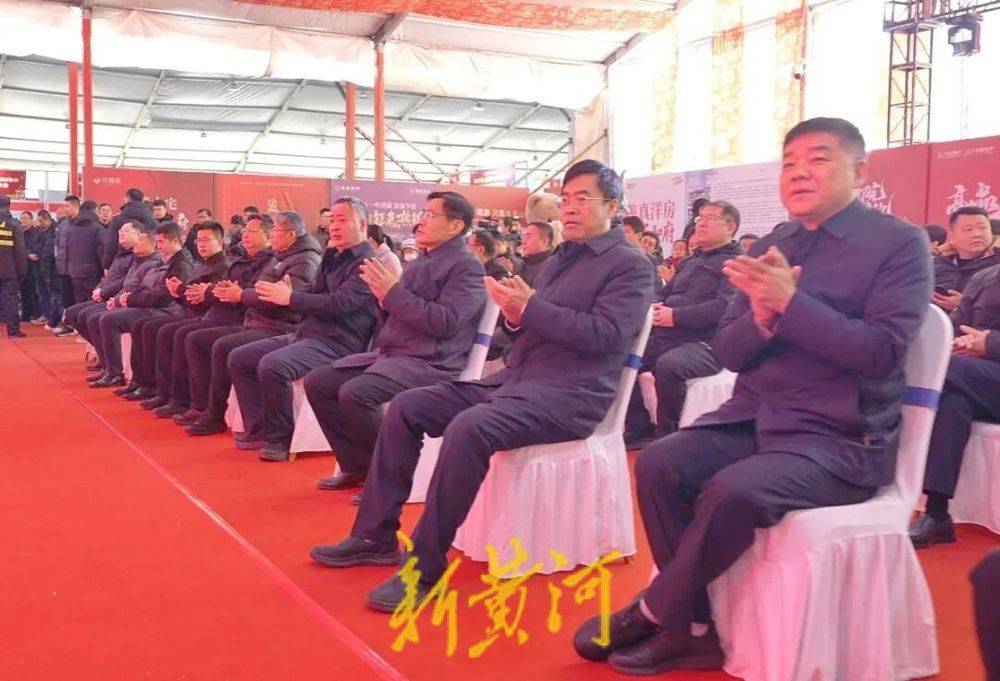
Group 1 - The event "Welcome the New Year, Change the House" 2026 Binzhou City Quality Real Estate Project Exhibition and Trading Fair was launched to promote high-quality development in the real estate sector and stimulate housing consumption [1] - The exhibition showcased over 20 quality real estate projects, including provincial and municipal high-quality residential pilot projects, adhering to the "good house" construction standards [3] - The fair aims to effectively bridge the market supply and demand, releasing the housing consumption potential of residents and allowing more citizens to realize their housing dreams with better services and discounts [5] Group 2 - The event was organized by the Binzhou City Housing and Urban-Rural Development Bureau, Binzhou City Commerce Bureau, and the People's Government of Bincheng District, with support from local housing and real estate associations [3] - The showcased projects focus on five dimensions: good standards, good design, good materials, good construction, and good maintenance, aiming to present ideal living environments to citizens [3] - The successful hosting of the trading fair is expected to contribute to the shared benefits of urban development in Binzhou and promote the vision of a livable city [5]

多地优化购房政策,能否释放住房消费潜力?
Xin Hua Wang· 2026-02-06 07:15
Core Viewpoint - The recent policy adjustments in China's housing market aim to stimulate consumer demand by removing unreasonable restrictions on housing purchases and enhancing financial support for homebuyers [1][2][3]. Group 1: Policy Adjustments - The "14th Five-Year Plan" suggests improving consumption mechanisms and removing unreasonable restrictions in sectors like automotive and housing [1]. - Major cities have relaxed housing purchase restrictions, with Beijing allowing multi-child families to buy more homes and Shanghai lifting limits on new and second-hand housing purchases [1][2]. - Financial measures include lowering mortgage rates and down payment ratios, with Beijing eliminating distinctions between first and second home loan rates [2][4]. Group 2: Market Response - Following the policy changes, there has been a noticeable increase in housing market activity, particularly in first-tier cities [3]. - In Shanghai, a specific project reported an average of 300 customer visits daily, indicating heightened interest in property purchases [3]. - The adjustments have also improved the purchasing power of consumers, as seen in the case of a buyer in Jinan who benefited from reduced down payment requirements [4]. Group 3: Financial Support and Consumer Confidence - Over 260 new policies related to housing provident funds have been introduced nationwide, focusing on increasing loan limits and simplifying processes [4]. - Experts believe that optimizing credit and provident fund policies will alleviate financial pressure on homebuyers and stabilize market expectations [4][5]. - A survey indicates that while consumer confidence in purchasing homes is improving, there is still a cautious outlook regarding policy changes, with a significant demand for housing vouchers and loan support [5]. Group 4: Future Policy Considerations - There remains potential for further relaxation of policies, particularly regarding the use of housing provident funds for second homes and other housing-related expenses [5]. - Experts suggest that housing provident fund reforms should align with urban renewal initiatives to support homeowners in upgrading their properties [5][6]. - The ongoing differentiation in market conditions necessitates tailored policy responses to meet both rigid and improvement-driven housing demands [6].
多地加码购房补贴 住房消费潜力加速释放
Zheng Quan Ri Bao Wang· 2026-01-23 13:01
Group 1 - Recent policies in multiple regions continue to provide housing subsidies, including contract tax subsidies and incentives for families with multiple children, aimed at stimulating housing consumption demand [1] - Jingmen City has extended housing subsidies for college graduates and families with multiple children until December 31, 2028, signaling a commitment to support these demographics [1] - Xiangtan City has introduced a new subsidy policy that significantly increases financial support for homebuyers, offering 8,000 yuan for homes up to 144 square meters and 16,000 yuan for larger homes [1] Group 2 - Experts emphasize the importance of localized and precise policies in real estate, suggesting that reducing housing costs can effectively stimulate consumer demand [2] - The upcoming national housing and urban-rural construction meeting in 2025 will encourage city governments to optimize real estate policies to support essential housing needs and maintain market stability [2] Group 3 - Various cities are implementing diverse housing subsidy measures, including support for returning residents, families with multiple children, and high-quality housing [3] - Dongying City has proposed a dynamic adjustment mechanism for housing provident fund loan limits, increasing the maximum loan amount for families with multiple children by at least 30% [3] - Experts note that while short-term subsidies can lower costs for first-time buyers, cities with weak population and industry support may struggle to achieve long-term market improvements [3] Group 4 - In 2026, measures to stimulate housing demand will focus on controlling new supply, reducing inventory, and improving supply quality [4] - Strategies for reducing inventory will include repurposing unsold new homes for various uses, such as dormitories and relocation housing, to meet the needs of new residents and drive demand for both new and second-hand homes [4] - Recommendations for improving supply quality include differentiated development and avoiding homogeneous competition among housing projects, while ensuring high standards in construction and design [4]
夯实公积金普惠金融底色
2 1 Shi Ji Jing Ji Bao Dao· 2026-01-12 22:53
Core Viewpoint - The recent Central Economic Work Conference emphasizes the need to deepen the reform of the housing provident fund system to stabilize the real estate market and promote high-quality development in the sector [1] Group 1: Reform and Current Status - The housing provident fund system reform has been ongoing, with the number of pilot cities for flexible employment personnel expanding from 13 to 36 [1] - In 2025, 65,300 individuals withdrew 2.043 billion yuan from the housing provident fund for home renovations, indicating a shift towards improving living conditions [1] - The coverage of the provident fund is limited, currently only covering one-third of urban employees, which affects the expansion of inclusive finance [2] Group 2: Financial Dynamics - The balance of the national housing provident fund increased from 4.56 trillion yuan in 2016 to 10.9 trillion yuan in 2024, but the proportion of withdrawals for housing consumption has decreased from 82.2% in 2021 to 75.2% in 2024 [2] - There is a significant funding gap for housing consumption among over 200 million flexible workers, of whom less than 10% contribute to the provident fund [2] Group 3: Adaptation to New Housing Needs - The original provident fund system, established in 1994, was designed for a different economic context and is now seen as outdated as urbanization stabilizes and housing demand evolves [3] - The reform direction should shift towards a more inclusive housing finance model that addresses the needs of over 200 million new citizens, young people, and flexible workers [3] Group 4: Proposed Solutions - Implementing fiscal subsidies for non-public sector employees and flexible workers to encourage provident fund contributions [4] - Increasing investment returns by enhancing the management and investment strategies of the provident fund to boost its scale and attractiveness [4] - Utilizing the fund's returns to invest in areas with high demand for housing improvements, such as old neighborhoods and rental housing for new citizens [5] Group 5: Long-term Support Mechanisms - Establishing a continuous support mechanism for new citizens transitioning from renting to owning homes, potentially expanding the provident fund's role to include broader social welfare accounts [6] - Creating a mechanism for the compensated adjustment of surplus funds between regions with varying loan rates to optimize resource allocation [6] - Fostering a sustainable cycle of provident fund accumulation, investment, and withdrawal to enhance the overall housing finance system [6]
9年来首降!个人购房2年以下增值税税率降至3%
2 1 Shi Ji Jing Ji Bao Dao· 2025-12-30 14:37
Core Viewpoint - The Ministry of Finance and the State Administration of Taxation announced a reduction in the value-added tax (VAT) rate for individuals selling residential properties, effective January 1, 2026, which aims to lower transaction costs in the real estate market [1][2][3]. Group 1: Policy Changes - Individuals selling properties purchased for less than two years will be subject to a VAT rate of 3%, down from the previous rate of 5% [1][3]. - Properties held for two years or more will be exempt from VAT [1][3]. - This marks the first adjustment to the VAT rate for personal housing sales since the comprehensive "business tax to VAT" reform in 2016 [5][10]. Group 2: Impact on Transaction Costs - For a property sold at 2 million yuan, the VAT payable will decrease from 100,000 yuan to 60,000 yuan, resulting in a savings of 40,000 yuan in transaction costs [4]. - The reduction in transaction costs is expected to stimulate demand and reduce the need for significant price reductions in property sales [5]. Group 3: Market Context - Recent statistics indicate a decline in both the sales area and sales amount of new residential properties, with second-hand housing prices experiencing a more significant drop compared to new homes [7]. - The adjustment in VAT is seen as a measure to alleviate the pressure on the real estate market, which has been facing weak expectations and a slowdown in new home transactions [7][9]. Group 4: Future Expectations - Analysts suggest that the VAT reduction could help unblock the "sell old to buy new" chain, which has been hindered by high transaction costs [8]. - There is an expectation of further tax policy optimizations in the real estate sector, including potential adjustments to deed tax, personal income tax, property tax, and land value-added tax [13].

多地加码购房补贴支持住房消费
Zheng Quan Ri Bao· 2025-12-03 16:26
Core Viewpoint - The article highlights the ongoing efforts by various local governments in China to stimulate housing consumption through the issuance of home purchase subsidies, particularly in the context of promoting a stable and healthy real estate market [1][2]. Group 1: Policy Implementation - Since the beginning of the year, approximately 100 cities, including Hangzhou and Wuhan, have increased home purchase subsidies to stimulate demand [2]. - In December, Wuzhou announced a subsidy program that offers a 100% financial rebate on the paid deed tax for individuals purchasing new commercial housing in designated urban areas [2]. - Nanning's recent policy includes multiple types of subsidies, such as for newlyweds and families with multiple children, aimed at supporting various demographics in purchasing homes [2]. Group 2: Specific Subsidy Programs - Fuzhou is considering a subsidy of 1% of the total purchase price for families with two children buying new market-oriented residential properties, with a maximum subsidy of 30,000 yuan per unit [3]. - Yunnan Province has introduced a tiered subsidy system for new residential purchases, offering up to 15,000 yuan based on the total price of the property [3]. - Nanning's policy specifically allocates 30,000 yuan for families with two children and 60,000 yuan for families with three children purchasing new homes [5]. Group 3: Market Impact - The introduction of these subsidies is expected to lower home purchase costs and stimulate demand among eligible buyers, contributing to a stabilization of the real estate market [4]. - The targeted support for specific groups, such as multi-child families and new employees, indicates a broad policy coverage aimed at enhancing housing accessibility and relieving financial pressures on these demographics [5].
重点30城一二手房成交数据释放“止跌回稳”信号
Zheng Quan Ri Bao· 2025-11-24 16:51
Group 1 - The core viewpoint indicates that the real estate market in 30 key cities has shown signs of stabilization due to multiple rounds of policies aimed at stabilizing the housing market, with transaction volumes for new and second-hand homes remaining at 274 million square meters in the first ten months of the year, roughly unchanged from the same period last year [1] - In terms of city performance, Shenzhen's transaction area for new and second-hand homes increased by 12% year-on-year, while Beijing, Shanghai, and Guangzhou saw increases of 7%, 6%, and 2% respectively [1] - Several second-tier cities demonstrated resilience, with Hefei leading the 30 cities with an 18% year-on-year increase in transaction area, and Chengdu reporting a transaction area of 26.3 million square meters, up 11% year-on-year [1] Group 2 - The overall housing demand remains stable, indicating a strong willingness among residents to purchase homes, with increased activity in the second-hand housing market reflecting the effectiveness of policies aimed at stabilizing the market [2] - Looking ahead, the real estate industry is expected to face certain pressures in the short term, with a focus on stabilizing the market and removing unreasonable restrictions in housing consumption, alongside the acceleration of policies related to urban village redevelopment [2] - The improvement of standards and regulations for "good housing" construction is anticipated to stimulate the release of demand for upgraded housing through the supply of high-quality housing [2]
96家楼盘集中亮相,搭建一站式服务平台 2025南京住房消费推介会本周六启动
Yang Zi Wan Bao Wang· 2025-11-20 11:08
Core Insights - The "Good House, Good Home, Good Life" housing promotion event in Nanjing will take place on November 22, showcasing 96 properties from 12 districts, catering to various consumer needs [1][2] Group 1: Event Overview - The event aims to present high-quality housing options through tangible craftsmanship, experiential scenarios, and quantifiable standards, highlighting the appeal of "good houses" in Nanjing [2] - A diverse range of properties will be available, including affordable options starting at 2 million yuan for a 79 square meter unit in Yuhua District, and upgraded products from local state-owned enterprises [2] Group 2: Subsidy and Promotions - The "old-for-new" housing policy in Nanjing is nearing its deadline, offering a 1% government subsidy on new housing contracts, creating a window of opportunity for residents to upgrade their homes [3] - The event will feature exclusive discounts, fixed-price offers, and group purchase deals from participating developers, alongside enhanced financial support from banks to lower the cost of acquiring quality housing [3] Group 3: One-Stop Service Platform - The promotion will establish a one-stop service platform for housing consumption, providing comprehensive services including transaction policy consultation, financial services, and public fund usage advice [4] - Various local specialties, cultural elements, and interactive activities will be showcased to enhance the community experience and promote Nanjing's cultural heritage [4]


楼市“银十”成色不足?百强房企操盘金额同比降4成 环比微增0.1%
Xin Lang Cai Jing· 2025-10-31 14:36
Group 1 - The core viewpoint of the article indicates that the sales performance of the top 100 real estate companies in October 2025 shows a slight month-on-month increase but a significant year-on-year decline, reflecting a market still in a low-level consolidation phase [1][4] - In October 2025, the sales amount of the top 100 real estate companies reached 253 billion yuan, with a month-on-month growth of 0.1% and a year-on-year decrease of 41.9% [1][3] - The year-on-year decline is attributed to the high base from the previous year, particularly after the policy changes in September 2024 that boosted market activity [1][2] Group 2 - Among the top 100 real estate companies, 48 companies reported month-on-month sales growth in October 2025, with 20 companies experiencing growth exceeding 30% [2] - The cumulative sales of the top 100 real estate companies from January to October 2025 amounted to 2896.71 billion yuan, representing a year-on-year decline of 16.3% [3] - The number of companies in different sales tiers has changed, with 7 companies exceeding 100 billion yuan in sales, while the second tier saw a decrease of 2 companies compared to the previous year [3] Group 3 - In October 2025, various policies were implemented to stimulate the market, including optimizing supply and demand measures, such as improving housing construction regulations and adjusting public housing loan policies [4][5] - Analysts predict that new home transaction volumes in November 2025 will continue to fluctuate at low levels, with potential for further year-on-year declines due to last year's high base [4][5] - The central government is expected to implement more comprehensive measures to stabilize the real estate market, focusing on improving financing conditions and regulatory frameworks [6]